
King cobras are the heavyweight champions of the snake world. These are the largest and longest of any other venomous snake on Earth. This is what makes the king cobra so infamous among snake species, but another species is equally intimidating. The green mamba is notorious for its bite. We’re examining the similarities and differences between these snakes to determine how they compare. When venom meets venom, these snakes share common lethal ground.
King Cobra: Its Deadly Characteristics
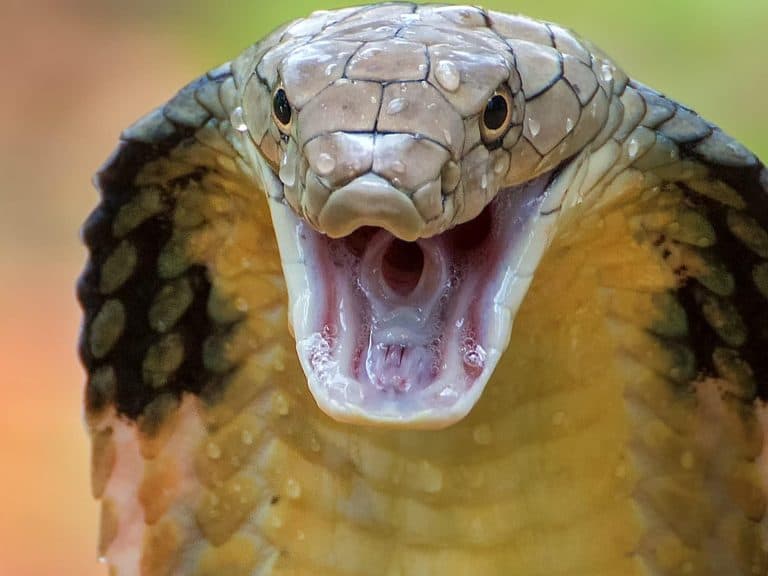
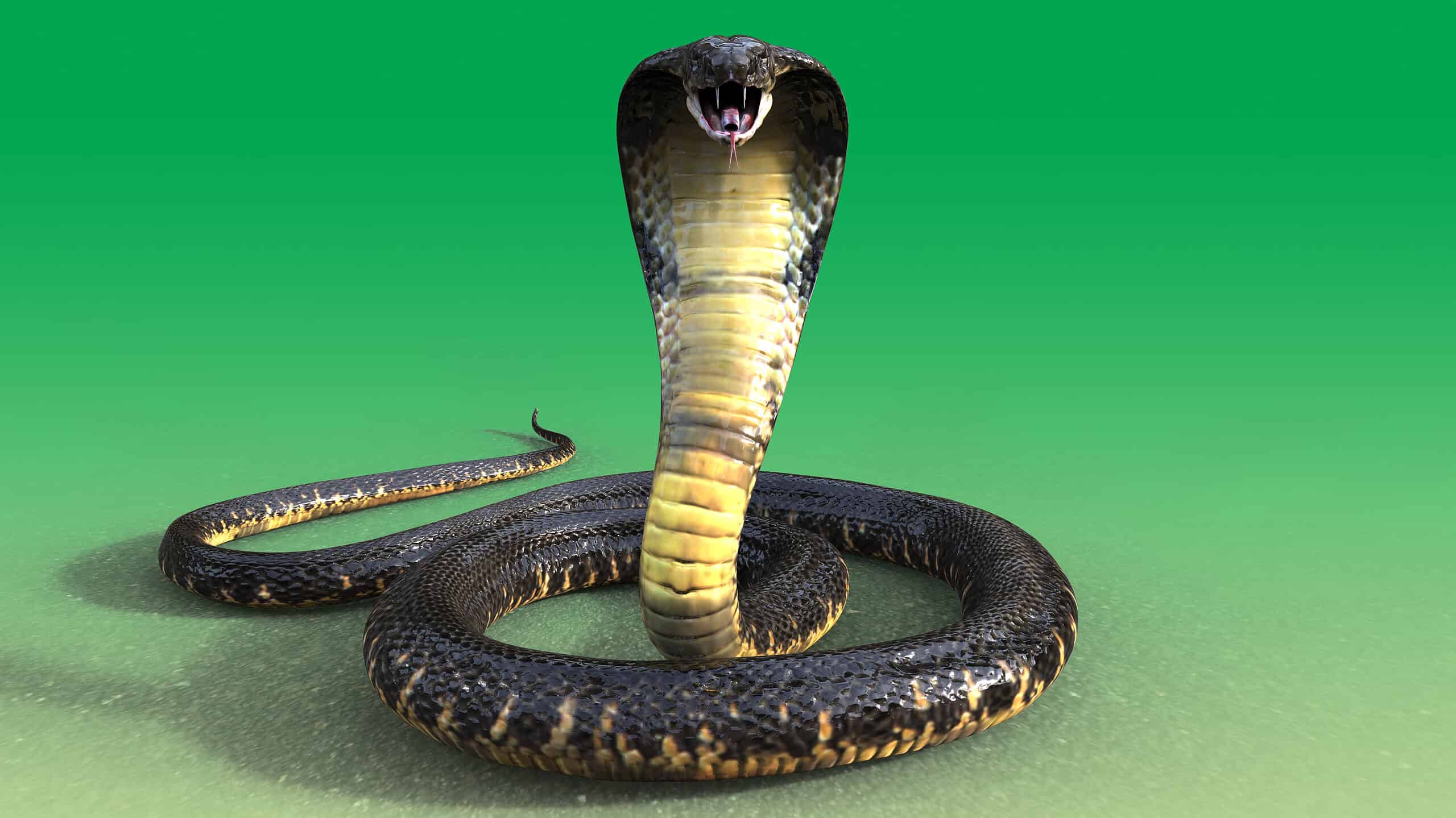
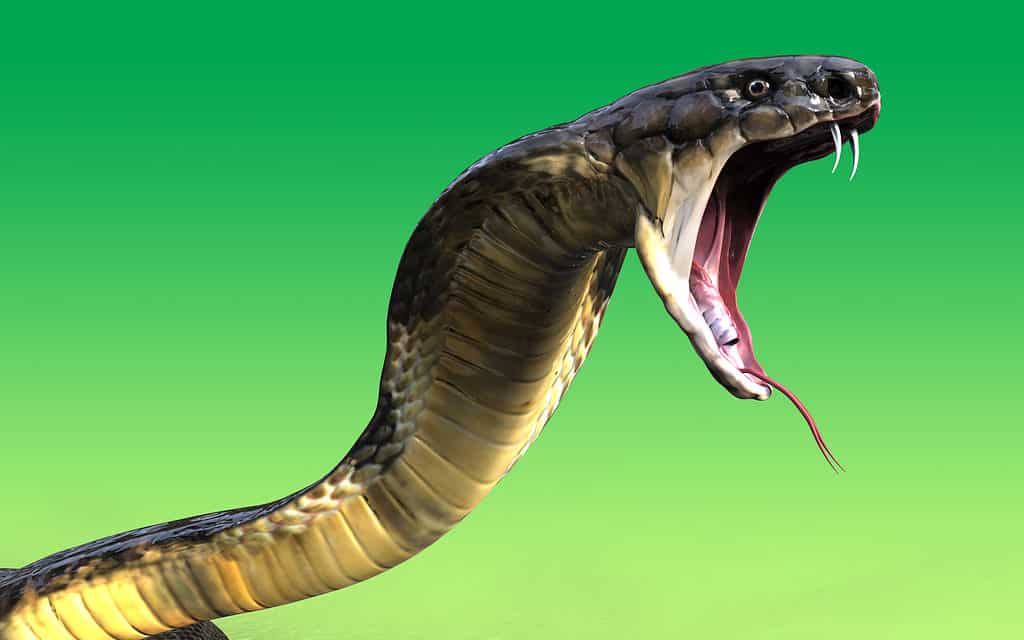
The king cobra is not often mistaken for other snakes. Its sheer size is enough to make an identification, but it has some other key defining features. It can grow up to 18 feet in length, making it the longest venomous snake species in the world. Its coloring ranges between green, brown, and black, with yellow or white chevrons running down its body. It has a cream-colored underbelly that’s lighter than the rest of its scales. What makes the king cobra so iconic is the hood on its head. When threatened, king cobras flare their hoods, making their heads appear larger than they are. It’s an effective intimidation tactic and serves as a warning to anyone getting too close.

©Kurit afshen/Shutterstock.com
Its eyes have round pupils, which is unusual among venomous snake species. The king cobra’s head is oval-shaped, unlike most venomous snakes, which typically have triangular heads. This is due to the muscles on either side of its head that create its hood. On either side of the hood are two dark markings that are visible only when the hood is extended. The jaw of the king cobra is also shorter than that of many snakes. If it were longer, its fangs would constantly stab its lower jaw. These fangs are typically half an inch long and are fixed in place, meaning they do not retract. Rather than curving outward, a king cobra’s fangs curve backward, preventing them from being concealed.
King Cobra: Habitats and Lifestyle
King cobras are found throughout Southeast Asia, including the rainforests in India and Southern China. They’re diurnal, meaning they hunt during the day, which is when people are most likely to find them. Even so, they primarily avoid humans and are not a confrontational species. At night, they retreat to fallen logs or termite mounds after feeding. If undisturbed, a king cobra can live up to 20 years in the wild.
©Mufti Adi Utomo/Shutterstock.com
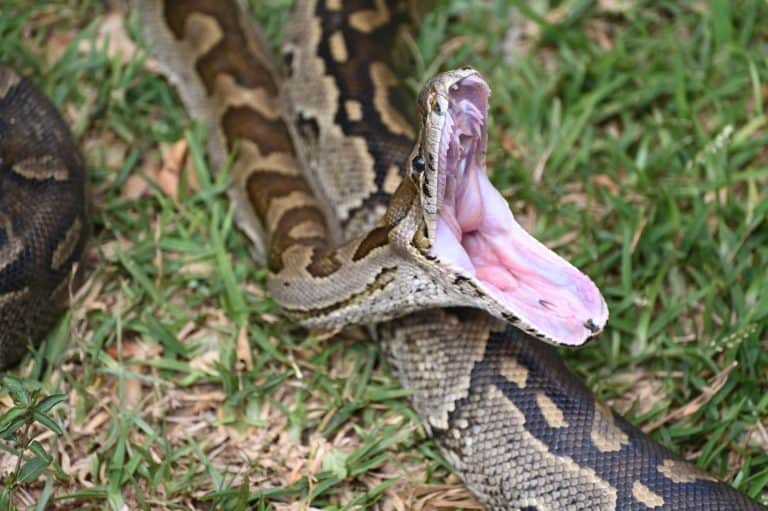
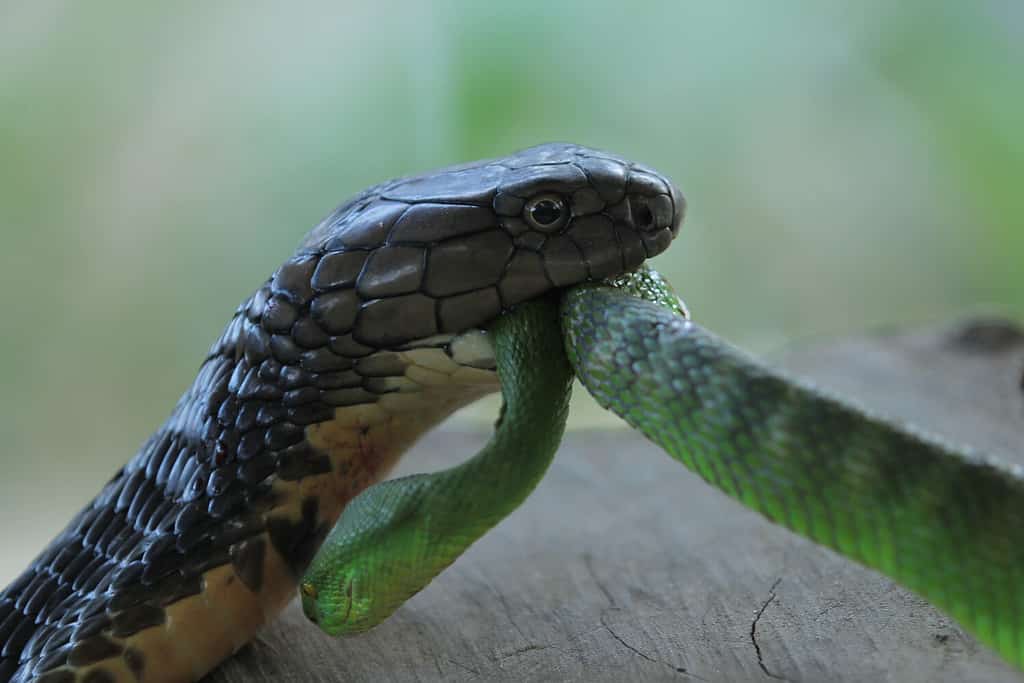
As for the diet of a king cobra, they’re known as “snake eaters.” They frequently prey on other snakes, including cobras, but cannibalism is rare. They prefer pythons and Asian rat snakes. When a king cobra isn’t snacking on other reptiles, it preys on small mammals like rodents and birds. It catches all its prey in the same way: by biting and immobilizing its meal with venom.
King Cobra: How Deadly Is Its Venom?
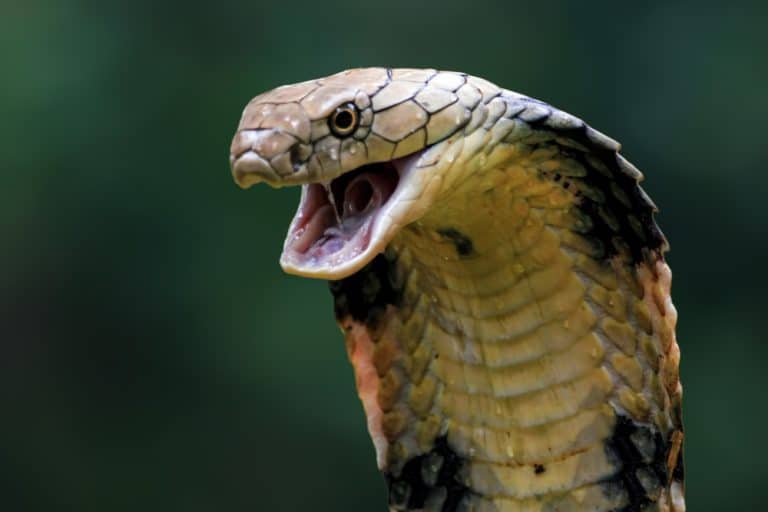
While a king cobra’s venom is enough to kill 11 adult humans, this doesn’t always mean one bite is fatal. This snake also employs a menacing hiss before striking, which is choreographed with a threatening “dance.” King cobras can lift the front half of their bodies into the air and sway, making themselves appear larger. In the animal kingdom, this is more than a fair warning for what happens next.
©mrjo/Shutterstock.com
They can move as fast as 12 MPH, which is faster than many people might think. In a fraction of a second, a king cobra can sink its fangs into its target and inject up to 600mg of neurotoxic and cytotoxic venom. This is the worst-case scenario, and if this happens, a king cobra can kill a human in as little as 30 minutes. Antivenom must be administered immediately for the best chance of survival. However, venomous snakes like the king cobra are strategic about when and how they use their venom. Sometimes, a bite can be a warning strike, otherwise known as a dry bite. If this happens, there will be significant pain, inflammation, and bleeding at the bite site, but no toxin is injected.
Green Mamba: Vibrant and Bold Characteristics
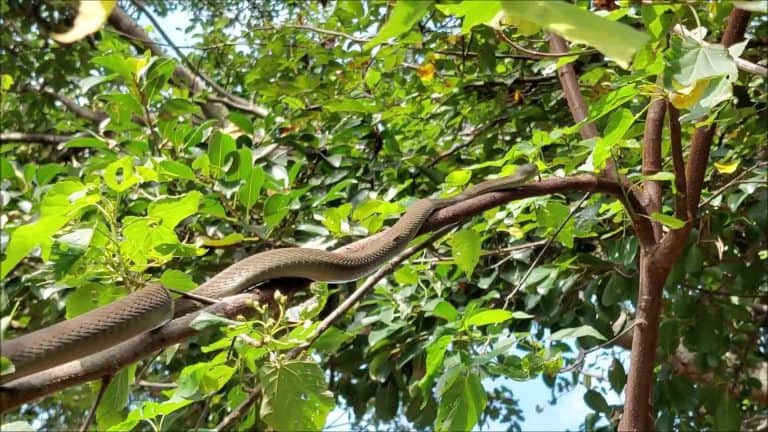
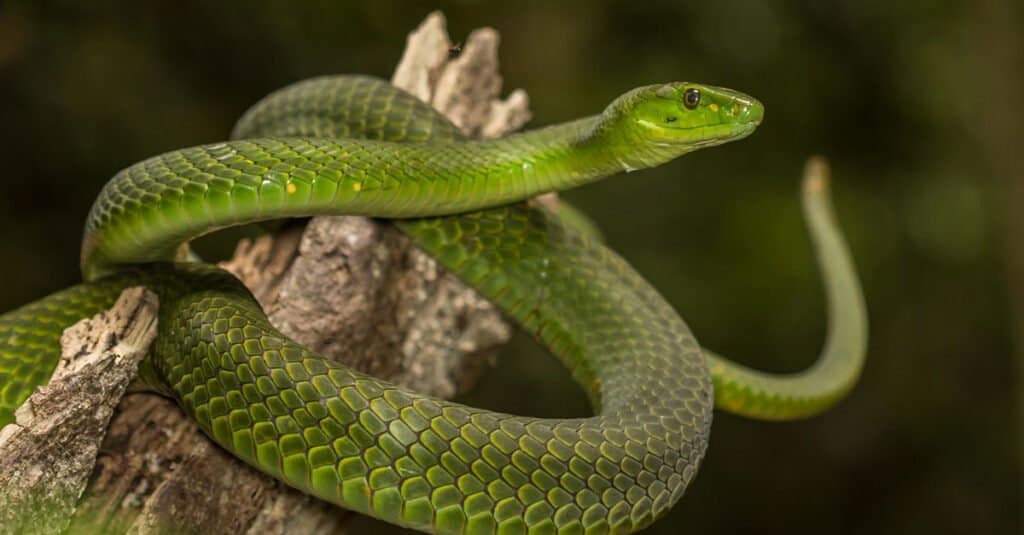
The green mamba is only half the size of the king cobra, but don’t let that fool you. This mamba species is elusive but highly venomous, possessing a neurotoxic venom that targets the respiratory system. Green mambas are known for their vibrant green coloration, which helps them blend into lush vegetation. While rarely seen by humans, they have potent venom and are potentially dangerous.

©Sibons photography/Shutterstock.com
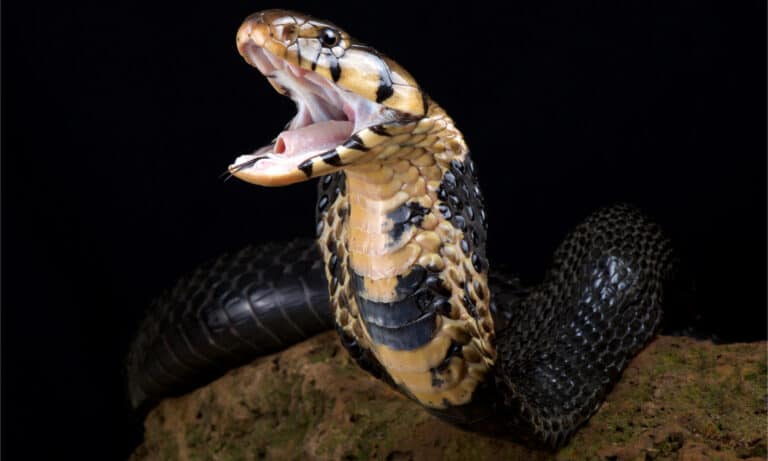
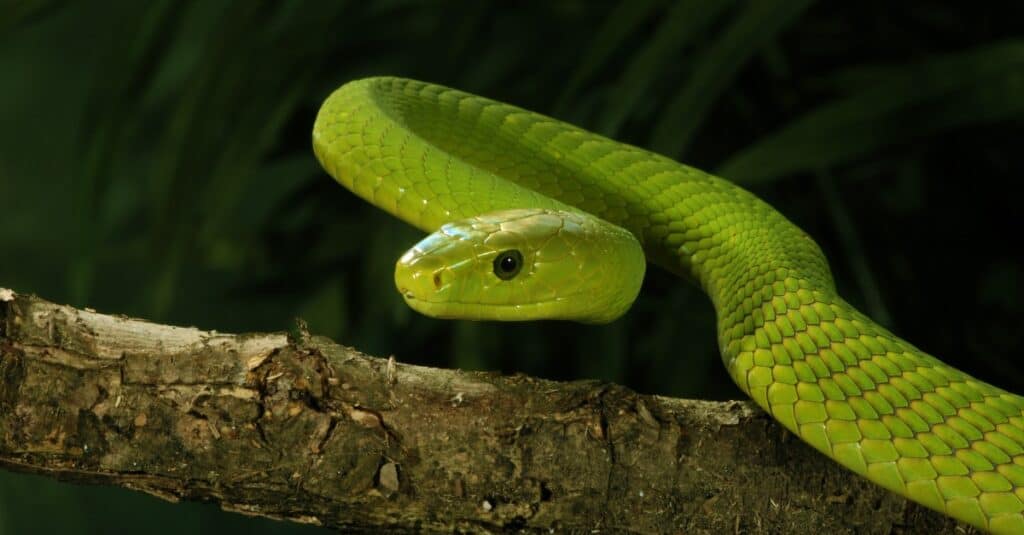
These snakes are easily identified by their bold color. Western green mambas, in particular, have yellow tails and yellow scales on their undersides. As the snakes mature, their color intensifies, eventually becoming a vibrant neon green. Green mambas are tree-dwellers, which means their bodies are long and slender. Although thinner than many other snakes, they are still capable of quick movement and have agility on their side when hunting. The head of this snake is small and narrow, differing from the typical triangular head of western venomous snakes. Its eyes are round and beady, with fangs that are relatively small but large enough to break human skin.
Green Mamba: Habitats and Lifestyle
Western green mambas are native to the forests of West Africa, while the eastern green mamba is native to East and Southern Africa. Unlike the king cobra, the green mamba has several look-alike species, including the green boomslang. These snakes naturally blend in with the vegetation along Africa’s coastline and are rarely seen. They spend their time hunting for small mammals, reptiles, and birds during the day. Green mambas are seldom seen on the ground and prefer to be high up in tree canopies.
©Dylan leonard/Shutterstock.com
In the wild, a green mamba can live up to 18 years. They’re relatively small in comparison to cobras, reaching a total of seven feet at full maturity. As a member of the Elapidae species, this snake can be preyed upon by cobras. However, this is unlikely in West Africa, where the green mamba is the king of the forest snakes.
Green Mamba: How Deadly Is Its Venom?
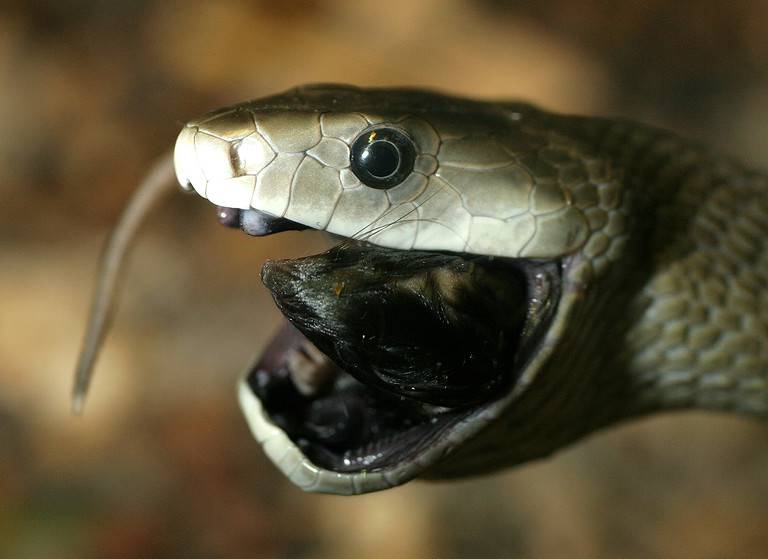
A green mamba’s fangs are roughly 6.5mm but can inject up to 20 drops of venom per fang. This makes it a powerful contender, with a potent venom that can kill a human in only 30 minutes if left untreated. Its venom puts it on par with a king cobra, which can do equal damage in the same amount of time. The neurotoxins in green mamba venom rapidly attack the nervous system, effectively shutting down the respiratory system. Those bitten by this snake’s cousin, the black mamba, may see paralysis anywhere from 10 to 45 minutes post-bite.
©iStock.com/through-my-lens
In contrast to the king cobra, the mortality rate of the green mamba’s victims is high without the use of antivenom. The only way to treat a bite is with antivenom, and this must be administered quickly before paralysis sets in. Excessive bleeding is also a concern with this snake’s bite due to its potent neurotoxin. After antivenom is given, a tetanus shot is often administered as a follow-up precaution.
Similarities and Differences: King Cobra Vs Green Mamba
Both snakes appear very different, but they do share some similarities in certain areas. Their venom classification, behavior, and reclusive nature make them more alike than you might think. Additionally, both of these snakes are among the deadliest in the world. That said, they also differ drastically in their physical characteristics and fang size. Their native locations are also distinct, with each having an advantage in its home territory. They also differ in striking range and aggression level.
| Characteristic | Venom Potency | Difference |
| Physical Appearance | Both snakes have head shapes that differ from the typical triangular shape of most venomous species | King cobras are brown, black, and/or tan; green mambas have bright green coloring |
| Aggression | Both snakes have neurotoxic venom | King cobras are known for dry bites and can cause hematological abnormalities; green mambas can kill a human in only 30 minutes (without treatment) |
| Size | Both snakes are relatively long (7-12 feet) | Green mambas are skinny and agile; king cobras are thick and muscular |
| Hunting Behavior | Both snakes hunt during the day | King cobras are active hunters; green mambas prefer to ambush prey from above |
| Agression | Both snakes avoid humans and prefer to avoid confrontation | King cobras are cautious around humans; green mambas are solitary and elusive |
| Diet | Rodents, birds | King cobras eat other snakes (many venomous); green mambas stick to small mammals |