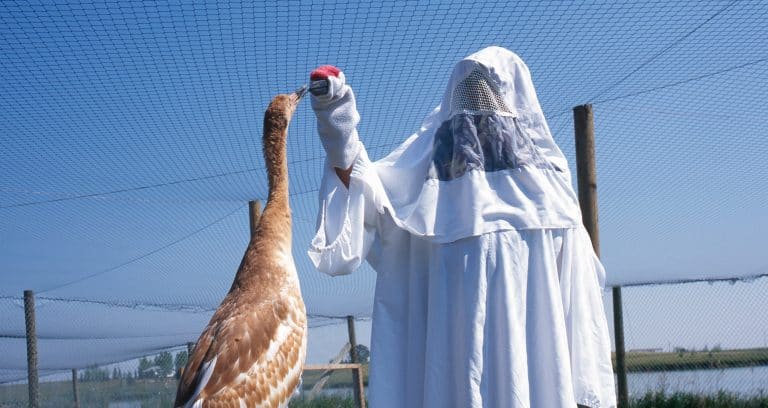

As human expansion continues to encroach on wildlife habitats, interactions between humans and animals are becoming more common. In this YouTube video, a woman unexpectedly encounters a large sandhill crane she affectionately names Carl. After accidentally befriending the bird, Carl “knocks” on the woman’s door to proudly introduce his new chicks.
Sandhill Crane Behavior and Intelligence

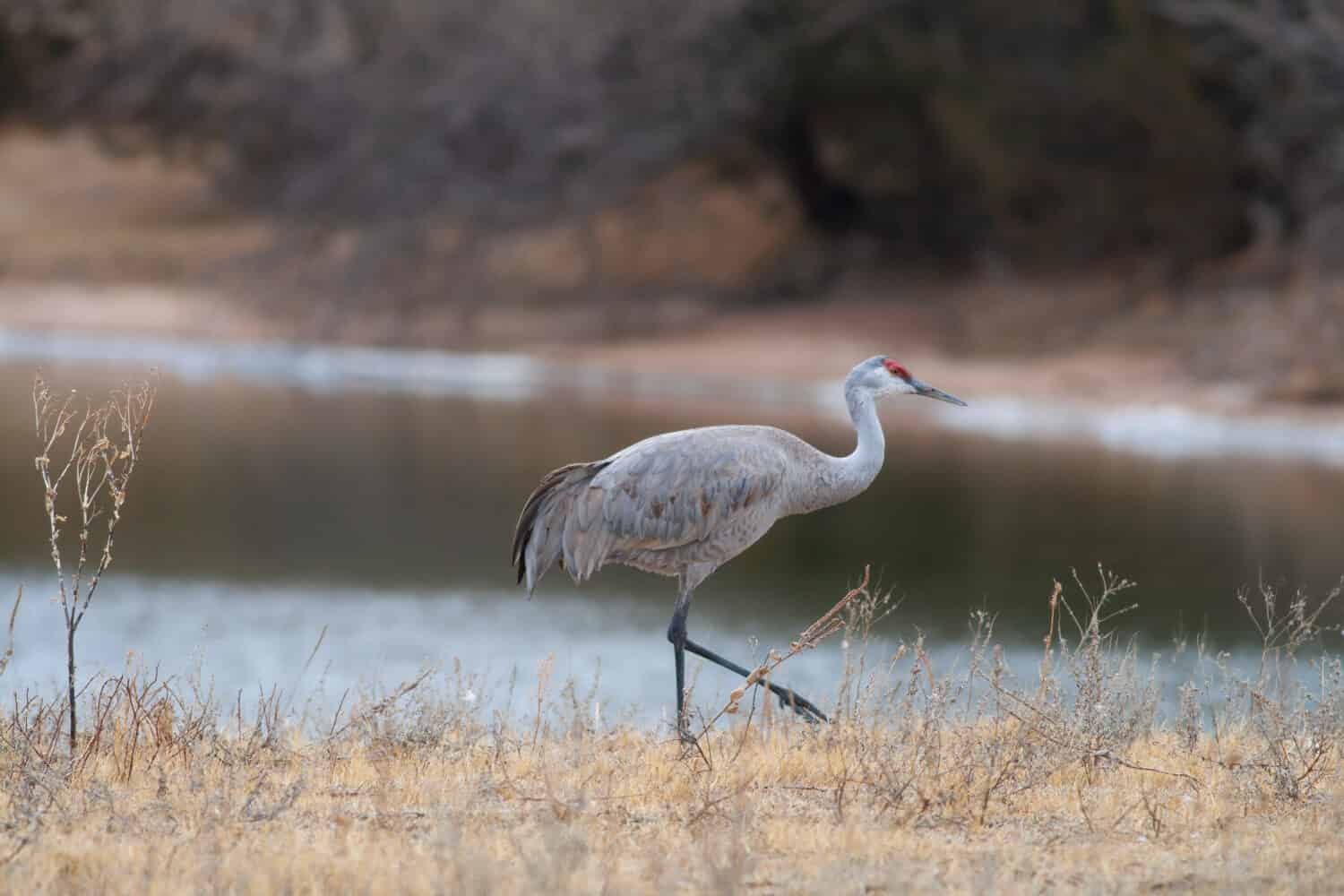
Sandhill cranes live in North America.
©YouTube/The Dodo – Original
Sandhill cranes are intelligent, adaptable, and social birds known for their complex communication and strong bonds. They use a variety of unique vocalizations, some of which can be heard from as far as 2.5 miles away. They also utilize body language to express emotions and strengthen social ties. Their communication involves distinct calls, specific postures, various movements, and intricate dances.
Sandhill cranes also have excellent memories. They readily recall their migratory routes and return to the same nesting sites each year. They are also remarkably adaptable, thriving in diverse environments and quickly adapting to new food sources.
How Cranes Teach and Protect Their Young

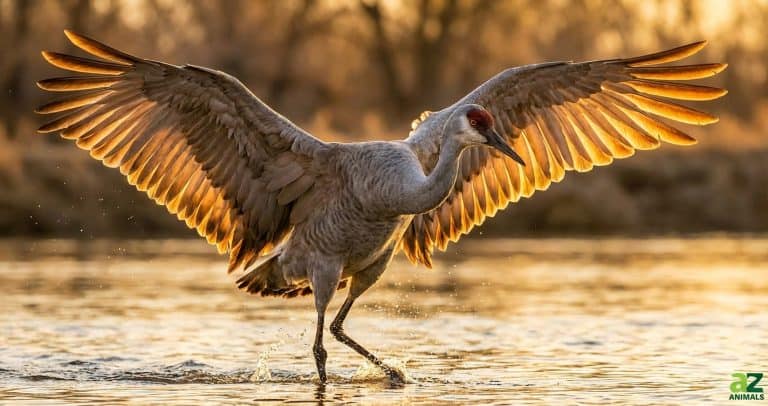
Sandhill cranes can measure 3 to 4 feet tall with a 6 to 7-foot wingspan.
©YouTube/The Dodo – Original
Sandhill cranes can begin breeding at two to three years old, although some may not breed until they are at least seven years old. They select their mates through intricate dances. Once paired, they mate for life and typically remain together or in family groups throughout the year. Sandhill cranes build their nests in open wetland habitats, where the female usually lays two eggs, although often only one chick survives.
Within eight hours of hatching, sandhill crane chicks can walk, leave the nest, and even swim. However, they stay with their parents for nine to ten months, during which time they learn essential survival skills such as foraging, dancing, and flying. Both parents are highly protective and guard their vulnerable young from predators, such as bobcats, crows, owls, coyotes, and raccoons.
Close Encounters with Sandhill Cranes

Sandhill cranes have long, coil-shaped tracheas that allow them to make loud, low-pitched sounds.
©YouTube/The Dodo – Original
The unusual friendship between Carl and his human friend highlights just how intelligent and socially attuned sandhill cranes can be, even across species boundaries. Sandhill cranes communicate with humans and other animals through vocalizations and body language. If you get too close, for example, they might issue a loud alarm call, bob their heads, rear up, stretch their wings, jump, or hunch over and hiss. When curious or familiar humans approach (such as in zoos), they may make soft clucking sounds.
Cranes typically avoid approaching humans, but their intelligence and curiosity can lead them to investigate new areas, especially in regions like Florida, where human development increasingly overlaps with their habitat. As a result, people often spot cranes in suburban areas and on golf courses.
When sandhill cranes become accustomed to humans, it creates significant problems for both parties. These habituated cranes might try to steal food or forage in garbage, which can lead to illness or entanglement. They may also become bolder in their curiosity and foraging, pecking at windows, doors, cars, and even people. Many dig up yards and lawns in search of grubs and crickets, which makes them more vulnerable to domestic cats and dogs, as well as toxic pesticides. As seen in the YouTube video, sandhill cranes also cross roads more frequently in these areas, which increases their risk of being hit by vehicles.
Protecting Sandhill Cranes in Urban Areas

Enormous flocks with hundreds and even thousands of sandhill cranes are often spotted during their migration season.
©YouTube/The Dodo – Original
While seeing cranes up close can be an amazing experience, it’s crucial to remember that they are wild animals. We can unintentionally harm them, sometimes without even realizing it. For their safety and our own, it’s important to:
- Never feed cranes. This harms their health and encourages unhealthy habituation.
- Cover windows, screens, and cars. Cranes are drawn to their reflections, either out of curiosity or seeing the image as a potential rival.
- Install small fences if cranes are damaging your property.
- Accept some pecking and digging in your yard, as it is part of their natural behavior.
- Drive carefully in areas with cranes and watch out for wildlife crossing roads.
- Encourage your neighbors to respect the local wildlife.
Community education is also vital. Informational signs in parks, wildlife crossings, and neighborhood newsletters can help people understand how to avoid feeding and harassing cranes. Even just a little awareness can go a long way in preserving the balance between urban life and wildlife.
By taking these steps, we can help ensure safer coexistence with these magnificent birds, especially as human development continues to expand into their natural habitats.