
Quick Take
- That dead tree in your yard might be hiding something you'd never expect. Removing it without checking first could have serious consequences. Dead trees hide active nests →
- Many people grew up believing that touching a baby bird seals its fate. But that popular belief turns out to be a myth. Get the facts on intervention →
- Finding a baby bird on the ground doesn't automatically mean it needs rescuing, though getting that call wrong has real consequences. Nestling vs. fledgling: know the difference →
- Trimming trees during the wrong time of year could violate federal wildlife protections. Understand the legal protections →
Dead trees often look lifeless, but some of them may be hiding a unique surprise, as a couple in Alabama discovered recently. When they began removing a storm-damaged pine tree, they unexpectedly uncovered a nest with two young pileated woodpeckers. Sadly, one chick did not survive, but the incredible rescue and return of the other chick to the wild serves as an important lesson for homeowners: always check for wildlife before trimming trees or starting outdoor projects.
Storm-Damaged Tree Reveals Baby Woodpeckers
While cutting down a storm-damaged dead pine tree, Tara Sharpe and her husband accidentally uncovered a nest containing two young pileated woodpeckers. Sadly, one chick didn’t survive, but the couple managed to save the other. Although the young bird was already about 12 inches tall, wildlife experts determined it was only a few weeks old — orphaned, starving, and far too young to survive on its own.
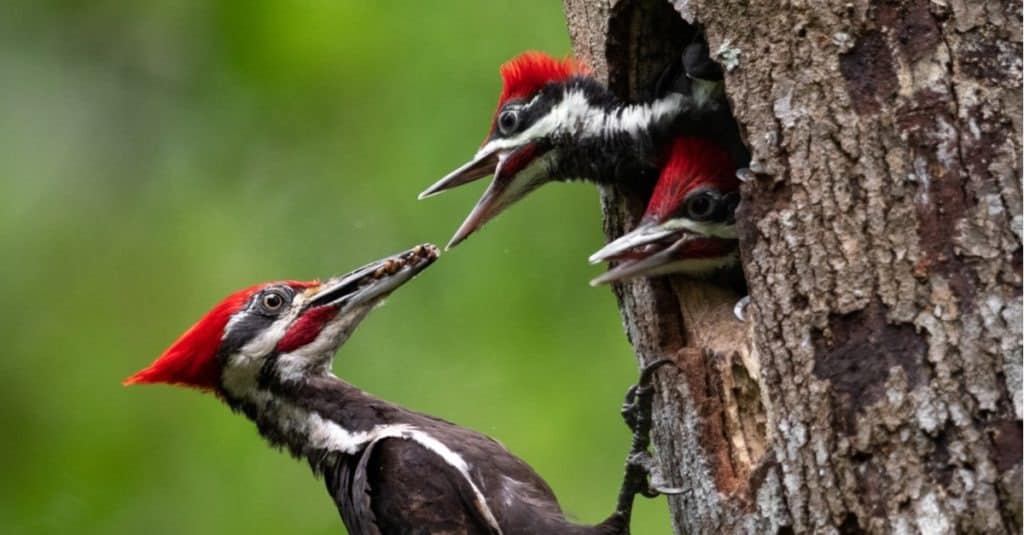
Adult pileated woodpeckers are nearly as large as a common crow.
©iStock.com/Harry Collins
Sharpe contacted the Auburn Raptor Center, which referred her to the Alabama Wildlife Center (AWC). An AWC volunteer drove 250 miles to rescue the fledgling, who was later named “Woody.” Over the next six weeks, Woody received specialized care and learned the skills he would need to survive in the wild.
Nearly two months after his rescue, he was released back onto the Sharpe property and flew successfully into a nearby tree. Inspired by the rescue, Sharpe became an AWC transport volunteer to help other injured wildlife.
Why Woodpeckers Nest in Dead Trees
Unlike many birds, woodpeckers do not build open nests in tree branches. Instead, they peck out deep holes inside tree trunks — especially in dead or dying trees where the wood is soft. The wood chips left behind create a natural cushion for their eggs.

A woodpecker’s skull has a unique anatomical structure that protects its brain from constant, high-impact hammering.
©FloridaStock/Shutterstock.com
Many species create a new nesting hole each year, while others reuse old ones. Once abandoned, these cavities become homes for other wildlife such as bluebirds, swallows, and squirrels.
While homeowners sometimes need to remove damaged trees for safety, these dead trees often contain active nests during the spring and early summer nesting season.
What to Do If You Accidentally Disturb a Nest
If you discover or accidentally disturb a nest, do not panic. In many cases, you can reunite young birds with their parents. First, determine whether the young bird is a nestling or a fledgling. Nestlings have few or no feathers and cannot move on their own. Fledglings have most of their feathers and often hop or climb on the ground while learning to fly.
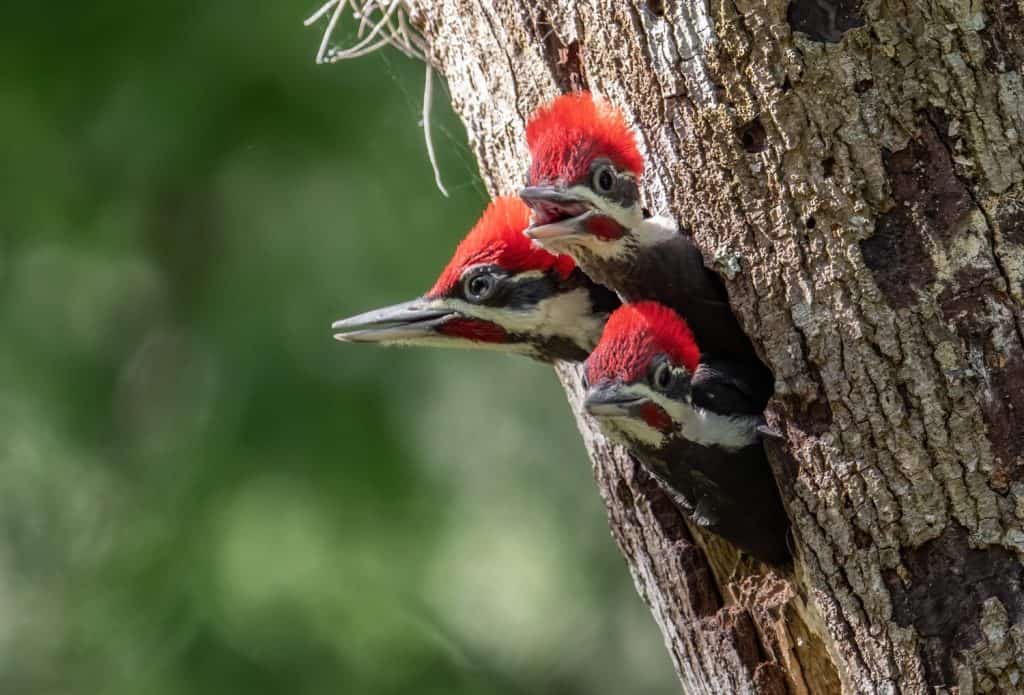
Pileated woodpeckers typically lay three to five eggs at a time.
©Harry Collins Photography/Shutterstock.com
If the bird looks healthy, handle it as little as possible and watch from a distance. Contrary to the popular myth, parent birds will not abandon their young just because a human touched them.
Carefully place healthy nestlings back in their original nest. If the nest is destroyed or unreachable, place the chick in a substitute nest box nearby and watch for the parents to return. In contrast, healthy fledglings usually do not need to be rescued. If they are in immediate danger, you can move them a short distance to a safe tree or shrub and then allow the parents to continue caring for them.
However, if a bird is bleeding, has broken bones, or has been attacked by a cat, contact a licensed wildlife rehabilitator immediately.
Remember: Most Native Birds Are Protected
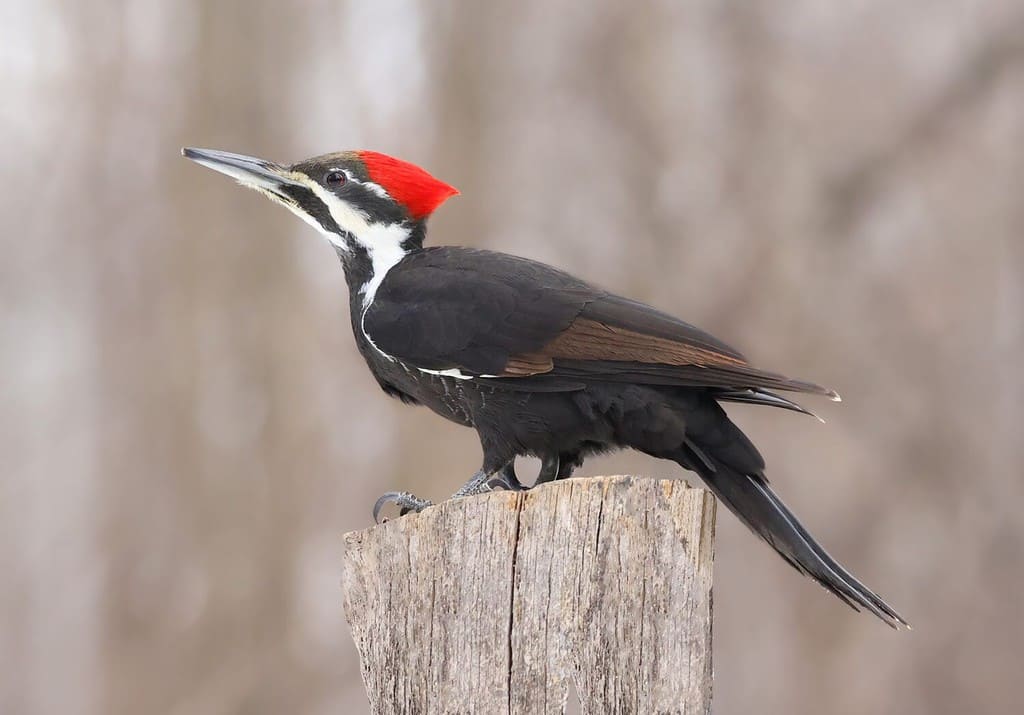
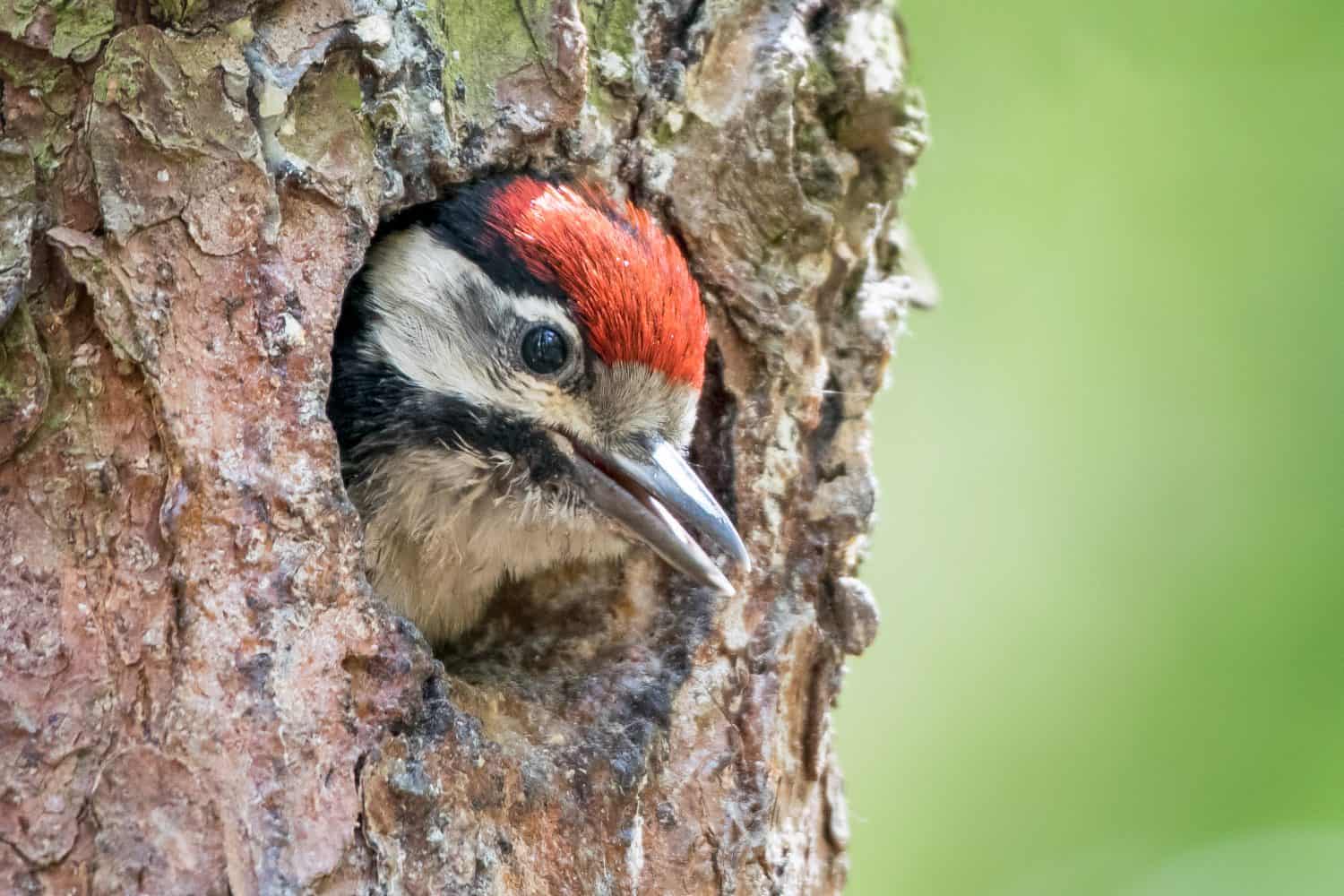
Woodpeckers build nests and find food by using their long, sturdy beaks to hammer into soft wood.
©Vlad G/Shutterstock.com
Nearly all native U.S. birds — including woodpeckers, their nests, and their eggs — are protected under the Migratory Bird Treaty Act. This means you cannot legally move or destroy an active nest.
To keep both people and wildlife safe, try to plan major tree work outside of the spring and summer nesting season. If you do find an active nest during a tree removal or home repair project, pause your work and contact a licensed wildlife rehabilitator or local wildlife agency for guidance.