
Located in southeastern Utah, Arches National Park’s red-rock wonderland is unlike anything else on Earth. Famous for its jaw-dropping stone formations, the park was officially established in November 1971 and now protects 119 square miles of desert beauty. In 2024 alone, nearly 1.5 million visitors came to experience more than 2,000 natural stone arches within the park. Hiking is the park’s number one activity, but visitors can also camp under star-filled skies, watch unique wildlife, and explore the rich cultural history of the landscape.
Beyond its world-famous arches and dramatic cliffs, Arches National Park is brimming with life. Over 400 species of plants and more than 270 kinds of animals call this incredible park home. While many visitors imagine only endless red-rock vistas, the park’s lush riparian corridors, pinyon-juniper woodlands, grasslands, and hardy desert scrublands each support a unique community of wildlife. To help you make the most of your visit, here are the animals you will encounter in Arches National Park!
Foxes
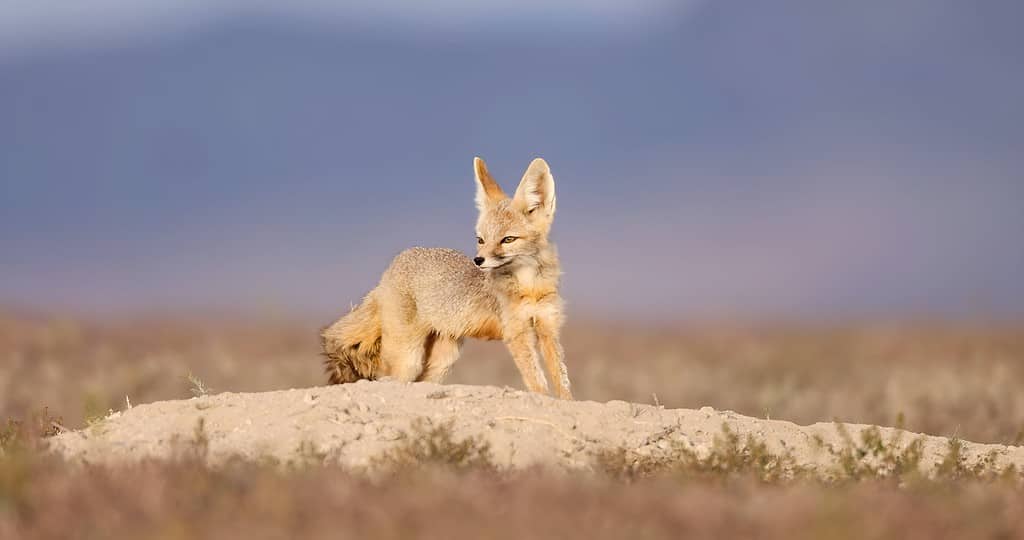
The kit fox only weighs 3 to 6 pounds.
©Swaroop Pixs/Shutterstock.com
Arches National Park is home to two different fox species — but don’t be surprised if you don’t spot them on your visit. These clever little canids are often nocturnal, spending their nights on the move and their days tucked safely out of sight. The common gray fox (Urocyon cinereoargenteus) has a black stripe on its tail and is the only fox in North America that can climb trees. The kit fox (Vulpes macrotis) is the smallest of the bunch and is perfectly built for desert living, with its oversized ears and expert digging skills.
Kangaroo Rats
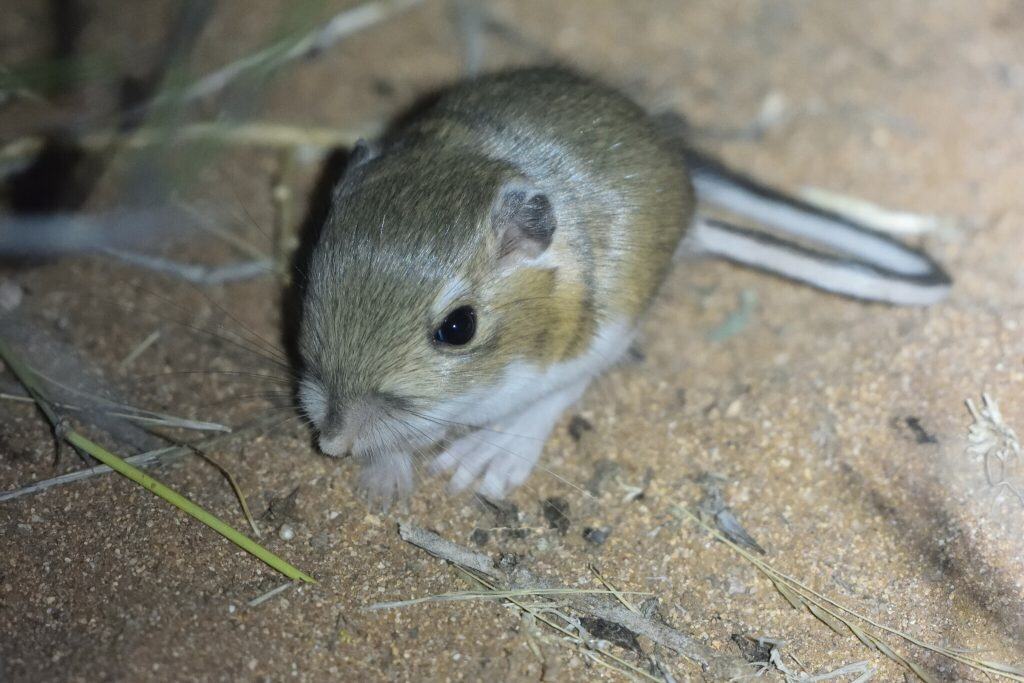
True to their name, kangaroo rats hop around on strong hind legs.
©Juan Cruzado Cortés / CC BY 4.0 / Wikimedia Commons – Original / License
Arches National Park is full of all kinds of rodents, but one of the most intriguing is Ord’s kangaroo rat (Dipodomys ordii). These little desert specialists never need to drink water. Instead, they draw all the moisture they need from the seeds they eat, thanks to their highly efficient organs that help to conserve water and produce “metabolic water.” They tuck their food into their expandable cheek pouches to snack on later or stash away in underground burrows. Kangaroo rats are mostly nocturnal, avoiding the hottest hours of the day.
Mule Deer

It’s common to spot mule deer along the park’s trails year-round.
©Christopher M Hall/Shutterstock.com
Mule deer (Odocoileus hemionus) is one of the most frequently seen large mammals in Arches National Park. True to their name, these deer have oversized, mule-like ears that help them detect even the slightest sounds. They are most active at dawn and dusk, when they venture out to graze on grasses, shrubs, and woody plants.
Desert Cottontails
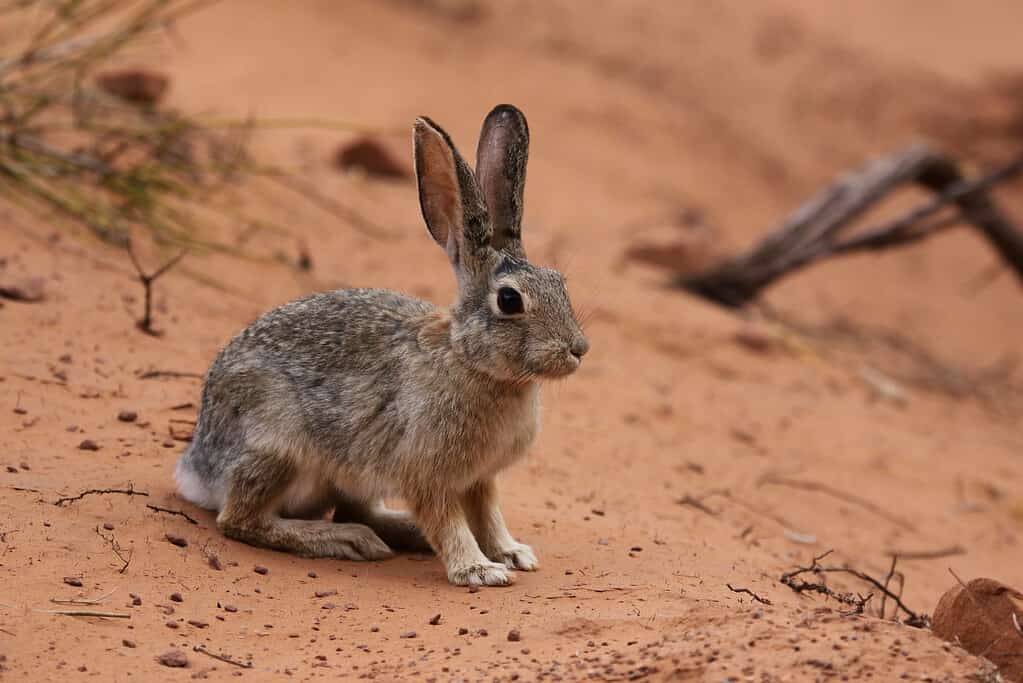
Desert cottontails can run at speeds of up to 20 miles per hour when startled.
©Chris Hill/Shutterstock.com
The desert cottontail (Sylvilagus audubonii) is one of the more familiar faces in Arches National Park. These cute rabbits are easy to recognize by their long ears and the fluffy white fur beneath their tails — the “cotton ball” that gives them their name. Most active in the cooler hours of dawn and dusk, cottontails prefer areas with thicker vegetation, and they are especially common near the Arches Visitor Center.
Black-Tailed Jackrabbits
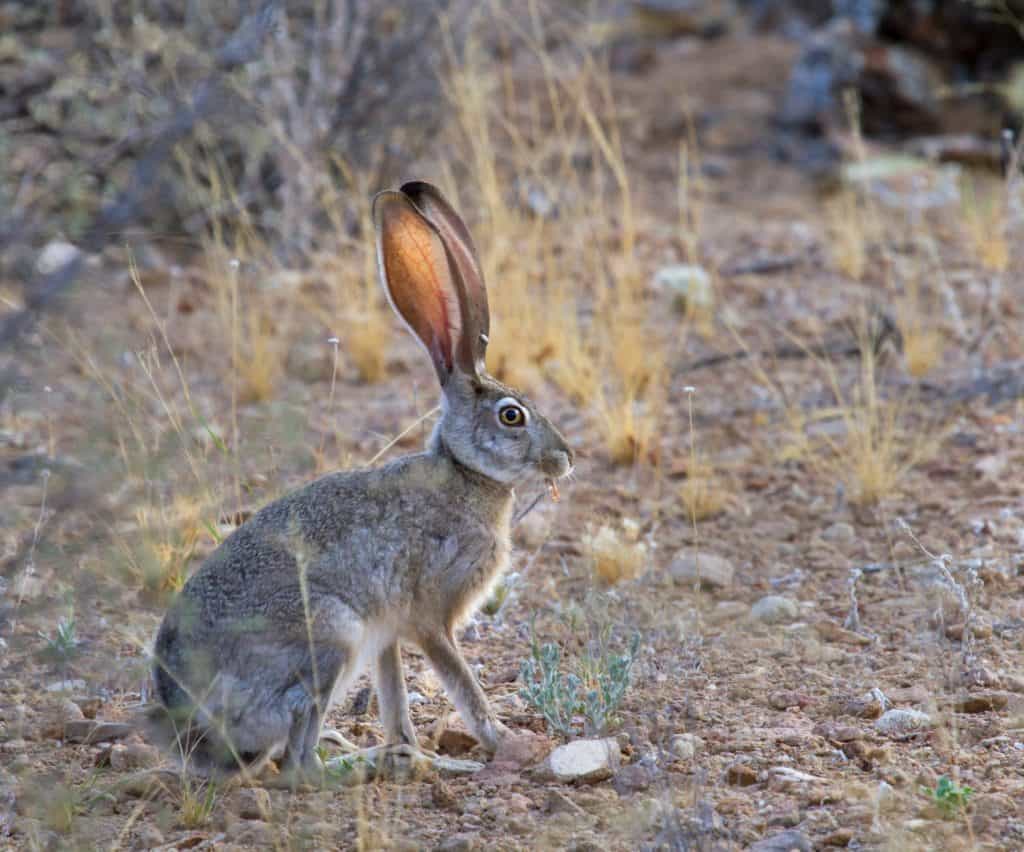
A black-tailed jackrabbit’s ears are 6 to 7 inches tall.
©Natalia Kuzmina/Shutterstock.com
Larger than their cute cottontail cousins, black-tailed jackrabbits (Lepus californicus) are also familiar residents of Arches National Park. These long-legged hares can grow up to two feet long with black markings on the tops of their tails. Their powerful hind legs make them excellent runners, and their enormous ears help them detect the faintest sounds of predators. Jackrabbits are most commonly seen in open areas of the park, especially at night or during the cooler hours of dawn and dusk.
Bats
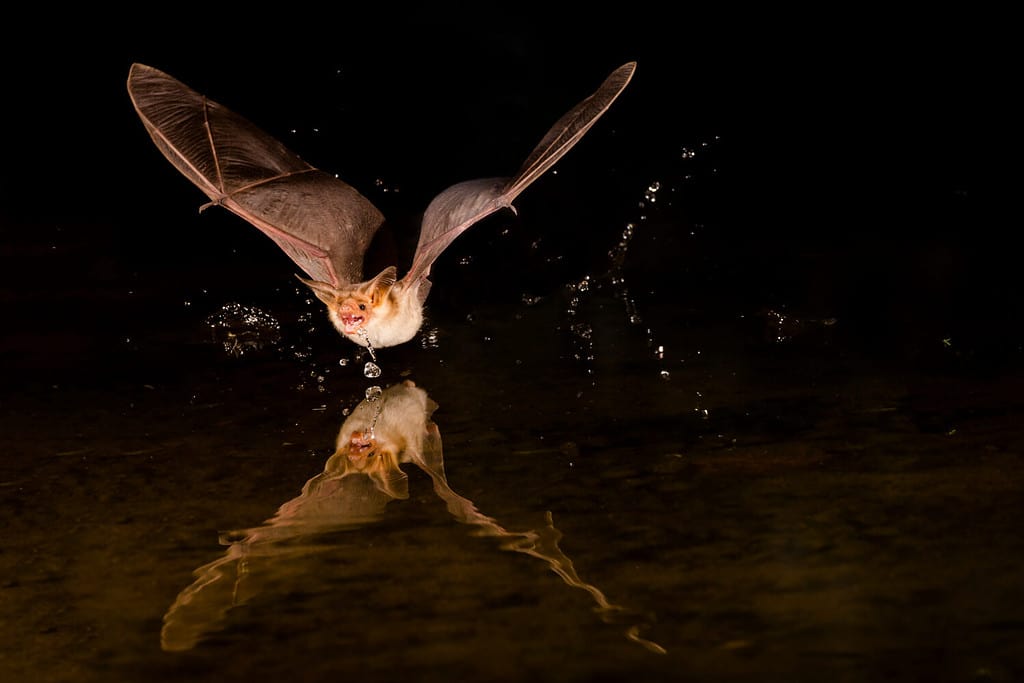
Most bats have great eyesight, despite their use of echolocation.
©Danita Delimont/Shutterstock.com
Utah is home to 18 species of bats, many of which are regular residents of Arches National Park. Being nocturnal, bats are rarely seen during the day. However, their dark silhouettes and high-pitched calls are often heard at night. One of the most common species in the park is the California myotis (Myotis californicus), which often roosts in caves, rock crevices, and even buildings. The pallid bat (Antrozous pallidus) has a large pale body and can be found near rocky cliffs, water sources, hollow trees, and crevices. The canyon bat, or western pipistrelle (Parastrellus hesperus), is a tiny creature, measuring only 2 to 3 inches long.
Antelope Squirrels
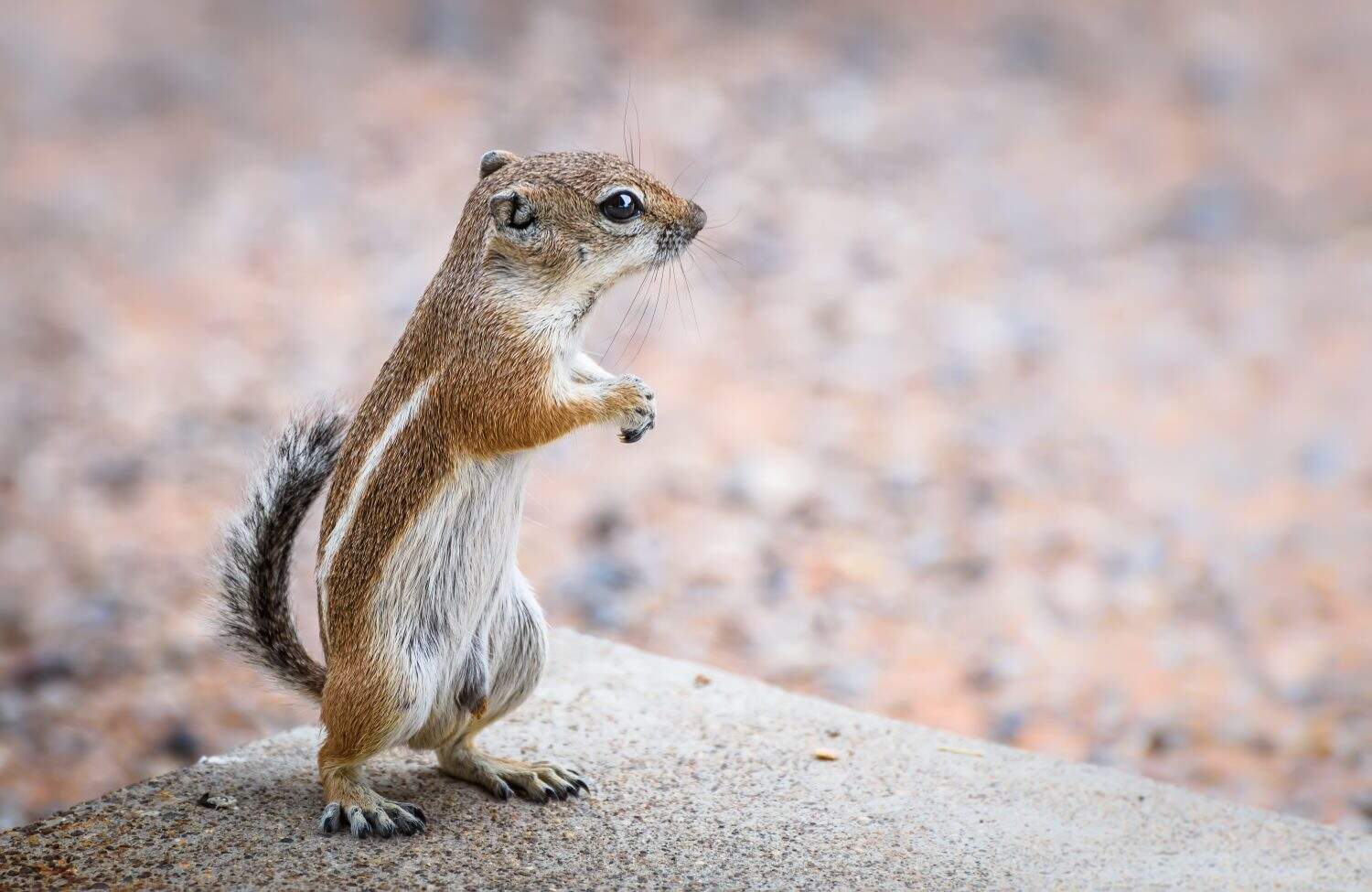
Unlike chipmunks, antelope squirrels don’t have a stripe on their heads.
©viktorio/Shutterstock.com
The white-tailed antelope squirrel (Ammospermophilus leucurus) is a charming resident of Arches National Park. These little striped acrobats are often spotted scurrying across rocks or shrubs, snacking even in broad daylight. When it gets too hot, they retreat to underground burrows or sprawl flat in the shade to cool off.
Coyotes
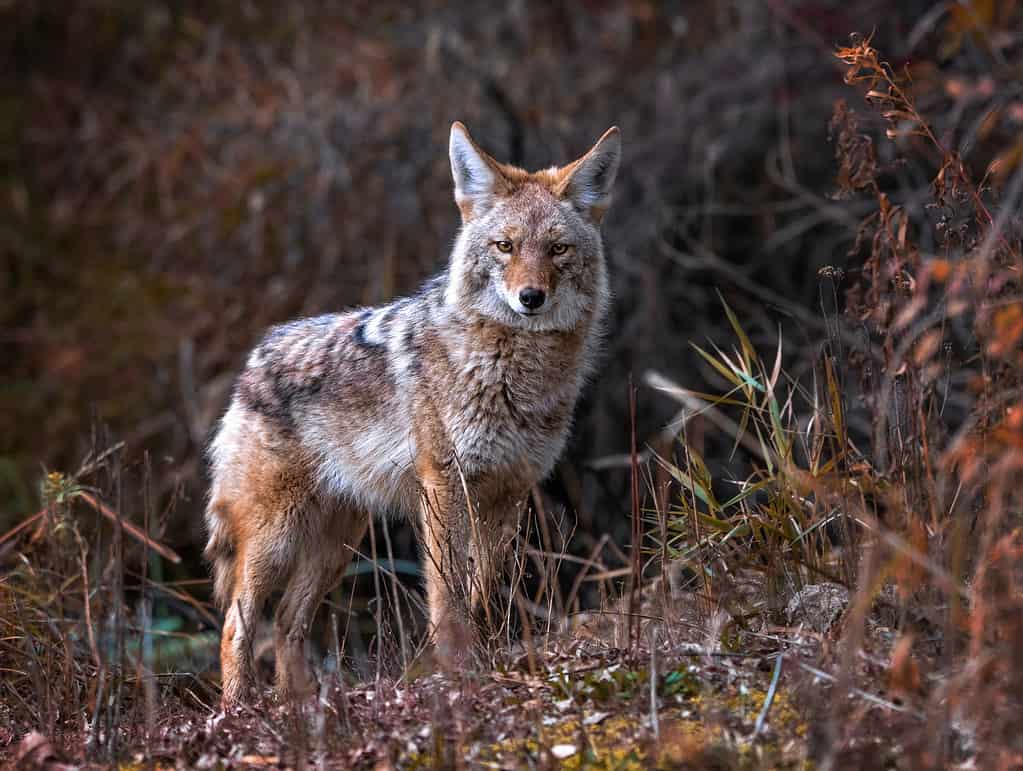
In southern Utah, coyotes typically stand about 2 feet tall at the shoulder.
©graphicphoto/iStock via Getty Images
An important predator in Arches National Park is the coyote (Canis latrans). Coyotes have long, pointed muzzles, large ears, and reddish to grayish-brown fur topped with a bushy black-tipped tail. In Arches, they tend to be most active at night, dawn, or dusk to avoid the desert heat. While sightings are relatively rare, the unmistakable howls and yips of coyotes can often be heard echoing across the park.
Rock Squirrels

Utah’s rock squirrels are usually around 10.5 inches long, with 8-inch-long tails.
©Angel DiBilio/Shutterstock.com
Rock squirrels (Otospermophilus variegatus) are some of the park’s most common residents, with large, furry bodies and long, bushy tails. True to their name, these ground squirrels love rocky terrain — boulder-strewn slopes, cliffs, and canyon walls are some of their favorite hangouts. Measuring 17 to 21 inches long, rock squirrels are active during the day and love to climb.
Songbirds
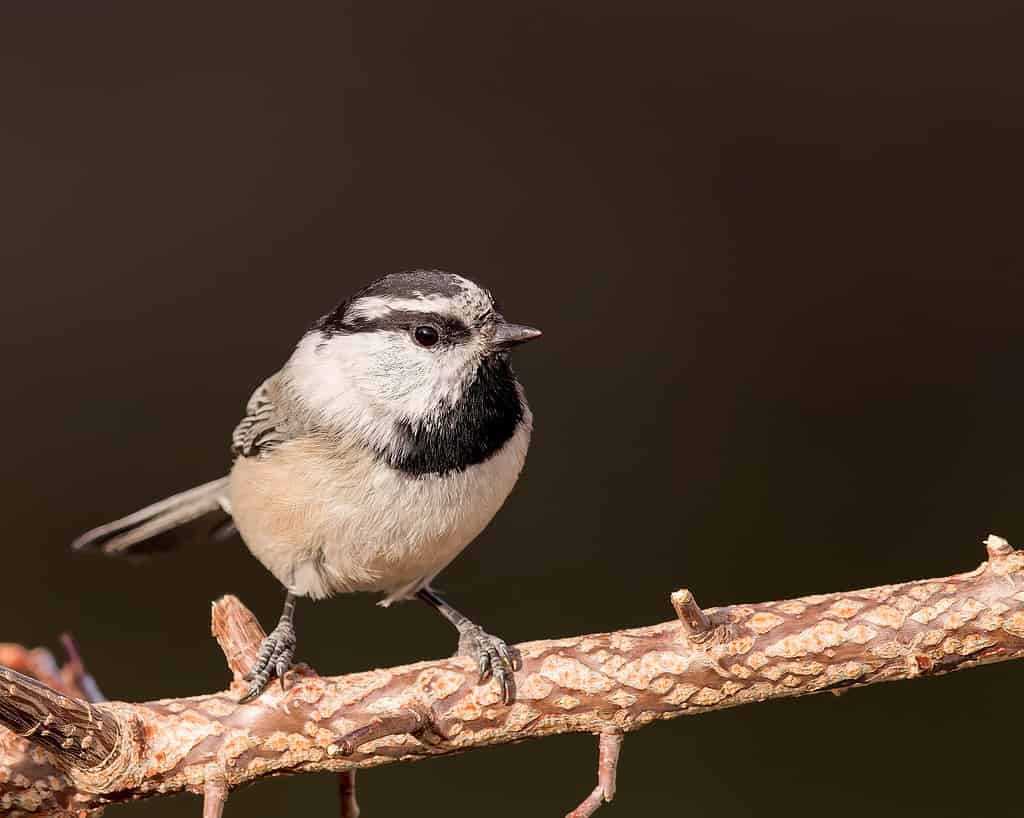
Chickadees can often be heard in the mornings in Arches National Park.
©M. Leonard Photography/ via Getty Images
In the spring and summer, Arches National Park comes alive with the songs of American robins (Turdus migratorius), goldfinches (Spinus), barn swallows (Hirundo rustica), blue grosbeaks (Passerina caerulea), and spotted towhees (Pipilo maculatus). Winter ushers in a different chorus, with black-capped chickadees (Poecile atricapillus) greeting the mornings alongside canyon wrens (Catherpes mexicanus), mountain bluebirds (Sialia currucoides), juncos (Junco hyemalis), and horned larks (Eremophila alpestris).
Songbirds are most common in areas with abundant vegetation. Pinyon-juniper woodlands are favored by species like juniper titmice, scrub jays, and black-throated gray warblers, while open grasslands attract birds such as meadowlarks and black-throated sparrows.
Ringtails
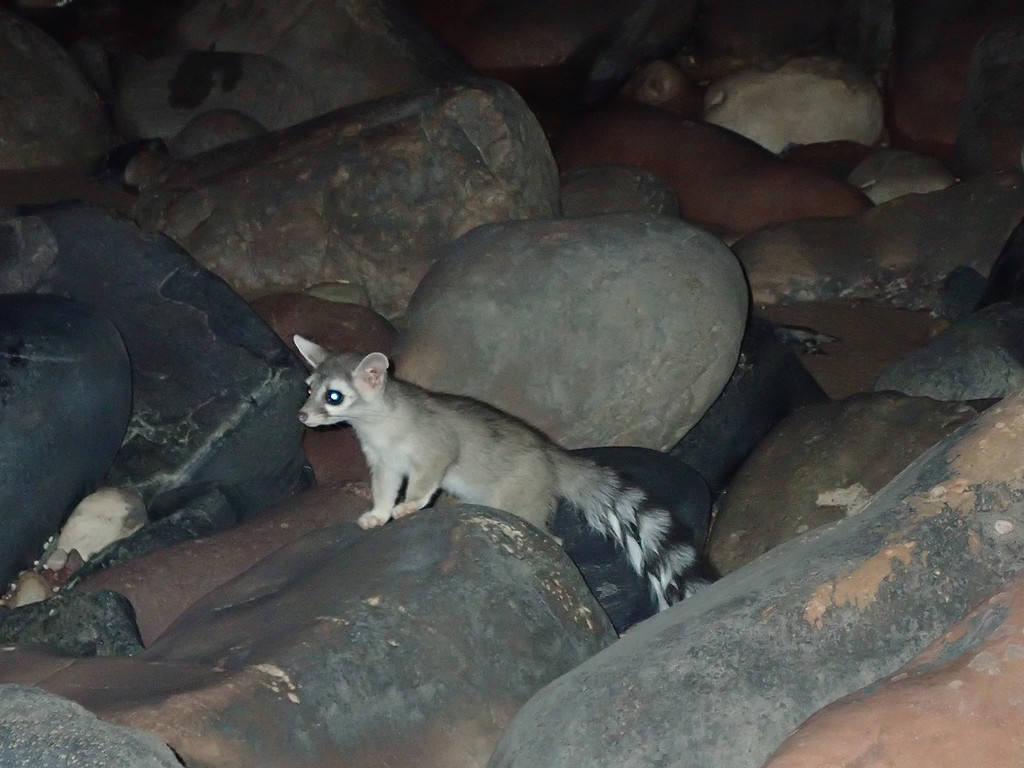
Though often called ringtail cats, these curious little creatures are not cats at all.
©lorentrager/iStock via Getty Images
Weighing only around 2 pounds, ringtails are nimble nocturnal hunters with a rather varied diet. In the summer and fall, they forage for plants and insects. In the winter, they hunt birds and small mammals like squirrels, mice, and woodrats. They are most active at night and avoid the bright sunlight, slipping silently through rocky areas near water. Ringtails are restless by nature. They rarely stay in one spot for more than a few days, which makes spotting one a rare and special treat.
Snakes
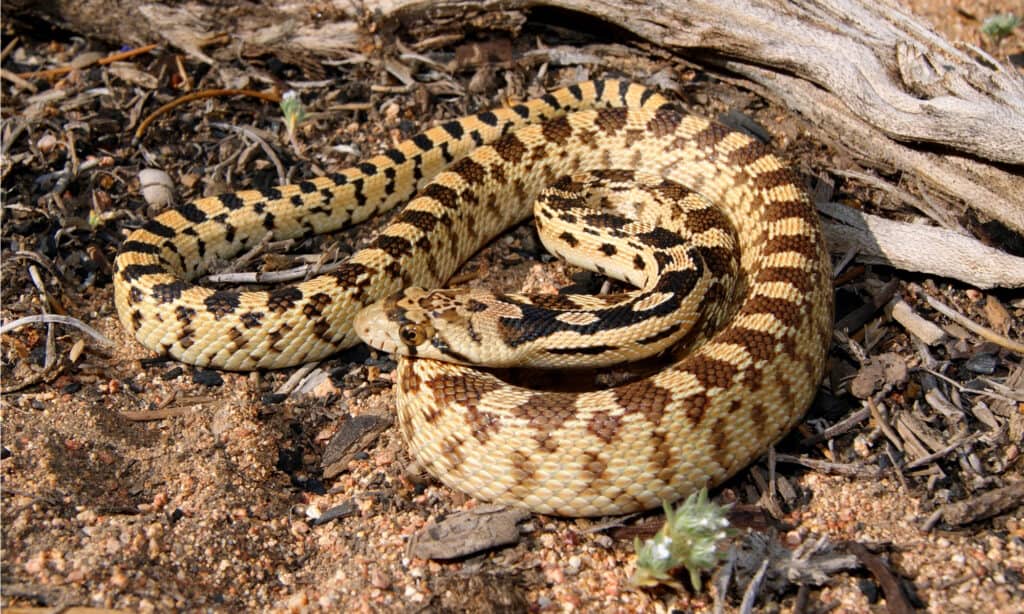
Gopher snakes have oval-shaped heads, whereas rattlesnakes have distinct triangular heads with thin necks.
©Matt Jeppson/Shutterstock.com
Arches National Park is home to several snake species, most of which are completely harmless to humans. The only dangerously venomous resident is the midget-faded rattlesnake (Crotalus concolor), a small, nocturnal species rarely seen during the day. In contrast, visitors often spot Great Basin gopher snakes (Pituophis catenifer deserticola), which can grow anywhere from 3 to 8 feet long. Some look startlingly like rattlesnakes — but don’t worry, they are perfectly harmless. Gopher snakes are quite clever and even mimic rattlesnakes by rattling their tails, though their sound comes from hissing, not an actual rattle.
Desert Bighorn Sheep
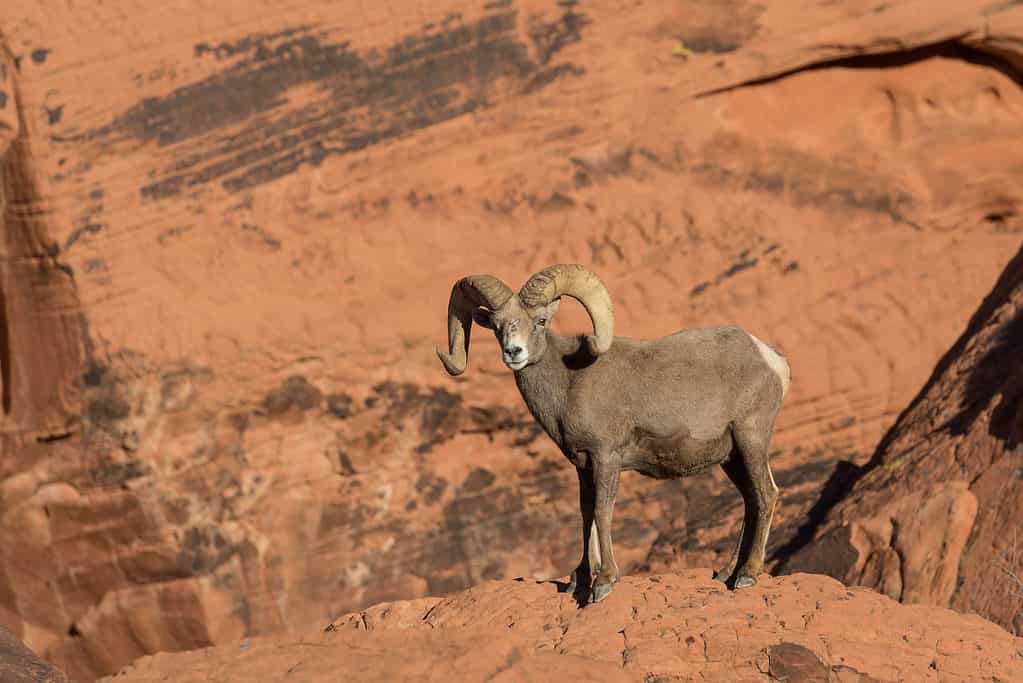
Desert bighorn sheep usually stick to the steepest, most rugged rocky areas.
©iStock.com/twildlife
Lucky hikers in Arches National Park may occasionally spot desert bighorn sheep (Ovis canadensis). These impressive mammals are among the largest you might encounter in the park, but their numbers are small and sightings are rare. After a major population decline, biologists began relocating individuals from healthy herds in nearby Canyonlands. Today, Arches is home to a small but vulnerable population of bighorn sheep. Early mornings and late evenings are the best times to spot them, often along the Colorado River corridor at the park’s southeastern boundary.
Lizards
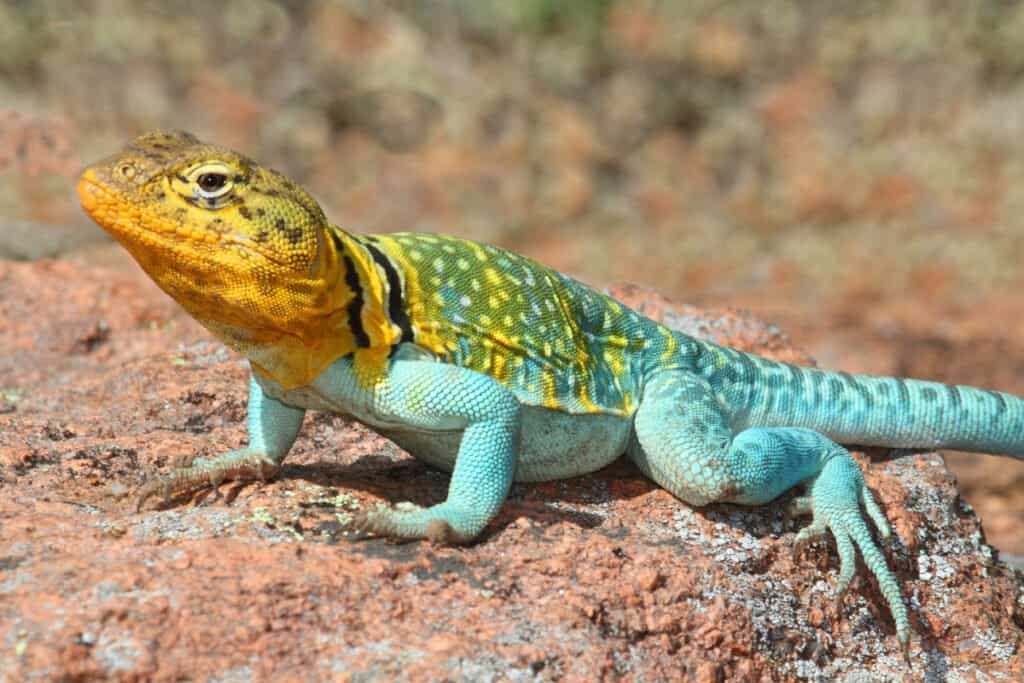
Male collared lizards have bright, colorful skin.
©iStock.com/SteveByland
Lizards are some of the most common — and entertaining — wildlife you’ll see in Arches National Park, especially during the summer. They can often be spotted basking on sun-warmed rocks or darting across dusty trails. The park is home to several species, including collared lizards (Crotaphytus collaris), plateau fence lizards (Sceloporus tristichus), desert spiny lizards (Sceloporus magister), and ornate tree lizards (Urosaurus ornatus). One of the park’s most unusual residents is the plateau striped whiptail lizard (Aspidoscelis velox). Remarkably, this species consists entirely of females.
Ravens
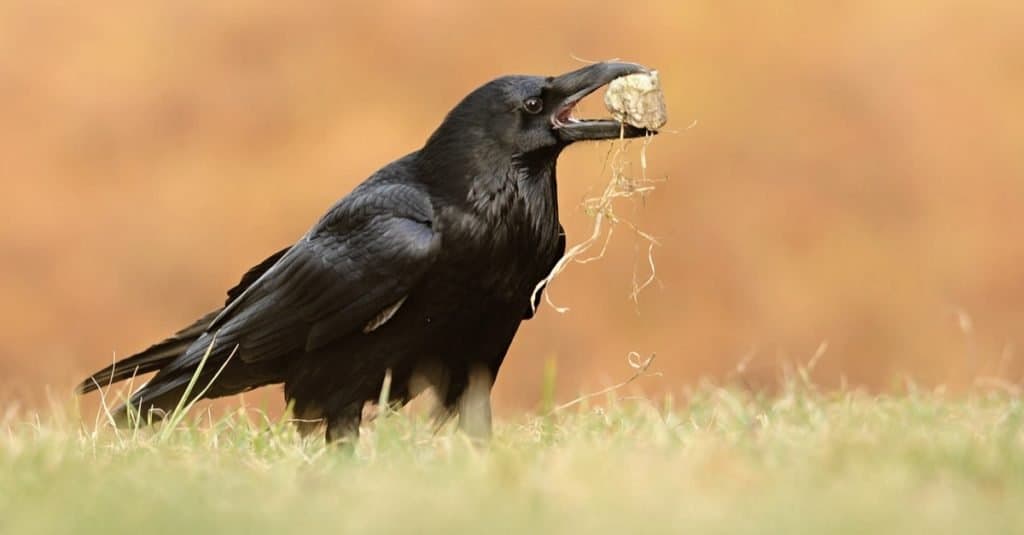
Common ravens will sometimes use tools or play with objects just for fun.
©Michal Pesata/Shutterstock.com
You can find ravens (Corvus corax) soaring, strutting, and squawking their way through Arches National Park year-round. These bold, fun-loving birds thrive in nearly every corner of the park. You’ll often hear their distinctive (and very loud) calls before you see them. Known for their remarkable intelligence, ravens are clever problem-solvers. However, their curiosity has a mischievous side: ravens are notorious for raiding camping gear, pecking at cars, and breaking into coolers.
Chipmunks
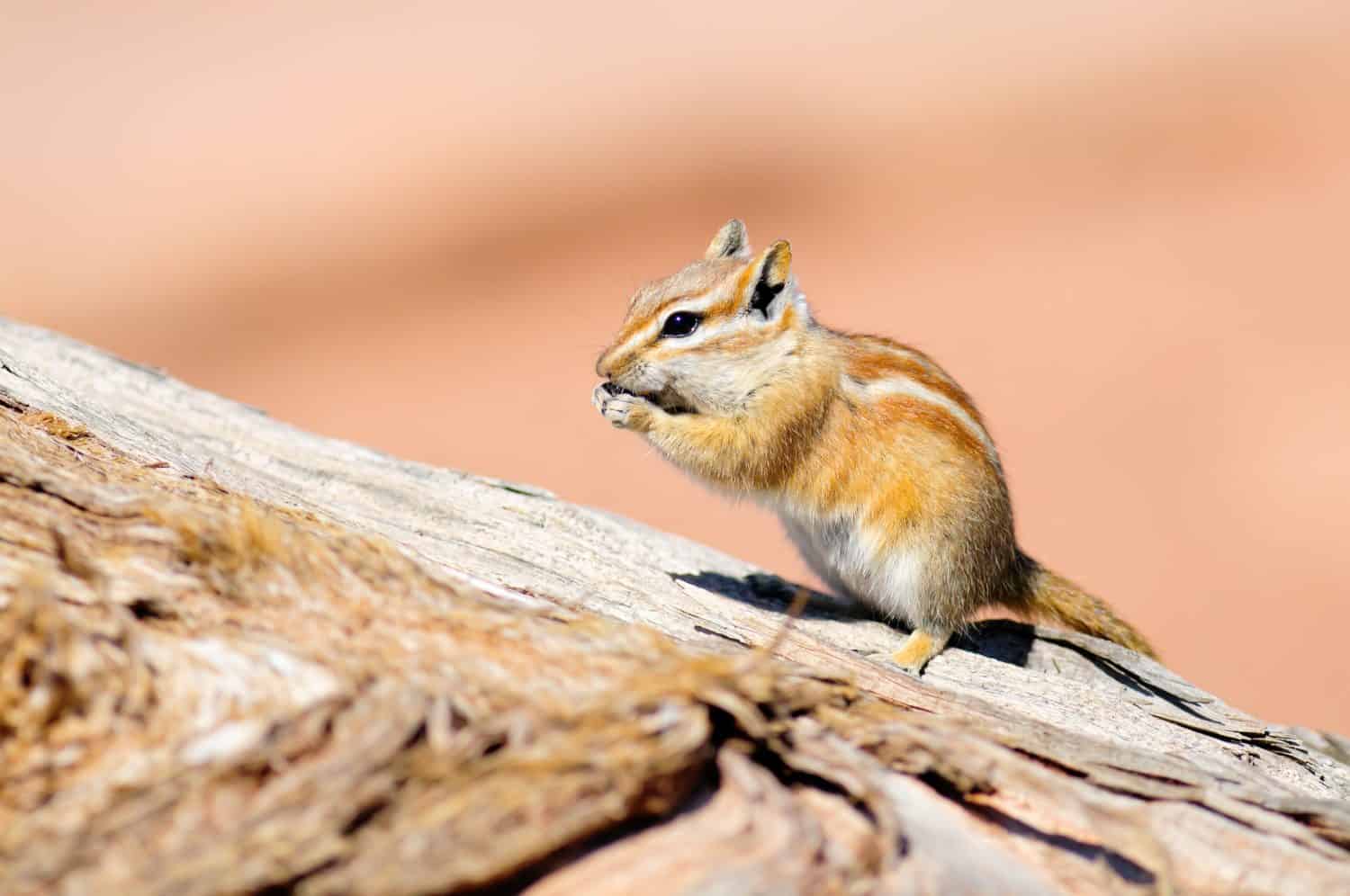
You can often spot Hopi chipmunks darting in and out of rocky crevices and scurrying across boulders and cliffs.
©kojihirano/Shutterstock.com
The Hopi chipmunk (Neotamias rufus) is a tiny but lively resident of Arches National Park. With their reddish-brown fur and bold stripes, these little speedsters are perfectly camouflaged against the park’s red rock scenery. Though they’re active during the day, the desert heat means most sightings happen in the cooler mornings and evenings when the chipmunks forage and explore.
Porcupines
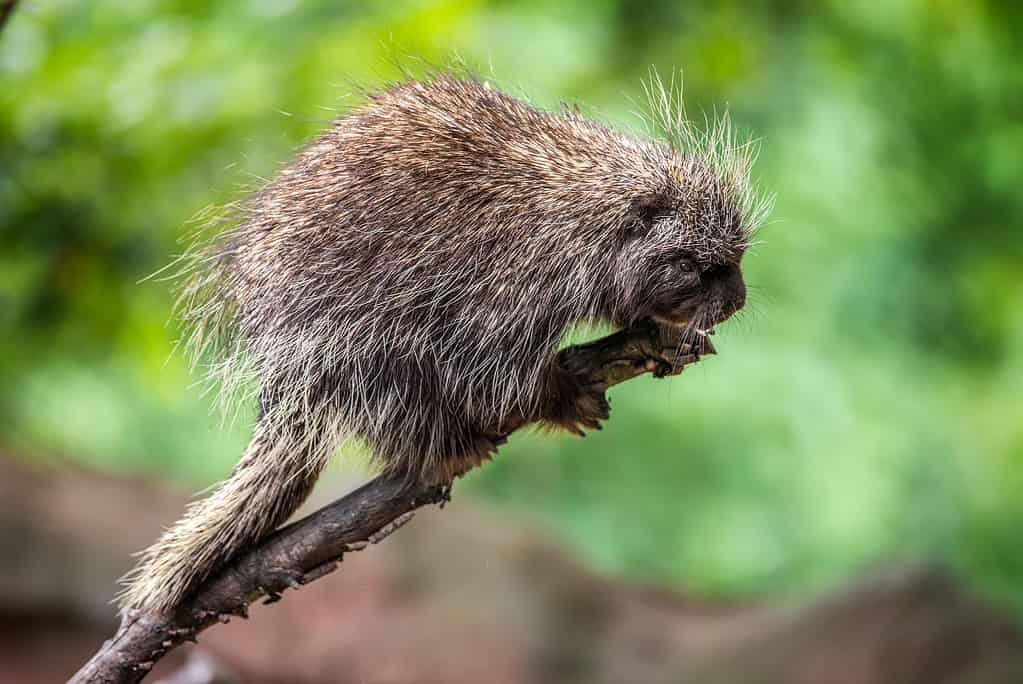
North American porcupines are excellent climbers.
©miroslav_1/iStock via Getty Images
North American porcupines (Erethizon dorsatum) are shy, nocturnal residents of Arches National Park, which means spotting one is a special treat. These prickly climbers are surprisingly agile. They can scale trees up to 30 feet tall in search of food or shelter. If you’re lucky, you might catch sight of a porcupine along a park road or nestled in a cottonwood tree during the cooler months of fall and winter.
Birds of Prey
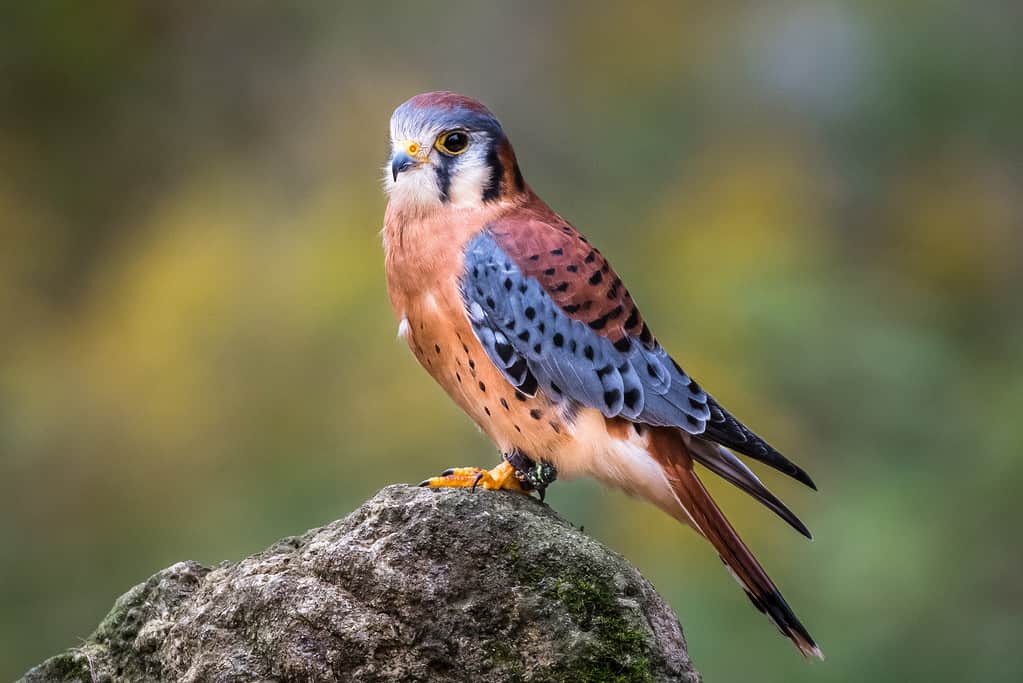
Male American kestrels have blue and reddish-brown plumage.
©Katie Duncan-Burt/iStock via Getty Images
Arches National Park is home to several impressive birds of prey. Peregrine falcons (Falco peregrinus), for example, nest high on cliff faces and in shallow caves that are nearly impossible for humans to reach. If you’re lucky, you might catch one darting swiftly across the sky or perched on a rocky ledge. The smaller American kestrel (Falco sparverius) is not much bigger than a songbird. This tiny falcon can hover in place, appearing to float on the wind. On rare occasions, you might even spot golden (Aquila chrysaetos) or bald eagles (Haliaeetus leucocephalus) soaring overhead, or catch a glimpse of a burrowing owl (Athene cunicularia) in nearby grasslands. Turkey vultures (Cathartes aura) often circle on hot desert air currents above.
Woodrats (Packrats)
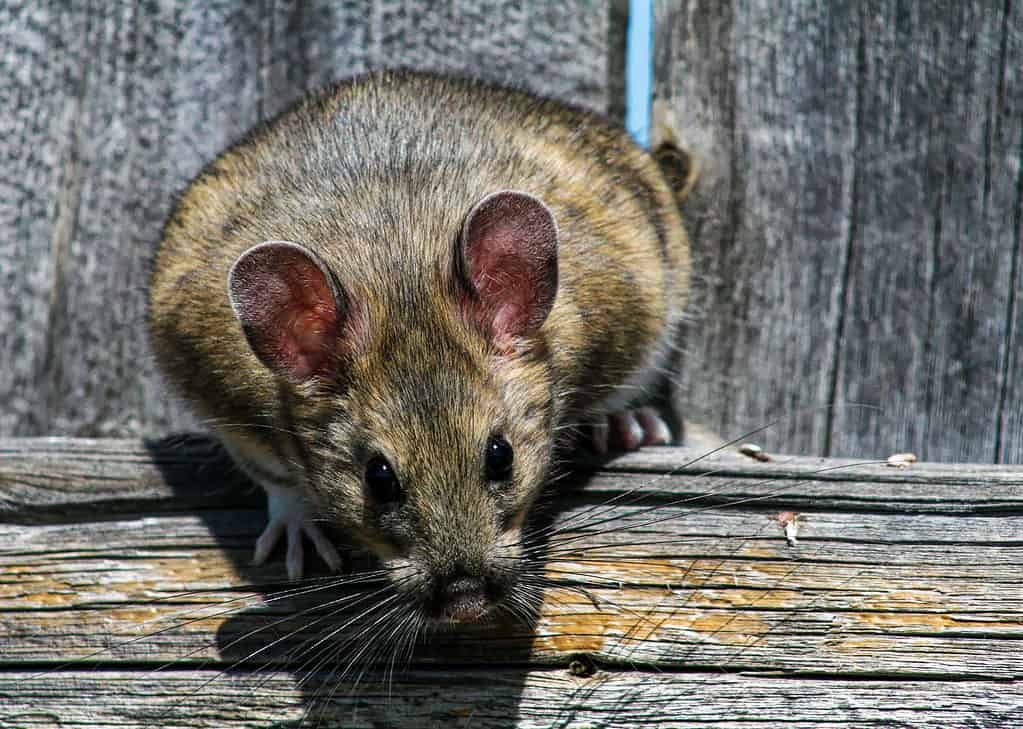
Bushy-tailed woodrats are found in North America and enjoy living in or around rocky places.
©M. Leonard Photography/Shutterstock.com
Bushy-tailed woodrats (Neotoma cinerea) are easy to recognize by their large ears and fluffy tails. Their close cousin, the desert woodrat (Neotoma lepida), looks similar but lacks that signature furry tail. Sometimes woodrats are called “packrats” because of their quirky habit of collecting random objects—anything from twigs and leaves to shiny or unusual items—and stashing them in their burrows.
Frogs, Toads, and Salamanders
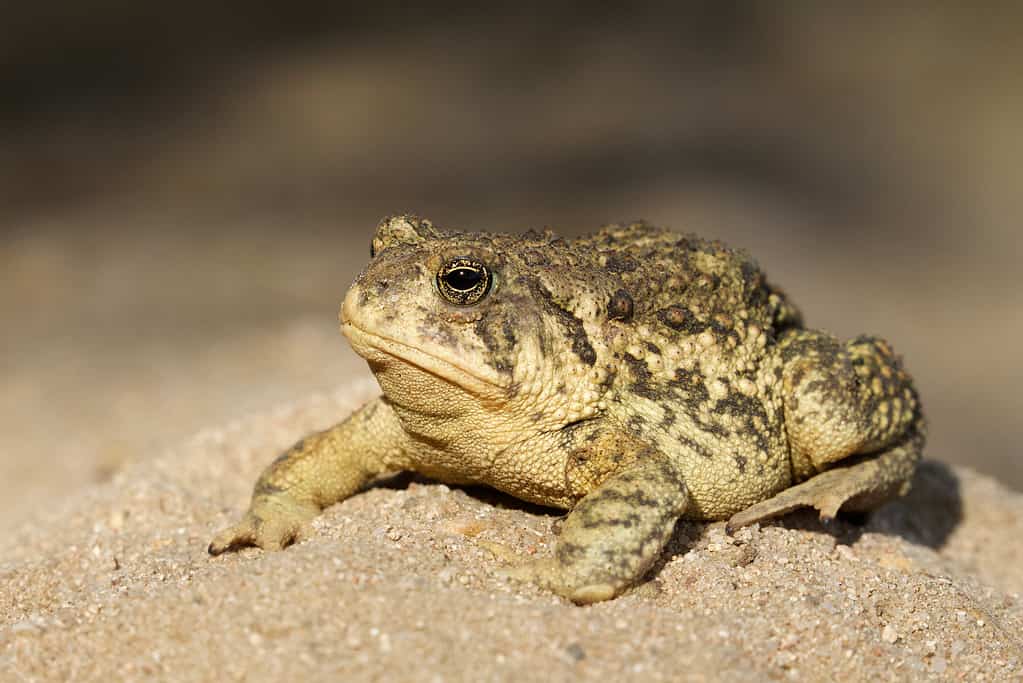
Woodhouse’s toads breed in shallow pools, often after heavy rainfall.
©Tom Reichner/Shutterstock.com
Arches National Park may be a hot, dry desert, but it’s still home to several types of amphibians — including toads, frogs, and even a salamander. Many of these creatures, like the Great Basin spadefoot toad (Spea intermontana), rely on places like Courthouse Wash to lay their eggs. If you’re in the park on a warm spring or summer night, especially after a good storm, you might hear a lively chorus of croaks and calls from male frogs and toads singing to attract mates.
Skunks
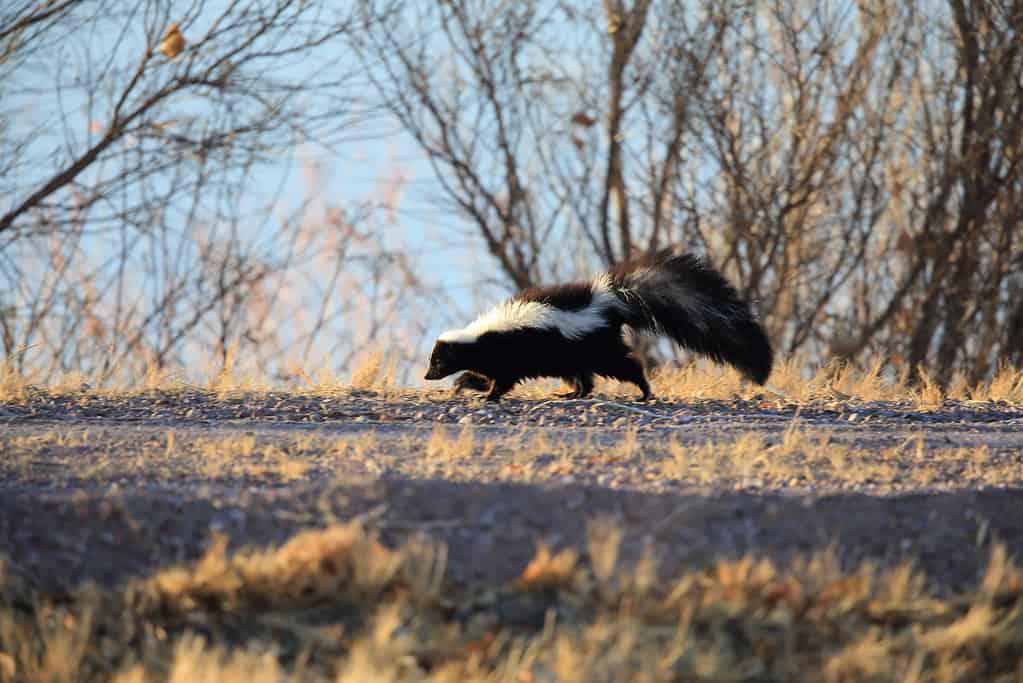
Skunks only spray as a last line of defense.
©Frank Fichtmüller/iStock via Getty Images
Though often hidden from view, two species of skunks make their home in Arches National Park. The striped skunk (Mephitis mephitis) is what most people picture in Utah, with bold white stripes running down its medium-sized body. The western spotted skunk (Spilogale gracilis), on the other hand, sports white spots and abstract patterns. Both species are nocturnal, so you’re unlikely to see them wandering around during the day. Instead, they spend their time foraging at night in brushy areas or near riparian habitats like streams, where there is plenty of food.
Water and Shore Birds
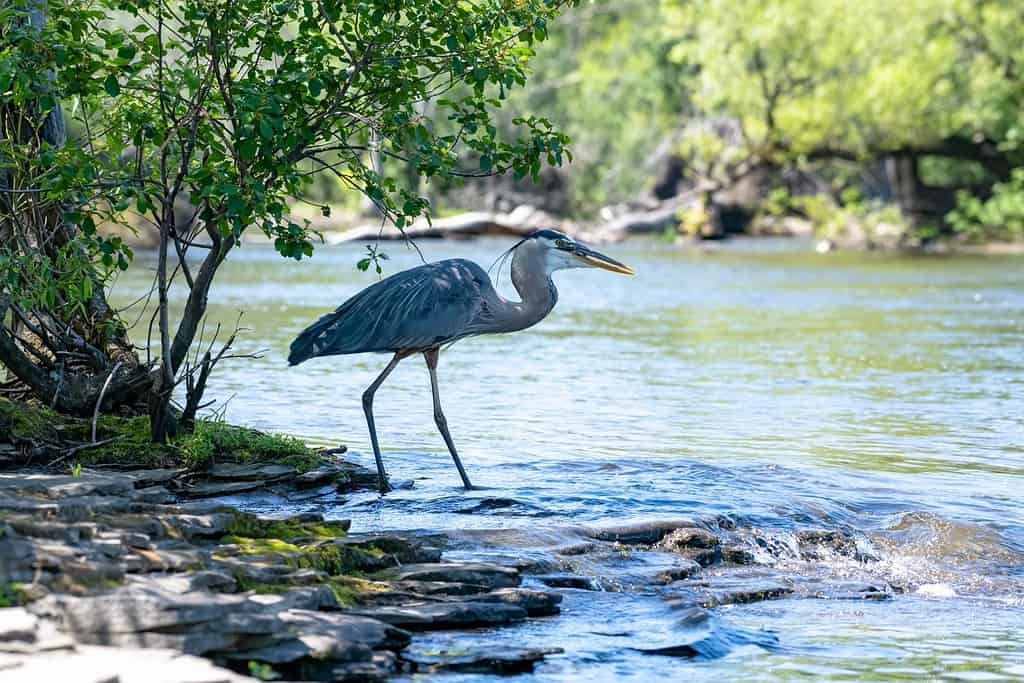
Great blue herons can often be spotted around small pools and streams in the park.
©Karen Hogan/Shutterstock.com
If you wander near the riparian corridors in Arches National Park, you may be surprised by the variety of water and shorebirds. The Colorado River, marking the park’s southern boundary, is especially rich with birdlife — look for elegant great egrets (Ardea alba) or towering great blue herons (Ardea herodias) wading along its edges. Places like Courthouse Wash are prime spots for shorebirds like killdeer (Charadrius vociferus) and spotted sandpipers (Actitis macularius).
Mice and Rats
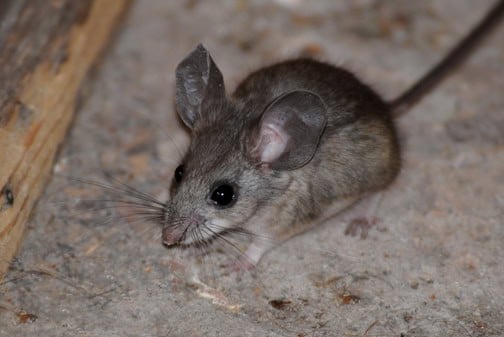
Pinyon mice store their food in extensive cache systems.
©NPS photo by Sally King / Public domain / Wikimedia Commons – Original / License
Arches National Park is home to a surprising variety of rats and mice. Most are nocturnal and often dart out of sight before you can get a good look. Still, it’s not uncommon to spot one scurrying across a trail at dusk. Canyon mice (Peromyscus crinitus) favor rocky cliffs, boulders, and slickrock slopes, while plains pocket mice (Perognathus flavescens) prefer sand dunes, loose soils, and sparse grasslands. True to their name, pinyon mice (Peromyscus truei) are often found in pinyon-juniper woodlands, while brush mice (Peromyscus boylii) stick to brushy areas and rocky outcrops.
Pocket Gophers
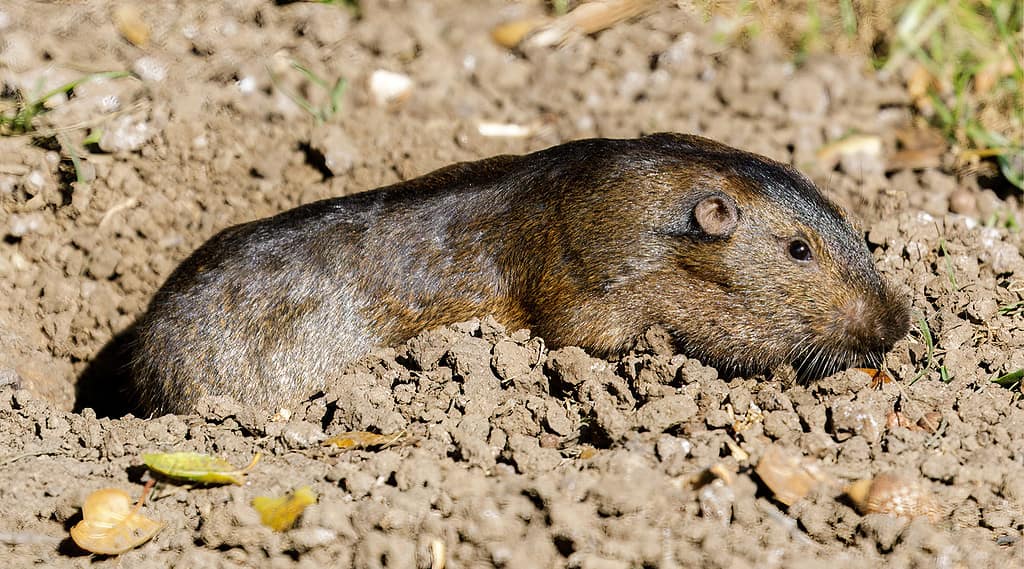
Pocket gophers in Arches are usually 6.5 to 10.5 inches long.
©iStock.com/dit:yhelfman
The northern pocket gopher (Thomomys talpoides) and Botta’s pocket gopher (Thomomys bottae) both live in Arches National Park. These master architects can dig tunnel systems stretching up to 200 yards long, complete with chambers for storing food, nesting, and feeding. While they spend most of their lives beneath the surface, you can often spot their handiwork above ground in the form of soil mounds — a clear sign that a busy gopher is hard at work below.
Badgers
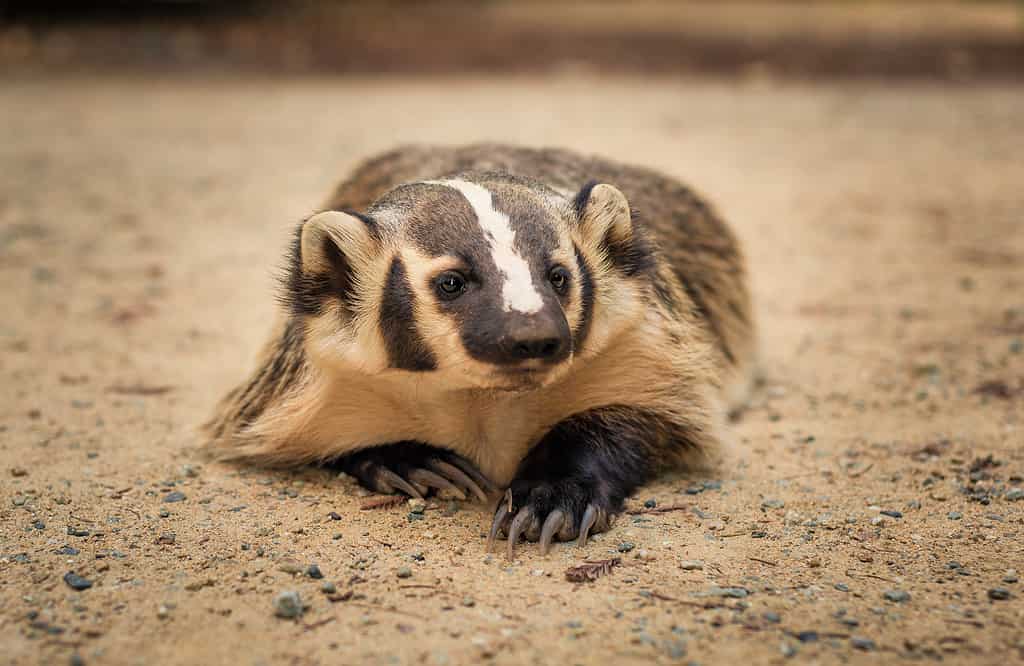
It’s often easier to spot a badger’s burrow or footprints rather than the animal itself.
©Photography by Adri/ via Getty Images
The American badger (Taxidea taxus) is a fairly common resident of Arches National Park, though its nocturnal habits mean most visitors only catch a glimpse of it at dawn or dusk. Naturally shy and surprisingly fast, badgers are tricky to spot. In desert and grassland areas with loose, easily dug soil, however, lucky visitors might see a badger hard at work digging or foraging.
Weasels
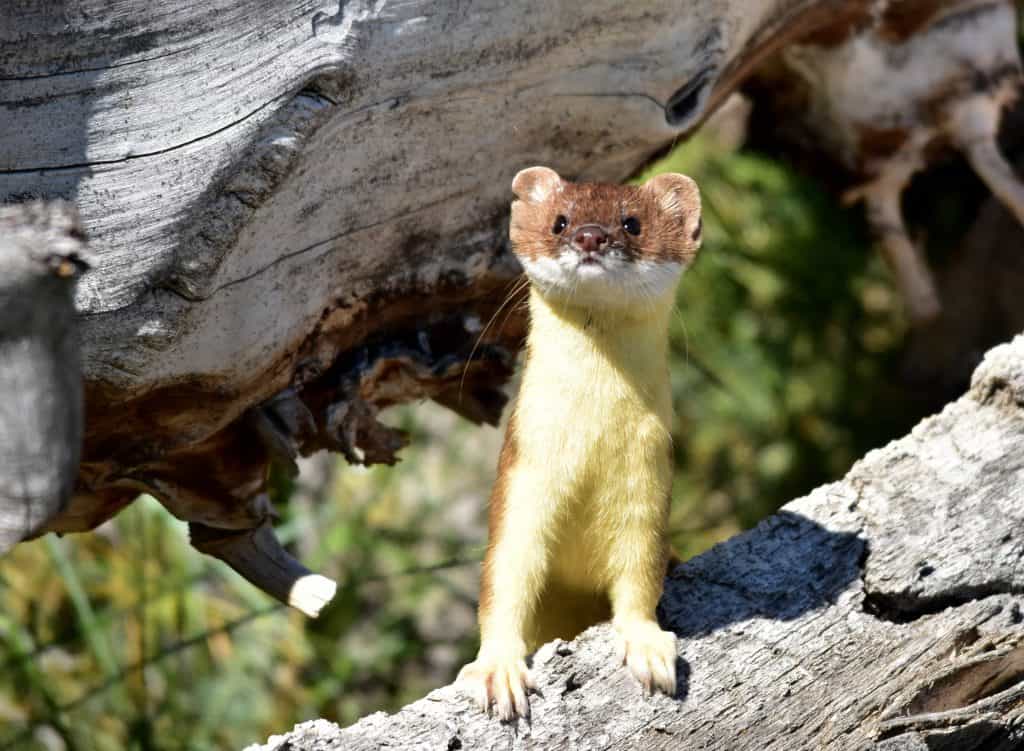
Spotting a long-tailed weasel in Arches National Park is extremely rare.
The long-tailed weasel (Mustela frenata) is one of the rarest and most elusive residents of Arches National Park. With their slender bodies, short legs, long tails, and tiny black tufted tail tips, these stealthy hunters are almost never seen during the day. They are occasionally spotted along the Colorado River corridor, but even then, their secretive nature makes this a very rare experience.
Otters and Muskrats
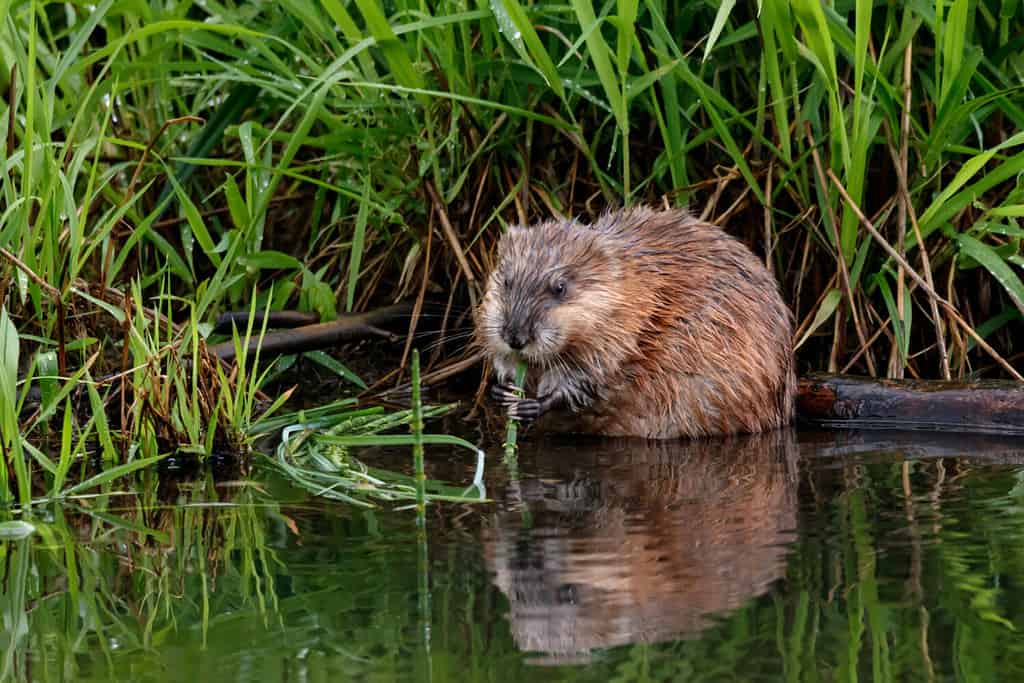
Muskrats have an appearance similar to a beaver, but without the paddle-shaped tail.
©Anton MirMar/Shutterstock.com
It’s extremely unlikely that you’ll spot a northern river otter (Lontra canadensis) or common muskrat (Ondatra zibethicus) while visiting Arches National Park, but these playful and elusive little critters do occasionally make an appearance. They are most often found near permanent water sources, such as the Colorado River or tributaries like Courthouse Wash.
Mountain Lions
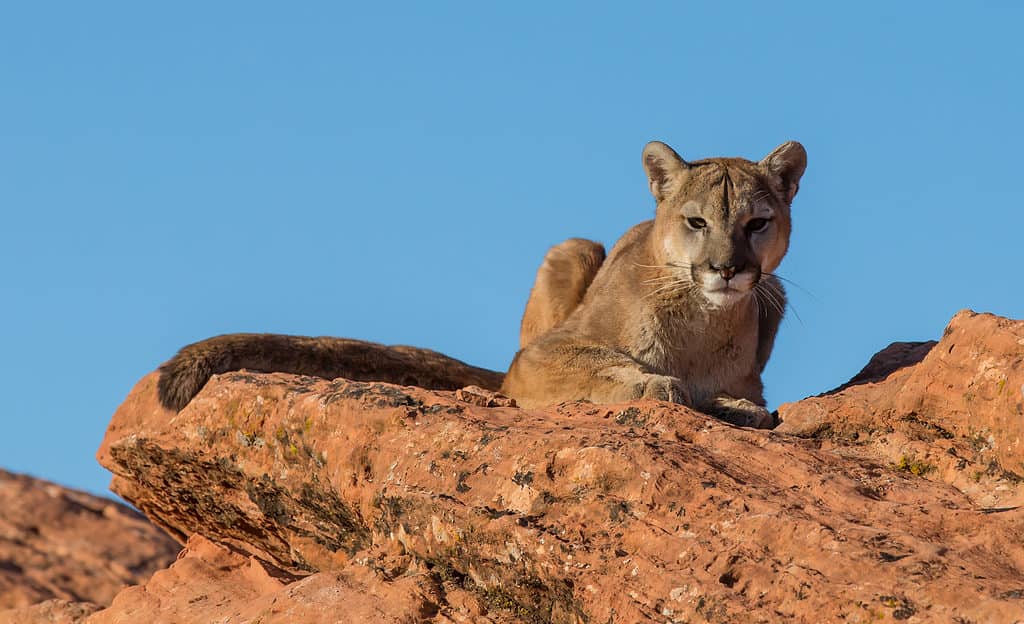
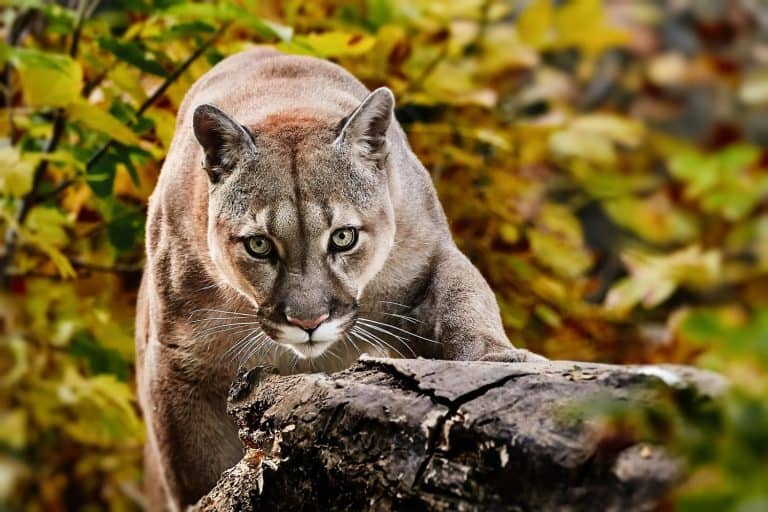
Mountain lions go by many names, including pumas, cougars, and ghost cats.
©Warren Metcalf/Shutterstock.com
Although mountain lions (Puma concolor) are the apex predators of Arches National Park, they are also the most unlikely animals you will see. Silent and stealthy, mountain lions are masters at moving through the landscape without being detected. Because of their elusive and secretive nature, they are seldom seen, and only a handful of visitors have ever caught a glimpse of one.
Bobcats
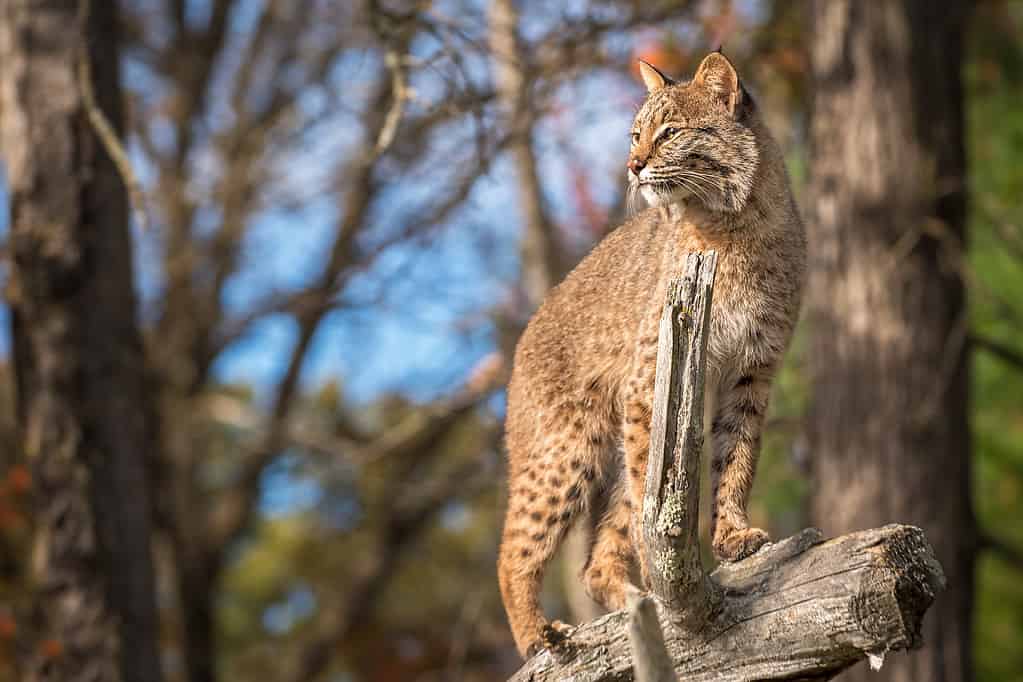
Bobcats are medium-sized predators, typically weighing between 12 and 30 pounds.
©Geoffrey Kuchera/Shutterstock.com
Another one of Arches National Park’s most elusive predators is the bobcat (Lynx rufus). This secretive feline is rarely seen by visitors, as it is only active from dusk until dawn, resting in cool dens during the day’s desert heat. Bobcats favor rocky areas and dense vegetation, blending seamlessly into their surroundings thanks to their beautifully spotted coats.