
When you think of what makes an animal so adorable, a muskox isn’t typically the first animal that comes to mind. However, this post by @discover.animal is making everyone think twice about their definition of “cute.” Muskoxen look like cuddly calves, but have evolved to handle some of the harshest weather conditions in the world. Their fluffy fur enhances their cuteness, but it’s also a life-saving measure against the cold tundra of the Arctic Circle. So don’t let this newborn fool you–muskoxen are far tougher than they look!
What Makes Musk Oxen Calves So Unique?
When a muskox is born, it hits the ground running, almost literally. Calves can walk within hours of being born, a feat that few four-legged animals master. They are quick learners and are born with most of the features needed for their survival. A newborn can weigh up to 30 pounds and is covered in thick fur. This keeps the calf insulated as it grows and will eventually turn into a full wool coat. By six months of age, most muskoxen are at least six times their newborn weight.
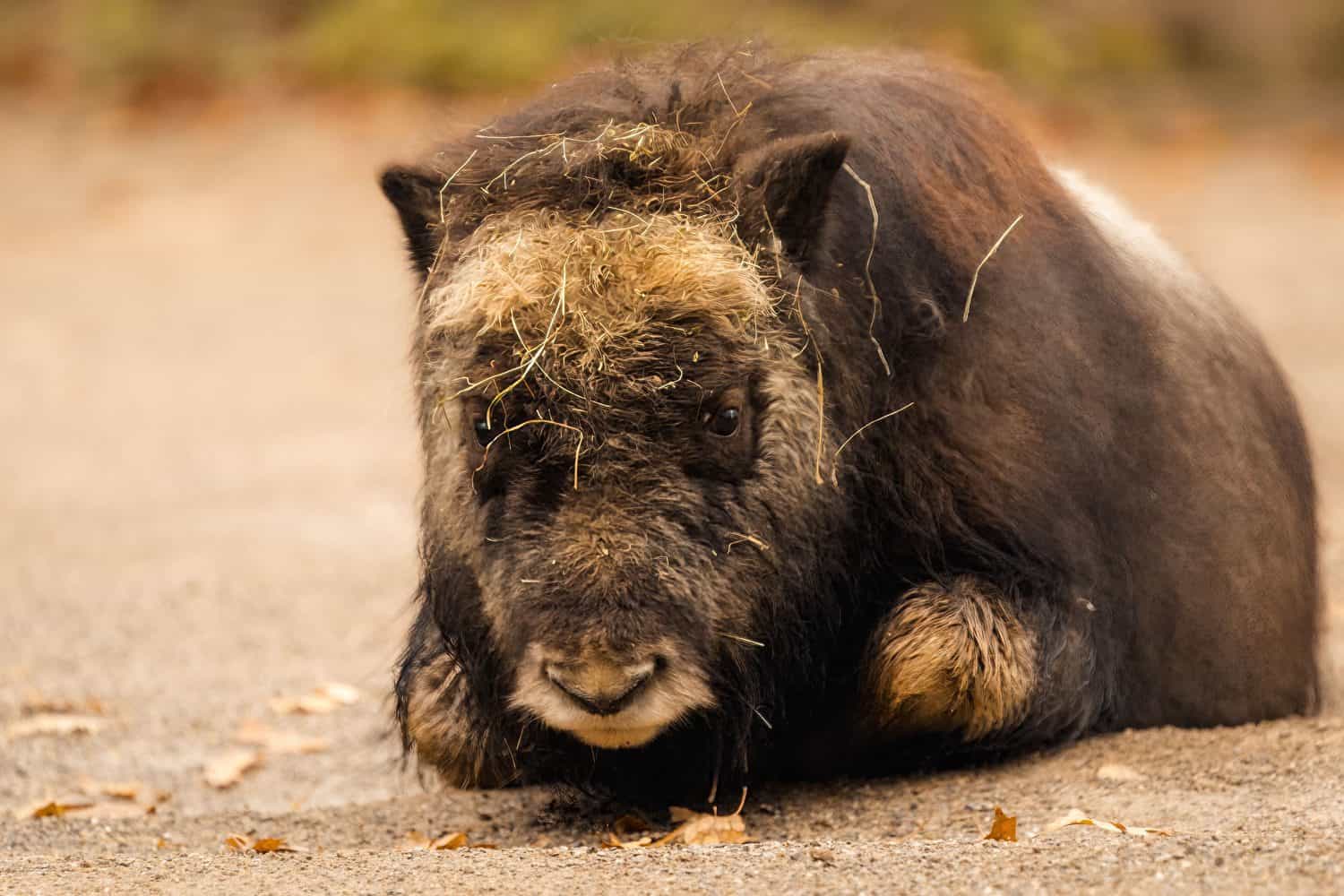
Muskoxen learn to stand on their own within hours of their birth.
©Wirestock Creators/Shutterstock.com
Along with their rapid growth, calves begin to grow horns within their first year earthside. They nurse for only ten months, and can eat solid food after only a few weeks. Their miraculously quick growth spurts prepare them for the world outside, but first, they must learn all they can from their mothers. Young muskoxen follow their mothers around for the first year or so of their lives, observing the adults of the herd. This is how they learn basic survival skills, which then help them when raising their own calves.
Musk Ox Are Survival Experts
The muskox is native to the Arctic, thriving in North America’s northernmost regions and parts of Greenland. They inhabit Canada’s Northwest Territory and Nunavut, as well as northern Alaska. Populations of muskox have also been reintroduced in Siberia and parts of Norway. Calves like the one in this post are born during the warmer summer months and must be ready to withstand frigid Arctic winters. Thankfully, their evolution has been ongoing since the Ice Age, allowing them to do precisely that.
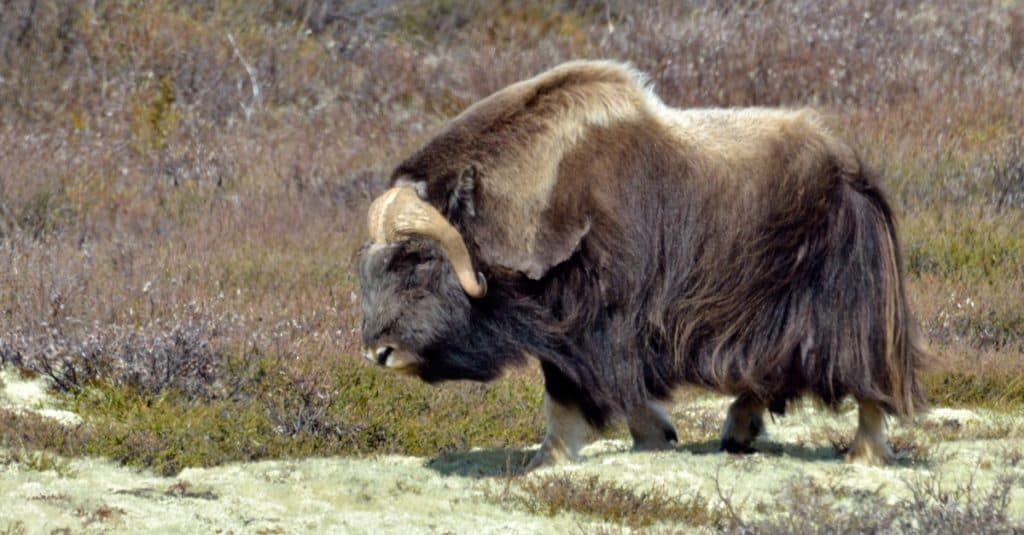
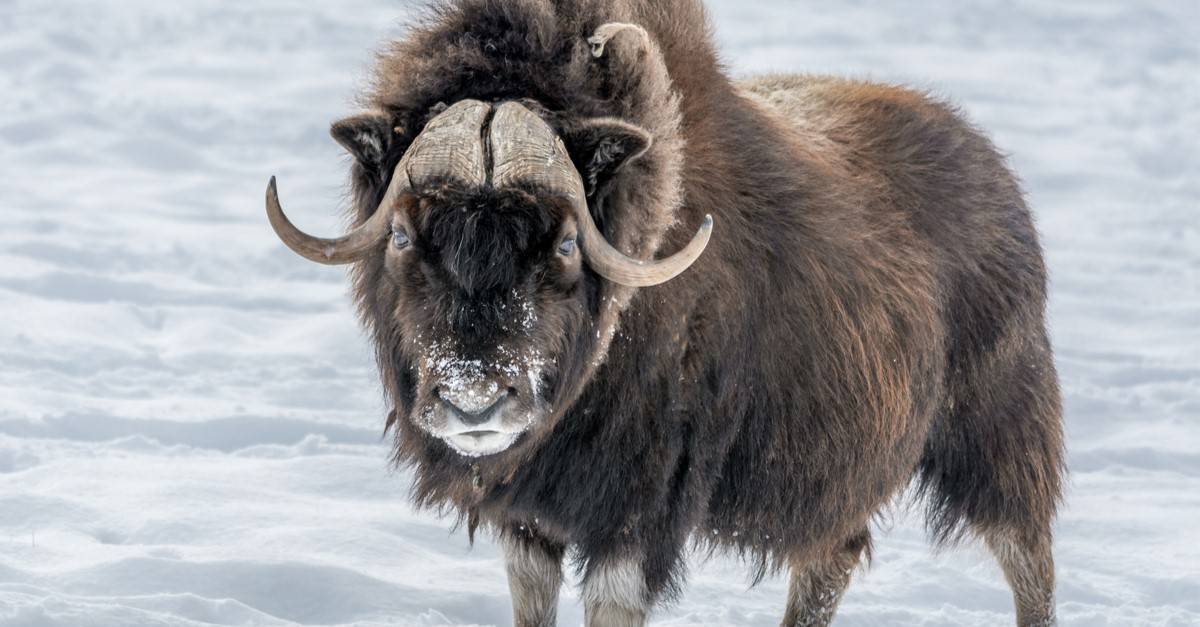
The fur of a muskox consists of two layers.
©aabeele/Shutterstock.com
Their coats are double-layered, with a dense, wiry top layer. This acts as a weather-proof layer, insulating the ox and preventing snow and ice from penetrating to their second fur layer. The horns on their heads curve downward, creating a helmet-like shape. This also shields their most vulnerable body parts while keeping their head insulated along with the rest of their body. When you see a muskox in the snow, its matted fur is only its first layer of protection. As the muskox moves or retreats to warmer ground, these clumps of snow and ice eventually fall off. Interestingly enough, the muskox is not a member of the ox family, despite its name. Instead, it’s more closely related to goats and sheep.
The Herd Mentality
Muskoxen have no issue with the cold, but their double-layered coats aren’t their only protection. The herd is a source of community but also serves as a defense against predators. When faced with a threat, muskoxen gather in a circle, keeping their youngest members in the center. As the herd gathers, they face their curved horns outward, ready to defend their calves. The “helmets” on their heads also hide a special adaptation. Underneath is an air cavity, which provides a protective cushion for their skulls. When fighting a predator or another muskox, this is what prevents the ox from taking head damage.
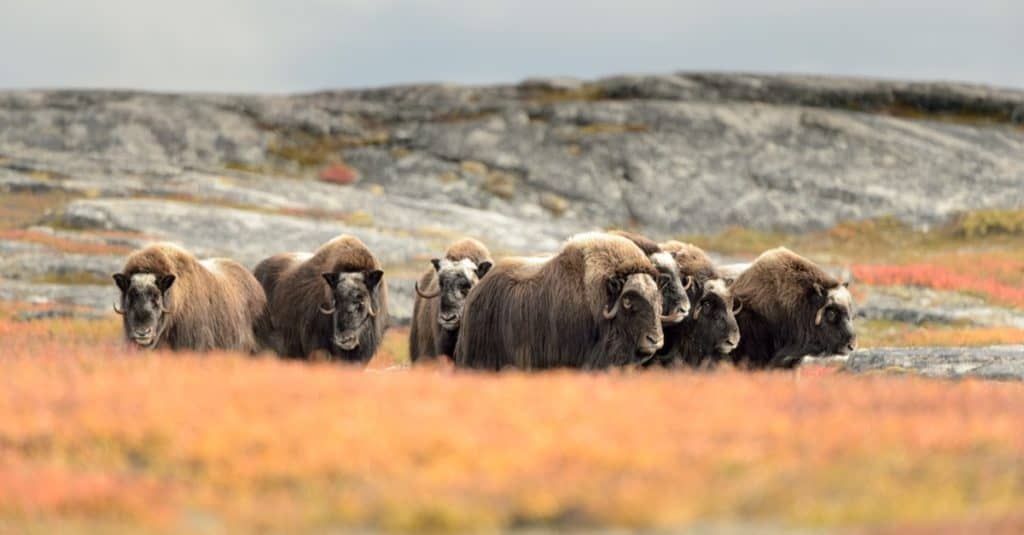
Herds form small groups as a defensive maneuver against predators.
©NaturesMomentsuk/Shutterstock.com
If a muskox fights a member of its herd, it’s typically due to mating season. Males can mate with up to 12 females, and often compete for the right to do so. Every mating fight is different, and some are over quickly while others go on until one male is too injured to fight. To prove their prowess, males ram one another, using their horns to make a point that they’re the top muskox in the herd. Most of the time, the larger animal, or the one with the largest horns, is the winner. This is also around the same time that males emit an odor, or the “musk” during mating season, for which they were named.
Are Musk Oxen Endangered?
Like many Arctic species, musk oxen face threats from climate change. However, as of 2025, the musk ox is listed as Least Concern on the IUCN Red List. However, this does not mean that calves such as this one won’t face a significant decline in the future. For some time, muskoxen faced a decline due to human activities. They were hunted for their wool, and the Alaskan muskox was nearly hunted to the point of extinction.
Today, thanks to significant conservation efforts, muskox hunting is strictly regulated. Currently, it’s only allowed by permit in places like Alaska, Greenland, and Canada. Their numbers are monitored in Alaska, and healthy populations still thrive in Greenland and Canada. The threat of climate change still looms for these animals, though, which may soon start to feel its effects.