Quick Take
- One Georgia turtle uses a built-in lure inside its mouth to ambush prey, and the species behind this trick may surprise you. See the ambush hunter →
- Georgia is home to a turtle so foul-smelling it earned a nickname most people wouldn't associate with wildlife. Meet the smelly culprit →
- Only one tortoise species lives east of the Mississippi River, and that species is quietly disappearing from Georgia's landscape. Learn about this rare tortoise →
- Some of Georgia's turtles can outlive your great-grandparents, though their slow maturity comes with a serious cost. Discover the century-old turtle →
Georgia’s warm, humid summers and mild winters make it the perfect home for a wide range of reptile species, particularly its resident turtles. In total, around 30-40 different species of turtles live in The Peach State. Some are widespread throughout the state, while others are rarely spotted. The turtles in Georgia are surprisingly diverse, ranging from small semi-aquatic, freshwater turtles to inland tortoises. Let’s take a look at 10 of Georgia’s unique and fascinating turtles below.
1. Painted Turtle
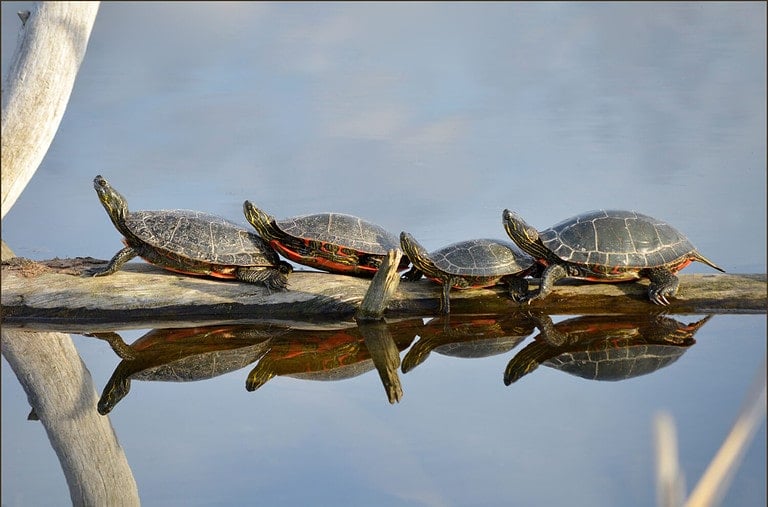
One of northern Georgia’s common turtles is the painted turtle (Chrysemys picta). This semi-aquatic freshwater turtle has a dark brown carapace with orange, yellow, or red markings on its plastron, depending on the subspecies. Its skin varies in shades of dark green with thin yellow or orange striping along the head, neck, and limbs.
It is a fairly small species at just 4 to 10 inches long on average, but its geographic range is impressive. The three subspecies collectively occupy much of the northern, Midwest, and eastern United States. In Georgia, however, the eastern painted turtle reigns supreme. Painted turtles prefer shallow, aquatic habitats like ponds, marshes, and wetlands. When they aren’t searching for prey, they spend much of their time basking on logs and rocks.
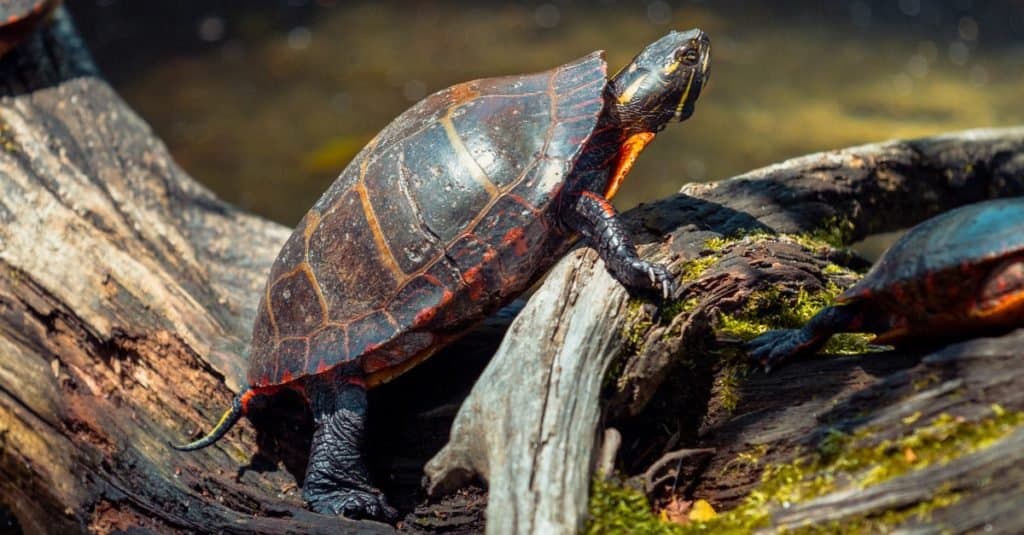
Painted turtles can have yellow, orange, or red markings on their plastrons.
©Jonathan Novack/Shutterstock.com
2. Common Snapping Turtle
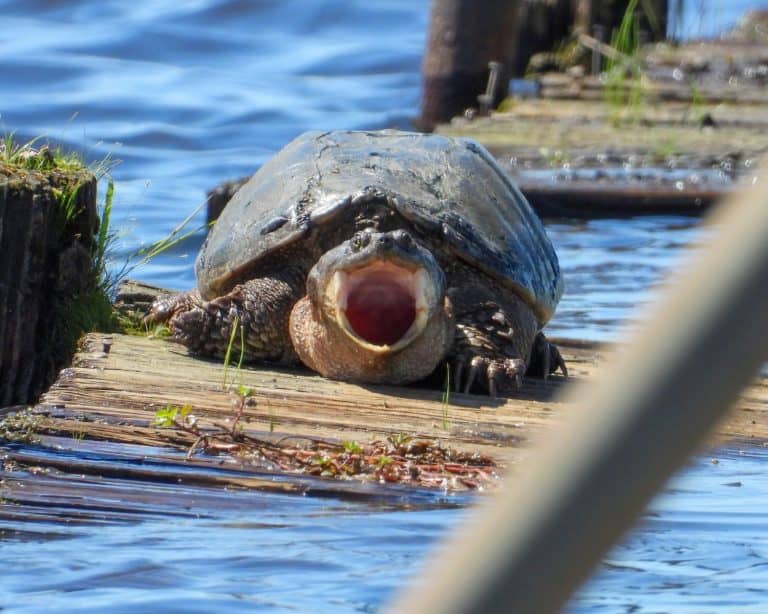
Of all snapping turtle species, the common snapping turtle (Chelydra serpentina) is the most widespread throughout Georgia and the U.S. in general. It’s also one of the heaviest freshwater turtle species. Large, hardy, and surprisingly speedy, the common snapping turtle typically ranges from 8 to 20 inches long and can weigh anywhere from 10 to 40 pounds. Its sharp, beak-like jaws, webbed feet, impenetrable shell, and clawed toes make it a fearsome predator.
Although it is primarily a freshwater species, the common snapper is tough enough to tolerate living in brackish water. Agile on land and water, the common snapping turtle is an especially skilled swimmer, expertly preying on small fish, amphibians, and aquatic invertebrates.
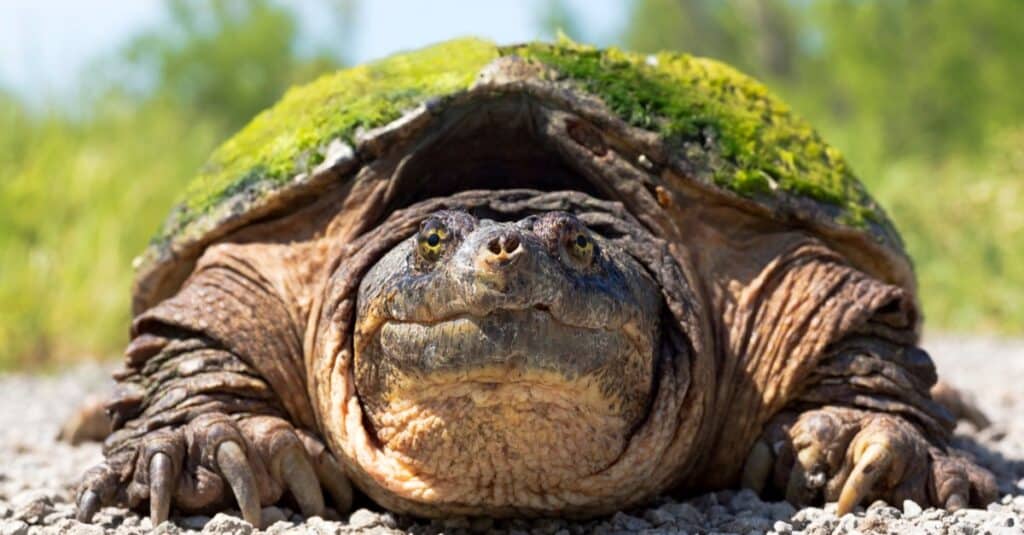
A common snapping turtle’s long claws make it agile on land and in water.
©Patrick Rolands/Shutterstock.com
3. Common Musk Turtle
Common musk turtles (Sternotherus odoratus) are also known as “stinkpot” turtles due to their foul-smelling scent glands, which it uses as a defense mechanism. These turtles are native to most of Georgia and the Southeast. At only 3 to 5 inches long on average, it’s one of Georgia’s smallest turtles.
At a glance, the common musk turtle resembles other semi-aquatic mud and pond turtles. However, this species is easily identifiable thanks to a pair of thin, pale yellow or white stripes along the sides of its face. Additionally, its shell is tall and rounded, and its neck is quite long for its small size.
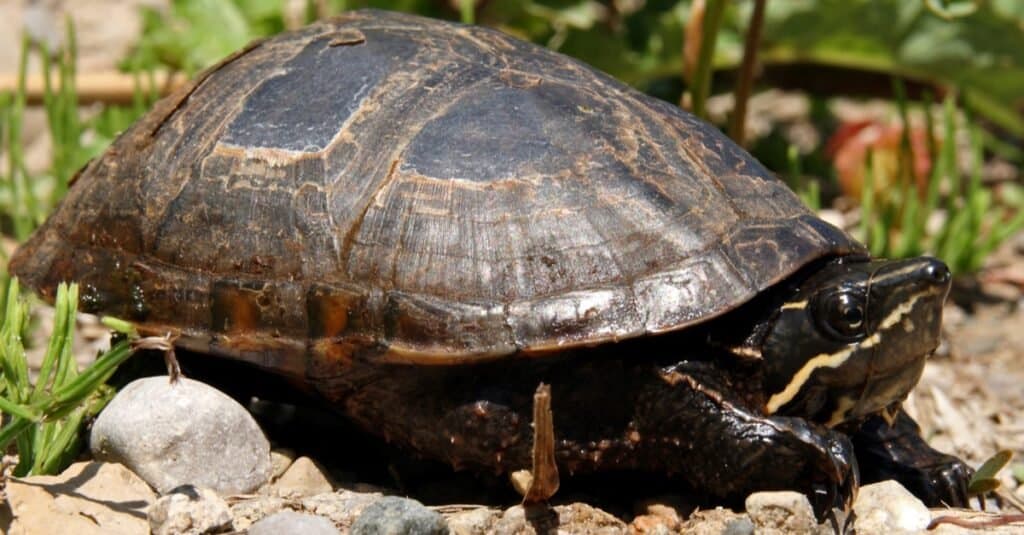
The common musk turtle has gained a smelly reputation for its foul scent gland secretions.
©Ryan M. Bolton/Shutterstock.com
4. Eastern Box Turtle
As a subspecies of the common box turtle, the eastern box turtle (Terrapene carolina carolina) can be found throughout Georgia and most of the eastern U.S. It is highly terrestrial but typically lives along streams and rivers, always close to a body of water.
On average, these turtles are around 4.5 to 8 inches long. The turtle’s shell and skin are tan or brown in color with bright yellow and orange markings. Notably, box turtles mature exceptionally slowly, even for turtles. They can live for 100+ years under exceptional conditions, most individuals average 25 to 50 years.

Eastern box turtles can have varying yellow and orange markings on their shells and skin.
©Studio DMM Photography, Designs & Art/Shutterstock.com
5. Alligator Snapping Turtle (Macrochelys temminckii)
The alligator snapping turtle is even larger than the common snapping turtle, holding the title of the heaviest freshwater turtle species in the United States. These prehistoric-looking reptiles with massive, rugged shells can weigh up to 200 pounds.
The species is highly aquatic, spending most of its time underwater but barely submerged. Almost entirely carnivorous, alligator snapping turtles use their worm-like tongues inside their dark, cavern-like mouths to lure and ambush fish, amphibians, and other aquatic prey.
Alligator snapping turtles can be found in southern Georgia and much of the South. They primarily live in muddy, slow-moving rivers and streams, often accumulating a thick layer of algae on their shells over time.
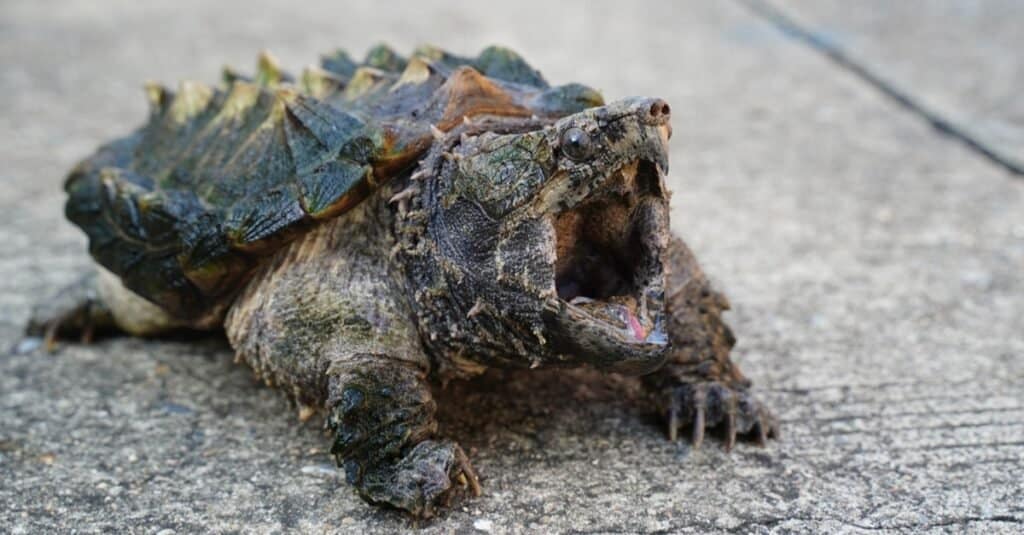
The alligator snapping turtle is easily identified by its heavily textured, craggy shell and sharp beak.
©Sista Vongjintanaruks/Shutterstock.com
6. Pond Slider
There are actually three unique subspecies of the pond slider turtle (Trachemys scripta), and in Georgia, the yellow-bellied slider is the most common. This group also contains the popular red-eared slider and the lesser-known Cumberland slider. Collectively, the three subspecies of the pond slider are among the most widespread turtles in the Southeast.
Pond sliders are fairly small at 5 to 10 inches long. They are highly aquatic, generally preferring low-lying wetland habitats like marshes and swamps. The carapace is dark green, while the underside, the plastron, is typically yellow or off-white. The turtle’s skin ranges from dark green to grey and is accented by thin yellow striping and other irregular yellow markings.

The yellow-bellied slider is the most common pond slider turtle in Georgia.
©iStock.com/jrubacha
7. Spiny Softshell Turtle
The spiny softshell turtle (Apalone spinifera) is easily the most bizarre-looking species on this list. As its name suggests, this turtle has a flat, leathery, mottled brown rubbery shell with small, spiny projections along the front edge. This, combined with its long, snorkel-like snout, makes it stand out from all the other semiaquatic turtles in Georgia. On average, males range from around 5 to 9 inches long, while females are considerably larger, ranging from around 7 to 21 inches long.
You can find this turtle throughout much of Georgia and the eastern U.S. In terms of habitats, it prefers muddy, low-lying, slow-moving rivers and streams. Its webbed, clawed feet make it fairly agile in water and on land. It is mostly carnivorous, feeding mainly on small aquatic invertebrates.
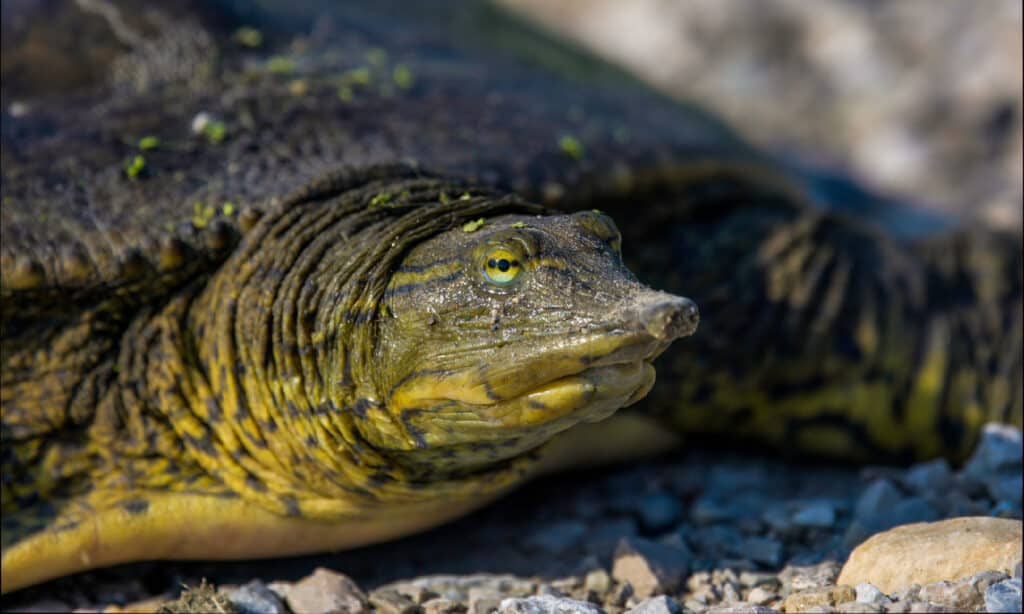
The spiny softshell turtle gets its name from its carapace’s tiny, spine-like projections.
©iStock.com/Brian Reinke
8. Eastern River Cooter Turtle
The river cooter turtle has two subspecies: the eastern and Suwannee varieties. The eastern river cooter (Pseudemys concinna concinna) is native to most of Georgia and the Southeast, while the Suwannee cooter (Pseudemys concinna suwanniensis) mainly resides in Florida and southern Georgia.
Both subspecies of the river cooter prefer staying close to shallow, slow-moving bodies of water like streams and ponds. However, despite being highly aquatic, they spend much of their time basking on logs and rocks to dry their shells.
At around 8 to 14 inches long, eastern river cooters are average in size as far as freshwater turtles go. Like some slider turtles, they have dark green skin with several thin yellow stripes along the sides of the face and limbs. Suwannee cooters have dark olive-brown to black carapaces that measure up to 17 inches long. They have dark green or black skin with yellow and cream stripes on the head, neck, and limbs.
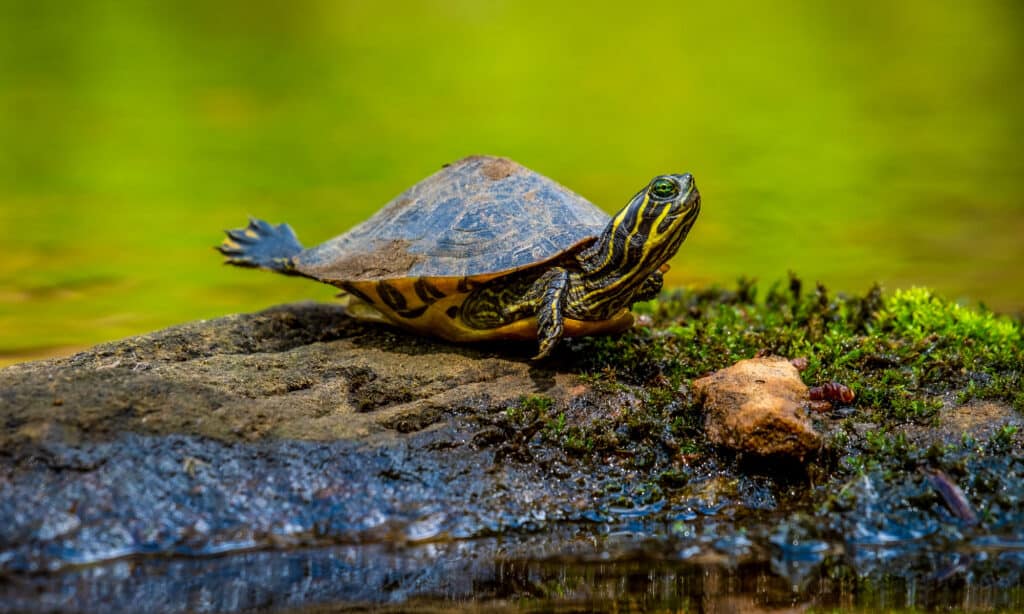
The eastern river cooter is highly aquatic but can often be found basking in the sun on logs and rocks.
©samray/Shutterstock.com
9. Gopher Tortoise
The gopher tortoise (Gopherus polyphemus) holds the unique distinction of being the only tortoise species living east of the Mississippi River. It’s native to southern Georgia, northern Florida, and parts of southern Alabama, Mississippi, and South Carolina.
Like all tortoises, this species is fully terrestrial. It has a large, bulky shell around 10 to 15 inches long and a heavy body. Its feet are wide and wedge-like for digging and, to a lesser extent, climbing. Gopher tortoises prefer warm, sandy coastal plains, where they can dig large, complex burrows. The gopher tortoise is federally endangered due to significant habitat loss in recent years. They grow and mature very slowly, but they can live for over 50+ years.
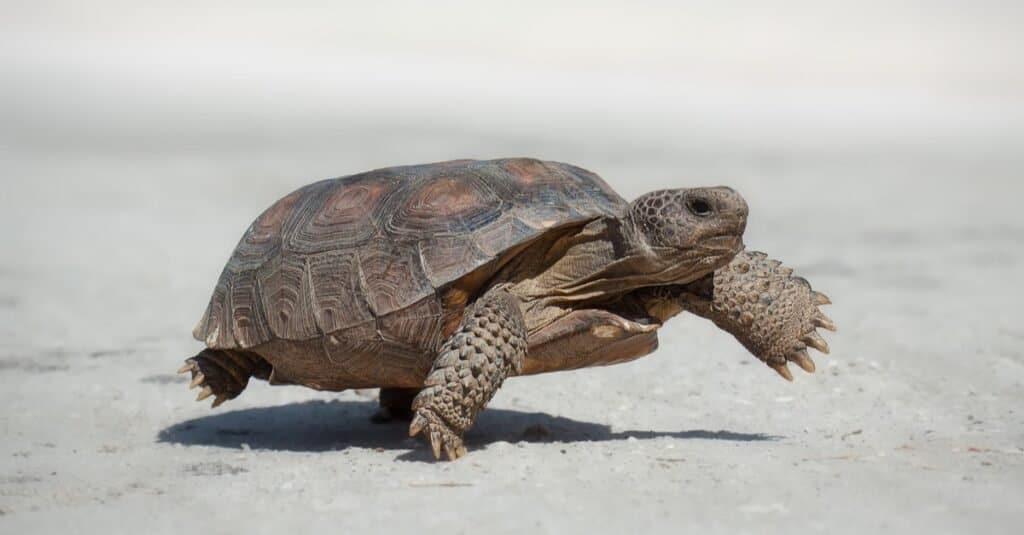
The gopher tortoise is Georgia’s only fully terrestrial turtle species.
©Kristian Bell/Shutterstock.com
10. Spotted Turtle
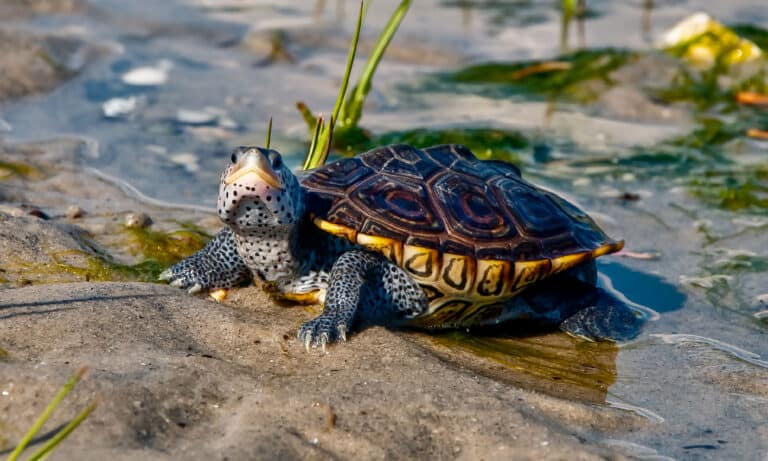
The aptly named spotted turtle (Clemmys guttata) is quite the stunning reptile. It has a sleek, flat, dark greyish-black shell with tiny, bright yellow polka dots. Its skin also shares the same fun coloration and pattern.
Like many other semi-aquatic species, the spotted turtle is small at just 3 to 5 inches long. It grows and matures slowly and has a lifespan of around 35 to 40 years. Male spotted turtles are slightly longer than females on average. Spotted turtles prefer low-lying, shallow wetlands and coastal plain habitats with plenty of plant cover. They live throughout the eastern United States, including the coastal areas of southern Georgia.
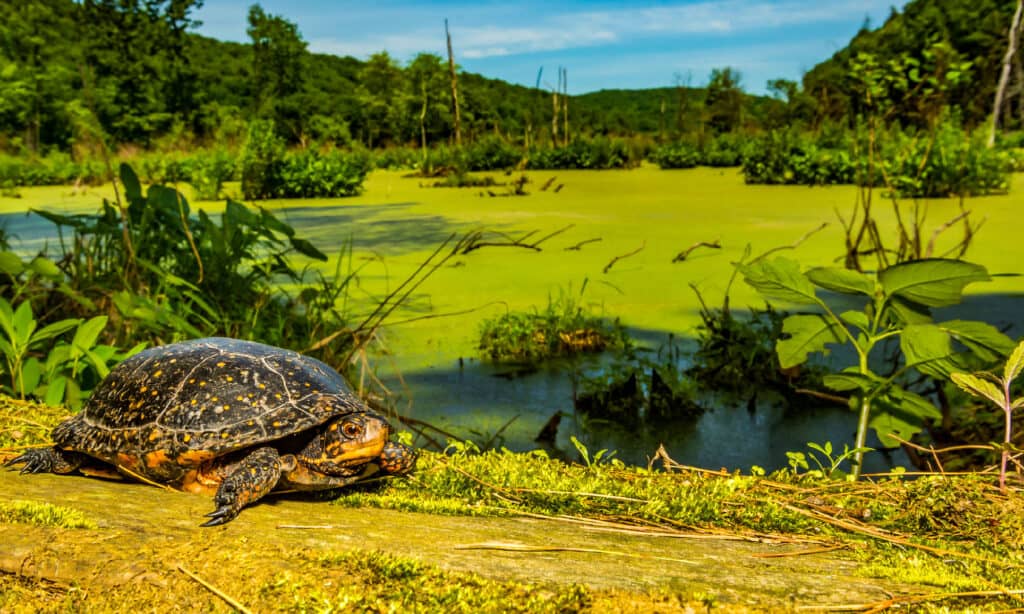
The spotted turtle has a unique black and yellow-spotted carapace.
©iStock.com/JasonOndreicka