
Quick Take
- Pet boarding works best for outgoing, adaptable dogs who enjoy social play and routine.
- Some dogs do better with a pet sitter at home, especially anxious or elderly dogs.
- When choosing a boarding facility, look for supervised socialization, certified staff, and robust health and safety measures.
To board your pup or not—that is the question. When you have to leave your furry best friend while away from home, you might struggle to decide how best to care for them. Many dog owners will opt for a pet sitter, while others will choose a highly rated pet boarding facility. Of course, neither choice is right or wrong; it entirely depends on your pup’s individual needs and personality.
Wondering which is best for your dog? Keep reading to hear an expert’s advice on whether you should use a pet boarding facility for your pup.
Types of Dogs That Do Well in Pet Boarding
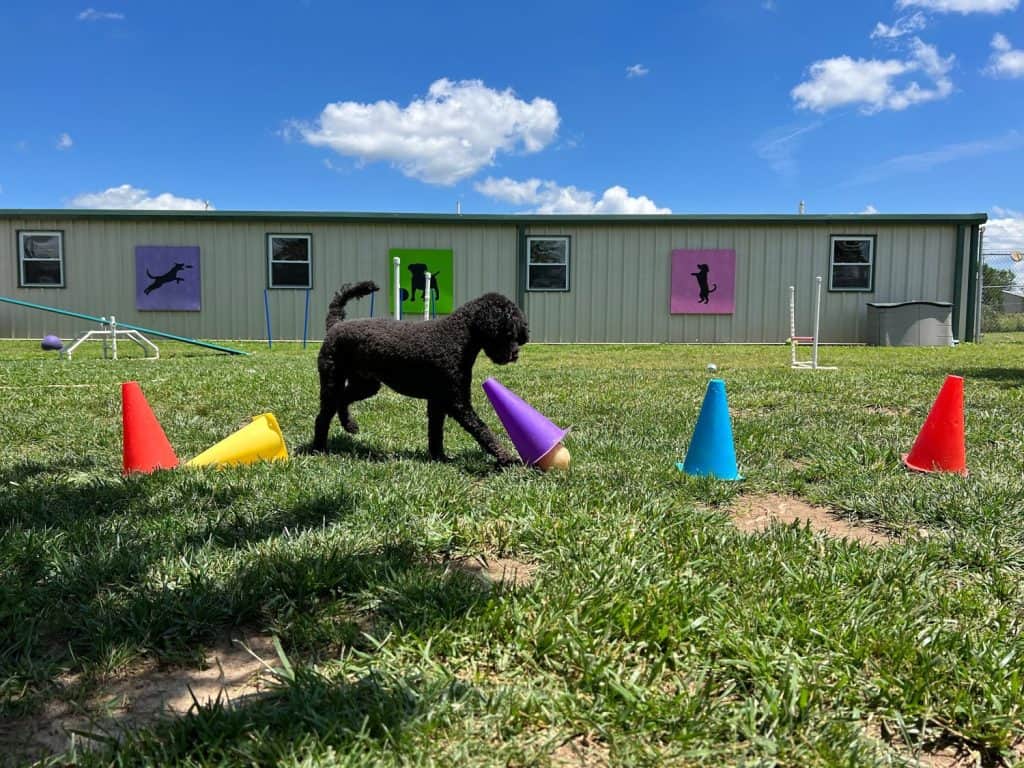
Many pet boarding facilities offer dog enrichment games.
©Ryan Brix/Shutterstock.com
While certain dog breeds might do better in pet boarding than others, it typically comes down to the individual pup. For example, given the social aspect of pet boarding, an outgoing, carefree dog will likely do far better than a shy, timid one.
“Not all dogs experience pet care outside the home in the same way,” says Lorraine Rhoads, Senior Director of Health & Safety at Dogtopia. “While many thrive at boarding facilities, some are better suited to staying at home with a pet sitter. Understanding your dog’s personality, energy level, and social style can help ensure they stay happy, healthy, and stress-free while you’re away.”
For example, she continues, extroverted and adaptable dogs tend to do well at boarding facilities. In fact, they typically prefer being surrounded by other dogs and caring professionals.
“Breeds or individuals who enjoy playtime, group interactions, and structured routines often flourish in a well-managed daycare or boarding environment,” Rhoads continues. “These dogs benefit from socialization, mental stimulation, and consistent activity during their stay.”
Types of Dogs that Do Better with a Pet Sitter

Many dog owners prefer hiring a pet sitter for their pups.
©SB Arts Media/Shutterstock.com
Of course, not all dogs prefer a social environment when separated from their owners. Some dogs may feel more comfortable with a sitter than in a pet boarding facility, especially if they are anxious or missing their humans.
“Conversely, dogs that are anxious, shy, elderly, or prone to stress in new environments often fare better at home with a pet sitter,” says Rhoads. “Some dogs form strong attachments to their owners or specific spaces and experience separation stress when removed from familiar surroundings.”
That being said, make sure you hire a reliable pet sitter who makes your dog feel safe.
“In-home care allows these dogs to maintain their routines, remain in a familiar environment, and receive one-on-one attention, which can reduce anxiety and prevent behavioral issues,” Rhoads explains. “Dogs with medical needs or dietary sensitivities also benefit from individualized care that is more easily managed at home.”
Not all dogs experience pet care outside the home in the same way. While many thrive at boarding facilities, some are better suited to staying at home with a pet sitter.
Lorraine Rhoads, Senior Director of Health & Safety at Dogtopia
What to Look for in a Pet Boarding Facility
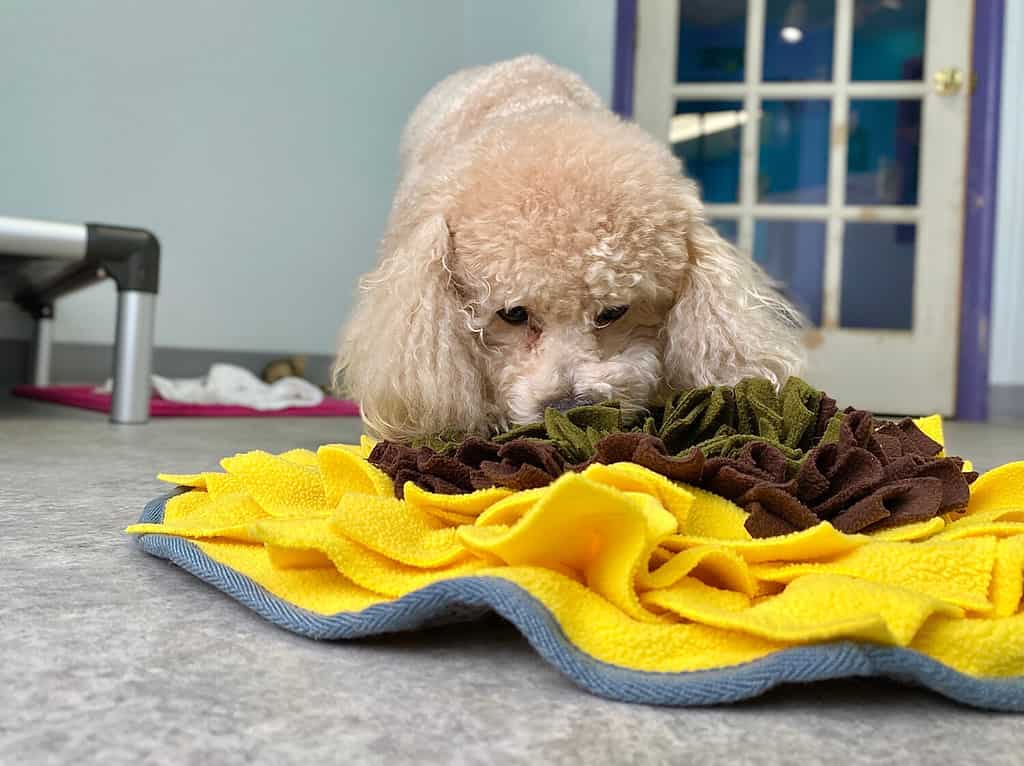
Some dogs enjoy the social aspect of pet boarding facilities.
©Ryan Brix/Shutterstock.com
If your dog seems like a good fit for a pet boarding facility, you’ll want to evaluate your options and choose one that meets their unique needs.
“When selecting a boarding facility, there are several features that can indicate your dog will receive high-quality care,” Rhoads says.
Here are four characteristics to consider when choosing a pet boarding facility.
1. Supervised Socialization
If your dog is particularly social, they’ll love the interactions they have with other pups at a boarding facility. However, it’s essential to choose a center that offers supervised socialization to protect your pup from potential aggressiveness or altercations.
“Look for places that offer 8 to 10 hours of supervised open play to encourage socialization and exercise, with meet-and-greet evaluations to ensure your dog will fit in safely,” Rhoads recommends.
2. Certifications/Education Background
A good pet boarding facility will employ professionals who have the proper certifications and educational backgrounds, ensuring quality care. For example, staff should be trained to recognize signs of stress or other health concerns, implement structured feeding schedules, and facilitate controlled play environments.
“Facilities that separate dogs by size and temperament and employ certified canine coaches trained to manage and educate all breeds help create a positive, safe environment,” says Rhoads.
3. Health and Safety Elements
Your dog’s safety should be a top priority for both you and the boarding facility.
“Attention to long-term health is important, so features like compressed rubberized flooring, spacious climate-controlled playrooms, and carefully chosen cleaning products designed for dogs’ safety make a difference,” Rhoads says.
“Brain games, enrichment activities, and charitable initiatives that give back to the community show a facility that values engagement and purpose,” she continues. “Above all, the best facilities prioritize the health, behavior, and emotional well-being of dogs, guided by biologists, behaviorists, and veterinarians, and operate with a passion for treating every dog like a beloved family member.”
4. Accessibility
As a pet parent, you likely know how difficult it is to trust your beloved pup in someone else’s hands. Thankfully, many facilities provide webcam access and regular updates about your pup throughout their stay.
“Access to webcams, periodic progress reports, and home-style crates for resting or overnight stays allow pet parents to stay connected and reassured,” says Rhoads.