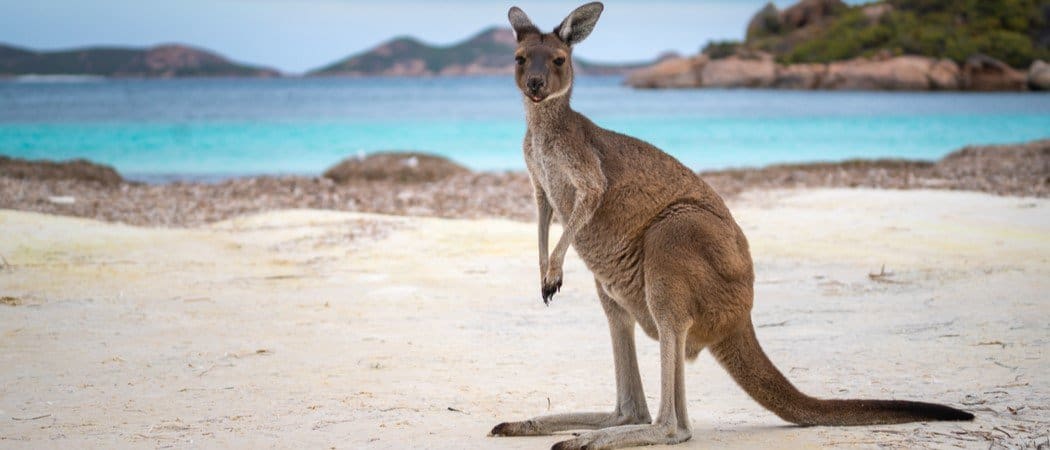

Quick Take
- Kangaroos can show loss responses that look very much like grief to human observers.
- Grief markers include staying near the body, reduced appetite, sleep changes, unusual vocalizations, withdrawal, and repeated site visits.
- Kangaroos have neural circuitry for affect and show stress responses, proving feelings exist, but not proving grief.
A video of a large male kangaroo trying to revive his fatally wounded mate raced across social media and stirred a global response. Many saw it as clear evidence of grief, but is that just anthropomorphism? Do kangaroos experience emotions of sadness and loss that resemble grief in people? If so, what does that look like in daily life, not just one-off online clips? Careful fieldwork, cautious wording, and context matter as we try to separate what is really happening from the story we want to tell ourselves about it.
Kangaroo Families
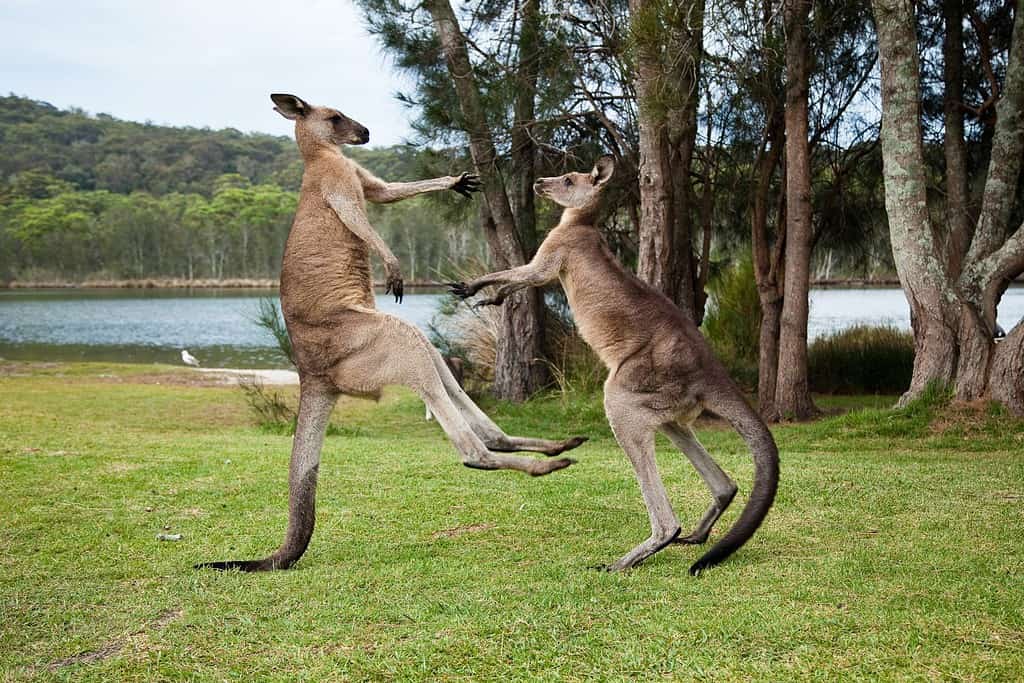
Males box, kick, and grapple for dominance.
©Breathes/Shutterstock.com
Kangaroos live in groups called mobs that behave chaotically: think “frat house with a daycare center.” It’s basically a loose social circle with a dominant male, several females, and their young. The dominant male secures his position through physical contests that resemble mixed martial arts: punching, kicking, grabbing opponents by the neck, and taking them down.
Females choose mates primarily based on strength and dominance, rather than long-term compatibility. The affection between adults is subtle, mostly grooming and gentle sniffing or touching—kind of like soft “hey, you’re cool” nudges rather than full-on cuddles. After mating, they don’t stay coupled as a “family unit,” but the females stick together with their joeys while the males come and go. Kangaroos breed year-round, and a mother might have 3 joeys of different ages all at the same time. The mob moves as a loose system of aunties who watch the youngsters. However, when a joey is frightened, it will always seek refuge in its mother’s safe, comfortable pouch.
Friendly, Irritating Neighbors
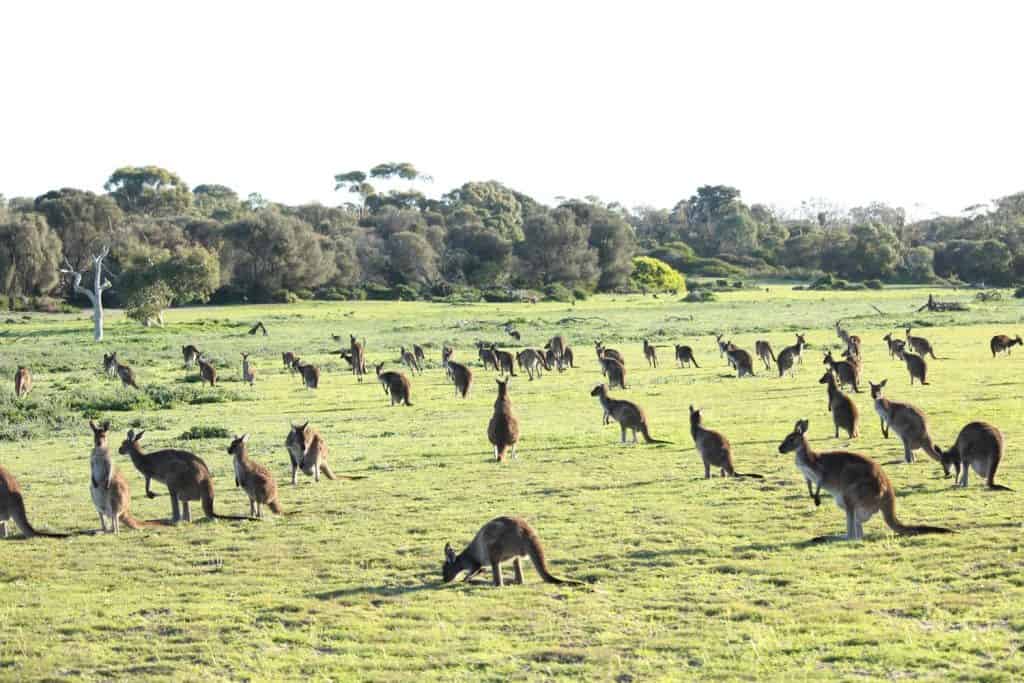
A mob of kangaroos can be quite large and can quickly demolish crops.
©LCAT Productions/Shutterstock.com
There are somewhere between 30 and 40 million kangaroos in Australia: more than there are people. Everyone loves them… or we should say, wants to love them. They look adorable and are an iconic Australian species, but they can also be like friendly yet irritating neighbors—crashing your gatherings, eating your food, and getting into fights.
They’re particularly a problem for farmers. Large mobs of roos compete with livestock for food and water, graze down crops, jump over fences or break them down, and even punch or kick people who get a little too close. Australia addresses this issue through regulated commercial harvesting, non-commercial culling permits for farmers, fertility control in some regions, and population monitoring to maintain sustainable numbers and prevent kangaroos from overwhelming landscapes and roads.
Kangaroos and Cars
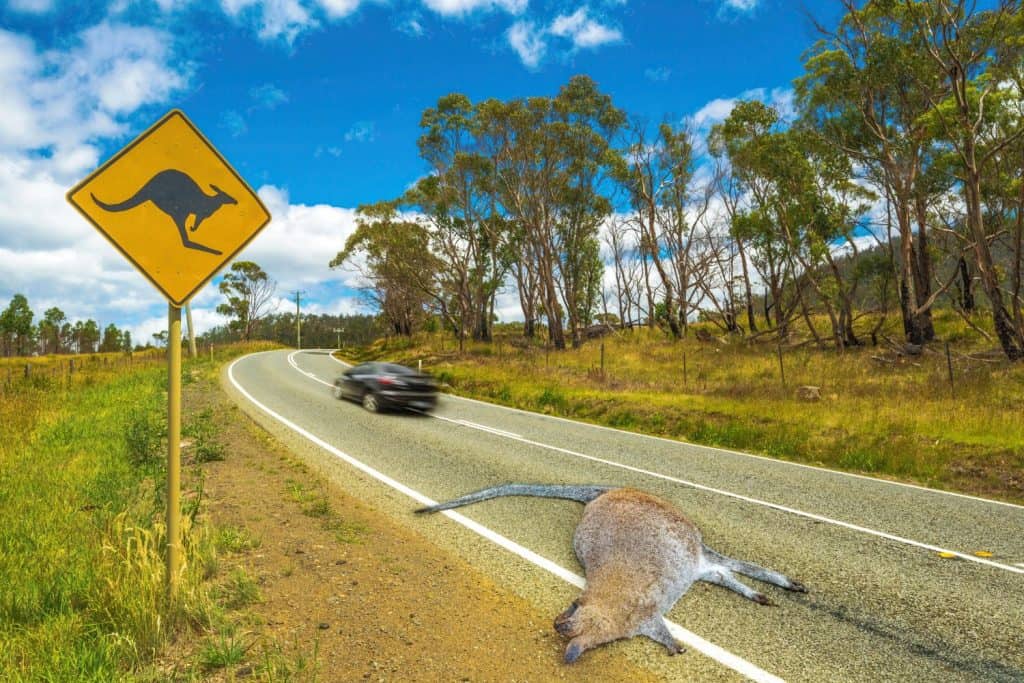
Tens of thousands of kangaroos have fatal collisions with cars each year.
©Benny Marty/Shutterstock.com
Traffic collisions with roos are a major issue across Australia, especially in the vast rural interior where kangaroos are most active at dawn and dusk. Kangaroos often bound unpredictably across roads, travel in groups, and freeze in headlights, creating a perfect storm for vehicle collisions. In many outback regions, kangaroos account for the majority of animal-related vehicle crashes. Nationwide, there are believed to be tens of thousands of kangaroo-vehicle collisions each year, with recent insurance data suggesting the number is likely between 20,000 and 30,000 annually.
A Poignant Scene
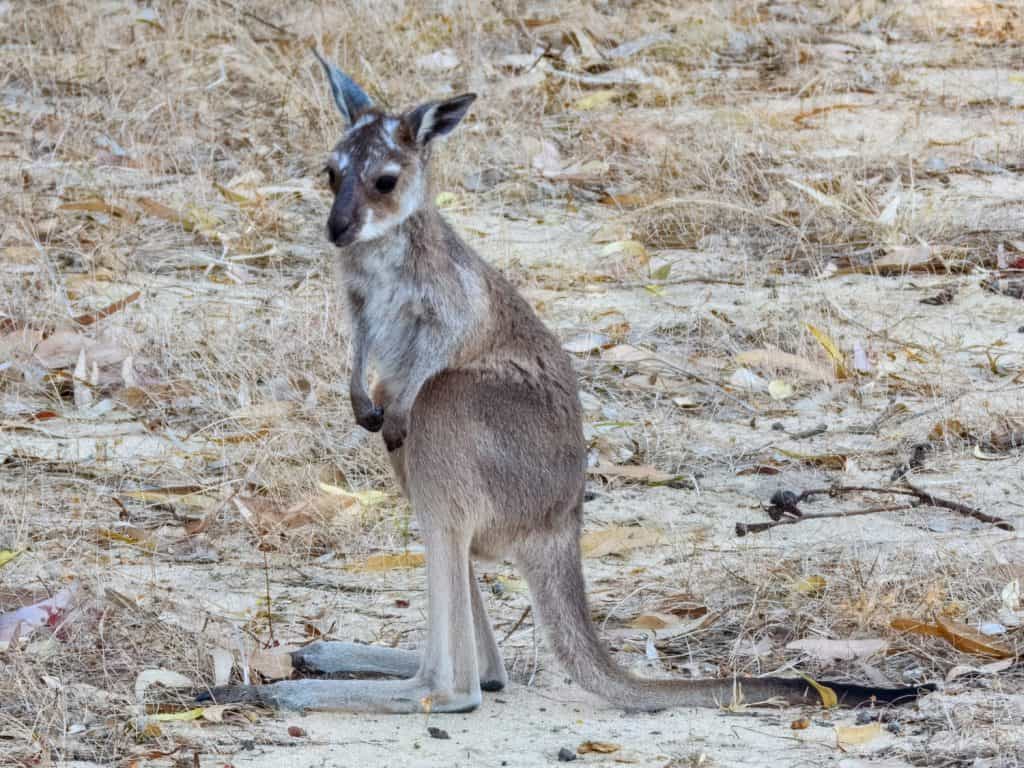
A female joey weighing about 4 pounds survived the accident.
©Imogen Warren/Shutterstock.com
An Instagram reel that recently spread across social media captured a scene almost too tender to bear. In a cemetery in New South Wales, surrounded by white crosses and weathered headstones, a male kangaroo stood beside the still body of a female who had been struck by a car. The video shows him nudging her, slipping his paws beneath her head, trying again and again to lift her as if urging her to wake up. She never moves.
The commentary explains that when Christian, a wildlife carer, arrived on the scene, he found the animal’s injuries were far too severe for her to survive, and her partner was refusing to leave her side. It is a raw and painful moment—one that resonates with our own understanding of grief. Yet amid the loss, there was a spark of hope: tucked safely in her pouch was a tiny 1.9-kilogram (about 4 pounds) joey—a little girl who survived because Christian acted quickly.
Understanding Grief in Animals
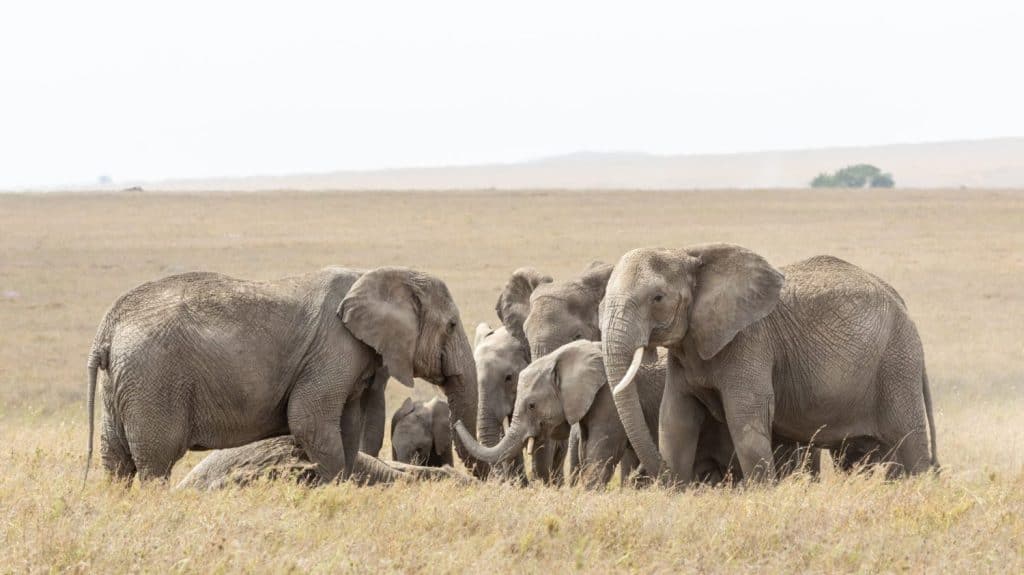
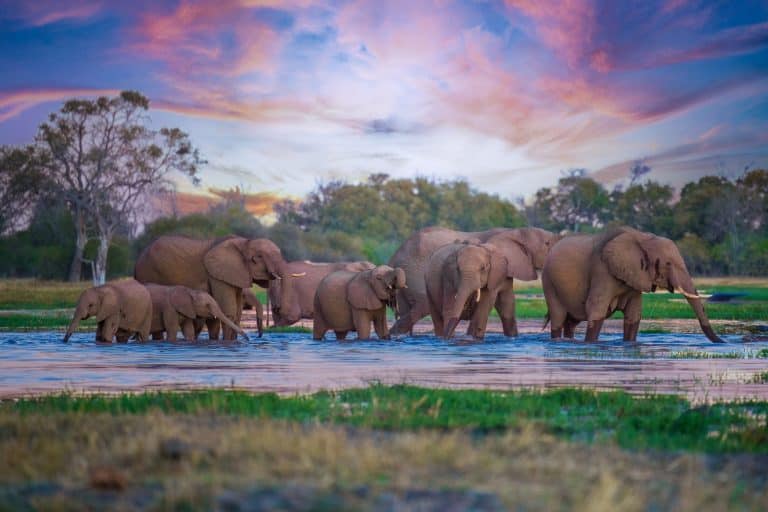
A herd of elephants gathered around a dead family member.
©Stu Porter/Shutterstock.com
Mammals show all kinds of emotions, and you don’t need a science degree to see them. Dogs wag and wiggle when they’re happy, cats sulk when they’re annoyed, and anyone who’s ever watched a baby monkey cling to its mother knows what comfort and fear look like. Lots of animals seek out friends, get excited, get scared, get frustrated, or lean into others for reassurance. They groom each other, play, cuddle, and call out when they’re upset. This is not simply ‘humans but smaller’; it is the natural emotional language of creatures who live in families and depend on one another.
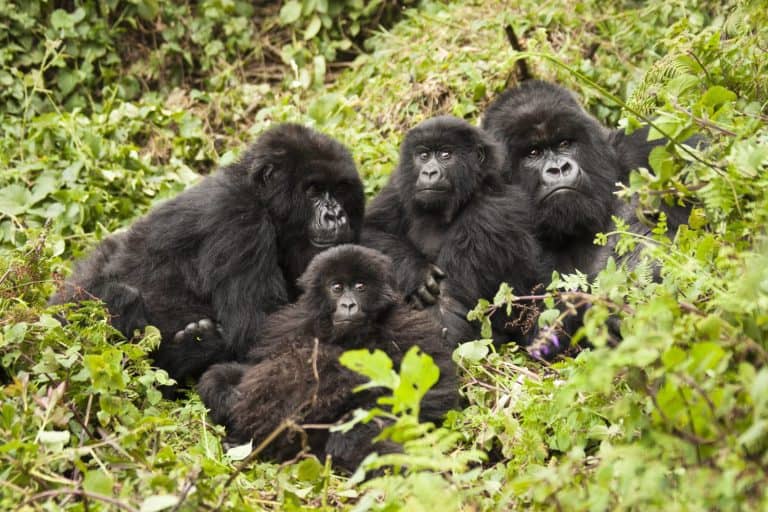
Grief is one of the clearest emotions to spot, and some animals show it in heartbreaking ways. Elephants linger around the bodies of loved ones, touching them gently with their trunks, sometimes returning to the same spot for days. Dolphins try to hold dead calves at the surface, as if hoping they’ll breathe again. Wolves hang back around fallen packmates, pacing and whining. Even primates have been seen carrying the bodies of their infants long after they’re gone. While it may not match human mourning exactly, it is clear that these animals feel the absence—the sudden break in their world—and react with a quiet ache that we recognize in ourselves.
Kangaroo Emotions
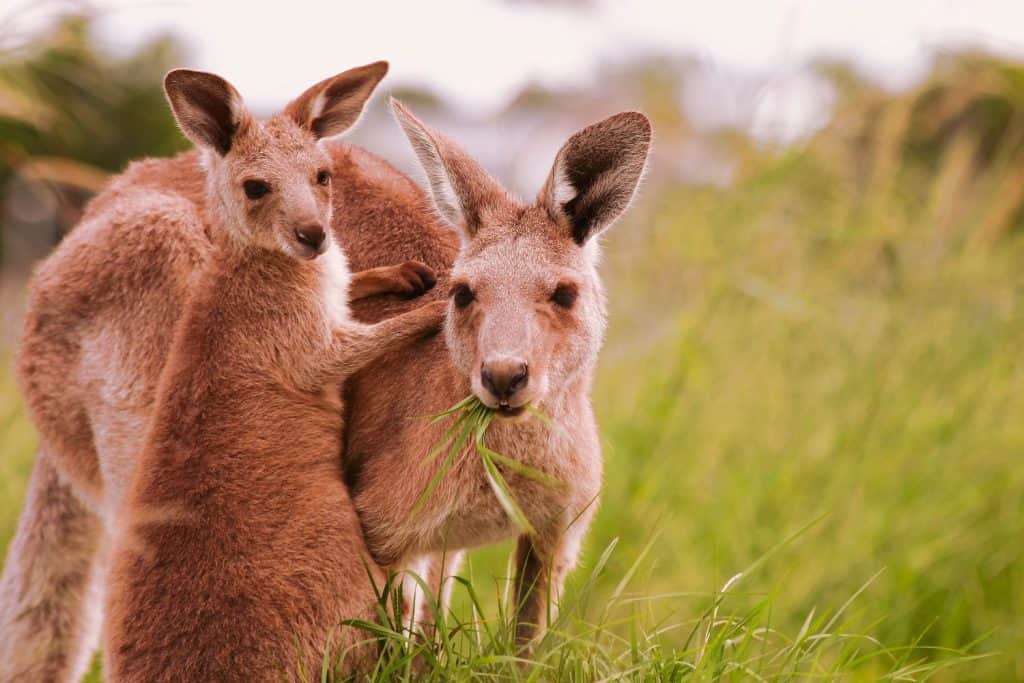
The brains of kangaroos are wired with the capacity for emotion.
©CreelShutterStock/Shutterstock.com
Kangaroos possess the neural hardware for strong emotional states. The brain regions involved in fear, reward, and social bonding are all present, and their bodies show familiar stress responses. Researchers track elevated stress hormones when kangaroos face dogs, cars, or separation from their mob. Mothers react intensely to threats against their joeys, and hand-raised individuals often form clear preferences for certain carers and routines.
Do Kangaroos Really Feel Grief?
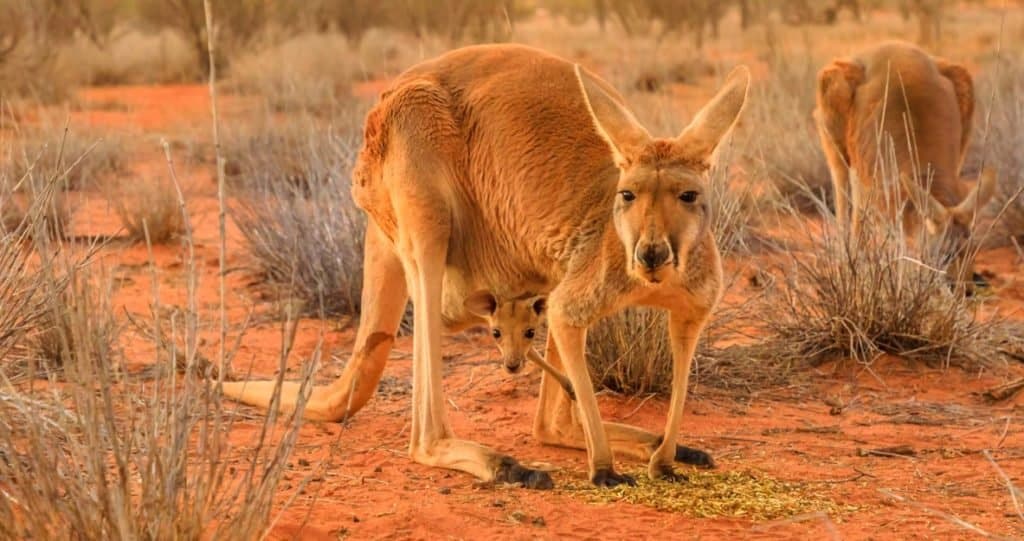
Grief in kangaroos has not been studied as closely as it has in some other mammals.
©Benny Marty/Shutterstock.com
Kangaroos are not as thoroughly studied in the area of mourning as elephants or primates, but their behavior suggests they feel something very close to grief or at least a deep disturbance when a bond is suddenly broken. Mothers who lose a joey often search their pouch, pace around the area where the joey was taken or died, and make soft, unsettled calls. Joeys removed for rescue sometimes cry, cling to their carers, or show anxiety in the absence of their mother. These responses are consistent with attachment, confusion, and emotional distress. These responses may not fit the human definition of grief, but they clearly show that kangaroos recognize when something is wrong and respond to that absence in a meaningful way.
Other observations come from wildlife carers and field workers who occasionally see adults staying near a dead mate or joey for long stretches. Some kangaroos touch the body with their nose or stand protectively nearby as if unsure whether to leave. Others walk away within minutes, indicating that reactions can vary depending on age, stress, season, or the presence of predators and traffic. Because many of these moments occur near roads, researchers cannot always observe safely, which limits what can be documented. Scientists are cautious about using the word ‘grief,’ since it is difficult to measure emotions in wild animals. However, the evidence shows strong social bonds and distress when those bonds are broken.
Guarding Against Projection
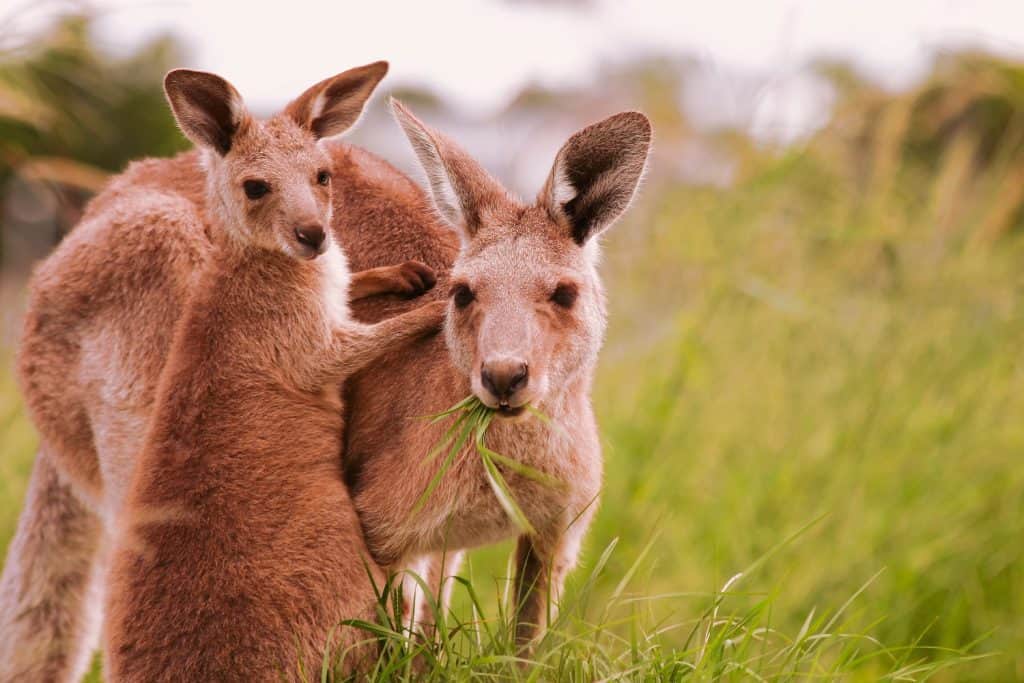
Humans have a tendency to anthropomorphize animals, particularly other mammals.
©CreelShutterStock/Shutterstock.com
People naturally project human feelings onto animals, especially in charged scenes. That tendency helps us care, but it can mislead. Scientists use stricter language to avoid mistakes. A kangaroo that nuzzles a dead companion may be grieving, or it may be checking scent, guarding access, or reacting to stress hormones. Attachment and distress are real and demonstrable. However, whether this behavior constitutes grief remains an open research question for this species.
A Symbolic Location
In the end, what made the cemetery video linger in people’s minds was not just the kangaroo’s behavior but the place where it happened. A seemingly grieving animal standing among human headstones feels strangely symbolic, as if the boundaries between our losses and theirs briefly overlapped. Whether kangaroos experience grief the way we do is still something science is sorting out. But regardless of how it is labeled, a moment like this invites us to look a little closer at the animals around us. As their lives unfold beside ours, they sometimes echo our own experiences more than we expect.