
Quick Take
- Researchers have found that human activity, especially scuba diving, combined with coastal development, is negatively impacting reef shark activity on coral reefs.
- Other species, like nurse sharks and Southern stingrays, are not impacted.
- The findings could have implications for future conservation approaches.
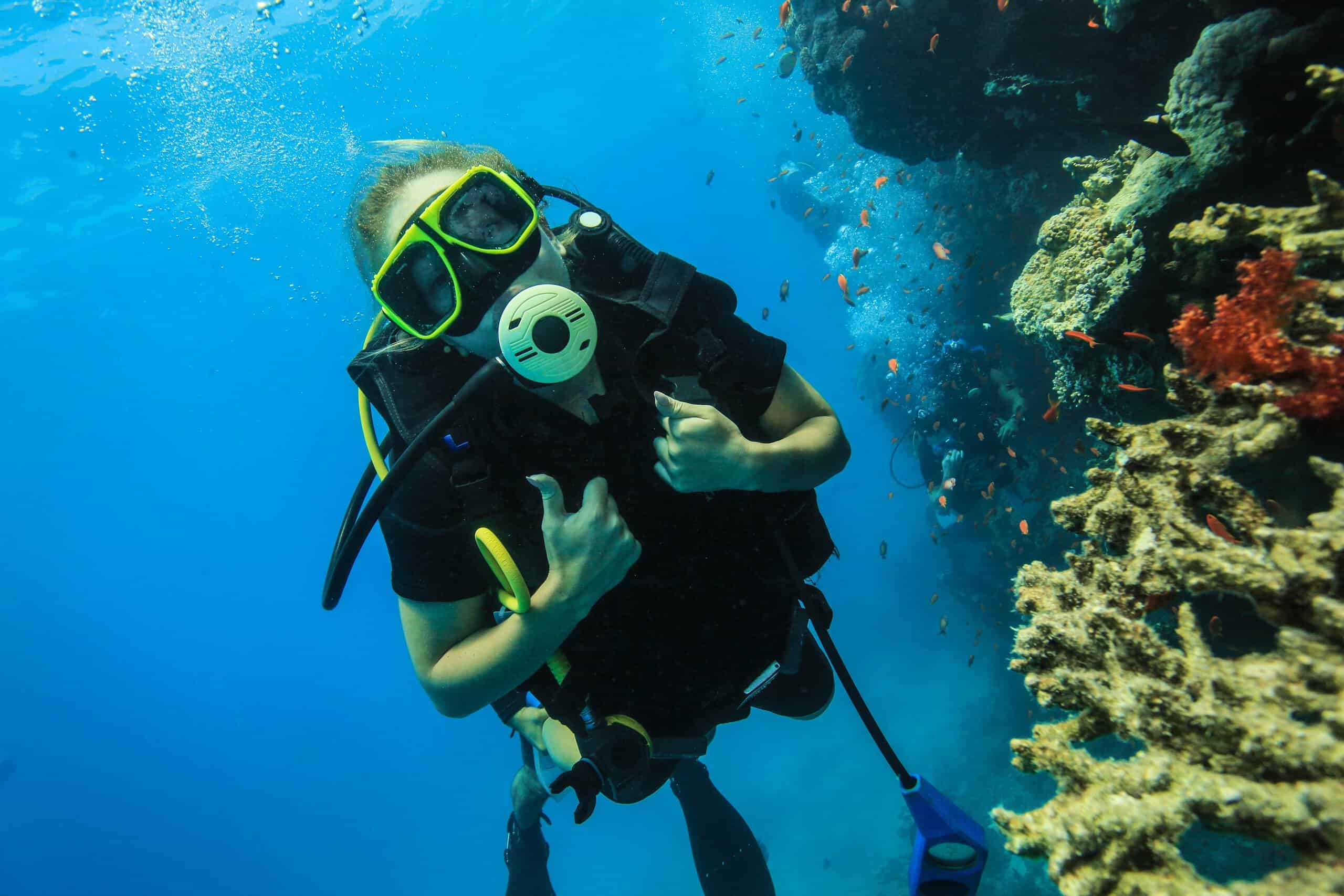
Where there are coral reefs, you expect to find sharks. But that’s not always the case. I’ve been scuba diving for more than a decade on the southern Caribbean island of Bonaire, an island famous for its pristine coral reef system that encircles the entire island. I’m not the only one.
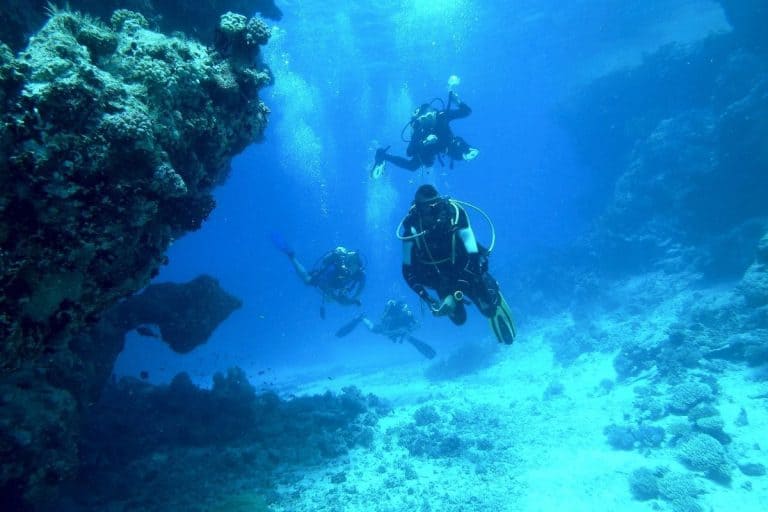
In 2024, more than 180,000 visitors came to Bonaire, many to explore the reef system. Tourists tend to dive on the island’s leeward west coast, where calm conditions and easy shore entries make diving a breeze. The reef system starts just a few meters from shore, too. These are all factors that have earned Bonaire the title of “Shore Diving Capital of the World.”
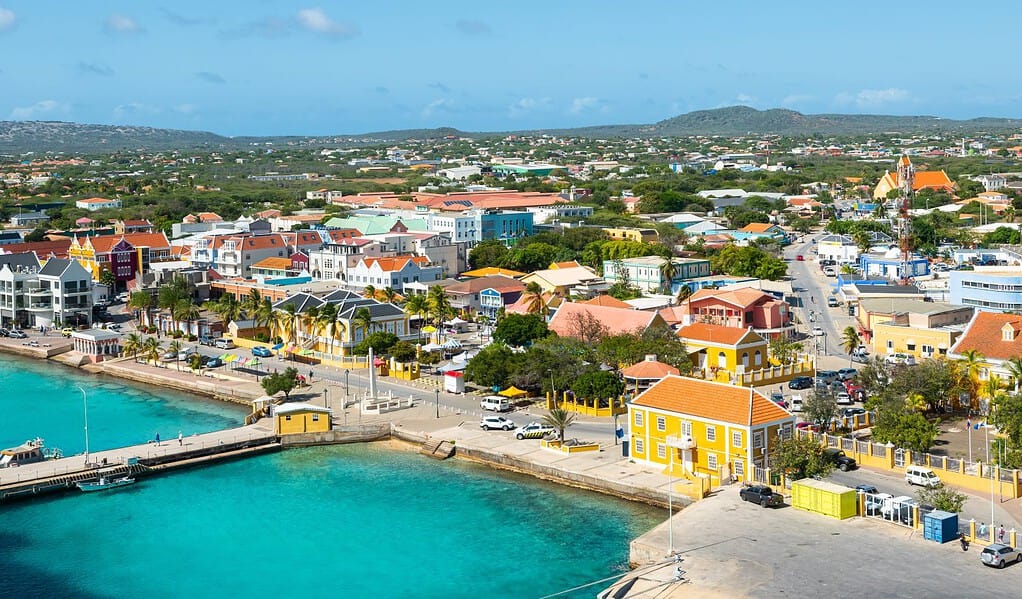
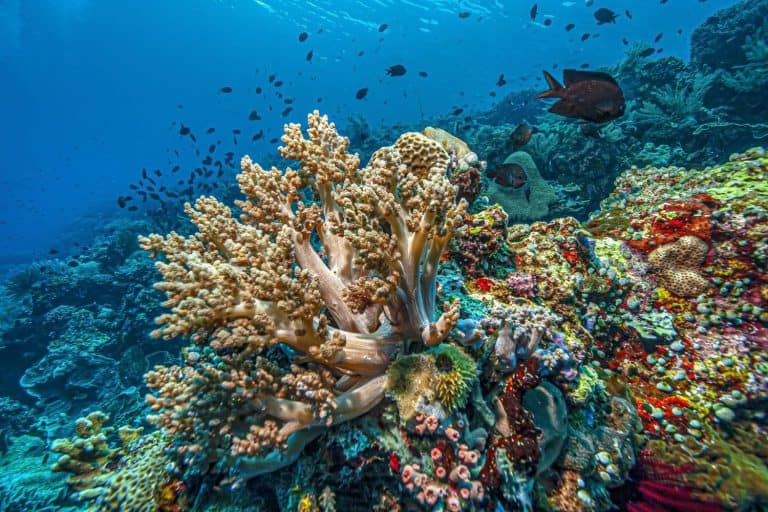
Bonaire is one of seven Dutch Caribbean locations included in the study. It is known as the “Shore Diving Capital of the World.”
©Nancy Pauwels/Shutterstock.com
Shark sightings are so rare that when one is seen, people flock to social media to share their experiences. I’ve logged more than 1,000 dives here and can count on one hand the number of sharks I’ve personally seen during a dive. Every one of those sightings was on the island’s uninhabited and rugged east coast.
I always wondered why. A new study may provide the answer.
What Did Researchers Study?
Researchers from Wageningen University and Research in the Netherlands spent five years, between 2012 and 2017, studying marine life activity across seven reefs in the Caribbean. Six were around Dutch Caribbean islands, including Aruba, Bonaire, Curaçao, Saba, St. Eustatius, and St. Maarten. One was on the Saba Bank, a remote reef with virtually no human activity.
Researchers were interested in understanding how human activity and coastal development impacted marine life populations on coral reefs. To collect data, the study measured two factors: marine life behavior and human presence.
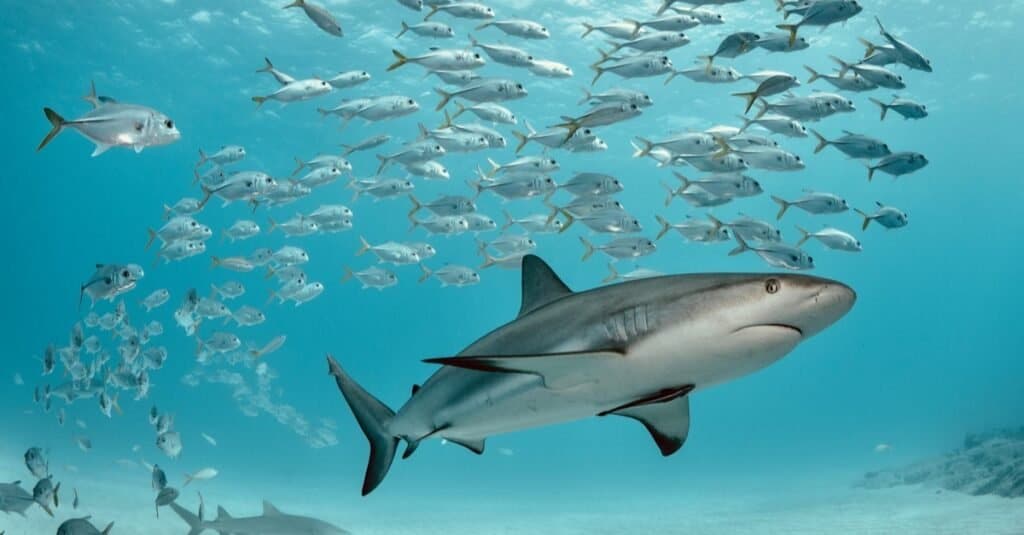
A Caribbean reef shark swims with a school of jacks.
©Maui Topical Images/Shutterstock.com
To compute marine life activity, researchers set up 995 Baited Remote Underwater Video (BRUV) systems on seven reef systems. The cameras used bait to attract marine life and then recorded visitors to the camera. During the five years, the cameras captured 455 elasmobranchs, dominated by Caribbean reef sharks, Carcharhinus perezi, Southern stingrays, Hypanus americanus, and nurse sharks, Ginglymostoma cirratum.
Human presence was measured differently. To get an understanding of the volume of human activity at each monitored location, researchers turned to a surprising source – social media. To gauge how much human activity there was on the reef, researchers used geolocated underwater photos that people posted to Facebook, Instagram, and other social platforms. Researchers combined that with publicly available satellite data to measure coastal development.
What the Study Found
The researchers concluded that high levels of human recreational activity – in particular scuba diving – combined with increased coastal development, were directly related to lower numbers of reef sharks on the coral reefs. This was true even when the reefs were in excellent ecological health. It turns out, sharks aren’t avoiding damaged reefs; they’re avoiding busy ones.
The Saba Bank, where human activity is minimal, presented a different scenario. Reef sharks were found there in numbers scientists would expect. The two factors that influenced the sharks’ presence on the Saba Bank reef were natural factors that typically impact shark presence, like reef structure and water depth.
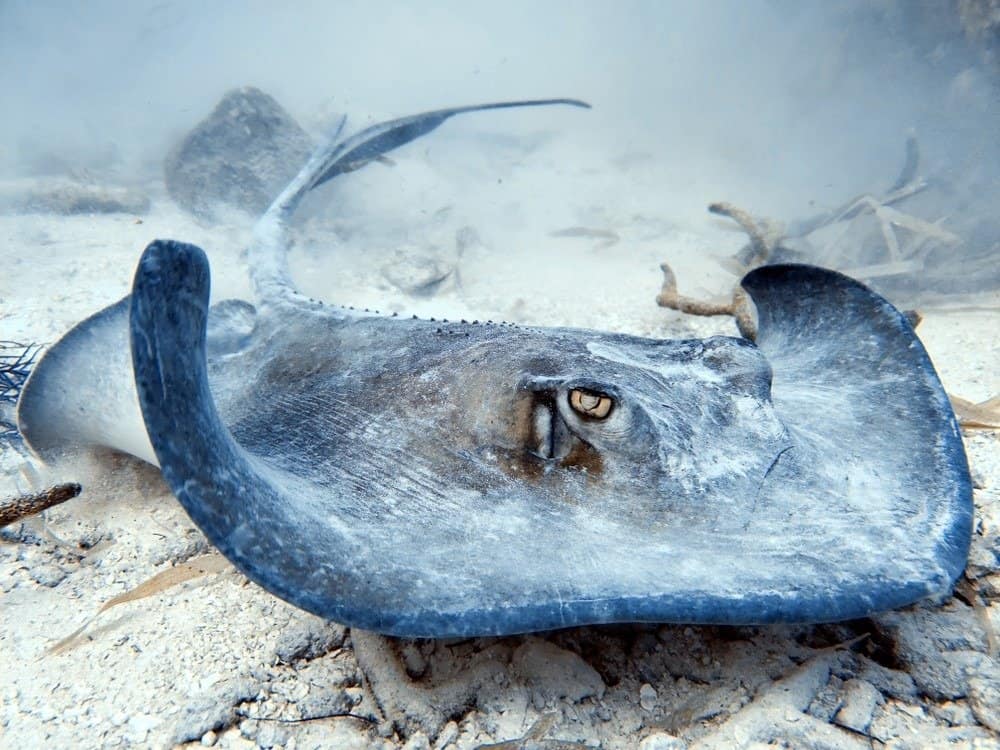
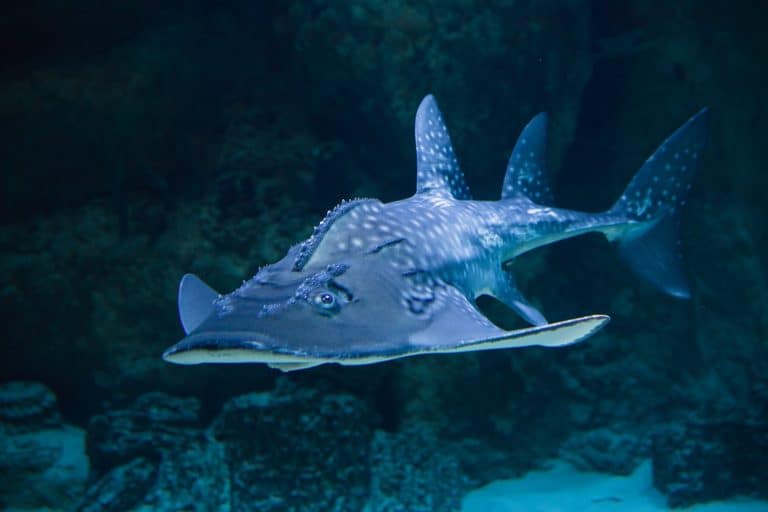
A Southern stingray cruises the ocean floor.
©Nate Madden/Shutterstock.com
For nurse sharks and Southern stingrays, the other two marine species that showed up most often in the study, distribution across all the studied sites was the same. Their presence was influenced by reef structure and water depth, with human activity having little to no impact on their numbers.
I don’t find this surprising. Nurse sharks are plentiful on Bonaire’s coral reefs, especially in the shallower areas. Southern stingrays are also easy to spot when they choose to venture along the shallower reef areas. In my experience, they tend to spend most of their time in much deeper water, typically near the maximum depth for recreational scuba diving—a depth that not many divers reach.
The bottom line is that even low-impact activities like scuba diving seem to contribute to the scarcity of reef sharks in areas where they would typically be found. Coastal development also plays a role.
Why Do These Findings Matter?
Reef sharks are apex predators. They help keep the entire ocean ecosystem in balance. If they’re being driven away by underwater tourist activity—even in places like Bonaire, which has strong marine park regulations—it could have a detrimental impact on overall marine health.
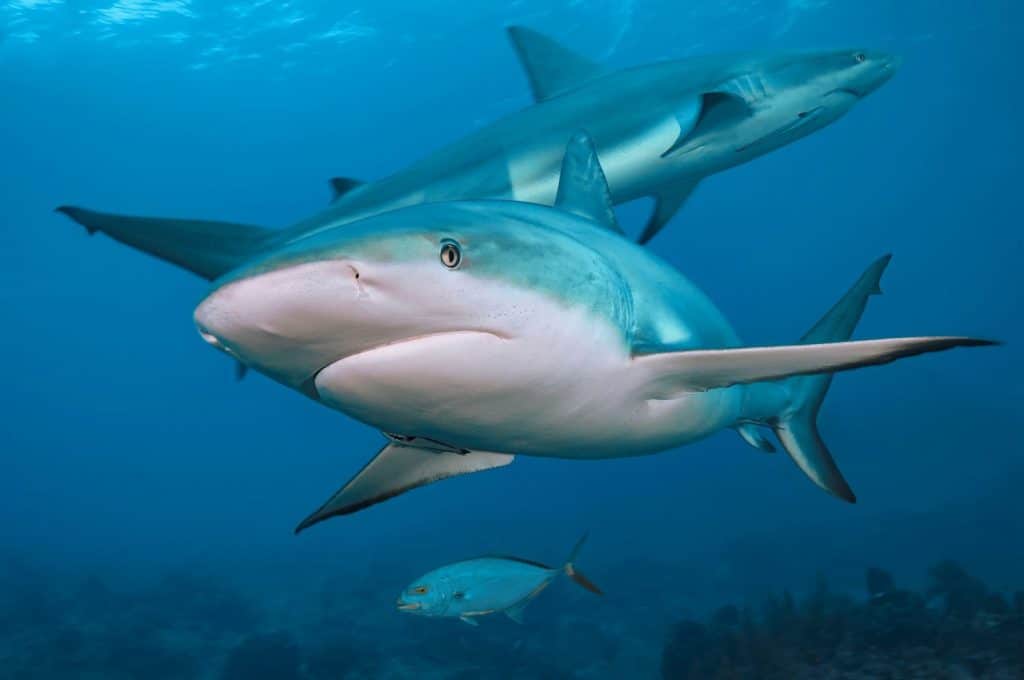
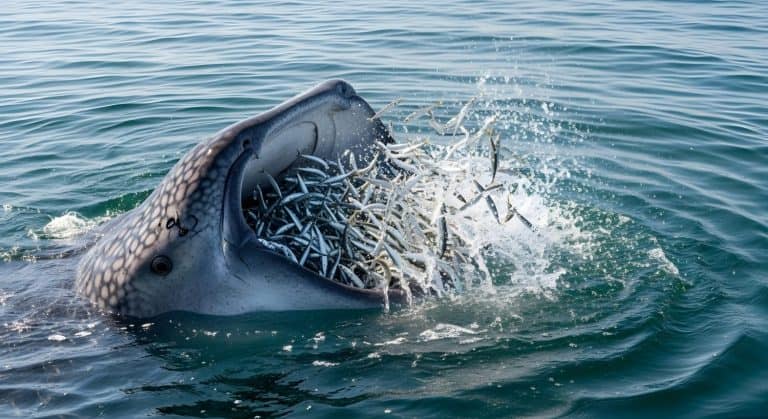
Caribbean reef sharks are apex predators and help keep the ecosystem balanced.
©Paul Flandinette/Shutterstock.com
The study’s findings suggest that conservationists must consider new approaches to reef management and species protection. For decades, Bonaire has been a leader in marine park protection. There are excellent standards in place to protect the fragile coral reef itself. Several other Dutch Caribbean islands have followed suit.
However, if the mere presence of divers in the water is enough to negatively impact reef shark behavior, it could fundamentally change how conservationists approach the protection of Caribbean coral reefs and marine ecosystems in the coming decades.