
Quick Take
- Sharks can reach ocean regions that neither human divers nor modern machines can effectively explore, and that gap is exactly why scientists are now strapping sensors to them. See how deep sharks dove →
- The forecasts sharks enable go far beyond predicting storms, and the implications for coastal communities and marine ecosystems are vast. Explore the broader implications →
- This research didn't start with sharks as meteorologists. It took nearly a decade and a surprising repurposing of existing tag technology to unlock what scientists had been sitting on. Trace the decade of research →
Animals are bioindicators, reflecting the state of the world around them. Birds are often early indicators of storms, while rodents are believed to feel earthquake tremors minutes before they happen. In the marine world, dragonflies are indicators of high mercury levels, while fish are now revealing toxic drug levels in waterways. Animals often detect environmental changes that humans may not easily detect, even with advanced technology.
Sharks are the newest players to enter the field of weather forecasting. Their migration patterns and swimming depths can reveal climate details that neither humans nor radar can record. And now, scientists are tagging sharks throughout our oceans to learn more.
Sharks Are the Newest Meteorologists
The study, published in the journal npj Climate and Atmospheric Science, is led by Laura H. McDonnell, a postdoctoral investigator at Woods Hole Oceanographic Institution (WHOI). McDonnell decided to test shark climate forecasting during her doctoral studies at the University of Miami Rosenstiel School of Marine, Atmospheric, and Earth Science and the Abess Center for Ecosystem Science and Policy. Her research showed that data from tagged sharks can enhance the accuracy of ocean forecasts in dynamic regions and complement existing weather technology.
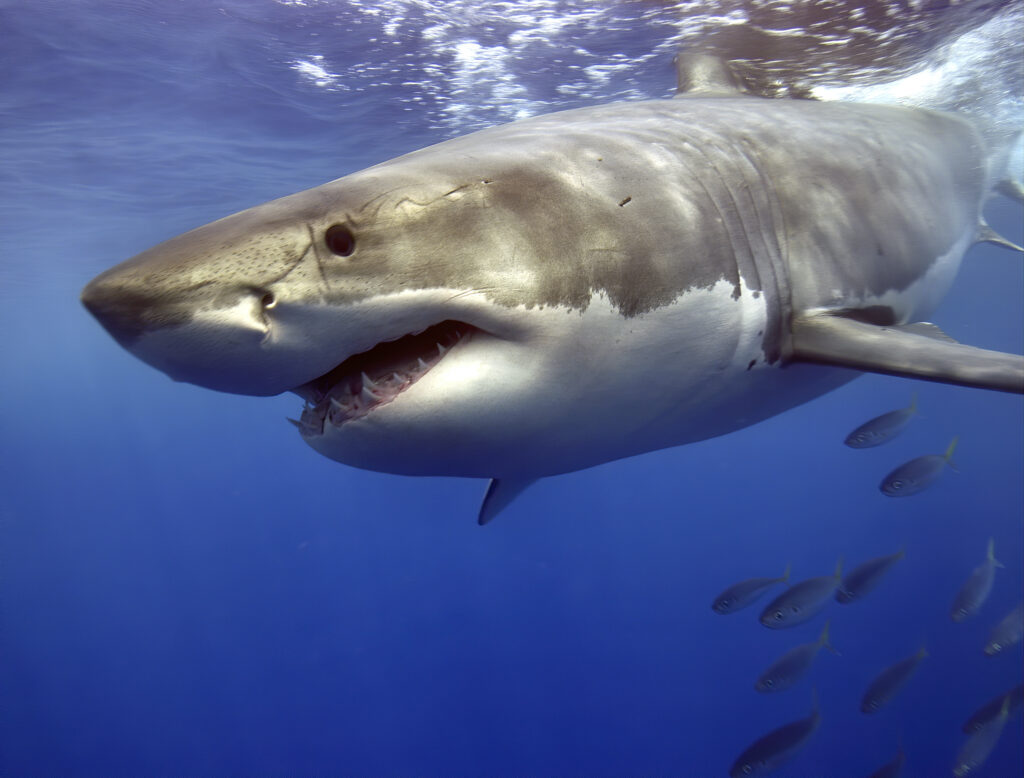
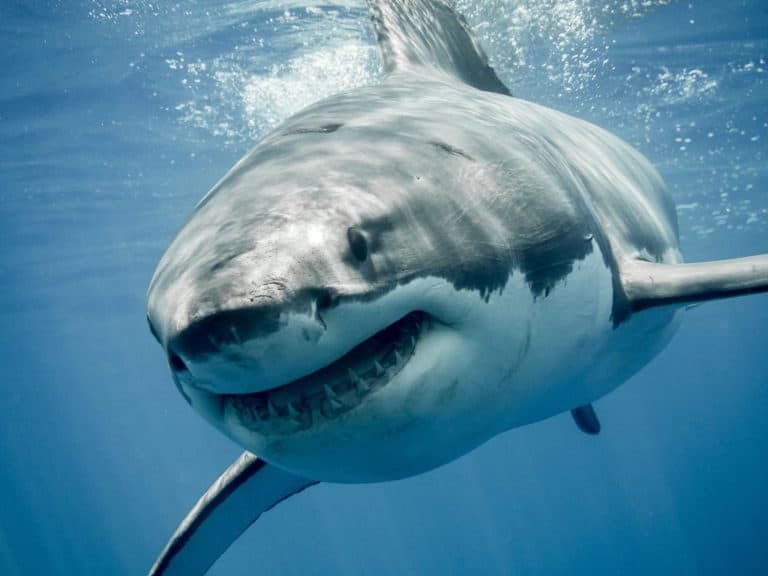
Tagged sharks are often tracked for study purposes, and now climate forecasting has been added to that list.
©iStock.com/Martin Heyn
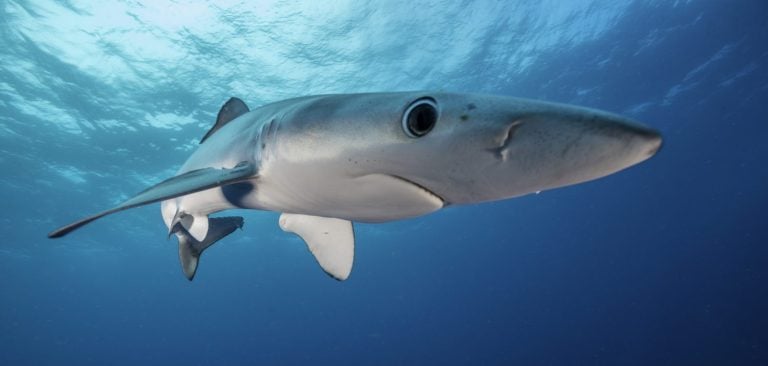
Scientists tag sharks for a number of reasons, from studying migration patterns to determining age and reproductive rates. However, sharks are not often tagged for weather prediction. The theory is that sharks can relay valuable information from parts of the Atlantic that are unreachable to humans or machines. To test this, McDonnell and her team tagged 18 blue sharks (Prionace glauca) and one shortfin mako shark (Isurus oxyrinchus). With the help of shark scientist Neil Hammerschlag, the WHOI team, and a local fisherman, the sharks were tracked throughout the Northeast Atlantic.
The Research and the Results
For a total of six months, McDonnell and her team recorded depth and temperature as the sharks swam. This is where the data becomes interesting. Depending on the season, sharks naturally gravitate toward warmer waters. This is a good early indicator of how quickly the ocean heats up, and where. Mako sharks, specifically, are known to prefer deep water in the pelagic zone. This brings them near continental shelves, regions that may be difficult to study.

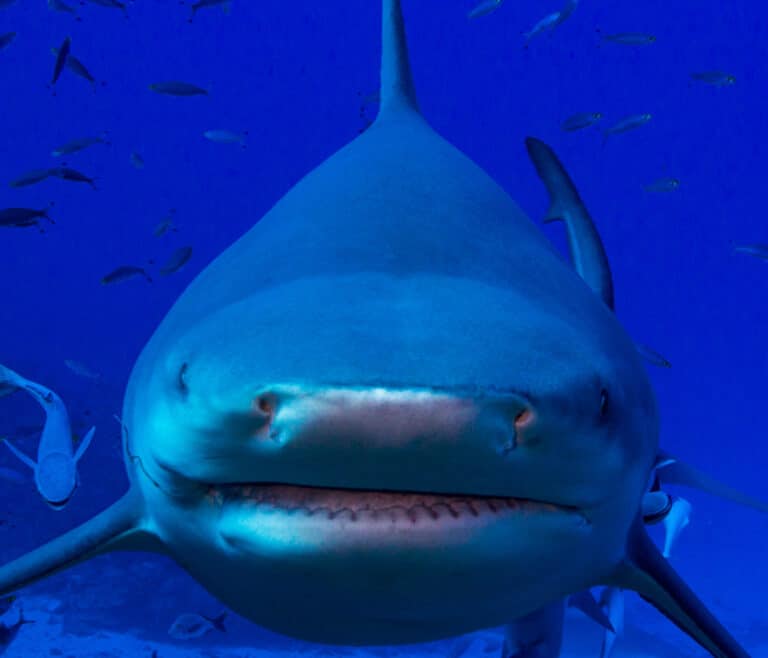
Shortfin makos prefer deep water, providing depth and temperature details in areas ROVs can’t reach.
©Alessandro De Maddalena/Shutterstock.com
Alternatively, blue sharks are fans of the open ocean and the pelagic zone. They thrive in tropical waters but are found across a wide range of oceans, making them ideal candidates for collecting the most data. They also follow clockwise ocean currents such as the Gulf Stream. Data from this area is extremely helpful in forecasting major storms and fronts. It’s also indicative of the climatic conditions in ocean basins that, again, are difficult for humans to reach alone.
By the end of six months, the tagged sharks unknowingly gathered 8,200 temperature-depth profiles. Some of these profiles recorded data from just over 1.2 miles beneath the surface. For reference, humans can only dive to about 0.2 miles, while ROVs typically do not go deeper than four miles. However, sharks can do what ROVs cannot: navigate crevices, shelves, and murky waters with ease. Sharks also do not have a time limit for how long they can stay underwater before surfacing, making them ideal for gathering data.
How Sharks Will Help Climate Forecasts in the Future
Hammerschlag stated that this study goes beyond monitoring shark locations. “Key to this study was repurposing a more advanced tag capable of transmitting location data along with temperature and depth information. This allowed us to link subsurface ocean conditions directly to specific locations with known accuracy,” he said in an interview with Mirage News. His words echoed McDonnell’s, emphasizing that sharks could help address the gaps left by current forecasting methods.
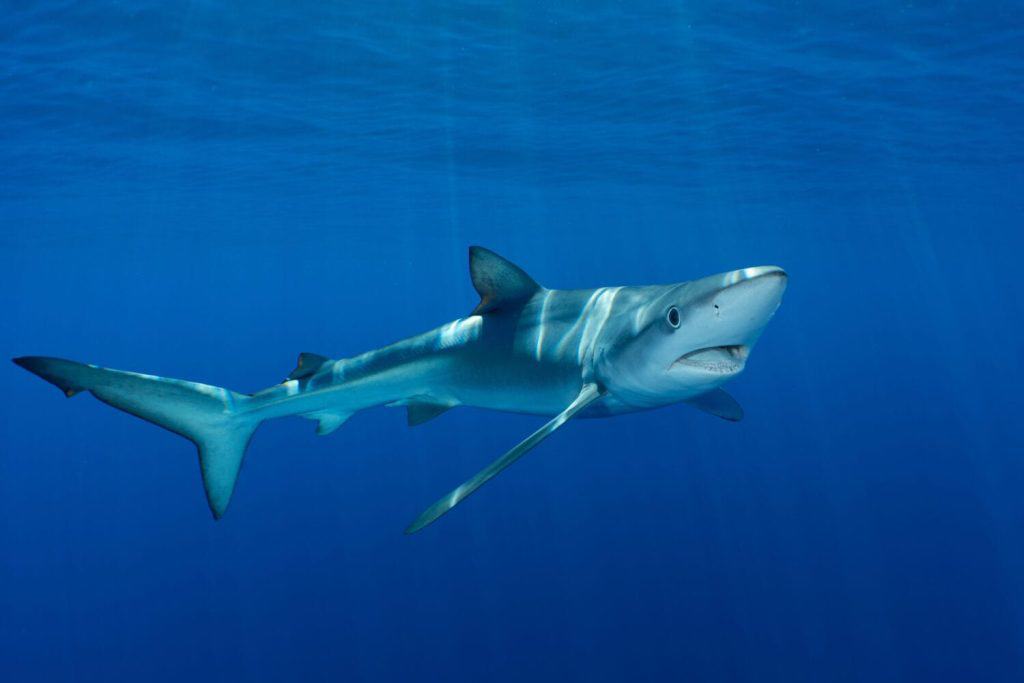
Blue sharks roam the oceans, offering information across a wide range of ocean territory.
©Samy Kassem / Shutterstock.com
These forecasts are not only valuable for predicting weather patterns. They can also serve as crucial indicators of the overall health of a marine ecosystem. Where sharks go can reveal information about vulnerable species, water conditions, and even the climate of coral reefs. On the human side, these forecasts are especially valuable to fisheries and coastal communities, according to WHOI oceanographer and study co-author Camrin Braun.
The study also builds on research and theory by Hammerschlag’s lab in 2018. During this period, the team realized that data collected by tagged sharks could be used for climate research. The research was nearly a decade-long process, and may continue to help monitor our ocean climate for decades to come.