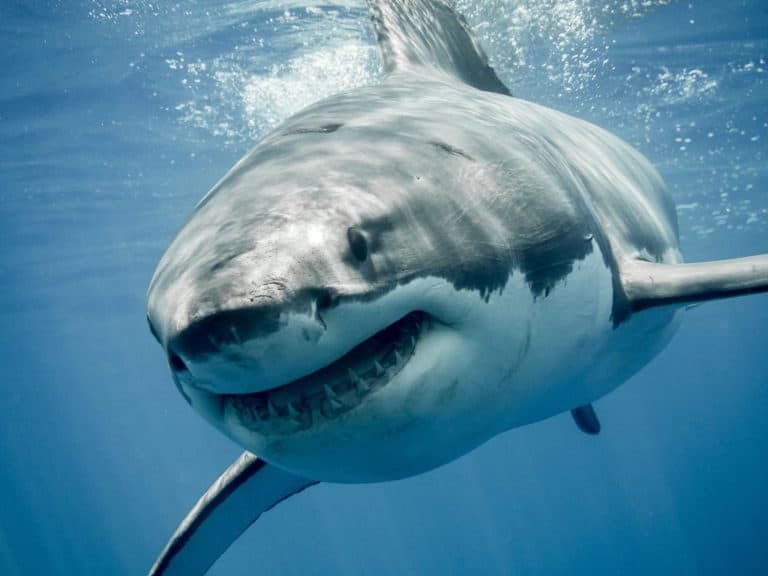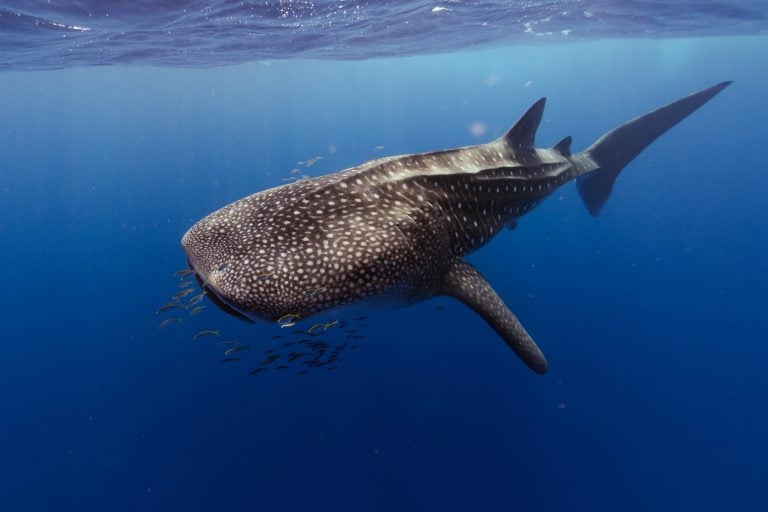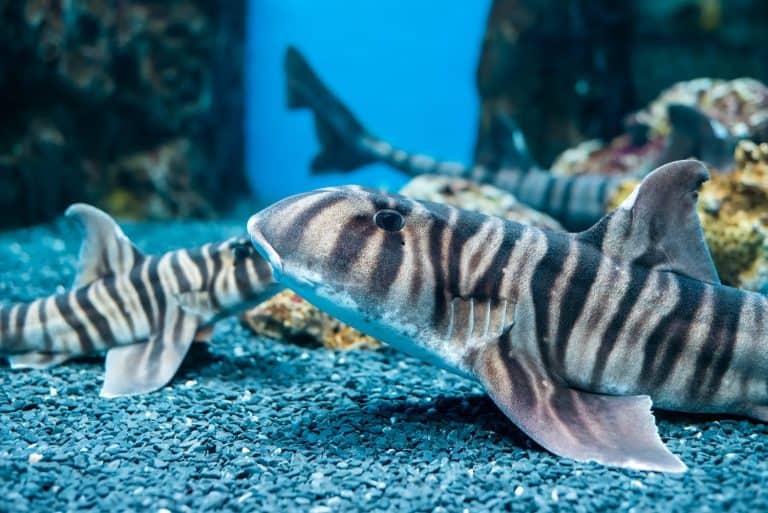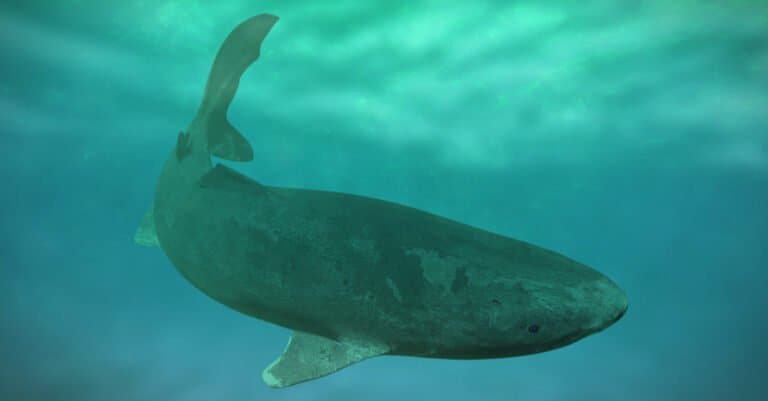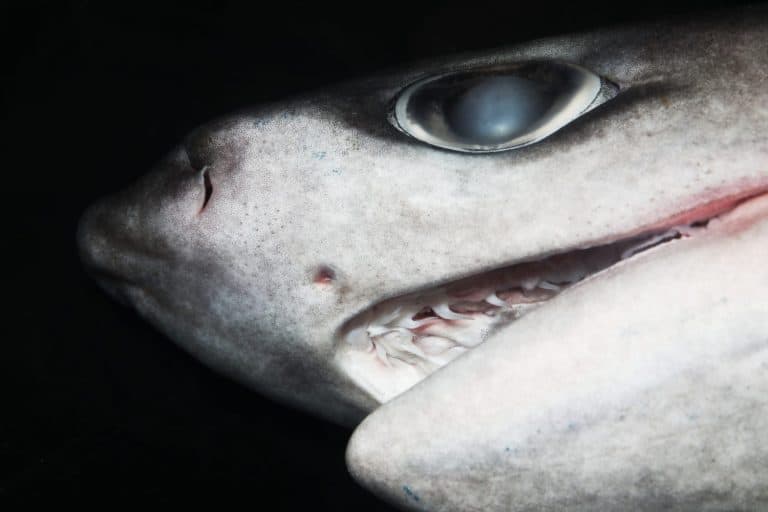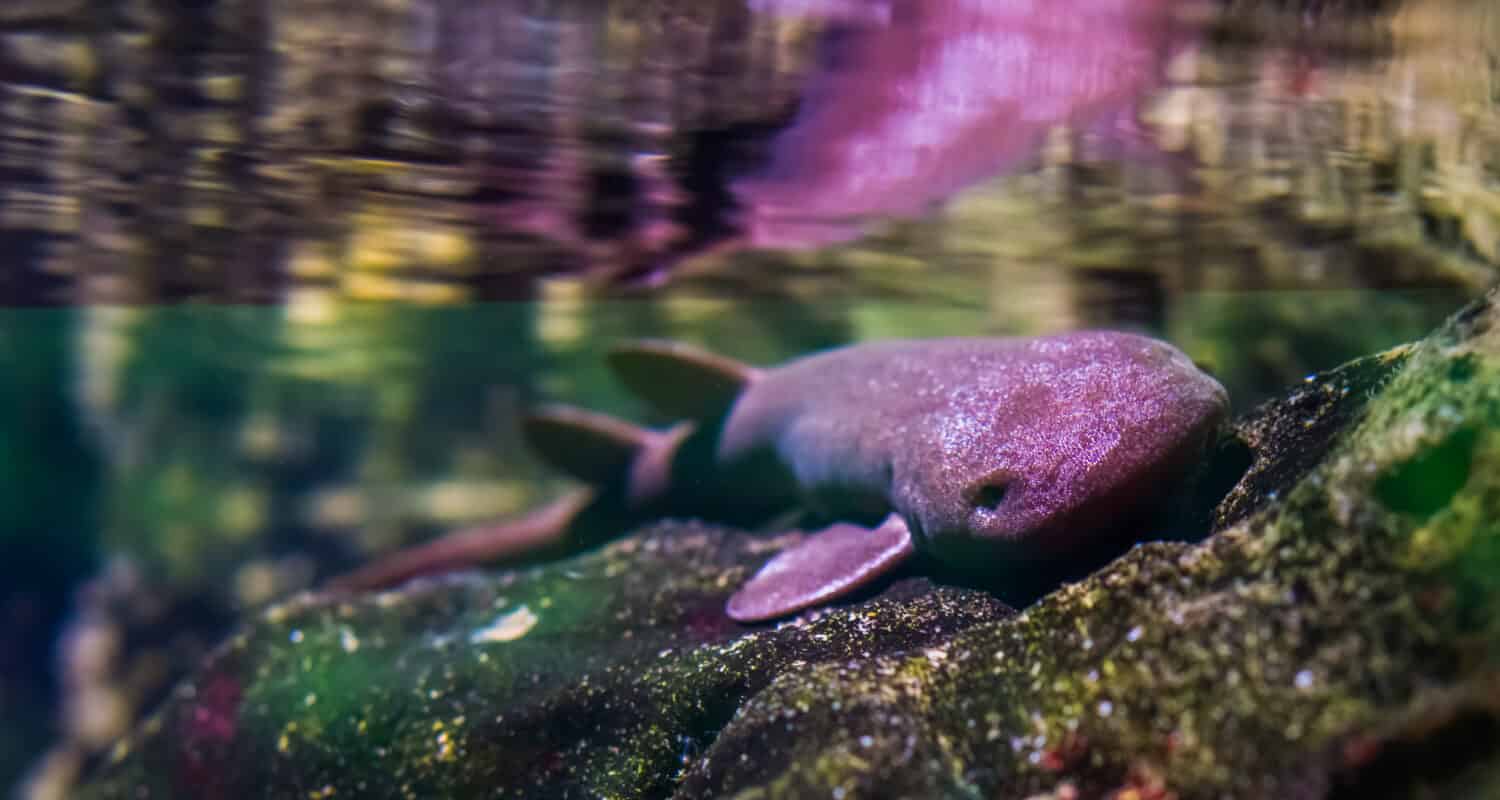

If you’ve ever seen a shark, either in person or through media, you’ve probably noticed that they share similar coloring: dark tops and sides (often shades of gray or beige) with a paler white stomach. These coloring patterns, known as countershading, help sharks remain camouflaged under the water. This countershading serves several purposes: it allows sharks to sneak up on prey more easily and helps them hide from potential predators such as larger sharks or killer whales. However, in rare cases, shark colors may deviate from the norm: exactly what happened with a nurse shark (Ginglymostoma cirratum) caught in Costa Rica’s Tortuguero National Park.
According to a YouTube video on the incident, sport fishers captured a glowing orange nurse shark with white eyes. What’s particularly interesting about their catch is that the shark is an adult. Given its coloring, most scientists would posit that the shark would have been easily spotted and eaten by predators earlier in time. This exact color pattern has only been observed and documented once before, in a Homelyn Ray(Raja montagui) found in the Irish Sea in 1910. Learn exactly why this pattern is so unique and what it could teach us about our world’s oceans.
What Are Nurse Sharks?
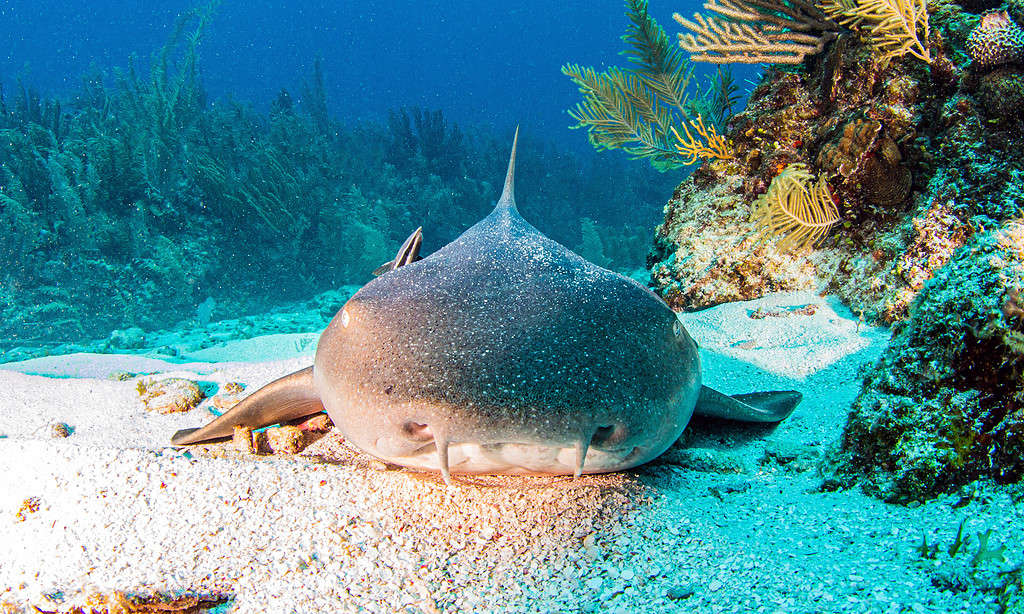
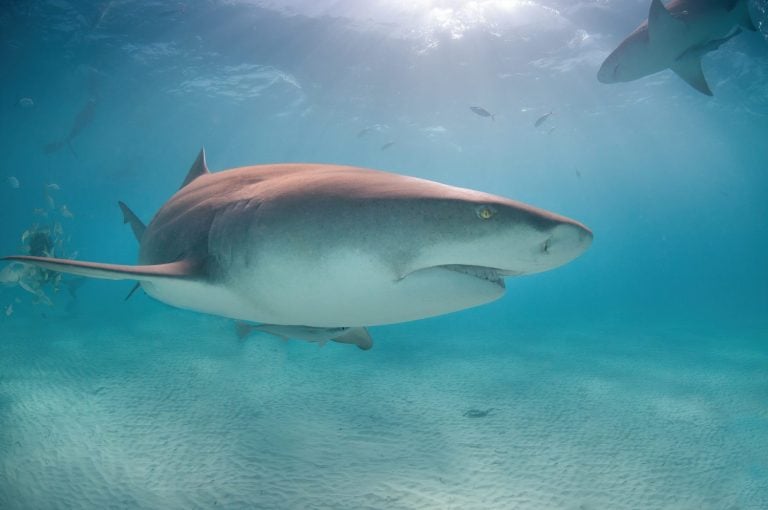
Nurse sharks are usually docile in nature, so they are typically not considered dangerous to humans.
©Divepic/ via Getty Images
Many people are afraid of sharks or swimming in water where sharks might be present. But with nurse sharks, you don’t have to worry. Although there are rare instances where nurse sharks can be provoked to bite, these sharks are slow-moving and relatively passive.
Nurse sharks usually grow to around 7.5-8 feet long, though they can be as large as 10 feet. Typically, they weigh between 160 and 230 pounds. Right now, nurse sharks are listed as Vulnerable on the IUCN Red List. According to Oceana, an international advocacy organization committed to ocean conservation, the largest dangers facing these sharks include overfishing, rising ocean temperatures, and habitat loss.
Nurse sharks are bottom-dwelling sharks that usually reside in warmer waters. Unlike other sharks, which need to swim to breathe, nurse sharks are buccal pumpers. Essentially, they can pump water through their gills to get the oxygen they need to survive, allowing them to rest in one place. Nurse sharks are also nocturnal, which means they’re active at night.
One of nurse sharks’ most defining features is their barbels, which look like fleshy whiskers hanging from their face. Nurse sharks are benthic feeders. Benthic means bottom-dwelling and refers to any creatures that live at the bottom of the water, such as mollusks, stingrays, crustaceans, or even bottom-dwelling fish. They find their food by dragging the barbels along the sand, then suctioning prey into their mouths.
Discovering the Orange Nurse Shark
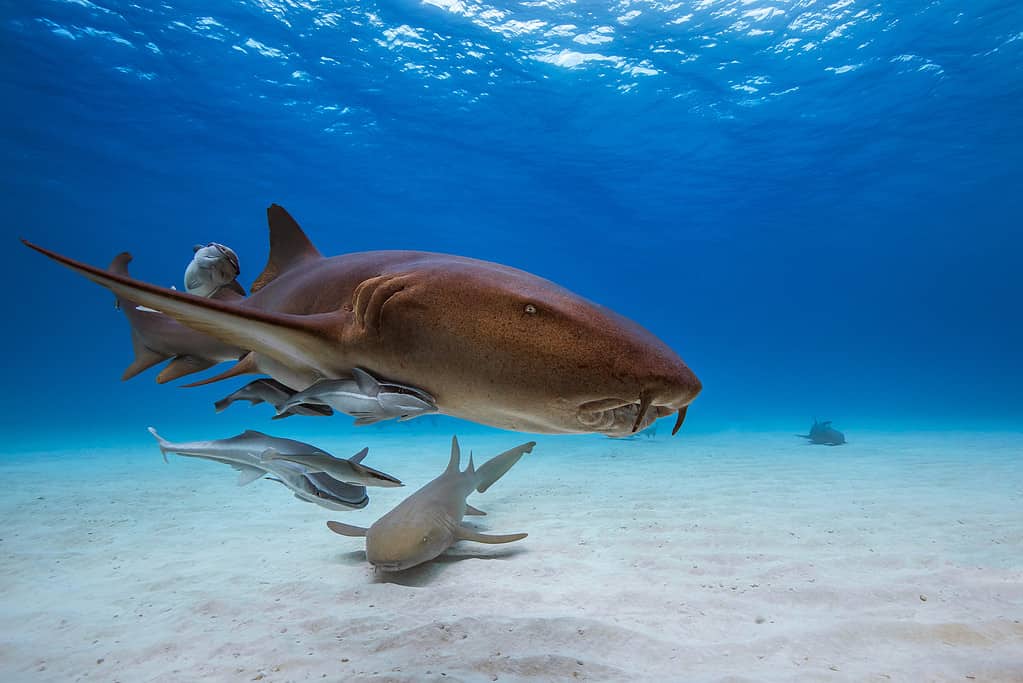
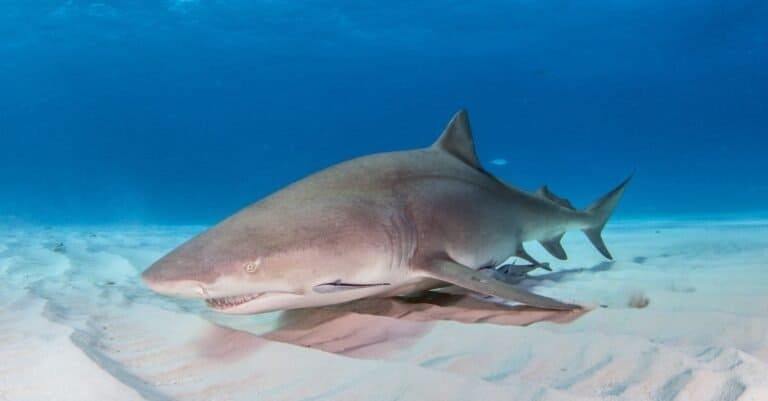
Nurse sharks are typically shades of brown in color, with occasional yellow or tan notes.
©Carlos Grillo/ via Getty Images
During a sport fishing event in Costa Rica, angler Garvin Watson reeled in an unexpected catch. The orange nurse shark, with white eyes, was swimming about 120 feet below the ocean’s surface when it was captured. Its coloring has never been seen before in its species.
The 6.6-foot shark, which was later released, had two genetic mutations that caused albinism and xanthism. Together, researchers are referring to the condition as albino-xanthochromism, a reference to the albinism paired with the abnormal yellow skin discoloration.
What are Albinism and Xanthism?
Albinism in animals is similar to albinism in humans. This genetic condition affects melanin production, leading to a lack of pigment in the skin and eyes. According to reporting in Forbes, this is not the first time albinism has been seen in nurse sharks. In fact, several reports have shown reports of albinism, hypermelanosis, and piebaldism, which either cause total absence of pigmentation or spotty coloring. Albinism can be dangerous to animals, including sharks, but not because of any health effects. Instead, sharks with albinism cannot camouflage as well, may become more vulnerable to predators, and may struggle to find acceptable mates.
Xanthism, on the other hand, has never before been observed in nurse sharks or in any other sea creatures discovered in Caribbean waters. As a form of xanthochromism, xanthism is another genetic disorder that causes an overabundance of yellow pigmentation and a lack of red pigmentation.
Marioxis Macías-Cuyare, the lead author on the study about this particular nurse shark, explained that xanthism doesn’t usually impair an animal’s health. For this shark, neither genetic anomaly actually contributed to any health impacts. In fact, researchers were somewhat stunned that the shark had survived into adulthood. Some have surmised potential reasons for this, including:
- The shark’s bottom-dwelling nature made it less vulnerable to larger predators.
- Its yellow coloring signaled potential danger to predators, ironically making it safer and less likely to be eaten.
What Causes Albino-Xanthochromism?
Honestly, researchers aren’t entirely sure what led to albino-xanthochromism in this nurse shark. But they do have potential ideas. At its core, xanthism and albinism are, as discussed, genetic issues. The paper authors are also considering:
- Environmental stressors, including rising ocean temperatures
- Inbreeding between sharks
- Hormonal changes or imbalances
- Other stressors faced by the shark
While we’re all curious, more research and evaluation are needed. By documenting this shark and others in the area in the future, and by examining the environment in which the shark was found, researchers could gain valuable insight into both the health of our oceans and the creatures that inhabit them.