Quick Take
- A new study reveals that one species of the “Pinocchio” chameleon, known for their long nose, is actually two species
- Researchers used both DNA analysis and looked at museum specimens
- Both species come from Madagascar, where a high percentage of chameleons live.
For nearly 150 years, herpetologists have recognized a quirky group of Madagascar chameleons by one unmistakable feature: a long, pointed “nose.” That dramatic snout earned them the nickname “Pinocchio chameleons,” and for decades, the shape of that nasal appendage was treated as the key to distinguishing species. Now, a new peer-reviewed study says that the signature trait wasn’t nearly as reliable as scientists thought.
Using a combination of genetic testing and close anatomical comparisons, an international research team concluded that the animal long referred to as the Pinocchio chameleon is actually a distinct, previously unrecognized species. The researchers named it Calumma pinocchio, finally aligning its famous common name with its scientific one. And that wasn’t the only surprise: the same deep dive into DNA and museum specimens also revealed a second new species, Calumma hofreiteri, which had been hiding in plain sight under an existing name.
The Chameleon Capital of the World
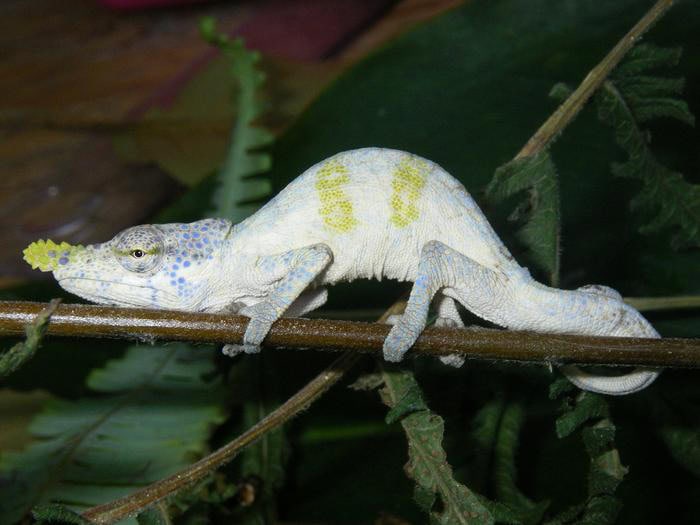
An adult Calumma nasutum chameleon, whose true identity was only recently discovered.
Madagascar is already legendary for chameleons. According to the press release from the Bavarian State Collections of Natural History (SNSB), more than 40% of all known chameleon species live on the island. That biodiversity also makes Madagascar a hotspot for lookalike species, animals that seem nearly identical until genetics (and careful morphology) tell a different story.
The long-nosed chameleons at the center of this discovery belong to what researchers call the Calumma gallus species complex, a group whose males have elongated nasal appendages. Historically, scientists leaned heavily on the nose—its length, shape, and appearance—to classify individuals into species. The new research suggests that the approach can be misleading.
How the Pinocchio Chameleon Fooled Researchers
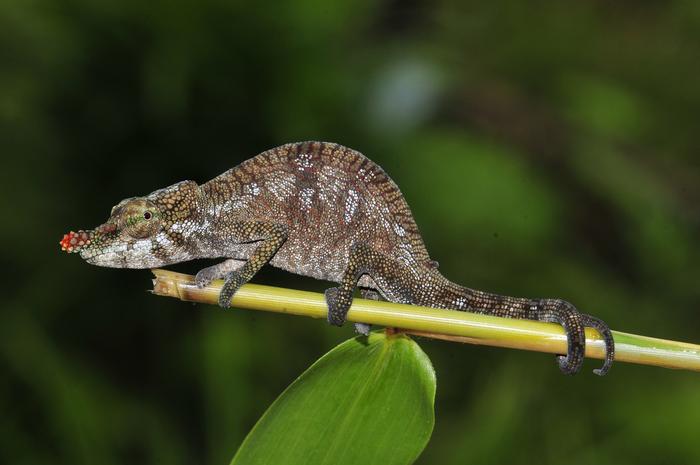
The Calumma pinocchio chameleon shows off its signature nose.
The team’s analyses showed that the chameleon, popularly known as the Pinocchio chameleon, wasn’t correctly placed in the old classification. Instead, it represents its own species: Calumma pinocchio.
Meanwhile, DNA from other specimens revealed another hidden species, Calumma hofreiteri. Before this study, those animals had been classified as Calumma nasutum, mainly because their nasal appendages resembled what researchers expected for that species.
First author Dr. Frank Glaw of SNSB said the genetic evidence leaves little wiggle room: “The genetic analyses are conclusive: the nose chameleons have virtually fooled previous research,” he said in a statement. In other words, what looked like clear visual “labels” for different species—those distinctive snouts—weren’t consistently tracking evolutionary relationships.
The Nose Knows
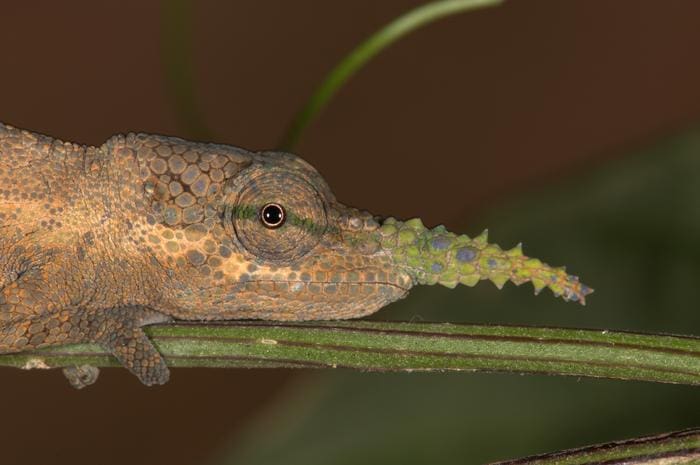
The male chameleons of the Calumma gallus species have a nose with distinct spines.
One of the most interesting implications of the study is what it suggests about how quickly chameleon “noses” can evolve. The team found evidence that these appendages may shift faster than expected, changing not just in size, but also in form and coloration.
Glaw emphasized just how variable this trait can be: “Our study also revealed that the nasal appendages can change quickly in terms of length, shape, and color. Their evolution is possibly driven by the respective preferences of females in mate selection,” he said.
If that’s true, it means the long snout might be less like a fixed fingerprint and more like a flexible “ornament,” something shaped by sexual selection (what mates find attractive) rather than a stable marker of species identity. That’s a big deal for taxonomy, because it highlights a classic pitfall: features that are flashy and obvious to humans aren’t always the features that best map onto a species’ true evolutionary history.
Looking at Chameleon DNA From the 1800s
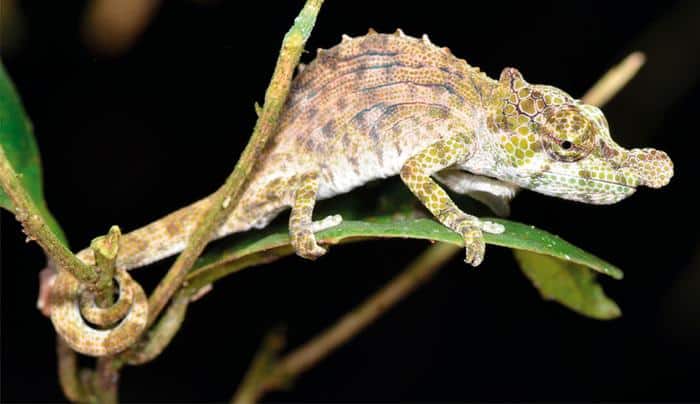
The new species Calumma hofreiteri has been confused with C. nasutum. It is named in honour of the geneticist Prof. Dr. Michael Hofreiter, who made the museomics study possible.
To sort out the confusion, the researchers didn’t just rely on modern samples. They also turned to a cutting-edge tool for museum collections: museomics, a method that allows scientists to extract usable DNA from historical specimens. In this case, the oldest specimen included in the study was collected in 1836, a reminder that museum drawers can hold not only rare animals, but also genetic time capsules that help untangle today’s classification puzzles.
Professor Miguel Vences of the Technical University of Braunschweig pointed to the broader value of the approach: “The study shows the great potential of the new museomics methods to correctly identify historically collected specimens, especially in species complexes,” he said in a statement.
That matters because many species complexes—groups of very similar organisms—can’t be reliably separated by a single visible trait. Old specimens, paired with new genetics, can reveal whether “one species” is actually several.
What This Means for Chameleon Diversity
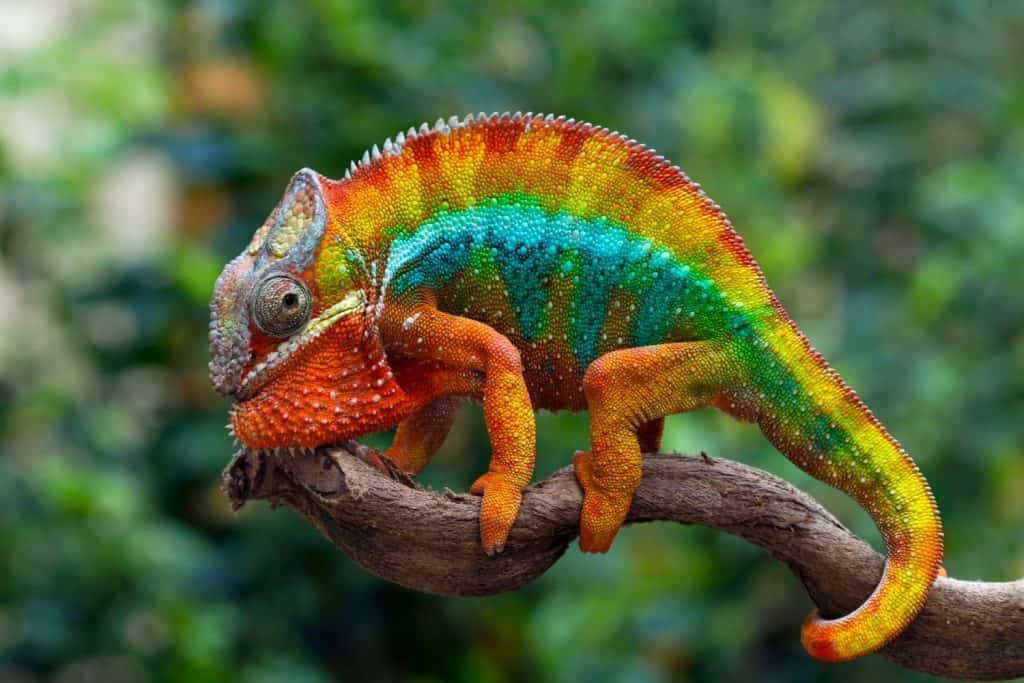
Most chameleon species are based in Madagascar.
©Kurit afshen/Shutterstock.com
With the two new species descriptions included, the press release notes a significant milestone: exactly 100 chameleon species are now known from Madagascar, bringing the total to 236 worldwide. Beyond the nice round number, the takeaway is bigger: chameleon diversity—especially in Madagascar—may still be undercounted in groups where appearances can be deceptive.