
Quick Take
- The 20-Minute Dive: Despite their size, these 250-pound predators can remain submerged for a third of an hour while hunting in freezing Atlantic waters.
- The Survival Shift: Once hunted as “pests,” these agile swimmers have staged a massive coastal recovery since 1972.
- Winter Sentinels: Hundreds of seals now reclaim Rhode Island’s Narragansett Bay every winter, serving as the ultimate indicator of the ocean’s health.
Underneath the freezing chop of Rhode Island’s winter shoreline, a 250-pound predator is holding its breath. For more than twenty minutes at a time, the harbor seal (Phoca vitulina) vanishes into the deep. It dives hundreds of feet to hunt herring and cod in near-total darkness. These animals look like awkward visitors on land because they lack external ear flaps and must wriggle to move. Once they hit the water, however, they are among the most agile hunters in the Northwest Atlantic.
Once decimated by hunting and viewed as nothing more than coastal pests, these massive marine mammals have staged a massive recovery. Today, their return to Narragansett Bay is more than just a seasonal spectacle. It is a primal reclamation of the state’s rocky coves. While they were officially named Rhode Island’s state marine mammal in 2016, their true identity is that of a “biological sentinel,” a species that survives the Atlantic’s most brutal months by defying the limits of mammalian physiology.

Harbor Seal (Phoca vitulina)
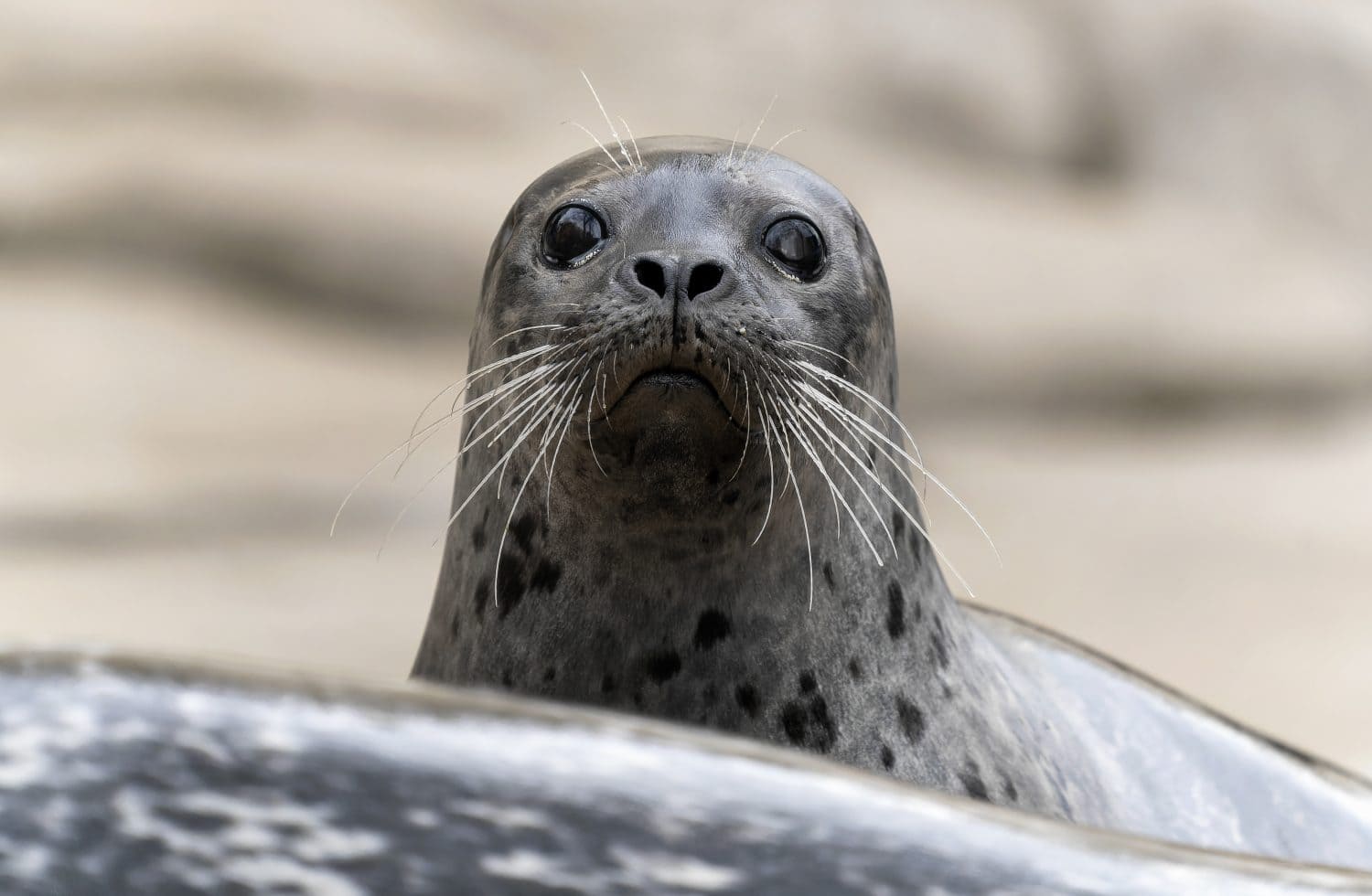
The harbor seal is a streamlined marine mammal with a rounded head, large dark eyes, and spotted fur that ranges from light gray to deep brown. Adults usually measure five to six feet long and weigh between 180 and 250 pounds. Females tend to be slightly smaller than males, although the difference is subtle. Unlike sea lions, harbor seals lack external ear flaps and move on land by wriggling forward on their bellies. In the water, however, they are agile swimmers, capable of diving several hundred feet and remaining submerged for more than twenty minutes while feeding. Their diet includes schooling fish such as herring, cod, and flounder, along with squid and crustaceans.
Harbor seals lack external ear flaps and move awkwardly on land, but are powerful swimmers at sea.
©yhelfman/Shutterstock.com
Life Along New England Coasts
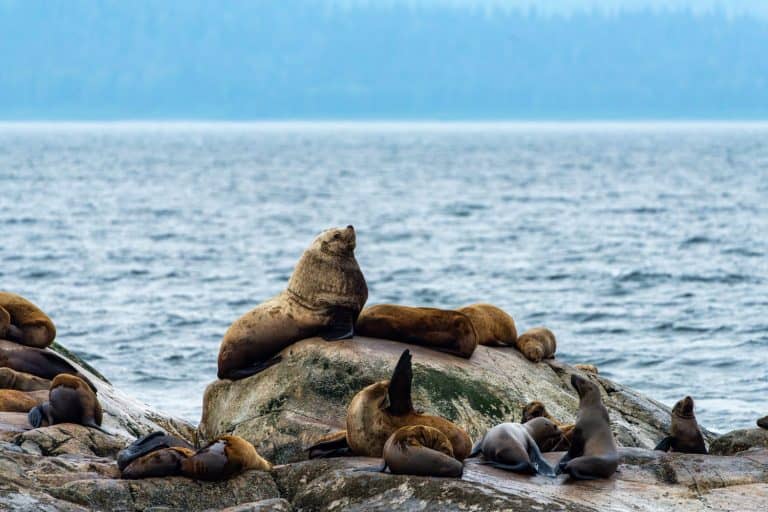
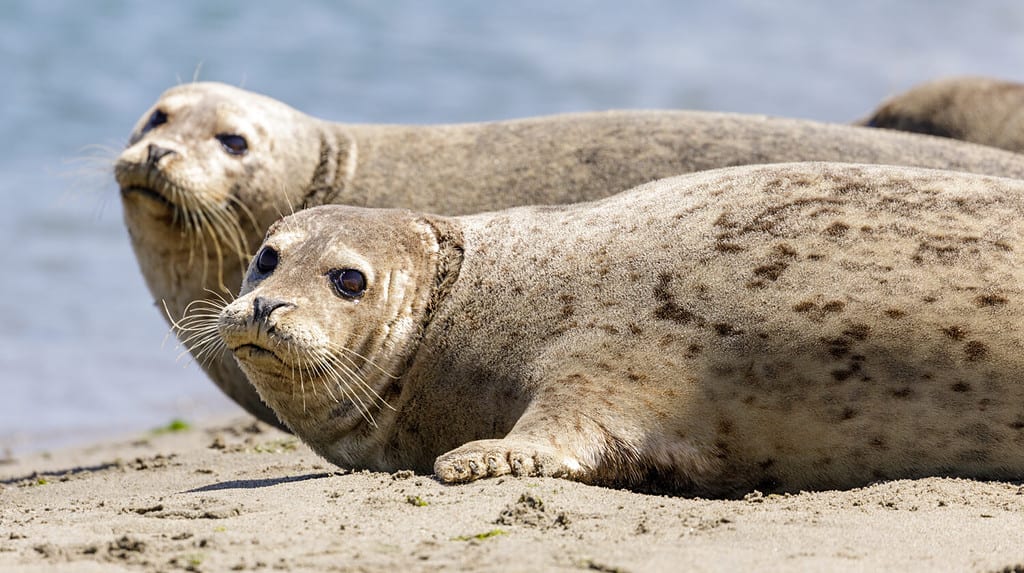
Harbor seals rank among the most widely distributed seal species in the world. The animals seen in Rhode Island belong to the Northwest Atlantic population, which ranges from eastern Canada south to the mid-Atlantic states. These seals favor shallow coastal waters, bays, estuaries, and rocky ledges where they can haul out to rest between feeding trips. During winter, many migrate south from colder Canadian waters to ice-free shorelines in Maine, Massachusetts, and Rhode Island. They often gather in groups on exposed rocks, sandbars, or small islands at low tide, remaining alert to human activity while tolerating distant observers on boats or shorelines.
A Growing Presence in Rhode Island
Seal numbers in Narragansett Bay and nearby waters stayed low for much of the twentieth century. Harbor seals were once hunted as pests and had little legal protection. This changed with the federal Marine Mammal Protection Act of 1972, which made it illegal to kill or harass seals.
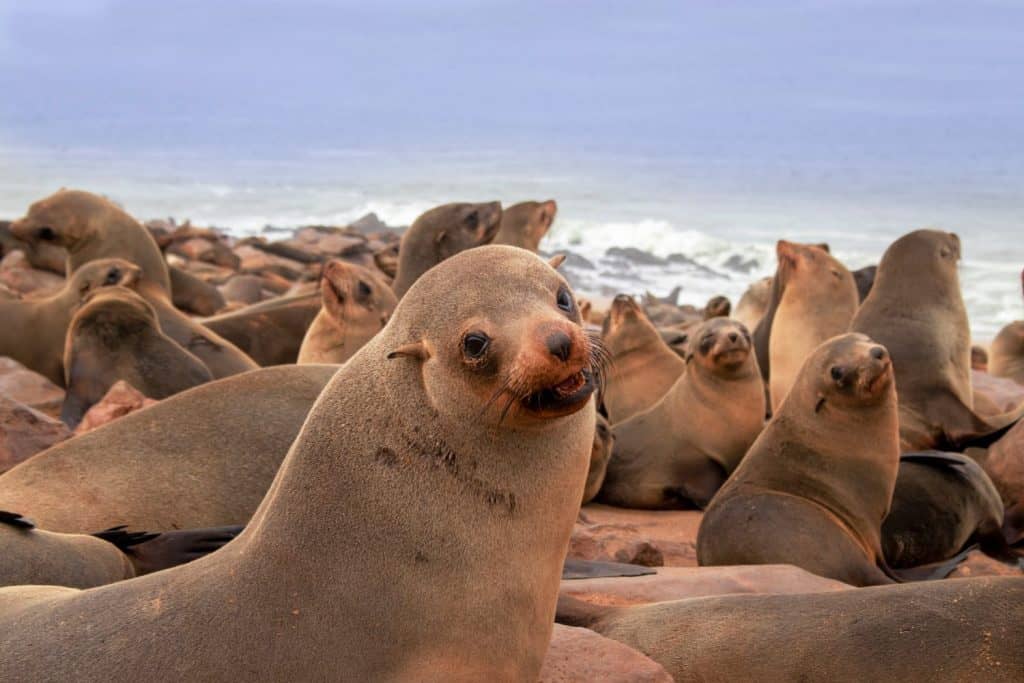
After federal protection in 1972, harbor seal numbers rebounded, making them a common sight along Rhode Island’s winter shoreline.
©Yuliia Lakeienko/Shutterstock.com
The law allowed populations along the Atlantic Coast to recover. By the early 2000s, winter surveys in Narragansett Bay recorded hundreds of harbor seals at established haul-out sites. A 2016 survey documented a then-record high number of harbor seals. This recovery made seals a regular feature of Rhode Island’s winter shoreline and attracted attention from residents, conservation groups, and tour operators.
Why States Adopt Animal Symbols
Across the United States, official animals function as shorthand for how a state understands itself. Legislatures often choose species that are already familiar to residents and closely tied to local landscapes, industries, or traditions. These selections are more about recognition than novelty, highlighting animals that already play a visible role in everyday life. Once adopted, state animals appear in classrooms, public programs, and tourism materials, reinforcing shared identity through living symbols rather than abstract ideals.
Official recognition can also influence public priorities. When an animal gains state status, it often draws greater attention to conservation, research, and habitat protection efforts. That focus can strengthen support for science-based management and environmental education. For the state, the symbol reinforces pride in local natural resources and encourages long-term stewardship. In this way, official animals serve as ambassadors, linking cultural identity with responsibility for the ecosystems shared by people and wildlife.
From Idea to Legislation
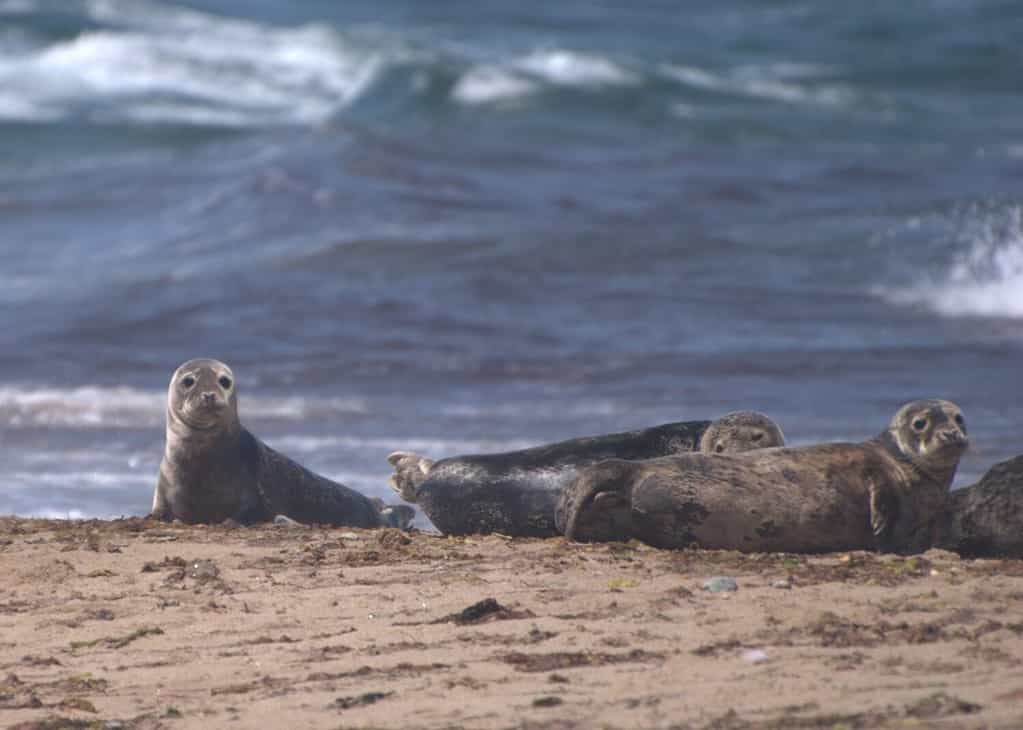
In 2016, Rhode Island named the harbor seal its state marine mammal, recognizing the role of coastal waters in state identity.
©Kara Healey/Shutterstock.com
The effort to make the harbor seal an official state symbol took shape in the Rhode Island General Assembly in 2016. Lawmakers introduced House Bill H 7111 to designate the species as the state marine mammal. Sponsors represented coastal districts where seals had become common winter visitors. They argued that the designation would highlight the importance of Narragansett Bay and surrounding waters to the state’s identity. After review by the House Environment and Natural Resources Committee, the bill passed both legislative chambers. It was signed into law on July 14, 2016, by Governor Gina Raimondo, formally adding the harbor seal to Rhode Island’s list of state emblems.
Symbolism of the Ocean State
Rhode Island’s identity has long been shaped by its relationship with the sea, from shipbuilding and fishing to trade and naval history. Choosing a marine mammal rather than a land species aligned the state’s official symbols more closely with its geography and economy. Supporters of the harbor seal designation viewed the animal as a living counterpart to the state seal and motto, “Hope,” representing resilience, dependence on coastal waters, and confidence in environmental recovery. In this way, the harbor seal became less a decorative emblem and more a reflection of how the state sees its past and future intertwined with the ocean.
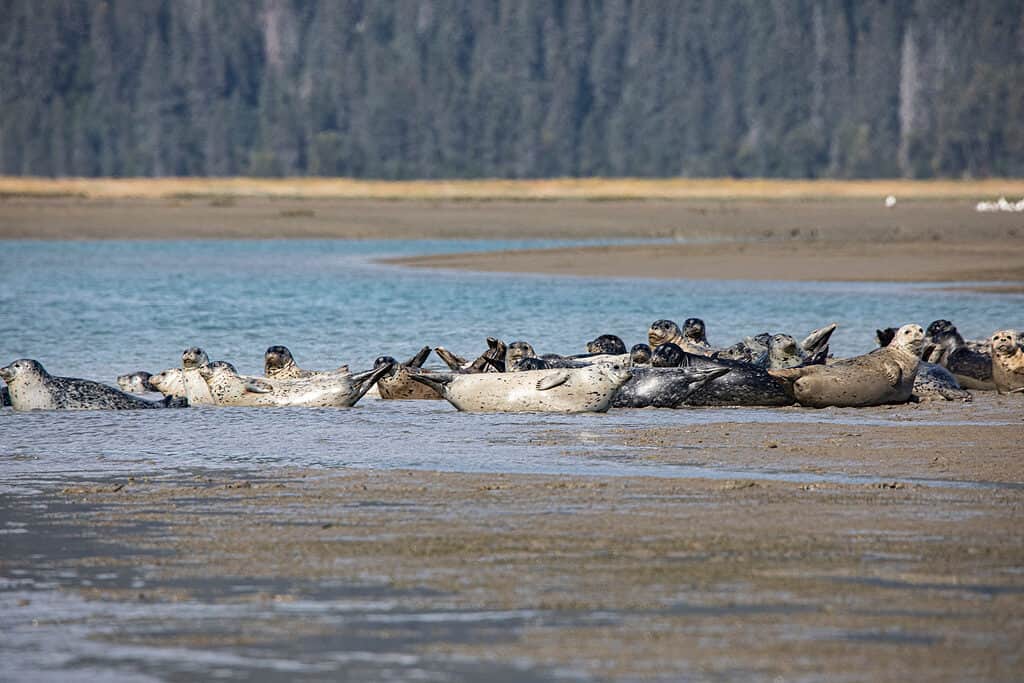
As seal numbers rebounded, haul-out sites turned harbor seals into seasonal ambassadors for the coastline.
©Danita Delimont/Shutterstock.com
Harbor seals also strike a balance between approachability and wildness. They readily capture public interest during boat tours, yet they remain dependent on clean water and healthy fish stocks. Lawmakers hoped the designation would strengthen the public’s connection to marine conservation and reinforce the link between the state’s economy and the health of Narragansett Bay.
Seals, Science, and Tourism
As harbor seal numbers increased, organizations such as Save The Bay began offering winter seal-watching cruises. These trips turned the animals into seasonal ambassadors and created an off-season tourism draw. Visitors observe seals from a respectful distance while learning about haul-out behavior, feeding habits, and wildlife protection laws. Researchers also use Rhode Island’s haul-out sites as valuable study locations. By tracking seal numbers, health, and behavior, scientists gain insights into fish populations, water quality, and broader environmental conditions. The harbor seal’s growing presence in tourism materials and public outreach has helped reinforce its role as a recognizable face of the state’s coastline.
Ecological Role in Narragansett Bay
Beyond symbolism, harbor seals play an important ecological role as mid-level predators in Rhode Island’s marine food web. By feeding on species such as herring, menhaden, and small flatfish, they influence prey distribution and abundance. Because seals congregate at predictable haul-out sites, researchers can monitor them efficiently. Changes in seal health or behavior can indicate pollution issues, disease outbreaks, or shifts in ocean conditions that might not be apparent in surface measurements. Harbor seals prefer productive, relatively clean coastal waters, so their sustained presence in Narragansett Bay suggests ongoing improvement after decades of industrial and sewage pollution.
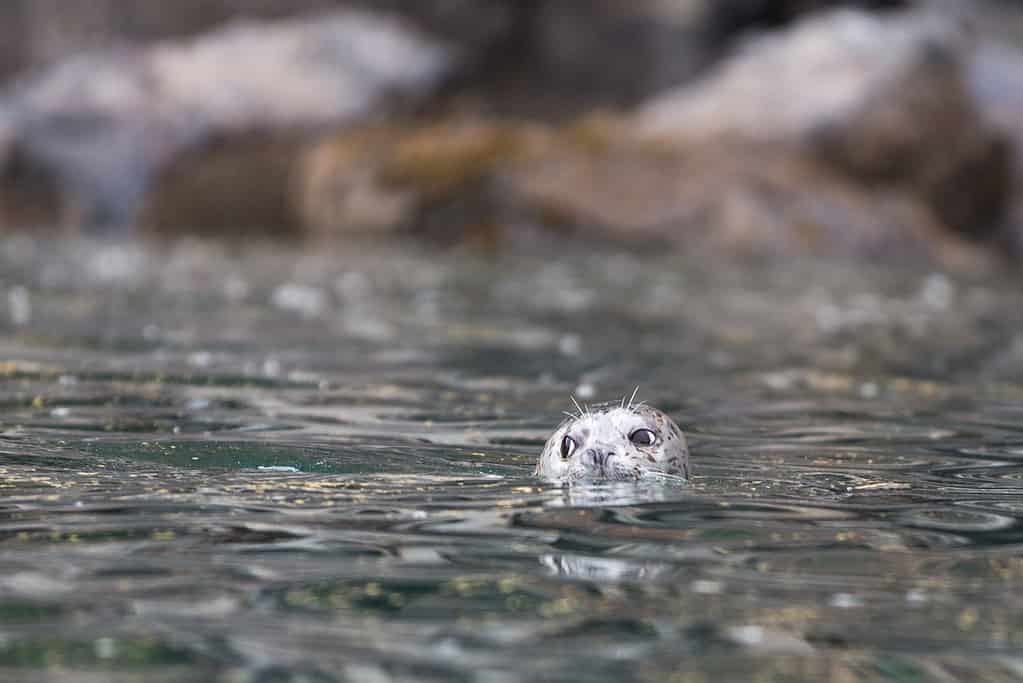
Harbor seals thrive in productive, relatively clean waters, making them useful indicators of marine health.
©RobsonAbbott/ via Getty Images
How to See Harbor Seals in Rhode Island
Harbor seals are most commonly seen in Rhode Island during the colder months, typically from late fall through early spring, when seals migrate south from Canadian waters. Winter low tides offer the best viewing opportunities, as seals haul out onto exposed rocks, sandbars, and small islands to rest between feeding trips. Popular viewing areas include parts of Narragansett Bay, especially around rocky ledges and protected coves where boat traffic is steady but not intrusive.
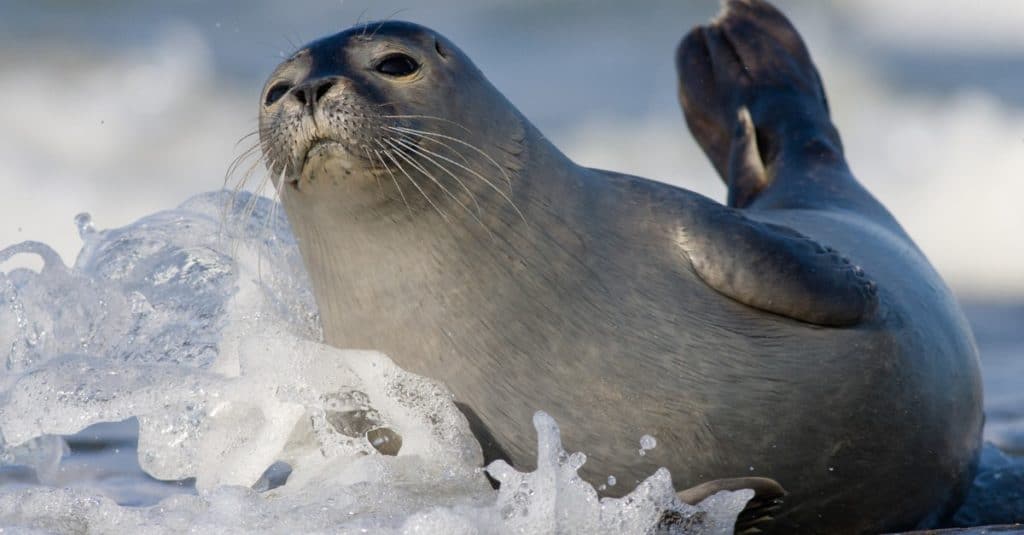
A familiar winter sight, harbor seals reflect decades of recovery and careful stewardship along Rhode Island’s coast.
©wim claes/Shutterstock.com
Seals are best observed from a distance, either from shore or from boats that maintain a respectful distance. Binoculars or a camera with a zoom lens allow viewers to observe natural behaviors without causing disturbance. Several organizations, including local conservation groups, offer guided winter seal-watching trips that combine wildlife viewing with education about marine mammals and coastal ecosystems. Visitors are encouraged to follow federal wildlife protection laws by avoiding close approaches, loud noises, or attempts to attract the seals’ attention.
Watching with Hope
Designating the harbor seal as a state symbol transformed a common winter visitor into a shared emblem of responsibility and resilience. From guided tours on Narragansett Bay to quiet views from shore, residents now link the Ocean State’s identity with a species that depends on healthy waters and abundant fish. As long as harbor seals continue to haul out on Rhode Island’s ledges and sandbars, they will remain a symbol of the close bond between the state and its coastal environment.