
Quick Take
- The whale may not have died from the strike itself, and that distinction changes everything about who bears responsibility. Explore the cause of death →
- Cruise ships typically get multiple chances to spot a whale before impact, so the question remains: why do strikes keep happening? See how ships spot whales →
- This whale's death dealt a double blow to an already struggling species, and the reason goes beyond the obvious. See the pregnant whale details →
- Some cruise lines already have a tool that could prevent strikes, though not every ship uses it. See avoidance tools in use →
Vessel strikes are an all-too-common occurrence for whales today. While commercial ships are typically the vessels that harm or kill whales, cruise ships can do so as well. This was recently demonstrated when a whale was found on the bow of a cruise ship, leaving investigators scrambling for answers.
Cruise Ship Arrives at Port with Dead Fin Whale On Bow
On Friday, June 19, 2026, the port in Seward, Alaska, became a hotbed of activity after a cruise ship arrived with a dead fin whale on its bow.
NOAA released news of the endangered whale’s death on Sunday. The 61-foot whale was found attached to Royal Caribbean’s Ovation of the Seas. Towering over 14 decks tall, the ship has a capacity of over 4,000 people.
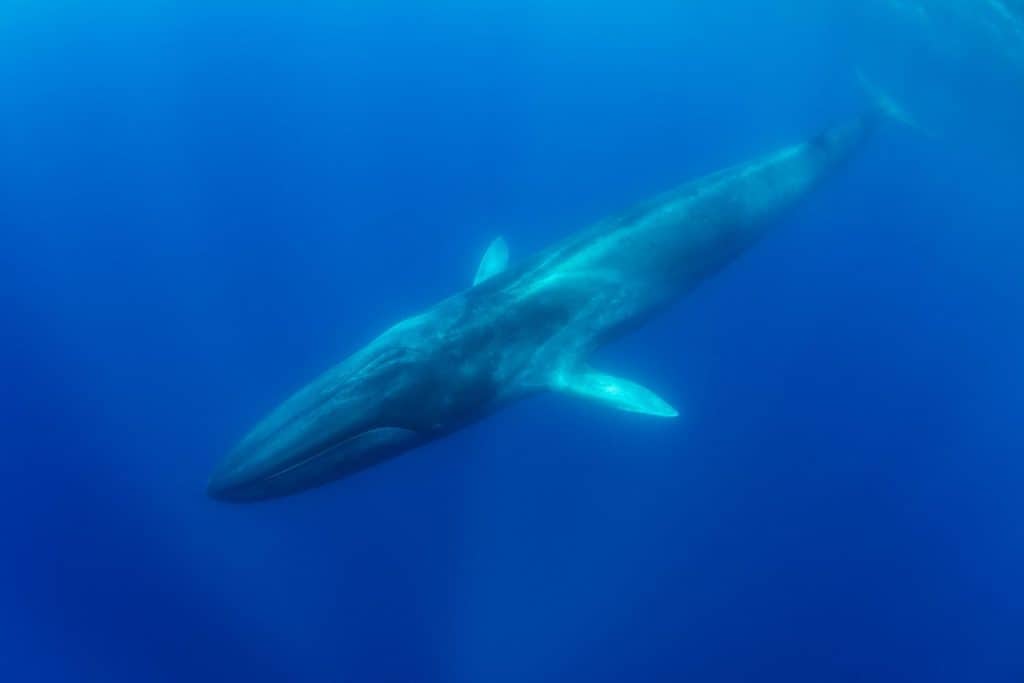
A deceased fin whale was found attached to a cruise ship when it arrived in the harbor on June 19, 2026.
©wildestanimal/Shutterstock.com
Royal Caribbean released a statement shortly after the incident was reported regarding the death of the fin whale.
“We are saddened to hear that one of our ships struck a whale while on its way to Seward,” the statement read. “We take any impact to marine ecosystems very seriously. The ship immediately reported the incident to the proper authorities.”
The investigation into the whale’s death is ongoing.
What Caused the Fin Whale’s Death?
After the fin whale was brought into the harbor, it was towed to a local beach to undergo a necropsy. This will give scientists answers to what ultimately caused the female fin whale’s death.
NOAA and the Alaska SeaLife Center are the organizations responsible for performing the necropsy. In a statement released by NOAA on Sunday, while they are still working to determine the cause of death, preliminary findings have yielded some answers.
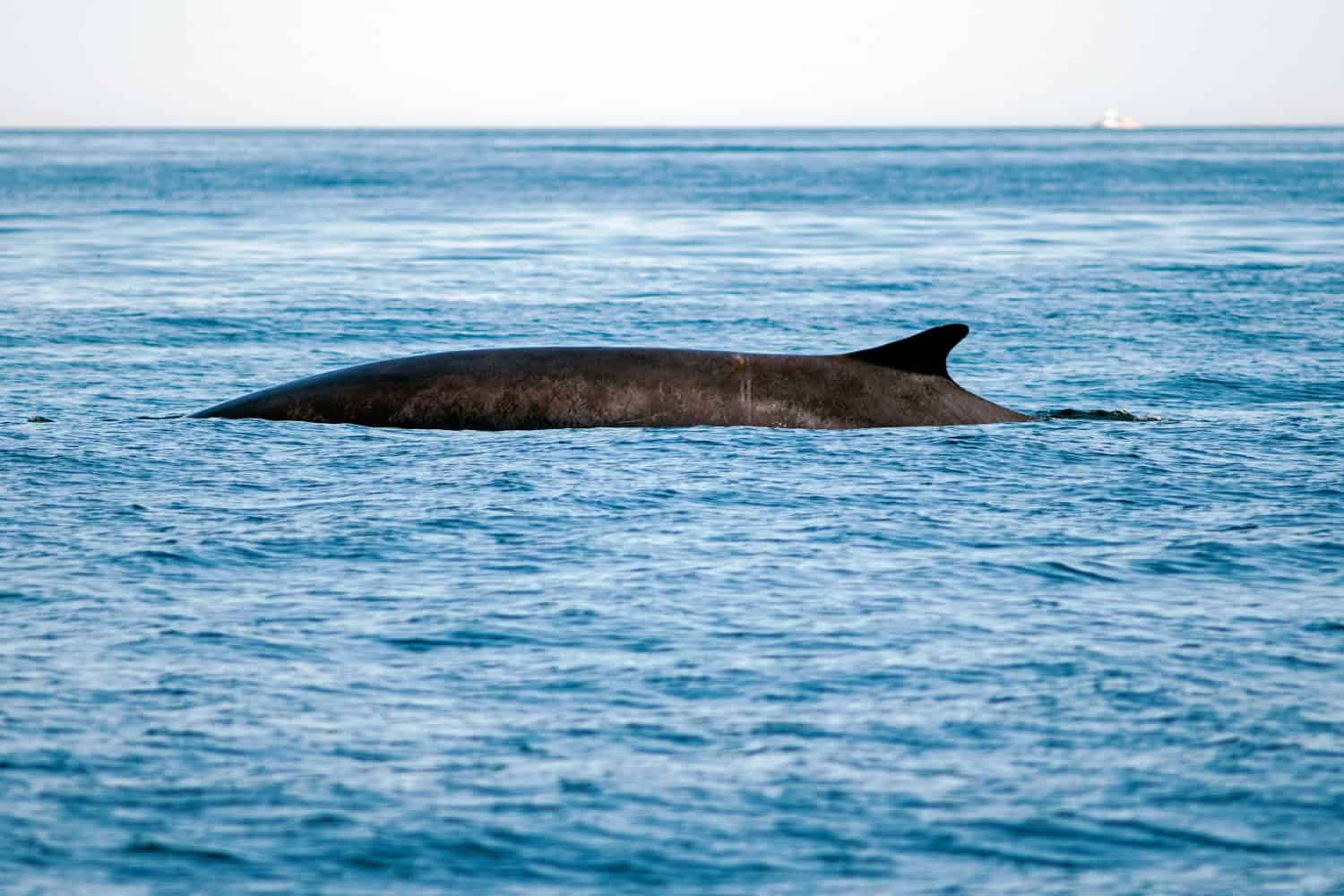
Authorities are performing a necropsy to determine the whale’s cause of death.
©ChristopherRM/Shutterstock.com
“We are working with the Alaska SeaLife Center to perform a necropsy on the 61-foot, adult female fin whale to determine the cause of death,” the statement read. “Initial findings indicate the whale was pregnant.”
The statement went on to ask that people stay away from the beach while the necropsy is taking place, both for their safety and to allow space for the team to perform the examination and collect samples.
Could the Cruise Ship Have Avoided the Fin Whale?
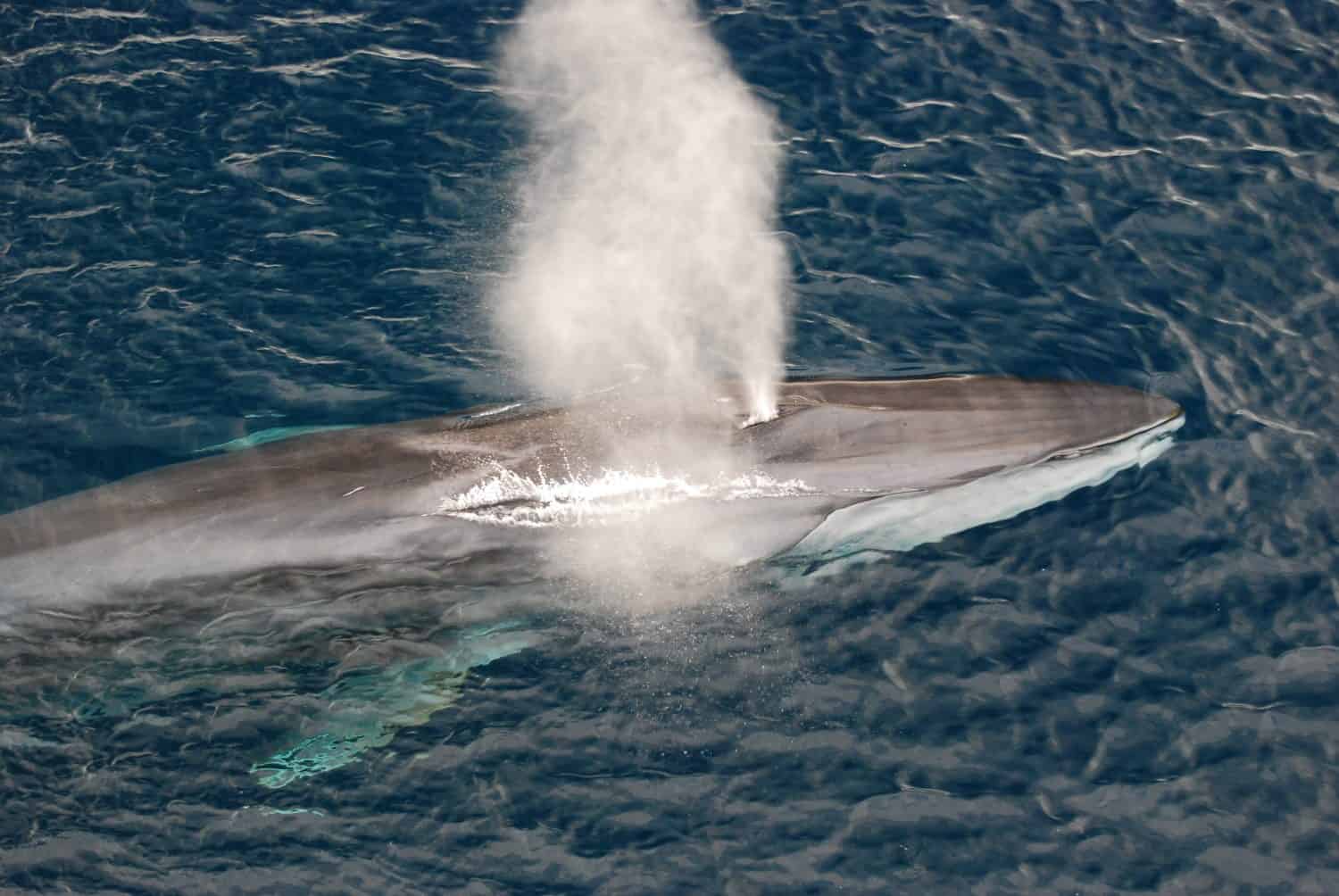
Because the details surrounding the fin whale’s death have not yet been released, it is unclear whether the cruise ship was responsible for the whale’s death or if the whale was already dead when it became attached to the bow. However, when fin whales swim just below the water’s surface, they are not always the easiest to spot.
To keep whales from being struck by cruise ships, some cruise lines have employed the aid of marine mammal observers. These observers are trained to spot whales long before a vessel comes close to them, allowing cruise ships time to slow down or change course to avoid whales.
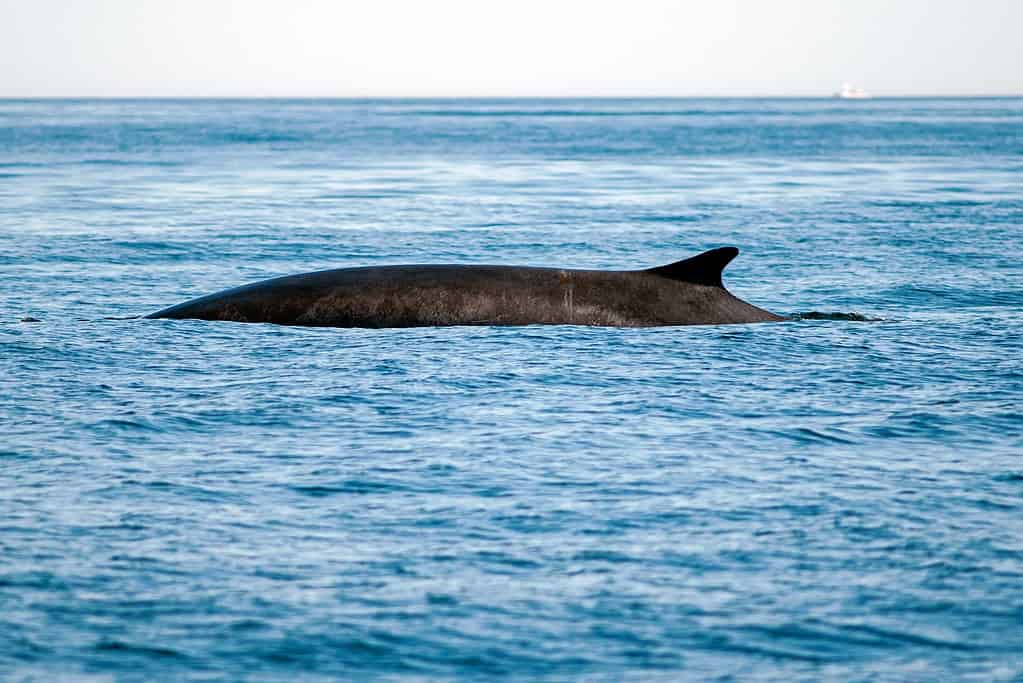
A Enormous Fin Whale’s dorsal fin rises above the ocean’s surface as it dives in the Gulf of Maine.
©ChristopherRM/Shutterstock.com
Additionally, a 2019 study found that cruise ships typically have three opportunities to see whales surfacing before coming too close to hit them. The challenge is that ships can only spot whales if they are actively looking for them.
There are ways to keep cruise ships from striking whales. Whether the incident could have been avoided in the case of the pregnant fin whale is not yet known.
Why Fin Whales Are Endangered
Beginning in the early 1900s, fin whales were targeted for their baleen, oil, and meat. By the early 2000s, more than 75% of the fin whale population had been killed. The population decreased from 400,000 to 100,000 in just a century.
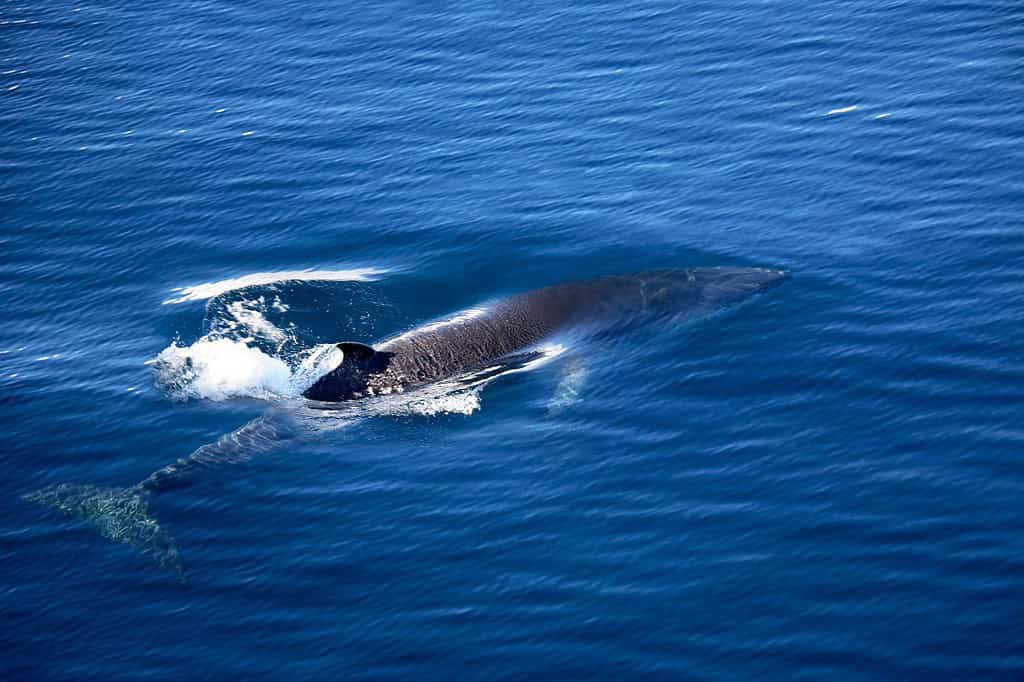
Fin whales are endangered due to overhunting, vessel strikes, and slow reproduction.
©Steve Allen/Shutterstock.com
Today, fin whales are considered endangered under the Endangered Species Act and vulnerable according to the IUCN. While the world’s second-largest whale is no longer commercially hunted, they are the victim of vessel strikes. Between this and their slow reproduction rate, it has been hard for fin whales to rebound.
It remains to be seen whether fin whales will be able to increase their population enough to no longer be considered at risk of extinction. Currently, keeping them alive is proving challenging, and incidents where ships of any kind are responsible for their deaths are not making the situation any easier.