
Quick Take
- Most ball python owners focus on temperature, but there's a second variable that determines whether their snake actually thrives or slowly suffers.
- Skipping proper humidity does more than cause bad sheds. It can trigger a specific health crisis that's hard to reverse once it starts. See the health risks →
- Where you place one everyday item in the enclosure can passively keep humidity in the ideal range without any extra equipment needed. See the water bowl trick →
Nothing warms the cold-blooded bodies of a snake like a sunny spot on a rock. But during these sunbathing sessions, warmth isn’t the only thing your ball python might be seeking. While ball pythons warm their scales and ease digestion, they also require a significant level of humidity. Ball python skin won’t shed properly without adequate humidity, but a little moisture in a warm, damp environment helps significantly.
And that’s not the only thing humidity helps with: Without it, your ball python might be susceptible to major health issues.
How Humidity Benefits Ball Pythons
Snake owners know that tank enclosures must be steamy hot in order for their pets to be comfortable. A consistent temperature of 88 to 92 degrees Fahrenheit is preferable for most ball pythons. For rocks and other basking spots in the tank, temperatures may even reach 95 degrees Fahrenheit, which is still acceptable as long as there is enough humidity to provide relief.
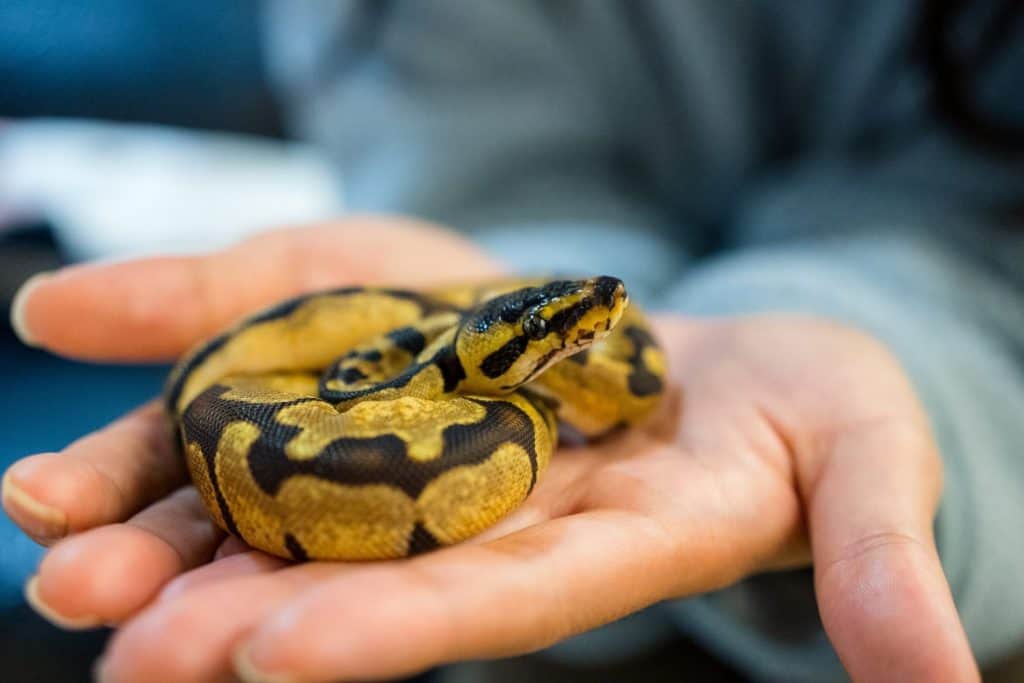
High humidity supports a healthy respiratory system in ball pythons.
©leungchopan/Shutterstock.com
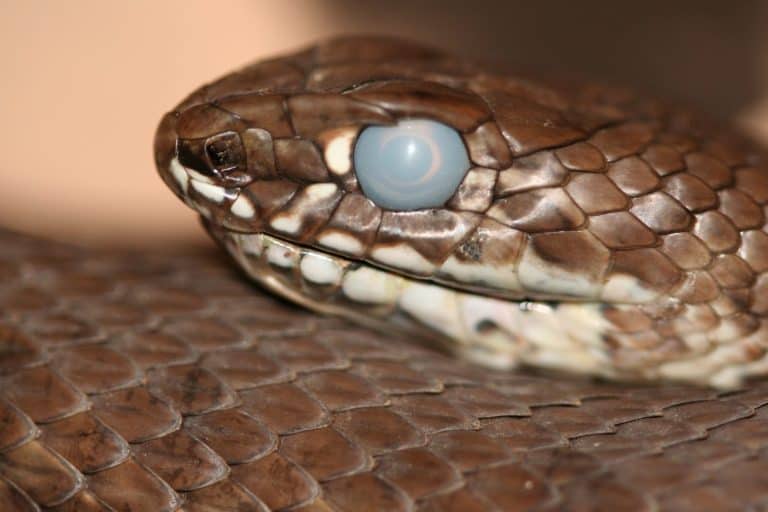
Providing the correct temperature is only part of ensuring your snake’s well-being; maintaining proper humidity is equally important. In their native habitats, ball pythons are accustomed to some of the world’s most humid rainforests. While enclosures can’t match those conditions, they can get relatively close. Without it, ball pythons may suffer from issues such as dehydration and uneven or patchy shedding. In severe cases, retained or “stuck” eye caps and respiratory difficulties can arise with low humidity levels.
Think of it this way: If you’re in the desert, drinking water may quench your thirst, but it won’t protect you from the heat beating down on your skin. For ball pythons, heat is only half of the equation; humidity provides the necessary balance between survival and comfort.
Achieving Perfect Humidity Levels
Creating the perfect microclimate doesn’t need to be complicated, but it does require a little work. One of the first things many snake owners do is spray the sides of the enclosure to create humidity. While this works, it’s typically not enough to maintain the constant humidity levels your ball python needs.
To create humidity that cycles throughout the tank, start with the substrate. Adding water to the soil in the tank and mixing it will create a nice, even layer of moisture that evaporates slowly. This also creates a more consistent humidity level than simply spraying, which can result in unpleasant damp spots and encourage mold growth.
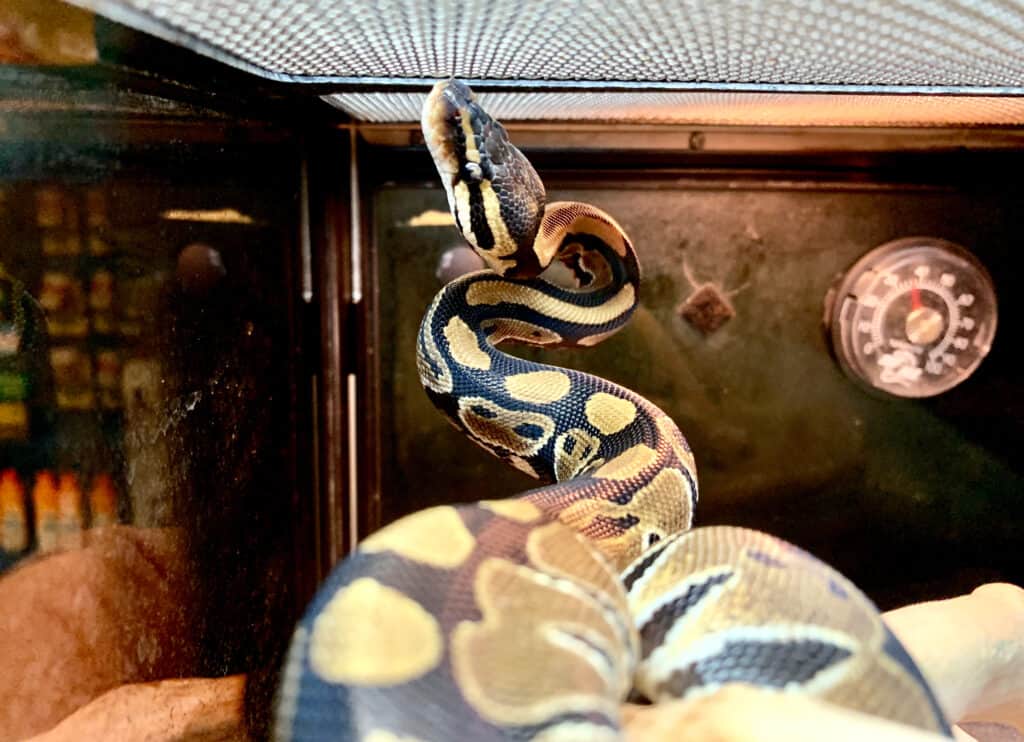
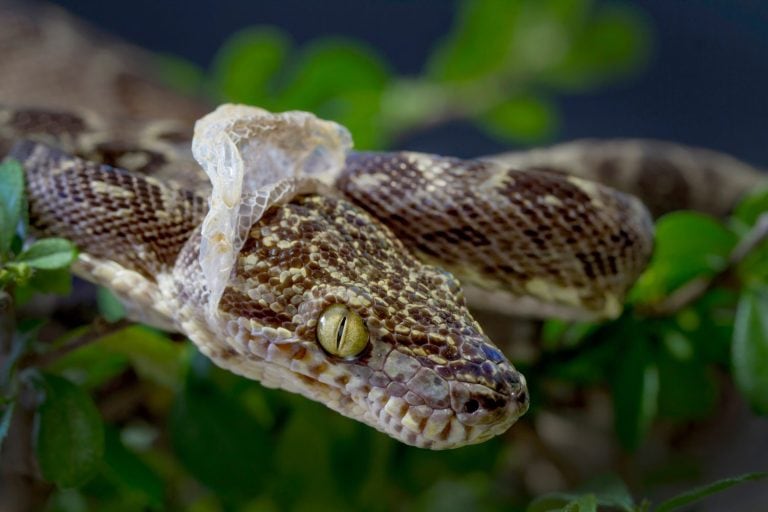
During shedding, ball pythons require higher humidity levels to prevent “stuck shed.”
©Megan Czarnocki/Shutterstock.com
For shedding purposes, consider creating a warm hide. This is simple: Fill the enclosed box with a substrate such as sphagnum moss, then mist it. The moss should be damp, but not so wet that it leaks water into the box. This provides a humid place for your ball python to go when it begins shedding, preventing issues such as “stuck shed.” The moisture encourages the old skin to peel off, while hydrating the new skin underneath.
Last but not least, ensure that your snake’s water bowl is in a good spot. Placing it directly under heat lamps or in the warmest part of the enclosure will also increase humidity. You may need to refill the bowl more often, but this will help maintain a humidity level of 50% to 60% under normal conditions, rising to 65% to 70% during shedding—levels that help keep your ball python healthy.