
Quick Take
- A group of well-studied orcas known as Southern Resident orcas are endangered and face multiple threats to survival.
- New research shows they interact more with other populations than expected and this could help or hurt them in different ways
- Shared habitats can lead to competition for food but, if they interbreed, can provide needed genetic diversity.
- Protecting them requires international cooperation to address the issues that affect them.
Southern Resident killer whales are a small and well-studied group of orcas that have long been seen as an isolated group without much outside connection. New research challenges that view, suggesting that their range does overlap with other pods of killer whales from outside their regular territory. Scientists are discovering they have a broader network of interactions that could shape their survival, for good or ill.
Southern Resident Killer Whales
Southern Resident killer whales (Orcinus orca) are an endangered population of orcas found along the coasts of Washington, Oregon, British Columbia, and northern California. This group has been studied extensively and is well-known for having strong social bonds and traveling in stable family groups known as pods. These whales primarily eat Chinook salmon, a fish species that has declined significantly due to habitat loss, the building of dams that interfere with their spawning habits, and changing ocean conditions such as temperature and pollutants.
Conservation Status
Southern Resident killer whales (Orcinus orca) are listed as endangered in the United States and Canada, reflecting both their small population size and the multiple pressures they face. With only about 74 individuals remaining, the group is considered one of the most at-risk marine mammal populations in the world.
Low birth rates, high calf mortality, limited genetic diversity, and ongoing threats from reduced prey, vessel disturbance, and pollution all contribute to their fragile status. Unlike larger or more widespread orca populations, Southern Residents have a specialized diet and tightly structured social groups, which makes recovery slower and more uncertain. Their conservation status highlights how even highly intelligent, adaptable predators can become vulnerable when key ecological supports begin to break down.
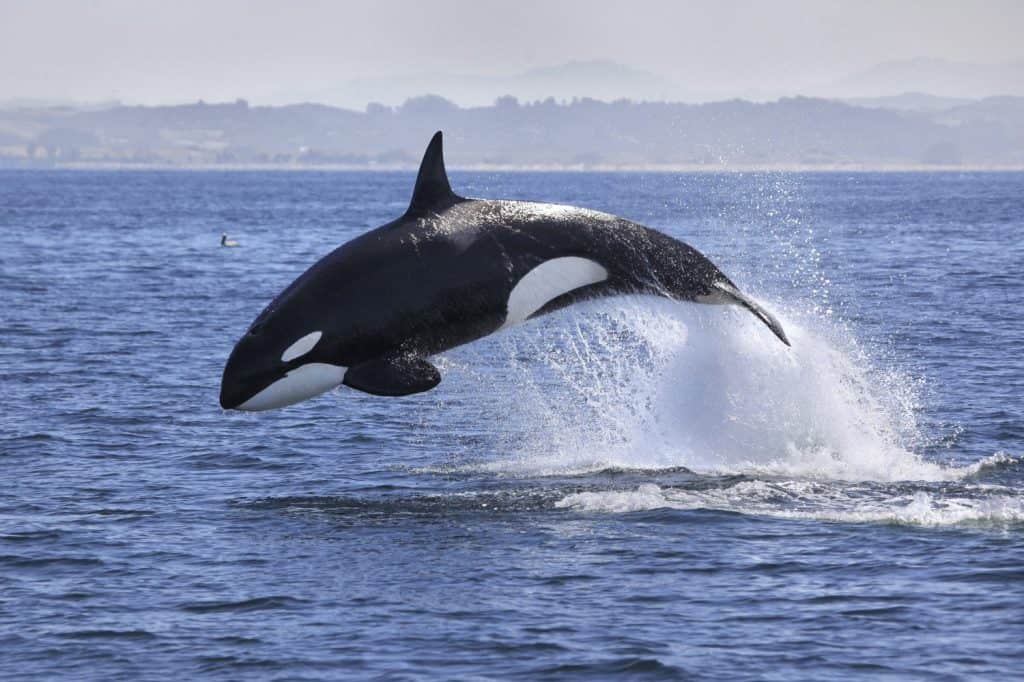
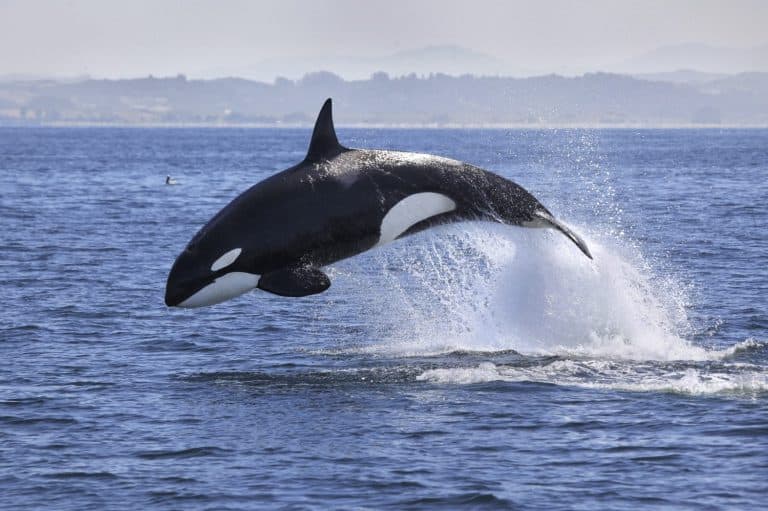
Southern Resident orcas have a specialized diet of Chinook salmon.
©Tory Kallman/Shutterstock.com
Expanding the Focus of Research
Historically, research on Southern Resident killer whales focused on local threats such as declining salmon populations, noise from vessels, pollution, and limited genetic diversity. While these remain critical factors, newer studies have expanded the scope to consider how interactions with other orca populations may influence survival.
Scientists have combined decades of observational, acoustic, and genetic data to better understand these connections. Instead of treating Southern Residents as an isolated group, researchers now view them as part of a larger network of killer whale populations across the North Pacific. This broader perspective opens new possibilities for understanding both risks and potential solutions.
Genetic Challenges and Inbreeding
One of the most pressing concerns for Southern Resident killer whales is inbreeding. With such a small population, mating often occurs between distant relatives, leading to reduced genetic diversity. This lack of variation can make the whales more susceptible to disease and less adaptable to environmental changes.
Recent studies show that individuals with higher levels of inbreeding may have lower survival rates and reduced reproductive success. Over time, this can create a downward spiral where fewer healthy calves are born, and fewer individuals reach maturity. Without new genetic input, the population may continue to struggle even if other threats are reduced.
Changing Movement Patterns and Overlap
For many years, Southern Resident killer whales were closely associated with the Salish Sea during the summer months. However, recent tracking data shows that their movements have shifted. Whales are spending more time along outer coastal waters and less time in their traditional inland habitat.
At the same time, other resident killer whale populations, including those from northern regions, have expanded their ranges southward. This has led to more frequent overlap in coastal areas off Washington and British Columbia. There, different populations can now be found within the same general regions.
Although overlap does not guarantee direct interaction, it increases the likelihood of shared space, competition for prey, and behavioral influence. These emerging zones of overlap may become increasingly important as ocean conditions change and salmon distributions shift.
How Orca Populations Interact and Why It Matters
Interactions between killer whale populations fall into three main categories. These are: competition for food, shared use of habitat, and the possibility of interbreeding. These are not separate processes happening in isolation. They overlap and reinforce each other, shaping how Southern Resident killer whales survive and reproduce over time.
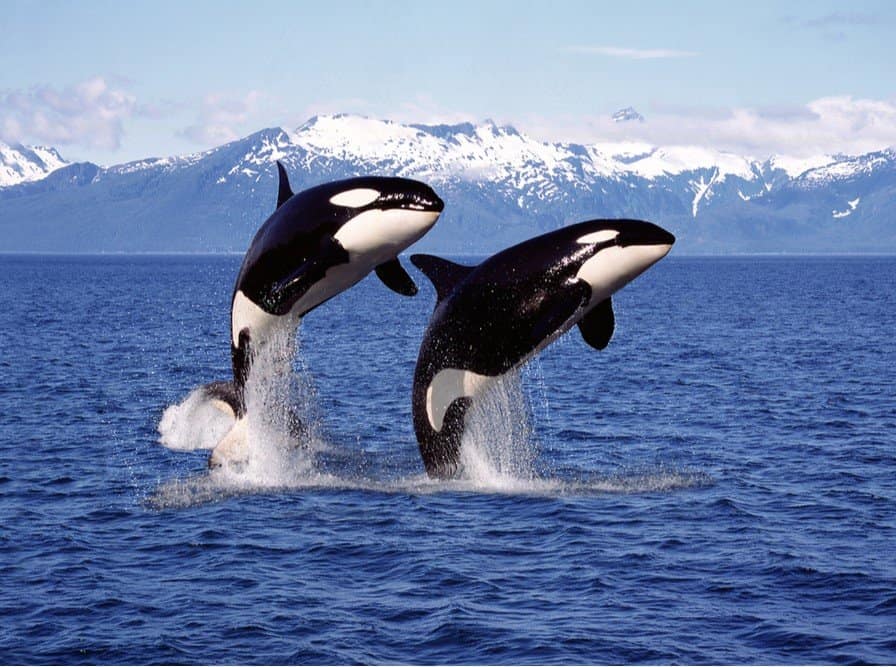
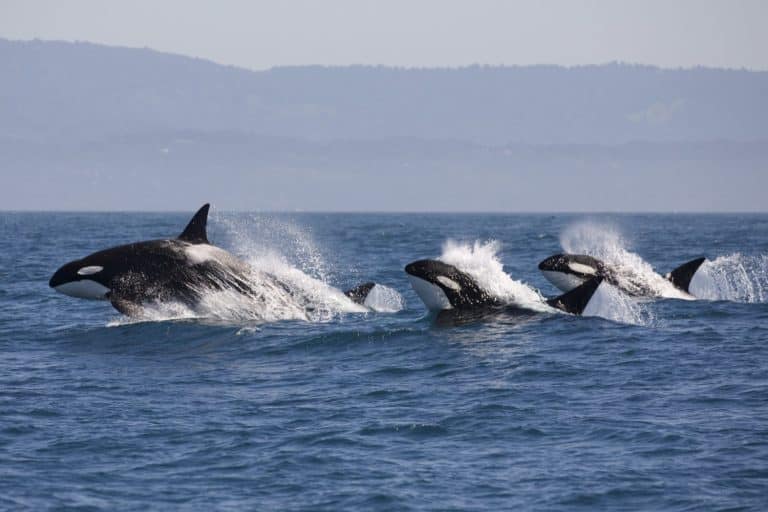
Killer whales are social but also competitive with others not part of their pods.
©slowmotiongli/Shutterstock.com
Competition for Food
Competition for salmon is the most immediate pressure. Southern Residents rely heavily on Chinook salmon. When multiple orca populations feed in the same regions, the total demand increases. In years when salmon runs are weak, this overlap can leave less food available for each group. For a population already struggling with low prey availability, that’s a big problem. Even small increases in competition can affect body condition, calf survival, and long-term population trends.
Shared Habitat
Shared habitat adds another layer. When different populations occupy the same coastal areas, their presence can influence behavior even without direct conflict. Southern Residents may adjust where they travel, how long they remain in a feeding area, or how they hunt based on the presence of other groups. Because killer whales rely heavily on sound, overlapping populations also create more complex acoustic environments, which can subtly affect communication and foraging efficiency.
Interbreeding
Interbreeding, while rare, introduces a different kind of influence. Occasional mating between populations could bring in new genetic material, helping reduce the effects of inbreeding and improving long-term resilience. Genetic evidence suggests Southern Residents were not always completely isolated, which makes future gene flow possible. However, this is not something that can be engineered easily. These whales rely on learned behaviors and stable social structures that shape mating patterns, meaning simple overlap does not guarantee genetic exchange. Any attempt to force the process would carry real risks, including disruption of social bonds and unintended ecological consequences.
Taken together, these interactions form an additional layer of pressure and opportunity. They do not replace known threats like prey loss or noise, but they help explain why recovery has been so difficult and why solutions may need to operate at a broader scale.
Managing Recovery in a Connected System
Managing Southern Resident killer whale recovery requires working within real biological and environmental limits. Increasing salmon abundance, reducing vessel disturbance, and limiting pollution remain central goals. These efforts are still the foundation of recovery, but they now exist within a more complex system where multiple orca populations overlap and influence one another. Each priority plays a distinct role in whether the population can stabilize and grow.
Increasing Salmon Availability
Chinook salmon are the primary food source for Southern Resident killer whales, and their availability is one of the strongest predictors of whale survival and reproduction. In years when Chinook runs are low, whales show signs of nutritional stress, including reduced body condition and lower birth rates.

Chinook salmon are the primary food of Southern Resident orcas, but are also popular with humans.
©"Chinook Salmon" by Red Barnes is licensed under BY-SA 2.0. – Original / License
Efforts to increase salmon abundance focus on restoring river habitats, improving fish passage around dams, and managing fisheries to ensure enough fish remain for predators. This includes habitat restoration in major river systems, protection of spawning grounds, and adjustments to harvest limits during weak runs. Because salmon migrate across large regions, improving their numbers requires coordinated action across freshwater and marine environments.
Even modest increases in Chinook availability can have measurable effects on whale health. Ensuring consistent access to high-quality prey remains one of the most direct and effective ways to support recovery.
Reducing Vessel Disturbance
Boat traffic is a persistent source of stress for Southern Resident killer whales. Noise from engines interferes with echolocation, making it harder for whales to locate and capture prey. Close vessel approaches can also disrupt natural behaviors such as feeding and resting.
Management strategies include enforcing minimum approach distances, limiting vessel speeds in key areas, and creating seasonal or temporary buffer zones when whales are present. Education and compliance efforts are also important, as recreational boaters make up a significant portion of vessel traffic in some regions.
Reducing disturbance does not eliminate all challenges, but it helps ensure that whales can forage more effectively when prey is available. In a system where food is already limited, minimizing disruption can make a meaningful difference.
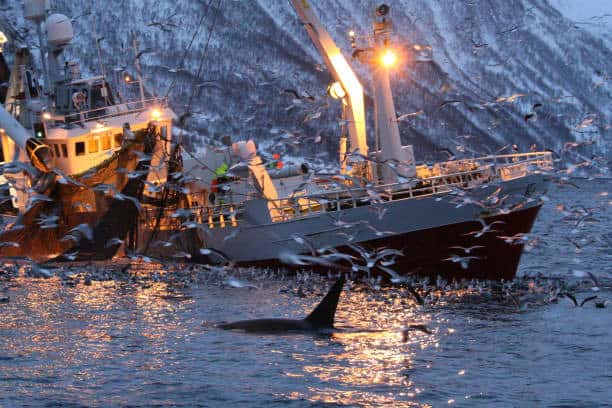
A killer whale swimming near a fishing trawler.
©iStock.com/Alessandro De Maddalena
Limiting Pollution Exposure
Southern Resident killer whales carry high levels of contaminants in their bodies, including PCBs and other long-lasting chemicals. These pollutants accumulate through the food chain, especially in fatty fish like Chinook salmon. Over time, they can affect immune function, reproduction, and overall health.
Reducing pollution involves both preventing new contaminants from entering the environment and managing existing sources. This includes regulating industrial discharges, improving wastewater treatment, and cleaning up contaminated sites. Because many pollutants persist for decades, recovery in this area can be slow, even after new inputs are reduced.
Lowering contaminant levels helps improve long-term health and increases the likelihood that whales can successfully reproduce. While less visible than other threats, pollution remains a critical factor in the population’s recovery.
Climate Change and Shifting Ocean Conditions
Climate change is adding a long-term layer of pressure that affects nearly every part of the Southern Resident killer whale system. Rising ocean temperatures, changing currents, and shifting food webs are altering where salmon are found and how reliably they return to spawning rivers. In some years, warmer conditions reduce ocean productivity, leading to fewer or smaller Chinook salmon reaching coastal waters, directly limiting the whales’ primary food source.
These changes are also reshaping whale movement patterns. As salmon distributions shift, Southern Residents are following them into new areas, increasing overlap with other orca populations in shared feeding zones. This can intensify competition for limited prey, but it may also create rare opportunities for genetic exchange. Unlike localized threats, climate change operates at a broad scale, amplifying existing pressures and making long-term recovery more uncertain.
International Cooperation
Because Southern Resident killer whales move freely across international waters, effective management depends on close cooperation between the United States and Canada. These whales rely on salmon runs, coastal habitats, and migration corridors that span both countries, so actions taken on one side of the border directly affect outcomes on the other.
Shared monitoring efforts such as coordinated acoustic tracking, photo identification, and genetic research help scientists build a complete picture of where whales travel and how populations interact. At the same time, aligning policies on fishing limits, vessel regulations, and habitat protection ensures that conservation measures are consistent rather than fragmented.
Protecting key feeding areas along the Pacific coast requires joint planning and enforcement. Since the whales do not recognize political boundaries, long-term recovery depends on treating the region as a single connected system rather than two separate jurisdictions.
A Connected System, Not an Isolated Population
For decades, Southern Resident killer whales were treated as a largely isolated group defined by their decline. That framing is incomplete. Their survival is shaped by interactions with other populations, shared prey resources, and changing ocean conditions across a wide region.
This broader perspective does not make recovery easier, but it makes it clearer. Protecting these whales means protecting the system they are part of, including the salmon they depend on and the habitats they share with other orcas. Their future will not be determined in one place or by one factor, but by how well these connections are understood and managed over time.