
Quick Take
- A new study challenges the leading explanation for why some bowhead whale populations are still struggling, and the real culprit turns out not to be what most scientists had assumed. See the study's findings →
- One bowhead population bounced back dramatically while the others hover near extinction, and the reason why comes down to a strange quirk of the whaling era itself. Explore the population differences →
- Centuries of hunting left a genetic wound in bowhead whales that protection laws can't fix, and its consequences are still unfolding today. Discover the genetic damage →
- The very thing that once shielded bowhead whales from extinction is now becoming their greatest threat, and the window to act is closing fast. See threats facing bowheads →
The practice of whaling proved to be very profitable to those who participated in it. Due to poor management and a lack of oversight of whale populations, whaling was ultimately banned to save whales on the brink of extinction.
Today, some whale populations have rebounded nicely. Others, such as the bowhead whale, are still suffering the consequences of whaling. As a result, the legacy of past whaling continues to influence the bowhead’s future, and the best course of action to save the whales is still being debated.
Bowhead Whale Populations Today Suffer the Consequences of Whaling Centuries Ago
Between the 16th and 20th centuries, whaling was a common practice in the Arctic. Whaling resulted in the deaths of thousands of bowhead whales during this period. It was not until the overall population was estimated at approximately 1,500 to 3,000 whales that the bowheads received international protection in the 1970s. Since that time, bowhead whales have made a miraculous comeback from the brink of extinction.
According to a new study published in Proceedings of the National Academy of Sciences, despite the species being protected and being afforded the opportunity to grow its population to approximately 24,000 whales, this is but a fraction of what the bowhead whale population once was. According to lead author Dr. Nicholas Freymueller, historical whaling patterns appear to explain the uneven recovery better than climate-related factors.
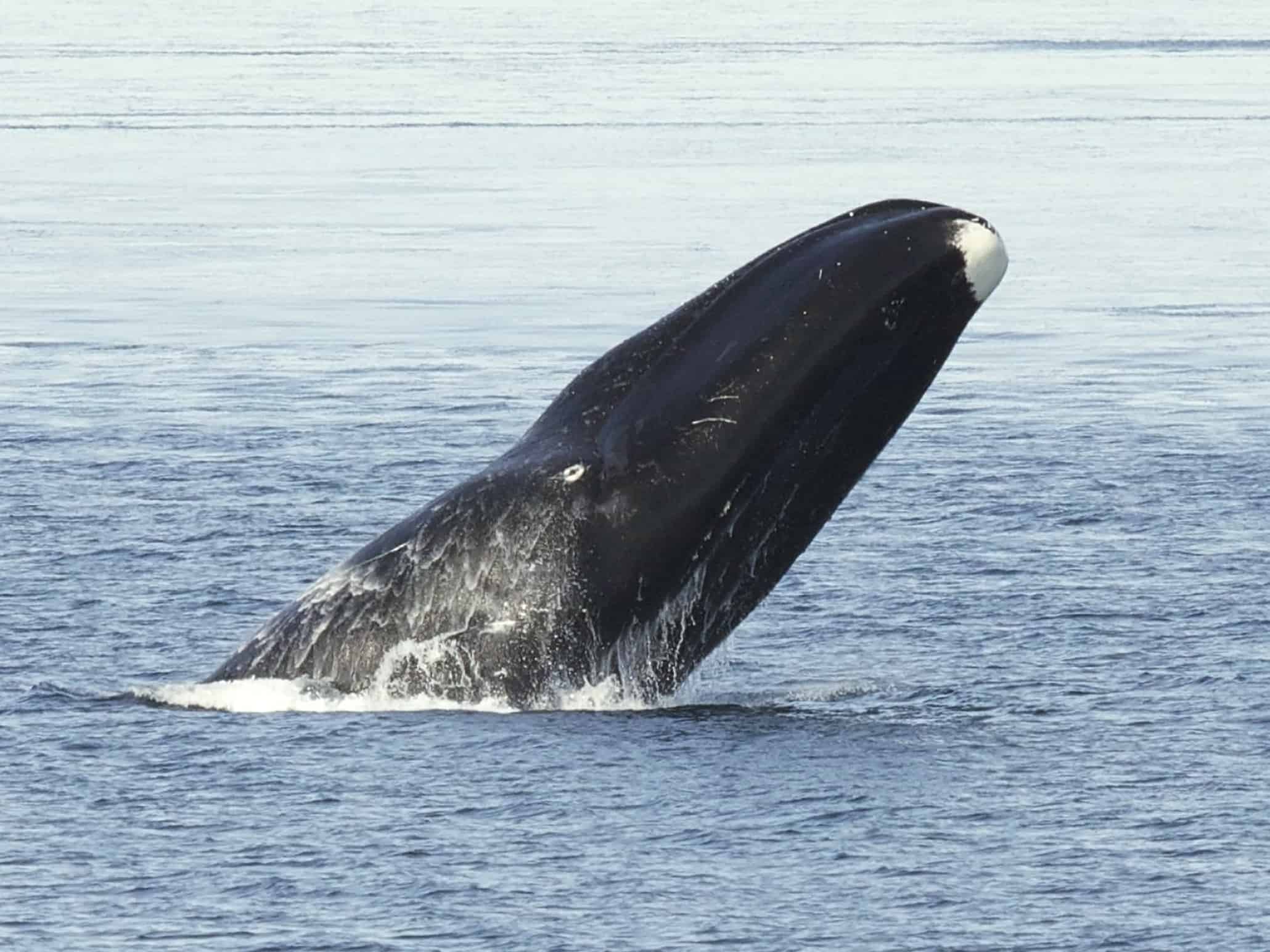
Bowhead whales were almost hunted to extinction due to the practice of whaling.
©iStock.com/bbevren
“Previous explanations have blamed changing ocean conditions for the lack of recovery in some stocks,” Dr. Freymueller stated in a news release. “However, we show that it is more likely to reflect differences in patterns of past exploitation.”
Some populations have rebounded far better than others. This raises the question of why bowhead whales number in the thousands in some regions but only a few hundred in others.
Why Have Some Populations of Bowhead Whales Fared Better Than Others?
There is only one species of bowhead whale, but there are four main populations within it. According to the International Whaling Commission, these include the Okhotsk Sea stock, the Bering-Chukchi-Beaufort stock, the East Canada–West Greenland stock, and the Spitsbergen stock.
Of these populations, not all have recovered at the same rate. The Bering-Chukchi-Beaufort stock has recovered the fastest, with an estimated 10,000 or more whales in the population. Unfortunately, it is believed that there are only about 400 in each of the remaining populations. Damien Fordham, senior author of the study with Adelaide University’s Environment Institute, explains that the difference in recovery rates is due to how well certain populations were protected by sea ice during the peak of whaling.
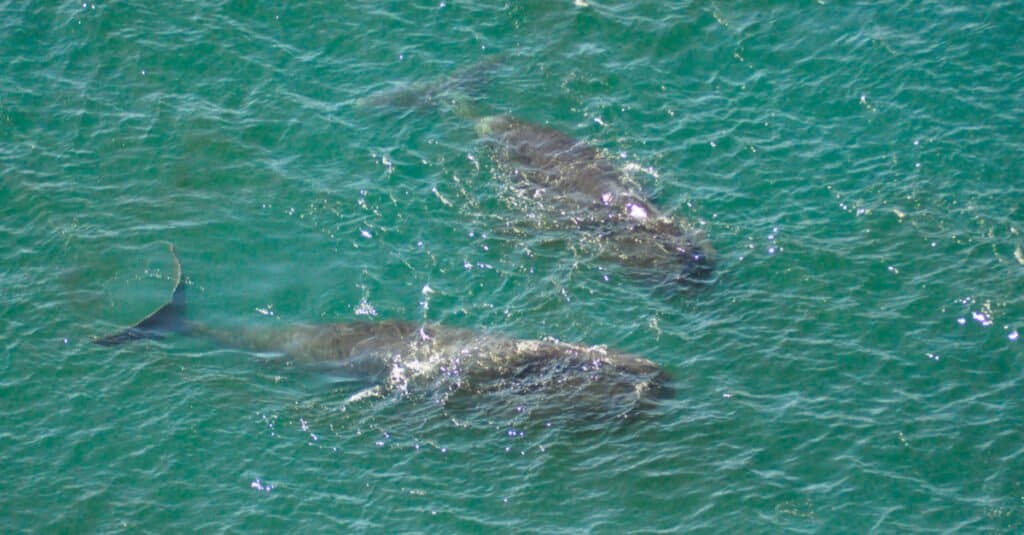
Thanks to being protected by the ice during the whaling period, some bowhead whales have recovered better than others.
©Vladimir Chebanov/Shutterstock.com
“We found that whaling in the late 1700s spread rapidly across the Arctic, with whalers reaching all but the most isolated bowhead whale habitats within a century,” Fordham explained in a news release. “Our analysis discovered that bowhead whale populations with ancestors who found refuge in these protective zones, hidden behind hazardous sea ice barriers, are recovering more quickly today.”
Along with slower recovery rates, there is a lack of genetic diversity to be concerned about in these populations. The smaller the population, the greater the risk for recessive traits to become the norm.
Lack of Genetic Diversity is Concerning for the Future of Bowhead Whales
Bowhead whales are among the longest-living animals. The life expectancy of 200 years or more is directly attributed to a slow metabolism and a low reproduction rate, the latter of which is partially contributing to low genetic diversity among the whales.
To be clear, the low reproduction rate is not what caused the lack of genetic diversity among bowhead whales. The fact that the whales were nearly hunted into extinction is. Once-abundant populations were suddenly reduced, forcing the remaining whales to breed only among themselves. Over the four centuries of hunting, bowhead whales eventually lost much of their genetic diversity.

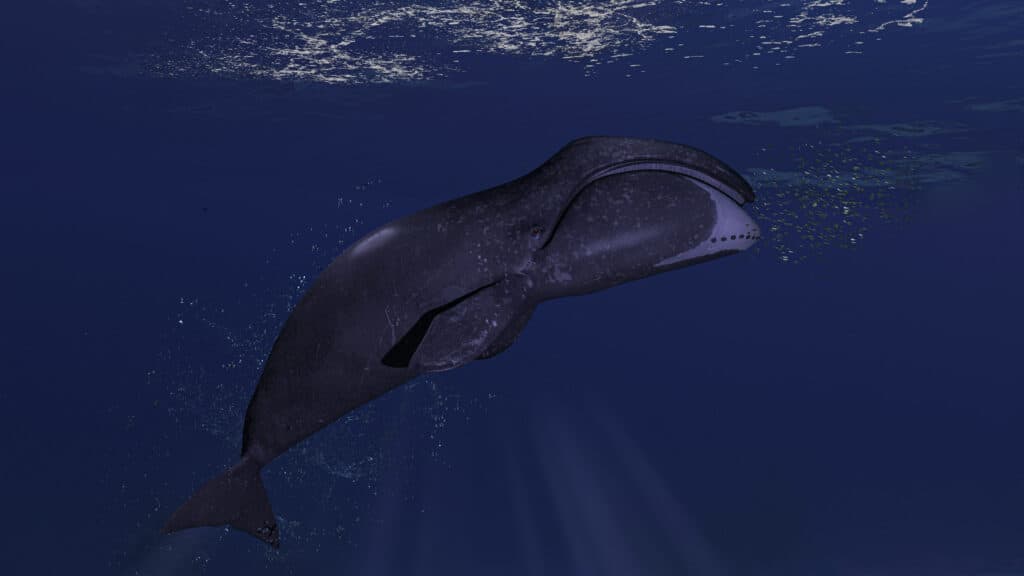
With a lack of genetic diversity, bowhead whales have become less adaptable to environmental changes.
©karenfoleyphotography/Shutterstock.com
Given that bowhead whales were not internationally protected from whaling until the 1970s, only a few generations of whales have been born since then. This is because bowhead whales do not reach sexual maturity until 23.5 years of age. Adding a 14-month gestation period, at least a three-year interval between births, and a long lifespan, it becomes clear why genetic diversity has waned over the years.
According to a 2024 study published in Global Change Biology, the lack of genetic diversity will persist for generations to come. As this occurs, bowhead whales will become less adaptable to environmental changes and develop more recessive traits. This makes bowhead whales less fit than at any other time in history and may become a major factor in the species’ decline.
Why Arctic Ice is Necessary for the Survival of Bowhead Whales
The same Arctic ice that protected the bowhead whales during the height of whaling is rapidly disappearing. While whaling is not a threat today, the loss of ice is. Without it, just how long bowhead whales can continue to exist is uncertain.
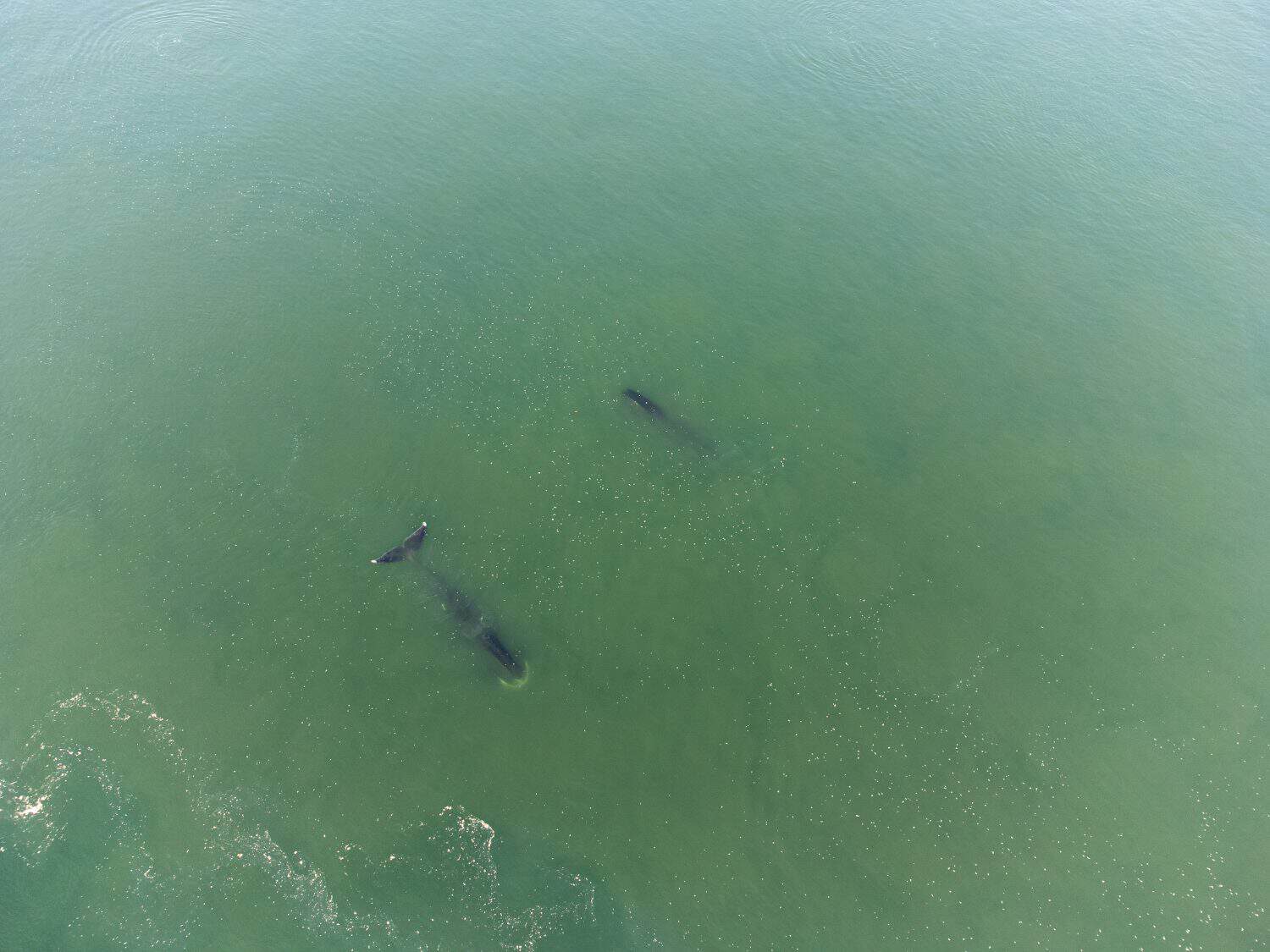
It is estimated that 65% to 75% of Arctic sea ice will vanish by the end of the 21st century.
©photo_mir/Shutterstock.com
According to a 2025 study published in Ecology and Evolution, sea ice is melting at an alarming rate. By the end of the 21st century, it is estimated that 65% to 75% of the Arctic sea ice will vanish. Additionally, in the Sea of Okhotsk, where one of the four bowhead whale populations lives, the summertime ice the whales depend on is projected to disappear by 2060.
Bowhead whales rely on sea ice both as a hunting ground and as protection from ships. As it disappears, the whales will be forced to move outside of their traditional summer habitats. Moving north to find sea ice means bowhead whales will be passing through shipping lanes. This increases the likelihood of vessel strikes, further threatening the already vulnerable bowhead whale population. Consequently, the whaling may not have led to the ultimate demise of bowhead whales, but increasing global temperatures may.
Threats Bowhead Whales Face Today
Bowhead whales are a very hardy species. Over time, they have proven to be resilient to climate change. This has allowed bowhead whales to exist in the oceans for over eight million years. But, as lead author of the study, Michael V. Westbury noted, humans have been the direct cause of the whales’ decline.
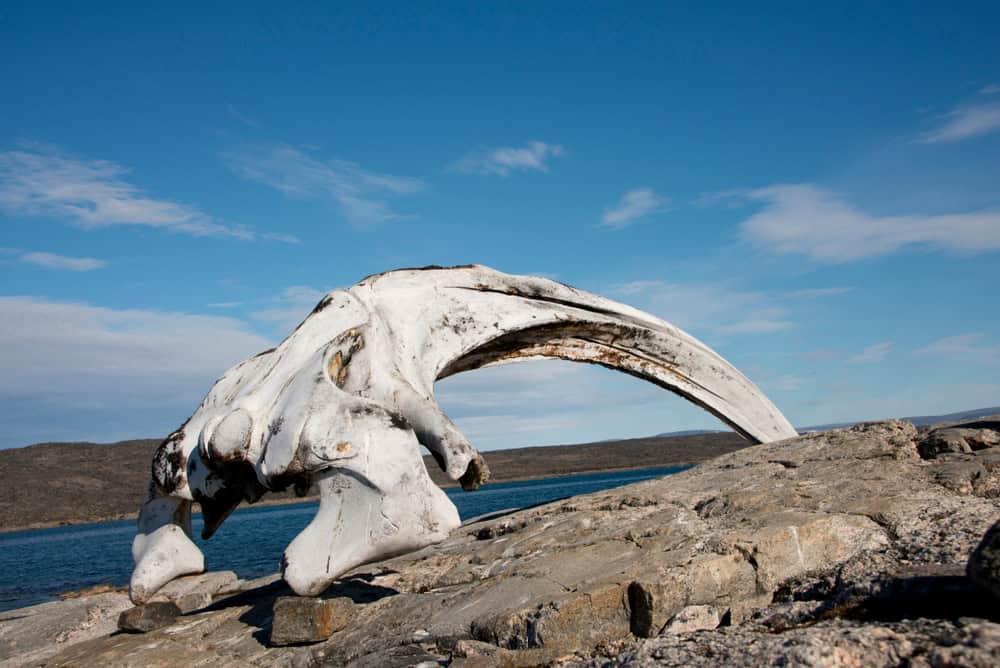
Bowhead whales may have survived whaling, but they still face many threats today.
©Danita Delimont/Shutterstock.com
“Our study shows the bowhead whale is an extremely robust species,” Westbury explained in a news release. “Bowhead whales are a species that can withstand almost anything—except humans.”
The threats that bowhead whales face today include:
- Habitat loss
- Vessel traffic
- Pollution
- Ship strikes
- Fishing gear entanglement
- Loss of ice
With so much stacked up against bowhead whales, their future is one filled with uncertainty. While conservation efforts have helped boost the populations of some, others remain endangered even with international protection. With the additional pressures of modern threats—again, directly caused by humans—the species could disappear by the end of the century. Whether this happens depends directly on how committed governments are to making real environmental policy changes and how strict vessel traffic laws become. Without significant changes, bowhead whale populations could continue to decline, placing the species at greater long-term risk.