
Quick Take
- Tennessee’s regional diversity creates a patchwork of winter habitats that support a wide range of backyard birds.
- Winter feeders become busy as natural foods wane, attracting year-round residents and winter visitors.
- Keep feeders clean and well-stocked, offer varied seed types, and place them to provide cover and minimize window strikes.
Tennessee winters aren’t as harsh as the deep freezes further north, but they still bring a mix of chilly nights, frosty mornings, and shifting weather that keeps backyard birds on the edge of survival. What makes the season especially interesting for bird watchers is how different the state’s regions are. Tennessee stretches from the Mississippi River’s flat, humid lowlands in the west, across the rolling hills of Middle Tennessee, all the way to the Great Smoky Mountains in the east. This is a patchwork of habitats that support a wide range of winter bird communities. Because each region experiences winter differently, the birds that visit backyard feeders can vary quite a bit. We’ve created a list of just a few of the species you might see if you put out a feeder in your area this winter.
Northern Cardinal (Cardinalis cardinalis)
Northern cardinal (Cardinalis cardinalis)
©Steve Byland/Shutterstock.com
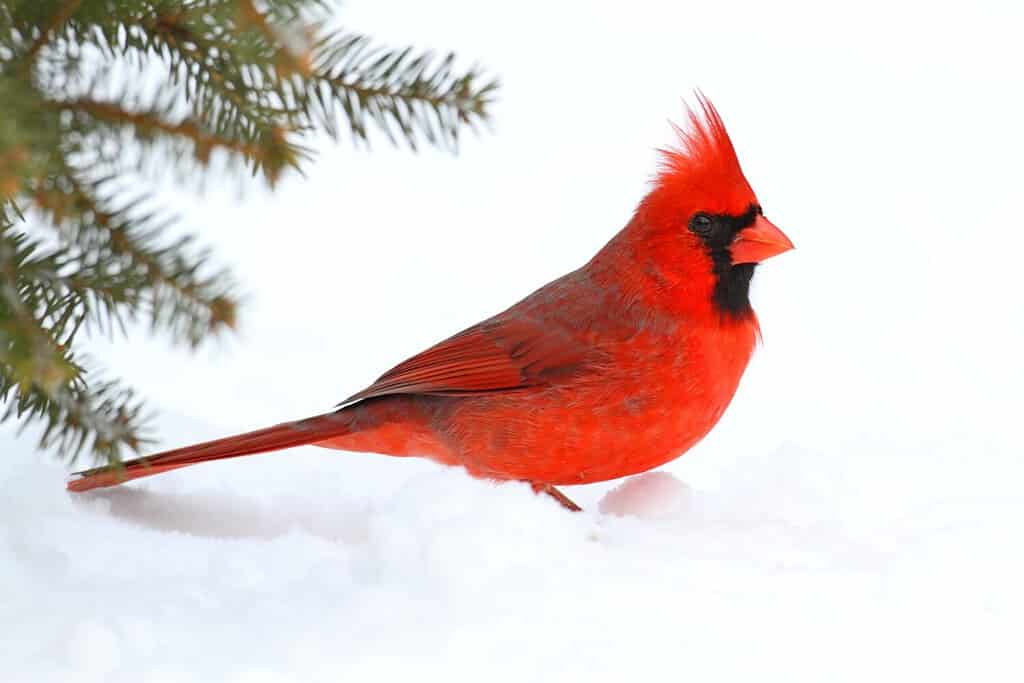
If Tennessee had to pick a mascot for backyard birds, the northern cardinal would win without even campaigning. The brilliant red of the male is impossible to miss, especially when he shows up against a snowy backdrop. Females may not be as bright, but their warm tan feathers with red touches on the wings and tail give them a beauty all their own. Both males and females sport the trademark crest and the thick, cone-shaped bill that makes cracking seeds look easy.
Cardinals live throughout the entire state and never migrate, so they’re a familiar presence in every Tennessee season. In winter, you’ll often see pairs together, and sometimes the male even offers seeds directly to the female — a sweet bit of bonding behavior. Cardinals are huge fans of black oil sunflower seeds and prefer platform or hopper-style feeders where they can perch comfortably.
You’ll find them in almost every type of habitat: suburban yards filled with shrubs, open parks, brushy edges, and even gardens full of winter seed sources. Their clear whistle carries well, so it’s often the first clue that a cardinal is nearby. When winter sets in, and many birds go quiet, their songs bring a welcome bit of sound to cold mornings.
Carolina Chickadee (Poecile carolinensis)
Carolina chickadee (Poecile carolinensis)
©iStock.com/lgunderson
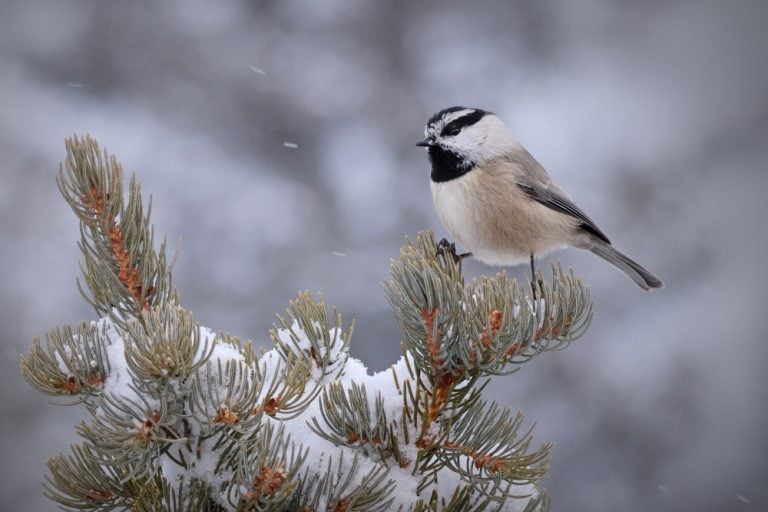
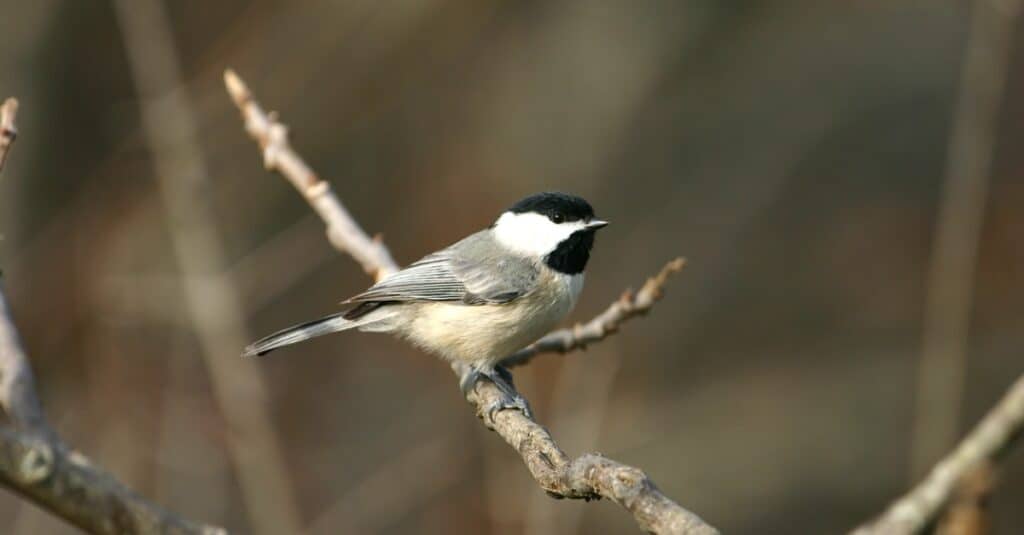
The Carolina chickadee is one of Tennessee’s most reliable feeder visitors and a year-round resident across the state. These little round birds are instantly recognizable thanks to their black cap and bib, bright white cheeks, and soft gray wings. Their small size doesn’t stop them from being some of the boldest visitors you’ll ever host.
Chickadees move quickly, almost like they’re running on a series of tiny missions. They swoop in for a seed, zip off to eat it in a safer spot, and then return for another. They’re also talented acrobats, often hanging upside down from branches or feeder perches to grab the best seeds.
Because they don’t migrate, chickadees depend heavily on winter feeders. As natural food sources dry up, their visits become more frequent and more noticeable. You’ll spot them in wooded neighborhoods, parks, and anywhere with mature trees. Their “chick-a-dee-dee-dee” call is a familiar sound that tells you exactly who you’re dealing with, even when you don’t see them.
Downy Woodpecker (Dryobates pubescens)
Downy woodpecker (Dryobates pubescens)
©BGSmith/Shutterstock.com
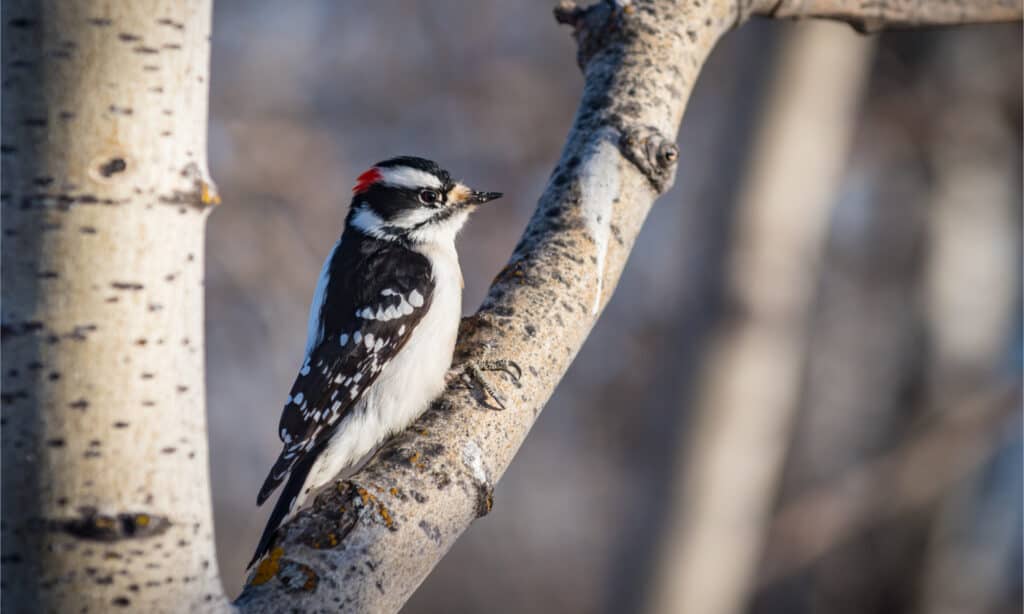
The downy woodpecker is the smallest woodpecker in Tennessee, but don’t let its size fool you — it shows up with confidence at winter feeders. With sharp black-and-white markings and a small red patch on the back of the male’s head, downys are easy to recognize once you get used to their proportions. They look a lot like hairy woodpeckers but are noticeably smaller with a shorter bill. They live throughout Tennessee in suburban neighborhoods with shade trees, wooded parks, riparian corridors, and any area with standing dead wood or mature forests.
Unlike some birds that shift almost entirely to feeders in winter, downies continue to forage naturally as long as insects are available. But in winter, when it’s harder for them to find insects, they show up more often at feeders, especially when suet is available. They’re pretty calm, steady birds overall. That’s a nice contrast to the frenetic flying, chattering, and squabbling of so many other species.
Tufted Titmouse (Baeolophus bicolor)
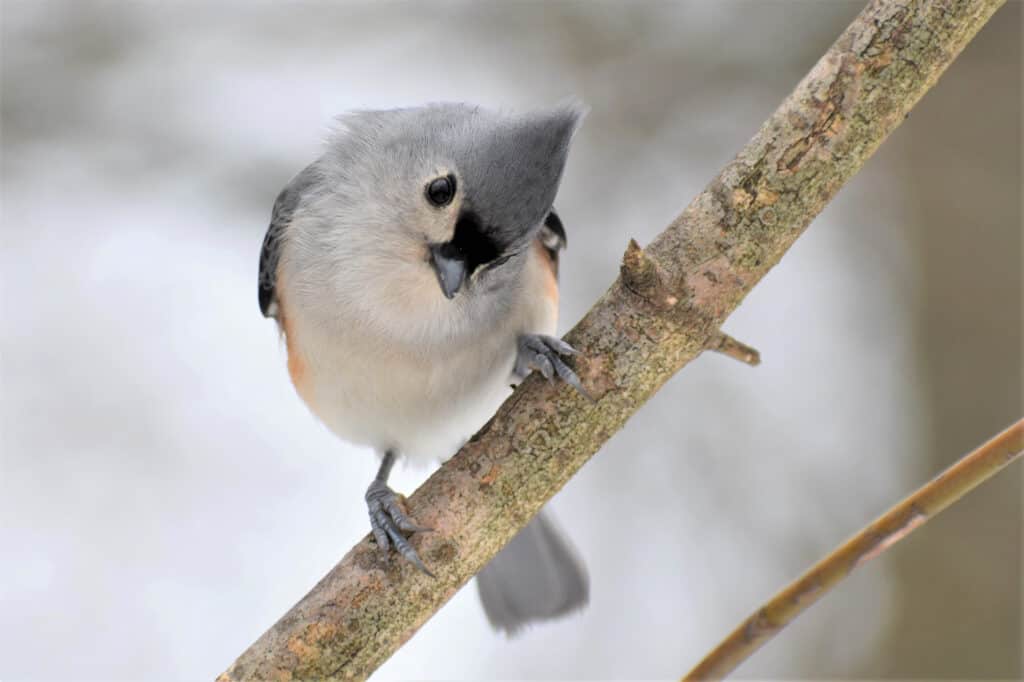
Tufted titmouse (Baeolophus bicolor)
©Lester Graham/Shutterstock.com
The tufted titmouse is one of those birds that feels bigger than it is because of its personality. With soft gray plumage, a pointed crest, and warm peachy flanks, titmice are both good-looking and full of confidence. They’re closely related to chickadees and often travel with them in mixed winter feeding flocks. Mixed flocks are a sensible survival strategy for some birds, as different types of birds are attuned to different threats from predators.
Titmice live throughout Tennessee all year long, especially in hardwood forests and wooded suburban areas. They love sunflower seeds, peanuts, and suet, and they tend to grab one piece and retreat to a branch to eat it before returning for more. Their call is like a clear whistle — often sounding like a loud “peter-peter-peter.” Their bright eyes, curiosity, and chipper vibe make them a favorite for backyard bird watchers who enjoy close-up views of active, energetic species.
American Goldfinch (Spinus tristis)
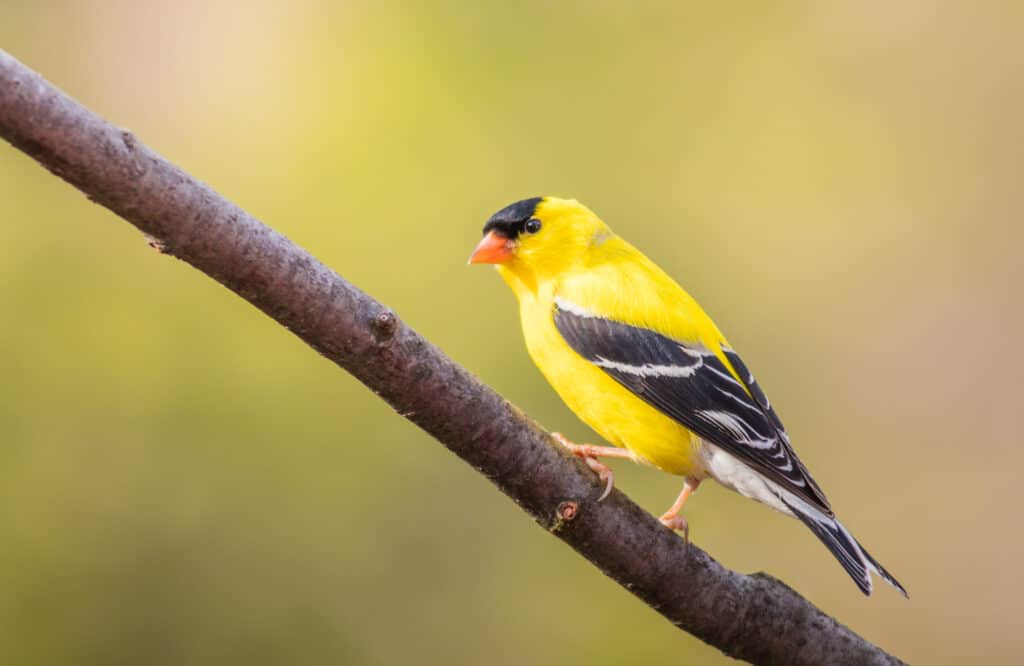
American goldfinch (Spinus tristis)
©Rabbitti/Shutterstock.com
The American goldfinch is a familiar summer bird, but winter brings a surprising change. Males lose their brilliant yellow and shift into a muted olive-brown that blends well with dried weeds and grasses. Females stay fairly subtle year-round, but both sexes keep their crisp wing bars.
Goldfinches live in Tennessee year-round, though winter may bring slight increases in their numbers when northern birds drift south. They are devoted fans of nyjer seed, which is why so many tube feeders across Tennessee stay busy with goldfinch flocks during the colder months. Fine sunflower chips are another favorite.
One interesting fact about goldfinches is that they nest much later than many other birds, waiting until thistle and similar seeds are abundant in late summer. In winter, you’ll often hear their soft calls as they travel in tight groups. They frequent open fields, backyard gardens, parks, and anywhere with seed-bearing plants, making them a common and welcome winter visitor.
Carolina Wren (Thryothorus ludovicianus)
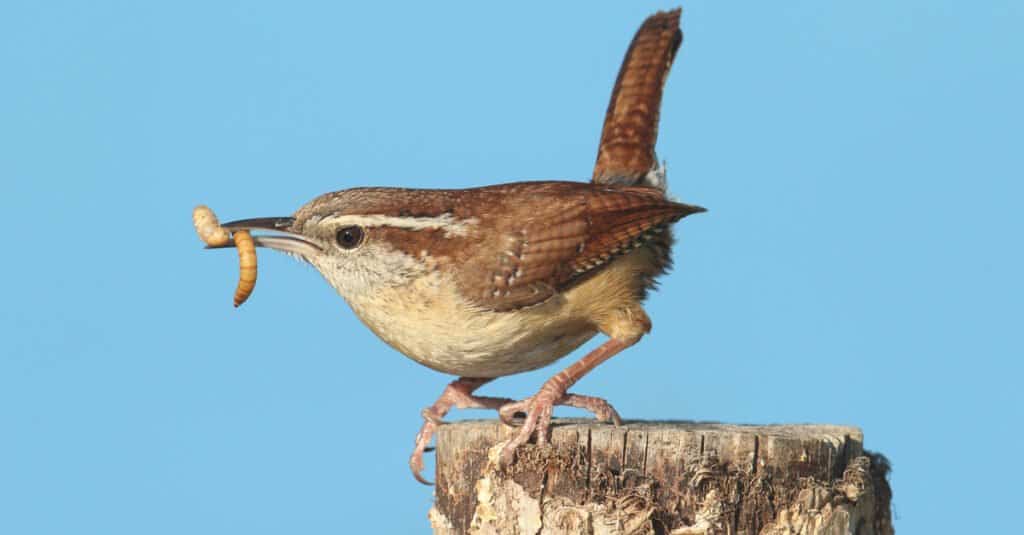
Carolina wren (Thryothorus ludovicianus)
©Steve Byland/Shutterstock.com
The Carolina wren is a small bird with a big voice. These reddish-brown wrens carry warm buff underparts and a clean white eyebrow stripe that gives them a bright, lively expression. Their song is one of the loudest sounds in Tennessee’s winter woods — a bold, ringing phrase repeated several times.
Although they don’t always linger in the open, Carolina wrens will visit feeders regularly, especially when offered suet, mealworms, or other soft, high-fat foods. They love brush piles, tangled vines, and sheltered corners of yards where insects and spiders may be hiding.
Because Carolina wrens stay in Tennessee all year long, winter can be especially tough on them. Severe cold snaps may cause populations to dip temporarily, so consistent food sources and some thick cover can really help. Their curious nature and cheerful calls make them delightful winter companions.
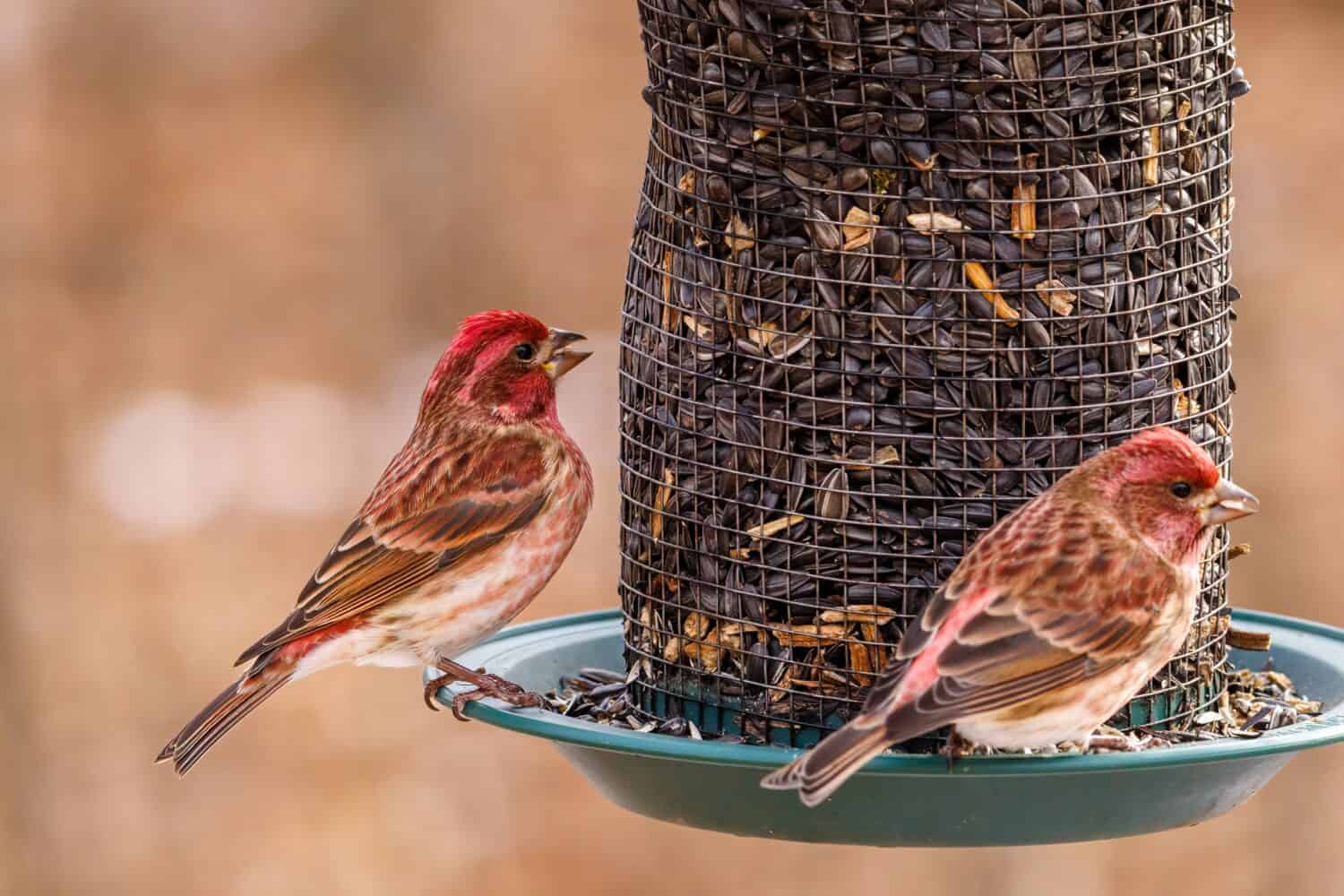
Purple Finch (Haemorhous purpureus)
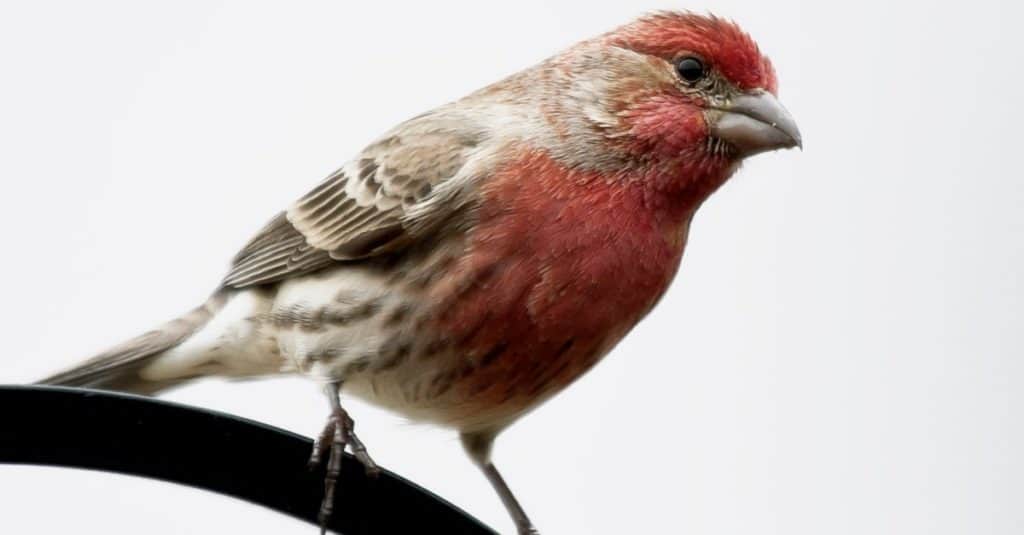
Purple finch (Haemorhous purpureus)
©Karen Givens/Shutterstock.com
Purple finches aren’t guaranteed visitors every winter, but when they show up, their unusual color makes a splash. Male purple finches have a raspberry-red wash over their heads, chests, and upper backs — as if someone dipped them into watercolor paint. Females are brown and heavily streaked, with a bold eyebrow pattern that helps distinguish them from female house finches.
Purple finches love sunflower seeds and will also take nyjer seeds when available. They usually travel in small flocks and move through forest edges, rural yards with scattered trees, and wooded suburbs. Their winter appearance is often tied to food supply cycles farther north, so some years may bring many purple finches, while other winters see very few. When they do arrive, they bring gentle calls, interest, and color to backyard feeders.
White-Breasted Nuthatch (Sitta carolinensis)
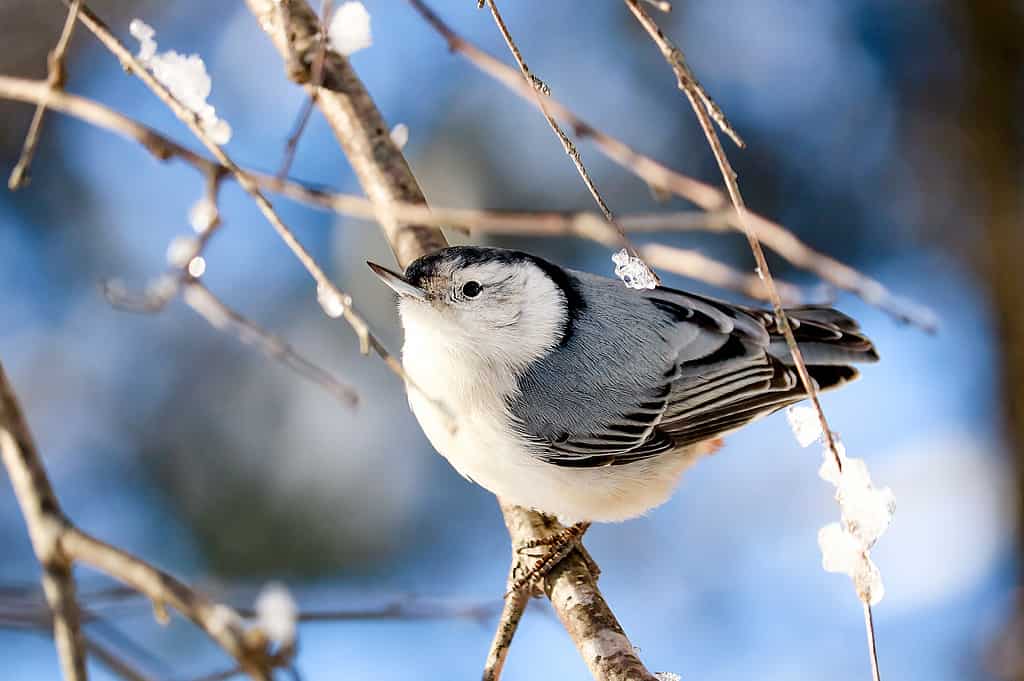
White-breasted nuthatch (Sitta carolinensis)
©lauraag/iStock via Getty Images
The white-breasted nuthatch has a distinctive look and an even more distinctive way of moving. These gray-blue birds with white faces and underparts creep headfirst down tree trunks, using their sharp bills to probe bark for insects and seeds. They also have a loud, nasal call that carries well through winter woods — often sounding like a repeated “yank-yank.”
These birds are year-round residents in Tennessee and fit comfortably into mixed winter feeding flocks alongside chickadees, titmice, and downy woodpeckers. At feeders, they gravitate toward sunflower seeds, peanuts, and suet. They often take a single piece of food and quickly stash it in a tree crevice for later. White-breasted nuthatches prefer mature forests, mixed woodlands, and older neighborhoods with large shade trees. Their beautiful color and quirky acrobatics make them a welcome visitor to your feeder.
Best Practices for Winter Bird Feeding
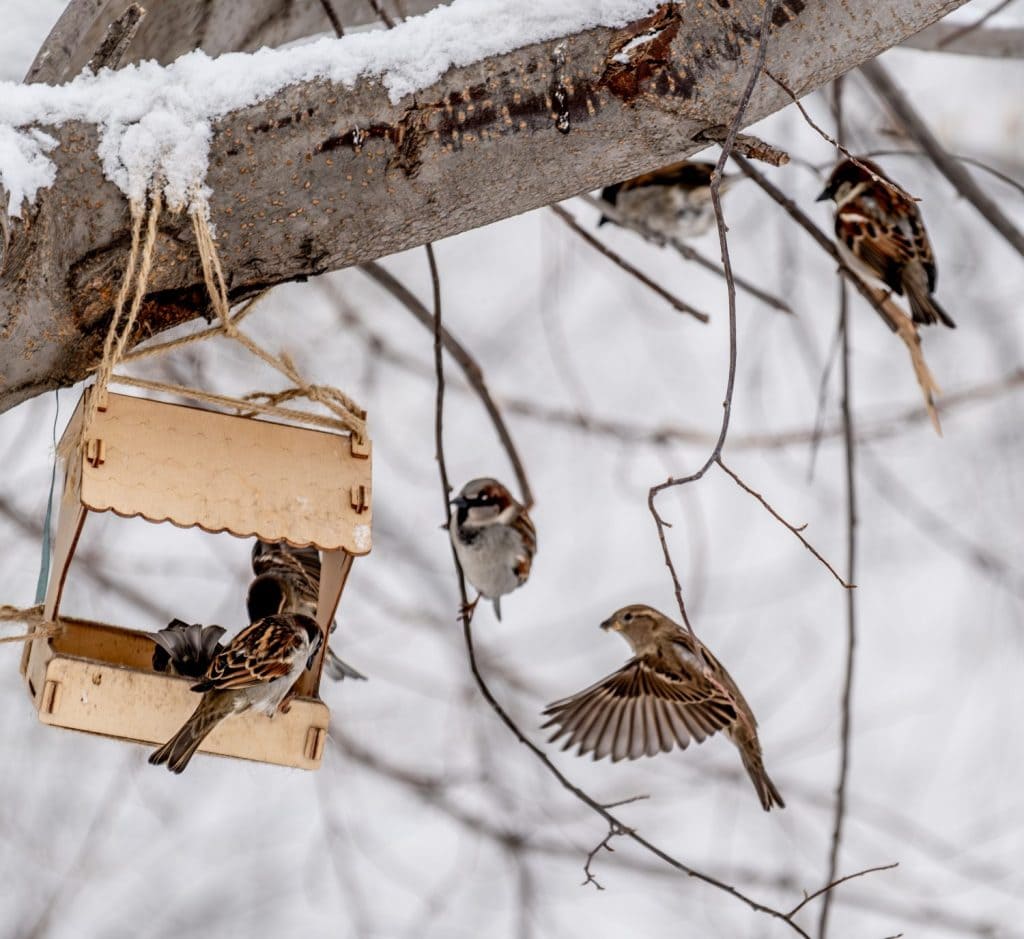
Remember to clean out your bird feeders periodically to prevent spreading disease among birds in close contact with each other.
©sergey lavrishchev/Shutterstock.com
Keeping winter feeders clean and well-stocked is one of the most helpful things you can do for backyard birds. Since many species gather closely around the same food sources, cleanliness matters. A dilute bleach solution followed by thorough rinsing keeps feeders safe. Always discard seed that’s wet, moldy, or clumped — birds recognize spoiled food and avoid it.
Variety is key. Black oil sunflower seeds work for many species. Nyjer seed keeps finches happy. Suet blocks help woodpeckers, wrens, and nuthatches maintain enough energy to make it through cold nights. Offering several feeder types gives more birds a chance to feed comfortably.
Dangers to Feeding Birds
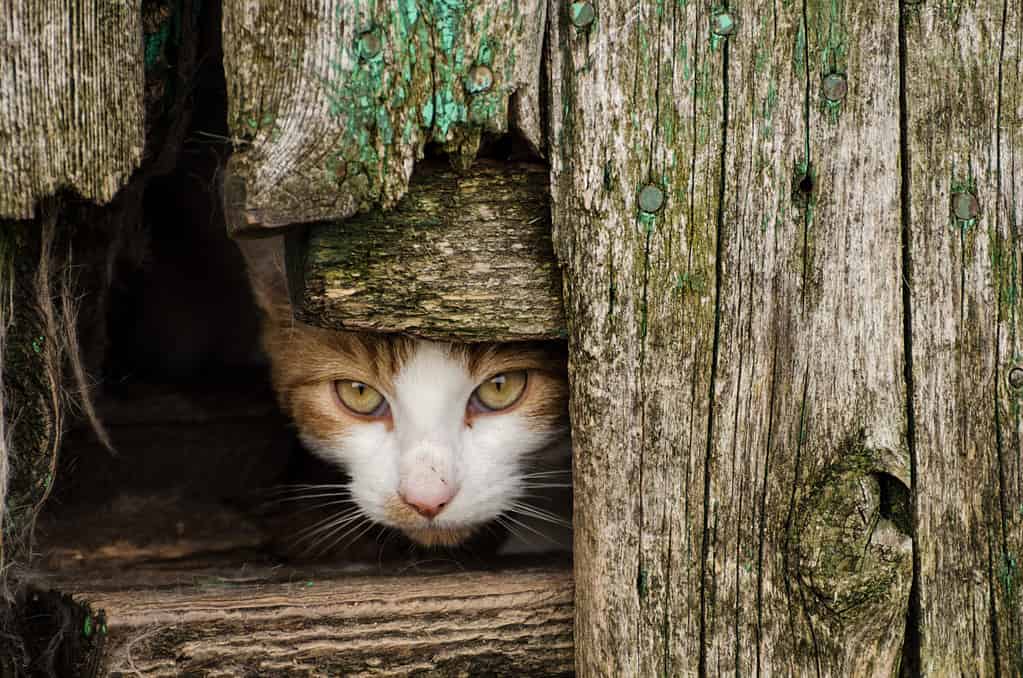
An estimated 60-100 million free-roaming cats kill anywhere from 1.3 billion and 4 billion birds a year.
©Julie Marshall/Shutterstock.com
Predators can turn a peaceful feeding station into a panic zone if the setup isn’t thought through. Hawks may swoop in from above, and neighborhood cats love to lurk under shrubs waiting for a distracted finch to slip up. The trick is balancing safety and visibility: give birds nearby cover such as shrubs or small trees so they can duck out quickly, but don’t place feeders right in that vegetation where a cat can spring from two feet away. A few yards of open space around the feeder makes it easier for birds to see what’s coming and harder for predators to stage an ambush.
Window strikes are the other big winter danger. Low sun angles and reflective glass can make windows look like open sky, leading birds to launch themselves straight into them at full speed. You can soften this risk by breaking up reflections with decals, patterned films, or exterior screens. Placement helps too: put feeders either very close to windows or well beyond ten to twelve feet. Close placement slows the birds down before impact; farther placement gives them room to maneuver. With thoughtful positioning, you protect your flock from claws and glass.
Your Front-Row Seat
Tennessee’s mix of winter residents and seasonal visitors turns the colder months into a season of daily surprises. With clean feeders, fresh food, and thoughtful placement, you can create a refuge that helps birds handle winter’s challenges while giving you front-row seats to the wild world just outside your door.