Quick Take
- Due to their large size and ungainly nature, moose are not generally associated with water, but they are fantastic swimmers.
- Moose live in forests near water sources.
- In the summer months, aquatic plants can make up most of their diet.
- To reach the plants, they use their swimming skills and natural buoyancy.
- Moose can dive as deep as 16 feet to eat plants underwater.
Moose generally live in forested areas, eating twigs, bark, roots, and the shoots of woody plants. However, they prefer moist conditions and like to live where there are lakes, ponds, and swamps. The surprising thing about moose is that they are good swimmers, and some even dive to the bottom of rivers, as this Instagram post explains. We explored this unexpected behavior in these large land mammals.
Why Would a Moose Want to Swim?
When we are thinking about one of the largest land mammals in North America, we have to ask ourselves why they would want to swim in the first place. The answer is connected with food!
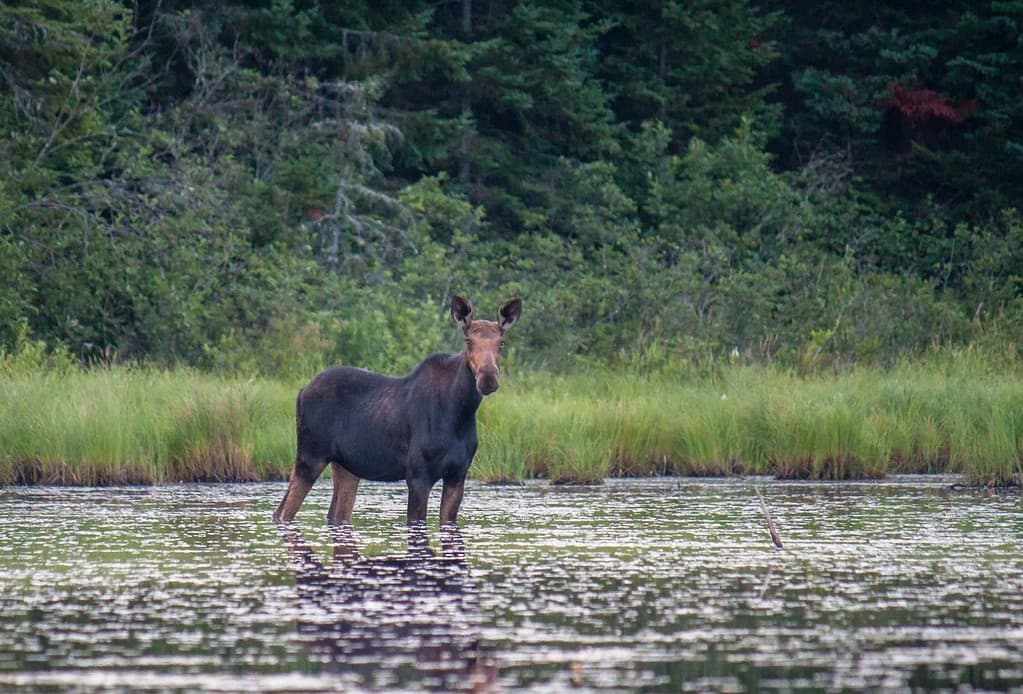
Moose feed on nutritious aquatic plants.
©trsers/Shutterstock.com
Moose spend a lot of time eating. They need around 45 pounds of food a day to keep them healthy. In the winter, they browse on conifers, but in the summer, another nutritious food source opens up for them. In the warmer months, moose often feed on water plants. These include water lilies, pondweed, horsetails, bladderworts, and bur-reed. It was clearly an evolutionary advantage for these large creatures to exploit an extra food source. In the summer, aquatic vegetation can make up most of their diet. Some researchers have suggested that moose eat these plants because they are rich in sodium, which is essential for antler growth, along with other metabolic processes.
How Good Are Moose at Swimming?
Given that they are quite an ungainly animal, moose are surprisingly good swimmers. They can reach speeds of up to 6 mph in the water – the average human can only manage around 2 mph. They have been seen swimming up to 10 miles! Part of their swimming ability can be attributed to their coat, which gives them buoyancy. Moose have guard hairs on their body which are hollow. This creates an area of insulation by trapping air but also helps them to float.
Moose also have a complex series of nasal structures, which makes it easier for them to feed on submerged plants. They can even dive down to depths of 16 feet and control their buoyancy so they can stay underwater long enough to feed!