
Quick Take
- A frog that uses its stomach as a womb should digest its own offspring. Here's the bizarre chemical trick that stops that from happening. See the chemical trick →
- Scientists had almost no time to study these frogs before they vanished, and most people would be wrong about what the leading cause of their extinction actually was. Discover the true cause →
- These frogs may already be extinct, but one project is attempting something that has never been successfully done for any vertebrate species. Learn about Project Lazarus →
Some species go extinct, but it’s even more remarkable when a species disappears only a few years after scientists discover it has one of the most unusual forms of offspring incubation in the animal kingdom. That is more or less what happened with the southern gastric-brooding frog. First formally identified by scientists in the 1970s in the subtropical rainforests of eastern Australia, this frog evolved a remarkable way to ensure its reproduction. Female frogs incubated their offspring inside their own stomachs.
Such a maneuver seems impossible. Yet, it was clearly demonstrated by both female southern and northern gastric-brooding frogs. Once scientists realized the mechanism, they raced to learn everything about the two species, but it was already too late. Within a few short years, both species entered a steep decline. Within less than a decade, the last captive specimens died. By the turn of the 21st century, both species had gone extinct.
Their brief and wondrous story remains one of the most enigmatic in herpetology. It shows that just when we think we know everything about the natural world and its workings, we get a surprise. A species can appear to overturn our notions entirely before disappearing in a flash. Let’s learn about the gastric-brooding frogs, how they managed such digestive incubations, and what made them go extinct so quickly.
Continue reading
Meet the Brooding Frogs
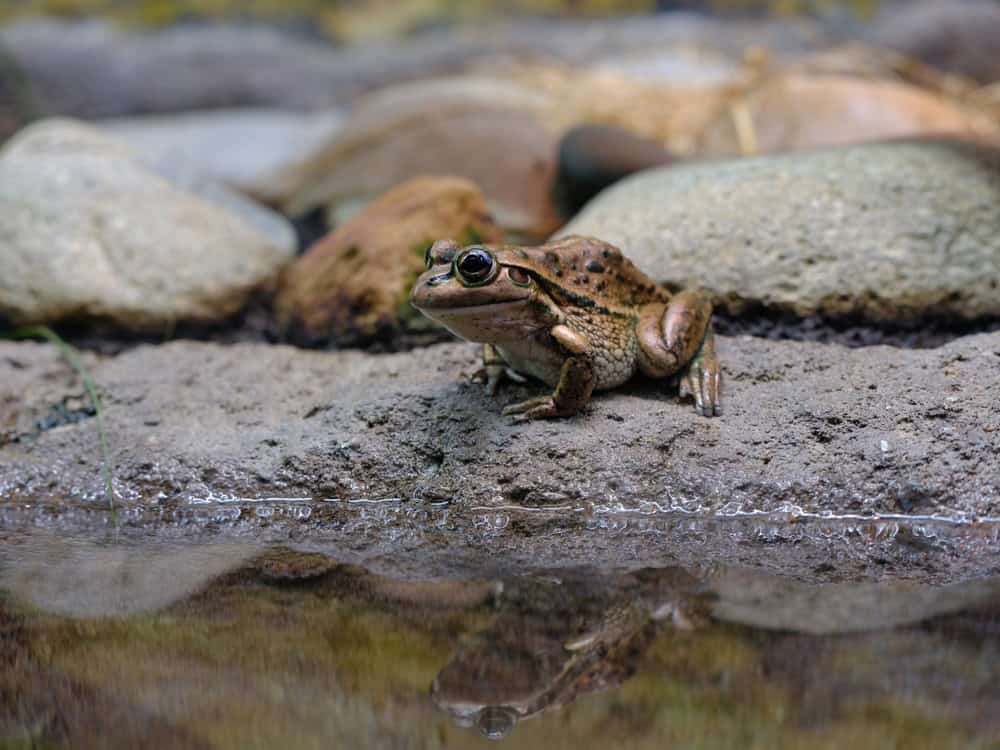
Both now-extinct species of gastric-brooding frogs spent most of their lives in or around water.
©Andreas Ruhz/Shutterstock.com
In 1972, researcher David Liem made a discovery in the Conondale and Blackall Ranges of southeastern Queensland, formally describing the species in 1973. It was a small frog that spent most of its life in or near turbulent mountain streams. He named it Rheobatrachus silus, which became known as the southern gastric-brooding frog.
A little over a decade later, in 1984, researcher Keith McDonald discovered a similar-looking frog species in the rainforests that dot the Clarke Range in central-coastal Queensland. He named it Rheobatrachus vitellinus, or the northern gastric-brooding frog.
Both frog species looked relatively similar, but they had several key differences. Southern gastric-brooding frogs lived between elevations of 350 and 800 meters. Northern gastric-brooding frogs lived between 400 and 1,000 meters. Northern variants were also slightly larger than southern variants and sometimes had broods of more than 30 tadpoles, while southern variants typically brooded between 20 and 25.
However, what both species shared was one of the strangest incubation methods in the world.
Chemically Induced Digestive Incubation
A more detailed study of these two species led scientists to a startling discovery. Both female northern gastric-brooding frogs and female southern gastric-brooding frogs swallowed their own fertilized eggs or hatched larvae. The broods entered the females’ stomachs, which transformed into nurseries, incubating the young until fully grown froglets emerged from their mouths.
Normally, a frog’s stomach produces chemicals like pepsin and hydrochloric acid to break down food. To protect their developing young, female gastric-brooding frogs completely stopped their digestive process for six to seven weeks—a process triggered by chemical signals from the broods.
Fertilized eggs are coated in jelly and mucus, which contain high concentrations of a chemical called Prostaglandin E2. This chemical binds to specific cells in a female frog’s stomach lining, which halts the production of hydrochloric acid. Furthermore, it prevents the digestive muscles from contracting and pushing their contents down into the intestines. For weeks, the digestive nursery grew and grew until the tadpoles took over much of the mother’s abdominal cavity. The growing tadpoles even compressed the mother’s lungs, forcing her to fast for weeks and rely on cutaneous respiration (breathing through the skin). Once incubation was complete, the froglets were expelled through their mother’s esophagus and mouth over several days. A few days later, the mother’s stomach returned to its normal structure, secretions, and appetite.
Untimely Extinction
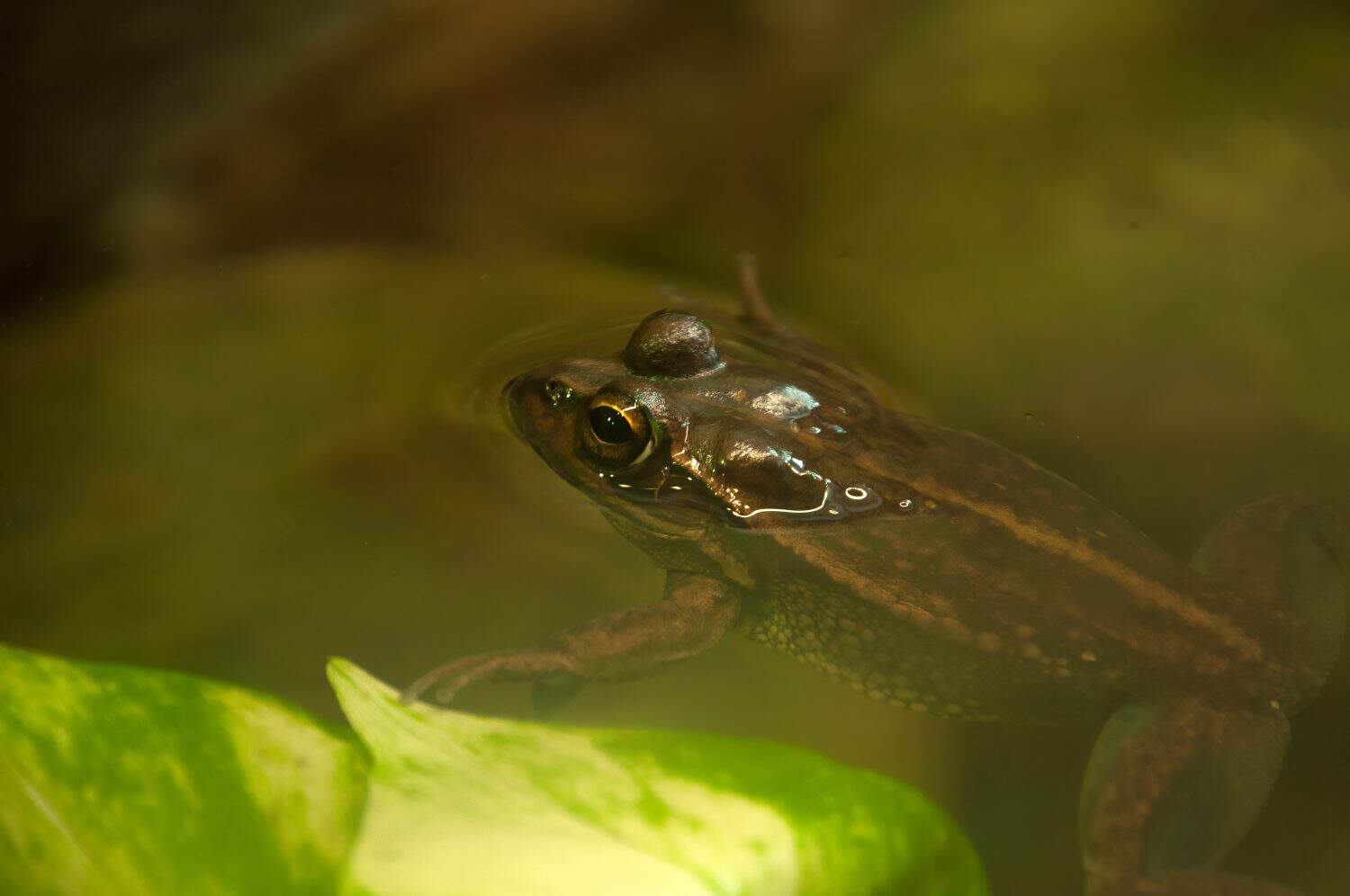
A fungus that affects amphibian skin likely contributed to the rapid decline and eventual extinction of both southern and northern gastric-brooding frogs.
©demamiel62/Shutterstock.com
Before scientists could make a complete survey of both brooding frog species, they were gone. The southern gastric-brooding frog was last observed in the wild in 1981, with captive specimens dying off only a little while later. Meanwhile, the northern gastric-brooding frog disappeared within about 18 months of its initial discovery, with the last sighting recorded around 1985.
It is hard to say exactly what brought extinction to these two strange frog species, but scientists point to several key factors. Their populations were already highly localized at the time of discovery, making them especially vulnerable to droughts and microclimate changes. Human development also played a role, with the local timber industry and water quality degradation contributing as well. Perhaps the most likely culprit, however, was the spread of a pathogenic chytrid fungus called Batrachochytrium dendrobatidis. This fungus disrupts the skin function of amphibians and put brooding frog species in an incredibly vulnerable state.
Whatever the reason, the brooding frogs were gone by the 21st century. The International Union for Conservation of Nature (IUCN) declared the southern species extinct in 2006 and the northern species extinct in 2015. Yet there may still be hope. A project to bring back extinct species, called Project Lazarus, made advances in reanimating the gastric-brooding frogs in the mid-2000s.