
Quick Take
- Traditional species identification can take decades, but Caterino's genetic approach dramatically sped up the process. See the genetic shortcut →
- Finding 339 unknown species at a single jungle site raises an uncomfortable question about how much life we've been walking past unnoticed. Explore the discovery site →
- Caterino's real sabbatical goal had nothing to do with the 339 species, and it may matter more for science in the long run. Discover the bigger goal →
Sometimes you get lucky. Sometimes, you get so lucky that you accomplish work that would normally take decades, require teams of scientists, and involve dozens of studies. Something similar happened recently in the lush jungles of Ecuador. A Clemson University entomologist named Michael Caterino discovered 339 previously unknown species of rove beetles, hidden among the leaf litter. Remarkably, he managed this feat in a single year.
Rove beetles, perhaps underappreciated due to their small size, live among dense vegetation and plant detritus that humans often overlook. There, rove beetles perform tireless work as forest rejuvenators, recycling nutrients and breaking down organic matter. Let’s learn more about this fascinating discovery—one of the largest single-paper species descriptions in recent history—and how Caterino used an innovative species identification technique to pull it off.
Innovative Identification
Several years ago, Michael Caterino made headlines for his remarkable discovery: 1,000 arthropod species in the Appalachian Mountains, dozens of which had never been seen before. Between 2019 and 2023, Caterino and his colleagues at Clemson University studied leaf litter found at 22 of the highest points in the southern Appalachian Mountains. This revealed a scale of arthropod biodiversity previously unrealized.
Traditional species identification methods are often tedious and done by hand. They involve hours of observation, selection, and individual dissection of specimens under a microscope to find anatomical differences. Caterino realized that this often grueling work could be bypassed through technological methods. He and his fellow researchers started collecting bulk leaf litter samples and using high-throughput genetic sequencing to analyze them instead. This, too, would be an arduous task by itself, so Caterino realized he could target specific, standardized gene regions. Genes such as mitochondrial cytochrome c oxidase I (COI) function as organic barcodes for different species. Software then applies species delimitation methods to such sequences before grouping similar genetic codes.
Not only was this innovative method effective, but it also took a fraction of the time required for traditional and manual taxonomic classification. In the wake of the project’s success, Caterino wanted to test his new method in a region with historically rich biodiversity, so he headed south.
A Productive Sabbatical

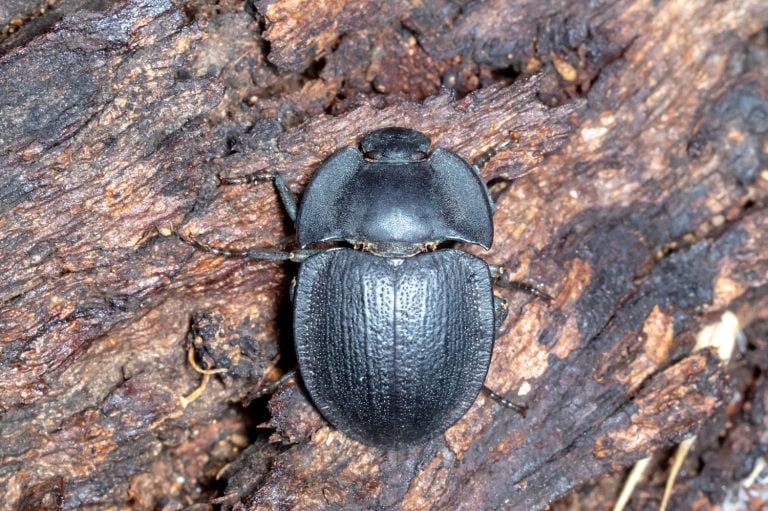
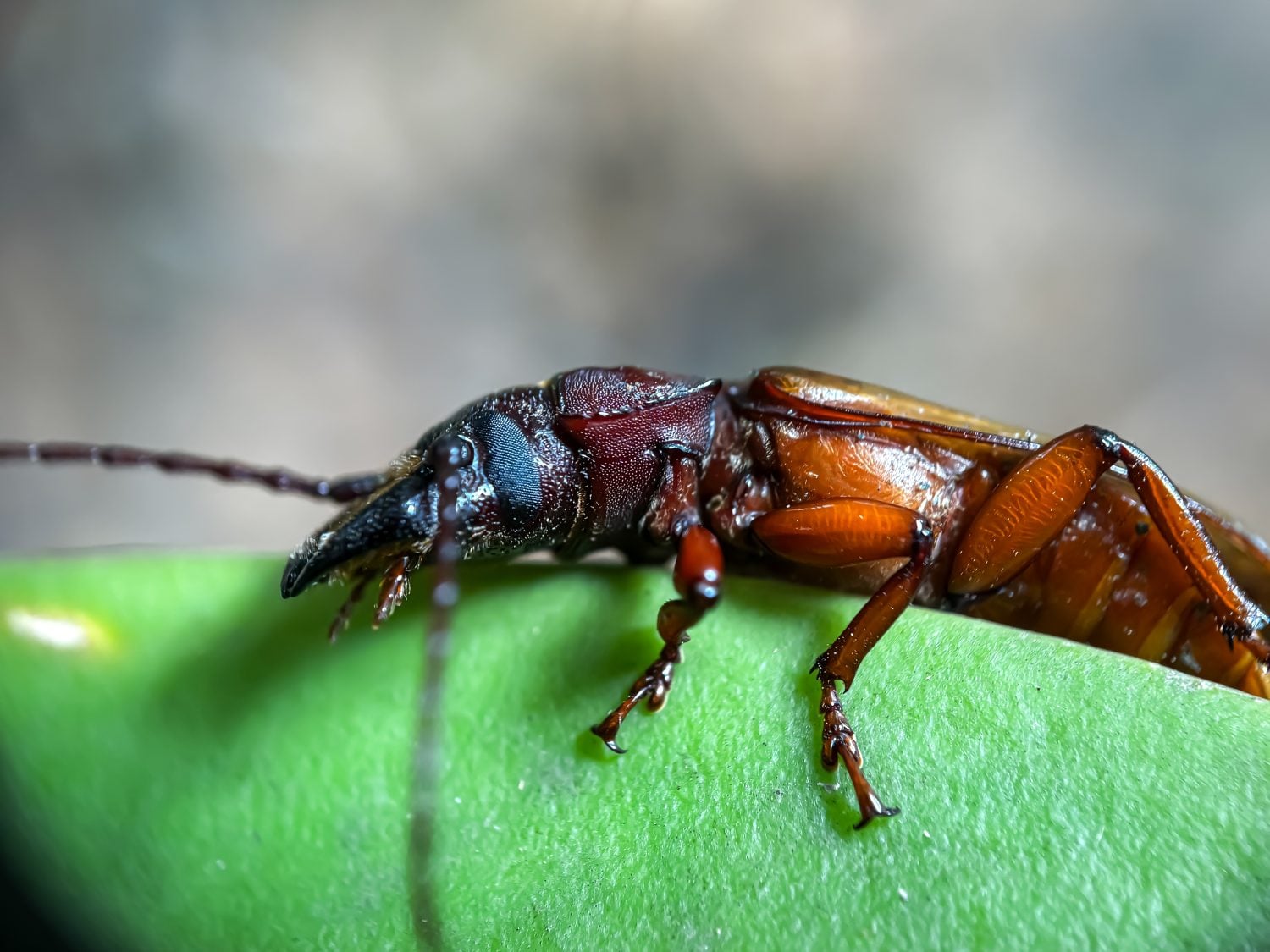
Rove beetles have extended bodies that make them look like wingless wasps.
©Sendo Serra/Shutterstock.com
Caterino took a year-long sabbatical from his position as Clemson University’s John and Suzanne Morse Endowed Chair of Arthropod Biodiversity. While many of us would use the time for vacation, Caterino used it to find even more unidentified species. He joined forces with students and researchers at Ecuador’s Instituto Nacional de Biodiversidad (INABIO) to collect and analyze leaf litter on the country’s dense forest floors. This included a reunion of sorts, as one of his first doctoral students at Clemson, Sofía Muñoz-Tobar—now a researcher at INABIO—also contributed.
The team decided to focus on rove beetles. They belong to Staphylinidae, the largest family of animals on Earth. Although rove beetles are widely distributed, people often overlook them because of their small size and tendency to live in decaying plant matter. Unlike other beetles, which are hefty with hard outer wings, rove beetles have elongated bodies that resemble wingless wasps. Some are voracious predators, while others serve as industrious decomposers, breaking down organic material. The Staphylinidae family just got a bit bigger, too, as Caterino and his Ecuadorian colleagues discovered 339 new species of rove beetles at around a dozen sites in Northern Ecuador—all within a year.
The majority of samples came from higher-elevation cloud sites in four different provinces. Several others were found in the eastern Amazonian lowlands and a few coastal sites. Some came from Caterino’s earlier fieldwork while others were collected by his collaborators at INABIO.
The stunning breadth of new rove beetle species suggests that the Ecuadorian jungle’s biodiversity is far greater than anyone previously imagined. As Caterino said in an article about the discovery on Clemson University’s website, “Ecuador’s insect diversity is off-the-charts exceptional. We’ve really only scratched the surface.”
Naming Privileges
As many know, the discoverer gets to name the species. Naming a single new species can be challenging, but coming up with 339 individual names is an extraordinary task. To honor the region, Caterino chose many of the names from indigenous languages and mythology. These include Ataorupagui and Cusicayo, named after the Cañari brothers, and Ayapuna, which combines Kichwa words meaning “spirit of the mountain.”
Caterino named a few dozen other rove beetle species after Ecuadorian scientists, conservation leaders, and community members. This honored their work in advancing the understanding and protection of Ecuador’s biodiversity. This includes Jubus limaorum, named after the Lima family who owns the reserve where many of the beetles were discovered, and Euphalepsus inclani, named after INABIO director Diego Inclán Luna.
Biodiversity A-Plenty

This landmark study suggests there are even more unidentified arthropods hiding amongst the Ecuadorian leaf litter.
©Curioso.Photography/Shutterstock.com
Uncovering so many new species can be an incredible source of motivation. The study not only suggests that even more unidentified species may be hidden among the Ecuadorian leaf litter, but also highlights the forest’s unsung heroes. As Caterino said, “My strongest motivation now and always is to make people aware of—and then care about—the ‘little things that run the world.'”
Beyond the potential for more species identification, Caterino suggests that his sabbatical in Ecuador was just as important for training future researchers. He said, “I hope one of the lasting outcomes of my sabbatical is that some of the students and collaborators I worked with continue this research. Building local expertise is just as important as documenting new species because it helps ensure the work continues long after I’m gone.”