
Quick Take
- One lake on this list is widely considered among the most haunted in the U.S., and the dark history behind that reputation sits directly beneath the water you'd be fishing. Discover the haunted history →
- At Georgia's most coveted trophy trout stream, the bait most anglers automatically reach for is completely prohibited, and violating that rule will cost you the fish and more. See the bait restrictions →
- Two of these fishing spots hide entire towns beneath the surface. At one of them, a drought can even bring those ghost towns back into view. Explore the flooded towns →
- One tiny coastal spot on this list has barely three miles of shoreline yet can put offshore trophy fish in your hands that most anglers never expect this close to shore. Find the offshore action →
In Georgia, the warmer water of summer pushes largemouth and spotted bass into deeper channels, brush piles, or shady cover. Cold tailwater rivers provide a refreshing escape for trout anglers who hit the water at dawn before recreational tubers crowd the runs. The state’s public fishing areas and lowland rivers are stocked with catfish for nighttime fishing, and the Golden Isles on the coast attract inshore redfish, jack crevalle, and migrating tarpon. Anglers aged 16 and older need a valid Georgia fishing license for fresh and saltwater. Here are the best Georgia fishing spots to visit this summer.
Waters Creek
Waters Creek is a mountain stream that flows through the Chattahoochee-Oconee National Forest. Fed by natural springs and rainfall, this creek owes its reputation for giant trout to strict management and a thriving ecosystem. Early June offers prime fishing before summer heat warms the crisp mountain waters. While the creek is open to the public, special regulations apply, meaning natural baits, corn, and scented plastics are strictly prohibited.
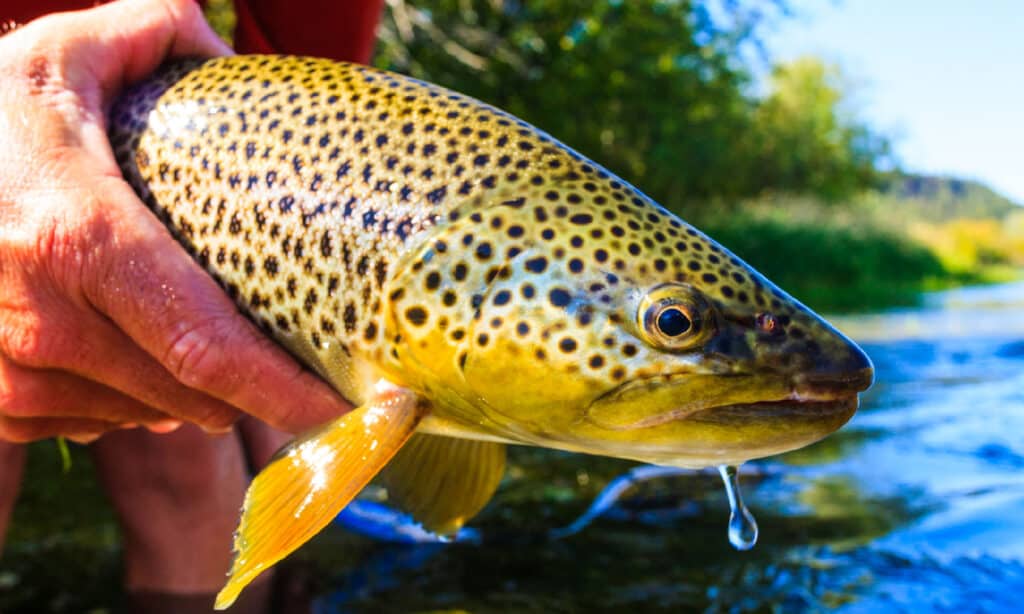
Waters Creek is one of Georgia’s two managed trophy streams.
©iStock.com/KevinCass
During the summer window from April 15 through October 14, anglers may harvest one trout per day, and it must be at least 22 inches in length, in accordance with special trophy regulations. Anglers aged 16 and older must sign in at the property and carry both a valid Georgia fishing license and an official trout stamp at all times while fishing.
Big Lazer Creek
Located in Talbot County, Georgia, the Big Lazer Creek Public Fishing Area features a 195-acre public-access lake. For summer fishing, the best times are early morning and late evening when bluegill, channel catfish, and largemouth bass are most active in the warmer weather.
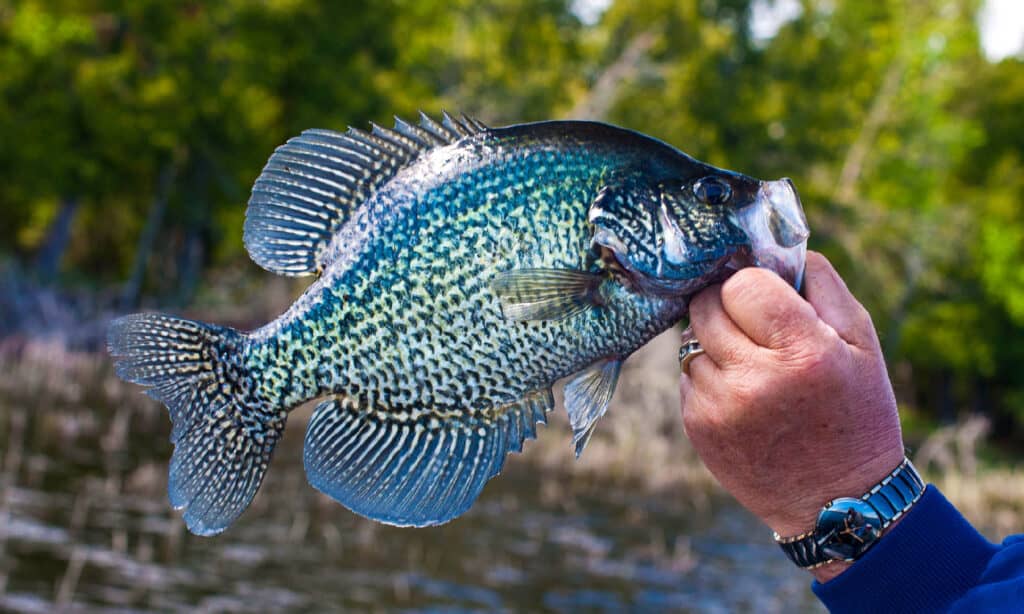
Big Lazer Creek is a 195-acre lake.
©iStock.com/SteveOehlenschlager
Anglers are restricted to using a maximum of two poles at a time. Live minnows are allowed but cannot be released into the water. Strict daily catch limits are enforced, including a 14-inch minimum for largemouth bass (limit 5), a 15-fish limit for bream, a 5-fish limit for channel catfish, and a mandatory immediate release for all grass carp. Boats must operate at idle speed. Children under 14 must be accompanied by an adult.
Paradise Public Fishing Area
Spanning 1,351 acres with 68 intensively managed lakes totaling around 525 acres of water, Paradise Public Fishing Area offers 24/7 public access during the summer (May 1–September 30). Summer fishing is best during early morning or late evening hours, or at night. Public entry requires a valid fishing license or lands pass. Restrictions limit anglers to a maximum of two poles, with specific catch-and-release rules on designated lakes.
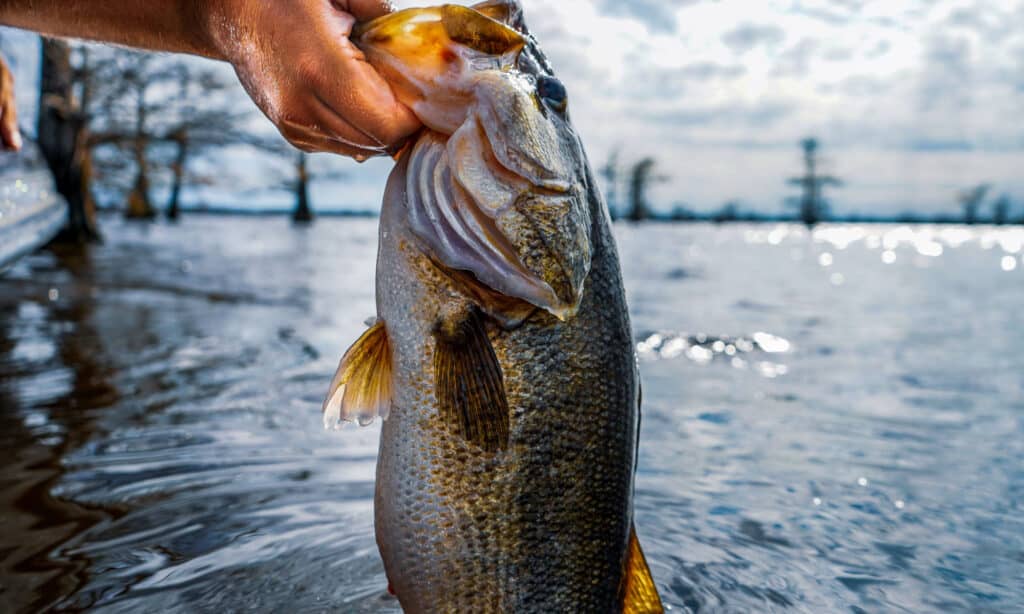
Paradise is a public fishing area in Georgia that has 68 lakes.
©Maclane Parker/Shutterstock.com
Toccoa River
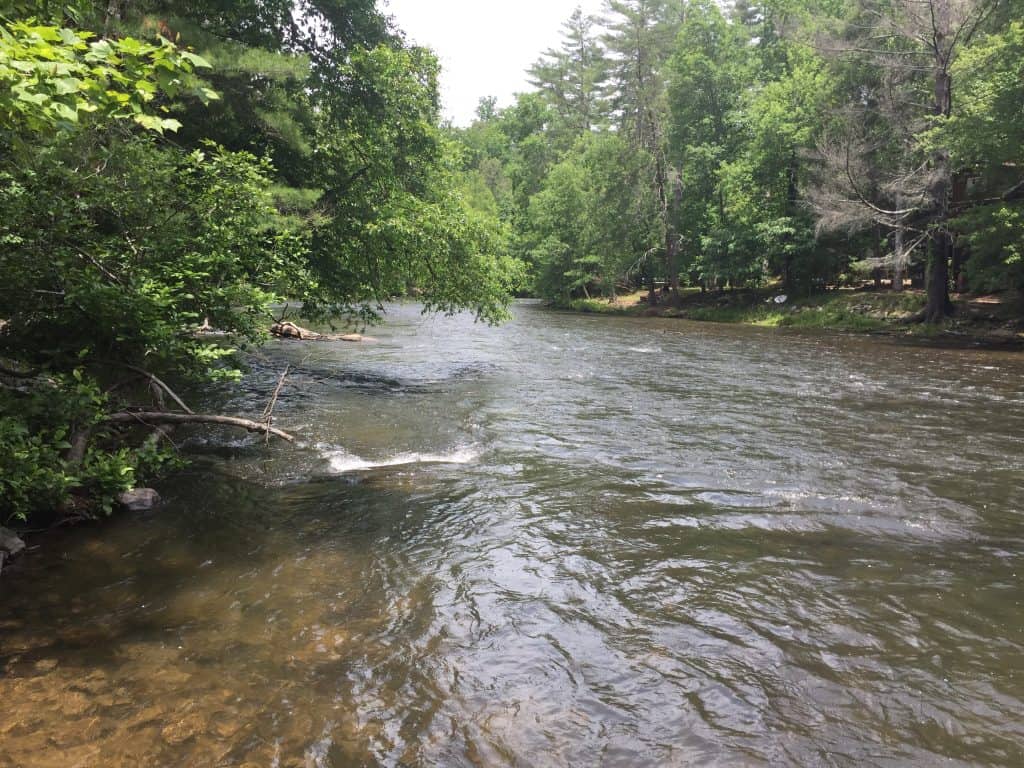
Summer fishing on the 15-mile Toccoa River tailwater in Georgia offers cold, trout-friendly waters best fished during early mornings or late evenings to avoid midday heat and heavy recreational traffic. Public access is limited to designated parks, such as Tammen and Curtis Switch. Anglers must have a valid Georgia fishing and trout license, be alert for sudden water level changes due to dam generation.
Allatoona Lake
Spanning 12,000 acres with 270 miles of shoreline, Allatoona Lake is a U.S. Army Corps of Engineers reservoir stretching 11 to 19 miles long. To escape the summer heat and heavy boat traffic, the best times to fish here are early morning, late evening, or at night. Public access is widely available from multiple boat ramps and parks.
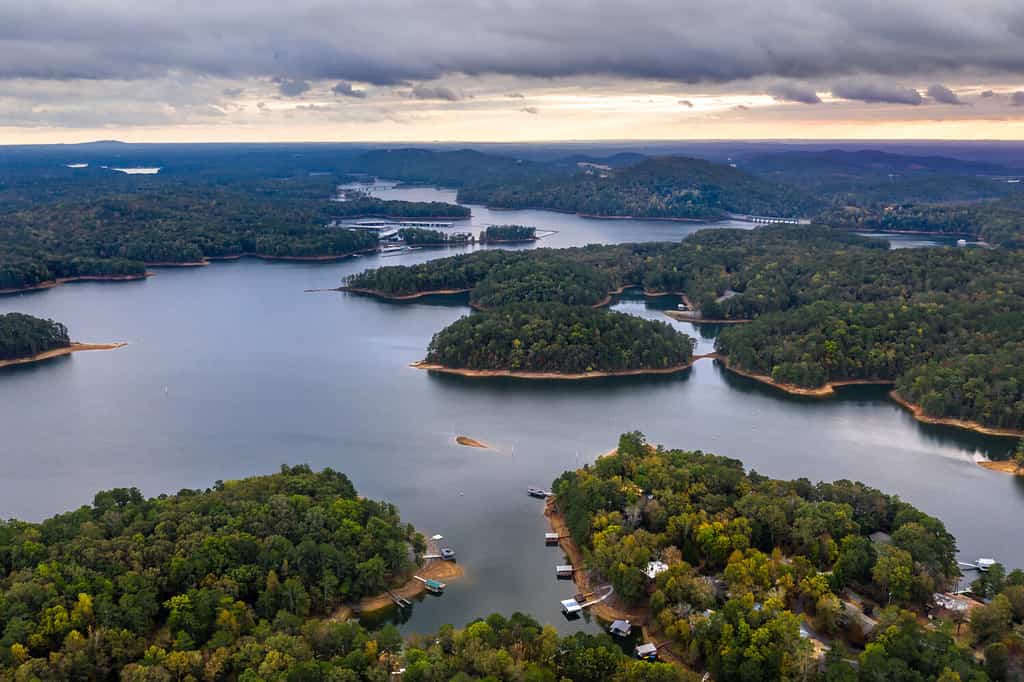
The Lake Allatoona reservoir was built between 1946 and 1950.
©RodClementPhotography/Shutterstock.com
Numerous small towns were lost when Lake Allatoona was flooded. While some of these communities were already dwindling or considered ghost towns by the 1940s, the federal government had to clear out remaining structures, homes, roads, and farmlands before filling the basin. Cemeteries were meticulously relocated, but remnants like old wells and concrete foundations remain at the bottom of the lake today.
Lake Lanier
Covering approximately 38,000 surface acres, with about 540 miles of shoreline, Lake Lanier offers exceptional summer fishing, particularly around dawn or late evening when striped and spotted bass feed near the surface. Public access is widely available from over 60 public boat ramps and numerous parks.
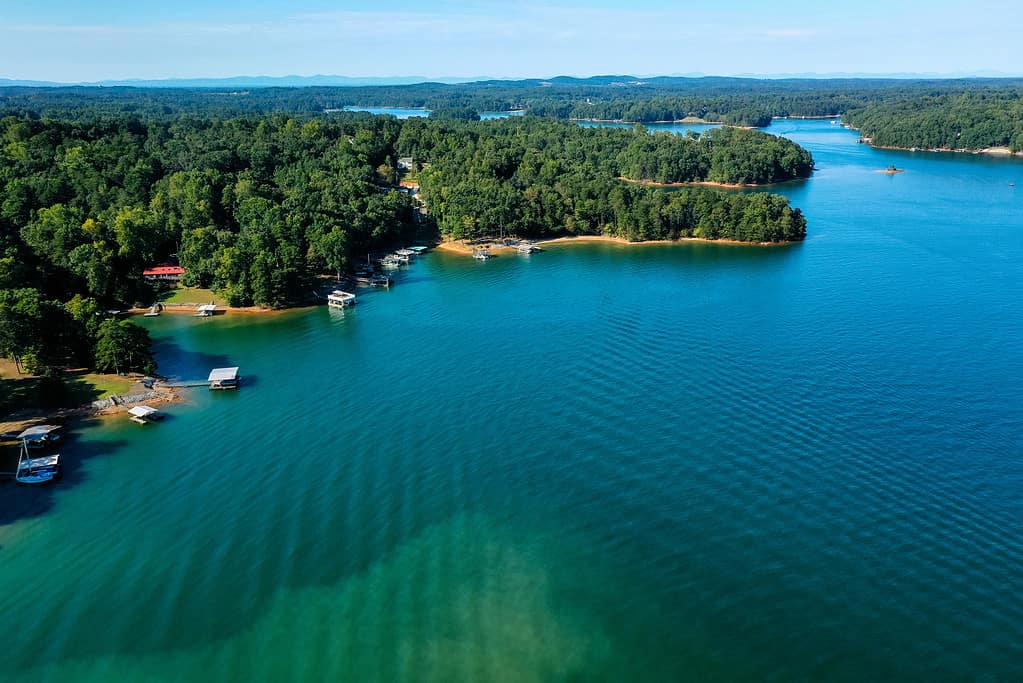
This panoramic aerial view of Lake Lanier was shot by drone.
©Rajesh Pandit/iStock via Getty Images
Although there is no concrete evidence proving supernatural activity, Lake Lanier is widely considered one of the most haunted and cursed bodies of water in the U.S. due to its tragic history and unusually high death toll. Since its creation by the U.S. Army Corps of Engineers in the 1950s, an estimated 700 people have died in its waters, with many bodies never recovered.
Clarks Hill
Clarks Hill Lake is Georgia’s largest reservoir. The lake covers 71,535 acres with over 1,200 miles of shoreline, a portion of which is in South Carolina, where it is officially called J. Strom Thurmond Lake. The best time to fish during summer is early morning or late evening when fish feed actively before retreating to deep, cooler water. The lake offers extensive public access, including boat ramps, state parks, and Corps of Engineers sites, and a reciprocal licensing agreement allows anglers to fish using either a Georgia or South Carolina license.
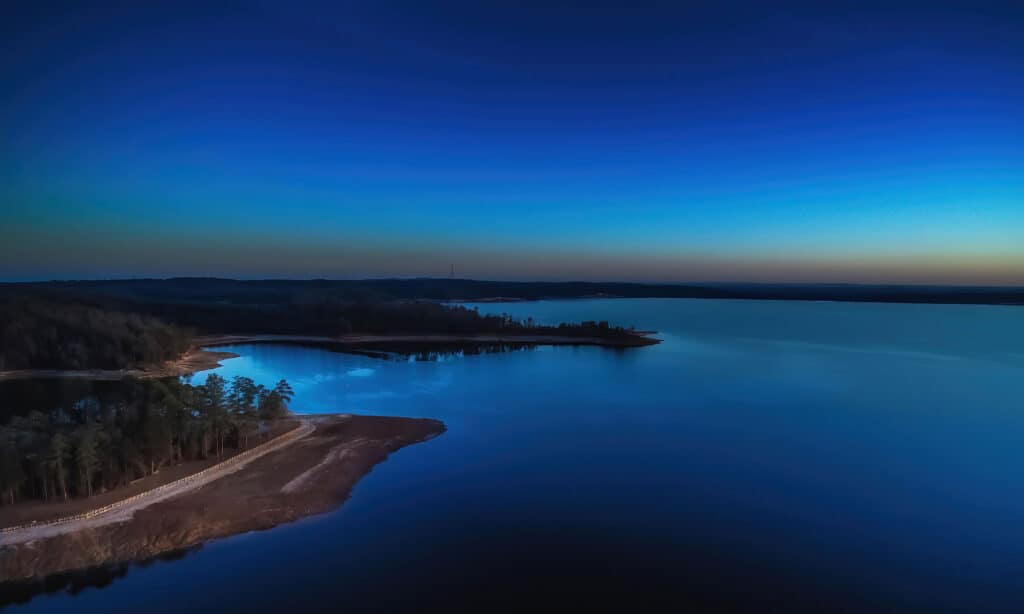
Clarks Hill Reservoir covers land in two states: Georgia and South Carolina, where it is called J. Strom Thurmond Lake.
©iStock.com/Cavan Images
Construction of the Clarks Hill Dam began in 1946 and was officially completed in 1954. The filling of the reservoir flooded three historic towns: Petersburg, Lisbon, and Vienna. Today, these underwater ghost towns sit just off the shoreline, and during periods of extreme drought, the receding water levels expose the original foundations and artifacts of the lost towns.
Jekyll Island
Jekyll Island offers ample public access along its 10 miles of beachfront. Consensus among local anglers suggests that low tide is the best time to cast a line.Anglers must strictly follow state-mandated catch restrictions, including specific minimum and maximum length or size limits and daily bag limits for species such as red drum, flounder, and trout. Those aged 16 or older must have a valid Georgia fishing license, along with a free Saltwater Information Program (SIP) permit.
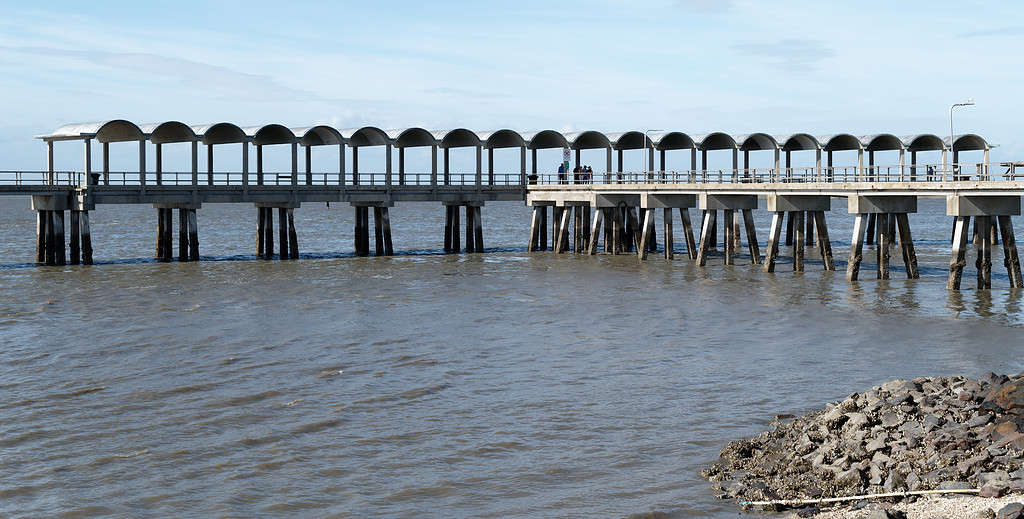
The 360-foot Jekyll Island Fishing Pier is a wonderful place to cast a line.
Tybee Island
Summer fishing at Tybee Island is best during early mornings or late evenings around half-tides. Public access is widely available via public beaches, the Tybee Island Pier and Pavilion, and Lazaretto Creek Pier. Restrictions require anglers aged 16 and older to hold a Georgia fishing license and a free Saltwater Information Program (SIP) permit.
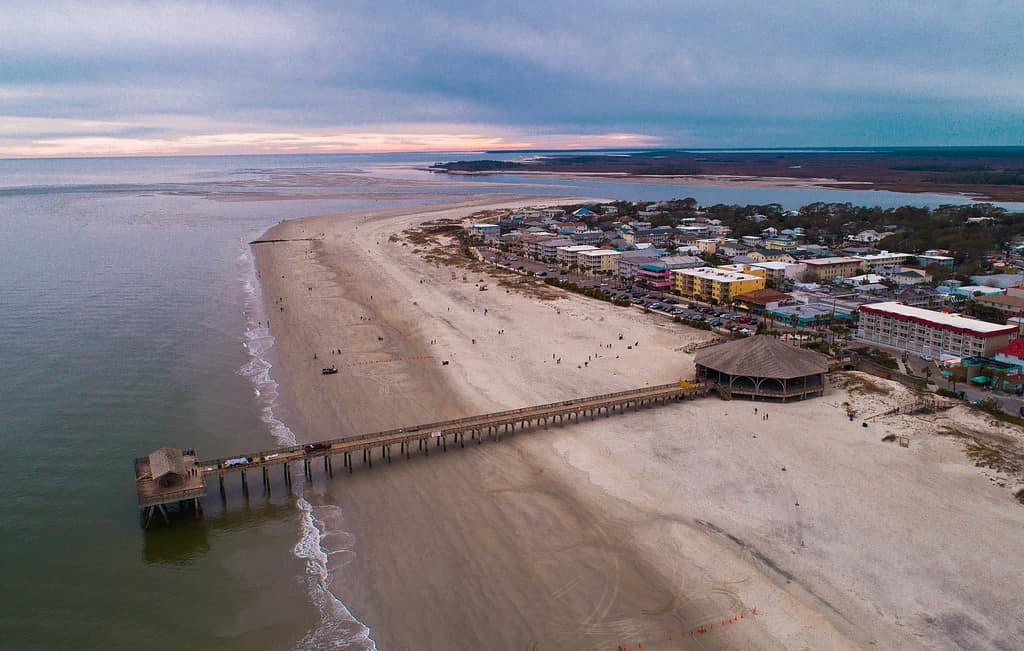
Tybee is a small island with approximately three miles of coastline.
©Drone Stock Pros/Shutterstock.com
Tybee is a small island, with approximately three miles of coastline. However, numerous charter fishing boats are available, catering to all skill levels and fishing styles.
Surf fishing or fishing off the Tybee Beach Pier yields abundant whiting, seasonal pompano, hard-striking bluefish, and Spanish mackerel. Those casting their lines in the calmer tidal estuaries and muddy channels can reel in gamefish such as red drum, black drum, spotted seatrout, and flounder. Charters traveling into the open waters of the Atlantic can haul in vermilion snapper, grouper, amberjack, mahi-mahi, wahoo, blackfin tuna, and trophy sailfish.