
Quick Take
- Minnesota winter birds stay active and rely on backyard feeders as natural foods vanish.
- Offer a variety of foods and feeder types to attract chickadees, finches, jays, nuthatches, and woodpeckers.
- Keep feeders clean and filled; discard damp seed; place them 10–12 feet from windows to reduce collisions.
Minnesota winters can push both people and wildlife to their limits. The cold settles in deeply, snow piles up for months at a time, and the world outside can feel frozen in place. Yet in the middle of this frigid environment, backyard bird watching remains a flurry of intensity. Many of the state’s toughest species stay active through the winter, and as natural food sources disappear beneath snow and ice, these little birds begin relying more heavily on backyard feeders. Across the state, well-maintained feeding stations turn into lively avian hubs of color and sound throughout the cold season.
Knowing which birds are likely to show up makes it easier to choose the right foods and feeder styles — and helps you enjoy a steady parade of winter visitors from the warmth of your home. Here’s a checklist of species to look for in your part of the state.
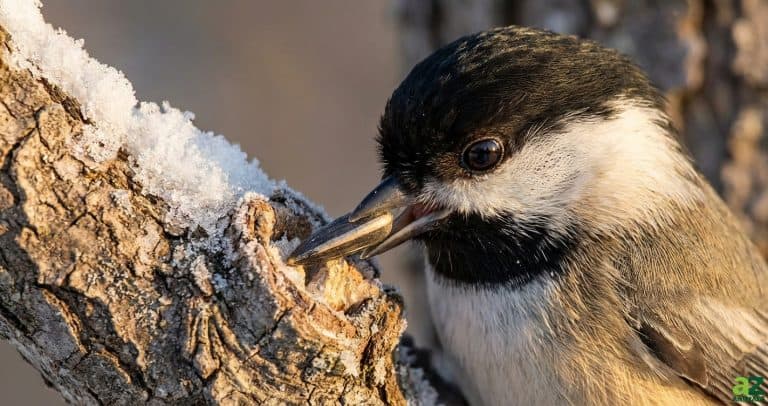
Black-Capped Chickadee (Poecile atricapillus)
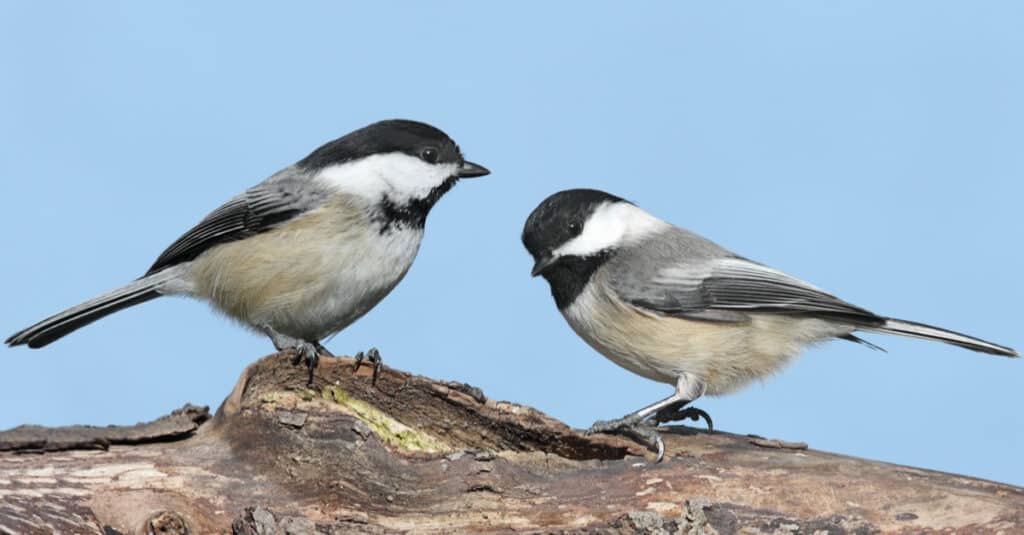
Black-Capped Chickadee (Poecile atricapillus)
©Steve Byland/Shutterstock.com
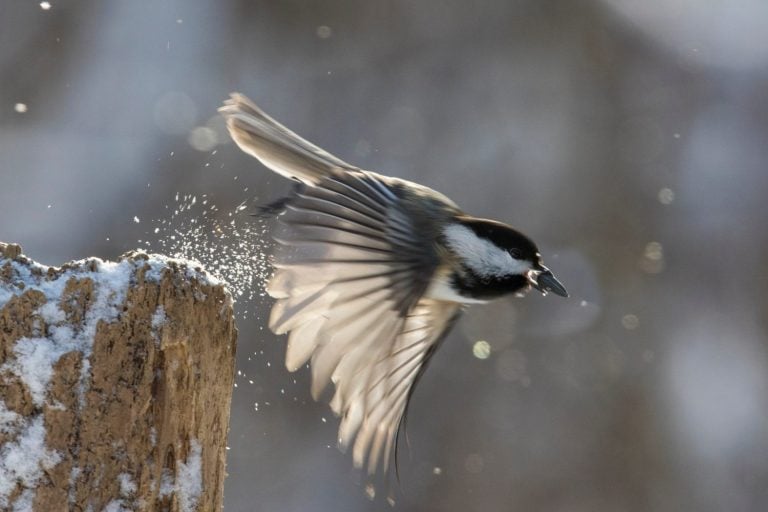
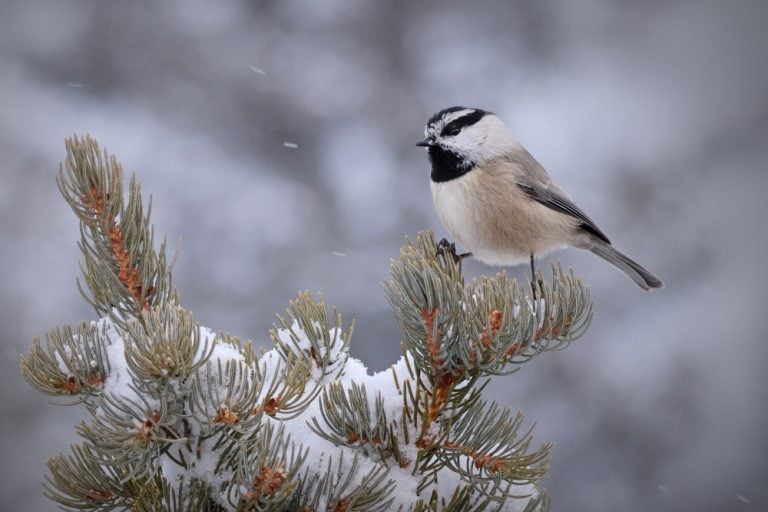
Few birds represent Minnesota winters as perfectly as the black-capped chickadee. Small, round, and endlessly cheerful, this bird wears a bold black cap and bib, crisp white cheeks, a soft gray back, and warm buffy sides. Chickadees live throughout Minnesota year-round — in forests, parks, woodlots, and mature neighborhoods filled with trees.
What sets chickadees apart is their remarkable ability to survive deep cold. They hide food for later, fluff their feathers to trap heat, and can even lower their body temperature slightly on the coldest nights to conserve energy. At feeders, they love black oil sunflower seeds, peanut pieces, and suet. Their feeding style is quick and tidy: grab one seed, fly to a branch, eat or store it, and return for more. Their constant movement and bright calls make them one of the most delightful winter companions.
Downy Woodpecker (Dryobates pubescens)
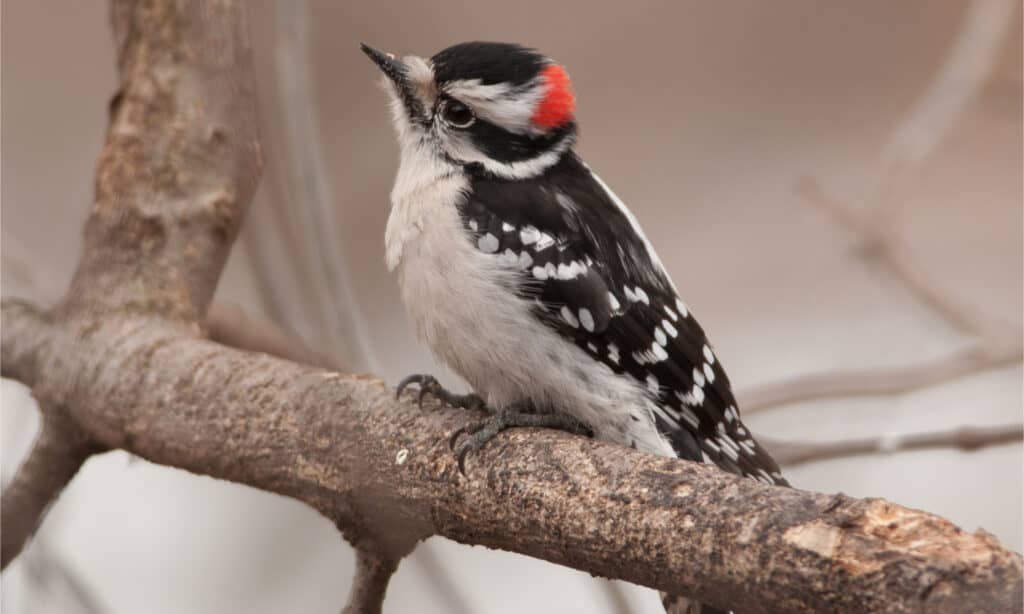
Downy Woodpecker (Dryobates pubescens)
©Gerald A. DeBoer/Shutterstock.com
The downy woodpecker is the smallest woodpecker in Minnesota and one of the state’s most familiar winter visitors. These black-and-white birds have a checkered back, a clean white belly, and males have a small red patch on the back of the head. They live year-round across the entire state, from the Canadian border all the way south to Iowa.
Downies spend much of the year hammering into tree bark to reach insects and larvae. In winter, however, they become especially drawn to suet feeders, which offer the high-energy food they need to stay warm. They also enjoy sunflower seeds and peanut pieces from hopper or platform feeders. Downies look similar to hairy woodpeckers, but their smaller size and shorter bill make them easy to tell apart once you’ve seen both species. You’ll find downy woodpeckers in forests, wooded neighborhoods, farm shelterbelts, and city parks, often moving with chickadees and nuthatches in mixed winter-feeding flocks.
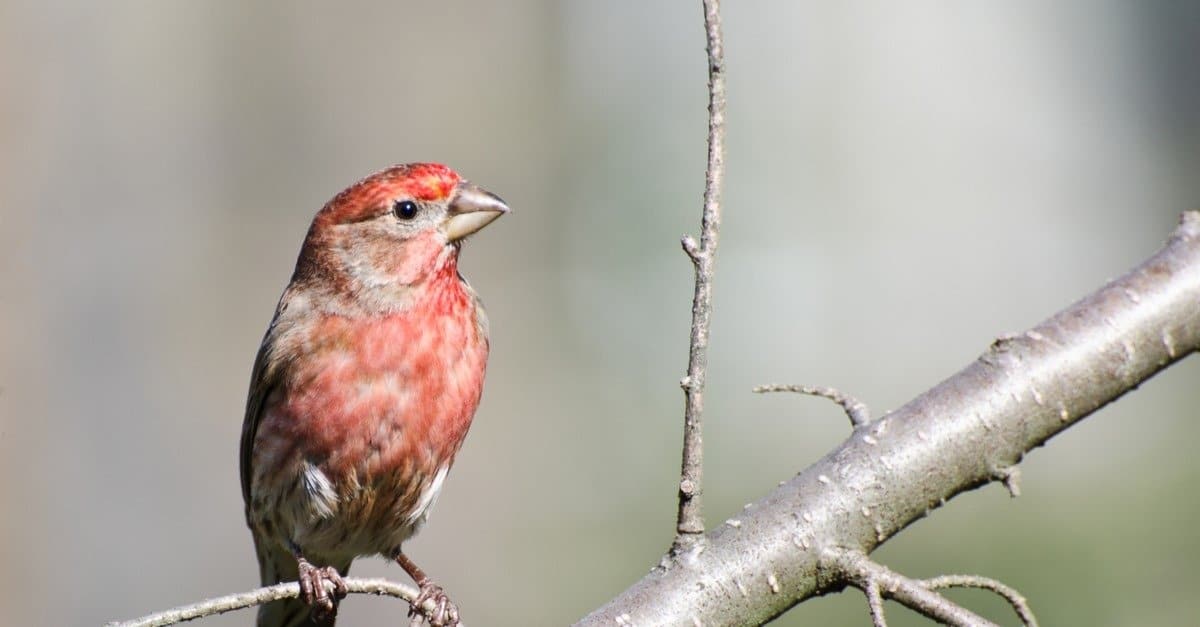
House Finch (Haemorhous mexicanus)
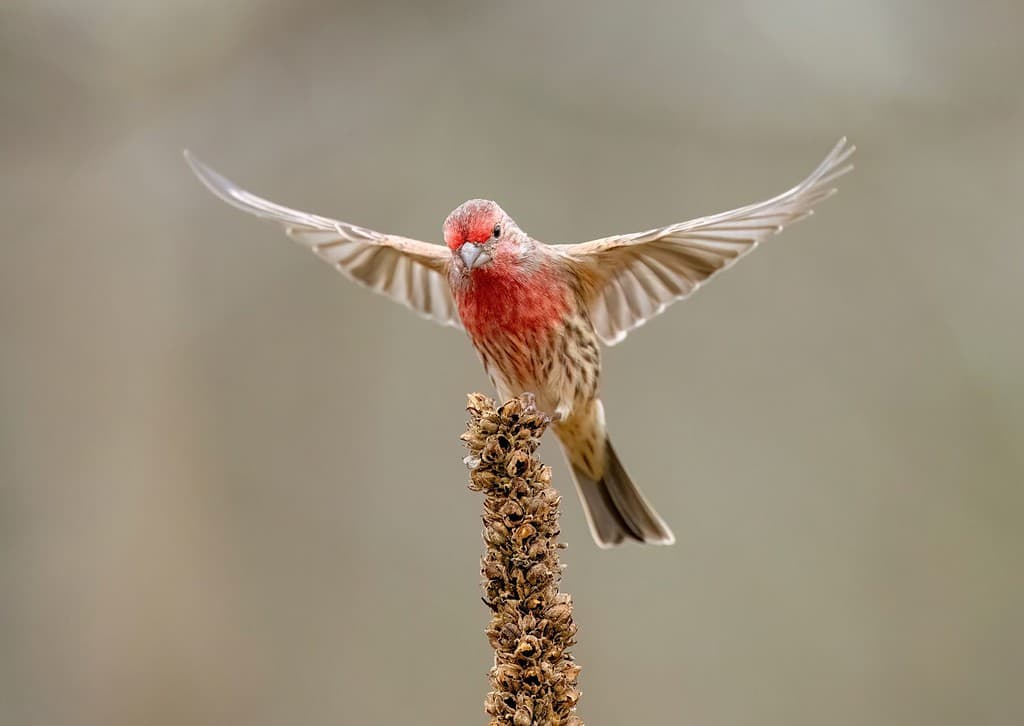
House Finch (Haemorhous mexicanus)
©Jeff Caverly/Shutterstock.com
House finches bring a bit of warm color to Minnesota’s monochrome winter landscapes, especially in towns and suburban areas. Males show red or sometimes orange tones on their heads, chests, and rumps, though the exact shade varies. Females are brown and heavily streaked, with plainer faces and no red coloring. Though house finches resemble purple finches, they tend to have more streaking on the flanks and lack the rich “raspberry” wash that gives male purple finches their distinctive look.
These finches have adapted easily to living around people, so they’re most commonly seen near houses, shopping areas, and small towns. During winter they gather at tube or hopper feeders for black oil sunflower seeds, sunflower chips, and mixed seed blends. They often appear in small flocks, sharing feeder space with goldfinches, sparrows, and other social species.
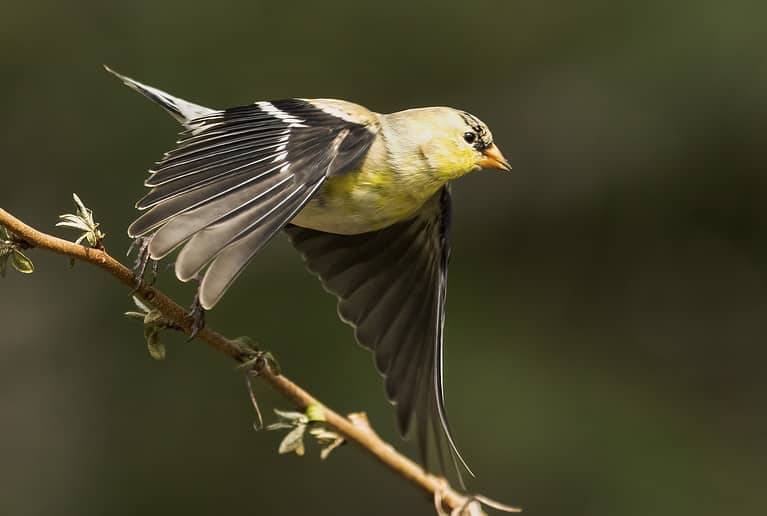
American Goldfinch (Spinus tristis)
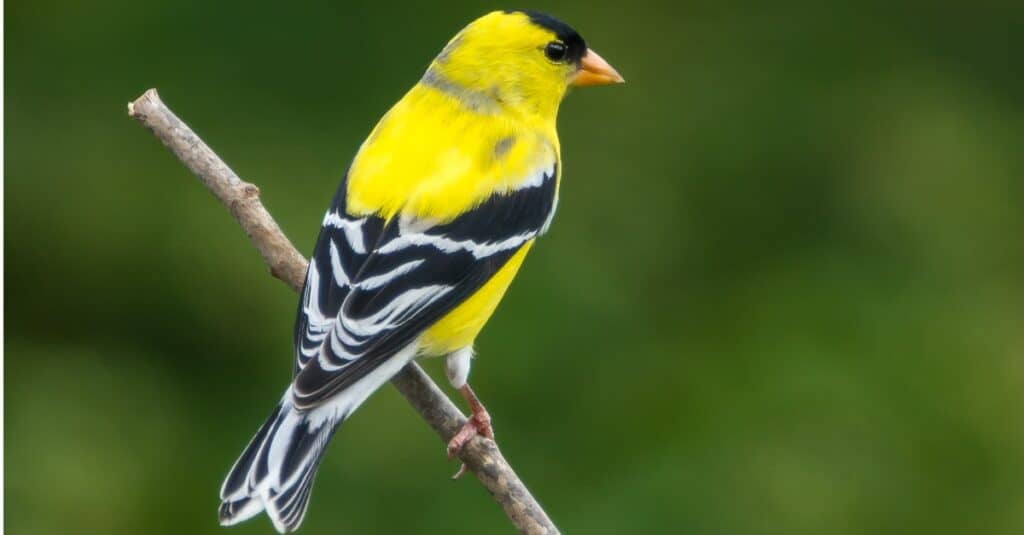
American Goldfinch (Spinus tristis)
©iStock.com/impr2003
The American goldfinch is familiar to Minnesota bird watchers, but its winter appearance can take people by surprise. The bright yellow of breeding males fades into muted olive or brownish tones, shared by both males and females through the winter months. Bold wing bars remain, making them easier to identify.
Goldfinches are present year-round in much of Minnesota, though some migrate south from the northernmost regions in winter, and their local abundance depends on where seed sources are plentiful. In winter, they gather at feeders offering nyjer (thistle) seed or small sunflower chips. Flocks move between backyard feeders, fields of dried weeds, and roadside seed patches, keeping up a steady chorus of soft, musical calls. Because their favorite garden flowers like coneflowers and asters still stand through winter, your yard becomes even more appealing to them.
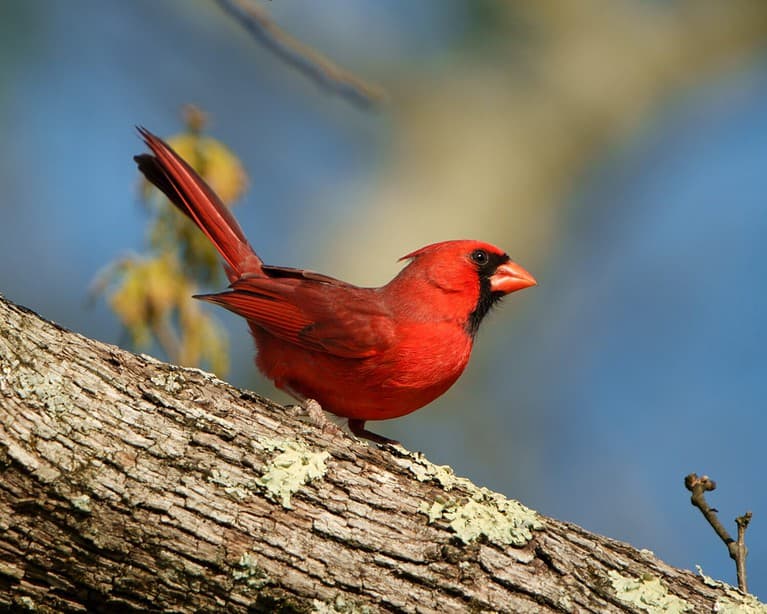
Northern Cardinal (Cardinalis cardinalis)
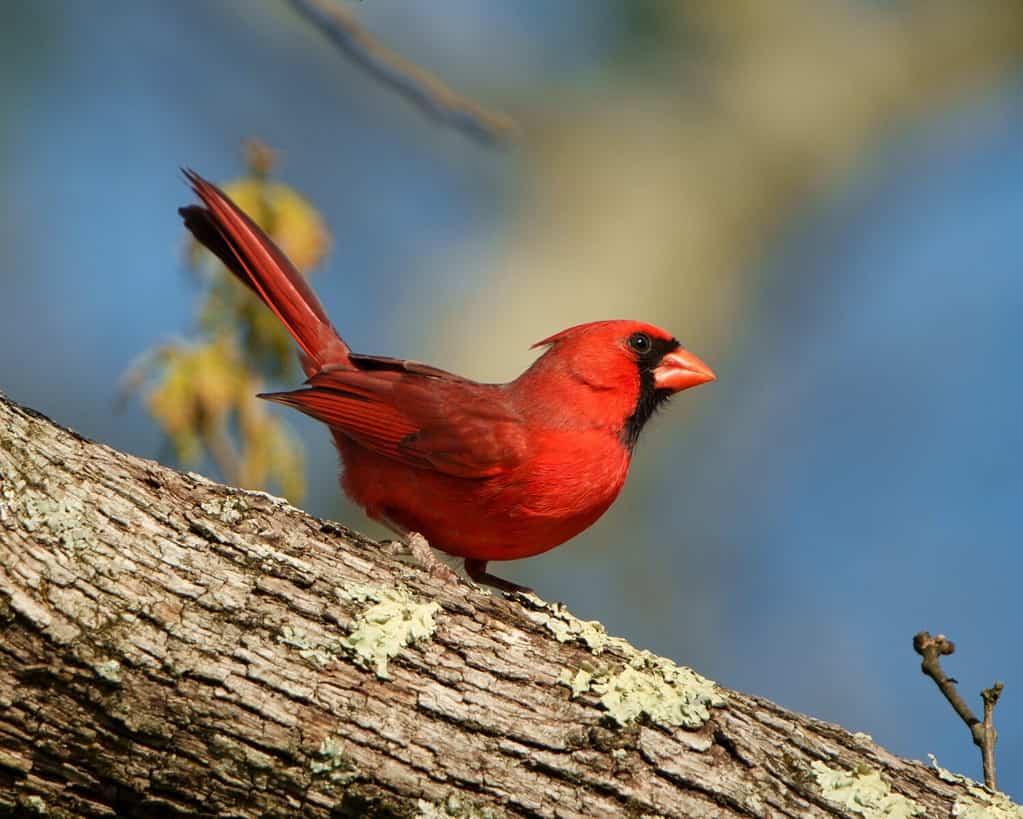
Northern Cardinal (Cardinalis cardinalis)
©peter weiler/Shutterstock.com
The northern cardinal has steadily expanded its range northward and is now a year-round resident in many Minnesota yards, especially in the southern and central parts of the state. The male’s vivid red plumage, crest, and black mask make him unmistakable. Females are softer brown with reddish accents, but every bit as beautiful in winter’s soft light.
In Minnesota, cardinals are now established year-round residents in suitable habitats, particularly in the southern and central regions where they find enough shelter. They prefer thickets, brushy edges, and yards with dense shrubs where they can hide during cold or windy weather. In winter, they visit platform and hopper feeders that provide sunflower seeds, safflower, or seed mixes that include plenty of large seeds. A bright red male perched in fresh snow is one of Minnesota’s classic winter scenes.
Red-Bellied Woodpecker (Melanerpes carolinus)
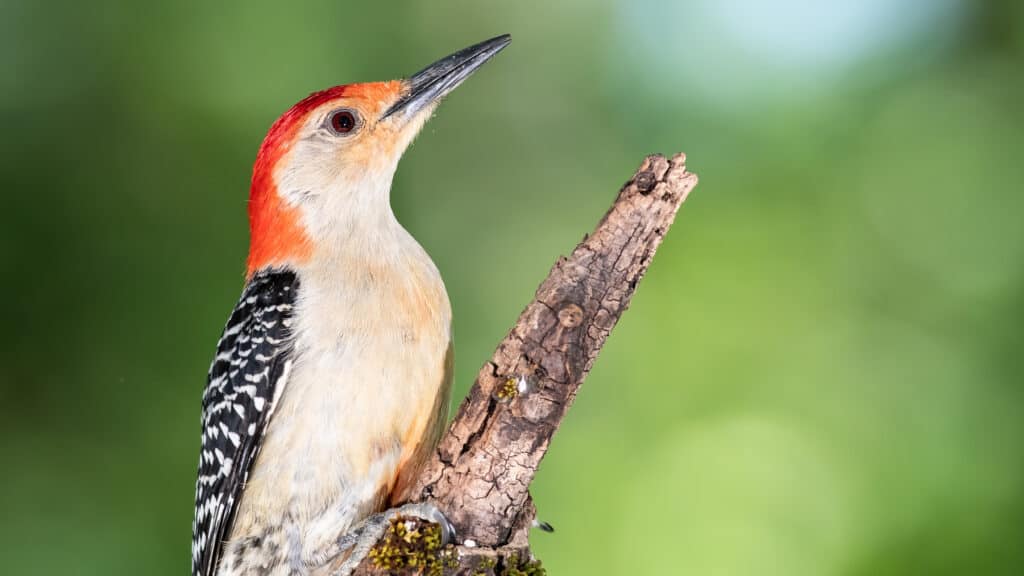
Red-Bellied Woodpecker (Melanerpes carolinus)
©rck_953/Shutterstock.com
The red-bellied woodpecker has been steadily moving northward in Minnesota and is now found in all 87 counties, though it remains most common in the southern and central parts of the state, with growing numbers reported farther north each year. Despite its name, the reddish wash on the belly can be hard to see. The most noticeable features are the clean black-and-white ladder pattern across the back and the bright red crown and nape — more extensive in males than females. So why aren’t they called red-headed woodpeckers then? Because another species with an even brighter red head already claimed that well-suited name. (Still, we think a re-naming contest for this bird is in order!)
Red-bellied woodpeckers favor deciduous woods, river valleys, and wooded suburbs. In winter, they become frequent visitors to suet feeders and also enjoy peanuts and sunflower seeds. Their loud, rolling calls carry easily through quiet winter woods, and their confident behavior makes them one of the more striking birds to watch when they claim a feeder as part of their territory.
Blue Jay (Cyanocitta cristata)
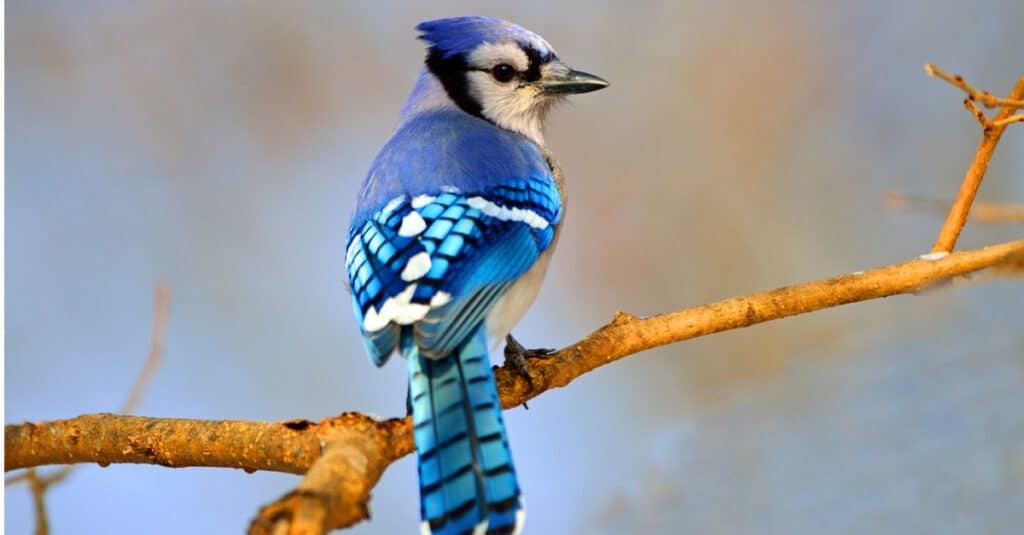
Blue Jay (Cyanocitta cristata)
©iStock.com/BrianEKushner
These assertive birds bring a bold presence to Minnesota backyards year-round. You’ll find them across Minnesota in forests, wooded edges, rural areas, and suburban neighborhoods. With bright blue upperparts, white faces, black collars, and expressive crests, they stand out vividly against a snowy background. They are intelligent, vocal birds that use a wide range of calls — from piercing screams to soft whistles — to communicate with one another. They are also able to do a convincing impression of a hawk’s cry to scare away other birds and hog the seeds for themselves.
In natural settings, blue jays are important seed dispersers because they gather and store acorns and other nuts. At feeders, they show a strong preference for whole peanuts, sunflower seeds, and corn. Though their assertive behavior can temporarily push smaller birds aside, their curiosity, social interactions, and beautiful coloring make them one of the winter’s most memorable visitors. It’s especially impressive to see blue jays and cardinals jockeying at the same feeder.
White-Breasted Nuthatch (Sitta carolinensis)
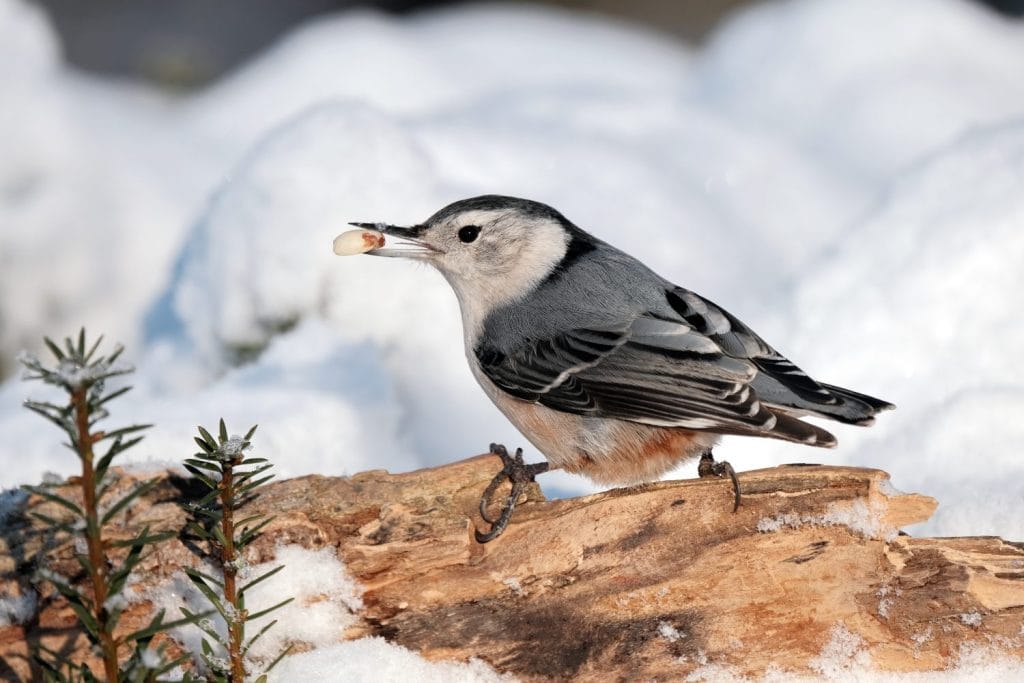
White-Breasted Nuthatch (Sitta carolinensis)
©Jim Nelson/Shutterstock.com
The white-breasted nuthatch adds acrobatic charm to winter feeders across Minnesota. This compact bird has blue-gray upperparts, a white face and belly, a dark cap, and a slightly upturned bill. Its most unique behavior is its habit of creeping headfirst down tree trunks as it searches for insects, seeds, and hidden food. This ninja skill allows these little birds to spot insects hiding behind ridges and cracks that may have been overlooked by other birds that typically would work their way up the trunk.
Nuthatches live in Minnesota year-round, especially in deciduous and mixed forests, wooded parks, and older neighborhoods with large shade trees. In winter, they move through feeding areas with chickadees and downy woodpeckers. They eagerly visit suet feeders and enjoy sunflower seeds and peanuts. Rather than eating seeds at the feeder, nuthatches often carry them away to tuck into bark crevices for later. Their loud, nasal “yank-yank” calls echo through winter woods and make it easy to know when they’re nearby.
Best Practices for Winter Bird Feeding
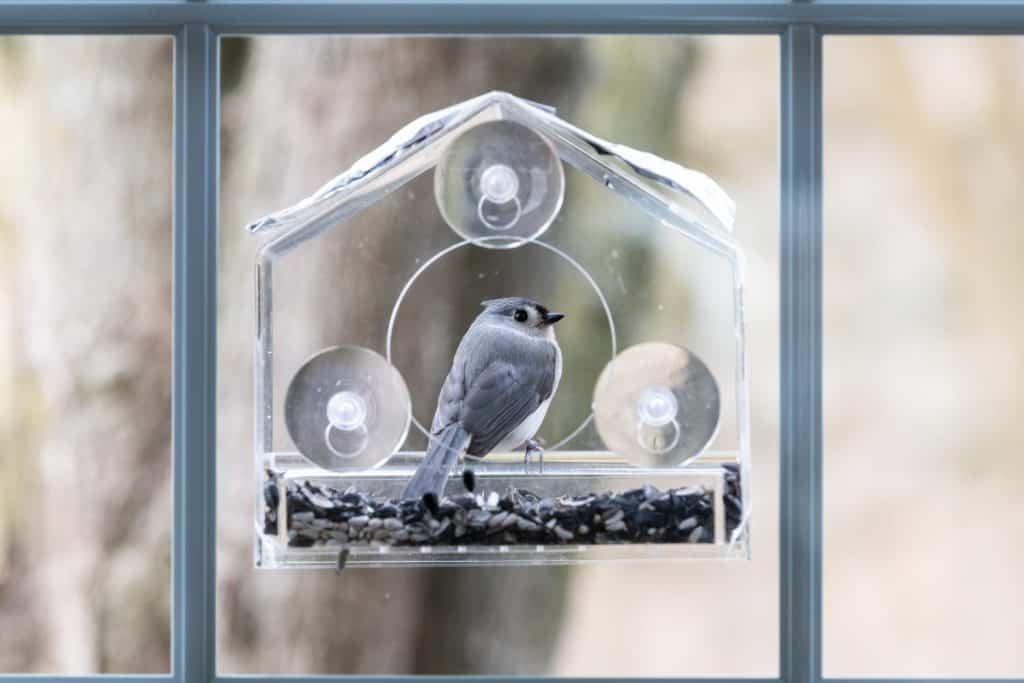
Bird feeders may be placed either very close to windows or 10-12 feet away from them to help avoid window collisions.
©Andriy Blokhin/Shutterstock.com
Winter feeding in Minnesota works best when feeders are kept clean, filled, and thoughtfully placed. Because so many birds gather at feeders during the cold months, sanitation is essential to prevent the spread of disease. Scrub feeders periodically with a dilute bleach solution, rinse them thoroughly, and let them dry before refilling. Always discard seed that looks damp, moldy, or clumped together — spoiled food can harm birds and discourage them from returning.
Winter birds go especially wild over suet, a cake made from animal fat that gives them a super-concentrated calorie burst when insects are hard to find. As for seeds, the mainstay of their diet, offering a variety ensures that you can attract a wide mix of species:
• Black oil sunflower seeds for chickadees, cardinals, finches, and nuthatches
• Nyjer for goldfinches
• Suet for woodpeckers, chickadees, and nuthatches
• Peanuts for blue jays, woodpeckers, and titmice
Use different feeder types — tube, hopper, platform, and suet cages — so that birds with different behaviors can feed comfortably. Placing feeders near evergreens or dense shrubs gives birds shelter from wind and predators but avoid putting them so close to foliage that cats can ambush from below. To reduce window collisions, add decals or patterned films to break up reflections. Position feeders either very close to windows or far enough away — beyond ten to twelve feet — to minimize the risk of high-speed impacts.
Winter Birds Bring Minnesota to Life
Even with subzero temperatures and deep snow, Minnesota’s winter birds keep the season vibrant. From chickadees toughing out long nights to red-bellied woodpeckers calling through frosty woods, each species offers a glimpse of resilience and adaptation. Bright cardinals, curious nuthatches, bold blue jays, and lively finches all bring warmth to a season that can feel otherwise harsh and devoid of life.
By keeping feeders clean, stocked, and safely placed, you can offer these birds a valuable boost during the hardest months of the year. In return, you’ll enjoy daily moments of color and motion at your window, making Minnesota’s long winter feel more alive.