
Quick Take
- Replicating a diamond-shaped head is mandatory for survival against rainforest predators.
- The Hemeroplanes triptolemus classification forces a reliance on visual deception over venom or fangs.
- Possessing 2 false eye spots surprisingly fails to protect the larva during its resting state.
- Engaging in Batesian mimicry is essential when secondary defense mechanisms fail to deter larger predators.
Mimicry is one of the most interesting forms of defense in nature. Sometimes an innocent and harmless insect can look like a terrifying snake, scaring off predators. One example is the hawk moth caterpillar, which looks like a snake before its metamorphosis. This Instagram post by @trends shows one of these caterpillars up close, and it really does look like a snake. Read here to learn more about these snake look-alikes.
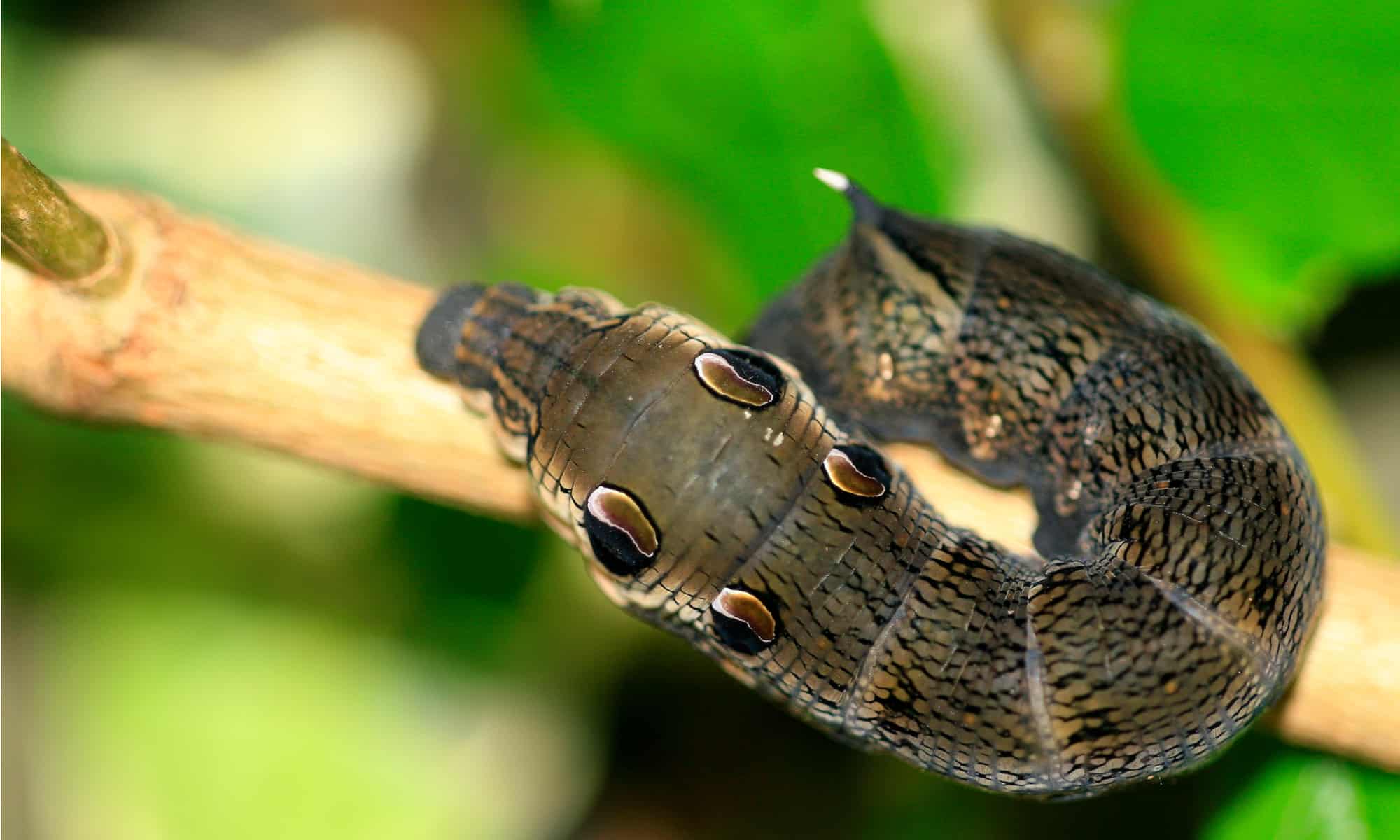
Hawk moth caterpillars have two false eye spots on their head to look like a snake.
©Katarina Christenson/Shutterstock.com
About the Hawk Moth Caterpillar
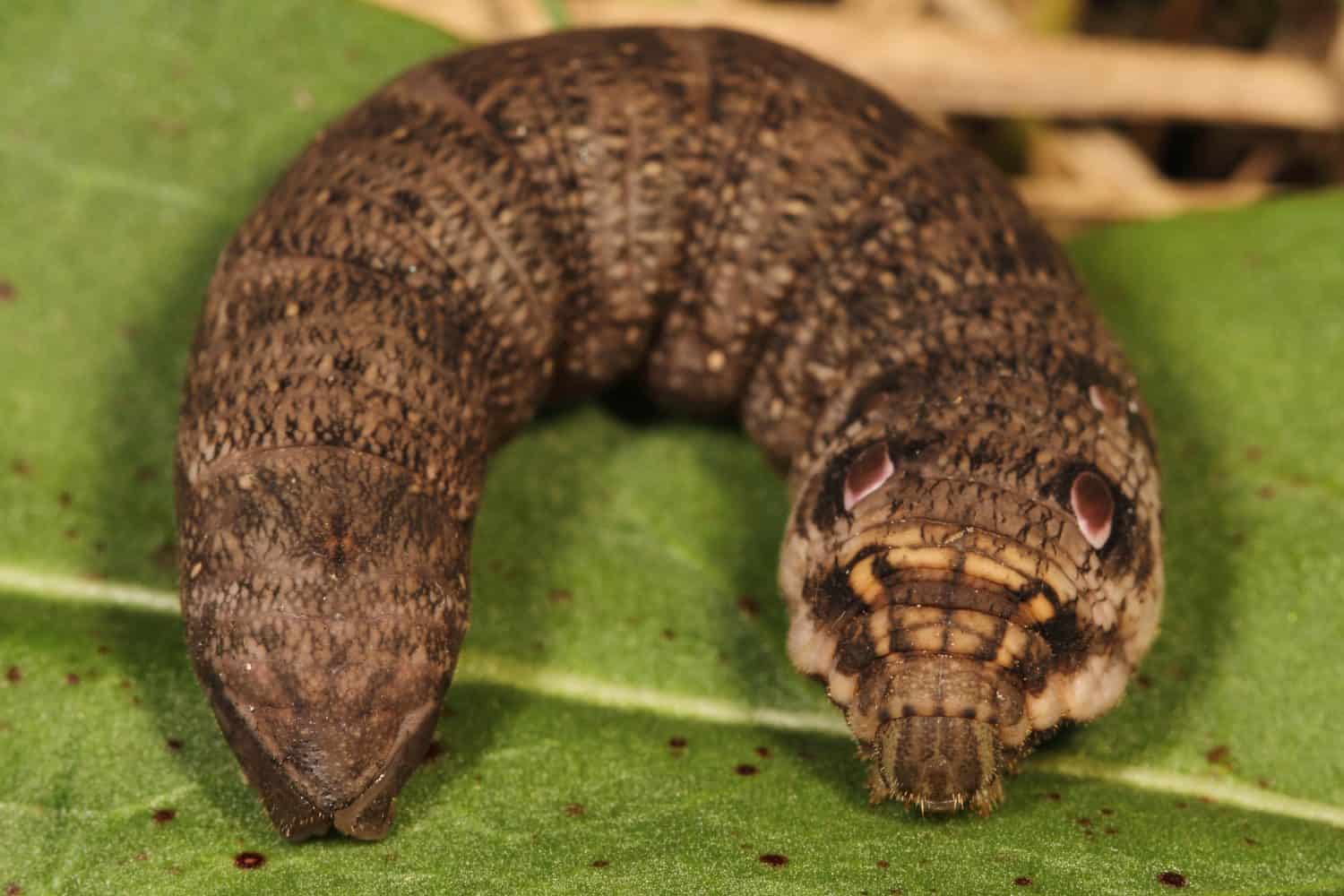
The hawk moth caterpillar is famous for its amazing snake mimicry. Snake-mimicking hawk moth caterpillars, such as Hemeroplanes triptolemus, are native to Central and South America. While the hawk moth family is widespread, this specific mimicry is not found on every continent. Hemeroplanes triptolemus live in rainforests that help them to blend in with the dense green foliage. Unlike real snakes or other insects, hawk moth caterpillars do not have venom, fangs, or any real ability to bite.
Instead, their snake-like appearance is merely an illusion to scare off predators. These caterpillars mimic snakes not only in appearance but also in behavior. When threatened, they twist their body segments to form a shape that resembles the diamond-shaped head of a snake. The spots on their bodies resemble snake eyes, and their patterns look like scales. To make the mimicry even more convincing, they sway and lunge like a snake to scare off predators.
Hawk moth caterpillars are an amazing example of mimicry, and specifically, Batesian mimicry. Batesian mimicry refers to when a harmless species adopts the warning signs and behaviors of other, more dangerous species. This adaptation helps the mimic avoid predators and defend itself more effectively. When other forms of defense fail against larger predators, mimicry serves as an effective strategy to avoid being eaten.
For hawk moth caterpillars, this mimicry is displayed only when they feel threatened. Most of the time, they resemble ordinary caterpillars. However, when threatened, they contort themselves to resemble a snake, as shown in the video. This amazing form of mimicry highlights how insects evolve and adapt to their environments over time.