
Quick Take
- The only proof this fox existed before 2023 was bone fragments, while some sightings were claimed, nothing was on record. What finally confirmed it was still alive will surprise you. See the bone fragment evidence →
- A conservationist traveled to Cozumel specifically to find this fox and failed, but then the fox essentially found him instead. Read how the fox appeared →
- Island dwarfism made this fox unlike any other, and that same trait may be exactly what makes its survival so precarious now. See why small size is a risk →
- Researchers just mapped where this fox actually lives, and their findings show the range is far smaller than anyone feared. See the mapped range findings →
For more than 20 years, residents on the Mexican island of Cozumel had no idea a tiny fox species was roaming the inland forests. Even those who had heard of the Cozumel fox believed it had gone extinct long ago.
Then, in 2023, everything changed. Thanks to a tip from some local residents, wildlife experts got their first glimpse of the elusive fox that researchers believed had disappeared decades ago. A new study just released in Neotropical Biology and Conservation covered the findings of this dwarf fox only found on Cozumel.
Meet the Cozumel Fox
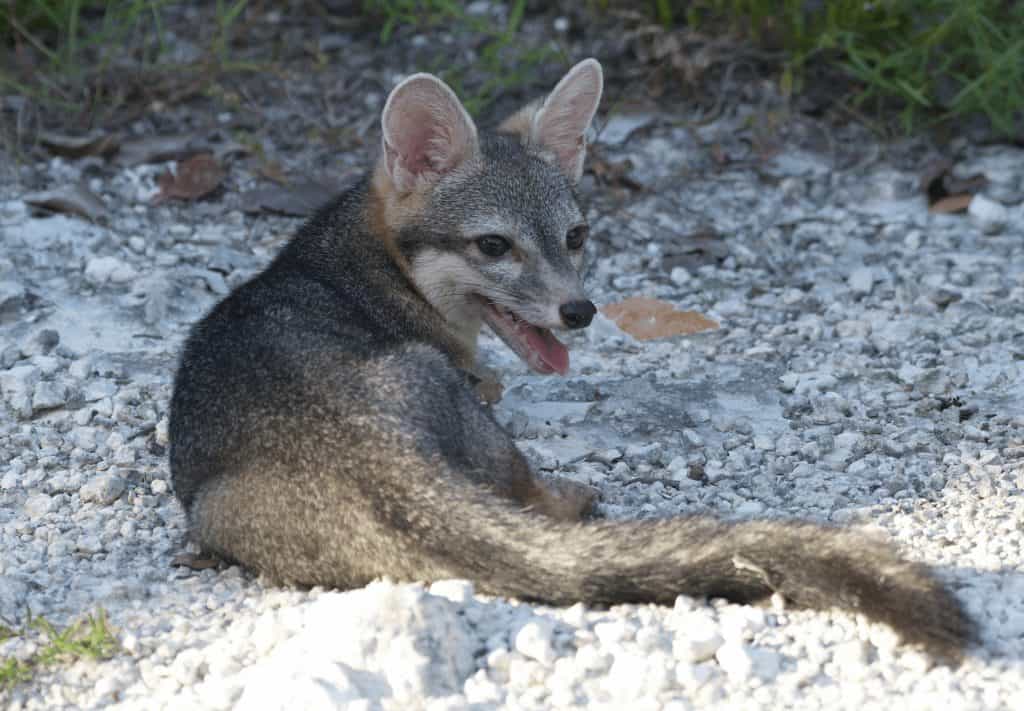
The adult male Cozumel fox was first spotted by residents alongside a coastal highway in 2023.
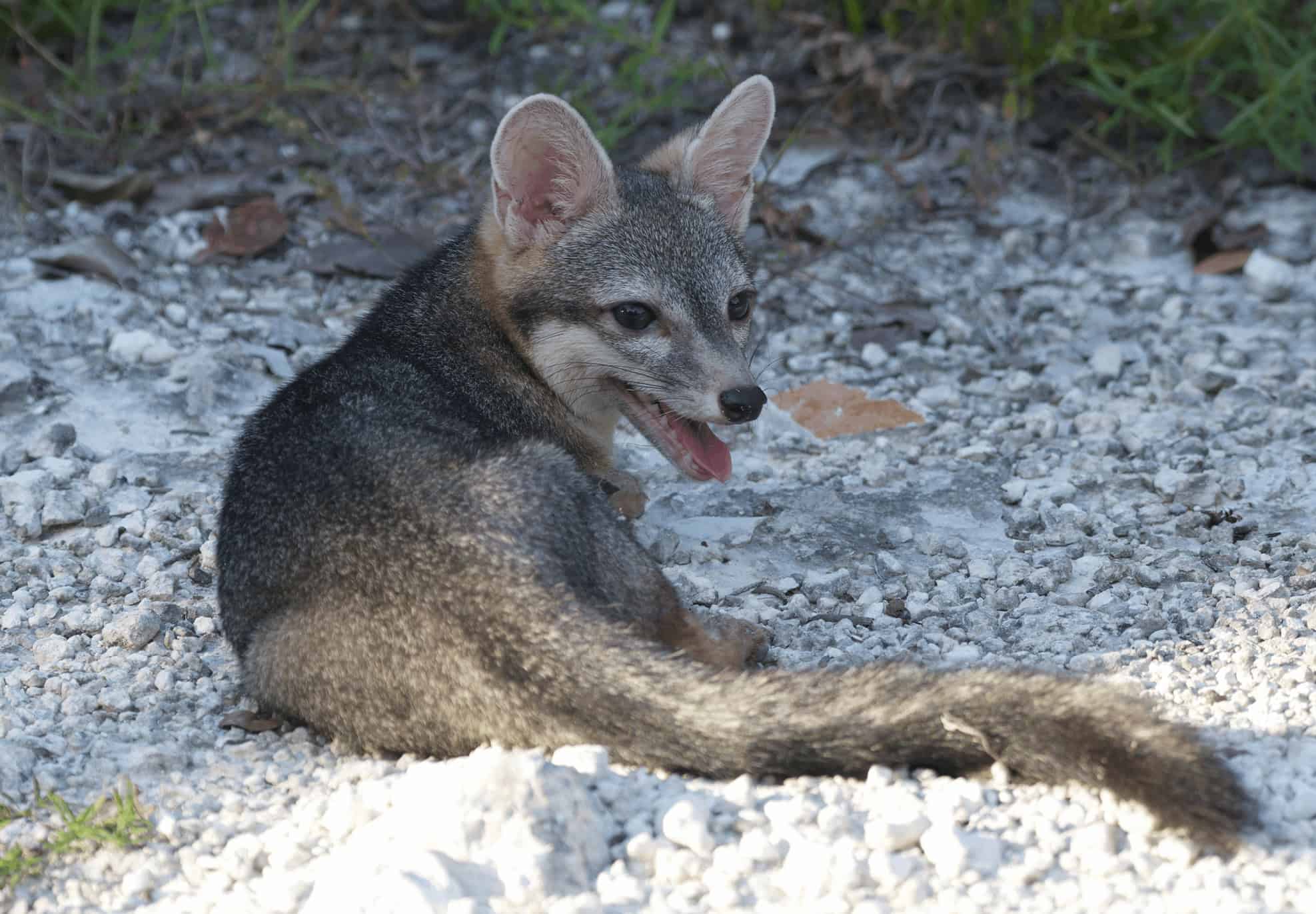
The Cozumel fox is a small gray fox related to gray foxes found in mainland Mexico. The biggest difference, though, is its size. Due to a phenomenon known as island dwarfism, the Cozumel fox is roughly just 60 to 80 percent the size of its mainland relatives.
While dwarf versions of foxes exist on other islands, this particular species is found only on Cozumel, a forested island surrounded by lush coral reefs. The island is located about 12 miles off Mexico’s Yucatán Peninsula, directly across from Playa del Carmen. It has one of the highest rates of endemic animal species in Mexico – at least 25 to 31 unique species and subspecies, including three carnivores.
Until the 2023 sighting, the only proof that the Cozumel fox ever existed was old bone fragments. Nobody had ever seen the fox, and there weren’t any photographs, either.
Research Before the Discovery
A Ph.D. student from the University of Rhode Island, Travis Bayer, learned about the fox as he prepared for a scuba diving trip to the island in 2023. As the founder of the nonprofit conservation organization Pathos Wildlife, Bayer wanted to know if the missing fox could be found. He thought he might be able to spot the fox during his vacation on the island.
“I naively thought I had a chance of seeing it during my trip,” Bayer said in the press release announcing the findings. “Obviously, I did not.” Although he didn’t find the fox himself, he spent months after returning to Rhode Island developing a survey method and filing for research permits.
But before he even had a chance to return to the island, news of the fox’s rediscovery reached him — just six months later.
A Chance Encounter Leads to an Amazing Discovery
Island residents first noticed the disoriented fox-like animal along a coastal roadside. Unaware of the significance of their discovery, they simply reported the animal to the authorities. Rafael Chacón, director of conservation and environmental education at the Fundación de Parques y Museos de Cozumel, went to check things out.
When he and his team arrived, they located an adult male fox hiding in some nearby trees. It was the first confirmed sighting of the Cozumel fox in more than 20 years. They collected the animal and took it to a veterinarian for an assessment. Once the fox was deemed healthy, the team released it into the Laguna Colombia State Reserve, a habitat better suited to the small animal.
Researchers Join Forces
Chacón snapped photos during the encounter, then uploaded them to the citizen science platform iNaturalist. It was the first proof that the Cozumel fox was still alive. The photos caught the attention of Bayer, who was already in the process of setting up his study. He contacted Chacón, and a collaboration began between Pathos Wildlife and Chacón’s foundation. Later, the University of Rhode Island’s CEAL Lab joined the efforts to assist with developing aerial survey methods.
“It was a very surreal moment,” Bayer said in the press release. “Most of all, it confirmed that these foxes still persist and that this survey was more important than ever.”
What They’ve Seen So Far
The team is currently conducting one of the largest camera-trap surveys ever on Cozumel. They have deployed 84 cameras across nearly 386 square miles. This marks the first targeted survey specifically aimed at finding the Cozumel fox in the wild.
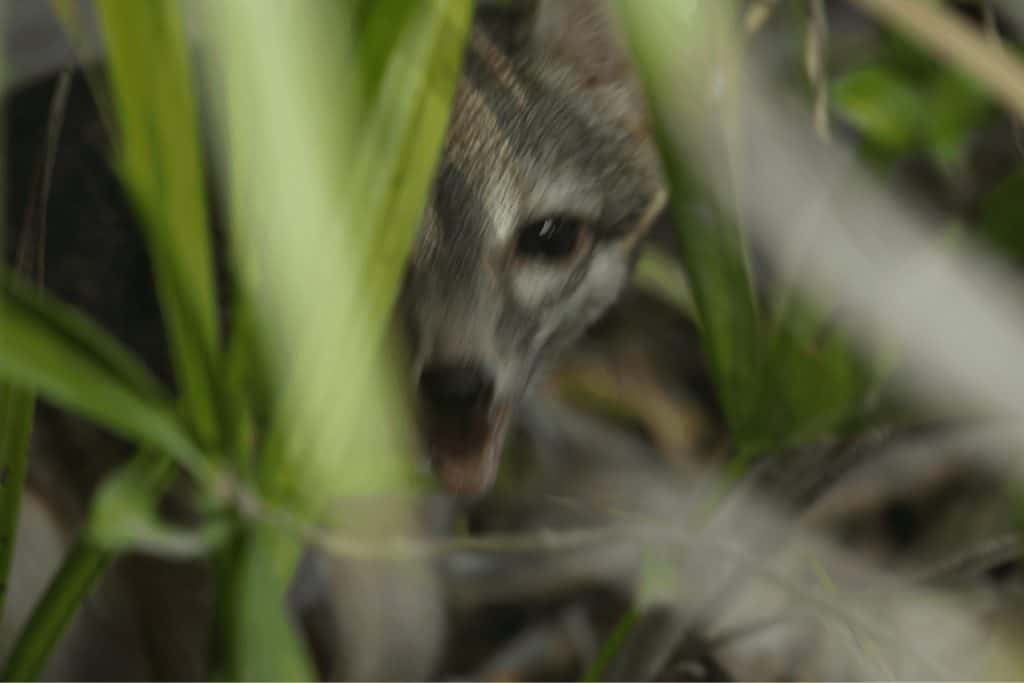
The dwarf gray fox was sighted for the first time in over 20 years and captured on film by conservationist Rafael Chacón during the fox’s rescue.
In addition to the ground cameras, thermal drones are being deployed thanks to the CEAL Lab’s involvement. To date, the only sightings have been around the community of El Cedral, a few miles inland from the island’s southwest coast. The community is adjacent to a forested area. Because the fox has only been seen near El Cedral, researchers believe its total range may be much smaller than previously thought.
Time Is Running Out
Road expansion has caused significant challenges for the fox. In addition to fragmenting the forest, it’s also made it easier for predators and competitors to invade the fox’s habitat. Species like feral dogs, ocelots, and boa constrictors all present threats to the tiny fox.
The research team hopes to determine how many foxes there still are and identify the habitats most critical to their continued survival. They also want to gather enough data to determine whether the fox qualifies for formal recognition as a distinct species.
As Bayer emphasized in the press release, “If these foxes are still holding on, we need to understand how to protect them before it’s too late.”