
Quick Take
- Those intimidating mandibles aren't used the way you'd think, and these beetles have a surprising physical limitation most people would never guess. Discover their biology →
- Arizona's monsoon rain does more than wet the ground. It triggers a biological countdown years in the making. See how monsoons trigger emergence →
- The beetles surfacing now spent years underground doing something that quietly threatens the trees above them. See their underground impact →
- These beetles must hit a size threshold before they're ready to emerge, and most never make it above ground at all. Learn the size threshold →
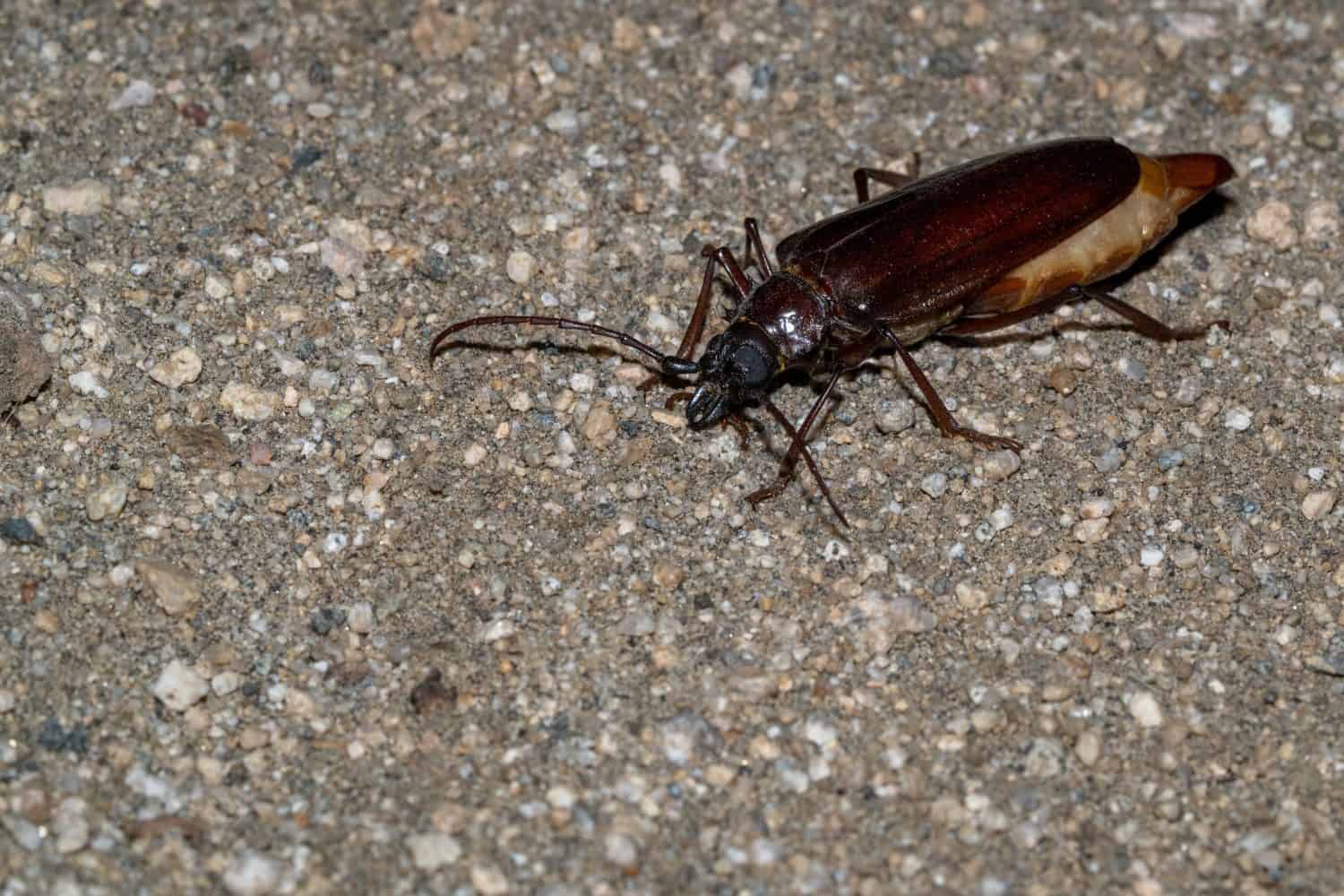
In Arizona, giant beetles are emerging seemingly out of nowhere. The Palo Verde beetle is a species that lives underground, but recent monsoons have brought it above ground. As one of the largest insects in the country, the Palo Verde beetle often surprises people with its size. This Instagram post by @downinnadesert highlights these beetles’ recent sightings in Arizona.
Continue reading
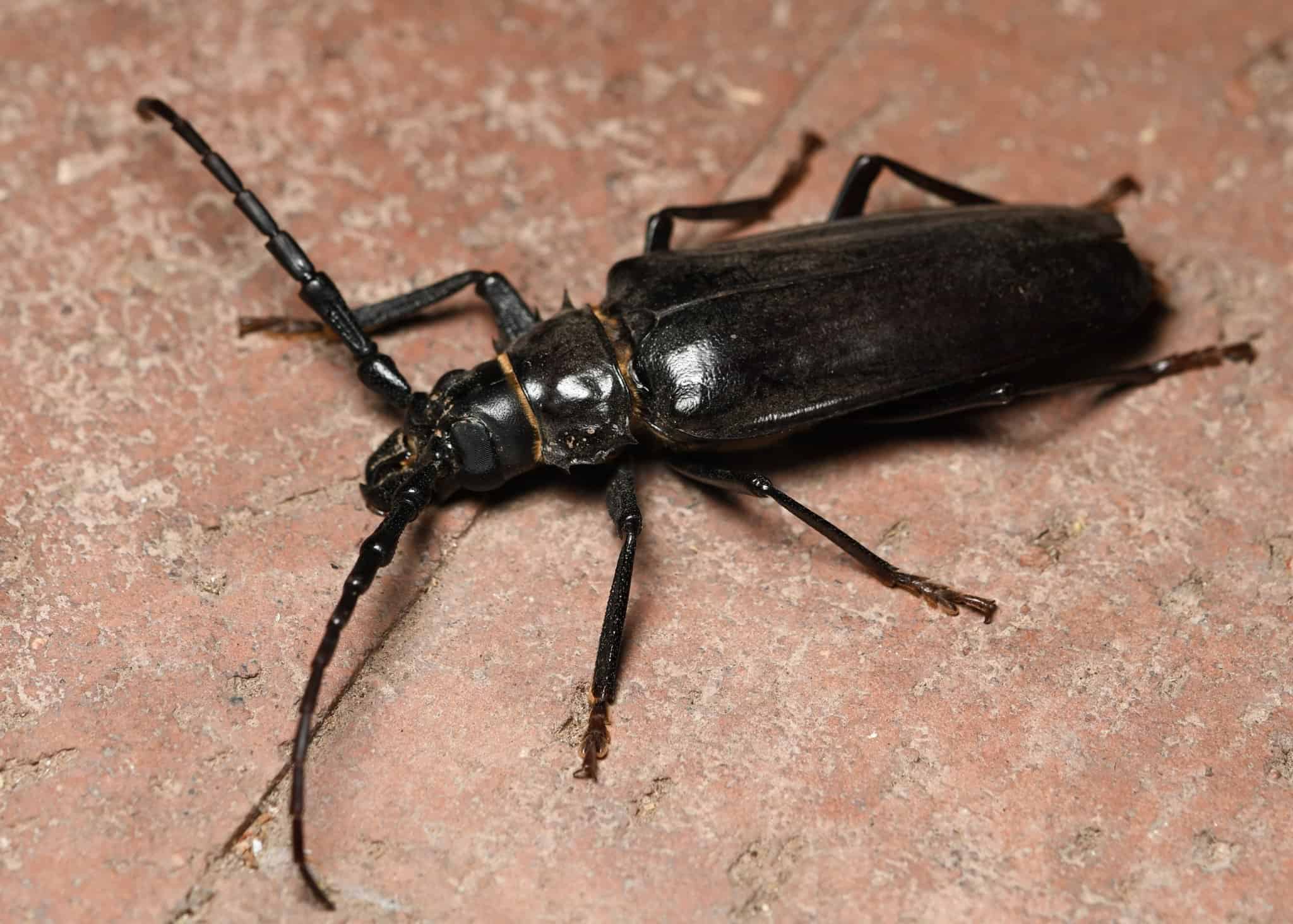
The Palo Verde beetle is one of the largest insects in North America, growing to around four inches long.
©Jason Mintzer/Shutterstock.com
About the Palo Verde Beetle
The Palo Verde beetle is a large longhorn beetle species native to the deserts of the southwestern United States and northern Mexico. Reaching roughly three to four inches long, they are always a surprising sight if you ever encounter one. However, they are often rare to see since they spend most of their time underground. After the female Palo Verde beetle lays her eggs in the soil around the base of a tree, the larvae hatch and burrow further into the soil. They spend most of their time feeding on tree roots, and the grub stage of their life lasts about two to four years. They then pupate and become adults. So, what causes them to come above ground?
Many residents in Arizona begin to see the Palo Verde beetle emerge during the summertime, all due to changes in weather. From June 15 through September 30, Arizona is in monsoon season, when rain and thunderstorms become common. The shift in weather conditions is a signal for many of the animals in the region, with these beetles being a prime example. The heavy rain can flood the burrows that these beetles stay in, which are otherwise dry throughout the year.
Although it may appear that the beetles are forced out of their homes by the rain, their emergence is actually a natural part of their life cycle. When the beetles emerge as adults, increased moisture and humidity create ideal conditions for reproduction, allowing a new generation to be born. So, if you are in Arizona and see one of these beetles, remember that years of development underground have led to that moment — a true wonder of nature.