
Quick Take
- One species on this list is entirely female, with every single offspring being a perfect clone of its mother. Meet the all-female species →
- One of these tiny snakes is venomous, which most people would never suspect given its size. See the hidden venom →
- The world's smallest snake lays only one egg at a time, and the hatchling is already half its mother's length. This biological quirk has a dark reason behind it. Discover the tiny hatchling →
- One of these snakes hitchhiked its way across the entire globe and is now found on nearly every continent, and it managed to do so thanks to an unlikely vehicle. Trace its global spread →
Although many snakes grow to intimidating lengths, there are hundreds of species of snakes that aren’t much larger than earthworms. In recognition of these reptiles, here is a list of the world’s smallest snakes, from largest to smallest.
Short-Headed Garter Snake
The short-headed garter snake (Thamnophis brachystoma) is one of the smaller garter snakes, at around 10 to 22 inches in length. In the United States, short-headed garter snakes are only found in New York and Pennsylvania, and almost always near open fields.
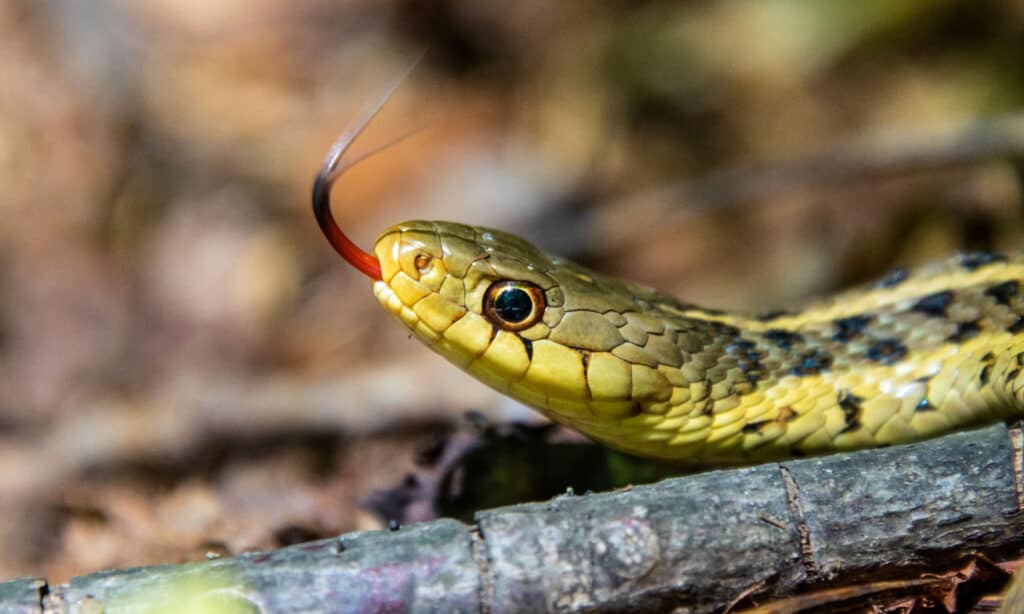
Garter snake is a common name for generally harmless, small to medium-sized snakes.
©Eric Dale/Shutterstock.com
Short-headed garter snakes eat only earthworms in the wild, but as pets, they’ll consume small amphibians, fish, and even leeches.
Though short-headed garter snakes are hesitant to bite, if they’re picked up, they will excrete feces or a foul-smelling musk if they’re annoyed.
Malagasy Blind Snake
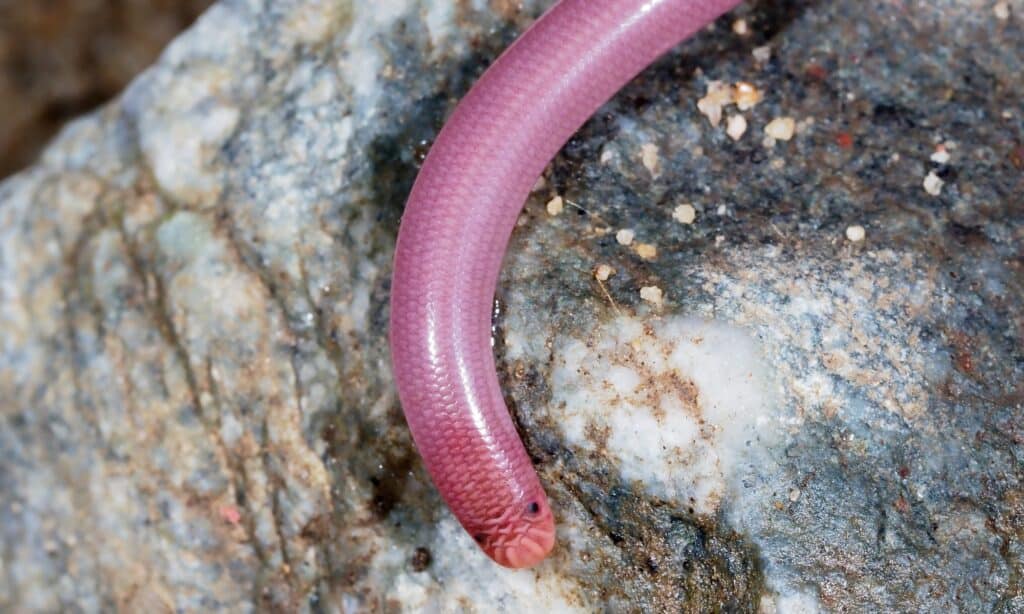
The Malagasy blind snake is considered critically endangered.
©iStock.com/MikeLane45
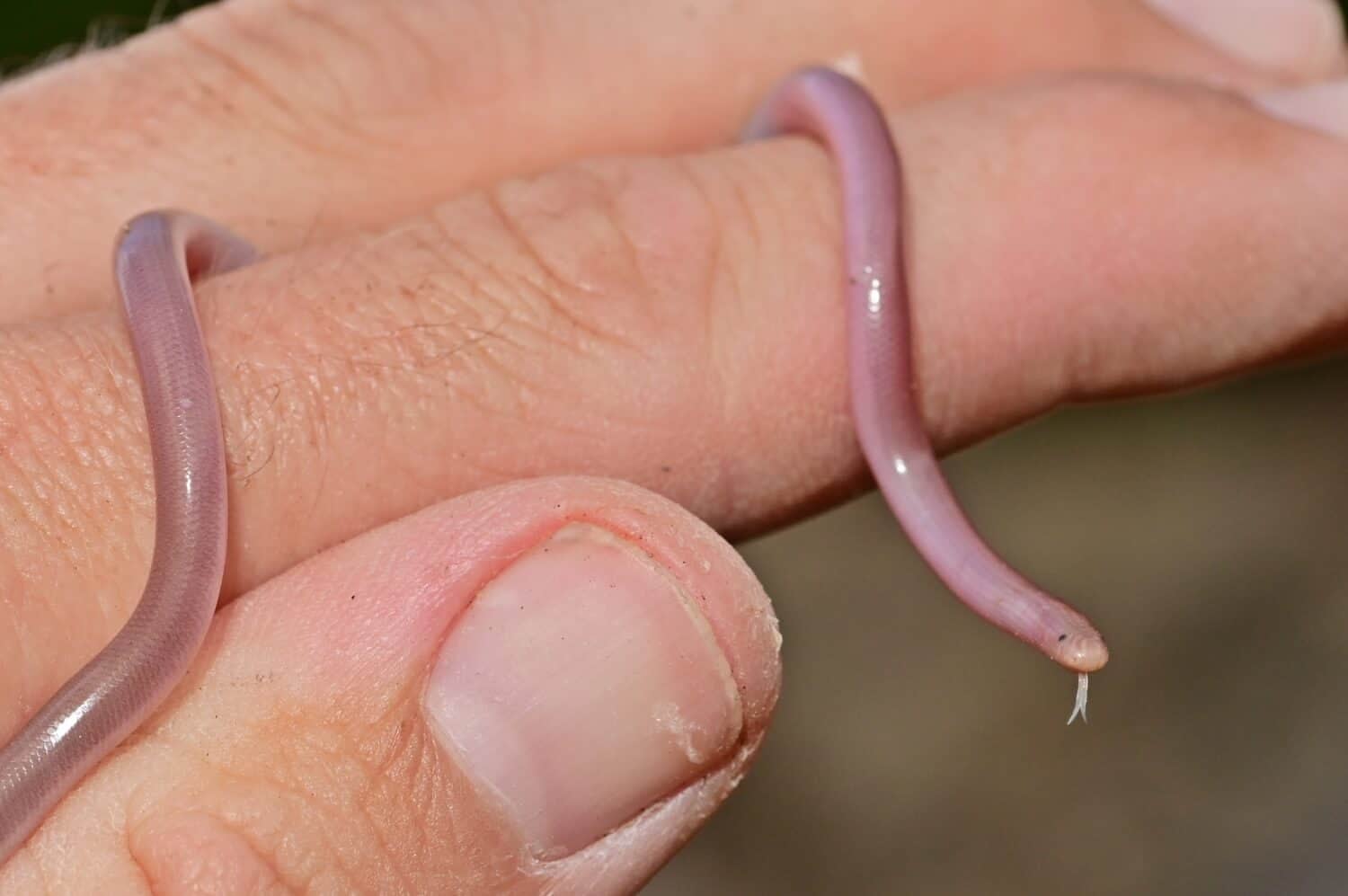
Rediscovered in 2005 after about a hundred years, the Malagasy blind snake (Xenotyphlops grandidieri) is only found in Madagascar. Malagasy blind snakes grow to around 9.8 inches long. Their nose is so armored and enlarged that it makes the snake’s head look somewhat like a bulldozer.
The Malagasy blind snake has scales that are not only pink but translucent, much like an earthworm. It lacks a functional lung, retaining only a vestigial membrane in its place. Like other blind snakes, Malagasy blind snakes burrow into sandy soil found in the coastal forests, using their hard head to dig.
Malagasy blind snakes eat ants and termites, which they hunt by tracking the scent and the heat given off by their prey.
Ring-necked Snake
Found from Canada down to central Mexico, the ring-necked snake (Diadophis punctatus) gets its name from the band of yellow, red, or orange around its neck. Otherwise, the rest of the snake can be olive green, blue-gray, brown, or charcoal. Some herpetologists believe there are about 14 subspecies of ring-necked snakes. Most ring-necked snakes are between 10 and 15 inches long.
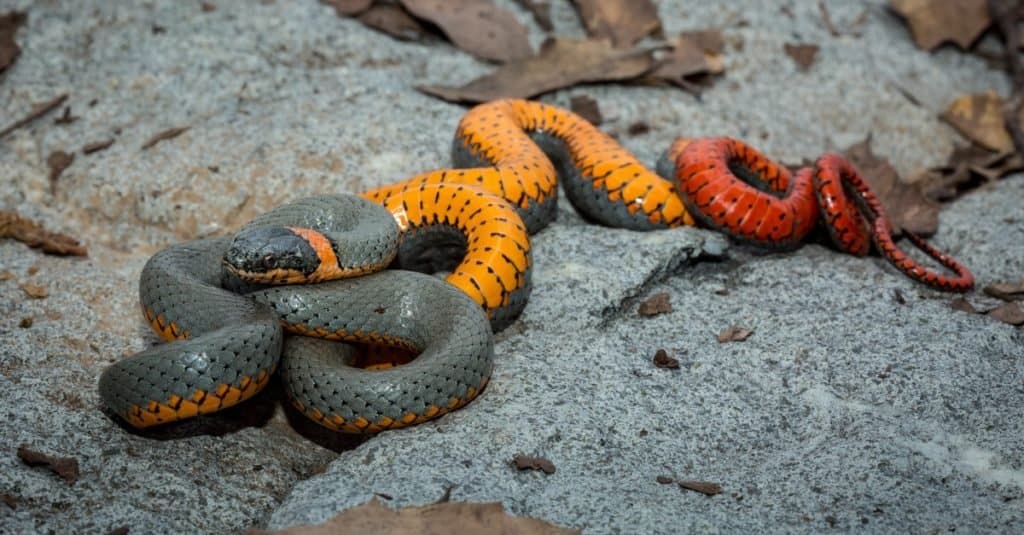
Ring-necked snakes will play dead when threatened.
©Michael K. McDermott/Shutterstock.com
Unlike the other snakes discussed here, the ring-necked snake is venomous, though only mildly so, enough to subdue small prey such as lizards, young snakes, frogs, salamanders, slugs, and earthworms. When it feels threatened, the snake curls up its tail and exposes its anal vent, which is bright red.
Lined Snake
Lined snakes (Tropidoclonion lineatum), which are between 8.66 and 15 inches long, are found in the Great Plains and have populations as far east as Illinois. There are four subspecies. They are the central lined snake (T.l. annectens), the northern lined snake (T.l. lineatum), Mertens’ lined snake (T.l. mertensi), and the Texas lined snake (T. l. texanum).
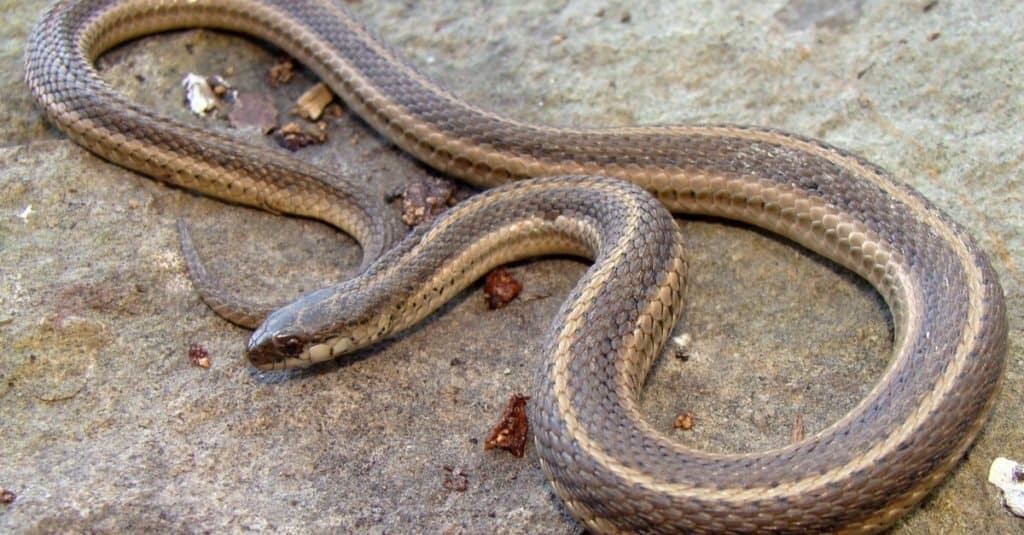
Lined snakes are small and thin and have small heads that are hardly wider than their body.
©Matt Jeppson/Shutterstock.com
Lined snakes are found in the woods, prairies, around human habitation, and abandoned lots. They hibernate during the winter in rocky crevices. Females are ready to breed at about two years old. Although lined snakes mate in the fall, fertilization of the eggs is delayed until spring. The female gives birth to two to 12 live young in August. Because they are born independent, the young receive no parental care.
The lined snake mostly eats earthworms and can be found looking for them after a rain. It also eats snails and slugs.
Peters’ Thread Snake
Peters’ threadsnake (Leptotyphlops scutifrons) is found in southern Africa and grows to a maximum length of about 11 inches (28 cm). Like other threadsnakes or blind snakes, an observer must look closely to distinguish the tail from the head when the snake is still.

The Peters’ Thread Snake resembles a worm, and can be hard to distinguish the head from the tail.
This thread snake spends much of its life in a burrow, though it will emerge after a heavy rainstorm. Since it eats termites and termite eggs, it can often be found around old termite nests. It is also easy to find under rocks and logs. Its scales are dark and shiny. Although it is not venomous, some people confuse it with the burrowing asp, which is also small but highly venomous.
Flat-headed Snake
The flat-headed snake (Tantilla gracilis) is the smallest snake found in Missouri, rarely growing longer than 7 or 8 inches. Its range extends from eastern Kansas, Missouri, and southwestern Illinois through Oklahoma, Arkansas, and central Louisiana and Texas. It has smooth scales whose colors range from tan to grayish or reddish-brown, with a pink belly.
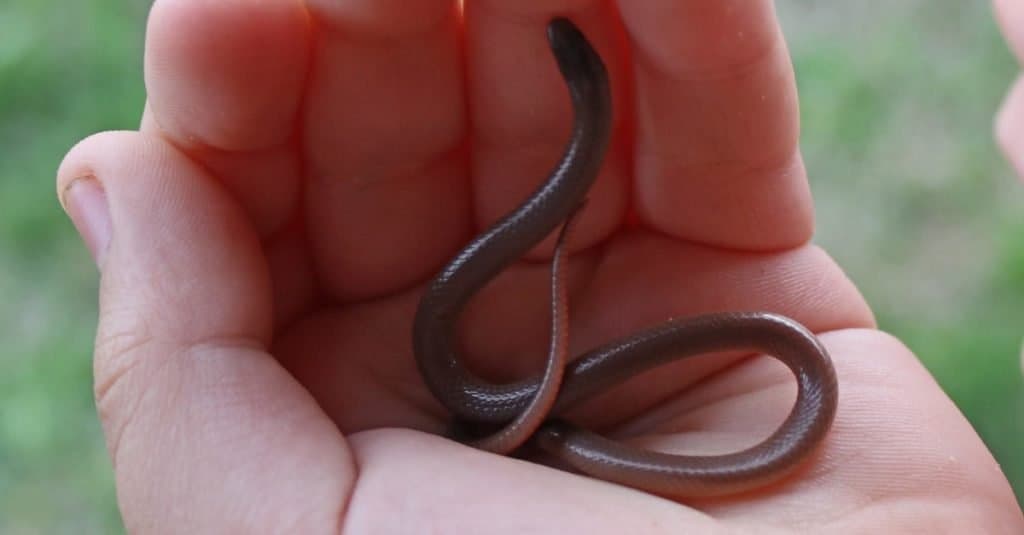
The flat-headed snake is a burrowing species. It spends most of its time in slightly moist soil under rocks or in underground burrows.
©Creeping Things/Shutterstock.com
Flat-headed snakes are active through the warmer months but spend much of the day in burrows dug out of sandy soil. The snake breeds in spring, and the female lays one to four eggs in June, and the 3-inch-long hatchlings emerge in late summer. Flat-headed snakes eat insects, insect larvae, and centipedes.
Texas Blind Snake
The Texas blind snake (Rena dulcis) is found from Southwestern Kansas down into Mexico. Like other blind snakes, this reptile—which grows between 3.94 and 11 inches in length—is easily mistaken for an earthworm. It is found in deserts and other dry places, as long as it can find shade and a source of moisture. It protects itself by sheltering under logs or rocks and can even be found in the compost piles of suburban yards.
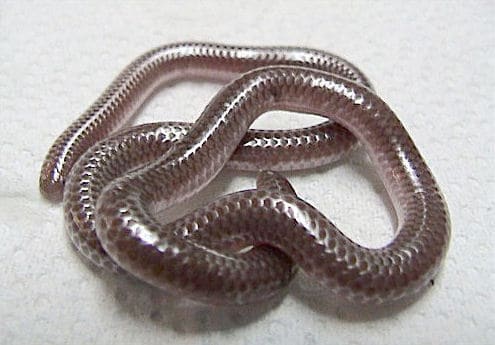
The Texas blind snake is able to discern different intensities of light.
The Texas blind snake is a burrowing snake and often follows the trails of earthworms, though it does not eat earthworms; instead, it eats ants, termites, and insect eggs. It has no teeth in its upper jaw and only has teeth at the front of its lower jaw. After mating, females lay about four long, narrow eggs with papery shells. These snakes aren’t completely blind and can discern different intensities of light.
Variegated Snail Eater
The variegated snail-eater (Dipsas variegata) is found in Amazonia and grows to just 3.4 to 3.6 inches in length. Slugs and snails make up the majority of its diet. It has a blunt, broad head, large yellow eyes, and a black-and-gray pattern over the body.

Variegated snail-eaters are harmless to humans. They are extremely docile and never attempt to bite.
©reptiles4all/Shutterstock.com
Variegated snail-eaters are found in old-growth forests, in which they are active at night. These semi-arboreal snakes can climb up to 9 feet in search of prey. During the day, the variegated snail-eater rests under leaf litter or among shrub branches. Beyond Amazonia, populations of the variegated snail-eater are also found in Trinidad and Tobago.
Brahminy Blind Snake
The Brahminy blind snake (Indotyphlops braminus) is possibly the second smallest snake in the world, measuring between two and six inches long. It is native to Asia and Africa but has been introduced to other areas of the world as stowaways in potted plants, which gives it the nickname the flowerpot snake.
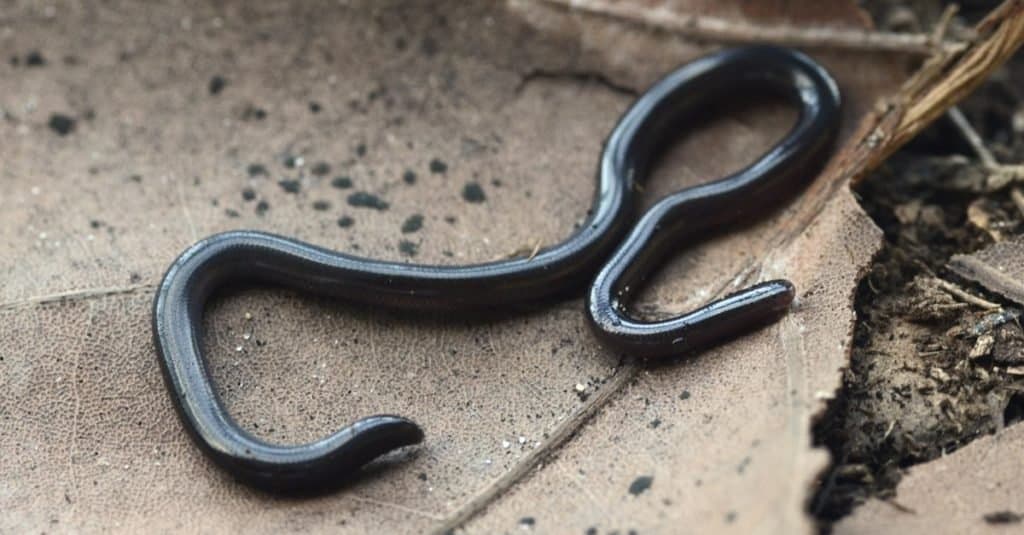
Brahminy blind snakes may get into homes along with potted plants, or come in from outside by crawling under doors or through cracks.
©Patrick K. Campbell/Shutterstock.com
Brahminy blind snakes come in a range of colors, including dark gray, silvery, yellowish beige, purple, and albino. They consume ants and termites as well as their eggs, larvae, and pupae. Brahminy blind snakes may also eat beetles, the eggs and larvae of other insects, caterpillars, and earthworms.
All Brahminy blind snakes are female. The species is parthenogenetic, meaning females reproduce without a male partner. They lay between one and eight eggs, which are all female, and all are identical to their mother.
Barbados Threadsnake
The Barbados threadsnake, recently discovered, (Tetracheilostoma carlae) is considered the smallest snake in the world. Mature Barbados threadsnakes rarely grow to more than four inches long. As its name implies, it was first discovered in Barbados and may also occur in Barbuda and Antigua. It was found living under a rock and feeds on termites and ant larvae.

The Barbados threadsnake can curl up on a U.S. quarter.
Notably, the female lays only one egg at a time, and when the hatchling emerges, it is already half the length of its mother. Herpetologists believe this threadsnake evolved to live in forests, and due to the massive deforestation of Barbados, its conservation status is Critically Endangered.