
Quick Take
- Your dog can tell fear apart from sadness, yet draws a blank on one emotional pairing that might surprise you. See which pairs dogs distinguish →
- One region deep in your dog's brain lights up specifically for your smile. Explore the caudate nucleus findings →
- Dogs don't just sense that you're upset. Brain scans reveal they're doing something far more sophisticated with your face than anyone expected. See the brain scan methods →
- The dogs in this study had a hidden edge that raises real questions about whether your own pet reads your face the same way. Read about study limitations →
Anyone who has a dog or has spent much time with one knows that our furry companions seem remarkably insightful when it comes to human emotions. A new brain-scan study suggests that there’s more going on when dogs look at our faces than simply recognizing whether we’re happy or upset.
The study, published in the journal iScience, found that dogs are not only able to tell happy expressions from negative ones, but can also differentiate between different types of negative expressions. Specifically, scientists observed different patterns of brain activity in the dogs when viewing fearful faces compared with those that were sad or angry.
Continue reading
Scientists Put Dogs’ Brains to the Test
Using a functional MRI (fMRI), researchers examined brain activity in awake pet dogs. An fMRI allows scientists to measure changes in brain activity while the dog is awake and responding to stimuli.
In the study, scientists carried out two experiments. The first experiment involved eight dogs that viewed pictures of both neutral and happy faces. In the second experiment, 12 dogs were shown images of people expressing happiness, fear, anger, and sadness.
Dr Raúl Hernández Pérez, the first author of the study, explained in a press release, “Humans are really good at picking up small details on the face, and so are dogs. This makes dogs very interesting. By studying their brains, we can understand what adaptations have developed to support their remarkable social and emotional understanding of humans.”
Happy Faces Stand Out to Dogs

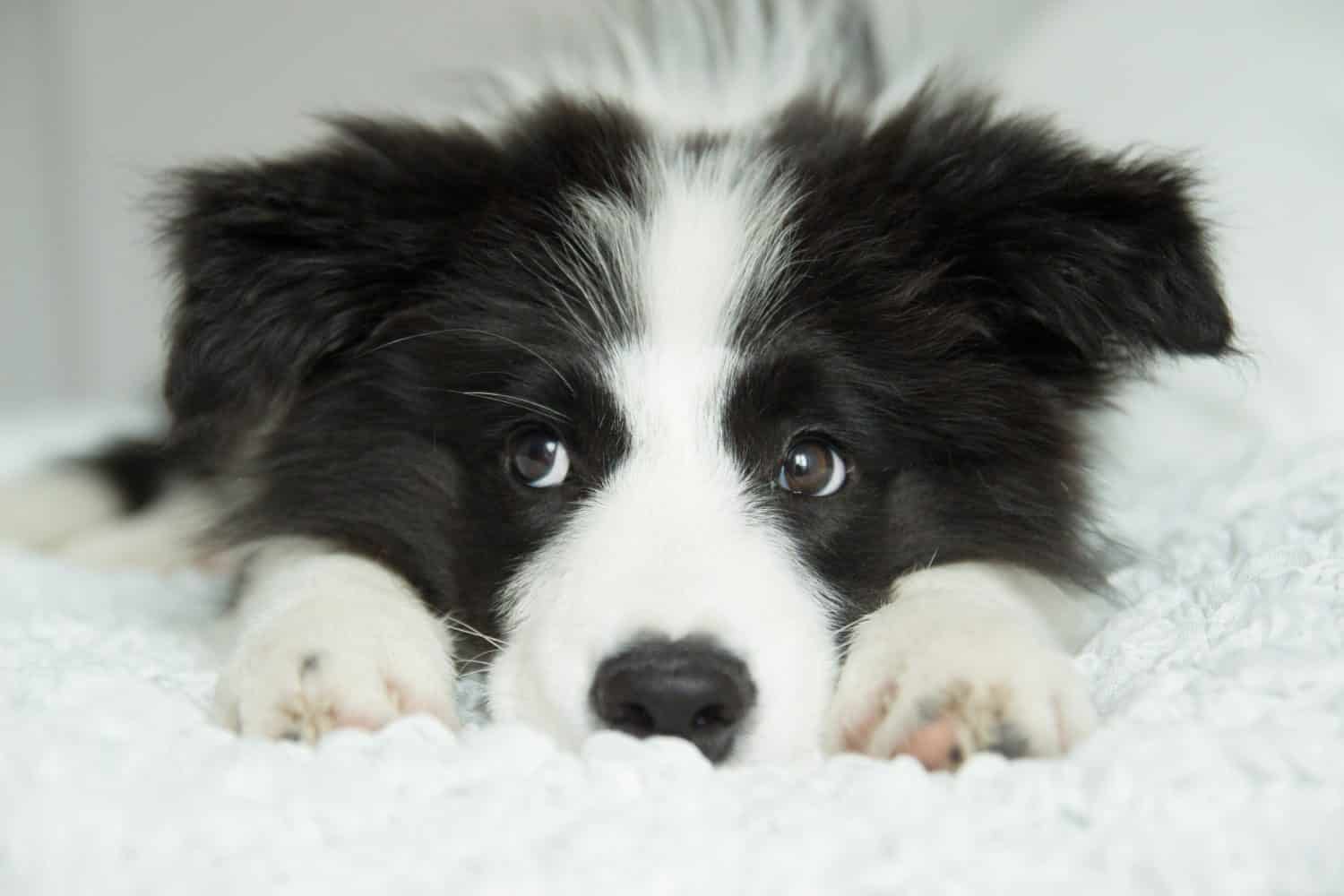
Dogs’ brains showed stronger responses when viewing pictures of happy human faces over neutral ones.
©alexei_tm/Shutterstock.com
In the first experiment, the dogs’ brains showed stronger responses when viewing happy faces over neutral expressions. Dr Laura Cuaya, a co-author of the study, explained in the press release, “The activity in the caudate nucleus is particularly interesting. It suggests that happy human faces may have emotional significance for dogs.”
Dogs’ Brains Distinguish Some Negative Expressions
The second experiment with 12 dogs found that the dogs’ brains responded differently to happy expressions than to fear, sadness, or anger. What scientists found particularly fascinating is that the dogs were able to distinguish between fear and anger, as well as between fear and sadness. However, there was no significant difference found between anger and sadness.
The scientists explained that this doesn’t mean dogs are having the same feelings as humans, but it is the first evidence that dog brains can distinguish between two negative facial expressions.
What the Study Means for Our Dogs
As noted by the scientists in the publication, the research does have some limitations. For one thing, dogs use our body language to read cues about how we are feeling, but these dogs had to rely on viewing still pictures. Also, the study included a small sample size of mainly well-trained Border Collies. Border Collies are known to excel at reading social cues and interacting with humans.
However, the new research does give us further insight into how dogs have managed to evolve alongside humans, forming intensely close bonds with us. “I would like people to see dogs as emotional beings,” Cuaya said in the press release. “They have evolved with us to understand our expressions and cooperate with us, and recognizing that can change how we communicate with and care for them.”