
Quick Take
- Spiders sense the world in a way most people never consider, which is why a sleeping human is one of the most hostile environments they could encounter. Discover how spiders sense →
- Most people assume spiders are indifferent to humans. Behavioral ecology says the opposite, and the reason is hardwired into them. See the instinct explained →
- What spiders actually look for in an environment reveals why your bedroom is rarely on their shortlist. Explore spider habitat needs →
You’ve likely heard the claim that the average human unwittingly swallows eight spiders a year in their sleep. If you haven’t, consider yourself lucky; I actively lost sleep trying to avoid this theoretical fate as a child.
But is this resilient piece of trivia a myth or a fact? In this article, I explore the urban legend with the help of a wildlife expert. We examine both how humans sleep and how spiders behave to get to the bottom of this claim. Keep reading to learn whether you can count accidentally consumed spiders toward your protein intake.
Do Humans Really Eat Eight Spiders Per Year?
Contrary to popular belief, the average human does not, in fact, eat eight spiders per year. I wish someone had told me this earlier in life. However, my two older brothers loved to tease me with this myth.
“There’s no research to prove this myth, and that’s likely because this idea isn’t founded in biology or based on observation,” says Johan Siggesson, wildlife photographer and expert. “The myth continues because the idea is memorable and creepy, but it is, in fact, completely untrue.”
Not only is the spider claim completely false, but it’s actually quite unrealistic given what we know about spiders.
“This myth actually makes very little sense from behavioral ecology. The vast majority of a spider’s life is spent trying to not be eaten,” says Siggesson. “This means they have to be careful not to take on too much risk and find places to be where they can carry on being undisturbed, but also to where they can catch their dinner. Walking across the face of a large mammal is a pretty high risk, and offers no reward.”
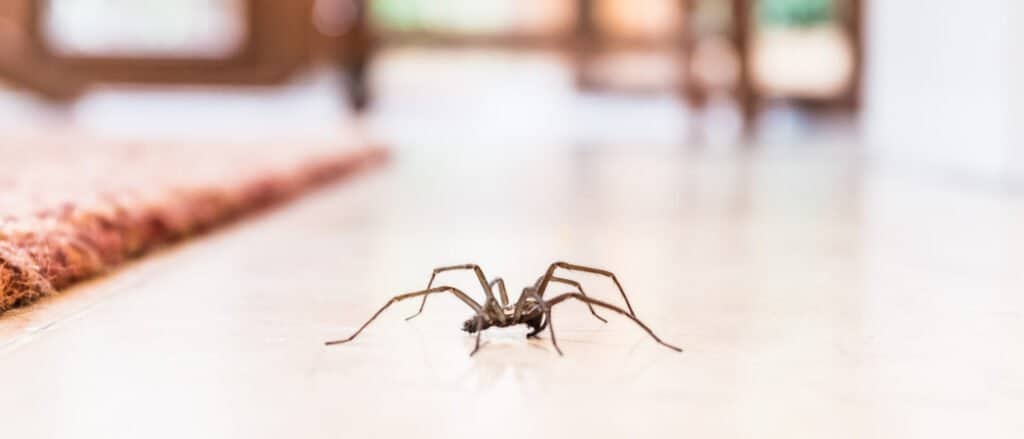
You’re likely not consuming house spiders in your sleep.
©Christine Bird/Shutterstock.com
In fact, it’s far more factual to say that humans eat virtually zero spiders per year.
“While biology rarely deals in absolutes, there is no evidence suggesting that sleeping and swallowing spiders is in any way routine or normal,” says Siggesson. “In the course of a 70 or 80-year life, a person may come into contact with and ingest all manner of insects, micro-organisms, and maybe other invertebrate creatures, owing to the fact we have an interactive relationship with the environment. However, unlike these insects, spiders are highly mobile and aware of their environment. Spiders are more likely to avoid us than come and crawl into our mouths.”
The myth continues because the idea is memorable and creepy, but it is, in fact, completely untrue.
Johan Siggesson, wildlife expert
Why Spiders Avoid Humans
As mentioned earlier, spiders are actually afraid of humans. It’s unlikely they’d purposefully go near a human’s mouth, especially since they’re incredibly sensitive to vibrations. Even the vibrations caused by your heartbeat, breathing, and shifting in bed can deter a spider from further exploration. In other words, it’s instinctual for them to stay away from humans.
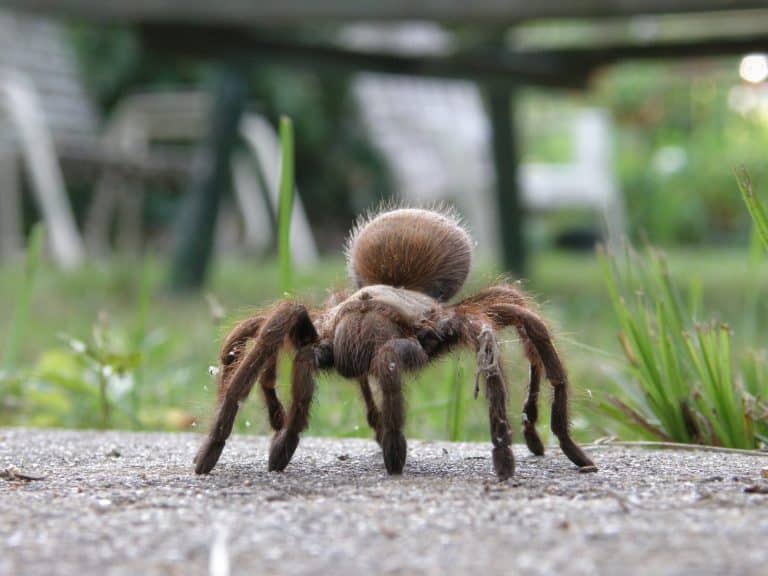
“The world of a spider is completely different from the world of a human. While we are mainly reliant on our vision, many spiders are very sensitive to vibrations and the movement of air,” says Siggesson. “Many spiders have fine hairs on their legs that are very sensitive to changes that help them detect the presence of predators or even prey.”

A spider’s instinct is to avoid humans.
©Leoniek van der Vliet/Shutterstock.com
That being said, a sleeping human’s mouth is the last place a spider would willingly explore. In fact, most spiders actively avoid humans, as we appear as massive predators to them.
“Most people actually think that spiders are on the lookout for an interaction with a human, and would jump to the conclusion that coming into contact with us is something they would want to do,” says Siggesson. “On the contrary, the large and most intimidating creature from the environment is noisy and unpredictable. The instinct of a spider would be to avoid contact, conceal itself, and, if in the presence of a human, disturbed and threatened, to withdraw or remain motionless until the threat is deemed to have passed.”
The Ideal Environment for a Spider
A spider’s ideal environment is a dark or hidden area with access to water, insects, and other food sources—not a human’s mouth. Spiders prefer quiet, low-traffic areas, so your bed—especially while you are sleeping in it—is not an attractive place for them.
“After many years of studying the natural environment and its inhabitants, I can safely say that a spider’s natural instinct is not to take a risk,” Siggesson adds. “It is far more preferable for a spider to have an environment that is safe and secure, and where its energy can be productively used to establish a location of effective hunting. A person’s face that is presented while they sleep would fall into neither of those categories.”