
Quick Take
- The real age of your dog has less to do with how many birthdays it's had and more to do with something most owners never think to consider. Why life stage matters →
- A Great Dane and a Chihuahua born the same year are biologically worlds apart in age, and the gap is far more dramatic than you would expect. See how breed shapes aging →
- DNA research uncovered a surprising biological link between how dogs and humans age, a finding that flips the seven-year rule on its head. Explore the epigenetic findings →
You’ve likely heard of the term “dog years,” which describes the age of a dog in human years. For decades, many believed that one dog year was equivalent to seven human years. But is that actually accurate? In this article, we analyze modern epigenetic clock studies and speak with a veterinarian about this long-held theory to learn all about the canine aging process.
Are ‘Dog Years’ Really a Thing?
The concept of “dog years” is more of a myth than an accurate description of age. While some might use it as a loose guideline for understanding their dog’s maturation, it’s an oversimplified method of calculating the animal’s age.
“The general statement that ‘one year of a human is equal to seven years of a dog’ is a good rule of thumb. However, I find this to be an oversimplification as to how dogs really do age,” says Iryna Smyrnova, a Veterinarian (DVM) at Meowoff. “During the first couple of years of a dog’s life, the dog matures rapidly both physically and sexually (reproductively) compared to the maturation of a human child. As a result, after this rapid development phase, the dog’s aging process will slow down greatly.”
In other words, it would be more accurate to analyze a dog’s stage of life rather than year of life. Additionally, depending on the breed, size, and other features, some dogs might mature and age faster than others. This makes the myth of “dog years” incredibly inaccurate and unreliable.
Factors That Influence ‘Dog Years’
The simple statement of “one human year equals seven dog years” does not account for the variation in a dog’s aging process. As noted earlier, many factors can influence the accuracy of this flawed science, from dog breed to size to stage of life.
“The aging process will vary based upon several individual characteristics such as breed, size, genetic makeup, current health, and way of living; therefore, you cannot apply one single ratio to each and every dog,” says Smyrnova.
Additionally, because dogs mature at different rates throughout their life, it’s inaccurate to measure each year of their lives equally. For example, they progress much differently through their “infant” years than their “middle” years.

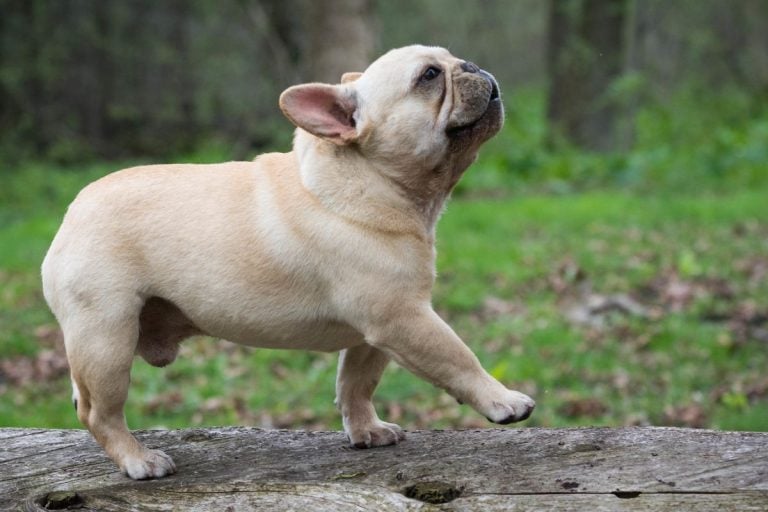
Smaller dogs like chihuahuas tend to live longer lives than larger breeds.
©Krakenimages.com/Shutterstock.com
“Another major drawback of the ‘seven years per dog’ method is that it assumes that all dogs develop (age), or grow, at a constant and linear rate,” Smyrnova points out. “This assumption is incorrect. The initial stages of puppyhood are marked by exponential growth and development. Adult dogs and elderly dogs (senior dogs) age at vastly different rates due to many biological influences.”
Smyrnova notes that larger breeds typically live shorter lives, aging more quickly than smaller breeds. So while, say, a Great Dane and a Chihuahua might be the same number of years old, their biological ages are likely drastically different.
The aging process will vary based upon several individual characteristics such as breed, size, genetic makeup, current health, and way of living; therefore, you cannot apply one single ratio to each and every dog.
SmyrnovaIryna Smyrnova, Veterinarian (DVM) at Meowoff
DNA Methylation Profiling
Modern epigenetic clock studies and DNA methylation profiling have provided a more accurate explanation of how our canine companions actually age. One study published in the journal Cell Systems found similarities between the infant/juvenile and senior stages of dogs and humans.
“The observed agreement between epigenetics and physiology was particularly close for infant/juvenile and senior stages,” the study authors wrote. “For instance, the epigenome translated approximately 8 weeks in dogs (0.15 years) to approximately 9 months in humans (0.78 years), corresponding to the infant stage when deciduous teeth develop in both puppies and babies. In seniors, the expected lifespan of Labrador retrievers, 12 years, correctly translated to the worldwide lifetime expectancy of humans, 70 years.”
Changes during the adolescent and mature stages were much faster in dogs than in humans. However, the researchers concluded that the “canine epigenome progresses through a series of conserved biological states that align with major physiological changes in humans, occurring in the same sequence but at different chronological timepoints during each species’ lifespan.”

Biologically speaking, dogs and humans share many aging mechanisms.
©maxim ibragimov/Shutterstock.com
“Dogs experience the same biological hallmarks of aging as humans, but do so in a compressed period, around 10 to 15 years on average, versus over 70 years in humans. This makes dogs invaluable for studying the genetics of aging across mammals, including humans,” Elaine Ostrander, Ph.D., NIH Distinguished Investigator and co-author of the paper, said in a press release. “It will be particularly interesting to study long-lived breeds, a disproportionate number of which are small in size, versus breeds with a shorter lifespan, which includes many larger breeds. This will help us correlate the well-recognized relationship between skeletal size and lifespan in dogs.”