
Quick Take
- The Giant Wēta is a large insect found on New Zealand’s outlying islands.
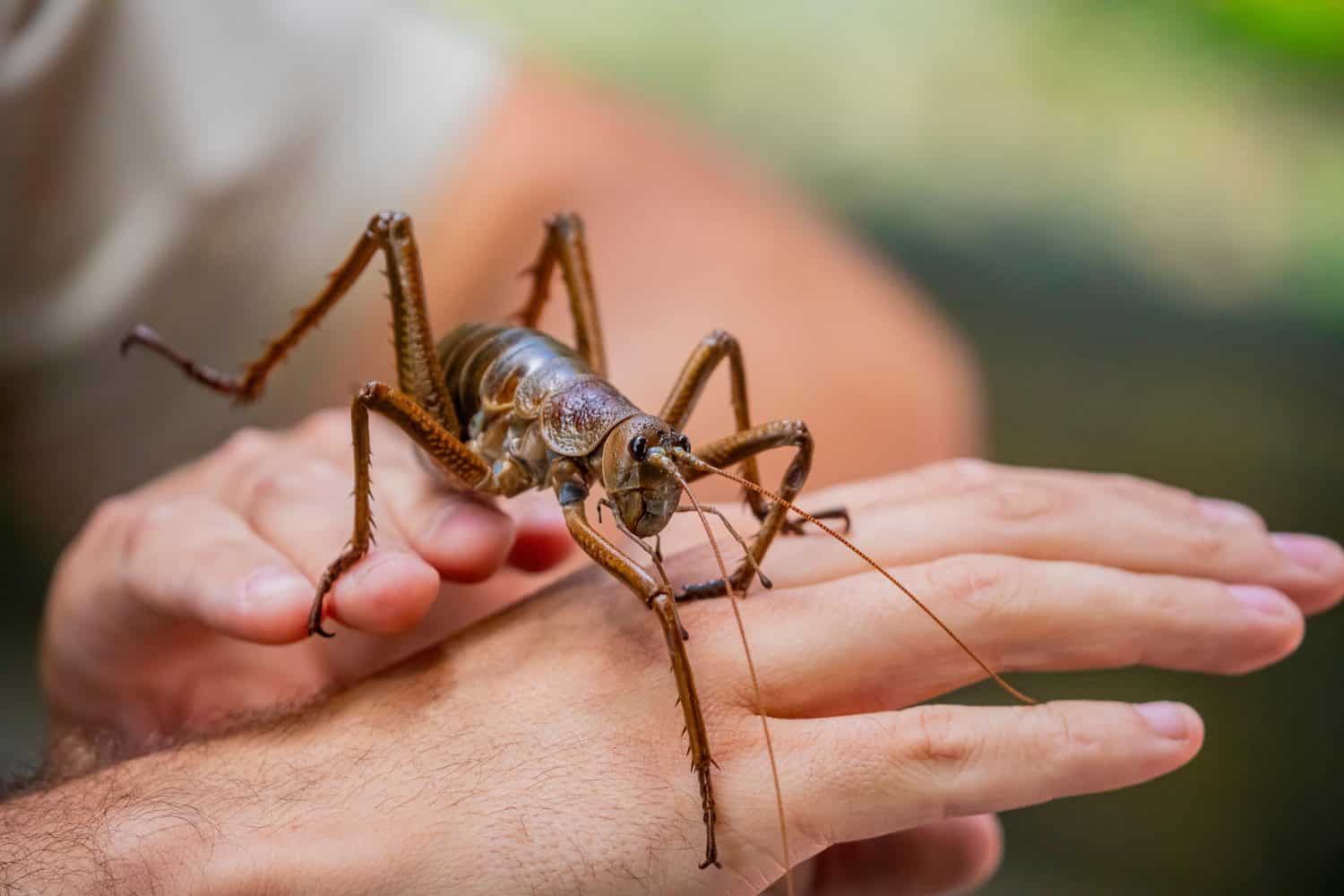
- This massive insect has spiny legs, long antennae, and an armored body and can surpass the weight of a mature sparrow.
- Owning or transporting a Deinacrida heteracantha specimen is a punishable criminal offense.
- The creature named the “God of ugly things” is categorized as a national treasure.
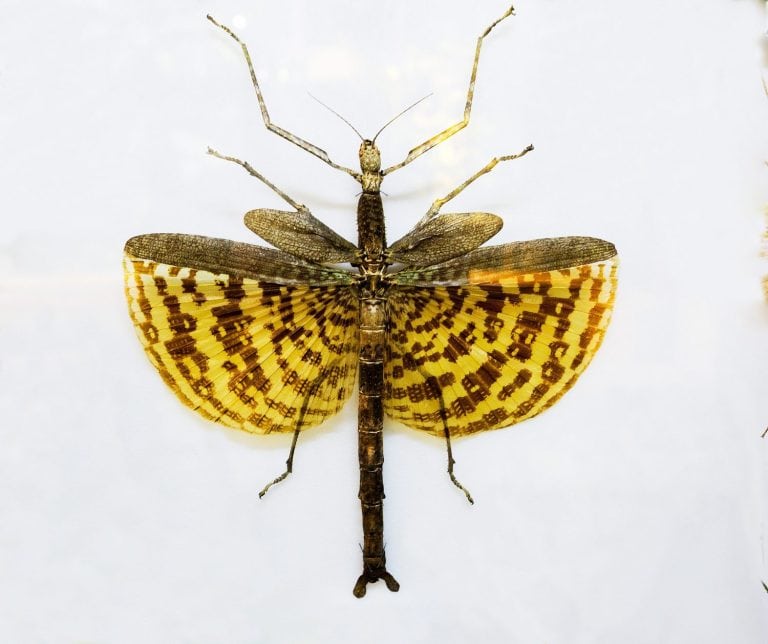
People think of New Zealand as two large islands separated by a thin channel of water. However, this country also includes nine smaller offshore island groups surrounding the two main islands. Known as the New Zealand outlying islands, these cays are home to some strange and spectacular creatures. Take the Giant Wētā, for example. Sometimes called invertebrate mice, these insects are massive, with spiny legs, long antennae, and armored bodies that can weigh more than full-grown sparrows.
Giant Wētā are a biological curiosity, but they are also one of the clearest examples of successful conservation ethics. Indeed, New Zealand is serious about protecting these massive insects; Giant Wētas cannot be bought, sold, or even owned. Instead, they are allowed to live out their lives in safe environments like Little Barrier Island. Let’s learn more about these intimidating insects and how their status as a New Zealand national treasure has kept them alive despite a long list of threats.
Wēta Wonders
The word Wētā is the common name for around 100 insect species in the families Anostostomatidae and Rhaphidorphoridae, both of which are endemic to New Zealand. Wētās are basically giant, flightless crickets; they are usually nocturnal. The smaller species are carnivores and scavengers, while the larger ones are herbivores. Big ones, like Giant Wētā, are among the heaviest insects in the world. Their scientific and traditional names speak to their outsized, if not outright shocking, appearance.
The genus name for giant wētā, Deinacrida, translates from Greek to “terrible grasshopper,” and the heaviest species, Deinacrida heteracantha (the Little Barrier Island giant wētā or wētāpunga), holds the record for the largest individuals. The traditional Maori name for Little Barrier Island Giant Wētā, Wētāpunga, roughly translates to “God of ugly things.” Funnily enough, the word weta itself can be translated as “excrement.” Suffice it to say that Giant Wētā have some memorable names. However, those aren’t their only standout attributes.
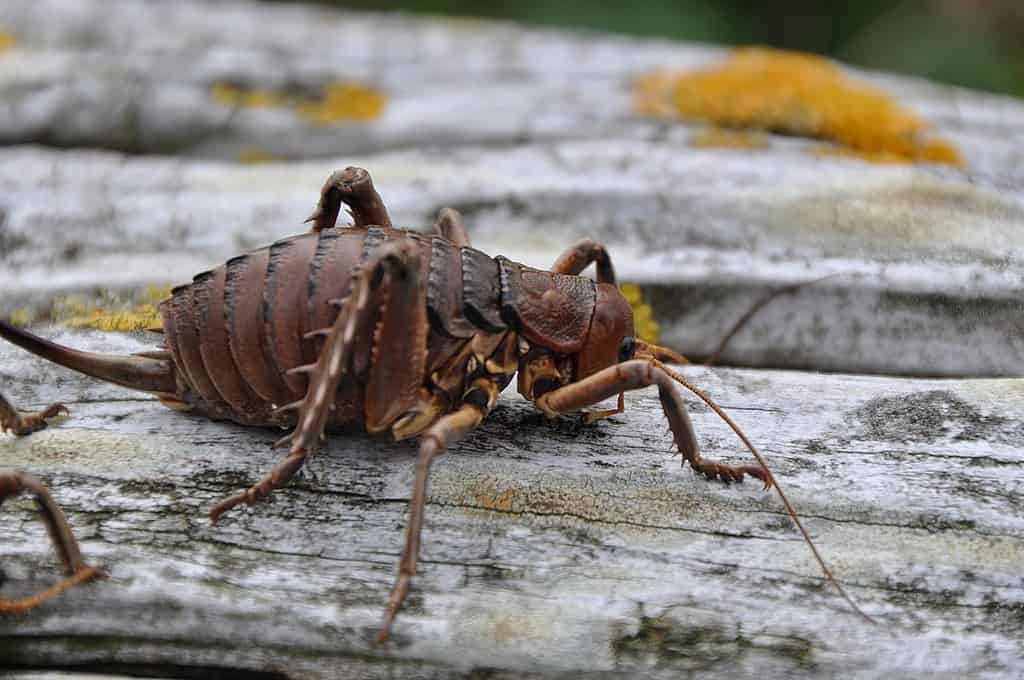
One captive specimen of Giant Wēta reached a weight of 70 grams, which is heavier than a mature sparrow.
©Ros Cole, CC BY-SA 4.0, via Wikimedia Commons – Original / License
These insects are massive, with enlarged hind legs, and appear like oversized katydids, long-horned grasshoppers, or crickets. Giant Wētā, specifically, are some of the heaviest insects on earth. One captive specimen filled with eggs reached a record weight of 70 grams, which is heavier than a mature sparrow. Despite their size and intimidating monikers, Giant Wētā are quite passive.
Island Gigantism
Giant Wētā are a perfect example of island gigantism, a phenomenon seen in isolated areas (like these islands) where species safe from mainland predators grow to large sizes. Because these insects can cope with a spectrum of temperatures, they are found in alpine, grassland, cave, and shrubland environments. Unlike smaller Wētā, Giant Wētā eat mostly lichens, leaves, seedheads, and fruits. They take one to two years to reach adulthood and exhibit clear sexual dimorphism. Being flightless wasn’t a problem for Giant Wētā for most of history. They filled a niche on islands normally reserved for mammals like small rodents and defended themselves using their formidable size.
These attributes, however, made them targets as time went on. Once invasive species were introduced to the islands, they had a field day hunting Giant Wētā because the insects couldn’t easily escape predation. With the invasive species came settlers, who destroyed habitats. This occurred in tandem with climate change, which also affects the traditional habitats of Giant Wētā. Add some invasive insects that compete for the same food sources, and you have a once-thriving creature that is now increasingly threatened.
Protective Measures
New Zealand has some of the strongest conservation laws on Earth. The Wildlife Act 1953 ensured that all species of Giant Wētā are fully protected. Indeed, the Department of Conservation enforces a law that makes it a criminal offense to remove a Giant Wētā from the wild or even to possess a dead specimen without a permit. These types of strict laws are necessary to protect a creature that survives only on small satellite islands like Little Barrier Island.
Put simply, private ownership of Giant Wētā is outlawed. This provides the insects with scientific sanctity, discourages their poaching, and reinforces their national identity as a matter of public pride.
New Zealand has the concept of Kaitiakitanga. This notion of guardianship makes both the government and Māori tribes stewards of the land and animals. Beyond that, no one can own Giant Wētā. Even researchers must undergo a rigorous permit application process to hold one, even for just a few minutes.
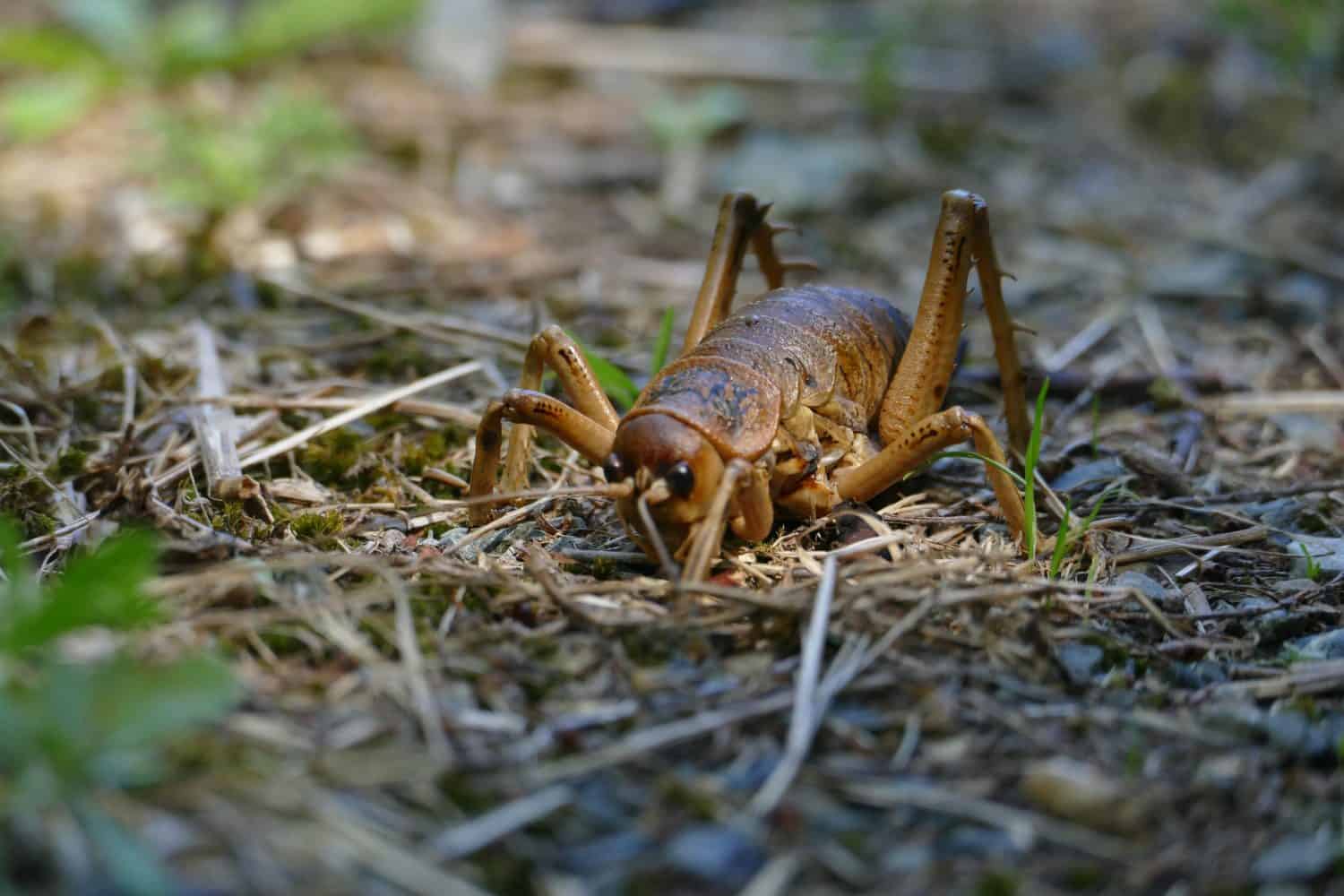
Even researchers must undergo a rigorous vetting process just to hold one of these insects for a few minutes.
©El Paco 33/Shutterstock.com
Priceless With Purpose
However, that doesn’t mean that designated organizations aren’t helping with Giant Wētā conservation. Two notable institutions serve the public good by keeping specimens in protected hands. The Museum of New Zealand (Te Papa Tongarewa) holds specimens in collections for both climate change research and DNA sequencing.
The Auckland Zoo also maintains a captive breeding program. Specialists at the zoo have successfully bred thousands of Wētās. Once they reach maturity, the Giant Wētā are transported to predator-free islands around New Zealand. In this way, these massive, truly priceless insects get a second chance at life without ever being exchanged through private hands.