
When desert animals face environmental extremes day in and day out, every unique anatomical feature can aid in their survival. Among the most striking of these adaptations is ear size. In arid landscapes like deserts, ears are utilized for more than just hearing threats; they can act as cooling devices and sensory amplifiers, becoming vital tools for survival overall.
To explore how ear size directly relates to desert survival, we spoke with Jon Nelson, Senior Wildlife Curator at the High Desert Museum in Bend, Oregon, who explained how ear structure plays a key role in desert ecology. We hope you’re all ears for this one! Let’s dive into the details.
How Do Bigger Ears Help Desert Animals?

©iStock.com/Attila Adam
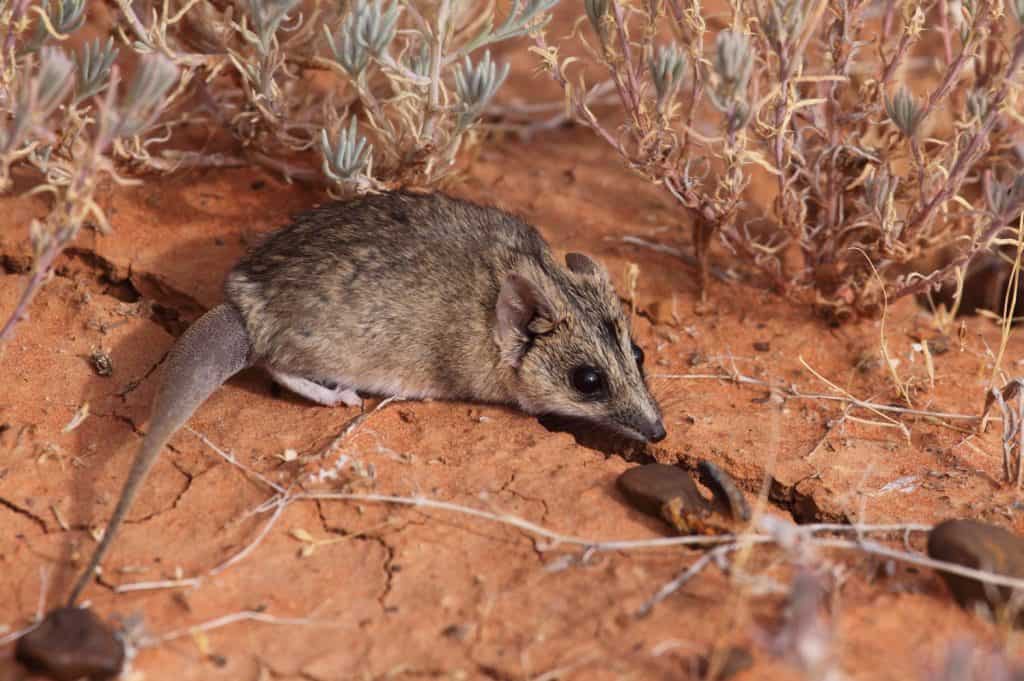
Large ears offer a multitude of advantages for desert dwellers, especially when it comes to aiding in thermoregulation, hearing, and even water conservation. As noted by Nelson, multiple desert mammals rely on their ears as biological radiators: “These creatures actually have small blood vessels that carry hot blood from the body. Combining with a large surface area, it actually allows heat to radiate.”
A University of Texas study confirmed this principle, showing that desert species follow what’s known as Allen’s Rule: animals in hotter climates evolve longer limbs and larger ears to disperse heat more efficiently. But this isn’t the only advantage large ears give to desert mammals, especially the most vulnerable of species.
Large Ears Are for More Than Hearing
©Chris Watson/Shutterstock.com
In his interview, Nelson said that he’s “observed that the ability to pick up prey or predators early gives some animals a clear survival edge.” He noted that, in open desert terrain, enhanced hearing and heat management go hand in hand.
Beyond thermoregulation, larger ears also reduce reliance on evaporative cooling. As Smithsonian’s Natural History Museum explains, species like the fennec fox and jackrabbit “use their massive ears to stay cool by radiating excess body heat.”
Which desert animals have large ears and regularly rely on them for their survival? While not all of these animals call Oregon home, the High Desert Museum helped us identify a few species with the ears necessary for life in these desolate places. Here are a handful of large-eared animals capable of surviving in deserts.
Black-Tailed Jackrabbit
©Natalia Kuzmina/Shutterstock.com
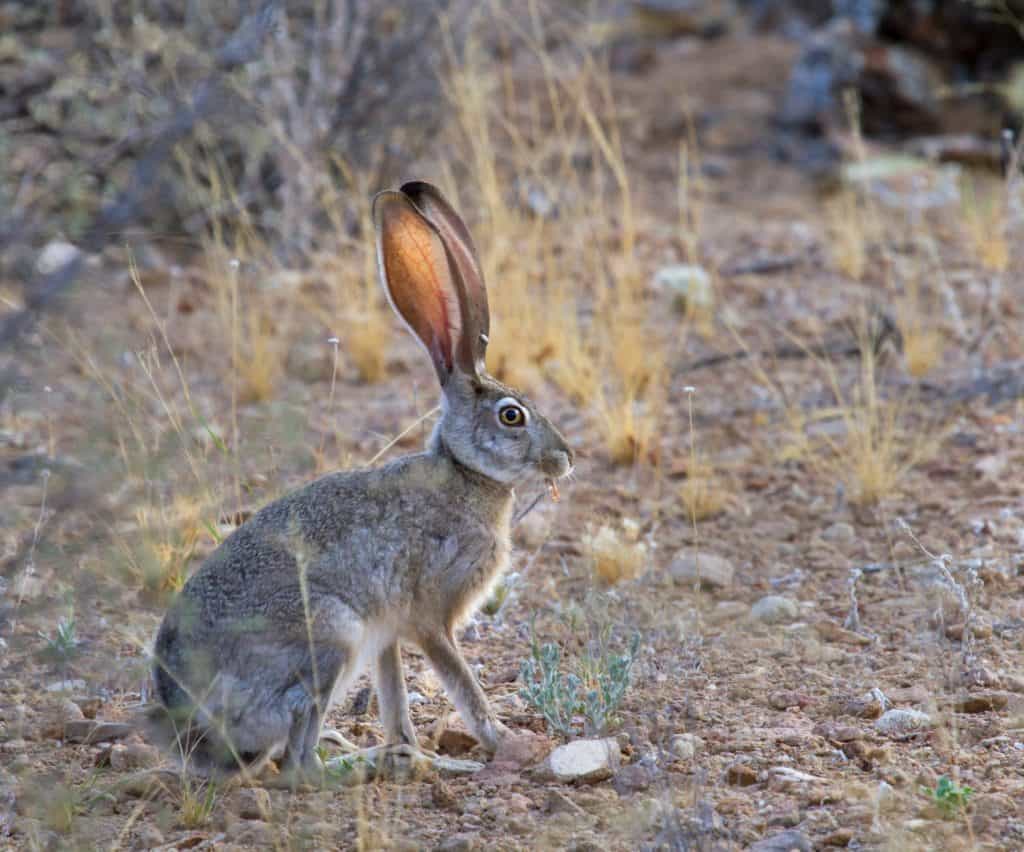
The black-tailed jackrabbit, native to the American Southwest, is an obvious choice when considering ear size. According to the Arizona-Sonora Desert Museum, “This animal’s big, beautiful ears act like radiators, helping them cool down after a sprint by increasing blood flow to the ears.”
Nelson confirmed this by adding, “we’ve noted in studies how the jackrabbit’s ears shifted orientation as if to optimize heat release.” These subtle movements allow the animal to regulate body temperature while staying alert to predators in the open desert, both necessary and vital needs for survival.
When you see those big ears, no matter how silly they may look, you’re really seeing how an animal survives in one of Earth’s toughest habitats.
Jon Nelson, Senior Wildlife Curator at Oregon’s High Desert Museum
Fennec Fox
©hagit berkovich/Shutterstock.com
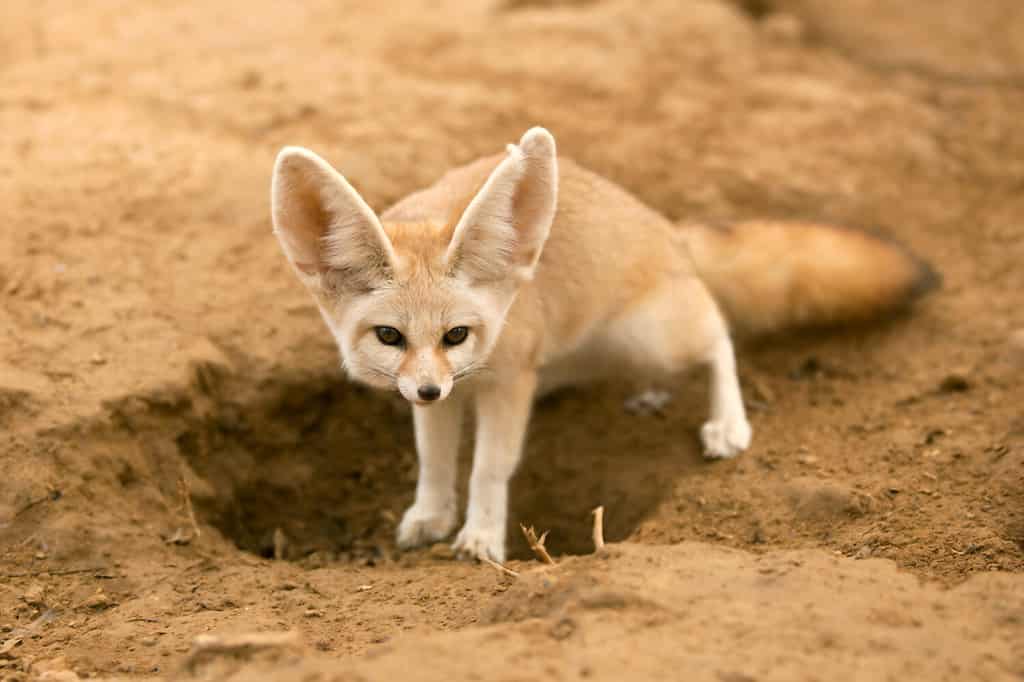
The fennec fox of North Africa’s deserts sports oversized pinnae, which can reach six inches in length. This helps them stay cool and also detect the sounds of prey moving underground.
Nelson explained further, “the fennec fox is a stellar comparison species to show convergent evolution: different species in separate deserts develop the same solution, which is big ears for cooling and survival.” Increased blood flow to the fox’s ears helps stabilize its body temperature better than any other evolutionary advantage.
Desert Cottontail
©Chris Hill/Shutterstock.com
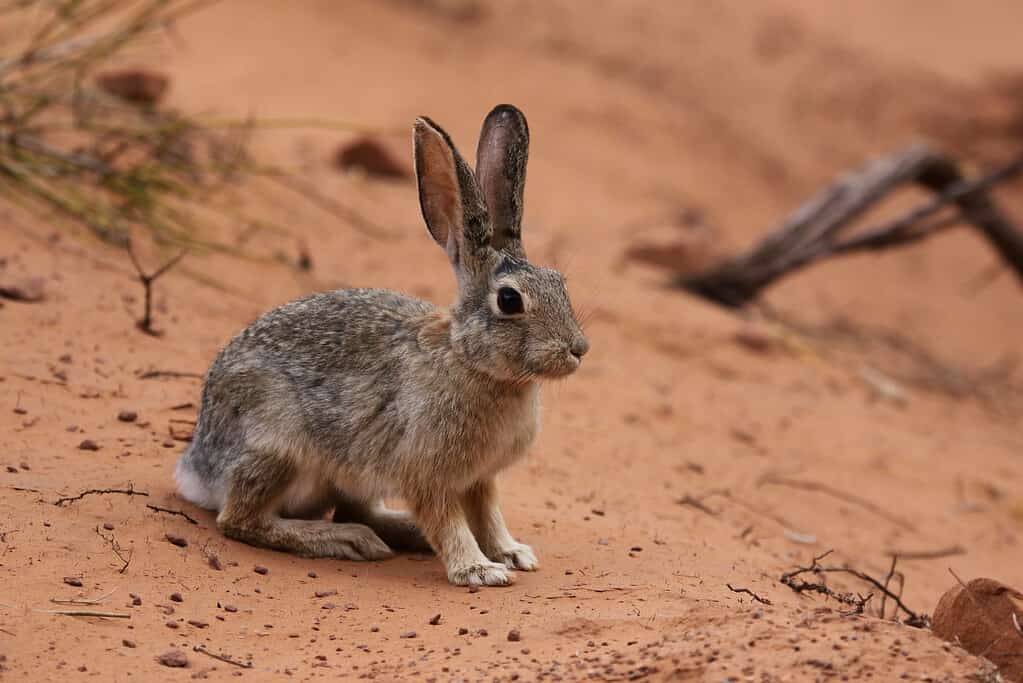
Smaller than a jackrabbit but still adapted for desert life in many countries, the desert cottontail uses its large ears to manage heat and sound. Their ears also serve as early-warning systems, allowing these little rabbits to detect predators like coyotes or hawks long before they’re visible, keeping them safe and allowing them ample time to seek shelter.
Bat-Eared Fox
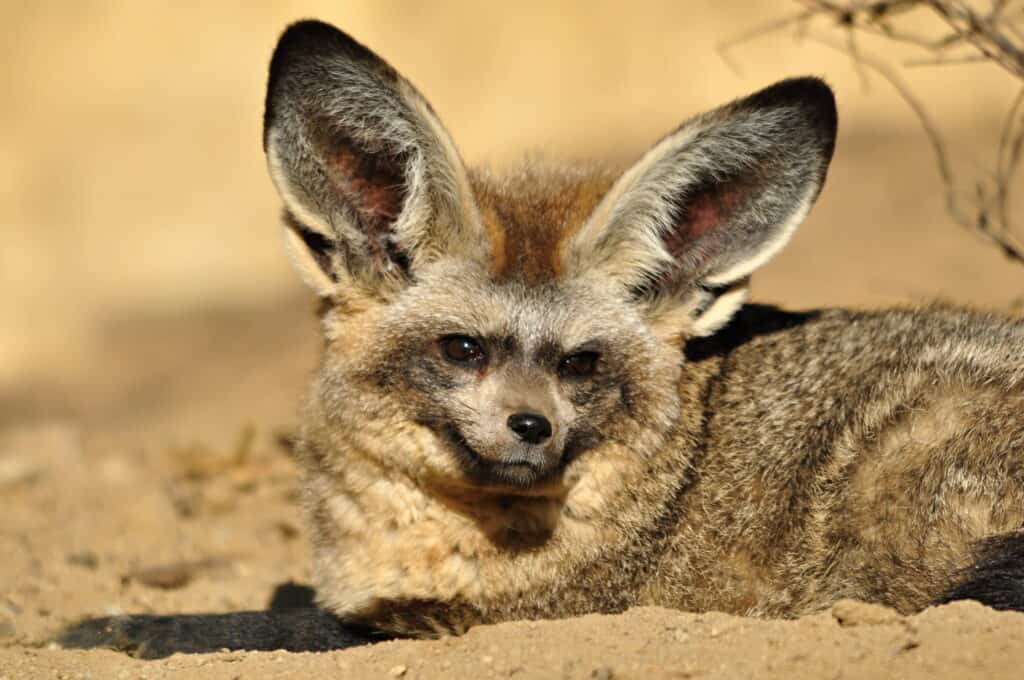
©Marek Velechovsky/Shutterstock.com
The bat-eared fox of sub-Saharan Africa isn’t native to North America, but this little mammal provides another perfect example of desert ear adaptation. Its enormous ears amplify sound frequencies used to detect termites and other insects beneath the soil while also, of course, dispersing heat.
Nelson noted that “while we don’t have one at our museum, we occasionally mention the bat-eared fox during our educational programs. This species and its ears evolved independently in multiple desert regions as a universal response to heat and predation.”
Why the High Desert Museum Studies Ear Adaptations

©Bob Pool/Shutterstock.com
Located in Bend, Oregon, the High Desert Museum focuses on the ecology of the arid West, where heat and open terrain pose similar challenges to those faced by classic desert animals. Through its public programs and animal exhibits, this museum translates complex thermodynamic principles into tangible lessons about how wildlife endures in harsh environments, making it a perfect school field trip destination.
What Can We Learn from Large Ears in Desert Species?

©Delbars/Shutterstock.com
In the desert, survival depends on precision and unique adaptations. Large ears are ultimately multipurpose tools for thermal regulation, auditory sensitivity, and water conservation, showcasing evolution’s ingenuity across both prey and predator species.
As Nelson concluded, “When you see those big ears, no matter how silly they may look, you’re really seeing how an animal survives in one of Earth’s toughest habitats.” Thanks to educational institutions like the High Desert Museum, visitors can check out these adaptations firsthand and gain a deeper appreciation for how desert life thrives against all odds.