
Quick Take
- One tiny, overlooked pond fish devours mosquito larvae at a rate that makes your bug spray look embarrassing. Meet the fish species →
- Some government agencies are quietly handing out live fish as pest control, though the strategy carries a serious ecological trade-off. Explore distribution programs →
- Not every mosquito-eating fish hunts the same way, and the differences explain why one species completely outclasses the rest. Compare hunting behaviors →
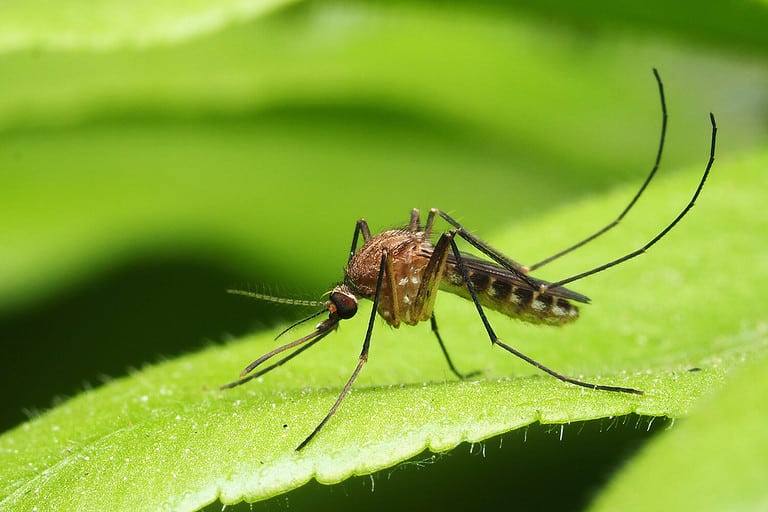
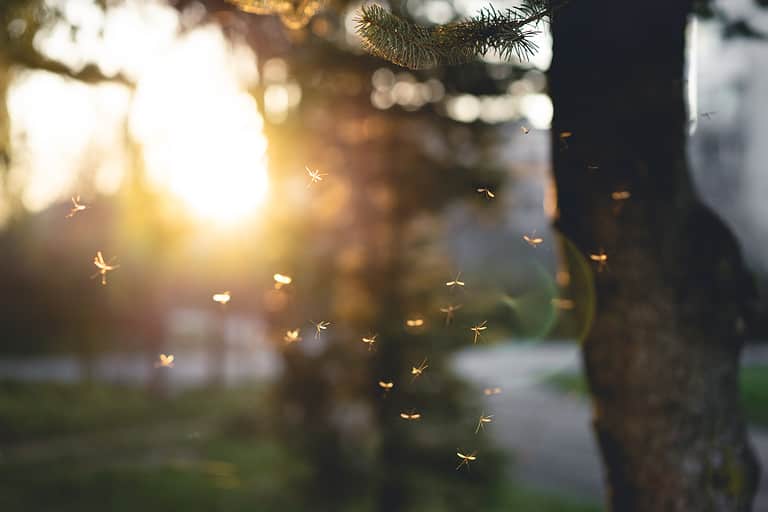
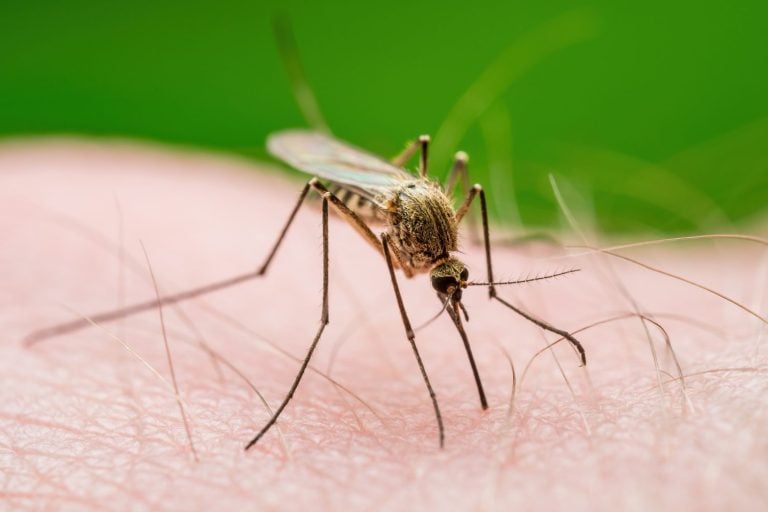
We all love the summertime, but its delights come with one key catch: mosquitoes. In some regions, you can barely get a proper tan before being assaulted by mosquitoes that bite your skin and ruin your whole day. In response, people have created countless tools to combat this flying plague. Meanwhile, on the surface of your local pond, several freshwater fish species act as nature’s mosquito controllers.
Eating mosquitoes all day to protect you from bites may seem like a thankless job, but fish like minnows, topminnows, and gambusia do it happily. In fact, they have little choice, as their evolution has made them natural mosquito predators. While you’re enjoying your summer barbecue, these fish are leading the fight against mosquitoes at a water source near you.
The Water’s Edge
If you’ve ever had a West Nile Virus warning in your neighborhood, you likely know that female mosquitoes typically lay their eggs in or near water. Many species prefer stagnant water, while others lay eggs in moist soil, on leaves, or just above the waterline in places likely to flood. These sources can include out-of-use fountains, birdbaths, saucers holding potted plants, and ornamental ponds.
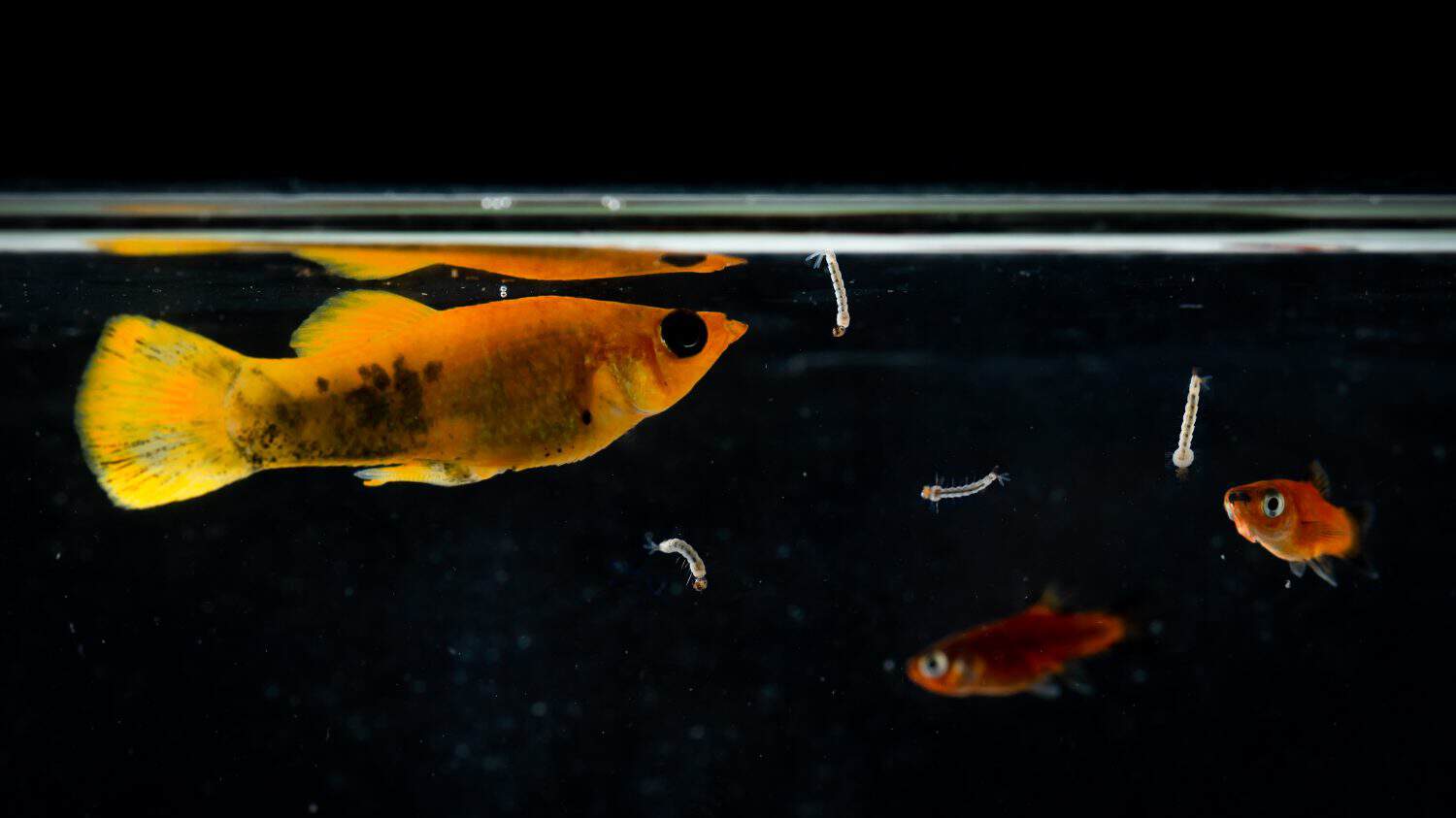
Mosquito larvae, also called wigglers, spend the first part of their lifecycle on the surface of water, molting and growing four times in succession. Certain species of mosquito, like Culex and Aedes, have a specialized breathing tube that forces them to breathe air at the water’s edge. Meanwhile, danger lurks nearby, as certain freshwater fish species wait, ready to eat them.
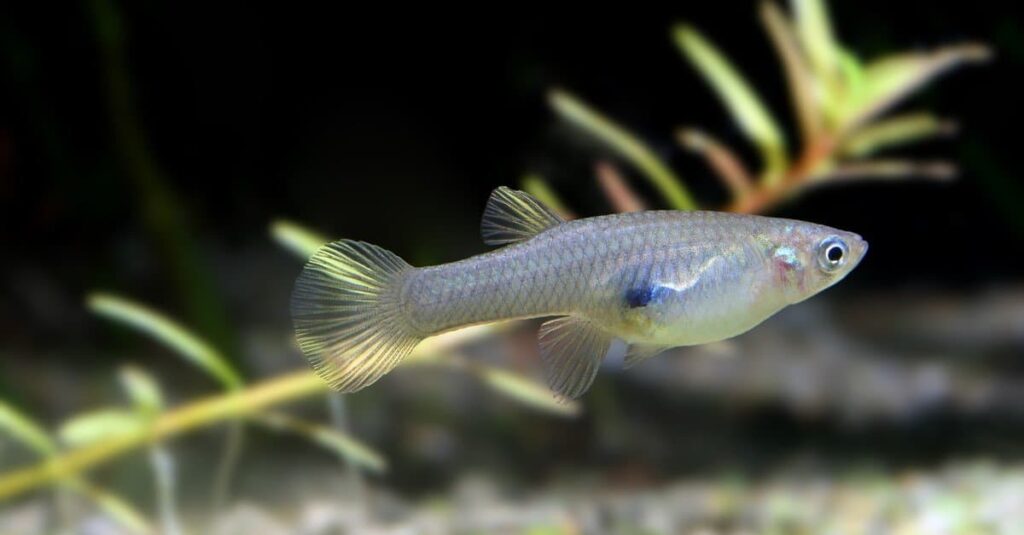
Female mosquitofish can consume as much as 300% of their own body weight in mosquito larvae in one day.
©topimages/Shutterstock.com
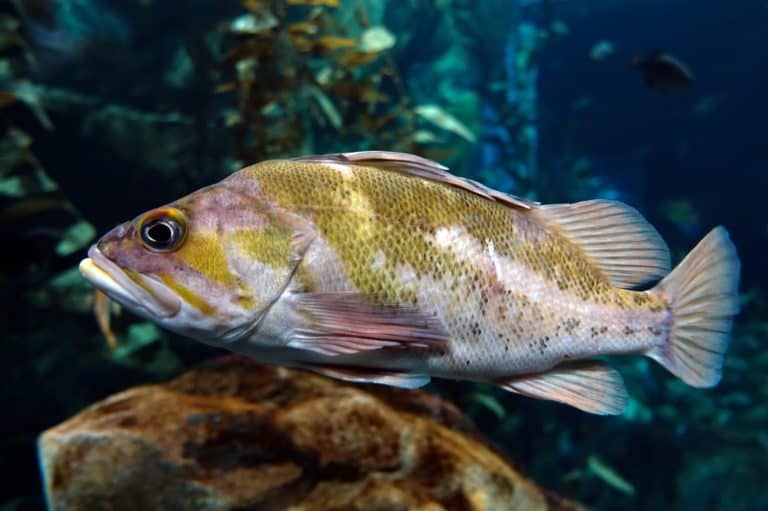
Fathead minnows, for example, may venture down to lower water depths but will happily rise to the surface to eat mosquito larvae. Topminnows, on the other hand, monitor the water surface and use their upward-pointing mouths to scoop up larvae.
While these fish eat mosquitoes, they pale in comparison to one of nature’s best pest controllers: the mosquitofish. Small and unassuming, mosquitofish live up to their name. They thrive in poor-quality, warm water—ideal conditions for mosquito larvae—and can consume up to 100 mosquito larvae in a single day.
Rid the Pests
It’s easy to overlook the little fish that loiter near the water’s surface. They may not be prized by fishermen, but they are one of the frontline defenses against deadly mosquito-borne diseases. Furthermore, fish like minnows and mosquitofish eat mosquitoes before they can take flight. This wipes out potentially deadly mosquito populations without the need for harmful chemicals.
Such mosquito-chomping prowess has incentivized various government agencies to distribute mosquitofish into abandoned swimming pools, ornamental ponds, and even horse troughs. However, there is always a trade-off, as mosquitofish are also aggressive and prolific breeders. As such, environmental agencies caution that such distribution tactics should avoid open waterways.
It’s easy to forget that while you’re busy applying mosquito repellent, small fish are doing the real work by controlling mosquito populations at nearby water sources.