
Quick Take
- The wind direction that triggers upwelling isn't what most people would guess, and surprisingly it has nothing to do with blowing water away from shore. See how wind direction works →
- Sharks crowd closer to shore every July, though swimmers aren't the reason why. See which sharks arrive →
- When the upwelling winds pause, the feeding frenzy does not stop. It actually intensifies. See what relaxation events bring →
- A microscopic plant most people have never heard of is what draws blue whales, orcas, and great whites all to the same stretch of coastline. Meet the microscopic trigger →
Every July, something invisible happens in the ocean waters along the west coast of the United States. It’s a phenomenon that draws marine life—species that typically stay in deeper water—close to shore. And it only takes a slight change in the wind to make it happen.
Scientists call the phenomenon “upwelling,” and it’s an annual occurrence that fuels a short-lived feast for whales, sharks, and even shorebirds up and down the coast.
What Causes Upwelling?
Upwelling is a fairly simple process. When strong winds blow along the coast, they push the warmer surface waters out to sea. Those warmer waters get replaced by deeper water that rises to the surface. That water is much colder, typically between 50 and 55 degrees Fahrenheit along the California coast.
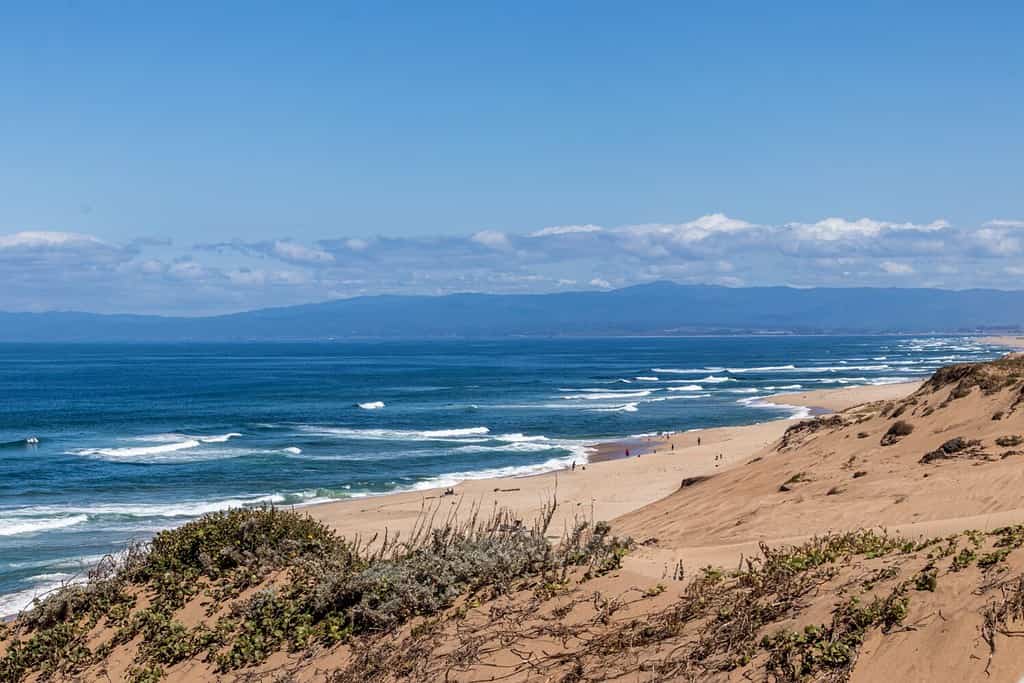
Monterey Bay in California is a hot spot for witnessing the upwelling phenomenon.
©Anne M Vallone/Shutterstock.com
That colder water brings more than just lower temperatures to the shoreline. It is also loaded with nutrients that thrive in the colder temperatures, like nitrates and phosphates that were previously trapped on the ocean floor. Those nutrients are exactly what species like krill need to thrive.
This upwelling happens along coastlines and in the open ocean, and it is all wind-dependent.
The Coriolis Effect
While you’d think only wind blowing away from land and toward the open ocean creates upwelling, that isn’t always the case. It’s usually the wind that blows parallel to coastlines that prompts upwelling. Why? It all has to do with the Earth’s rotation.
This effect is driven by another ocean phenomenon called the Coriolis Effect. As the Earth rotates and wind blows along the coast, these forces work together to create a vacuum at the water’s surface, pulling colder water upward while pushing warmer water out to sea.
The Plankton Explosion
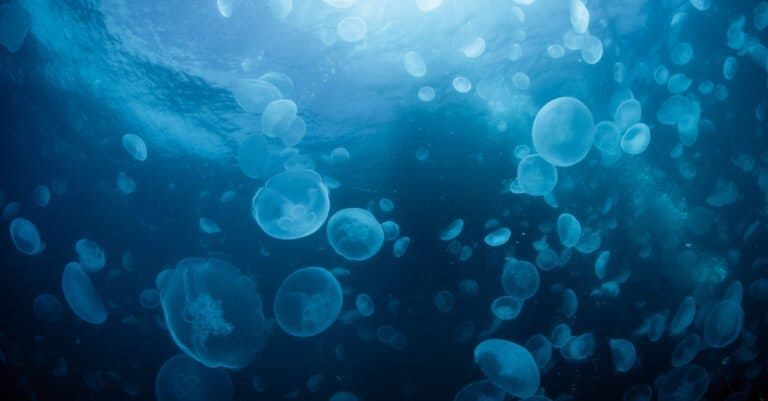
All those nutrients pulled up from the ocean floor have a significant purpose. They support the explosive growth of phytoplankton, causing a bloom of tiny floating plants that multiply quickly. As the phytoplankton bloom grows, it also drifts naturally with the ocean currents. As it drifts, zooplankton like krill and other small fish swarm in to eat the phytoplankton bloom.
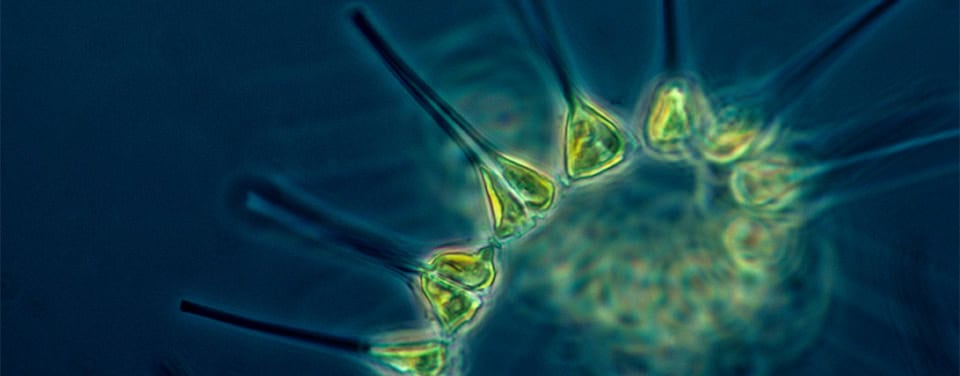
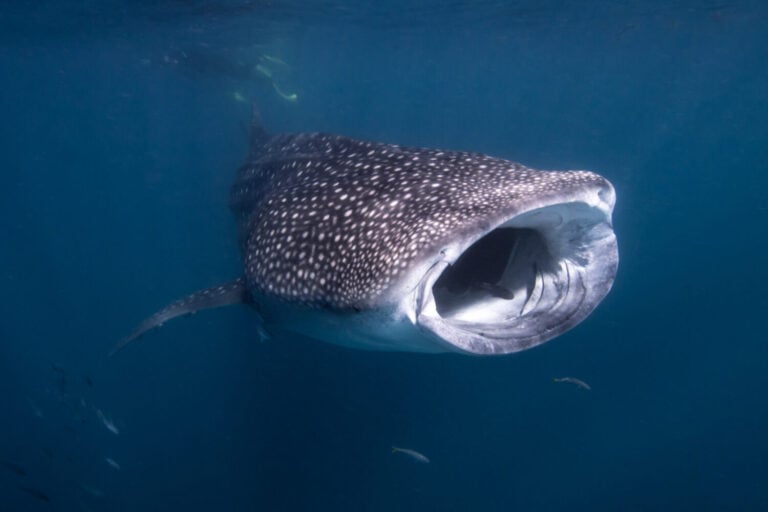
Phytoplankton are microscopic plants that are a main food source for krill and small fish.
The peak bloom time for the phytoplankton happens in July along the California coast. The blooms can get so thick that they cut visibility for scuba divers and spearfishers in the area.
As the zooplankton and fish devour the phytoplankton, the entire mass drifts along ocean currents toward feeding hotspots for the next predators up the food chain.
Who’s Coming to Dinner?
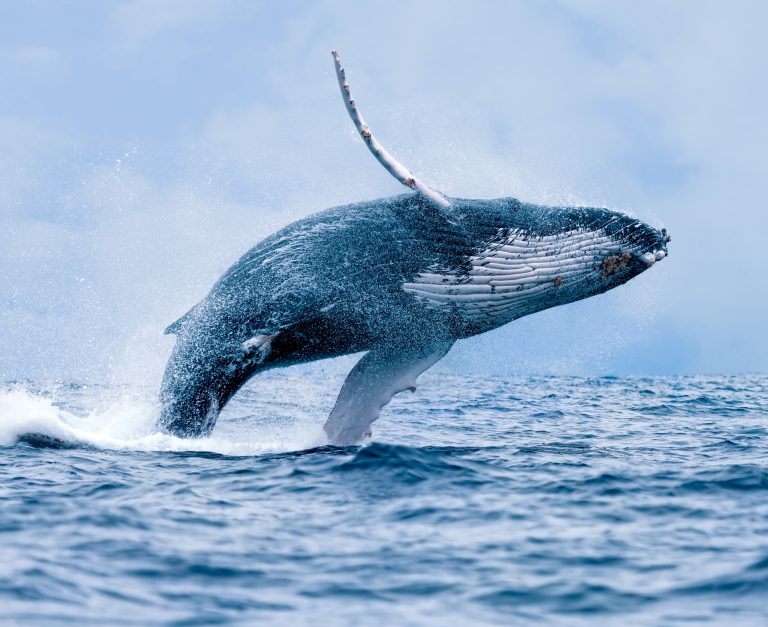
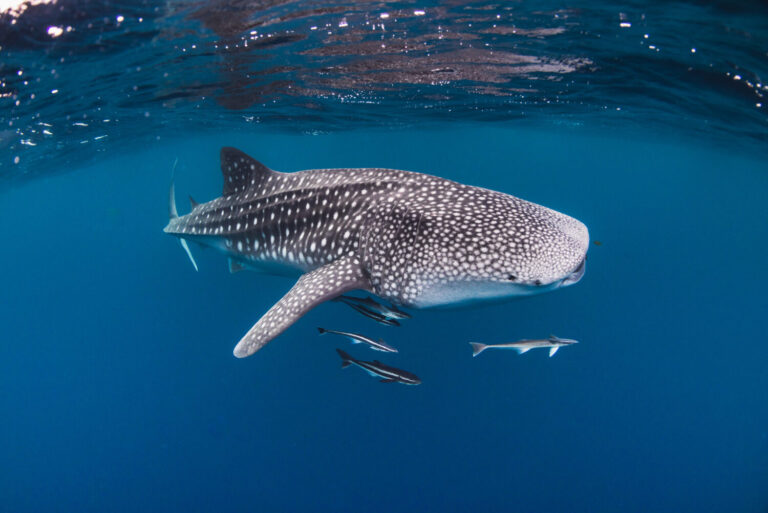
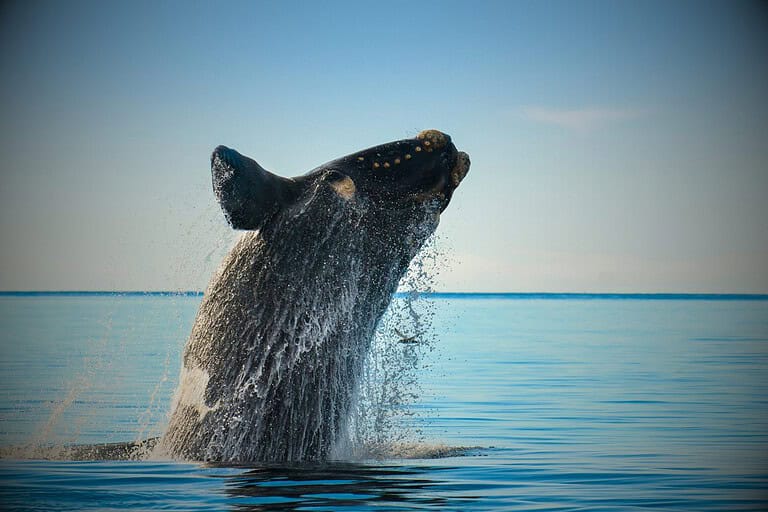
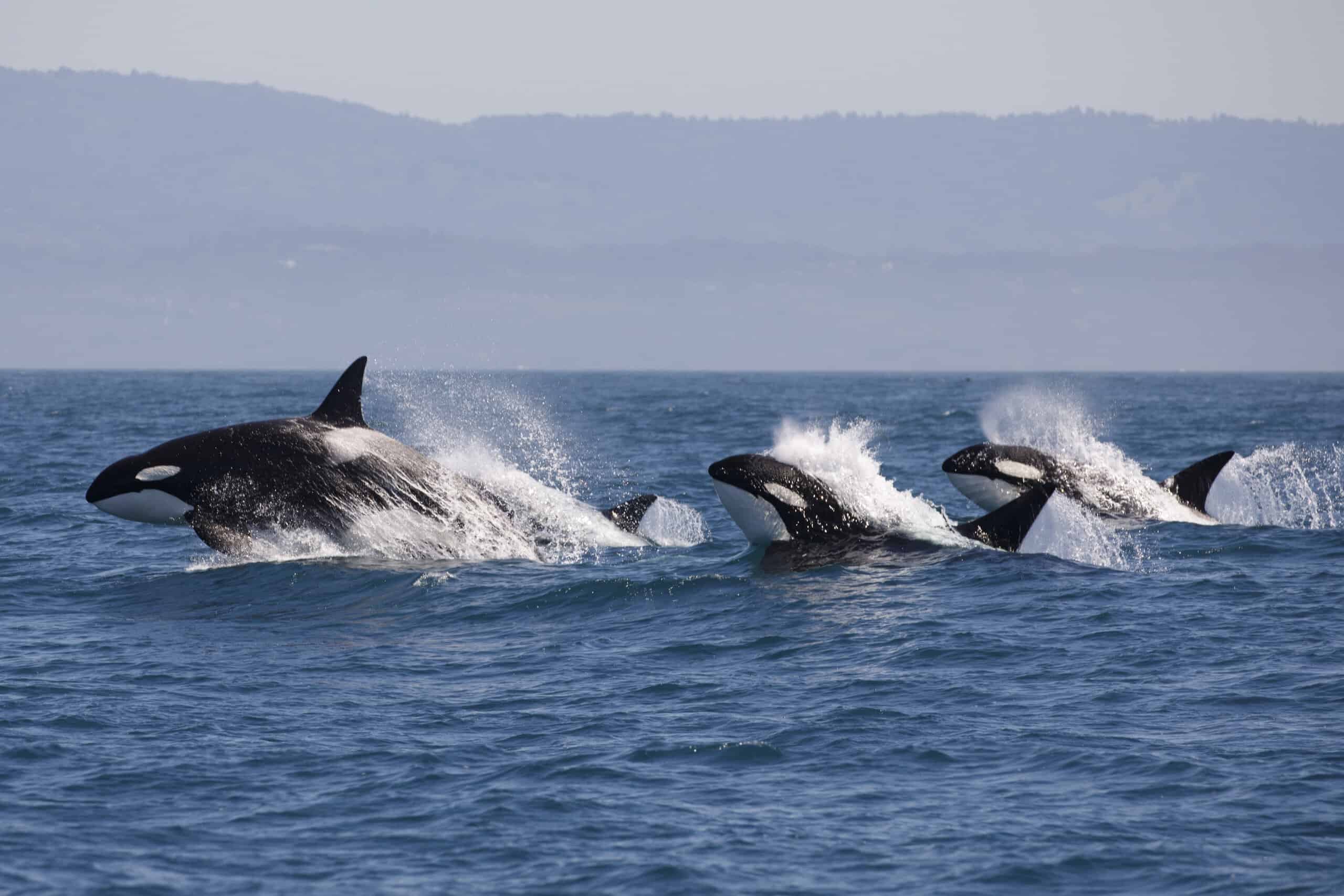
The concentration of krill and tiny fish creates an all-you-can-eat buffet for the species that love to eat them. This includes whales, sharks, and seabirds. During the peak upwelling season of July along the California coast, you’re very likely to see blue whales, killer whales, great white sharks, dolphins, sea lions, and more than 180 species of seabirds and shorebirds throughout the Monterey Bay National Marine Sanctuary.
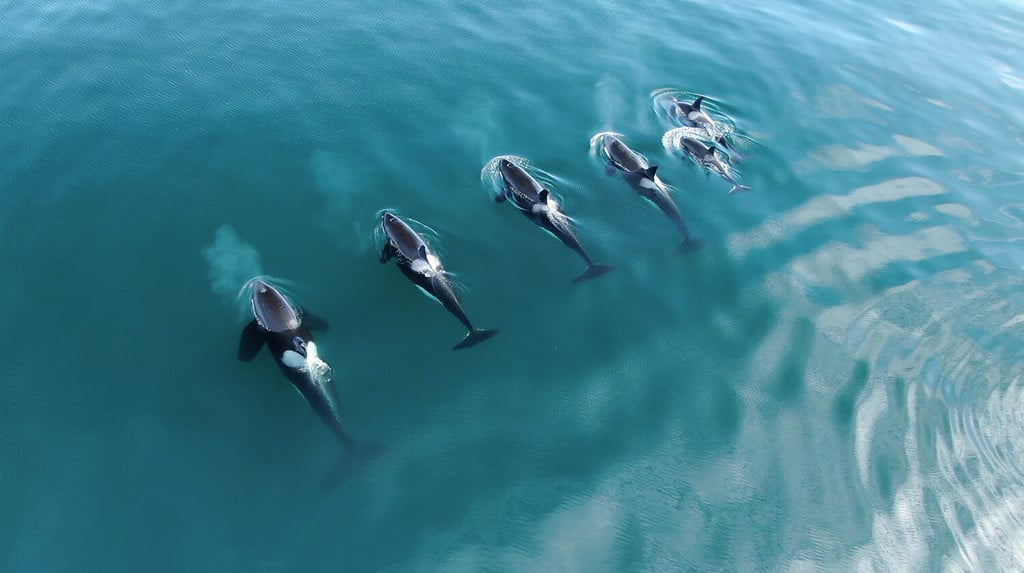
Orcas, also known as killer whales, are just one of the marine species attracted by upwelling.
©Willyam Bradberry/Shutterstock.com
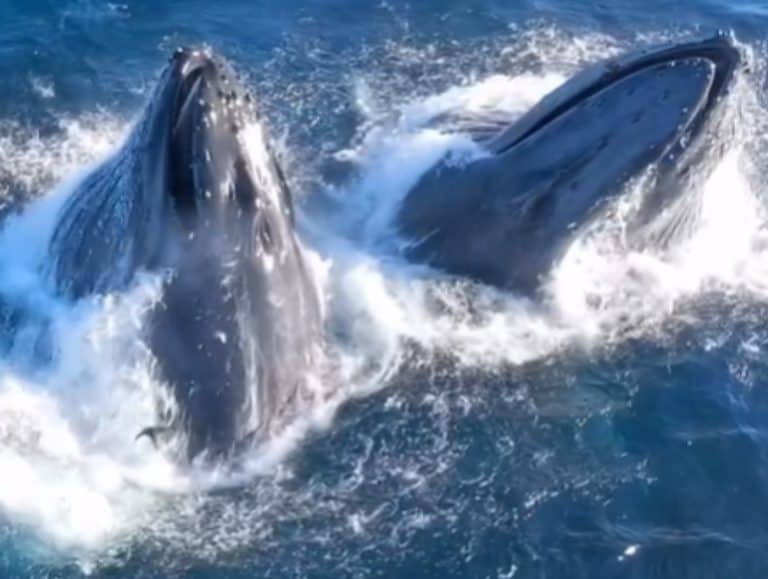
Further out to sea, in places like the Farallon Islands around 28 to 30 miles outside the Golden Gate, large groups of humpback and blue whales can often be spotted feeding on the abundant krill supplies. They gulp down huge amounts of krill using a bubble-net method.
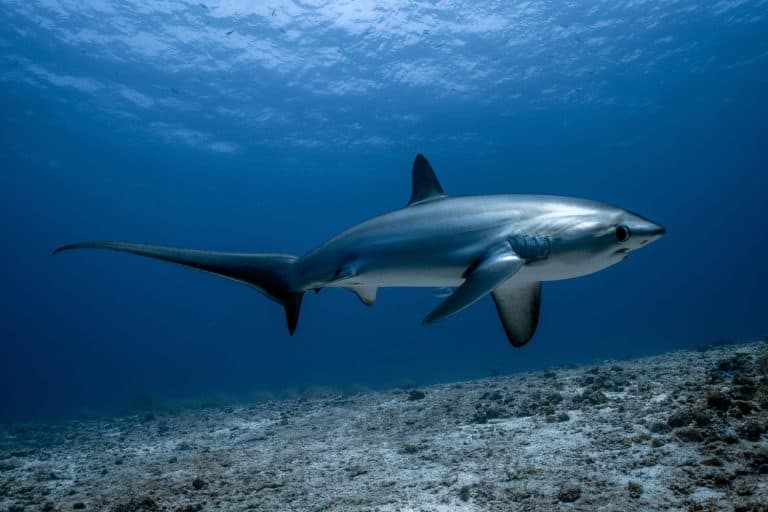
The concentrated food sources are also a reason more sharks are seen closer to shore during July than any other month. They aren’t necessarily attracted by higher numbers of swimmers or surfers, but rather by the presence of so much natural prey.
How Long Does the Upwelling Last?
Rather than being a single event, upwelling actually occurs in cycles. Upwelling-favorable winds typically blow for a week or two, then subside. While these winds are present, upwelling occurs; when the winds die down, upwelling stops. Sometimes, the winds may even reverse, causing the opposite of upwelling, called “downwelling.” This is when warmer waters return to shore, and the colder waters sink back down.
Typically, there are only brief pauses between upwelling events. When the seas calm, nutrients accumulate, helping to fuel even larger blooms. The larger the bloom, the easier it is for krill and other organisms to find and feed on it.

Phytoplankton blooms can be easily seen from above.
©GizemG/Shutterstock.com
The pauses between upwelling cycles are called “relaxation events” by scientists and researchers.
Along the California coast, the peak upwelling season runs generally from April through June, when seasonal winds blow the strongest.
What Happens When the Winds Die Down?
Starting around August, California’s coastal waters enter what scientists call the “oceanic season.” This is when warmer, more settled water moves in. It’s also when the different water temperatures cause the water column to form layers, with the warmest water at the top.
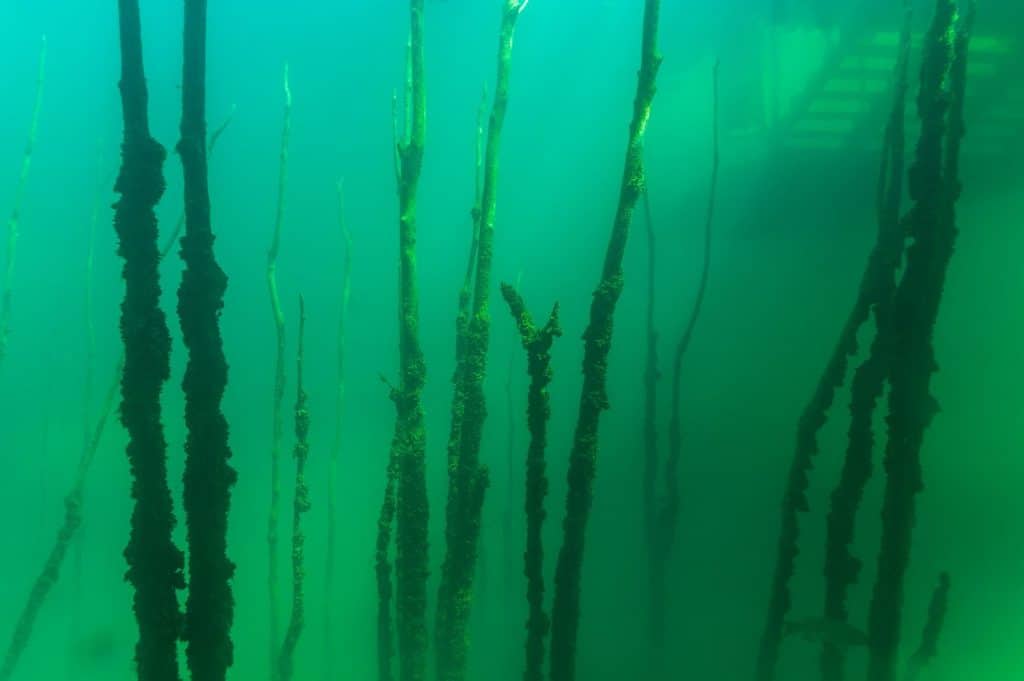
At the point where the warmer water layer meets the colder water, a thermocline will form and sometimes create hazy conditions.
©Focused Adventures/Shutterstock.com
The meeting point where the warmer layer meets the colder layer is known as a “thermocline.” It’s often visible to scuba divers as they descend — a thin, hazy layer that’s easy to spot. Even if you can’t see it, a diver can feel it as the water drops several degrees.
As the colder water sinks deeper, the nutrients go with it. The marine animals that gathered for the feast then move on to their next destination.