
Quick Take
- Colorado winter birds vary by elevation. High-country birds move to valleys when conditions are harsh.
- Dark-eyed juncos arrive from higher elevations and forage on ground. Offer millet or cracked seed on the ground or low platforms.
- Wash feeders regularly and keep them dry. Place near cover and at a good distance from windows to avoid collisions with the glass.
Colorado winters are a mix of brilliant sunshine, deep freezes, and sudden snowstorms, and birds respond to these conditions differently depending on where they live. Elevation matters here more than in many other states. Birds in the high country often shift down into valleys when conditions become too harsh, while birds from farther north may move into Colorado for the winter. Whether you’re on the eastern plains, the Front Range, or in a mountain town, backyard feeders take on extra importance when natural seeds and insects become buried under snow or locked away by ice. Knowing which species are likely to drop in during winter helps you set up feeders that both support those birds and give you great views of their seasonal routines.
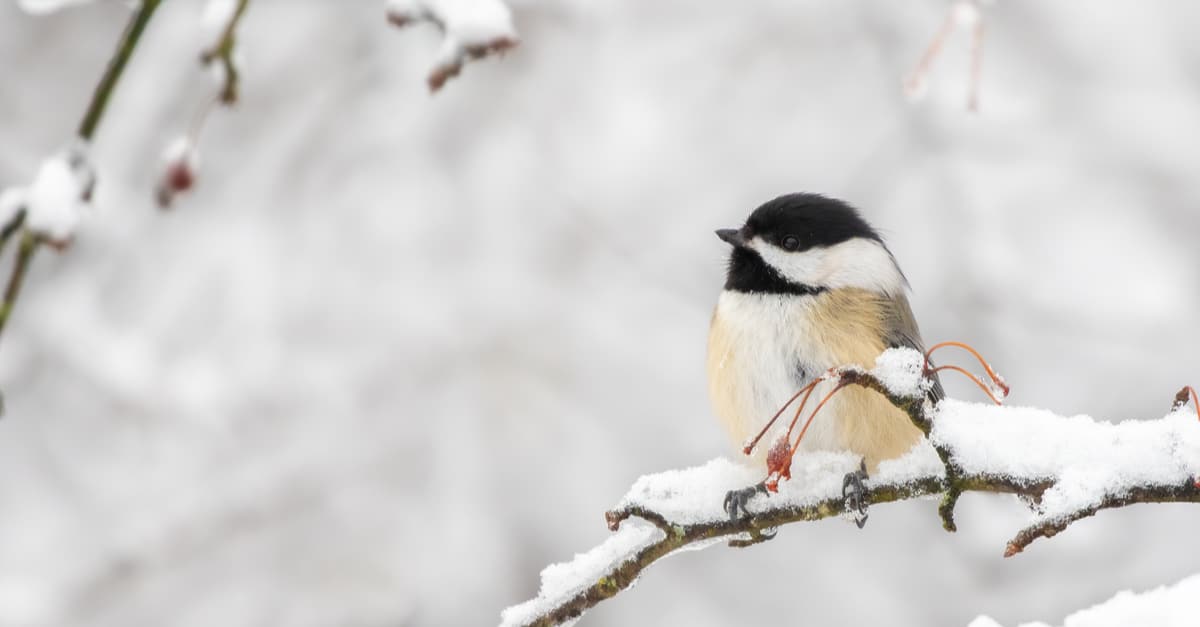
Black-Capped Chickadee (Poecile atricapillus)
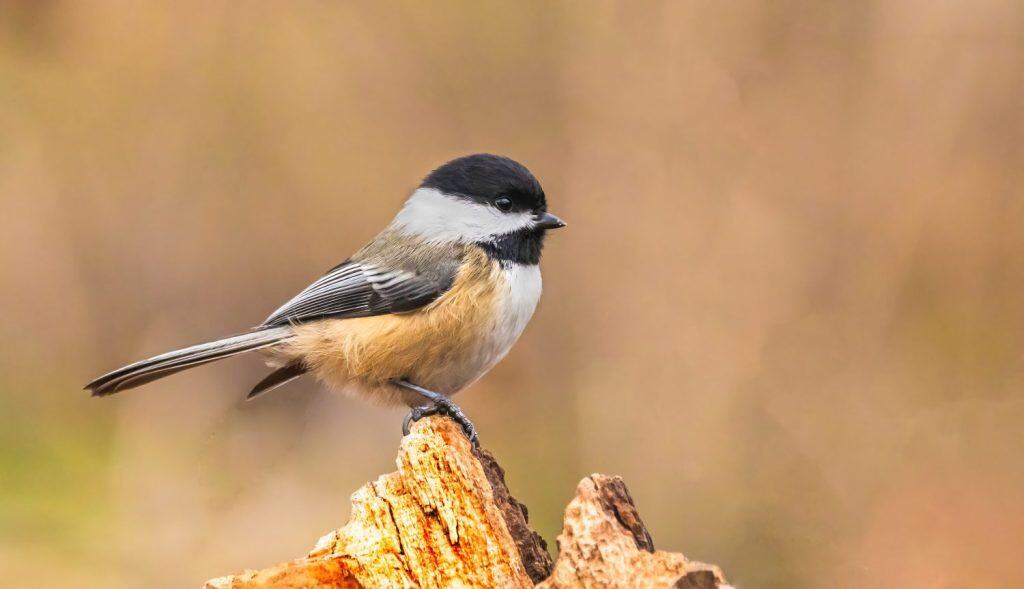
Black-Capped Chickadee (Poecile atricapillus)
©Elle777/Shutterstock.com
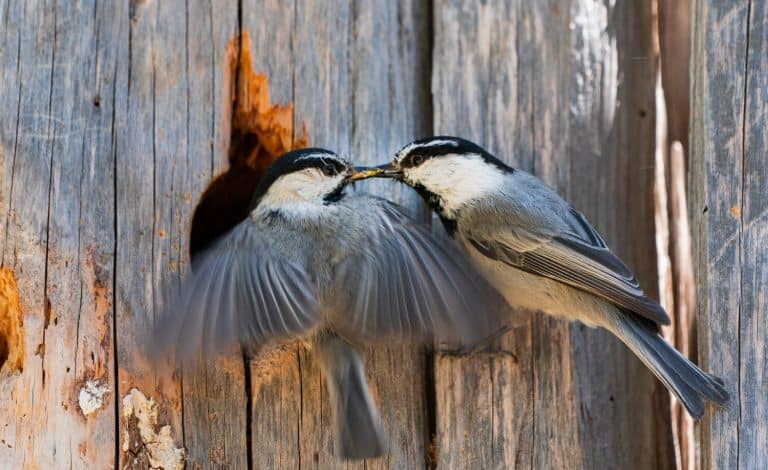
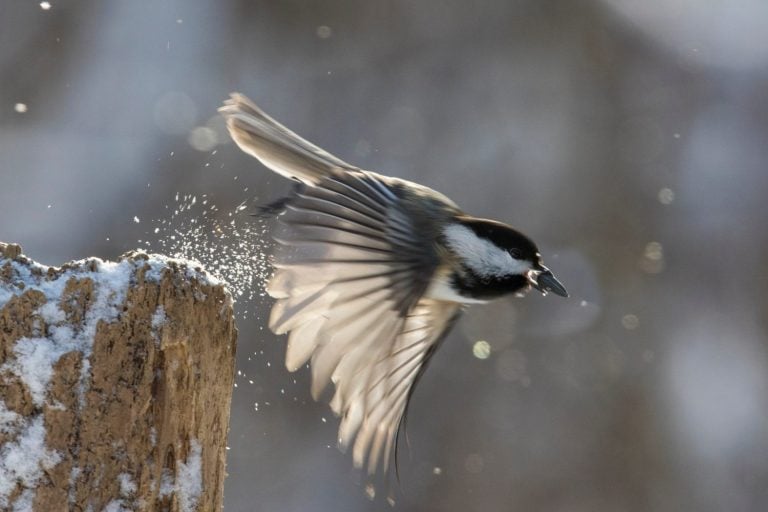
These are some of the most charming winter feeder birds in Colorado. They’re year-round residents in many forested and semi-wooded parts of the state, especially along the Front Range and forests. Sporting a crisp black cap and bib, bright white cheeks, gray back, and warm buff-colored sides, chickadees bring a high-contrast look to snowy branches.
During winter, chickadees often team up with nuthatches and small woodpeckers, traveling in mixed flocks from one foraging spot to another. Each species has its own strengths in spotting predators, so as a combined group they multiply their advantages. At feeders, chickadees are enthusiastic fans of black oil sunflower seeds, sunflower hearts, and peanut pieces. True to their personality, they usually take just one piece of food and fly off to eat or store it. Their curiosity and clear calls make them delightful winter companions, especially against a still, frozen backdrop.
Dark-Eyed Junco (Junco hyemalis)
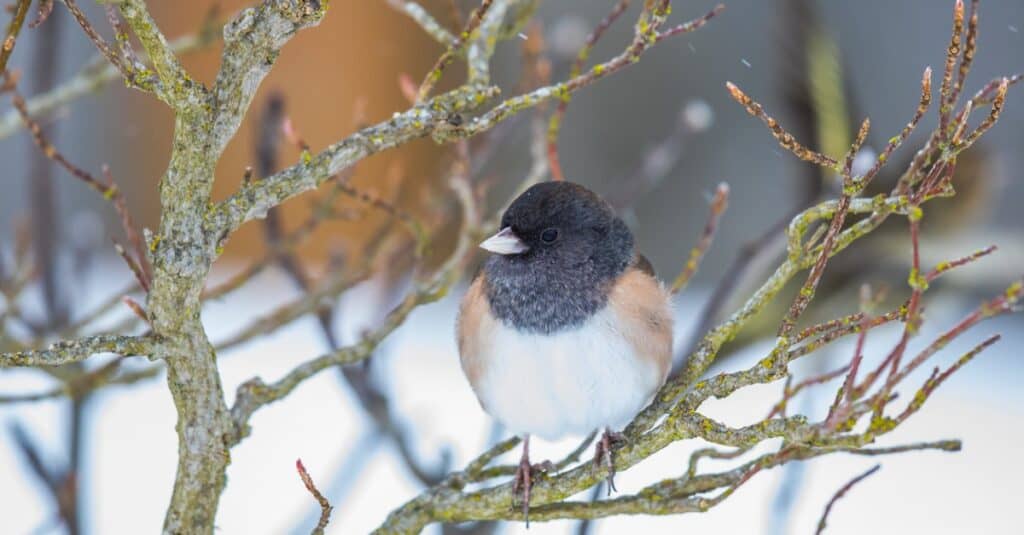
Dark-Eyed Junco (Junco hyemalis)
©iStock.com/Jeff Huth
The dark-eyed junco is one of Colorado’s classic winter visitors — the “snowbird” that many people first notice once cold weather settles in. These birds come in different subspecies, but most show some combination of gray or brown upperparts, a pale belly, and white outer tail feathers that flash dramatically as they fly.
In summer, many juncos breed in high-elevation forests or farther north. Once winter approaches, they move into lower valleys, foothill towns, and Front Range neighborhoods. They’re almost always ground feeders, hopping and scratching with both feet to uncover seeds on bare patches or lightly snow-covered areas. Backyards offering millet and cracked sunflower scattered on the ground or placed on low platform feeders tend to attract them. Juncos often arrive in flocks, bringing constant motion to the area beneath your feeders.
Brown-Capped Rosy-Finch (Leucosticte australis)

Brown-Capped Rosy-Finch (Leucosticte australis)
©iStock.com/Carl Bendorf
The brown-capped rosy-finch is one of Colorado’s most distinctive winter birds, and a real mountain specialty. This species breeds primarily in Colorado, with small populations also found in northern New Mexico, nesting on high cliffs and rock faces above the tree line. During summer, rosy-finches survive in some of the harshest alpine terrain in North America, feeding on insects and seeds in areas far beyond easy human reach.
When winter hits the alpine zone bringing intense winds, deep snow, and bitter cold, brown-capped rosy-finches move downslope in search of accessible food. Mountain towns, ski resorts, and high-elevation communities sometimes see entire flocks descend onto feeders. Adults have warm brown heads and upperparts with rosy or pinkish tones on their wings and bellies, especially in males. Feeders stocked with mixed seeds or cracked corn are most likely to attract these high-mountain visitors. For many Coloradans and seasonal tourists, seeing rosy-finches up close is a rare and unforgettable winter experience.
House Finch (Haemorhous mexicanus)
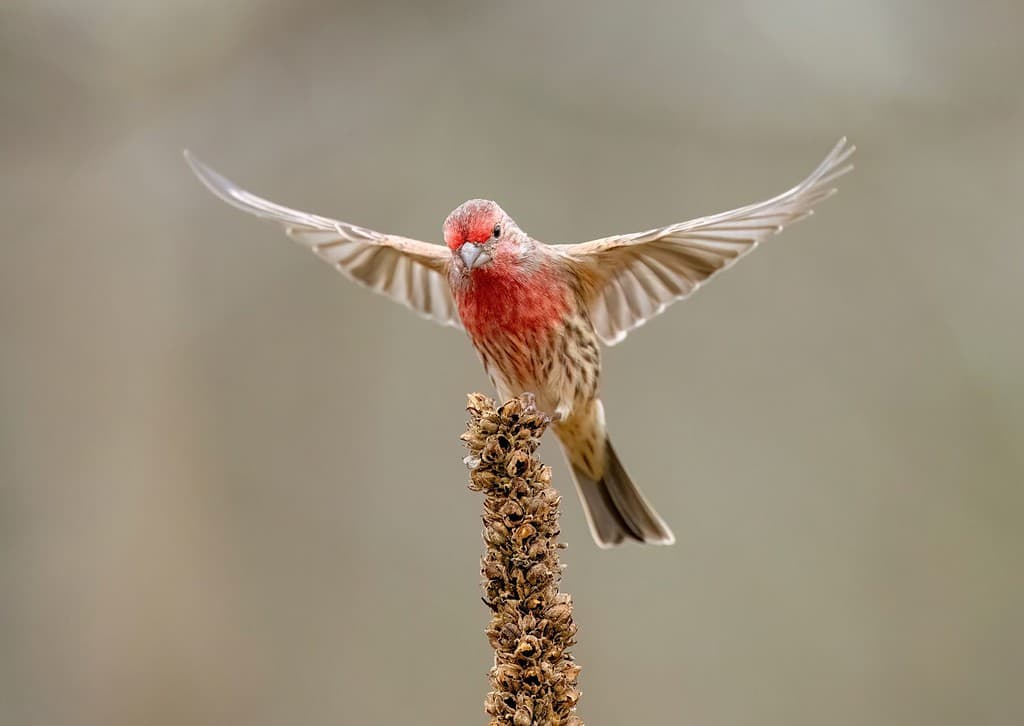
House Finch (Haemorhous mexicanus)
©Jeff Caverly/Shutterstock.com
These gorgeous finches are widespread across Colorado, especially along the Front Range and in lower-elevation cities and towns on the eastern and western slopes. These adaptable birds thrive in human-dominated landscapes, nesting in ornamental trees, hanging planters, and building ledges.
Males typically show red on their heads, chests, and rumps, though shades can vary depending on their diet. Females are brown and streaked, blending easily into winter backgrounds. During the colder months, house finches gather at tube and hopper feeders, especially those offering black oil sunflower seeds, sunflower hearts, and mixed seed. Their warm colors and cheerful, warbling songs help brighten even the chilliest winter days.
Downy Woodpecker (Dryobates pubescens)
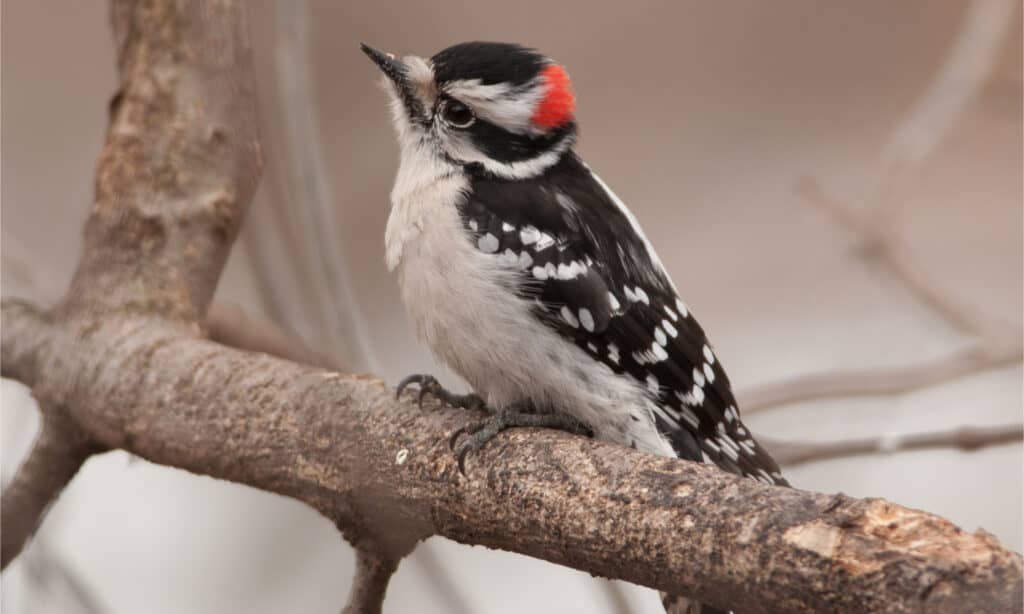
Downy Woodpecker (Dryobates pubescens)
©Gerald A. DeBoer/Shutterstock.com
The downy woodpecker is the smallest woodpecker in Colorado and a regular presence at winter feeding stations in wooded areas. Black and white with a checked back and clean white underparts, downies are easy to recognize. Males also have a small red patch on the back of the head.
These woodpeckers occur in woodlands along rivers, foothill forests, and tree-filled neighborhoods along the Front Range and in parts of the Western Slope. They spend much of their time probing trunks and branches for insects, but in winter they switch readily to suet feeders. Downies also enjoy sunflower seeds and peanut pieces from hopper and platform feeders. It’s common to see them traveling with chickadees and nuthatches in mixed flocks during the coldest months.
Northern Cardinal (Cardinalis cardinalis)
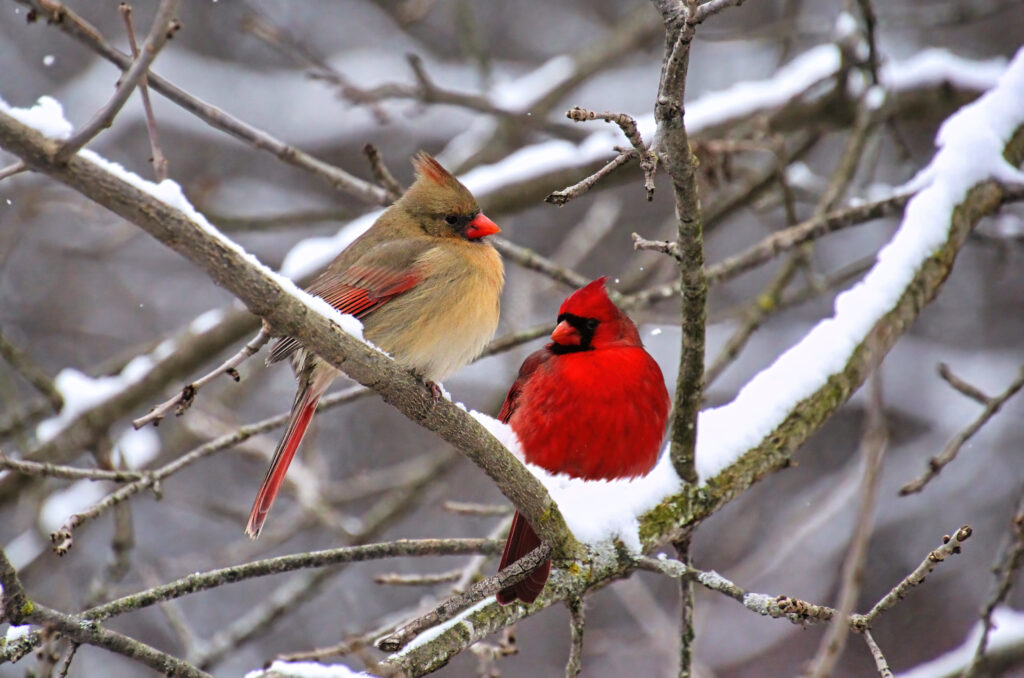
Northern Cardinal (Cardinalis cardinalis)
©iStock.com/Hongkun Wang
The northern cardinal, long associated with the eastern United States, has slowly expanded its range westward and is occasionally recorded in parts of eastern Colorado, with rare sightings in the Front Range. Males are brilliant red with a black face mask and pointed crest, while females are soft brown with red accents on their wings, tails, and crests.
Cardinals prefer shrubby habitats, riparian corridors, and yards with thick vegetation. They’re most likely to be found in the eastern plains and in some urban areas where ornamental plantings provide food and cover. In winter, they visit platform and hopper feeders stocked with black oil sunflower seeds, safflower, and other large seeds. Their clear whistled songs cut through cold morning air, flowing joyfully across snow or dry winter grasses.
Blue Jay (Cyanocitta cristata)
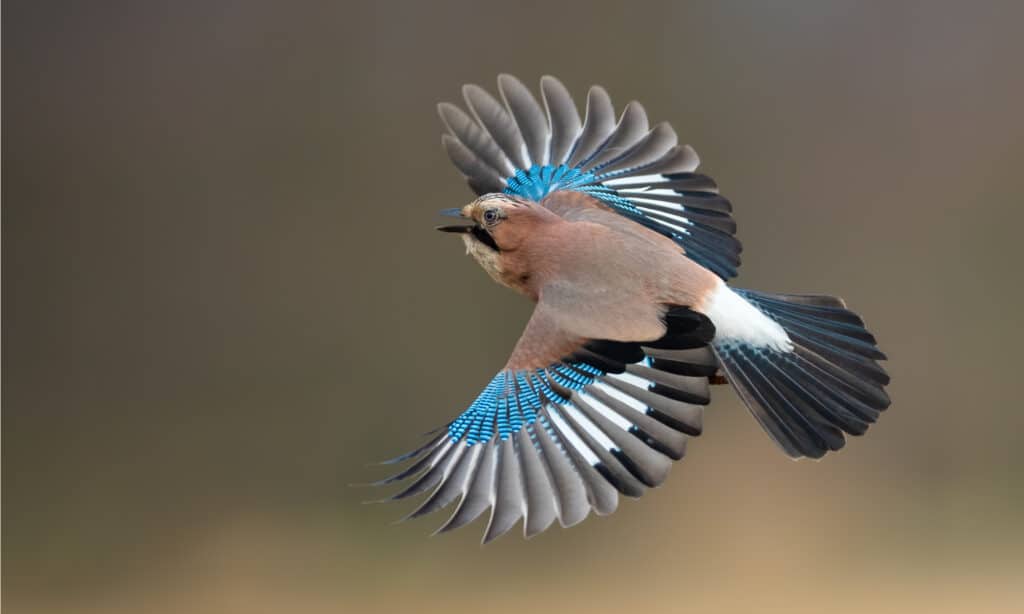
Blue Jay (Cyanocitta cristata)
©Rafal Szozda/Shutterstock.com
Bold and intelligent, blue jays appear in many forested and semi-wooded parts of Colorado, especially in foothill communities and lower mountain neighborhoods. With bright blue upperparts, a white face and belly, a black collar, and a distinctive crest, they’re impossible to miss.
These highly social birds often travel in small groups and use a wide range of calls, from harsh screams to surprisingly soft notes. In the wild, they help distribute acorns and other nuts by burying them, sometimes forgetting where they left them. It’s pretty amazing to think about: they are actually planting the forests that will one day feed their descendants. At feeders, blue jays especially enjoy whole peanuts, sunflower seeds, and corn. Though they can sometimes bully smaller birds, their intelligence, beauty, and personality make them one of the most entertaining backyard visitors.
White-Breasted Nuthatch (Sitta carolinensis)
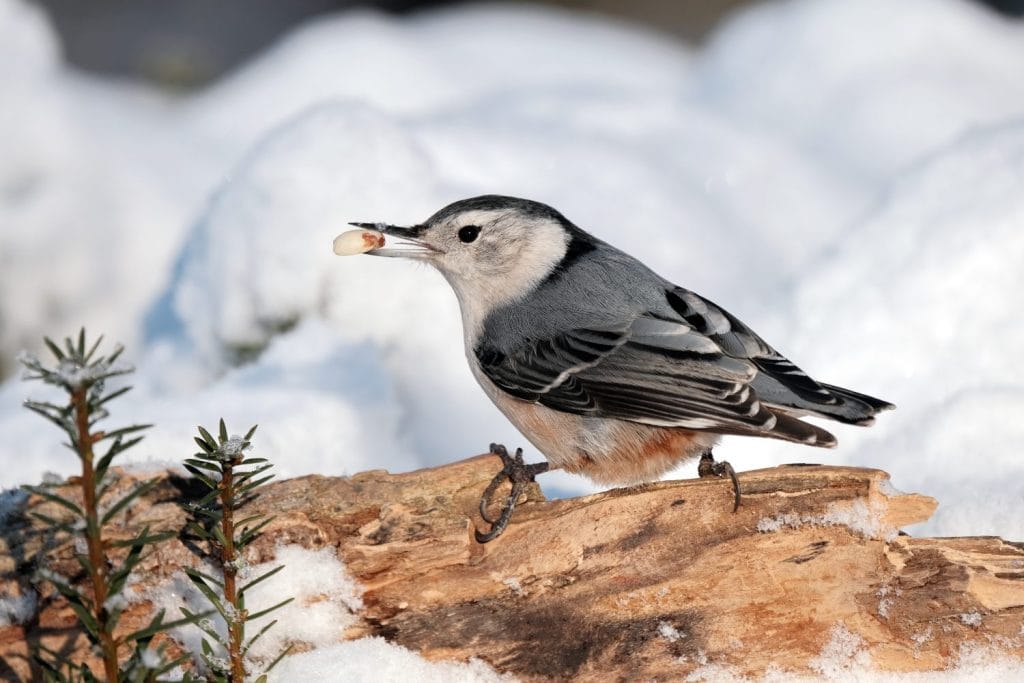
White-Breasted Nuthatch (Sitta carolinensis)
©Jim Nelson/Shutterstock.com
The white-breasted nuthatch brings acrobatic flair to winter feeders. This compact bird has a blue-gray back, white face and belly, and a black or dark gray cap. Its slightly upturned bill and habit of moving headfirst down tree trunks make it easy to recognize.
Found year-round in many of Colorado’s woodlands — including foothill forests, riparian areas, and older neighborhoods with tall trees — nuthatches become especially noticeable in winter. They often join wandering flocks of chickadees and downy woodpeckers, moving together from one food source to another. At feeders, they enjoy sunflower seeds, peanuts, and suet. True to nuthatch style, they usually grab a single piece of food, fly to a trunk or branch, and tuck it away in bark crevices for later. Their echoing “yank-yank” calls carry through snowy yards and wooded campgrounds.
Best Practices for Winter Bird Feeding
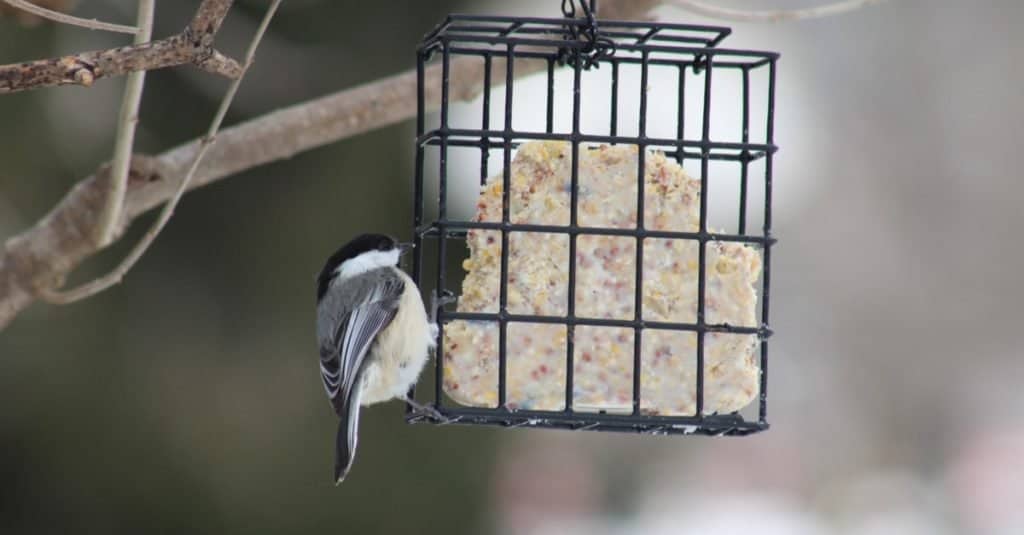
Chickadee feasting on suet at a bird feeder.
©Wade Lamb/Shutterstock.com
Feeding birds through a Colorado winter works best when you focus on clean feeders, good-quality food, and thoughtful placement. An assortment of feeder styles — tube feeders, hopper feeders, platform feeders, and suet cages — allow you to accommodate birds with different feeding behaviors. Wash feeders regularly with a mild bleach solution, rinse thoroughly, and let them dry before refilling. This helps prevent disease from spreading among birds that gather closely during cold months. Throw out any seed that looks wet, moldy, or clumped.
Offer a variety of foods to attract the widest range of birds:
• Black oil sunflower seeds for cardinals, chickadees, finches, and nuthatches
• Nyjer for finches
• Suet for woodpeckers and insect feeders
• Peanuts for jays, woodpeckers, and nuthatches
Place feeders near trees or shrubs that offer cover from wind and predators but avoid thick brush directly underneath where cats or other predators can hide. To reduce window strikes, break up reflections with decals, patterned film, or external screens. Position feeders either within about three feet of windows or beyond ten to twelve feet to reduce the risk of birds hitting the glass at high speed.
Colorado’s Winter Birds Offer a Window Into the Season
Winter bird watching in Colorado brings together species from different elevations and regions, all adapting in their own ways to snow, sunlight, and changing food supplies. Chickadees and nuthatches bring constant activity. Blue jays bring color and confidence. Rosy-finches, when they arrive, create unforgettable mountain moments. By keeping feeders clean, food fresh, and windows safer, you give these birds a helping hand during one of the toughest times of year — and in return, you’ll receive daily reminders of life flourishing in the midst of winter.