
Quick Take
- Working with a honeyguide can transform a hunter's success rate, though this only holds true for those who know what the bird silently expects in return. See what hunters owe the bird →
- Different communities use completely different sounds to call a honeyguide, and the birds have somehow learned to tell the difference. How birds learn local signals →
- Occasionally, a honeyguide leads hunters straight to danger instead of honey, and the real reason behind this behavior defies centuries of cultural explanation. Explore the wrong turns →
- This partnership thrives without domestication or training, which raises the question of how two species negotiated the terms at all. How this partnership took shape →
Honey is a prized resource across many parts of Africa, but wild bee nests are difficult to find. However, some human honey hunters have an unusual ally: the greater honeyguide (Indicator indicator), a small wild bird that leads them straight to the harvest.
The honeyguide flits from tree to tree, calling out to lead human honey hunters directly to a hive. Once the humans open the nest and harvest the honey, the bird is rewarded with access to the remaining wax and larvae — resources it could not otherwise reach on its own.
Continue reading
How Humans and Honeyguides Cooperate
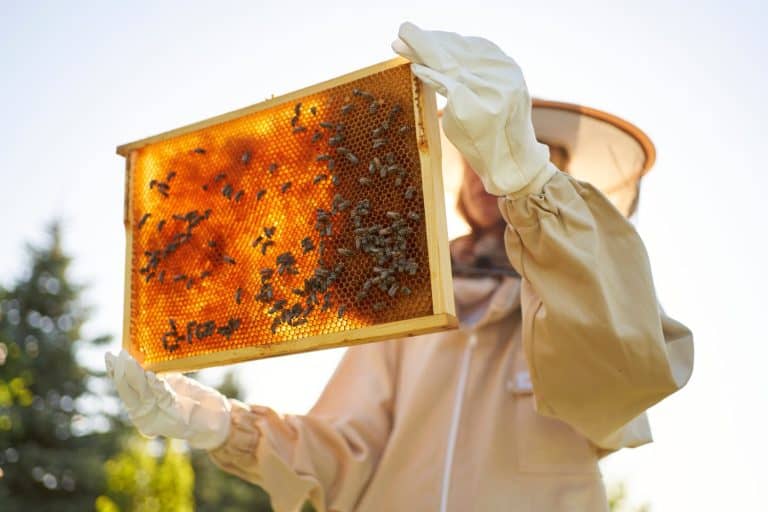
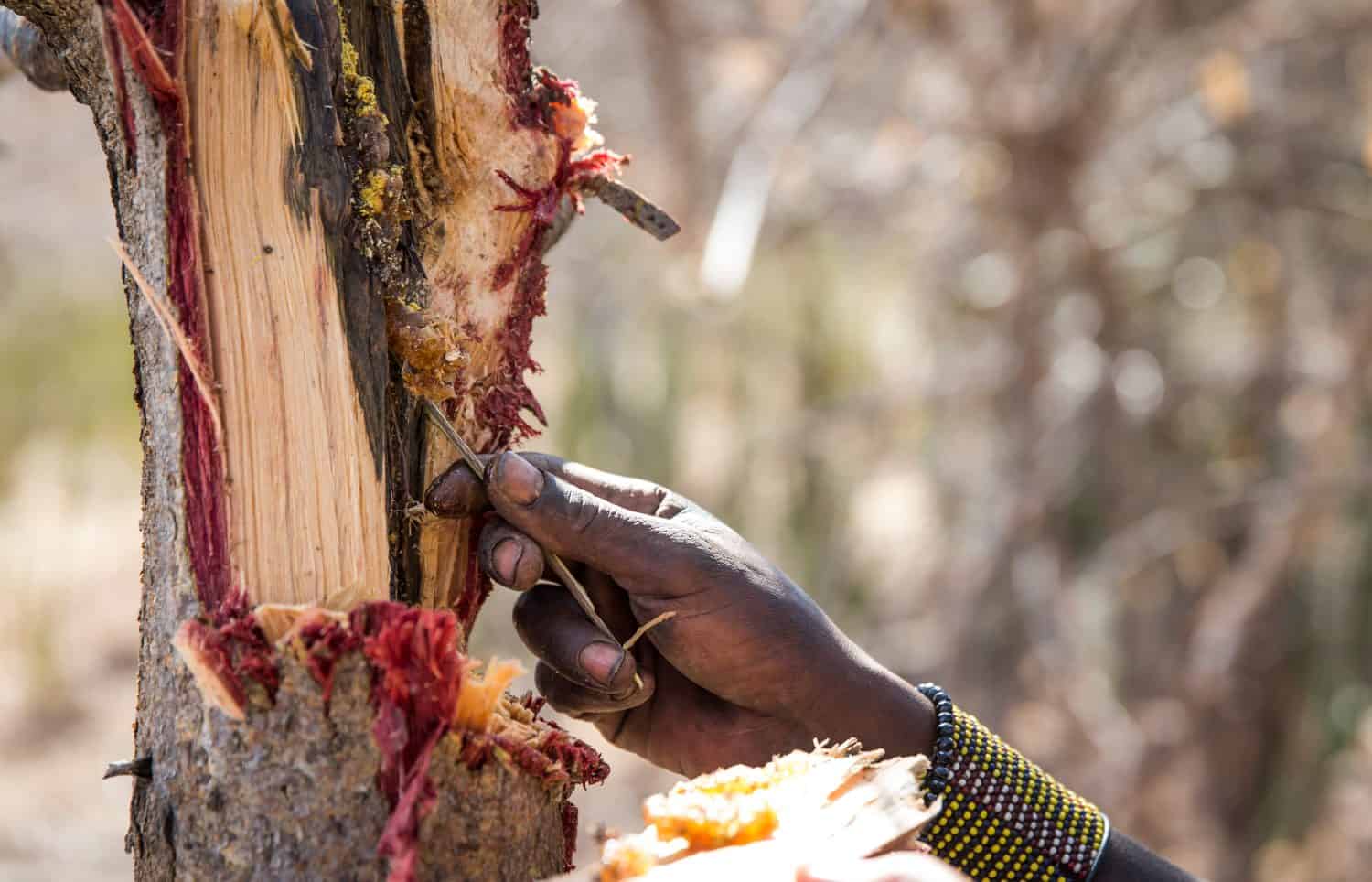
The relationship between wild greater honeyguides and human honey hunters is one of the clearest examples of communication-based cooperation between humans and wild animals. Spotting a bee nest with its sharp vision, the bird catches a hunter’s attention with a distinctive chattering call, then flies from tree to tree to guide them to the hive. Using smoke and tools, the hunter subdues the bees and opens the nest. In the end, both walk away with an easy meal: the human takes the calorie-rich honey, and the bird gains access to beeswax, larvae, and honeycomb.
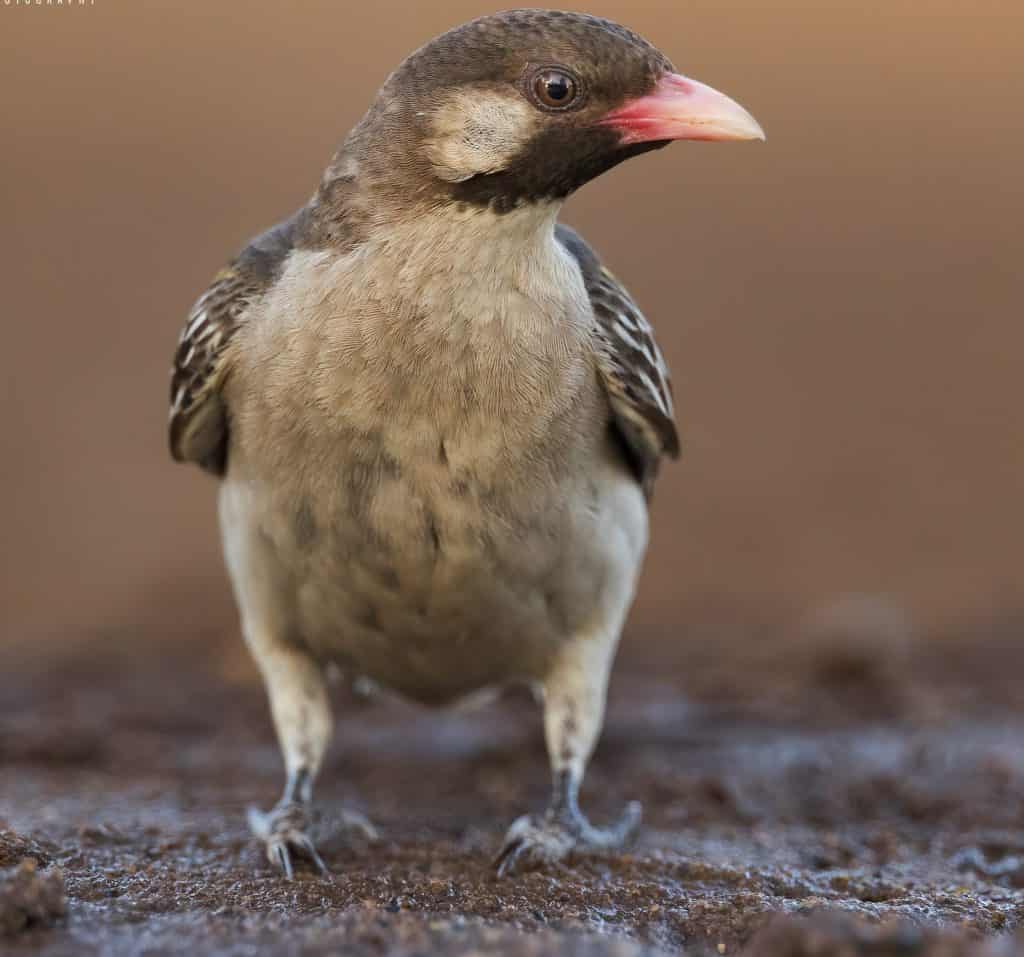
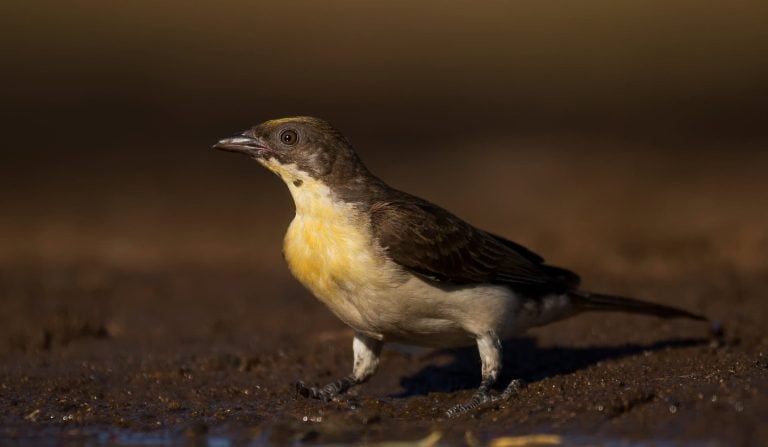
Greater honeyguides are typically 7 to 8 inches long.
©Michael Heyns, CC BY-SA 4.0, via Wikimedia Commons (cropped from original) – Original / License
A Partnership Built on Mutual Rewards
For human honey hunters, working with honeyguides boosts nest-finding efficiency by a staggering 560 percent. Among Tanzania’s Hadza people, wild honey accounts for 8 to 20 percent of their annual diet. In some regions, it also serves as medicine and ceremonial material. Beyond nutrition, honey hunting also reinforces community identity and preserves oral traditions, such as the specialized knowledge passed from father to son among Yao hunters.
The birds reap significant rewards of their own. Because greater honeyguides cannot break into nests on their own, human intervention grants them crucial access to beeswax, larvae, and leftover honeycomb.
To maintain this vital partnership, many communities deliberately leave behind rewards for their avian guides. Cultural traditions warn against stinginess, cautioning that withholding a bird’s fair share brings bad luck, divine retribution, or even a bird that leads hunters directly into the path of a dangerous predator instead of a hive.
Every Community Has Its Own Call
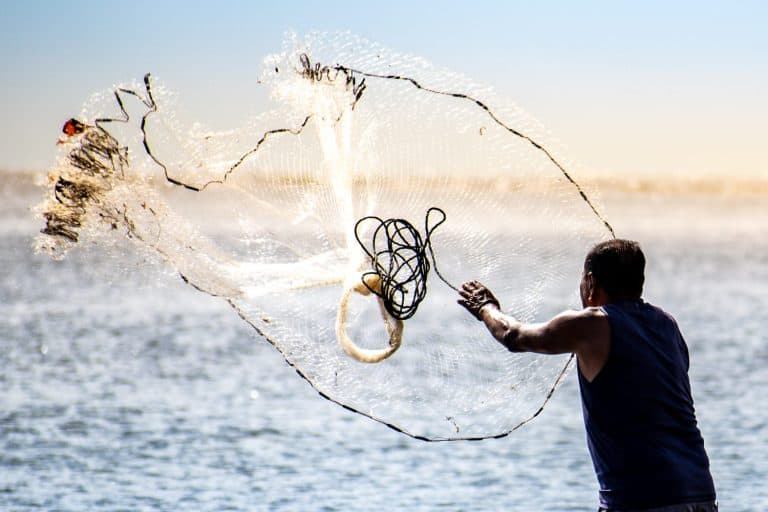
Among the Hadza of northern Tanzania, honey hunters rely on a soft, bird-like whistle. Because they often stalk mammals with bows and arrows while searching for the hives, this quiet signal attracts honeyguides without scaring off nearby game.
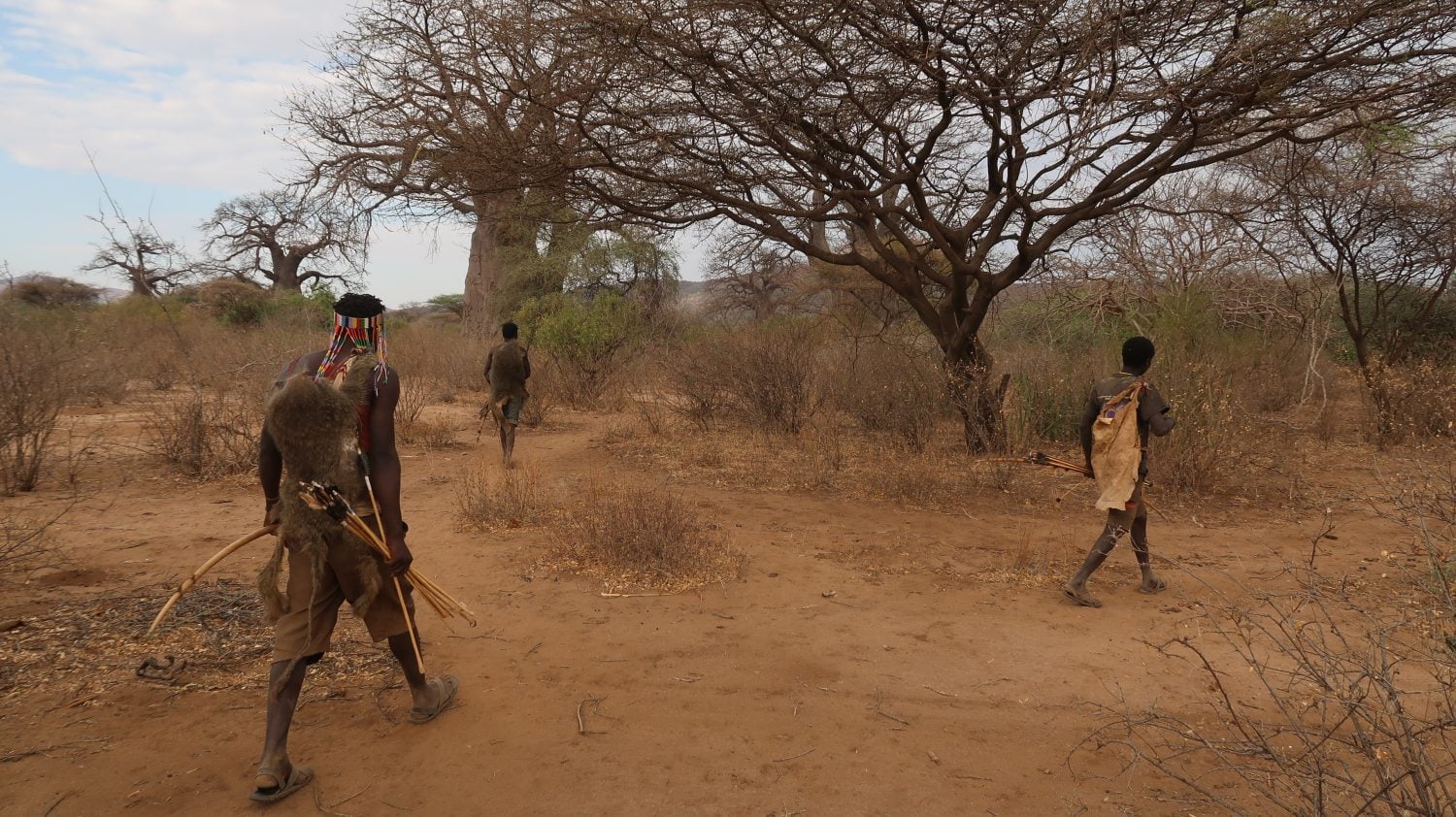
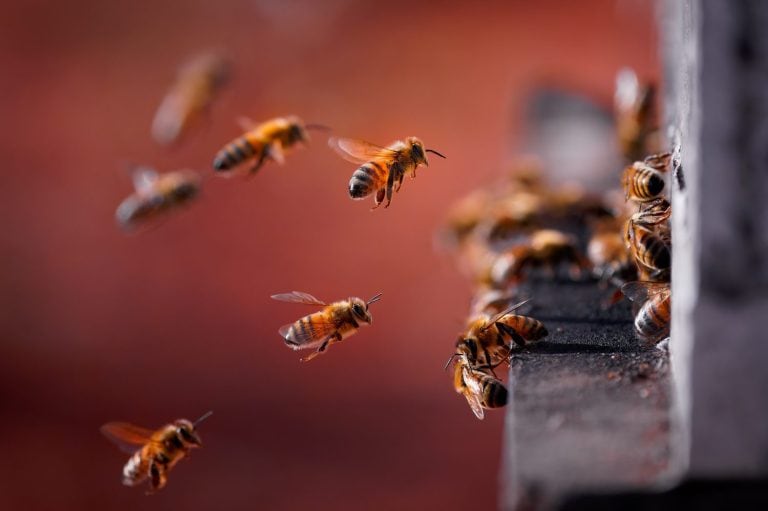
Honey hunters blow smoke into hives to help calm the bees before removing any honey.
©Tvede/Shutterstock.com
In contrast, Yao honey hunters in northern Mozambique use a loud, trilled “brrr-hmm!” call. Since the Yao focus solely on honey during these trips, their loud signal easily cuts through the bush while helping deter dangerous wildlife like elephants and buffalo.
Meanwhile, in Eswatini, honey hunting is largely a recreational pastime for young cattle herders, who use the practice for play and social bonding. They guide the birds using oral whistles, improvised fruit-pod or plastic whistles, tree-striking sounds, and verbal praises.
These distinct regional signals illustrate that the partnership isn’t purely instinctual — it is an active dialogue shaped by human culture.
Honeyguides Learn Their Local “Dialects”
To test whether honeyguides actively recognize local human signals, evolutionary biologists played recorded calls in Tanzania and Mozambique to measure which sounds triggered guiding behavior. They tested three categories in both regions: local traditional calls, foreign traditional calls, and ordinary human speech.
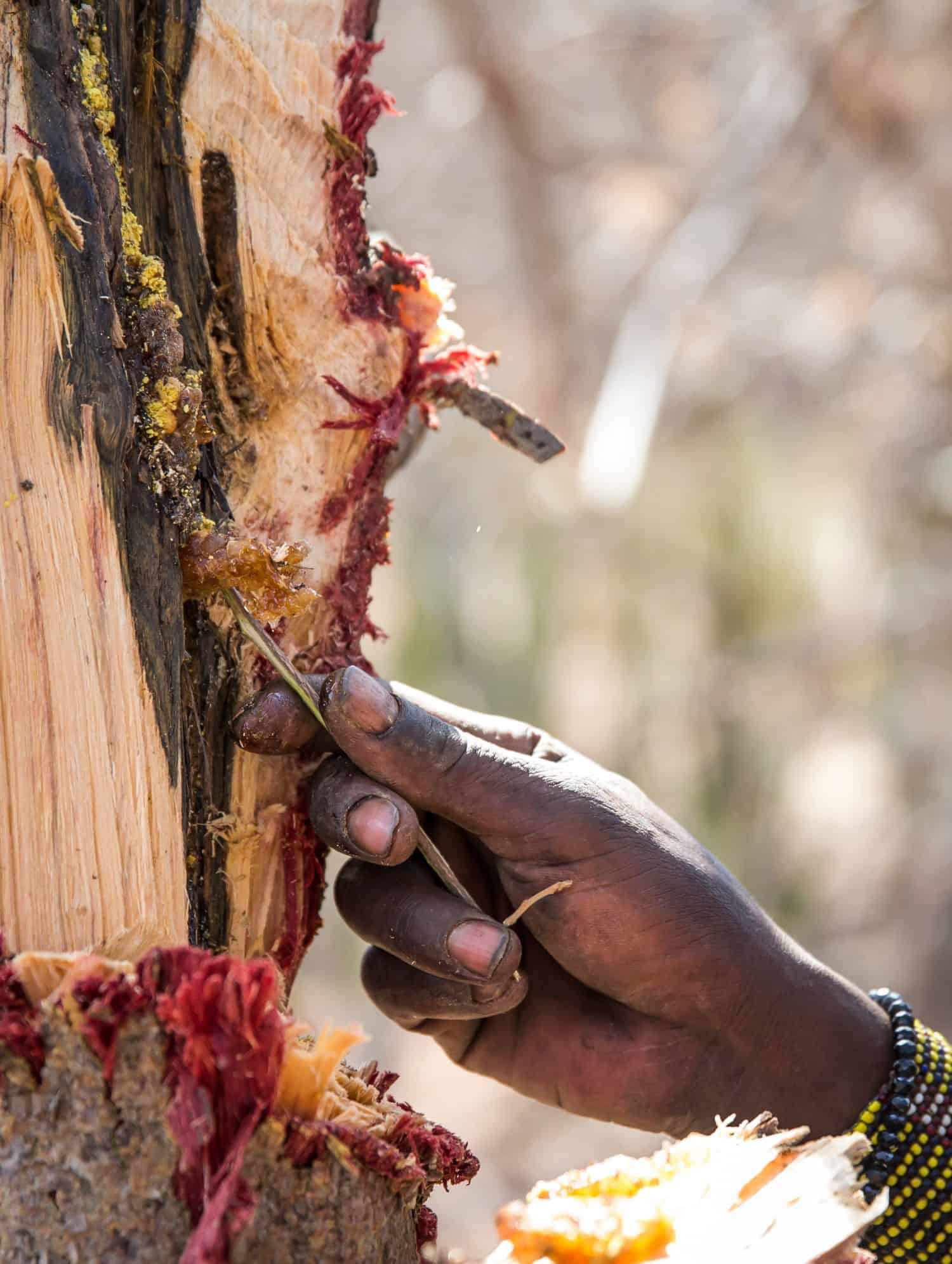
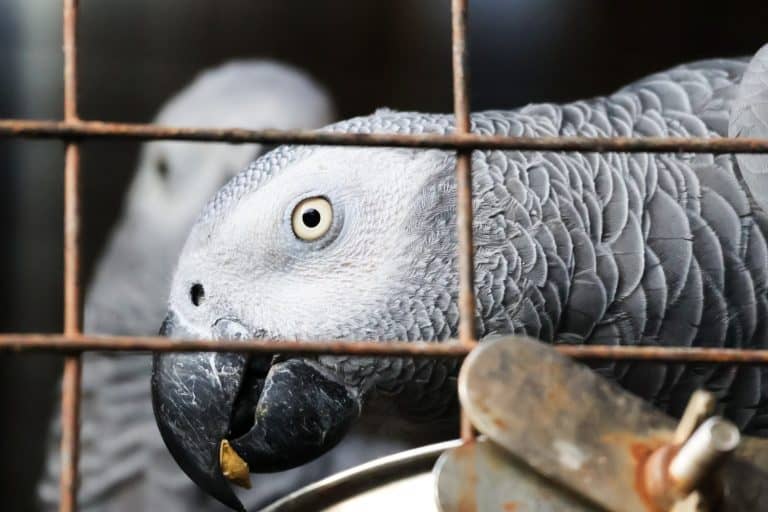
Greater honeyguides have unique microbes and enzymes in their digestive tracts that allow them to process beeswax.
©Katiekk/Shutterstock.com
The results were striking. In Tanzania, honeyguides were three times more likely to guide hunters when hearing the local Hadza whistle compared to foreign Yao calls or control speech. In contrast, honeyguides in Mozambique were nearly twice as likely to respond to the local Yao trill-grunt than the foreign Hadza whistle.
After ruling out habitat acoustics and innate sound preferences, the researchers concluded that honeyguides learn the specific calls of their local human partners. The result is a true interspecies dialect — where the sounds themselves are arbitrary, but both species learn their shared meaning to work together effectively.
When a Honeyguide Gets It Wrong
Although rare, greater honeyguides do not always lead humans to bees. Field research in Mozambique confirms Indigenous African accounts of honeyguides occasionally guiding people toward dangerous predators, venomous snakes, or animal carcasses instead.
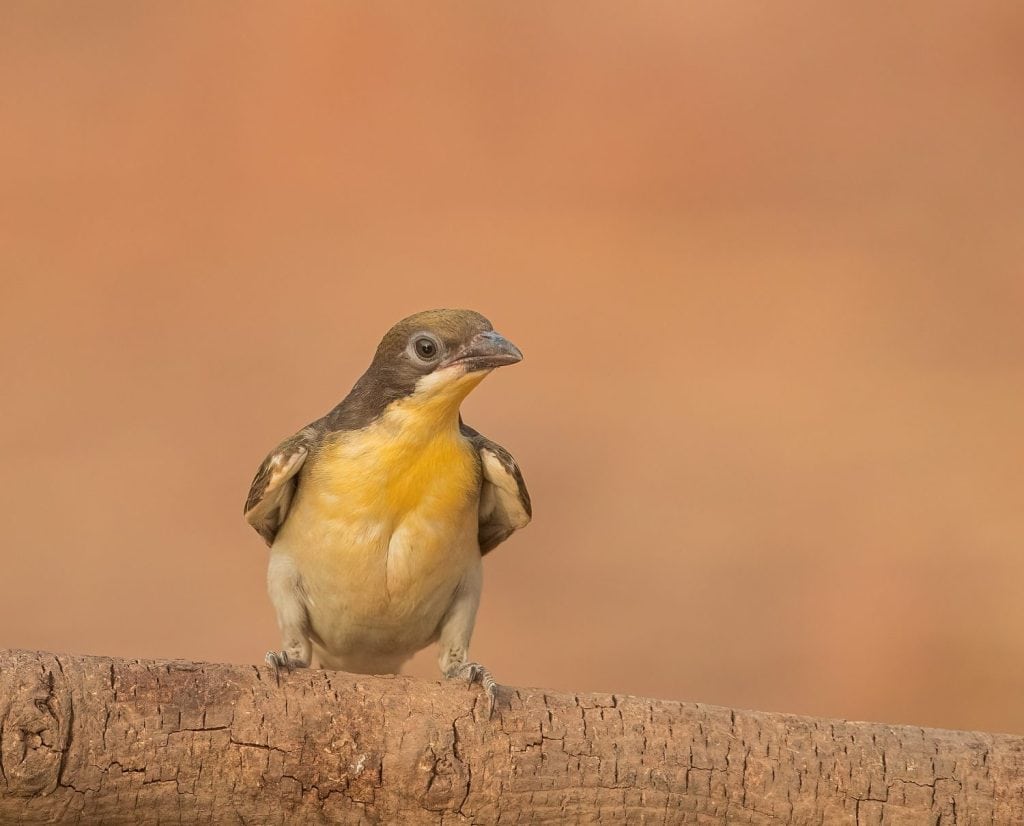
Juvenile greater honeyguides look nothing like their parents.
©Pascal De Munck/Shutterstock.com
Traditional beliefs often interpret these misdirections as divine punishment for withholding a reward, or as deliberate warnings about nearby threats. Researchers, however, found no statistical link to unrewarded visits nor evidence of a dedicated alarm system. Honeyguides rely on extensive mental maps of nest locations, and a bird will occasionally confuse a landmark and guide a human to the wrong spot.
Despite this misconception, the cultural duty to reward honeyguides plays an important role in preserving the partnership. By encouraging people to consistently leave behind beeswax, larvae, or honeycomb, these traditional beliefs reinforce a mutually beneficial exchange that keeps the interspecies bond thriving.
A Wild Partnership Shaped by Communication
What makes the bond between greater honeyguides and human hunters so extraordinary is that neither species merely tolerates the other — they actively read and respond to each other’s behavior. The bird locates the hidden hive, while the human uses tools to open it and leaves behind a reward. Over generations, humans develop and pass down specialized calls, and local honeyguides learn to recognize them.
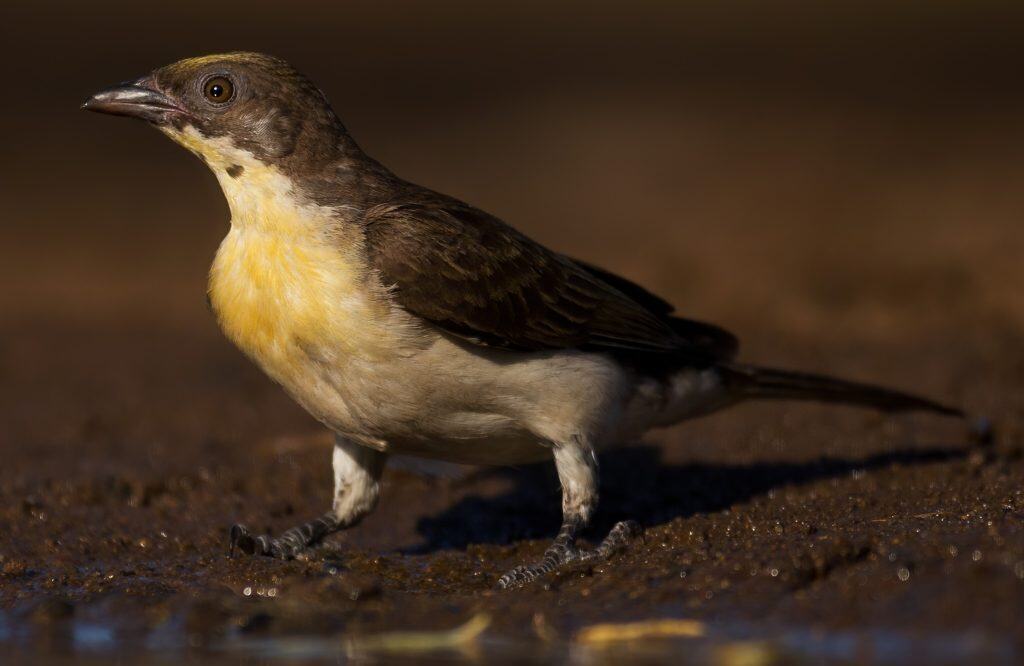
Greater honeyguides are losing their vital human partners in many areas due to cultural changes and a lack of interest in traditional practices.
©Michael Heyns, CC BY-SA 4.0, via Wikimedia Commons (cropped from original)
Rather than being forged through domestication, the human-honeyguide relationship thrives on learning, communication, and mutual benefit — a rare example of two vastly different species developing a shared system simply to obtain food.