
Quick Take
- February is the peak time to see humpback whales in Hawaii, after they have completed their migration from Alaska to the warmer waters of the Pacific.
- Male humpback whales are part of competition pods that show off their physicality to win a mate.
- Humpback whales are singing louder than ever due to noise pollution in the waters off the Hawaiian Islands.
- Humpback whales both breed and give birth to calves during their time in Hawaii.
Each year, whales migrate to and from feeding and breeding grounds. Gray whales, North Atlantic right whales, and blue whales are all species that make lengthy journeys, having done so for an untold number of years. They return to the same regions time and again, making for an awe-inspiring sight that never gets old.
The humpback whale also participates in the ritual of migration. Traveling from Alaska to the Hawaiian Islands in droves, these massive creatures create a spectacle. Hundreds of whales can be seen off the Hawaiian coast, jumping out of the water as they take their shot at being noticed by others in the pods. This is especially true in February, also known as “whale soup” season in the Pacific, when the population is at or near its peak.
What Is “Whale Soup” Season?
Each year, Hawaii prepares for “whale soup” season. Humpback whales migrate from Alaska in droves to enjoy the warmer waters of the Pacific between November and May. The peak time for the migration is between January and March, making February a prime time to see the whales in action.
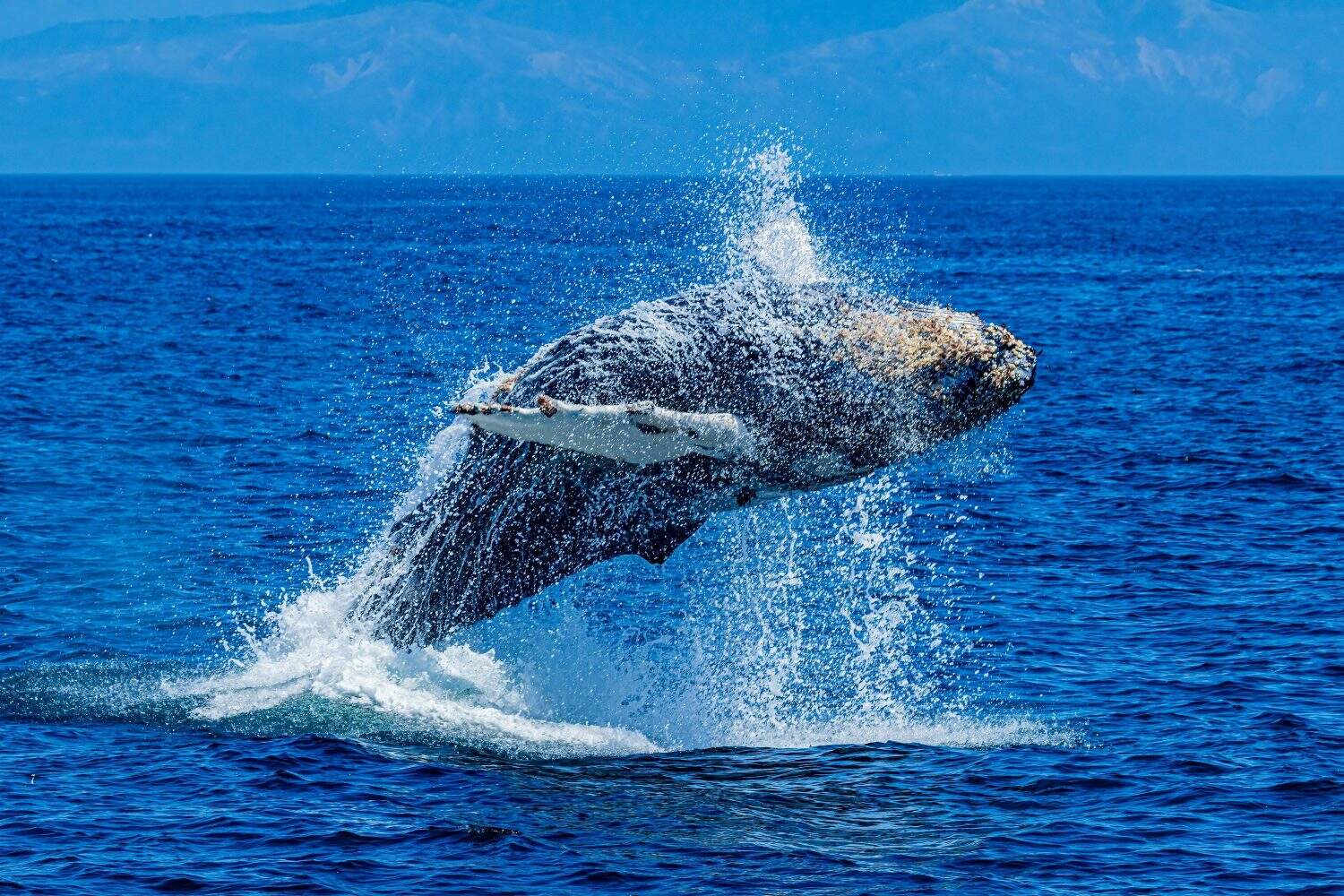
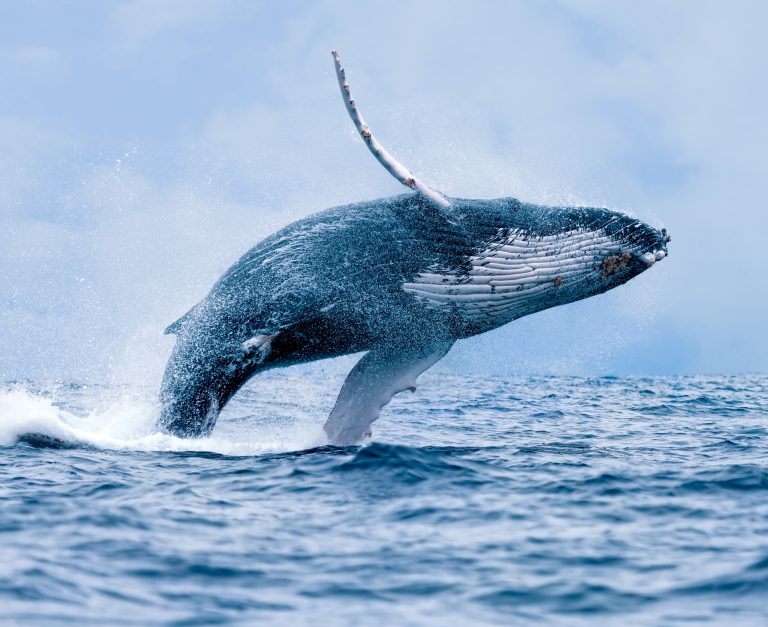
Male humpback whales show off their physicality to win the affections of female humpback whales while in the waters off the Hawaiian Islands.
©Dmitry Demkin/Shutterstock.com
Humpback whales are very active off the coast of the Hawaiian Islands. This is specifically true for the males. The males will form competition pods to show off their physical prowess. In these pods, the male humpback whales will display their dominance by:
- Pushing one another out of the way
- Scratching one another with barnacles attached to their bodies
- Slapping the tail on the surface of the water, also known as tail lobbing
- Propelling the head and body out of the water
All of these tactics are used to gain the attention of female humpback whales. Those who are most successful may gain the chance to breed. But even the most successful male humpbacks have been rejected by females, highlighting how much remains unknown about these magnificent creatures living in the deep blue sea.
Why Humpback Whales Migrate to the Hawaiian Islands
It is unknown how long humpback whales have been migrating from Alaska to Hawaii. Generally, it takes whales six to eight weeks. It is not just for a change in scenery that the humpback whales make this trip each year. The humpback whales do so to give the next generation of whales the best chance of survival.
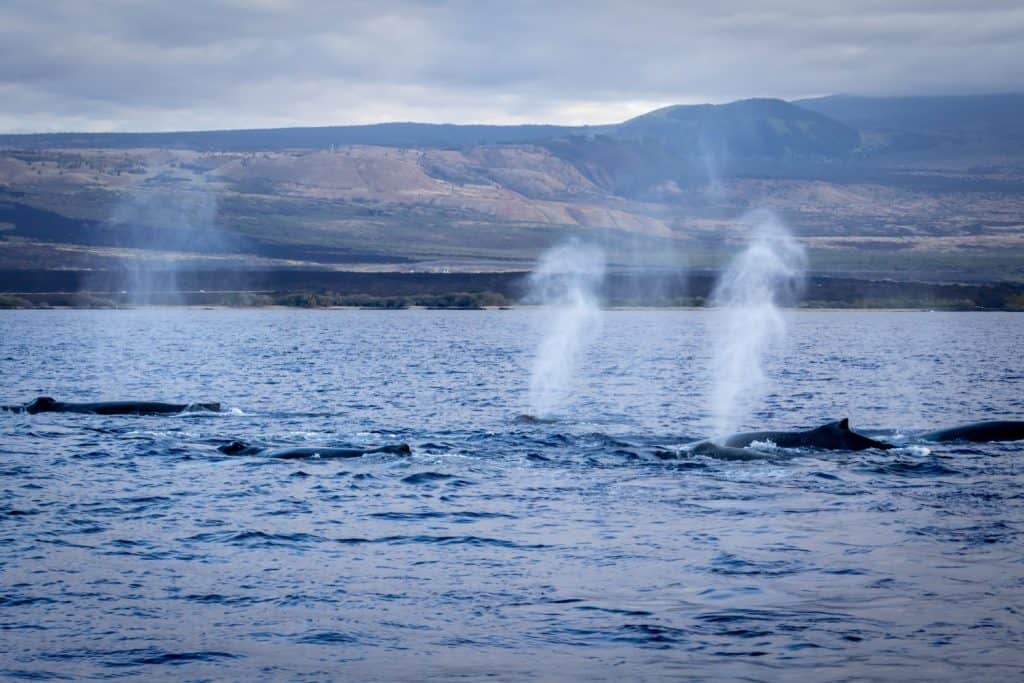
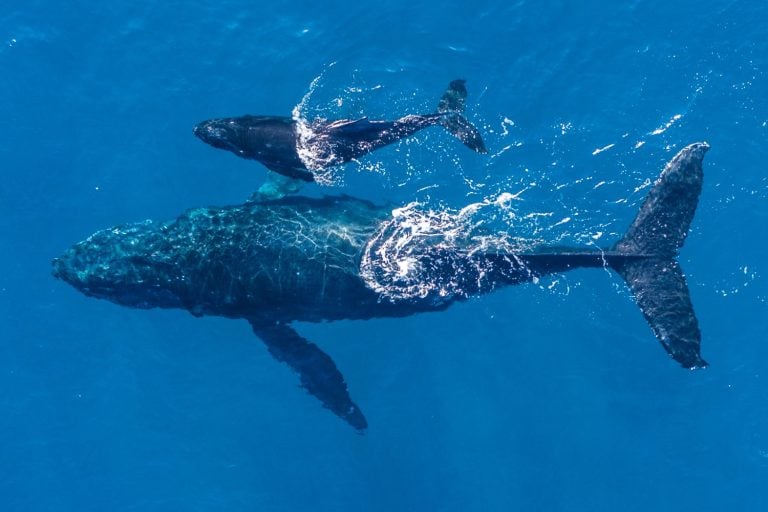
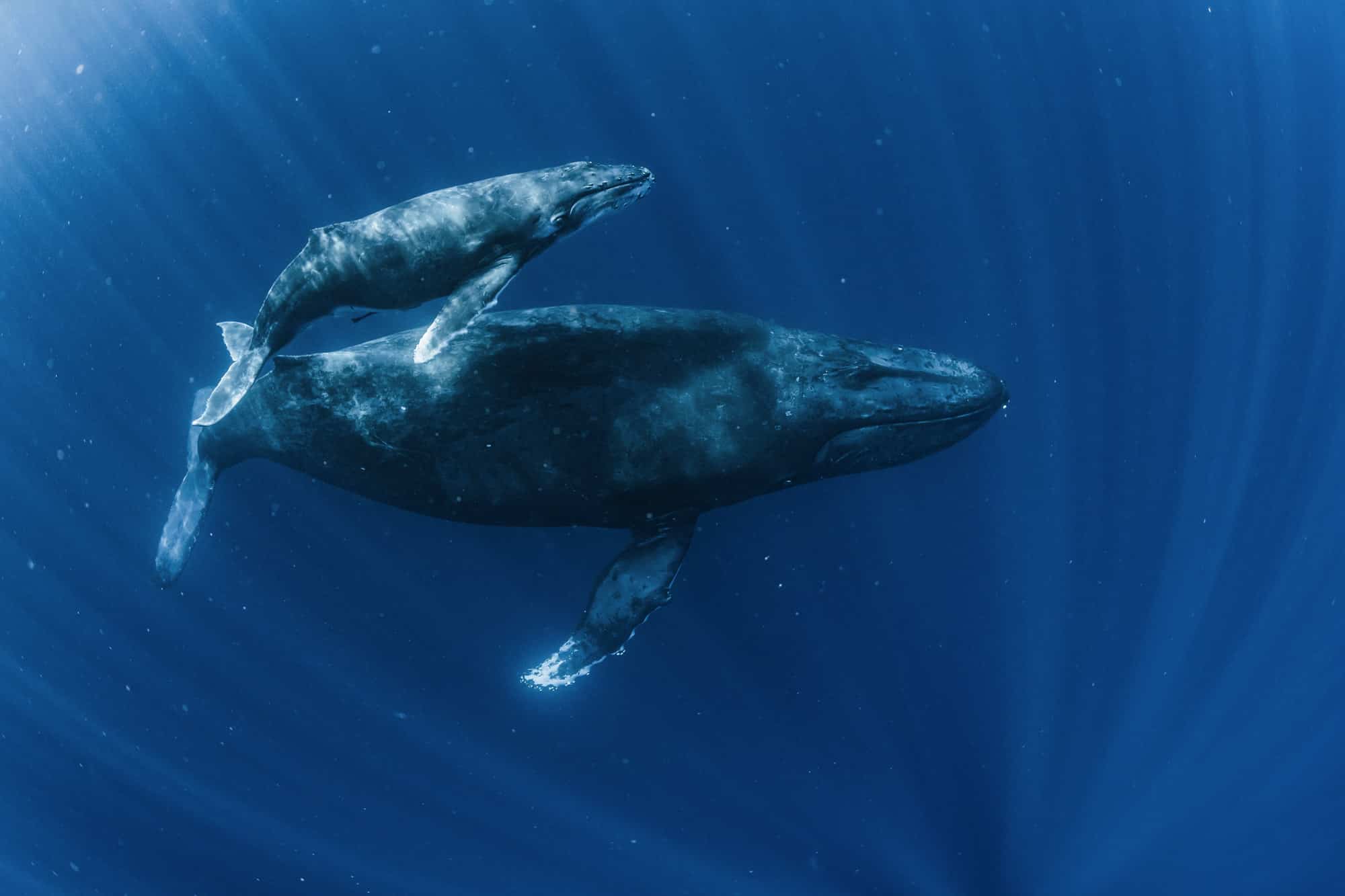
Humpback whales migrate to Hawaii from Alaska to breed and have their calves in the warmer waters.
©RS Smith Photography/Shutterstock.com
Humpback whales come to the Hawaiian Islands during the winter both to mate and to have their offspring. They prefer the shallower waters off the islands’ coasts. These regions are typically less than 600 feet deep and contain whale nurseries. It is here that the mother whales tend to their calves, helping them navigate the warm waters and fatten them before beginning the 3,500-mile swim back to Alaska.
The mothers and calves are typically the last to depart Hawaii. While adult humpback whales do not eat much, if anything, in Hawaii, the longer the calves remain there, the more milk they can consume to gain strength and bulk. This is not only about surviving the colder waters in Alaska but also about enduring the arduous trek back. The larger and stronger the calves are, the better their chances of survival.
How Many Humpback Whales Have Been Spotted to Date?
Each year, the humpback whale population that returns to the Hawaiian waters is counted. This not only helps determine whether the whales are following normal migration patterns but also indicates how the population as a whole is faring. This information is critical to ongoing conservation efforts to ensure that humpback whales survive and thrive.
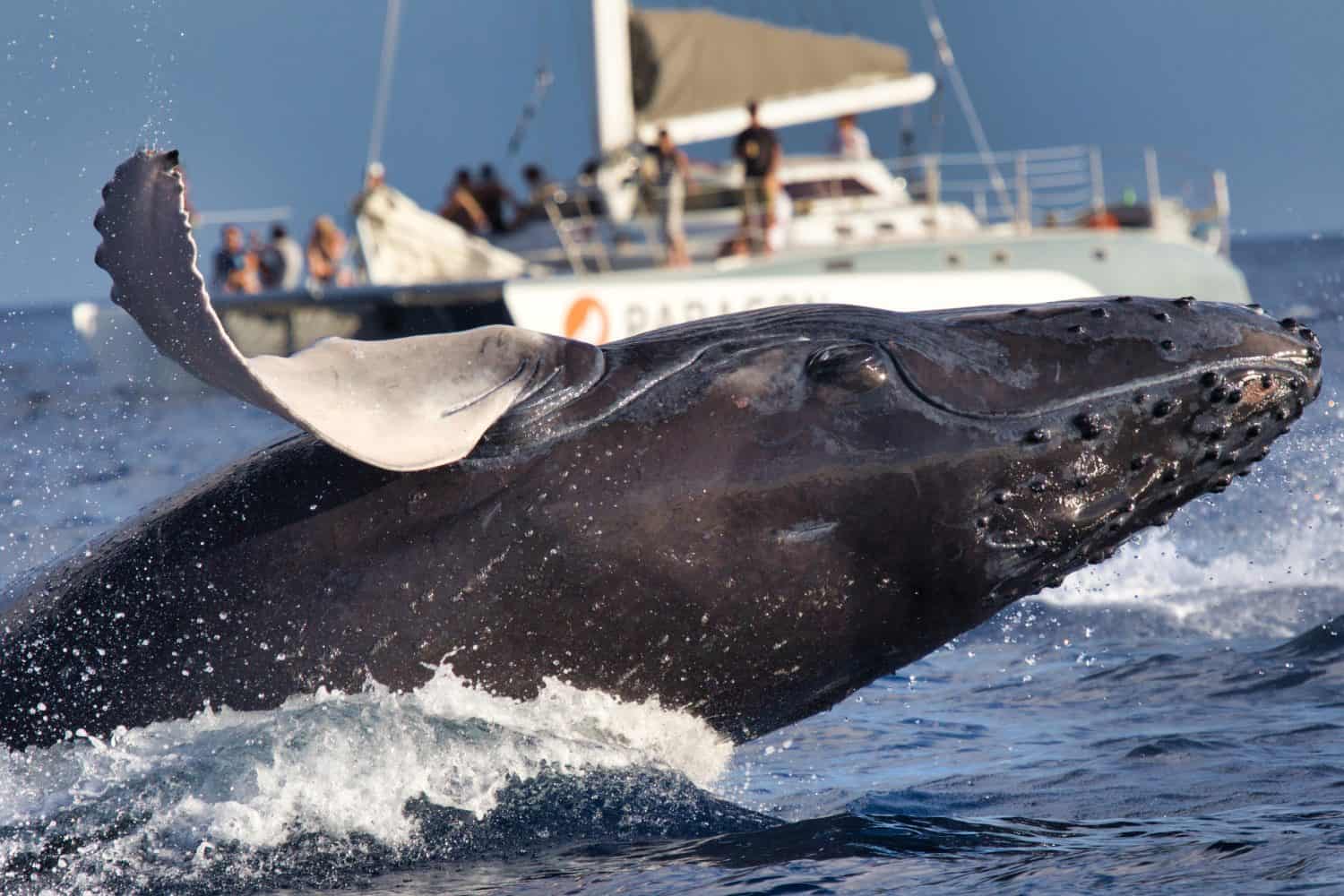
Official counts have yet to be released for the humpback whales that have migrated to the Hawaiian Islands.
©Manuel Balesteri/Shutterstock.com
To get an accurate count of how many humpback whales migrate to the Hawaiian Islands annually, the Sanctuary Ocean Count is conducted. The Sanctuary Ocean Count, which partners with the Pacific Whale Foundation’s Great Whale Count, relies on community volunteers to watch the shallow waters from the shore to tally the humpback whales.
The counts are taken three times each year: the first at the end of January, followed by one at the end of February, and the final at the end of March. Figures for January 2026 have not been released. However, on January 25, 2025, alone, approximately 300 humpback whales were counted in 15 minutes. In total, more than 2,100 sightings were recorded that morning. While there were duplicate sightings, it is still remarkable how many humpback whales return to the region each year.
Humpback Whales Sing Loud and Proud
Hundreds of humpback whales migrating to the Hawaiian Islands make an incredible sight. It is also something special to hear, as the whales sing songs to one another as part of their annual mating ritual. Whales sing to one another this time of year for several reasons. The males sing to attract a mate. Their songs reveal fitness levels and social hierarchy, with the most dominant individuals mating first.
Additionally, whales are social creatures. Therefore, singing is also a form of communication among individuals. Mothers and calves sing to one another, and female whales, on occasion, may sing to find resting spots together. While mating calls do make up a lot of the humpback whale chatter, singing to one another to stay connected happens often as well.
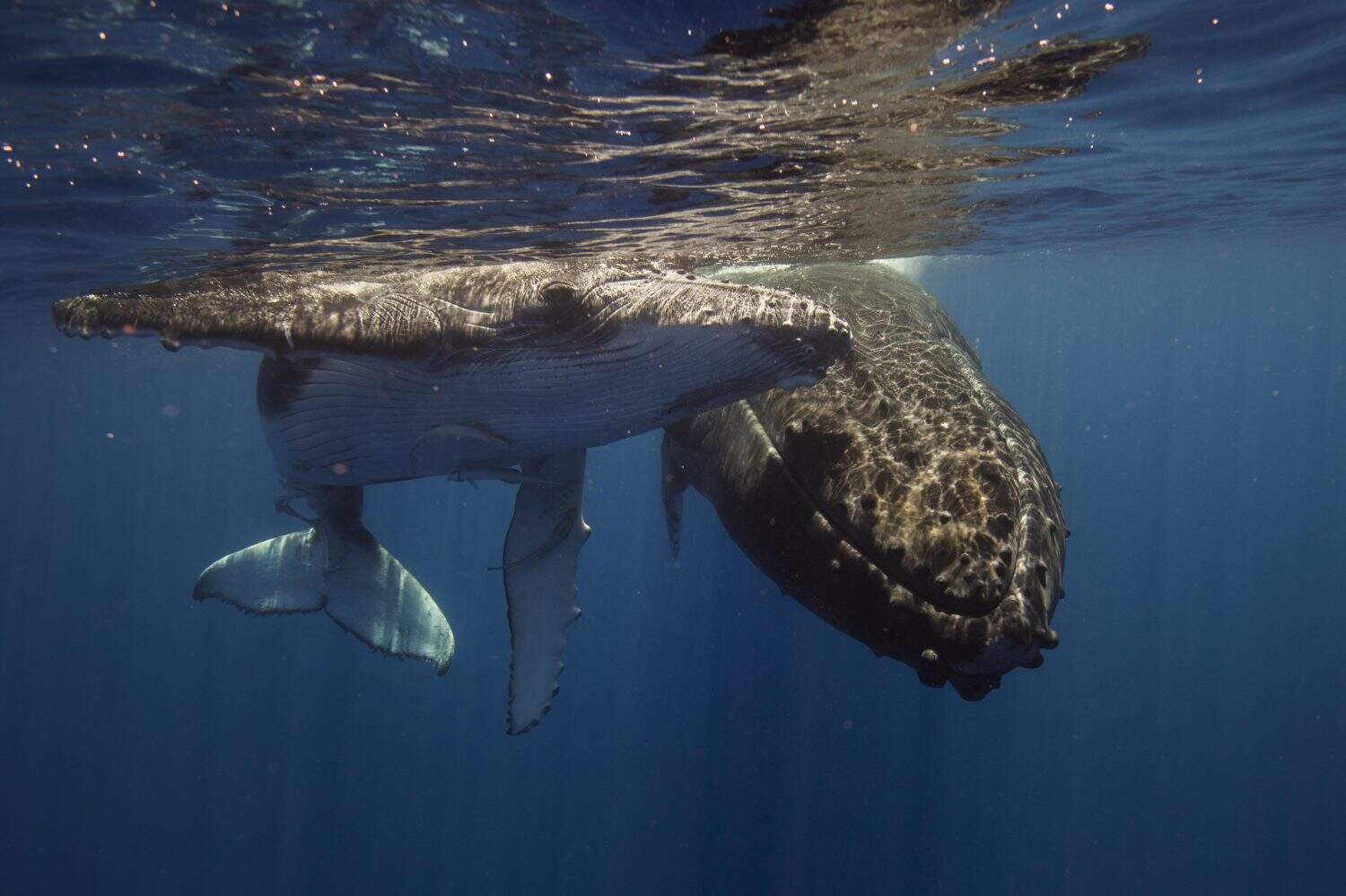
Humpback whales sing to one another to attract mates and to communicate between mother and calf in the Hawaiian waters.
©le bouil baptiste/Shutterstock.com
Notably, over the years, humpback whale singing has become louder. It is to the point where the songs can be heard from the surface of the water. This increase in volume is not due to a higher number of whales off the coast of the Hawaiian Islands. Instead, it is a response to increased water noise pollution, which necessitates louder singing. Consequently, the whales will swim farther offshore during the day and return to shallower waters in the evening, when noise pollution diminishes. This behavior is believed to increase the likelihood that their songs will be heard by other humpback whales.
Hearing the whales sing from the surface is awe-inspiring. However, this also highlights another stressor that humpback whales face in order to survive. The whales must sing louder just to hear one another beneath the surface of the water. If noise pollution persists for too long, the whales become stressed. This stress compromises their immune systems, reduces their ability to fight off disease, and negatively affects their reproductive behavior. Neither of these outcomes is beneficial for the whales as they conclude a massive migration to enjoy time in the warm Hawaiian waters.
Do Humpback Whales Face Threats While Swimming Through the Hawaiian Islands?
February means there are more humpback whales in the waters off the Hawaiian Islands than there are during other months of the year. While this makes an impressive sight for whale watchers and researchers, it also increases the risk that whales encounter threats in the warm ocean waters.
Some of the biggest threats the humpback whales face include:
- Enganglement
- Vessel strikes
- Habitat degradation
- Acoustic disturbance
- Water pollution
Humpback whales do have protected areas in Hawaii. In 1992, Congress created the Hawaiian Islands Humpback Whale National Marine Sanctuary. The sanctuary is located off the coast of all Hawaiian Islands, creating 1,400 miles of protected waters for the humpback whales. The goal is to keep the whales safe as they breed and give birth.
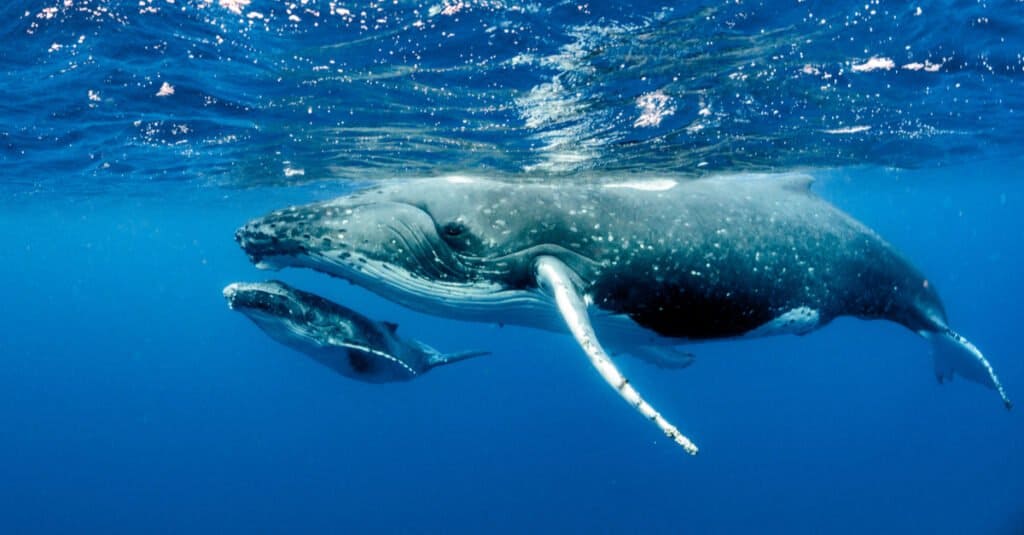
Humpback whales face threats that include entanglement, vessel strikes, noise pollution, and more while spending time in the ocean off the coast of the Hawaiian Islands.
©Imagine Earth Photography/Shutterstock.com
Unfortunately, having protected waterways is not always enough to keep the humpback whales safe. On January 30, 2026, a humpback whale was spotted off the coast of Kona entangled in a massive amount of fishing gear. Rescue personnel were called out to see if they could free the whale. The trained responders worked throughout the day to free the whale. Ultimately, “320 feet of ropes, chains, and hooks” were removed, and by the end of the day, the whale was free.
This proved to be a very happy ending for this humpback whale, as it made its migration to the Hawaiian Islands. Some whales are not as lucky, however, losing their lives to entanglement. As more whales continue to come to the islands for their annual migration, the hope is that more will not be spotted dragging fishing gear along with them. However, if whales are found entangled, rescue personnel are standing by to help during the peak humpback whale season in Hawaii.