
Quick Take
- The Great Auk survived four Ice Ages but was wiped out by something far more ordinary, and the irony of that runs deeper than you'd expect. See the full extinction story →
- The physical trait that made the Great Auk a supreme ocean predator turned it into easy prey the moment hunters arrived. Explore its physical traits →
- Laws were passed to protect the Great Auk, but a single loophole guaranteed its extinction anyway. Read about the fatal loophole →
- Indigenous hunters killed Great Auks for centuries and the population thrived, but what Europeans did differently changed everything. See how European hunting differed →
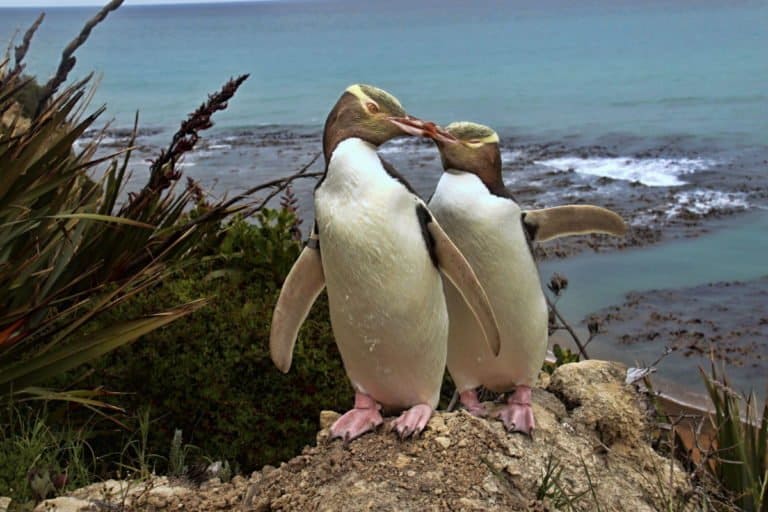
Today, there are 18 different species of penguin. Their size varies as much as their habitats.
There was once a penguin that stood above the rest. Its massive size allowed it to survive in harsh conditions, but it also ultimately led to its demise. This northern bird ceased to exist due to relentless hunting by humans, which drove it to extinction. Had conservation efforts been successful, the Great Auk might still be alive today.
What Was the Great Auk?
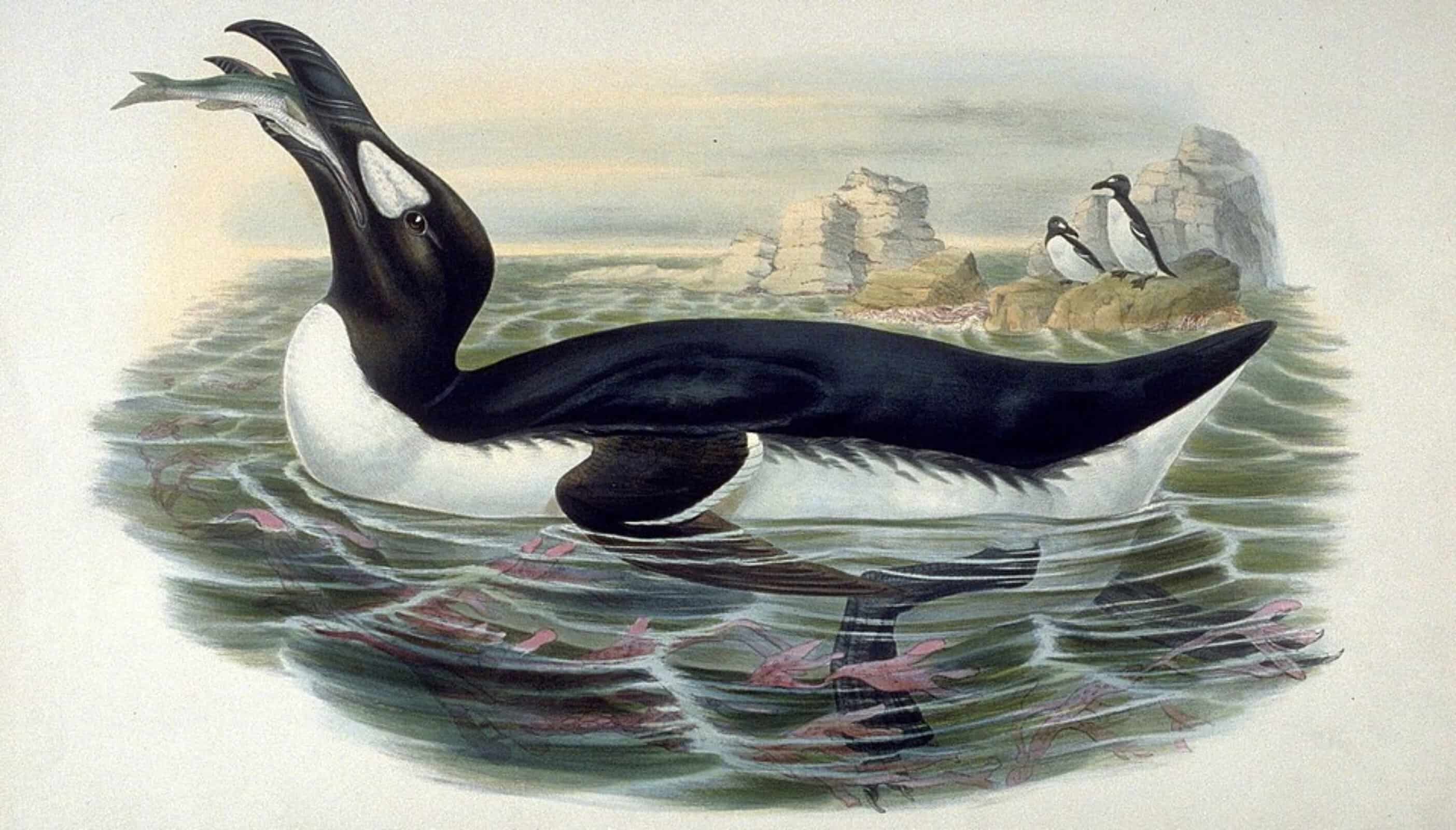
The Great Auk is often referred to as the original penguin because its black upper body and white underside resemble modern penguins.
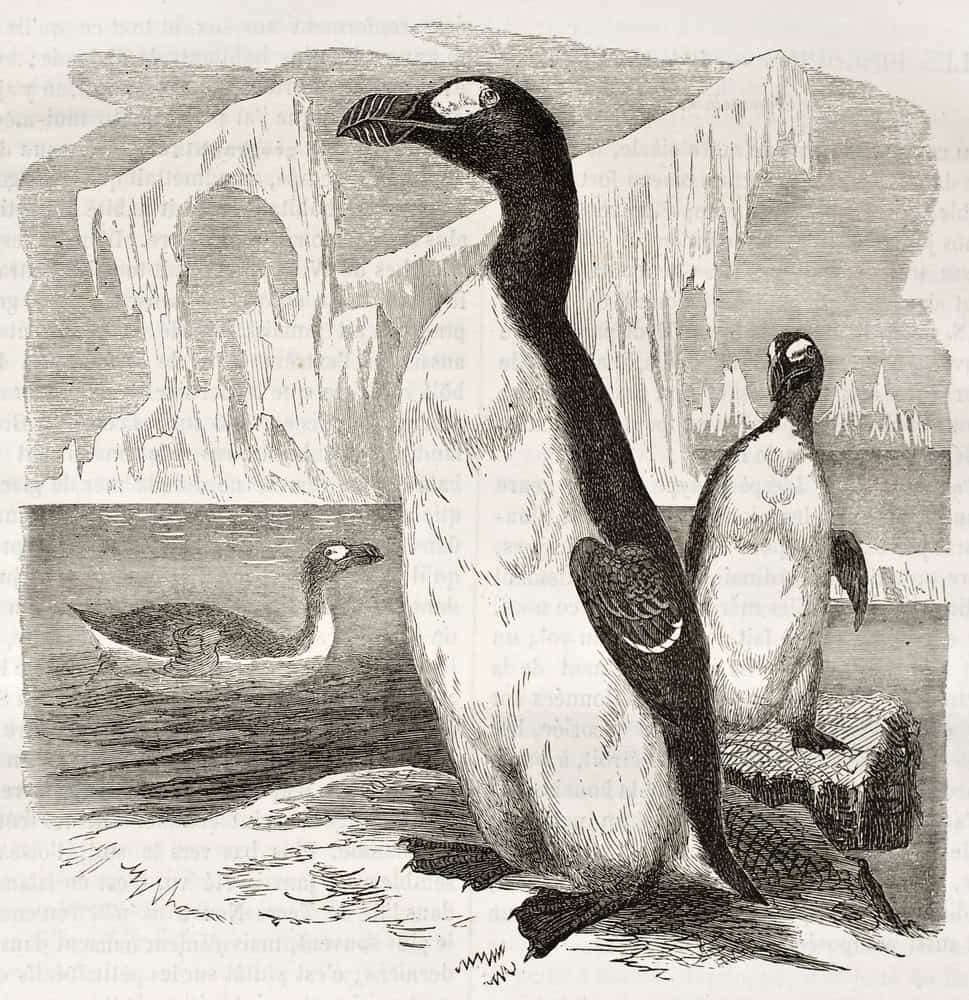
Great Auks were large, flightless seabirds that stood three feet tall and weighed 11 pounds.
©Marzolino/Shutterstock.com
Great Auks were even larger than the biggest modern penguin species. These birds, with black hooked beaks, stood three feet tall and weighed 11 pounds. Great Auks had wings, but they were unable to fly. Instead, their wings functioned as flippers, allowing Great Auks to swim efficiently through the ocean.
Walking on land was not easy for the Great Auk. They were not as agile on land as they were in the water. As a result, the birds chose isolated locations for breeding when they came ashore. This ensured the greatest chance of survival for both adult Great Auks and their chicks.
Where the Great Auk Lived
The Great Auk was a seabird that only came ashore to breed. When they did come ashore, large colonies formed in areas known for both their isolation from predators and proximity to food.
The regions the Great Auk came ashore during the breeding season include:
- St. Kilda, Scotland
- Faroe Islands, Denmark
- Grimsey Island, Norway
- Eldey Island, Iceland
- Geirfuglasker, Iceland
- Funk Island, Newfoundland
- Bird Rock, Isle of St. Lawrence
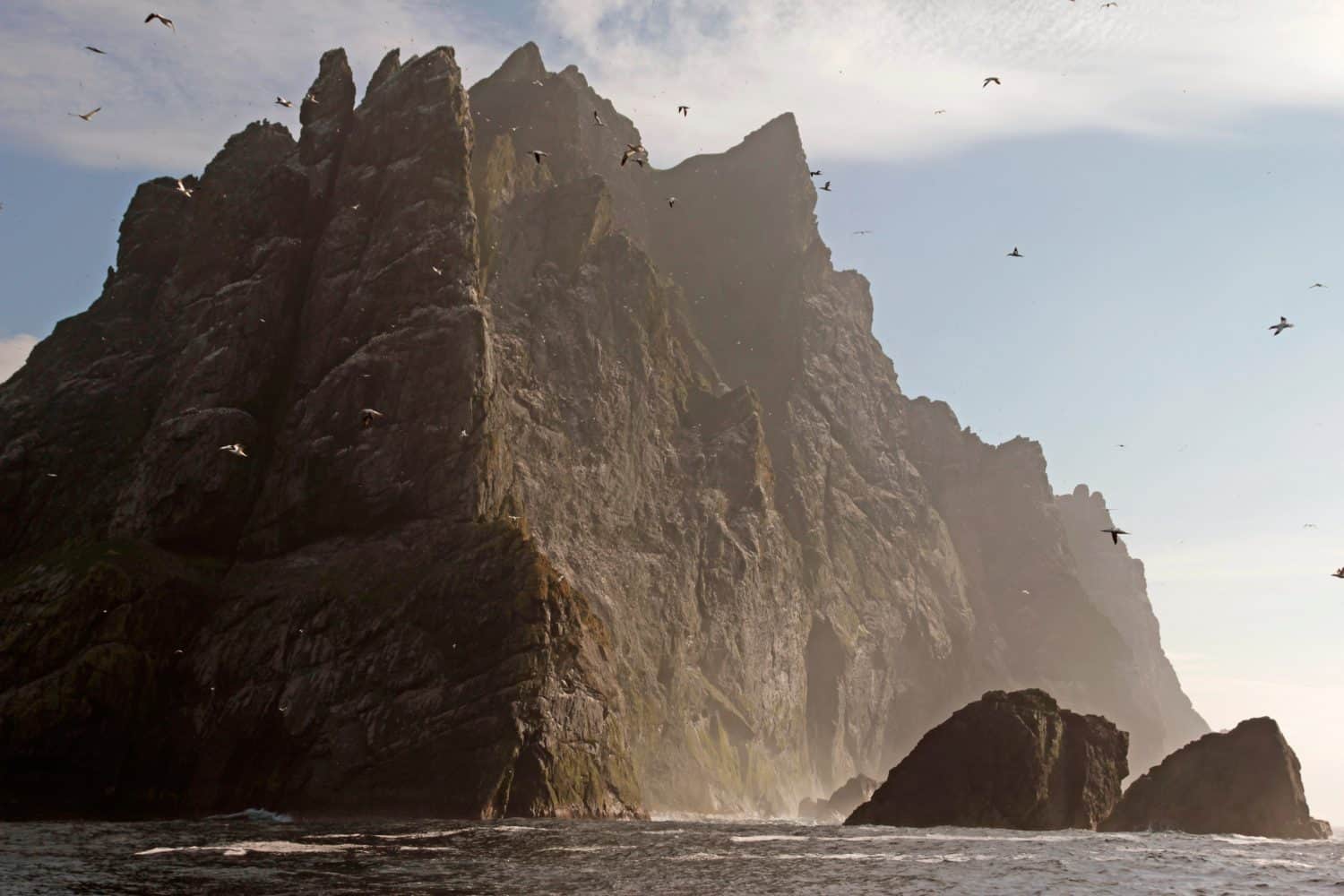
Great Auks would breed in places like St. Kilda for protection and access to food.
©corlaffra/Shutterstock.com
The Great Auk’s oceanic range was much larger than its breeding grounds. Spending the majority of their lives at sea, Great Auks foraged across the Atlantic. There is even fossil evidence that they spent time in the Mediterranean. Wherever there was food, the Great Auk followed.
Some of the countries off whose coasts the Great Auk was known to forage and come ashore to rest include:
- Canada
- Greenland
- Iceland
- Spain
- Norway
- Great Britain
- France
- Italy
- France
- United States (Florida and Massachusetts)
At their peak, Great Auks could be found in many regions bordering the Atlantic Ocean.
Why Hunters Targeted the Great Auk
The Great Auk first appeared 400,000 years ago. During this time, the penguins survived through four known Ice Ages. What the Great Auk could not survive was the arrival and exploitation by colonial European explorers and settlers.
There were several reasons the Great Auk was killed. Those reasons include:
- Feathers
- Blubber
- Meat
- Museum collections
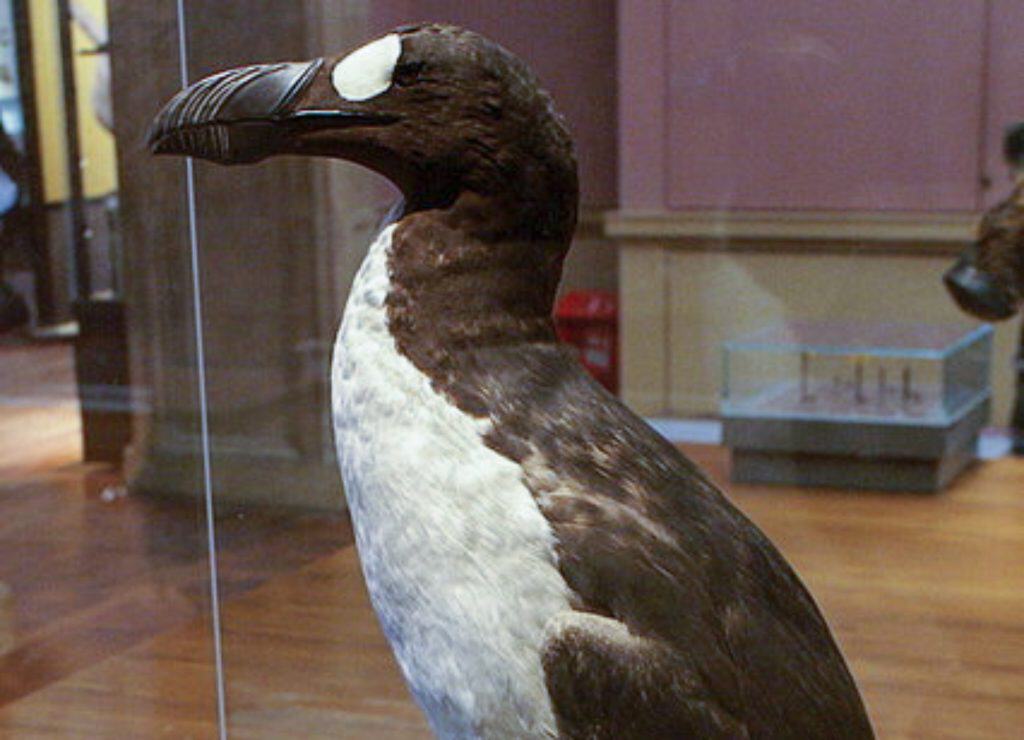
Great Auks were targeted for display in museums.
©Mike Pennington / Wikimedia Commons / CC BY-SA 2.0 – Original
Of these reasons, collecting specimens for museums was the least harmful, as by the time this became common, the population had already collapsed. With no regulations limiting how many Great Auks could be killed, they were slaughtered in large numbers. In less than 300 years, the giant penguin population was reduced to a fraction of what it once was. It was clear that without intervention, the Great Auk would cease to exist. But even intervention failed to save the Great Auk.
Conservation Efforts to Save the Great Auk Failed
Realizing that the Great Auk was in trouble, early conservation efforts were made to save the species. Despite legal protections, government efforts did little to stop the killing of Great Auks.
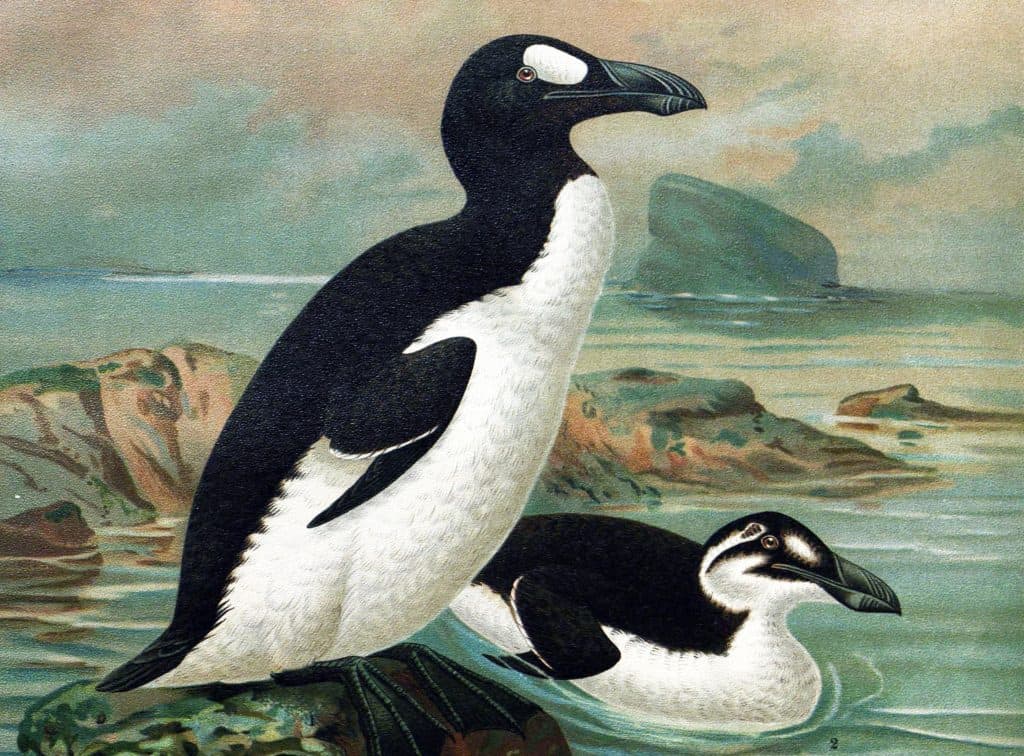
Conservation efforts were made to save the Great Auk, but ultimately failed.
©John Gerrard Keulemans / Wikimedia Commons / Public Domain – Original
In 1775, the Parliament of Great Britain was approached by the Nova Scotian government to intervene on behalf of the Great Auk. The petition drafted by Nova Scotia was approved by Great Britain. It stated that those who took eggs or killed the Great Auk for its feathers were to be “beaten in public.”
Unfortunately, there was a loophole. Fishermen were still allowed to kill Great Auks. This killing was permitted as long as the meat from the Great Auks was used as bait. Therefore, the Great Auks were never truly protected. Conservation efforts failed, and the Great Auk was bound for extinction.
What Caused the Great Auk to Go Extinct?
The European hunters were not the first to kill the Great Auk for its feathers and meat. Indigenous people from Newfoundland also hunted the Great Auk. However, there was one difference. The Beothuk hunted the Great Auk sustainably.
As the Europeans continued to hunt the Great Auk for its oil, feathers, meat, and fat, they did so in numbers that the population could not sustain. Eggs were gathered en masse, and generations of these large birds were lost. Adults did not stand a chance against hunters, given how unsteady and slow they were on land.
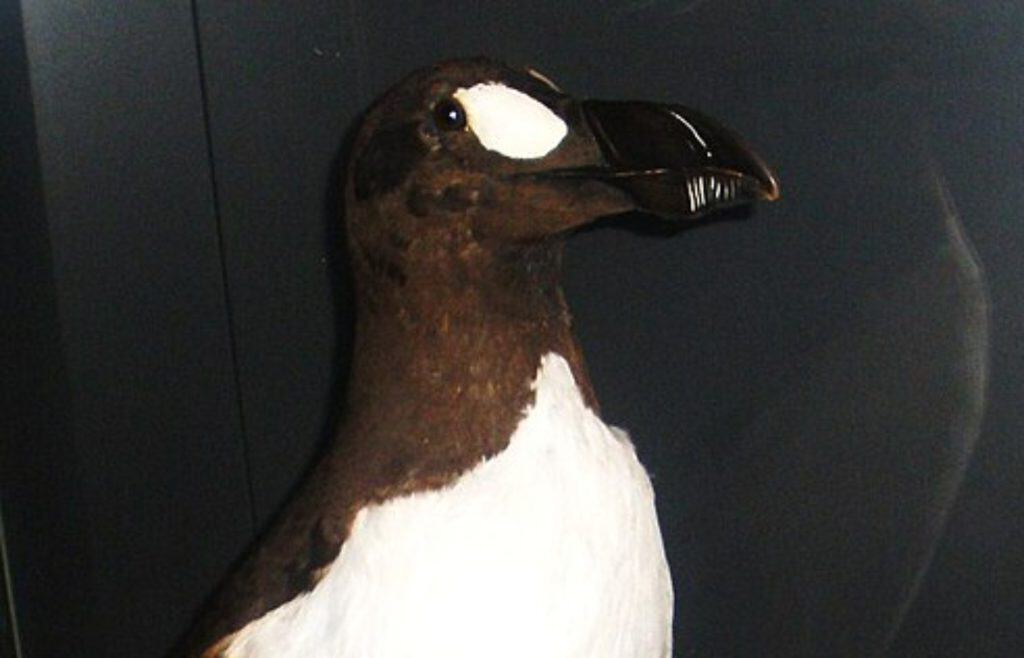
The Great Auk went extinct in 1844 due to overhunting.
©Ghedoghedo / Wikimedia Commons / CC BY SA-3.0 – Original
In total, between the 16th and 19th centuries, it is estimated that colonial hunters killed potentially millions of Great Auks. The last of these magnificent penguins was noted as being slaughtered on Eldey Island in 1844. While there were occasional sightings of the Great Auk over the next few years, by 1850 it was officially extinct.
The tale of the Great Auk and other species targeted during European exploration and expansion should serve as a warning today. As animals continue to go extinct, the planet’s landscape is changing for the worse. With the sixth extinction potentially already underway, species on the brink need urgent protection. Without conservation, there will be a global collapse, and not only will wild animals suffer from this extinction, but humans will as well.