
Although some shorebirds prefer habitats further from the water, most are found at the water’s edge. It may seem strange for shorebirds to run away from water as fast as their legs can carry them. Yet, that is exactly what the plump little grey and white birds in this YouTube video are doing. They scurry back and forth along the beach, staying just ahead of the advancing and retreating waves. What are these little birds, and why do they run from the water? Read on to find out.
The Beach-Going Sanderling

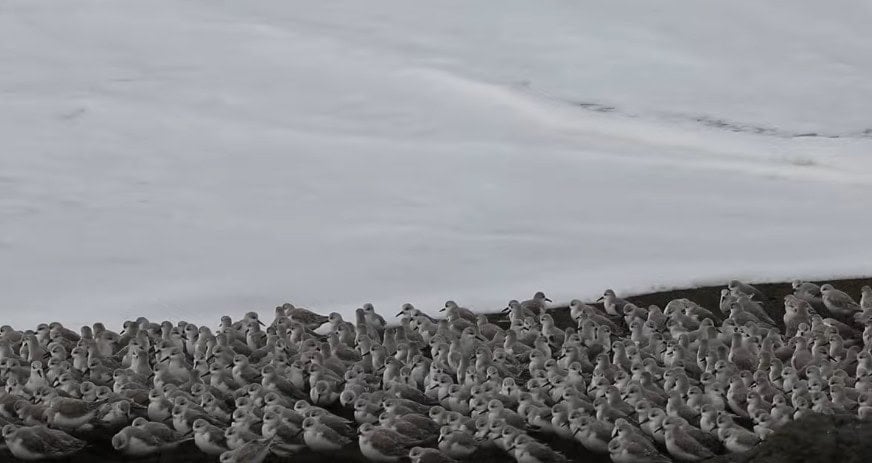
From fall until spring, flocks of sanderlings can be found on sandy beaches all over the world.
©lauri duke / YouTube – Original
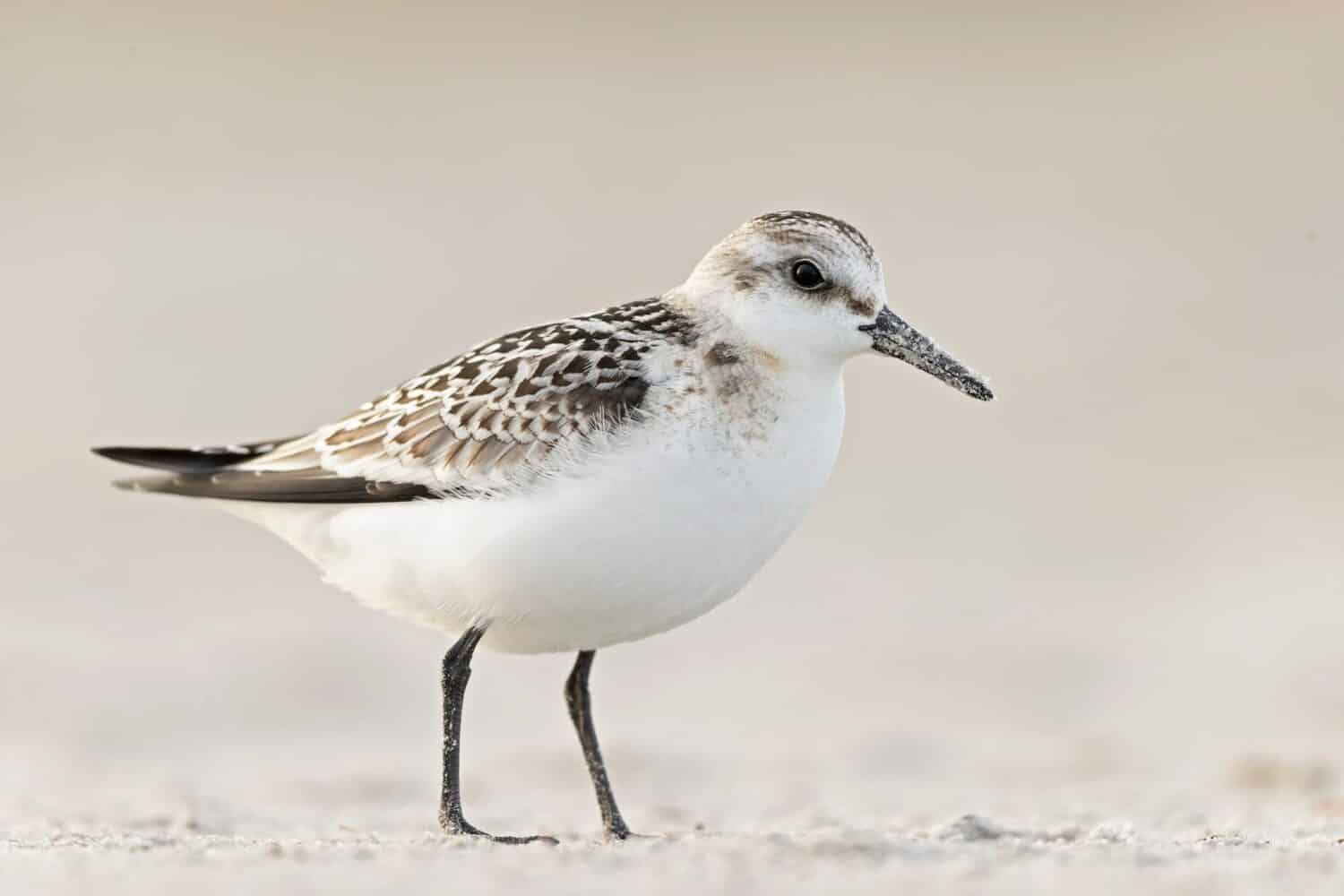
The birds in the video are sanderlings (Calidris alba), sandpipers in the family Scolopacidae. They are one of the most widely distributed migratory shorebirds in the world. Sanderlings breed only on the tundra of the high Arctic in Canada, Greenland, and Siberia. However, during the winter and migration periods, they are found on tropical and temperate sandy beaches all over the globe. Younger, non-breeding birds sometimes stay on beaches through the summer. This allows them to save energy by avoiding the long, unnecessary trip to the nesting grounds in the Arctic.
Their non-breeding plumage is the most commonly observed. Non-breeding sanderlings have light gray upper bodies, white underparts, and a black bar at the shoulder. In flight, the edges of their wings appear dark from above and white from below. Their breeding plumage is a mottled, rusty brown on their heads, backs, and breasts. They have thin, black legs and straight, sturdy black bills that are about the same length as their heads. These birds are small and plump, reaching 7.1-7.9 inches long and weighing 1.4 to 3.5 ounces.
Chasing the Waves
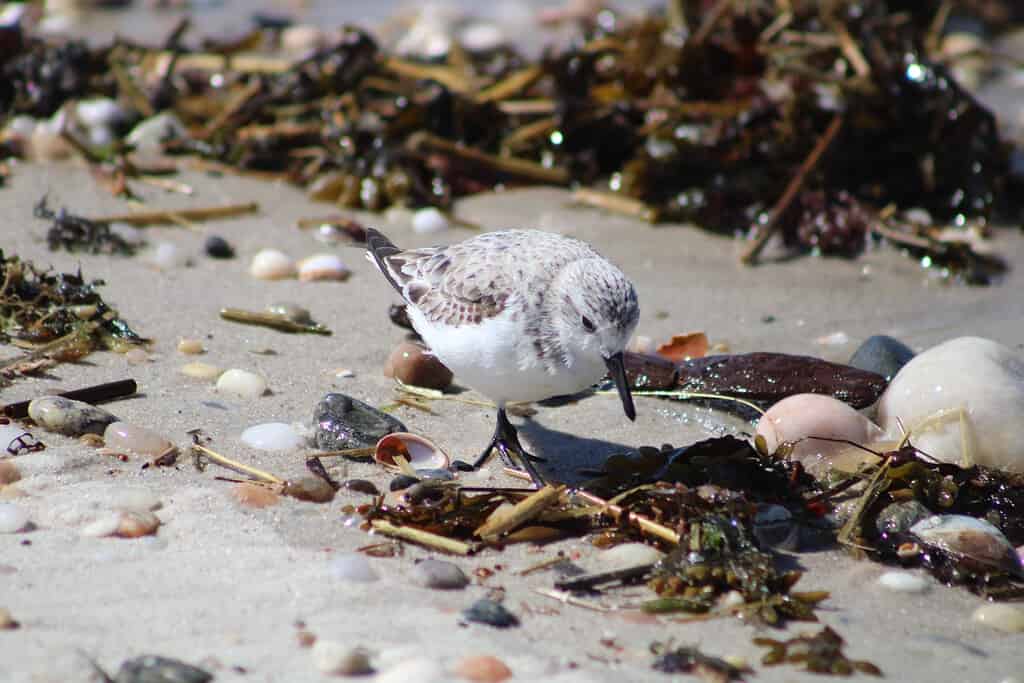
Sanderlings run back and forth on the beach to find prey in the wet sand.
©lauri duke / YouTube – Original
From fall through the following spring, flocks of hundreds or even thousands of sanderlings can be seen chasing the incoming and receding waves. However, these birds aren’t running away from the water—they are primarily hunting for sand crabs that bury themselves in the shifting sands of the intertidal zone. Sand crabs are easiest to find just after the surf retreats, which uncovers their burrows.
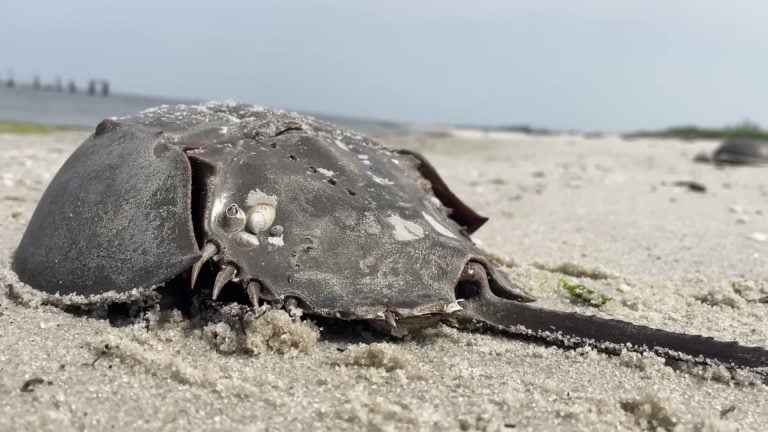
Sanderlings also probe the beach and skim puddles for other small crustaceans and invertebrates, such as mollusks and marine worms. Migrating birds depend on seasonally abundant prey at stopover sites, such as horseshoe crab eggs found along the Atlantic coasts of North America. In the summer, they add insects to their diet, including mosquitoes, flies, midges, moths, butterflies, and beetles.
Shorebird Adaptations
Sanderlings lack hind toes so they can run more efficiently on soft substrates.
©Jaclyn Vernace/Shutterstock.com
Sanderlings and other shorebirds have adaptations that allow them to forage efficiently in their coastal habitats. They use their long bills to probe the sand and dip into puddles to locate food. They have long, thin legs for walking in shallow water, wet sand, and mud. These birds also have long toes that aid in balance and stability on soft surfaces.
As shown in the video, sanderlings are quick, powerful runners. Unlike other shorebirds, sanderlings lack hind toes, which helps them run faster and more efficiently on sand, allowing them to stay ahead of the waves. Food is the primary motivation for long-distance migrants like sanderlings, so they are constantly feeding and storing energy for their next journey. Researchers estimate that sanderlings spend 40%-85% of their day foraging for food. Fortunately, when they reach their Arctic breeding grounds in June, they experience 24 hours of sunlight, giving them more time to eat and build up strength for their return trip to the beach in the fall.