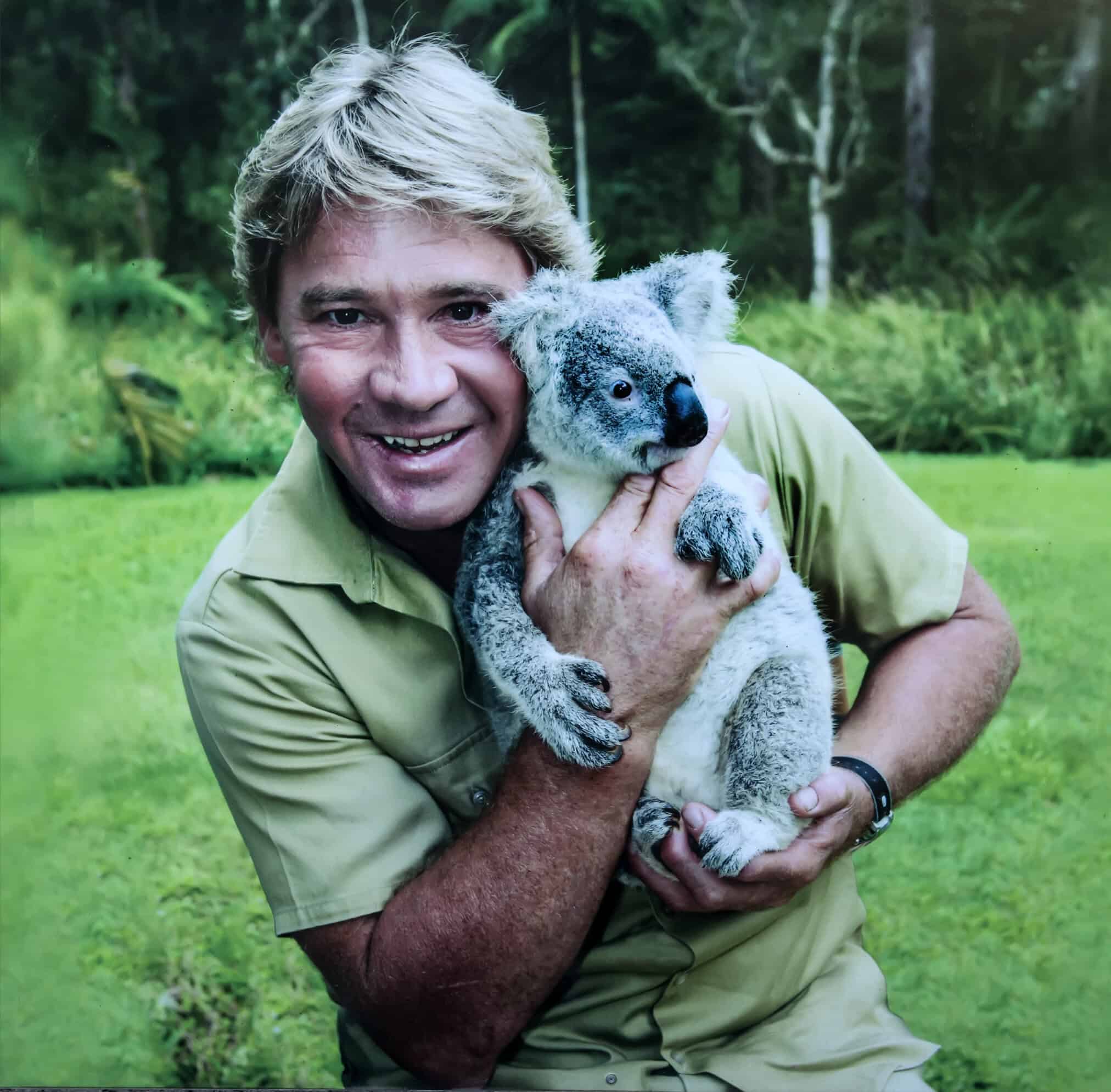

Quick Take
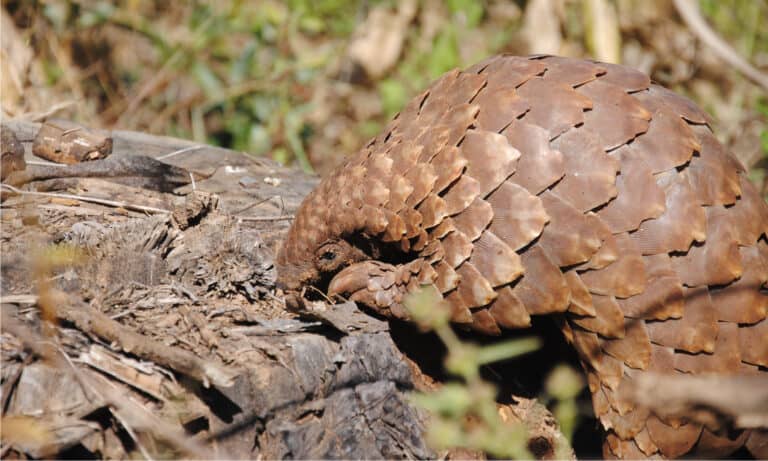
- The animals Irwin chose to champion were the ones most conservationists avoided, and that bet paid off in a way the wider field still hasn't fully caught up with. See how feared species became allies →
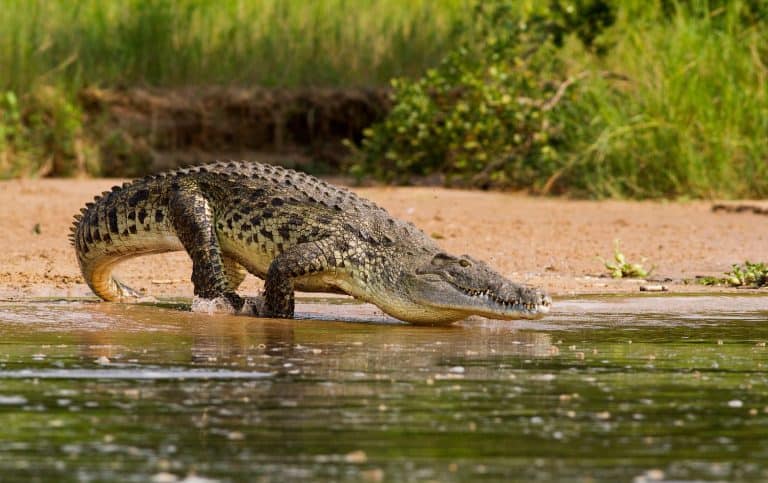
- A towel was one of his most important crocodile management tools, and the technique it enabled would go on to become the foundation of a decades-long research project. Explore the crocodile research project →
- Irwin never opened with a conservation lecture, and that single choice explains why millions of people who'd never cared about wildlife suddenly did. Discover the Mourachan gamble →
- Irwin's conservation work earned a nature reserve a legal protection stronger than the Great Barrier Reef, and it all came down to one unlikely campaign. See how the reserve was secured →
Famous for his enthusiastic catchphrase, “Crikey!”, Steve Irwin transformed wildlife conservation by proving that emotional connection and hands-on engagement could inspire people to care about the natural world.
At a time when traditional nature programs often relied on detached narration and academic language, Irwin brought wild animals into people’s living rooms with a raw, contagious energy. He didn’t just teach viewers about animals; he got excited about them.
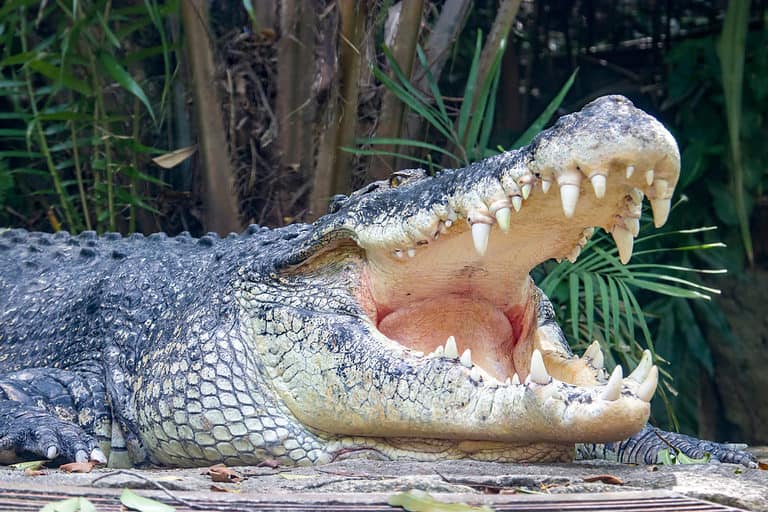
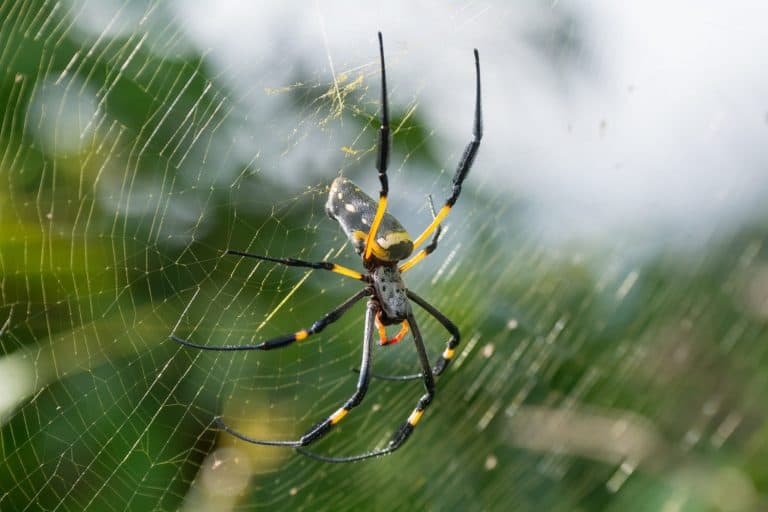
That approach became the foundation of Australia Zoo’s core philosophy: “Conservation Through Exciting Education.” Irwin understood that conservation needed to focus on more than just beautiful or cuddly animals. He turned dangerous, misunderstood creatures like saltwater crocodiles, spiders, and snakes into fascinating animals worth understanding and protecting.
Guided by the belief that people don’t protect what they don’t care about, his genuine excitement reached hundreds of millions of viewers across more than 120 countries.
Ahead of National Wildlife Day on September 4, Irwin’s legacy stands out not just for the animals he saved, but for how he changed our perspective of the natural world. His greatest achievement wasn’t a single species or project. It was inspiring ordinary people to feel personally connected to the animals and wild places that need their protection.
Continue reading
Rethinking the Crocodile “Problem”
Steve Irwin’s legacy went far beyond television. His approach blended hands-on animal rescue, scientific research, and practical conservation.
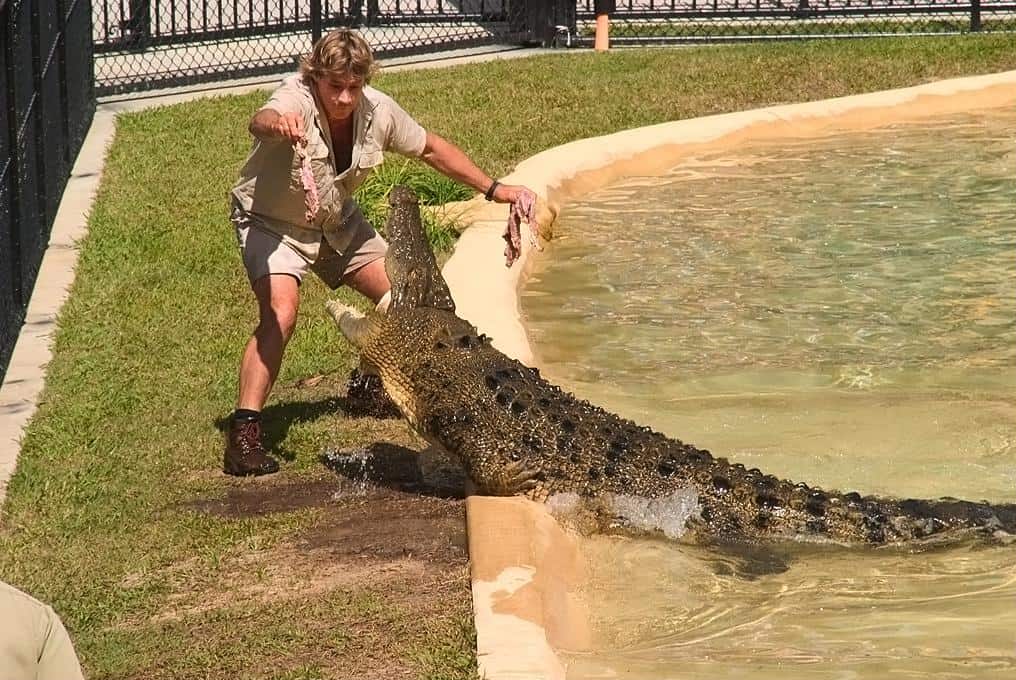
As a child, Irwin joined his father in crocodile relocation expeditions.
©Sheba_Also 43,000 photos / CC BY-SA 2.0 / Wikimedia Commons – Original / License
In the late 1970s and 1980s, saltwater crocodiles were routinely shot or euthanized when they threatened local communities. Irwin changed that by trapping “rogue” crocodiles for the government and developing non-lethal capture and relocation methods that minimized stress on the animals.
He used ropes, physics, and simple tricks — such as placing a towel over a crocodile’s eyes to help keep it calm — helping to set the foundation for modern crocodile safety.
But Irwin understood that safely moving a crocodile was only the beginning. Partnering with the University of Queensland, he helped launch long-term satellite tracking projects, gathering crucial data on crocodile behavior and creating the world’s longest-running crocodile research project.
For Irwin, a crocodile was never a problem to be solved — it was a creature to be understood.
Protecting Wildlife Means Protecting Habitat
Steve Irwin also understood a simple truth: you can’t save animals without saving the places where they live.
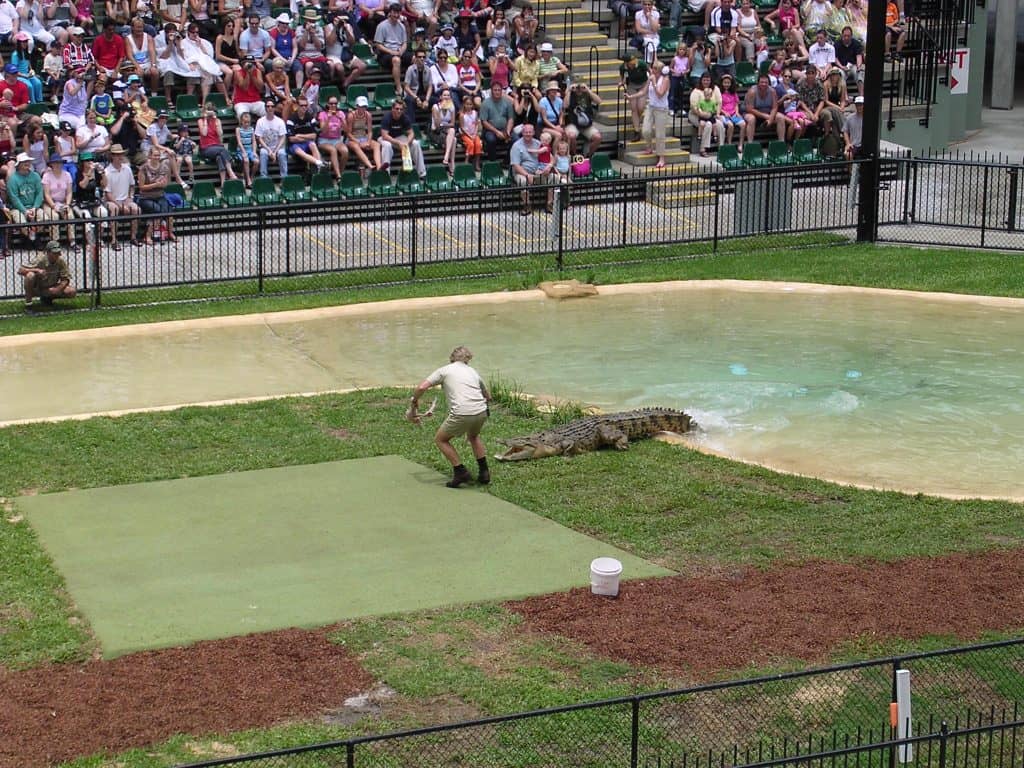
Irwin began developing his crocodile handling techniques when he was just nine years old.
©Biatch2 / CC BY-SA 3.0 / Wikimedia Commons – Original / License
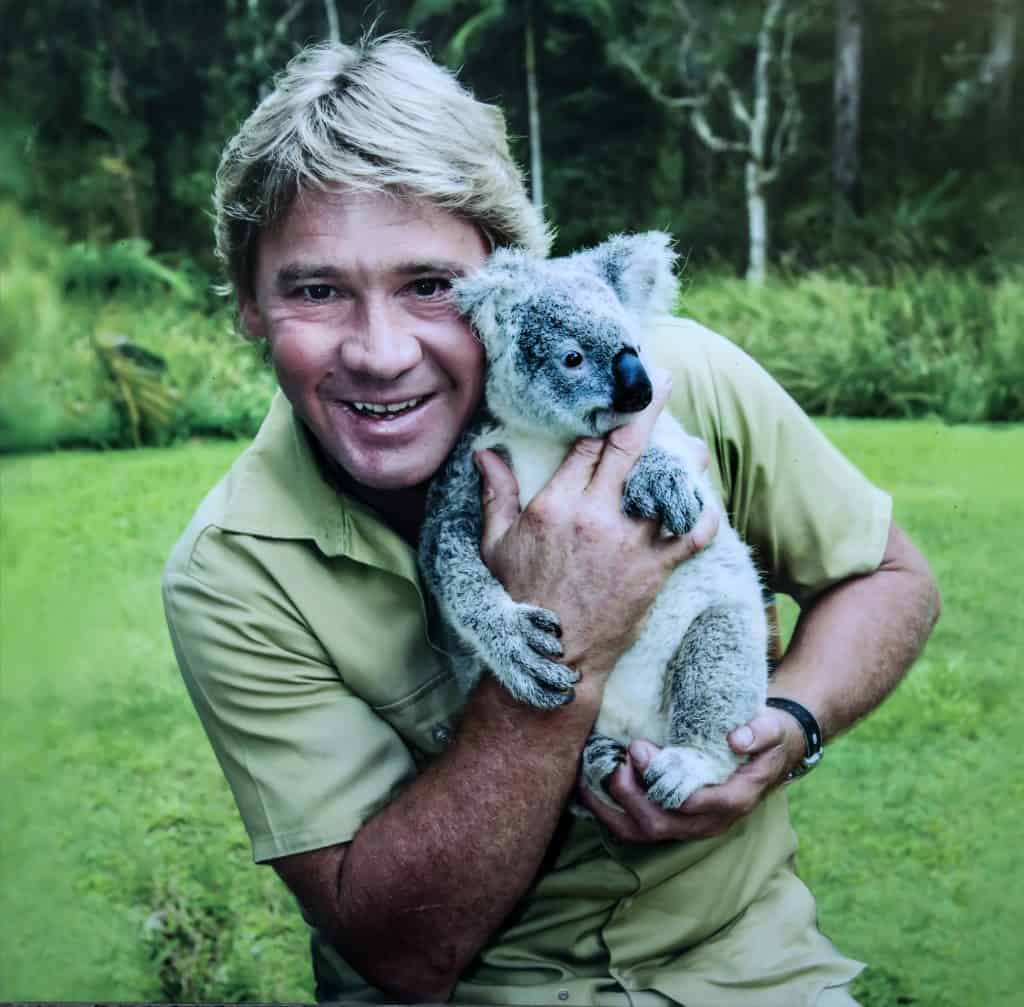
He used his own television earnings to buy land and restore habitats. At Ironbark Station in Queensland, he planted around 44,000 eucalyptus trees to rebuild destroyed koala ecosystems.
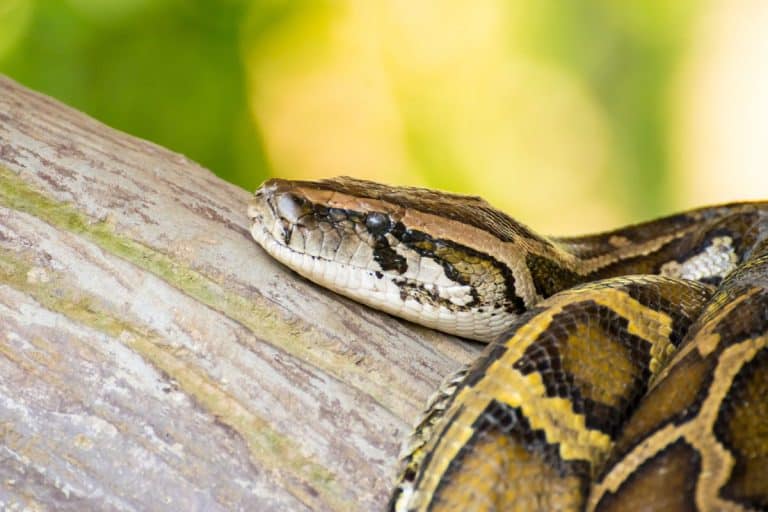
Later, Irwin purchased Mourachan, a massive 118,000-acre property in Queensland’s Brigalow Belt, to protect the endangered woma python and the vulnerable yakka skink.
By buying land and restoring ecosystems, Irwin showed that conservation isn’t just something to watch on a screen — it’s hands-on work that happens on the ground.
Today’s science communicators use many of the same tools — plain language, personality, humor, and genuine emotion — to engage global audiences through digital and social media.
If you can’t excite people about wildlife, how can you convince them to love, cherish, and protect our wildlife and the environment they live in?
Steve Irwin, The Crocodile Hunter: The Incredible Life and Adventures of Steve and Terri Irwin (2002)
Building a Wildlife Conservation Legacy
Irwin transformed his family’s wildlife park into an international hub for conservation, demonstrating that tourism could directly support real animal protection. Today, Australia Zoo directly funds animal care, research, and habitat protection.
Steve Irwin passed away on September 4, 2006.
©DaHuzyBru / CC BY-SA 4.0 / Wikimedia Commons – Original / License
In 1996, Steve and his wife Terri founded Wildlife Warriors, a non-profit that gives the public a direct way to support global conservation. The organization funds anti-poaching operations and protects species like black rhinos, Asian elephants, and Sumatran tigers.
Through Visionary Wildlife Warriors, the organization also encourages children aged 4 to 17 to lead hands-on conservation projects in their own communities.
By using zoo operations to cover business costs, the Irwins ensured that 100 percent of public donations go directly to field projects, land purchases, and wildlife hospital care — turning passive viewers into active conservationists.
A Hospital for Australia’s Wildlife
In 2004, the Irwins founded the Australia Zoo Wildlife Hospital, building a 24/7 rescue and rehabilitation facility to treat native animals and return them to the wild. The hospital treats between 9,000 and 10,000 sick, injured, or orphaned animals each year — at no cost to the public — and has cared for over 136,000 patients to date.
Irwin met his future wife, Terri Raines, at Australia Zoo.
©John / CC BY-SA 2.0 / Wikimedia Commons – Original / License
A dedicated 24/7 Rescue Unit responds to emergency calls across South-East Queensland. The hospital also doubles as a top-tier research center. Partnering with the University of Queensland, it leads studies on koala health, vaccine trials, and frog disease research.
In line with Irwin’s core belief, this ultimately illustrates that rescue, science, education, and conservation are most effective when they work together.
Protecting the Places Wildlife Call Home
Steve Irwin’s conservation vision also lives on in the landscapes protected by his family.
Established in 2007, the Steve Irwin Wildlife Reserve is a 450,000-acre reserve in Cape York that protects 35 distinct ecosystems — including savannahs, wetlands, rainforests, and perched bauxite springs — for species like Irwin’s turtle, northern quolls, and palm cockatoos.
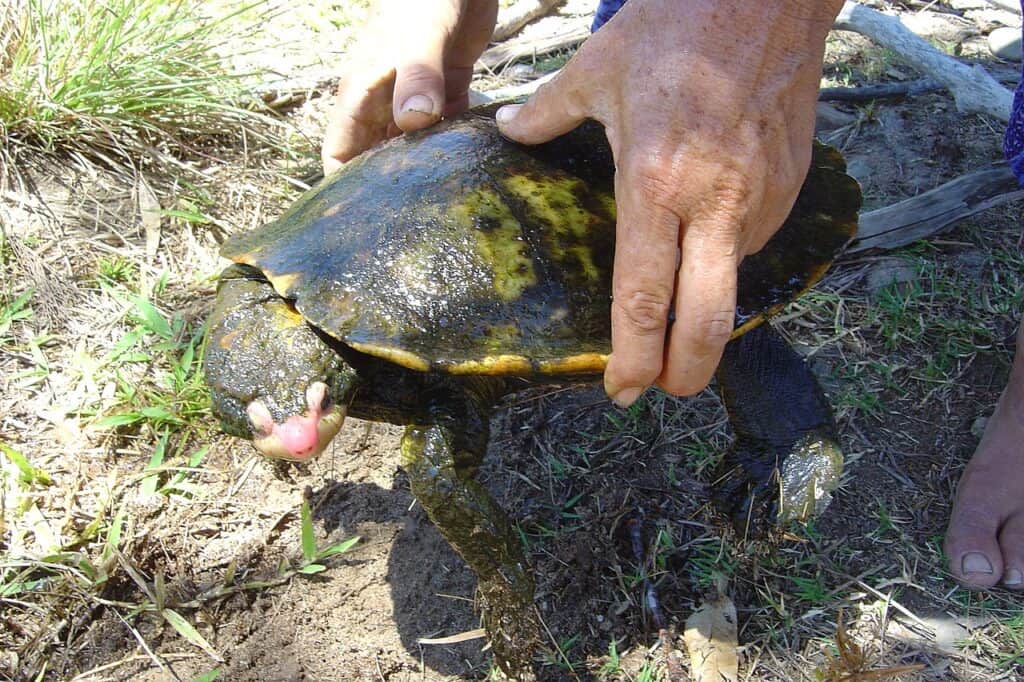
Irwin’s turtle was discovered by Steve Irwin in 1990.
©Ian Sutton from Oberon, Australia / CC BY 2.0 / Wikimedia Commons – Original / License
Following Steve’s death, Terri Irwin led a campaign with over 451,000 signatures to block proposed bauxite mining on the land. They secured its status as a Strategic Environmental Area, granting it higher legal protection than even the Great Barrier Reef.
Across 117,000 acres in Queensland’s Brigalow Belt, the family is actively restoring land cleared by farming to protect endangered species like the woma python and yakka skink.
We don’t own the planet Earth, we belong to it. And we must share it with our wildlife.
Steve Irwin, The Crocodile Hunter: The Incredible Life and Adventures of Steve and Terri Irwin (20
These reserves once again prove Steve Irwin’s philosophy that sometimes the most important thing you can do to save an animal is to save the place it calls home.
Science, Research, and Traditional Ecological Knowledge
Australia Zoo continues to build on Steve Irwin’s scientific legacy through long-term research and land stewardship. Every August, scientists return to the Wenlock River to track saltwater crocodiles, continuing the world’s longest-running crocodile research project.
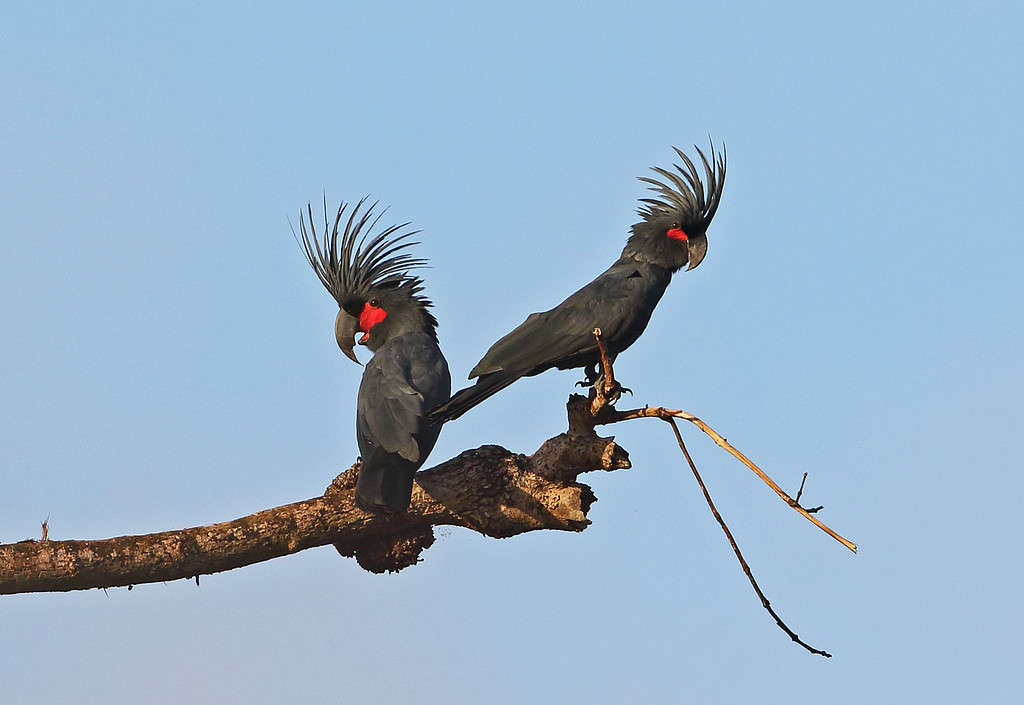
The palm cockatoo is the largest of all the cockatoo species.
©neil bowman/ via Getty Images
Research at the Steve Irwin Wildlife Reserve goes beyond crocodiles to study palm cockatoos, microbats, northern quolls, freshwater fish, native plant life, and hydrology.
Reserve rangers partner with Traditional Owners to integrate generational Indigenous ecological knowledge, including traditional fire-management practices, into modern land management.
By combining cutting-edge science with traditional wisdom, the zoo honors Steve’s core belief that protecting ecosystems requires understanding them from every perspective.
The “Irwin Effect”
Steve Irwin revolutionized science communication by showing that people must care about wildlife before they care about the science protecting it. Instead of starting with a lecture on ecology, Irwin opened with pure enthusiasm: “Look at this animal, isn’t it amazing?“
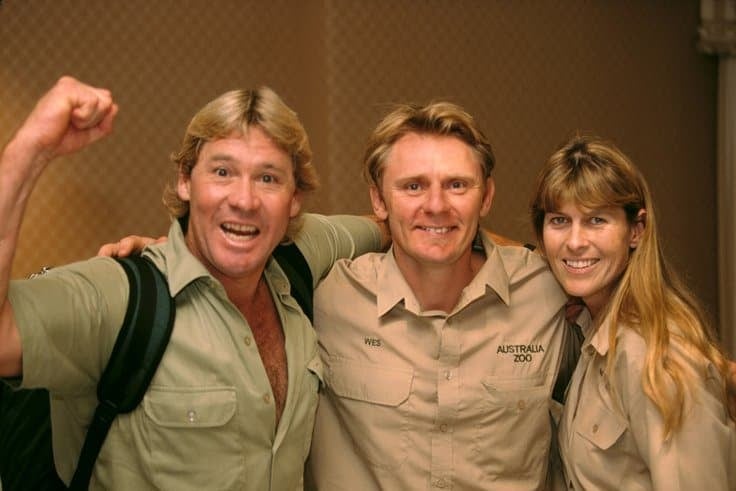
Steve Irwin, Wes Mannion, and Terri Irwin all worked together at Australia Zoo.
©Australia Zoo Pty Ltd / CC BY-SA 1.0 / Wikimedia Commons – Original / License
He replaced fear with fascination, proving that learning about animals should feel like an adventure rather than a classroom lecture.
Today’s science communicators use many of the same tools — plain language, personality, humor, and genuine emotion — to engage global audiences across modern digital media and social platforms.
Giving “Scary” Animals a Second Look
Steve Irwin’s true talent was turning fear into fascination, transforming dangerous predators into heroes of the natural world. He challenged the idea that only “cute and cuddly” animals deserved saving, using crocodiles, snakes, and spiders to spark global love for misunderstood species.
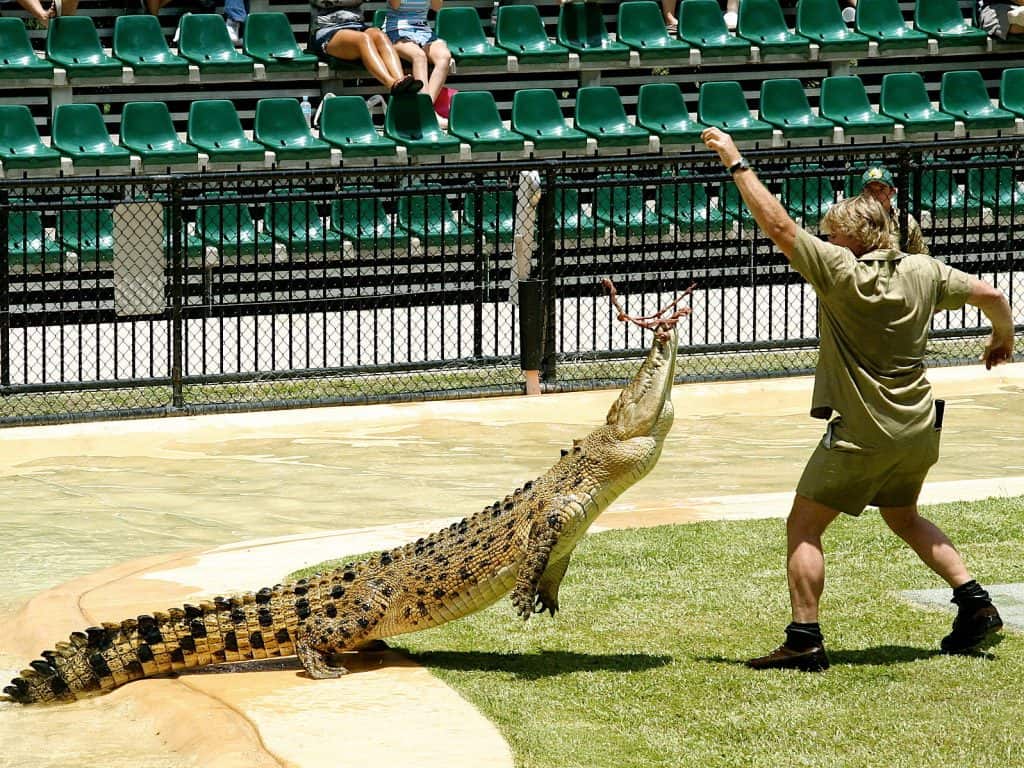
Irwin performed live crocodile shows inside a large stadium at Australia Zoo called the Crocoseum.
©Richard Giles / CC BY-SA 3.0 / Wikimedia Commons – Original / License
Irwin used individual animal stories to explain major ecological problems. Instead of keeping wildlife locked away, he taught people how to safely share landscapes with wild animals through understanding rather than fear.
From Television to Action
Steve Irwin understood the ultimate power of visibility: that people won’t fight to protect animals or habitats they don’t know exist.
He used his massive television platform to shine a light on real conservation work, channeling public fascination directly into funding for habitat loss, research, and rescue centers.
If we save our wild places, we will ultimately save ourselves.
Steve Irwin, The Crocodile Hunter: The Incredible Life and Adventures of Steve and Terri Irwin (2002)
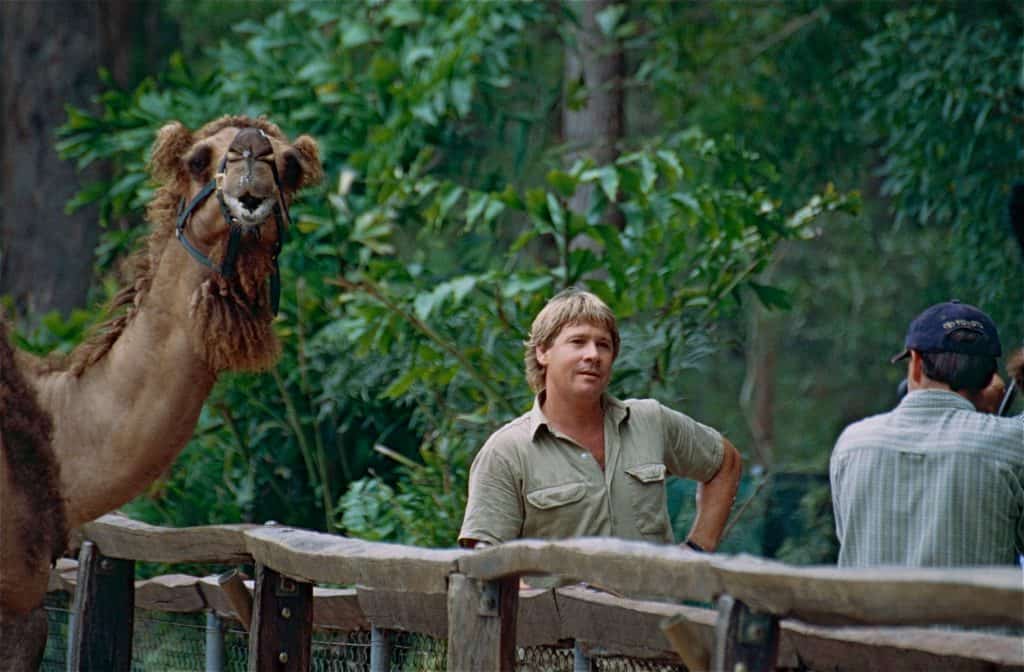
Irwin made more than 100 wildlife documentaries during his lifetime.
©Bernard DUPONT from FRANCE / CC BY-SA 2.0 / Wikimedia Commons – Original / License
Irwin pioneered a strategy that many conservationists use today on digital and social media — using powerful storytelling to reach millions of people and turn views into real-world donations, petitions, and direct action.
His legacy left a simple but powerful framework for inspiring change: tell people a compelling story, make people care, and give them a way to help.
A Family Legacy
The clearest proof that Steve Irwin’s philosophy endures is the work of his family — Terri, Bindi, and Robert — who carry the mission into a new generation through Australia Zoo and Wildlife Warriors.
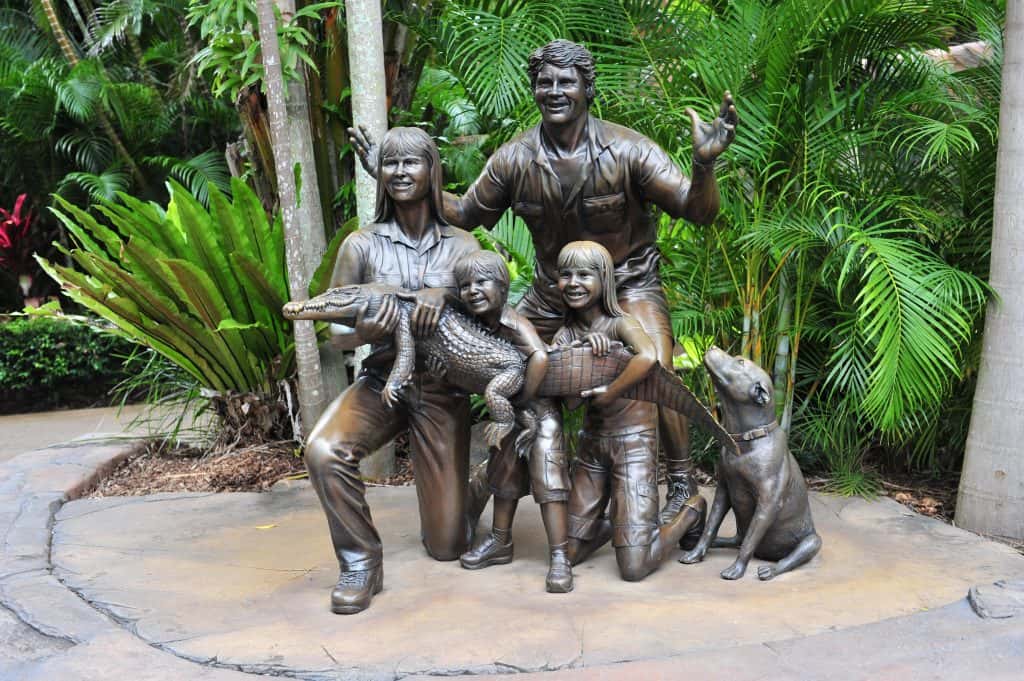
Irwin’s wife, Terri, and their children manage Australia Zoo today.
©thinboyfatter / CC BY 2.0 / Wikimedia Commons – Original / License
Robert Irwin uses modern visual storytelling techniques to grow his father’s message, blending his father’s passion for fieldwork with award-winning environmental photography. In 2020, he won the Photographer of the Year People’s Choice Award for Bushfire, a striking drone image capturing the destruction of Australia’s Black Summer fires. Robert also actively participates in the annual crocodile tracking on the Wenlock River and serves as a Global Ambassador for Prince William’s Earthshot Prize.
Both Bindi and Robert competed on — and won — Dancing with the Stars, taking their father’s conservation message to a massive new audience. Winning the mirrorball trophy gave both siblings a whole new platform to share their passion for wildlife with millions of viewers who might never have tuned into a traditional nature documentary.
Through programs like Visionary Wildlife Warriors, television, photography, research, and even ballroom dance, the Irwin family continues to prove that Steve’s legacy isn’t static — it’s alive and thriving, constantly reaching new audiences in unexpected ways.
Steve Irwin’s Enduring Conservation Legacy
Steve Irwin’s ultimate legacy isn’t just the animals he rescued — it is the millions of people he inspired to care. He understood a simple truth: people only protect what they feel connected to.
He turned feared predators like crocodiles and snakes into charismatic heroes, making wildlife rescue an inspiring human story.
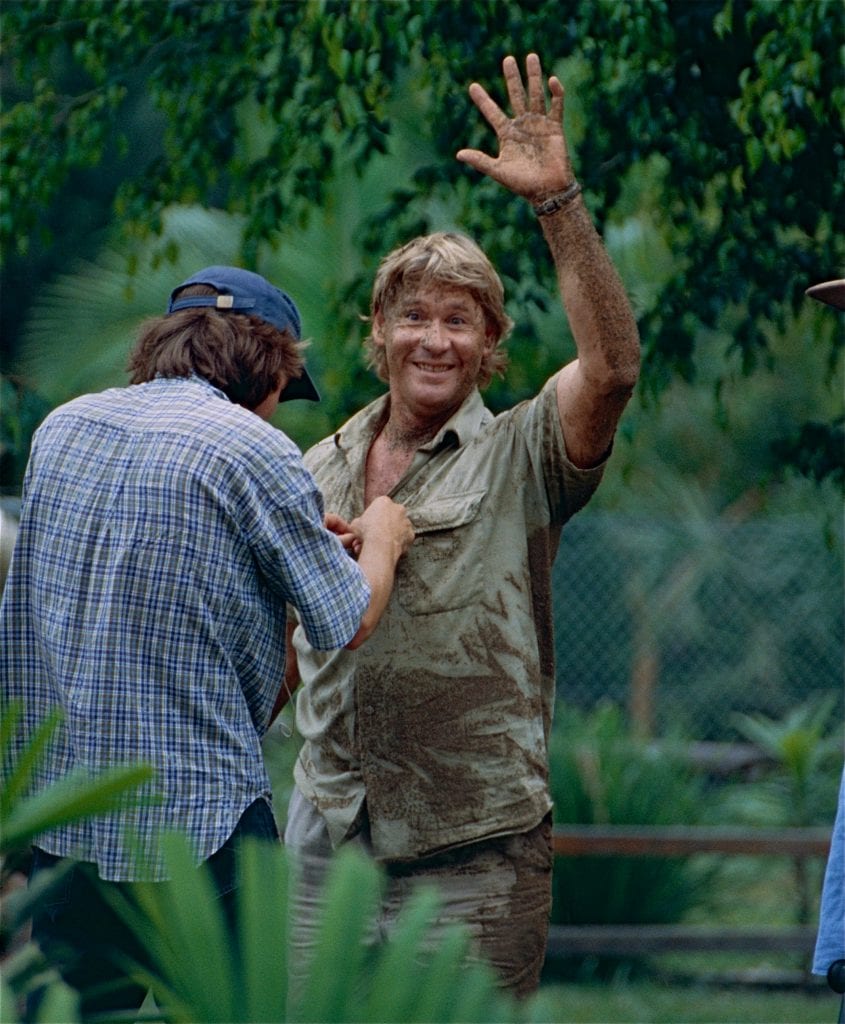
Irwin was posthumously awarded a star on the Hollywood Walk of Fame in 2018.
©Bernard DUPONT from FRANCE / Wikimedia Commons – Original / License
Irwin connected public excitement directly to science, land conservation, wildlife rehabilitation, and long-term funding. Decades later, his mission continues to thrive through Australia Zoo, Wildlife Warriors, protected conservation reserves, field research, and a global community of advocates.
Steve Irwin never asked us to watch nature safely from the sidelines. He invited us to jump in, get excited, understand, protect, and above all — to care.