
Ribbon worms, or “proboscis worms,” are in the phylum Nemertea. Most species in this phylum live in the water, but a few are terrestrial or parasitic. These are unique creatures with a lot of odd traits. If you’re not too squeamish about these slippery sea worms, continue reading to learn more about these strange animals.
What Are Ribbon Worms?
Ribbon worms are a mostly aquatic worm-species without segments that are bilaterally symmetrical. This means they are the same on both sides if you were to split the ribbon worm directly down the middle from tip to tip. Earthworms and other segmented worms like leeches (as a group these are referred to as “annelids”) have a set of organs in each segment throughout their bodies. Proboscis worms and other unsegmented worms have their organs distributed throughout the entire length of their body. Interestingly, the ribbon worm has a unique anatomy that consists of separate holes for the mouth and anus, as well as a stomach and intestines. This is a trait not common in many kinds of worms.
One of the odd things about these worms are their proboscis. This is an organ the worms use to catch prey. It is also useful in helping the worm’s locomotion. The muscles around the proboscis, which extends from the stomach out to the proboscis opening (called a “pore”) contract to push out the proboscis.
In the class Enopla, this proboscis also features nail-like projections called “stylets”. The stylets are similar to fangs in a snake because they can inject neurotoxins into the prey. They frequently break, but fortunately can regrow for future attacks.
Is the Ribbon Worm the Longest Animal?
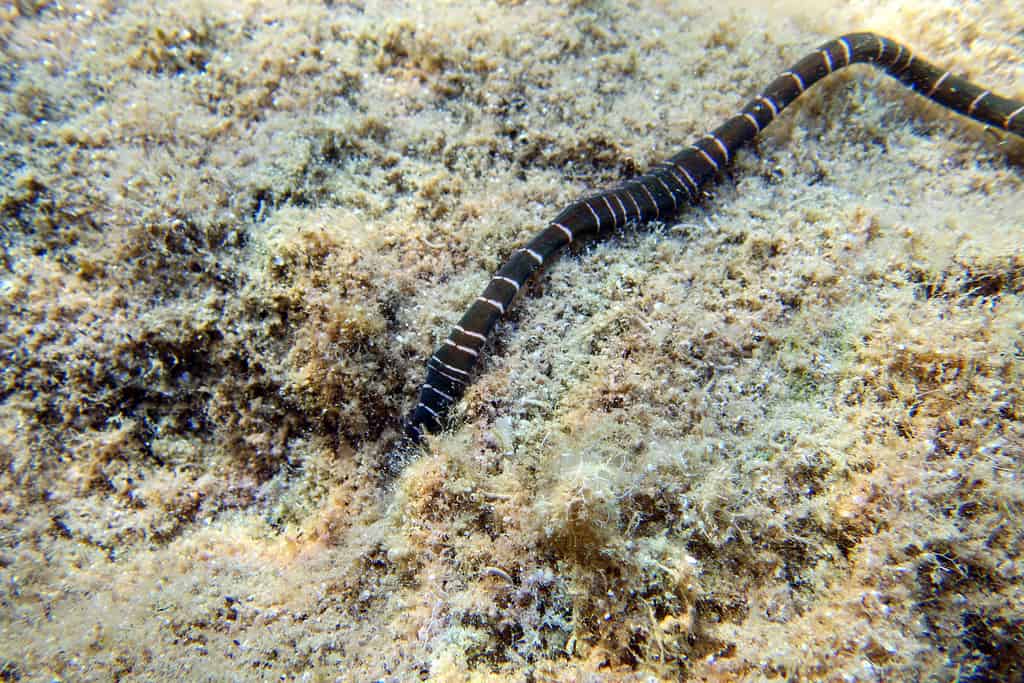
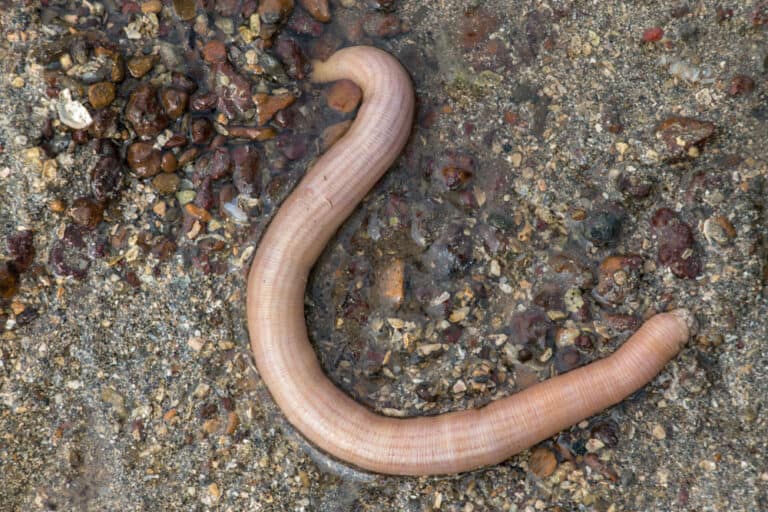
The banded bootlace sea worm is one of the largest members of the Nemertea phylum.
©vojce/ via Getty Images
They are indeed one of the longest animals we know of on Earth. Most specimens are 8 inches long, but the longest ribbon worm can be 98 feet long! Imagine two full-sized shipping containers stacked on top of each other. That is about how long the longest ribbon worm would be when fully stretched. Many ribbon worms exist in a bundled mass most of the time. When they’re in a coil, it can be difficult to see how long they really are. This can make it is easy to mistake one worm for many.
Many other giant creatures on the planet are also from the ocean. This includes the blue whale and the siphonophore, which is technically many individual animals making up one long chain.
Do Ribbon Worms Have a Brain?
While ribbon worms don’t have brains as we think of them, they do have a nervous system. This nervous system consists of four ganglia situated throughout the body. A ganglia is a bundle of nerve masses. These are on the anterior end of the worm near the mouth and surrounding the digestive system.
The nervous system of these seemingly simple animals allows for them to have chemoreceptors. These allow for the worm to sense not only food and potential mates, but also can give them information about their surroundings. They can perceive light but cannot make out actual images. But perceiving light is good enough for these frequently deep-sea dwelling worms.
As far as other necessary organs go, it might be surprising to find out that these are some heartless creatures. However, they do still have blood and a circulatory system. Instead of the heart doing the blood-pumping, the blood is in vessels, like in humans. The contractions of the worm’s muscles help to facilitate movement of the blood throughout its body.
Do Ribbon Worms Regenerate Their Bodies?
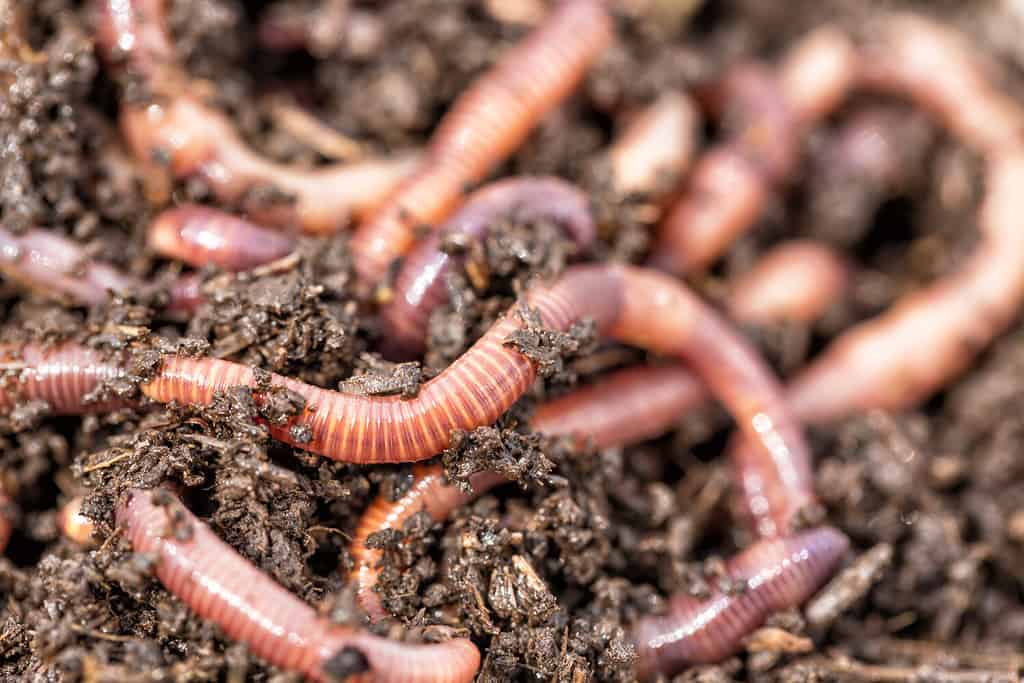
Almost all segmented worms have the ability to regenerate their bodies.
©Nick N A/Shutterstock.com
Not all ribbon worms have the supernatural ability to regenerate their bodies when cut or injured. However, the species Lineus sanguineus and a few other species of ribbons worms do. They can regenerate from a tiny portion of their body as long as it still has a lateral nerve intact.
Regeneration speeds might vary among species, but L. sanguineus can regenerate a noticeable head and tail in around one to two weeks. But not every species that can regenerate is equal. For example, L. lacteus cannot regenerate a lost head.
Are Ribbon Worms Dangerous?
Ribbon worms have a variety of venoms and poisons used to defend themselves. Some species of ribbon worm contain the infamous tetrodotoxin. This toxin can cause paralysis of the organs and possibly death if consumed. There is also some evidence that simply handling certain species of ribbon worms can cause inflammation on the site which touches the worm (frequently the hand).
For the most part, ribbon worms are not dangerous to humans. Most species live in marine settings in the benthic zone as bottom-dwellers, which is usually far deeper than most humans will venture. While there are some freshwater and terrestrial species, we’re too large and complex to be on their menu. These are predatory worms that eat other worms, mollusks, and crustaceans. Even the largest ribbon worm is unlikely to take notice of a human in its environment.