
Quick Take
- One study found that rats emitted ultrasonic vocalizations when they were subjected to manual somatosensory stimulation, i.e., tickling.
- The results of this controversial research were published in the October 2000 issue of the journal “Behavioural Brain Research.”
- Quantitative analyses of the behavior have seen acceptance of the idea grow.
- Scientists found that tickle-enjoying is a fairly stable individual trait in rats.
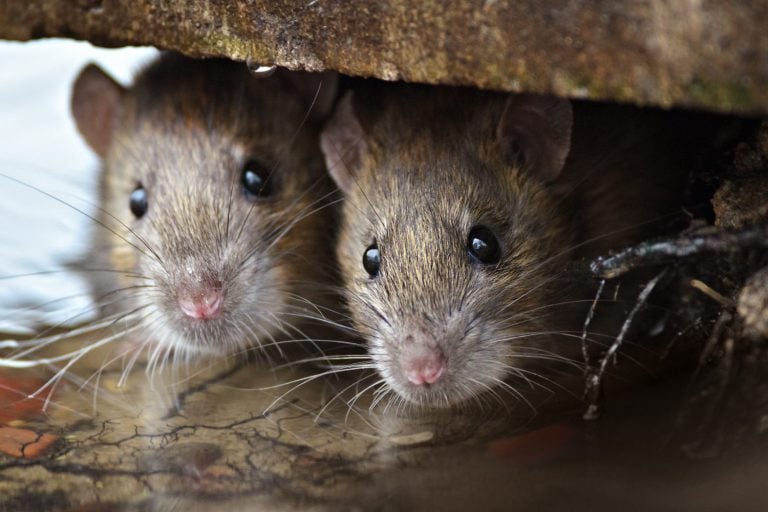
If you think laughter and comedy are reserved strictly for humans, you’d be wrong. A study in the late 1990s showed that creatures like rats emit ultrasonic vocalizations while playing with or anticipating the opportunity to play with other rats. To make matters sillier, rats emitted similar vocalizations when they were subjected to manual somatosensory stimulation. In other words, rats laughed from being tickled.
It’s the type of controversial research that could either lead to an unexpected slush of funding or far stricter oversight regarding scientific experiments. Luckily, there are thousands of research departments out there, embarking on strange quests for knowledge. It may seem silly, even trivial, in the annals of scientific discovery. However, the discovery that rats can laugh provides real insight into the inner lives of animals. More and more, humans discover that even tiny animals are not so different from us, after all. Let’s learn more about this research and how scientists discovered that rats laugh when subjected to play time and tickles.
The 50-kHz Chirp

Rats appear to emit ultrasonic 50-kHz chirp sounds when reacting positively to stimuli, akin to laughter.
©New Africa/Shutterstock.com
The study’s name explains the experiment pretty well: “50-kHz chirping (laughter?) in response to conditioned and unconditioned tickle-induced reward in rats: effects of social housing and genetic variables.” It was published in the October 2000 issue of the journal “Behavioural Brain Research.” However, it found a second life in Wired Magazine. The story is as follows:
Neuroscientist Jaak Panksepp and colleagues found out that rats emit a unique ultrasonic vocalization while playing or anticipating playtime. This 50 kHz chirp that the rats emitted seemed to point to a positive emotional state. Furthermore, the rats also seemed to emit this chirp when scientists tickled them, much more than any other activity. These tickles, done with the right hand, consisted of “rapid initial finger movements across the back with a focus on the neck, followed by quickly turning the animals over onto their backs, vigorously tickling their ventral surface, and then releasing them after a few seconds of stimulation.”
Despite being brisk and assertive, each tickling maneuver, which was repeated throughout each session, was done in a way to prevent frightening the rats.
The Heart of the Laugh
According to Wired, researchers first trained rats to press certain levers. One lever was supposed to be a response to a tone to receive a morsel of food. The other lever was supposed to be pressed in response to a different tone to avoid an electric shock. After the rats had figured out that one tone meant “food” and the other lever meant “ouch,” scientists divided them into two groups. One of those groups got tickled. The other just got handled normally. After that, scientists gave the rats another tone, this time an ambiguous frequency between the two they were trained on.
The tickled rats seemed to interpret the ambiguous sound more optimistically. They pressed the food-reward lever a lot more than the shock avoidance lever. Specifically, only rats that responded to tickling with many ultrasonic ‘laughter’ vocalizations showed such optimism. Interestingly, there were some rats that didn’t like being tickled either way. They didn’t respond to the experience with laughter. The ones that did were considered more optimistic, as they expected a reward rather than punishment.
Hilarious Hindsight

Rats with a penchant for laughing can be selected for breeding that shows results in just four generations.
©Volodymyr TVERDOKHLIB/Shutterstock.com
Other neuroscientists greeted the discovery of rat laughter in the late 1990s with scorn, derision, and, well, humor. As time has gone on, however, quantitative analyses of the behavior have seen acceptance of the idea grow. A new frontier in science regarding the inner lives and experiences of animals bolsters such claims. Other experiments also show that rat laughter is not only very real but also heritable.
Scientists found that tickle-enjoying is a fairly stable individual trait in rats. These rats are less neurotic on average and better able to handle stress. This means it can be selected for through breeding. As such, scientists have bred a strain of rats that love to be tickled. It took only four generations to turn playful rats into ‘tickle monsters’—rats that love to play, be tickled, and laugh during both experiences.
Other researchers even found that rat laughter can reflect personality differences related to the rate of hippocampal neurogenesis, or the birth of new nerve cells in the hippocampus. While decreased hippocampal neurogenesis is associated with depression in humans, no one is quite sure if a low rate causes depression or if depression decreases neurogenesis. Scientists discovered, via rat laughter, that repeated tickling “increased neurogenesis only in the rats that enjoyed tickling and responded to it with laughter; that is, increased neurogenesis depended on an interaction between a certain stimulus (tickling) and the individual rat’s disposition.”
It seems that when done correctly, even ‘silly’ experiments can lead to startling scientific insights.