
Dogs in Chernobyl are a varied group. While they are typically descended from shepherd breeds, their coloration and markings differ. The typical colors of dogs are brown, black, and white. This is why, when a very different coloration of dog was reported from Chernobyl, many wondered if radiation was to blame. But after a month of trying to track down the cause, the question remains: why are blue dogs showing up in Chernobyl?
Why Dogs Are Turning Blue in Chernobyl

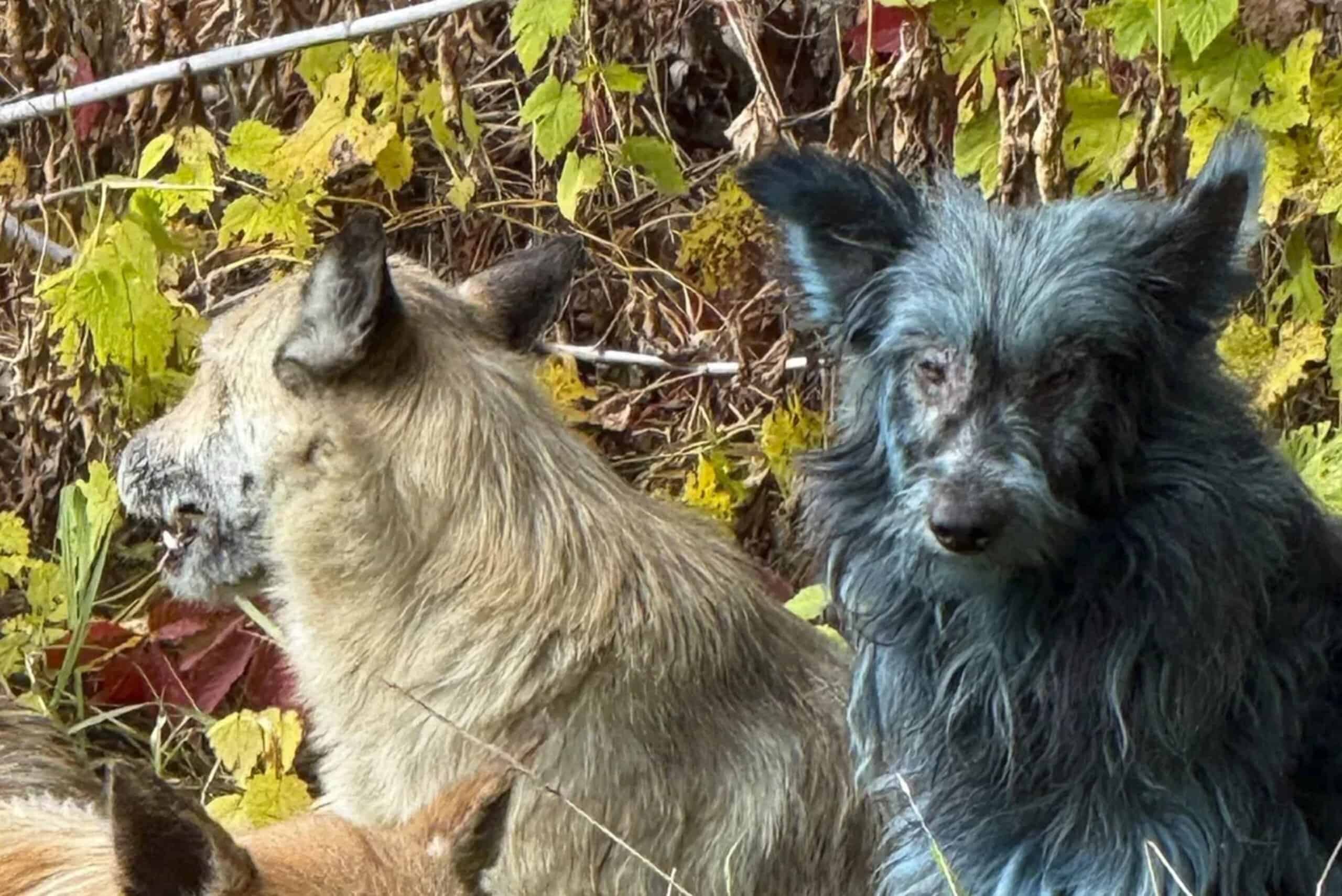
Dogs have been showing up in Chernobyl with an odd blue coloration.
© – Original
Over the years, stories have been reported on the dogs of Chernobyl and their ability to survive in one of the highest radioactive regions in the world. But a recent Instagram post from the Dogs of Chernobyl organization has drawn particular attention. This is because the dogs in the video are blue. When the Instagram video was first posted, the organization was unclear about the exact reason why.
“A very unique experience we have to discuss. Chernobyl blue dogs,” the Dogs of Chernobyl organization writes. “We are on the ground catching dogs for sterilization, and we came across three dogs that were completely blue. We are not sure exactly what is going [on].”
The organization continues, “The town people were asking us why the dogs were blue? We do not know the reason, and we are attempting to catch them so we can find out what is happening. Most likely, they’re getting into some sort of chemical. They seem to be very active at this point.”
In the last week, Dogs of Chernobyl Veterinary Medical Director, Dr. Jennifer Betz, confirmed that it was likely a chemical versus something related to radiation that caused the dogs’ fur to turn blue.
“They appear to have been rolling in a substance that had accumulated on their fur. We are suspecting that this substance was from an old portable toilet that was in the same location as the dogs,” Dr. Betz tells IFLScience. “However, we were unable to positively confirm our suspicions.”
The reason the porta-potty was blamed as the culprit was its proximity to the dogs’ location. Given that portable toilets tend to have a blue chemical in them, it is a reasonable assumption that the dogs somehow gained access to it and have now turned blue.
Fortunately, according to Dr. Betz, the dogs “appear healthy” and “as long as they don’t lick the majority of the substance off of their fur,” they likely will remain that way.
However, because the dogs could not be captured for analysis, the cause of the blue coloration remains speculative.
Not The First Time Chernobyl Dogs Have Unusual Colorings
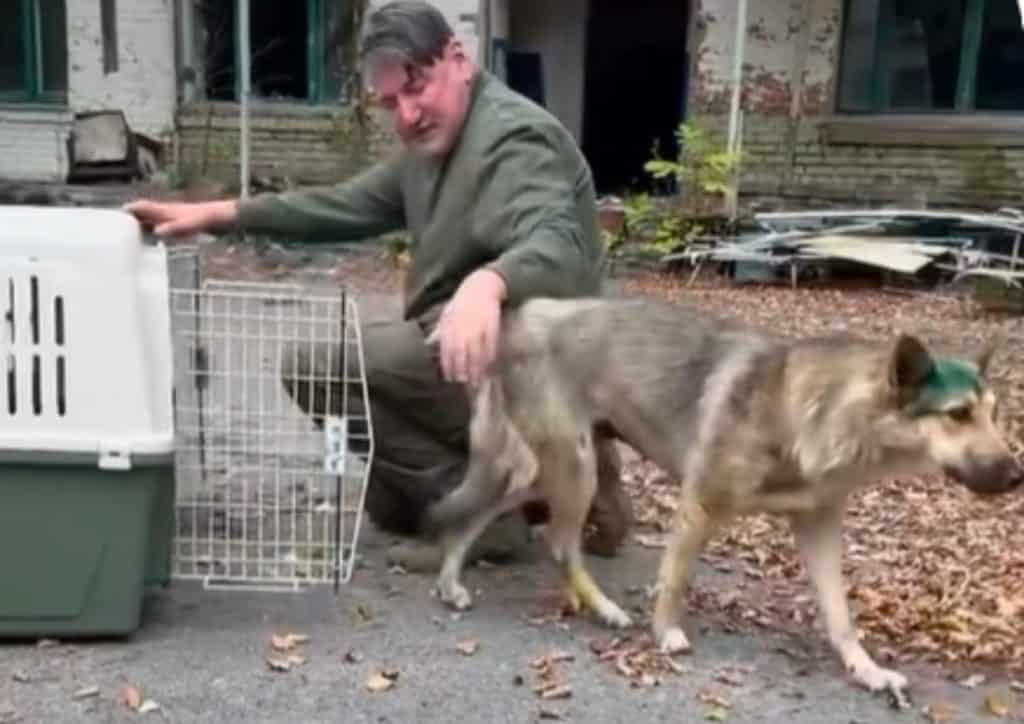
Dogs will have markings on their heads after being spayed or neutered by the Dogs of Chernobyl organization.
© – Original
This is not the first time dogs in Chernobyl have been seen with colored fur. From time to time, there are also marks on the dogs’ heads in various colors. This is not caused by radiation, but is instead the result of a sterilization campaign conducted by Dogs of Chernobyl.
“During our sterilization campaign,” Dr. Betz tells Science That Matters, “we apply a temporary crayon marker on the top of their head in the color green, red, blue, or purple, to identify which dogs we have recently performed surgery on.”
Dr. Betz continues, “This washes off in 2 to 3 days. This coloring is only on top of their head[s] and is completely different from the dogs that we encountered that were almost covered head to toe in blue substance.”
The reason there are sterilization campaigns in Chernobyl is to keep the dog population under control in a region where resources are limited and are often provided by workers at the power plant or volunteer organizations. But why are there so many stray dogs in Chernobyl to begin with? The answer to that question starts with a radiation disaster that occurred decades ago.
Why Are There Dogs In Chernobyl?
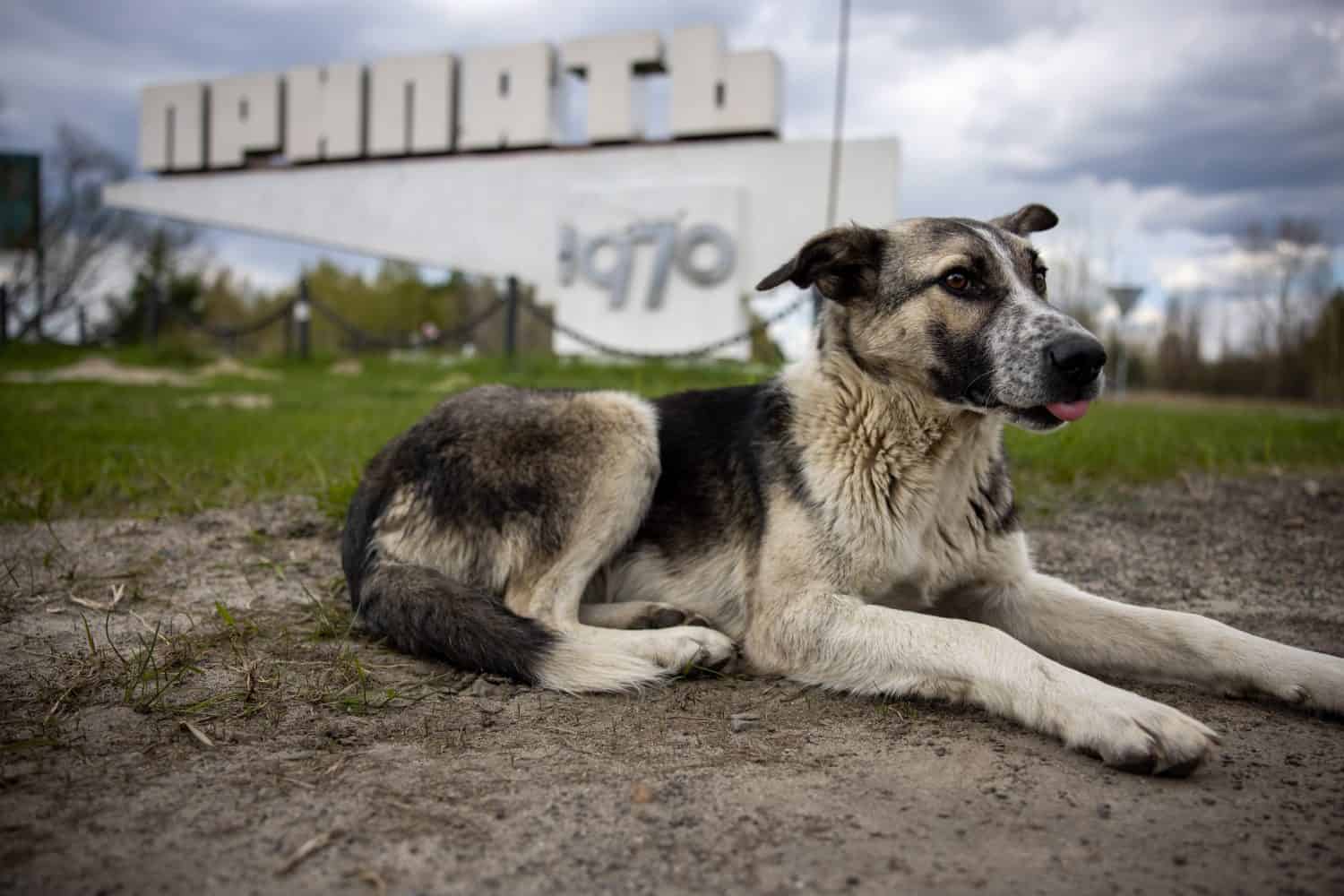
Stray dogs are in Chernobyl and the surrounding areas as a result of a nuclear explosion in 1986.
©Anton Yuhimenko/Shutterstock.com
The reason there are dogs in the Chernobyl Evacuation Zone has to do with the fact that dogs were left behind in staggering numbers over 40 years ago, after one of the worst nuclear disasters in history occurred. In 1986, the city of Chernobyl had a population of approximately 14,000, while the nearby city of Pripyat, built for the nuclear power plant workers, had about 49,000 residents. In April of that year, a nuclear explosion occurred at a nuclear power plant that was housed in the city. This caused not only Chernobyl to be evacuated, but also the surrounding areas. In total, 68,000 people were evacuated, and in the following days and weeks, over 360,000 people were relocated.
When people were evacuated, they were not allowed to take their pets with them. Therefore, an untold number of dogs were left behind. How many dogs perished due to radiation exposure is not known. However, over the years, descendants of those dogs have not only survived but also thrived. This is primarily due to the workers and volunteer organizations that help care for the dogs by providing food, water, and veterinary care.
Dogs are not the only animals that have increased in numbers since the explosion. Wild animals like bears, wolves, and the rare Przewalski’s horse have seen their populations grow as the Chernobyl Exclusion Zone returns to its wild roots, free of human interference. While there are still high levels of radiation in some areas, making Chernobyl and the Chernobyl Exclusion Zone unsafe to live in, many dogs continue to live in the region and will likely do so for generations to come.
How Many Dogs Still Live in the Chernobyl Exclusion Zone?
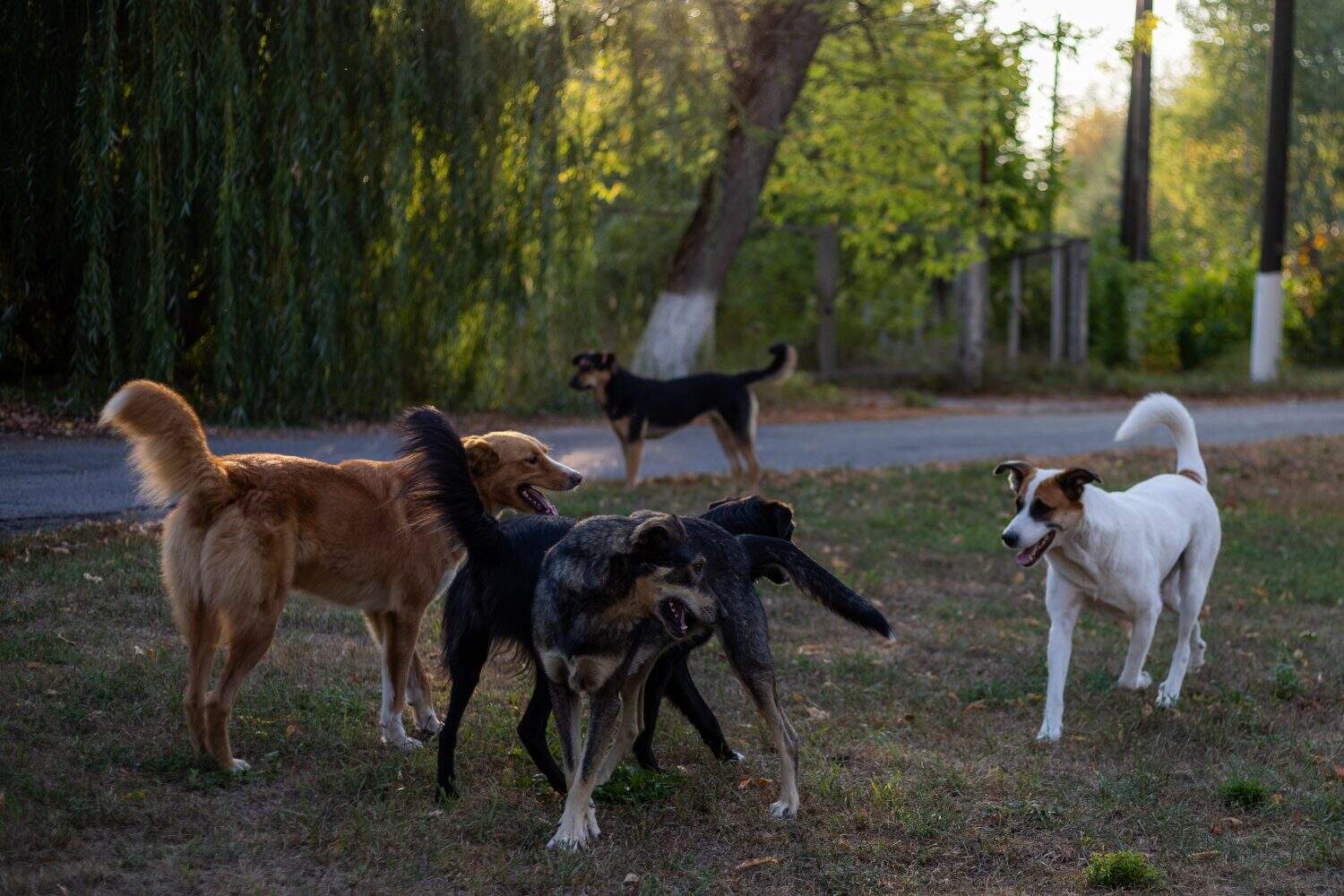
The exact number of dogs living in the Chernobyl Exclusion Zone may never be known.
©Jamie Adams/Shutterstock.com
Currently, the exact number of dogs that live in the Chernobyl Exclusion Zone is unknown. This is largely because most of the dogs are afraid of people, due to their limited interaction with humans. It is estimated that 800 dogs living in and around the region are fed by workers who maintain the nuclear power plant and regularly test for elevated radiation levels. However, these are only the dogs who have contact with people. Some volunteer organizations that care for the dogs, such as Dogs of Chernobyl, believe there could be many more on the outskirts of the Chernobyl Exclusion Zone.
Even more interesting is that there are populations of dogs that have survived over the decades and are entirely separate from one another. Therefore, they have distinct characteristics, leaving researchers wondering how this will affect the populations in the future.
There Are Two Distinct Populations of Dogs in Chernobyl
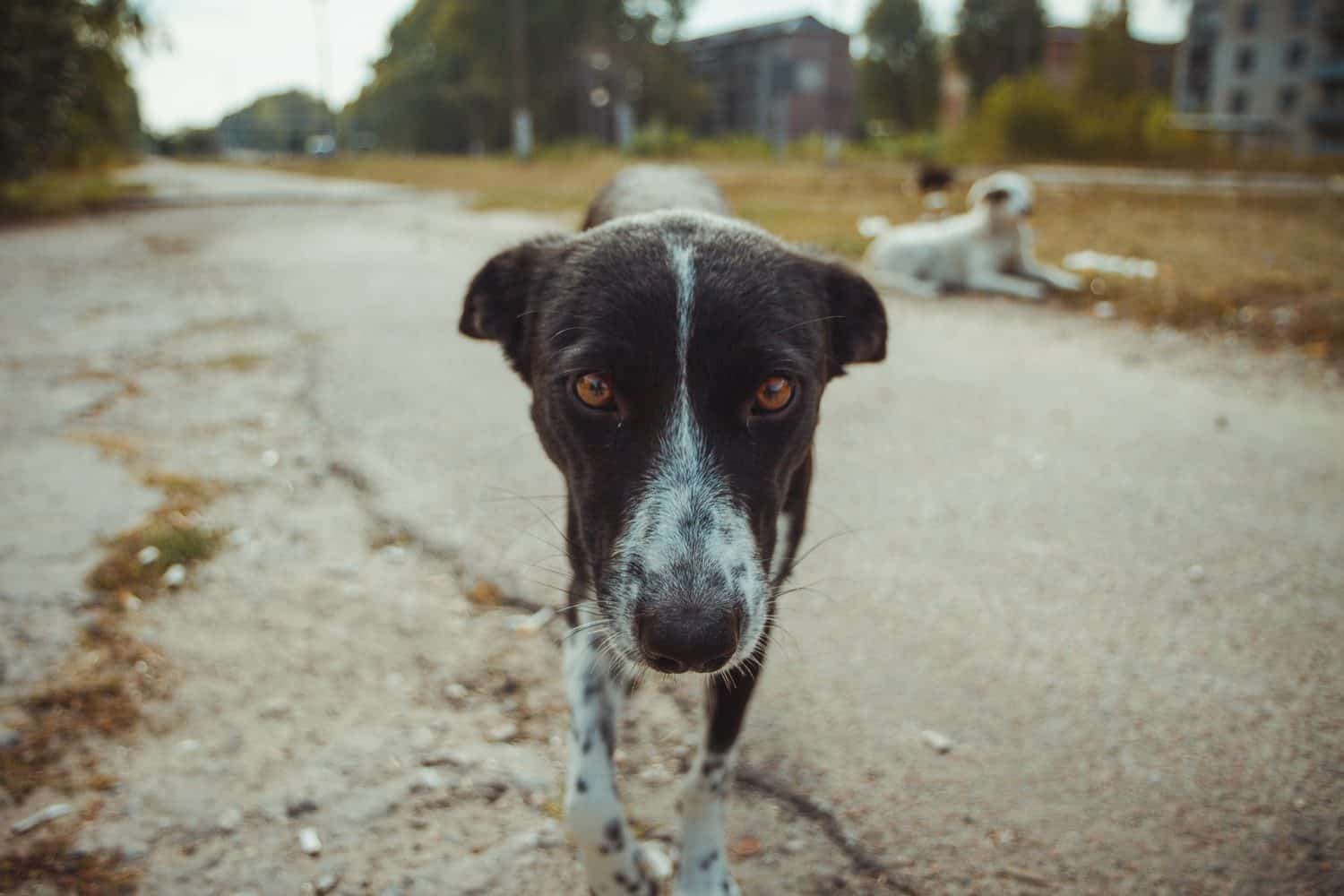
Two genetically distinct populations of wild dogs live in the Chernobyl Exclusion Zone.
©Sergiy Romanyuk/Shutterstock.com
After the explosion of the nuclear reactor, those dogs that would have been in the direct vicinity of the reactor would not have survived. Those who were in and near the city of Pripyat, Ukraine, would have fared better. These dogs are believed to be the original ones who survived long enough to procreate. Therefore, the dogs living in the Chernobyl Exclusion Zone today would be their descendants.
Along the way, something odd occurred. Instead of the dogs remaining in a single pack or even in separate packs in a general vicinity, two distinct populations formed over the years. Today, these populations do not come in contact with one another. This has resulted in the dogs developing different genetic profiles, not solely due to radiation exposure. The two populations, according to a 2023 study published in Companion Animals Health and Genetics, are likely genetically different due to both radiation-induced mutations and the environments in which the dogs live and survive.
However, scientists are quick to note that this is only the tip of the iceberg when it comes to learning about the genetics of the Chernobyl dogs. As the region continues to undergo radiation breakdown and become safer for scientists, more genetic studies will be conducted. Perhaps then the exact reason for the Chernobyl dogs turning blue can also be determined.