
Quick Take
- The cameras weren't even set up to find the ghost dog, and yet it managed to hijack an entire 25-year study. See how it hijacked the study →
- Scientists had one big theory for why it's almost never spotted. The new data proved them completely wrong. Discover the real reason →
- Its population numbers defy everything researchers thought they knew, and the real figure changes how we rank it against other Amazonian predators. Explore the population numbers →
- Losing this one elusive canine could quietly devastate the economies of entire countries, and the link between the two is truly unexpected. Uncover the economic link →
The Amazon is home to 10% of the planet’s known wildlife. With over 100 new species being revealed each year, there is still much to learn about the Amazon and the creatures that live there.
Animals in the Amazon tend to inhabit remote locations, which makes observing and understanding them difficult. However, one of the Amazon’s most elusive animals, the “ghost dog,” has finally revealed some of its secrets, thanks to non-invasive observation techniques used over the past 25 years.
“Ghost Dog” Turns Study About Ocelots and Jaguars on its Head
Camera traps are often set in remote locations to obtain an accurate estimate of an animal population within a square mile radius. Beginning in 2001, researchers in the Amazon were attempting to do just that with ocelots and jaguars. However, when the footage was reviewed, a different animal altogether caught researchers’ attention and, in doing so, changed the direction of the study.
According to a new study published in Neotropical Biology and Conservation, 34 camera traps were set up throughout the lowlands of Bolivia and Peru. Each station was sprayed with perfume to entice jaguars and ocelots to investigate the camera traps. However, the “ghost dog” made an appearance instead.
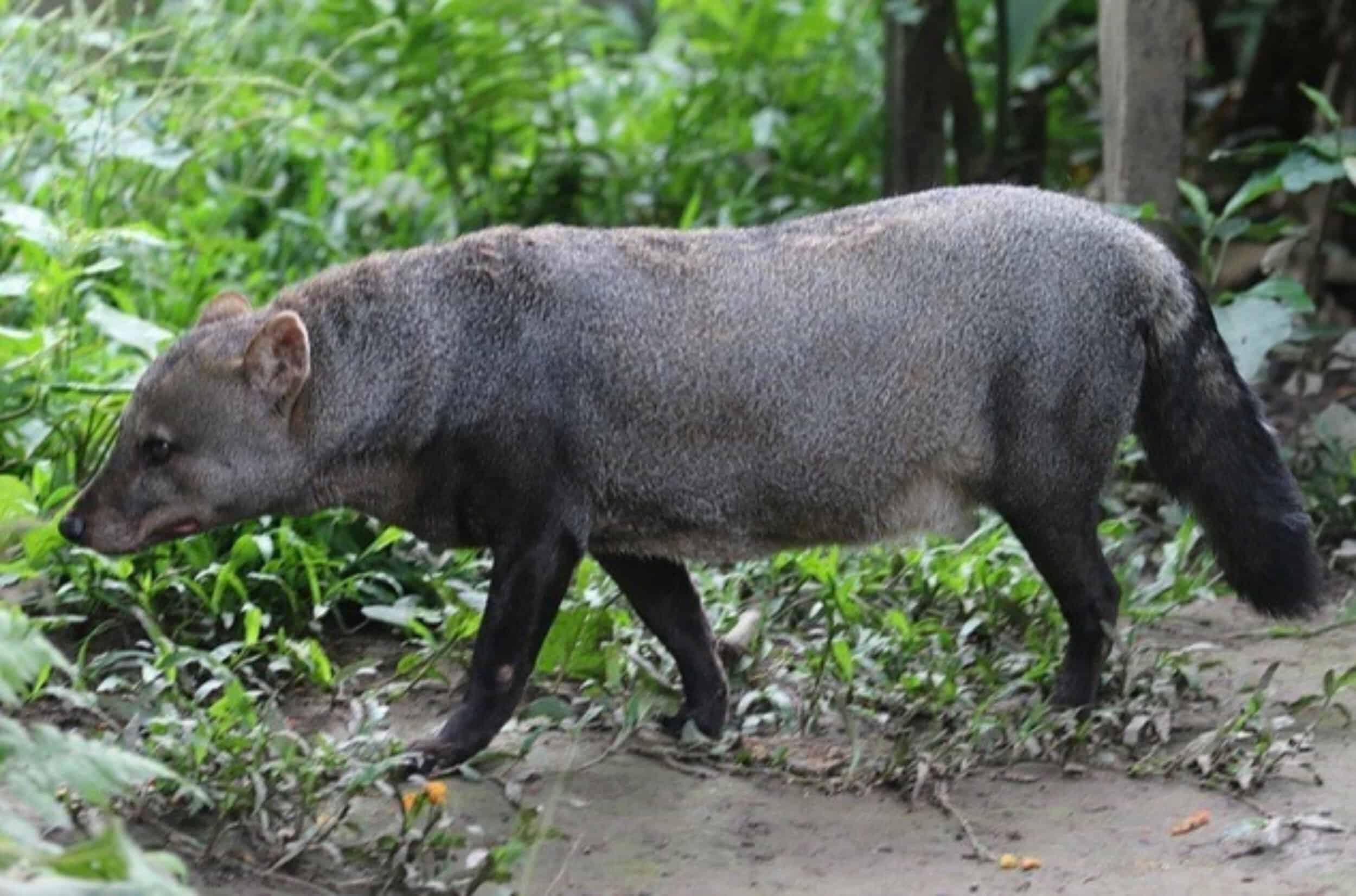
Short-eared dogs have made their presence known over the last 25 years on camera traps.
©Igor de le Vingne, CC BY-SA 4.0 , via Wikimedia Commons – Original
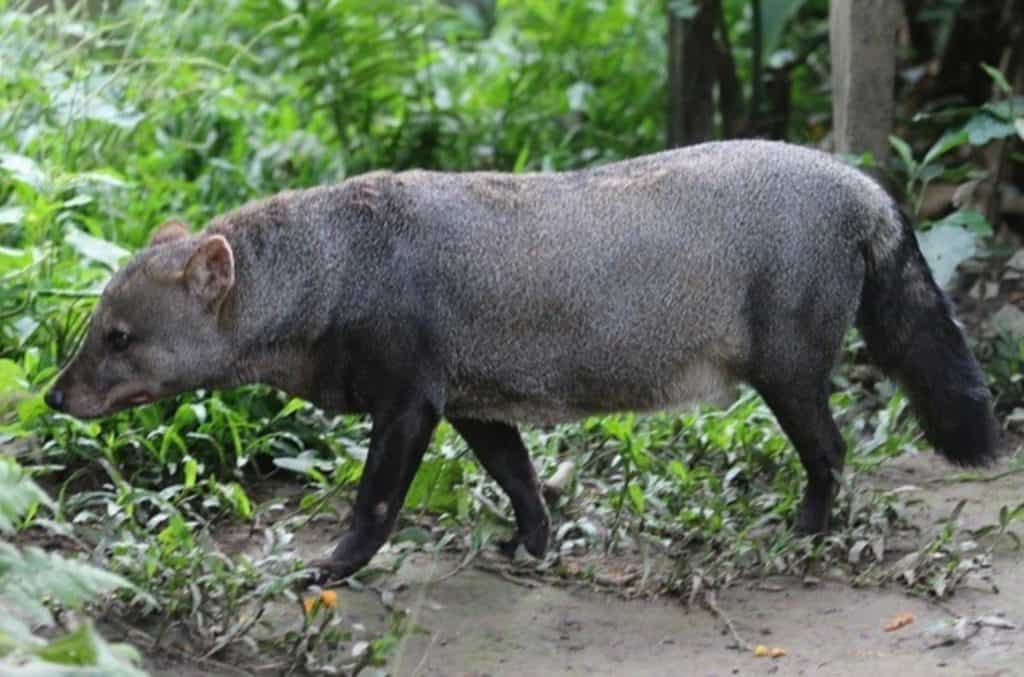
The “ghost dog” is the short-eared dog. Rarely seen, this canine has a head that resembles a fox. Instead of pointed ears, the short-eared dog has small, rounded ears. It has short, dark fur ranging from brown to gray and a bushy tail, akin to that of a fox. Interestingly, the short-eared dog also has webbed feet.
Between 2001 and 2024, the camera traps captured 4,635 different photos of the short-eared dog. Researchers believe this equates to 594 separate encounters with the trap cameras.
Very little is known about short-eared dogs. Most information comes from four museum specimens and rare field observations. It is hoped that the images captured by the camera traps will allow for a greater understanding of the once-mythical dog that roams the Amazonian forest.
Why the Short-Eared Dog is Rarely Seen
There is a reason the short-eared dog has the nickname “ghost dog” and why some believe the canine to be a mythical creature. The short-eared dog is rarely ever seen.
It was once believed that short-eared dogs were nocturnal or, minimally, were most active during twilight hours. However, as the new study showed, the short-eared dogs were active during daylight hours. They were most active from 6:00 AM to 12:00 PM and least active at night. Therefore, the lack of observations could no longer be attributed to short-eared dogs being active only at night.

Short-eared dogs are rarely seen because their habitat is so dense and untouched by humans.
©Mark Green/Shutterstock.com
Instead, the short-eared dog is rarely seen because of its habitat. The short-eared dog prefers untouched and intact forests. The canines do not want to be near rivers. Instead, they prefer upland Amazonian forests.
Not only is this location out of sight for most people, but it is also difficult to access. Consequently, the short-eared dog has remained a virtual mystery since it was first described in 1883.
Does This Mean There Are More Short-Eared Dogs Than Once Believed?
Before the study, sightings of the short-eared dog were extremely rare. So rare, in fact, that there were only two direct sightings by field biologists of the elusive canine. Now, it is believed that the infrequent sightings are not due to an extremely small population, but rather because the dogs live in habitats rarely visited by people.
According to Robert Wallace of the Wildlife Conservation Society and first author of the study, the short-eared dogs are “more abundant” than anyone had ever believed.

Camera-trap images reveal that there are more short-eared dogs than previously anticipated.
©Igor de le Vingne, CC BY-SA 4.0 , via Wikimedia Commons – Original
“The most surprising aspect of the results was that despite being an almost mythical beast, short-eared dogs are much more abundant than we had imagined,” Wallace explained in a press release.
While an exact population count is not possible, camera-trap observations suggest there are 15 short-eared dogs across approximately 40 square miles. Though not a large number, this estimate is much higher than previously thought—surpassing jaguar populations but still lower than ocelot numbers.
“This research,” Wallace stated, “is a wonderful example of how conservation technology and remote sensing — in this case, the intensive use of camera traps — can provide substantial data on one of the least-known species of the Amazonian rainforests.”
Short-Eared Dogs Are a Barometer for Their Ecosystems
Although short-eared dogs are difficult to track and study, one thing is clear: they serve as a barometer for the health of their ecosystem.
Short-eared dogs do not live in fragmented habitats. Instead, they require that their forest home be large and connected. This means that the regions they live in are untouched Amazonian forest where people are not present. As this becomes rarer due to urbanization and climate change, it is believed that the population will decline. Some estimate there will be a 30% reduction in population by 2027 if their habitats continue to be destroyed.

Only healthy, non-fragmented ecosystems are home to short-eared dogs.
©RPBaiao/Shutterstock.com
Because short-eared dogs are omnivores, they also contribute to seed dispersal in the lowland forest. In particular, it is believed they are one of the integral species that spread Brazil nut trees. Given how important Brazil nuts are to the economy of Amazonian countries, losing short-eared dogs to extinction could have huge economic impacts.
Short-eared dogs may have a varied diet, but they are still predators. According to the new study, like ocelots and jaguars, short-eared dogs help control animal populations.
The nearly 600 sightings of short-eared dogs should not be a reason to reduce conservation efforts for the species. Instead, this is the time to ensure that their habitats are not further destroyed in the name of progress so that the elusive short-eared dogs can remain a staple in the Amazonian forest for years to come.