
Quick Take
- Black-necked stilts parent their chicks in a way almost no other bird does, a method that solves three survival problems at once. See their unique parenting →
- Their legs are record-breakingly long, yet the real surprise is what those legs cost them as parents. Check the leg facts →
- Hiding a chick from a predator in open wetland seems impossible, but black-necked stilts found a way. How they hide chicks →
- By week five, black-necked stilt chicks don't need their parents at all, and what happens in those first weeks is what makes that possible. Explore the chick timeline →
Birds are some of the best parents in the animal kingdom. They spend months at a time incubating their eggs and even more time raising their chicks, demonstrating a level of care rarely seen elsewhere in nature. One example is the black-necked stilt, a bird that has an interesting way of protecting its chicks. This Instagram post by @ericnzhou.photo shows a chick under its wings.
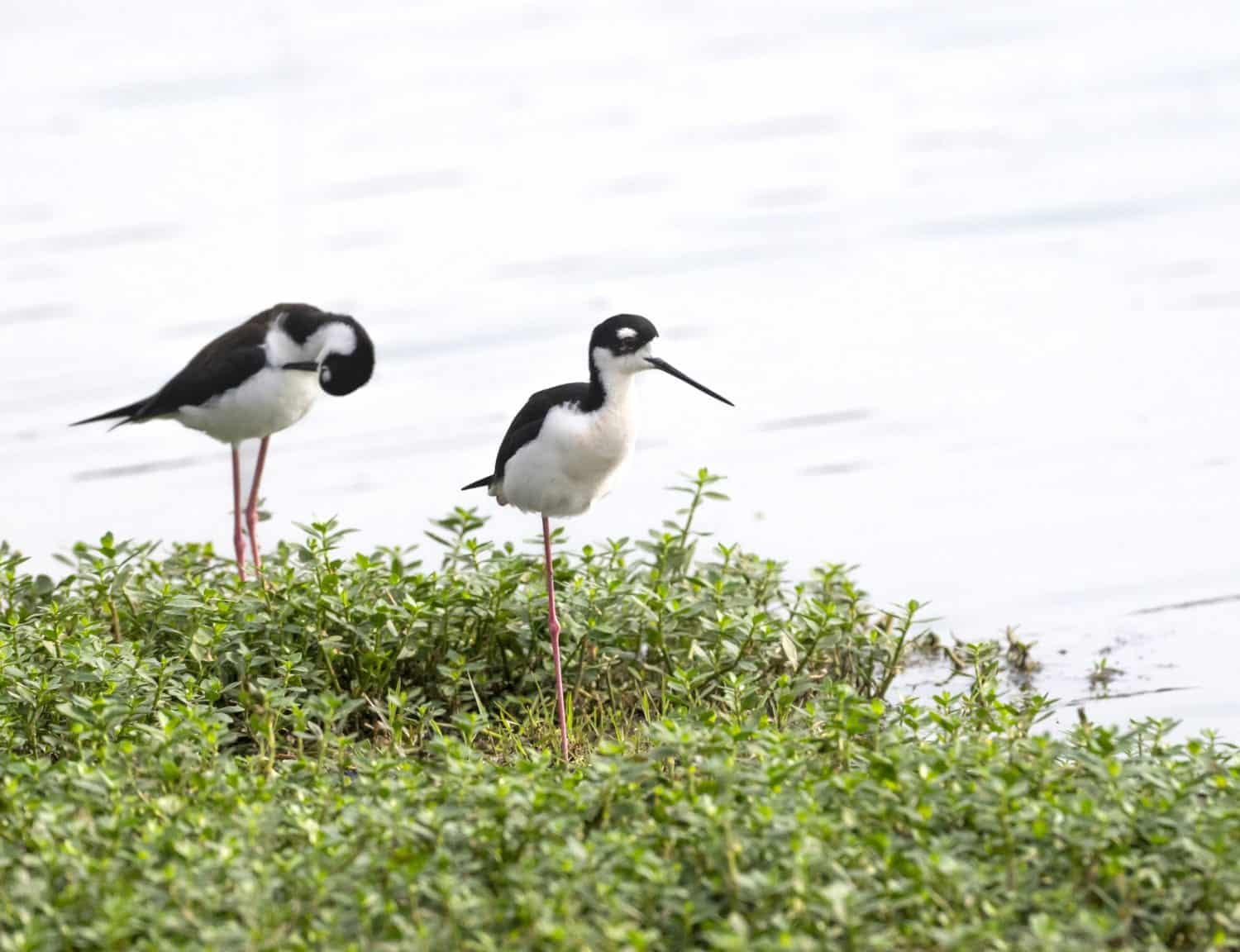
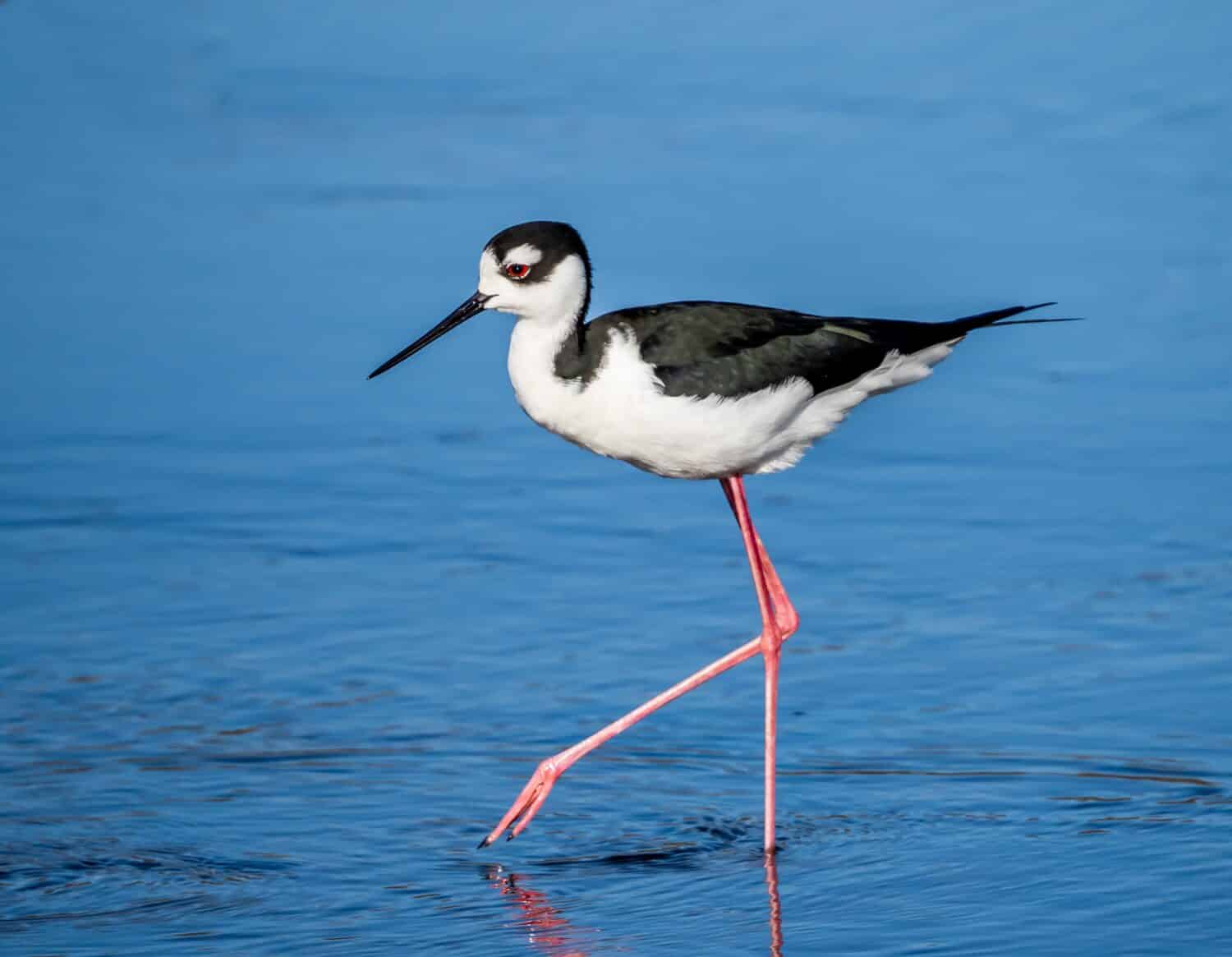
Black-necked stilts have some of the longest legs relative to their body size of any bird, only second to flamingos.
©Natalia Kuzmina/Shutterstock.com
Black-Necked Stilts
The video above features a beautiful black-necked stilt and its chicks. These birds are found throughout the Americas, specifically at shorelines of water bodies. They prefer shallow wetlands like marshes, mangroves, lagoons, and salt ponds. In the United States, you can find them in these habitats throughout the south and western regions, as well as in Hawaii! These shallow wetlands are perfect for these birds as their long pink legs allow them to wade through the water with ease. Black-necked stilts’ legs grow to about 10 inches long, and their body about 14 to 15 inches. As they wade through the water, they feed on prey such as insects, crustaceans, and snails. When their chicks are still small and defenseless, black-necked stilt parents carry them under their wings.
To safely move their chicks around, black-necked stilts keep their chicks tucked beneath their wings. Carrying them in this manner is beneficial in many ways. For one, the babies can hide from predators, which would otherwise view them as easy prey. Being transported also means they can conserve energy. Importantly, the insulation of the wing and belly feathers helps keep the babies warm and dry. This method of transport and protection highlights just how dedicated these birds are to caring for their young. They usually tote their chicks for the first couple of weeks of life, and by around four to five weeks, the young are capable of flight.