
Quick Take
- Athena appears to be helping her chick break free from the egg, but what she is actually doing turns out to be something far more unexpected. See what Athena's really doing →
- Keeping a newborn chick pressed against unhatched eggs sounds risky, but kestrels do it anyway for a clever survival reason. Discover the clever survival reason →
- Apollo steps up the moment his chick hatches, though his role in the nest is about to change in a way most people wouldn't expect. See how Apollo's role shifts →
- These helpless hatchlings have a surprisingly short window before they're ready to leave their parents for good. Find out how fast they grow →
A family of kestrels featured for the last five years on YouTube has again been successful in hatching their eggs. The first chick breaking through the egg was caught on video, allowing the world to watch a kestrel welcome her new baby.
Mother Kestrel Welcomes Her First Hatchling
Athena and Apollo are two kestrels featured on Robert Fuller’s YouTube channel. The pair, who had a clutch of six this season, welcomed the first chick from the group at the beginning of May 2026, who was healthy and good-sized.
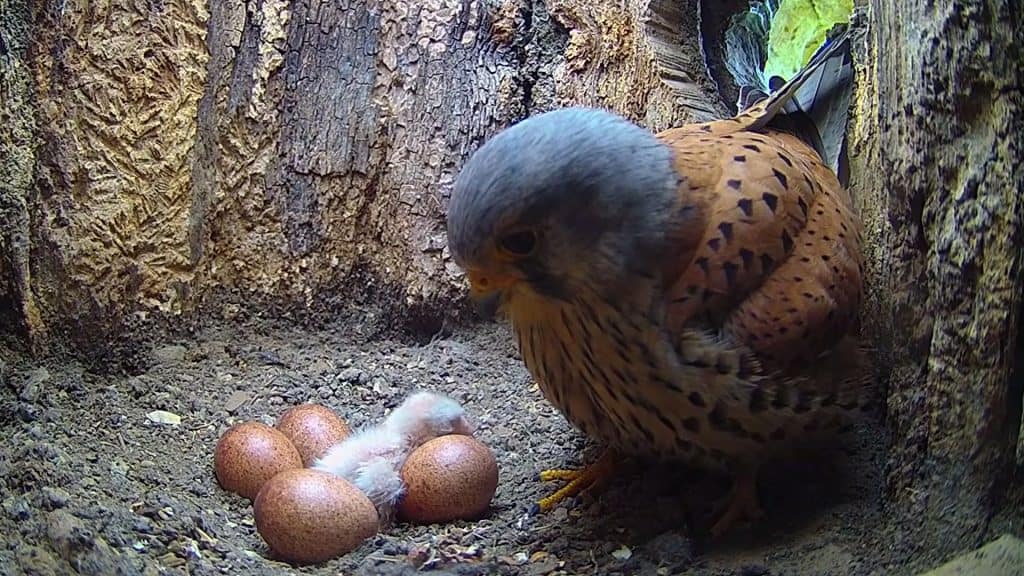
Apollo sees the first of the kestrel chicks hatch.
©Robert E Fuller via YouTube — used under fair use – Original / License
In the video, Athena calls out to Apollo to let him know the first chick has arrived. He comes into the nest to watch the hatchling while Athena leaves for a few minutes. During this time, Apollo tries to keep the baby and the clutch warm.
Shortly after she departs, Athena returns. She pushes Apollo out of the way and resumes her position on the clutch. The hatchling is tucked beneath Athena alongside the remaining eggs to keep it warm. The hope is that within a few more days, the remaining kestrels will hatch as well.
Kestrels Eat the Shells of Hatched Eggs
At the beginning of the YouTube video, it appears that Athena is helping her hatchling out of the egg.. However, she is actually beginning to consume the shell, something many birds do after chicks are born.
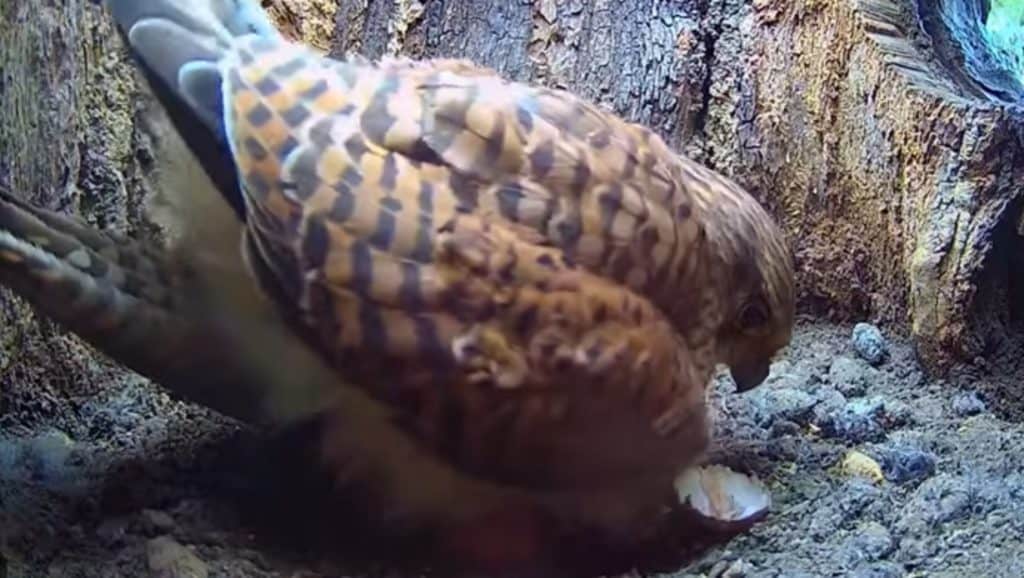
Athena begins to eat the eggshell from the chick that hatched.
©Robert E Fuller via YouTube — used under fair use – Original / License
Female kestrels will consume eggshells after chicks hatch for nutritional purposes. According to another YouTube video by Robert Fuller, females eat eggshells to recoup nutrients lost during egg-laying. Those not consumed will be cleared away from the chicks to keep the nesting area tidy.
Why Do Kestrels Incubate Hatchlings Along with Unhatched Eggs?
As seen in the YouTube video, after the kestrel chick hatches, it gets tucked back underneath the female with the clutch that has yet to hatch. Athena does this to ensure the survival of both the chick and the remaining eggs.
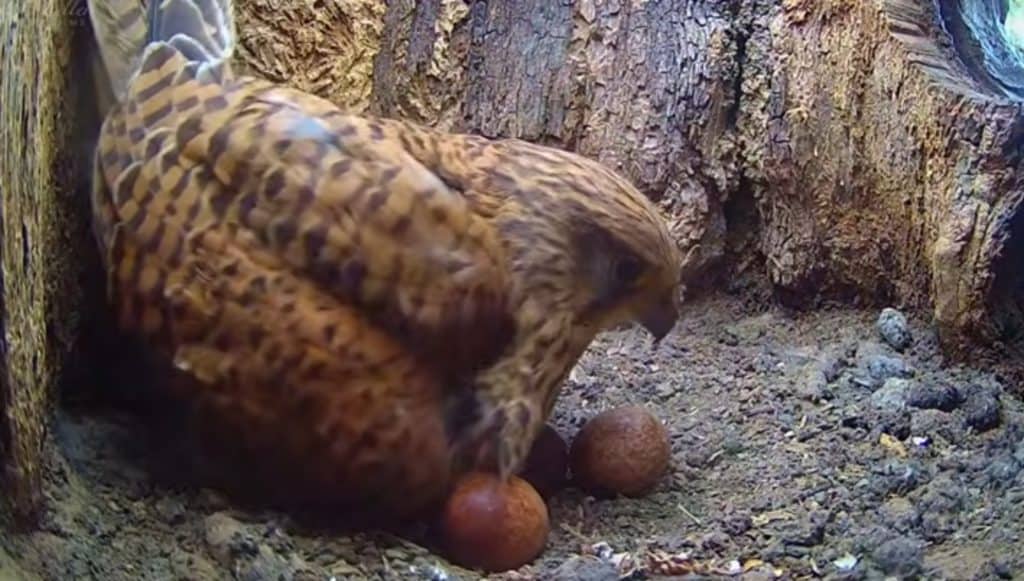
Athena incubates eggs while keeping the chick warm.
©Robert E Fuller via YouTube — used under fair use – Original / License
Just because one chick has hatched does not mean the rest of the eggs have developed at the same rate. With eggs laid at different times, there may be a few days between the first and last hatches. The eggs need to be incubated around the clock to develop properly. This can be hard to do with a new hatchling. By keeping the hatchling close, Athena can continue to incubate the eggs while also protecting the chick from predators between feedings. It is multitasking at its finest.
Female Kestrels Do the Majority of the Incubation Work
Both male and female kestrels will incubate the eggs after they are laid. However, as the clutch grows and the closer the eggs get to hatching, the majority of the incubation work falls to female kestrels. When a female lays the first egg, both she and her partner take turns incubating. This gives both parents a break from sitting on the eggs when needed.
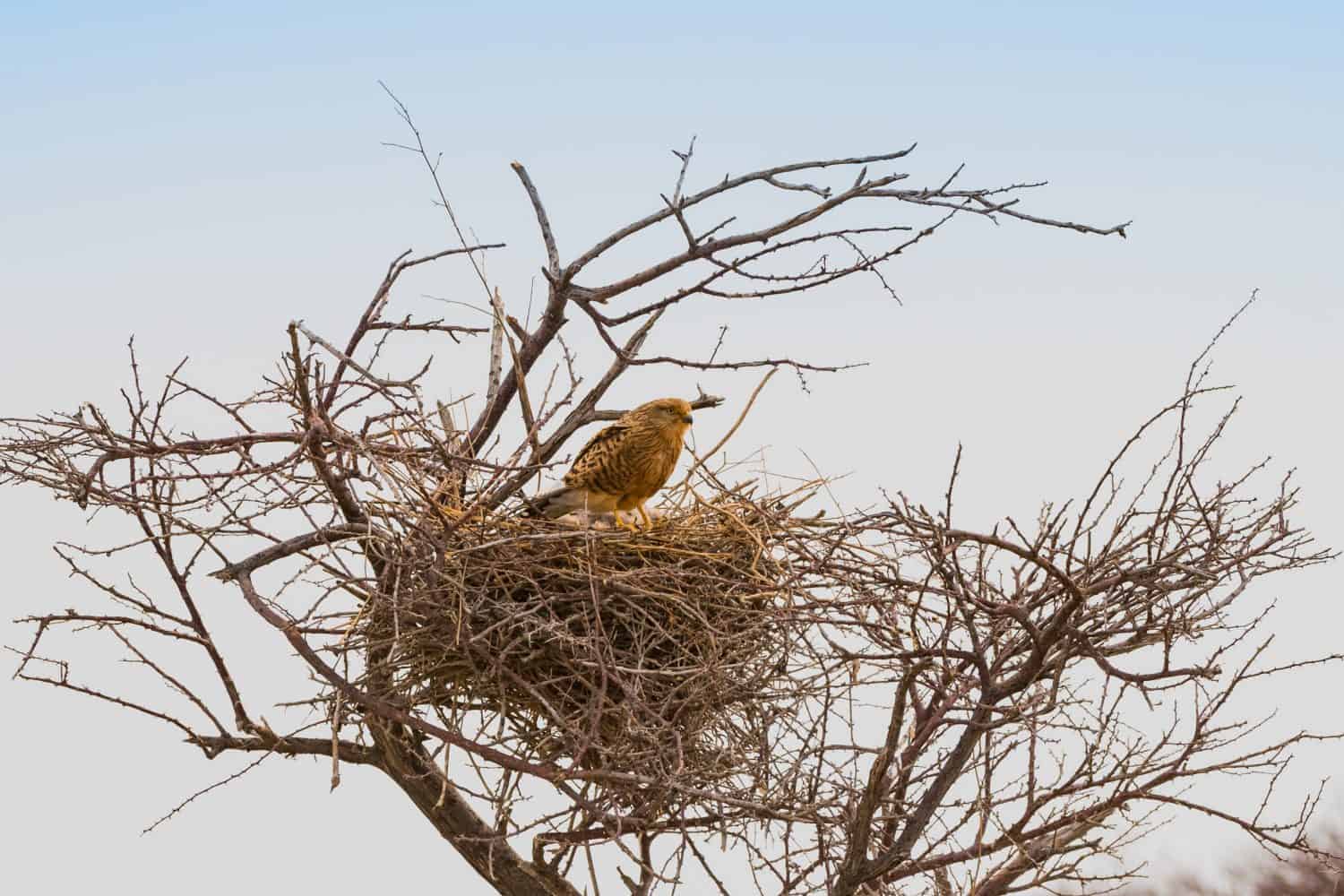
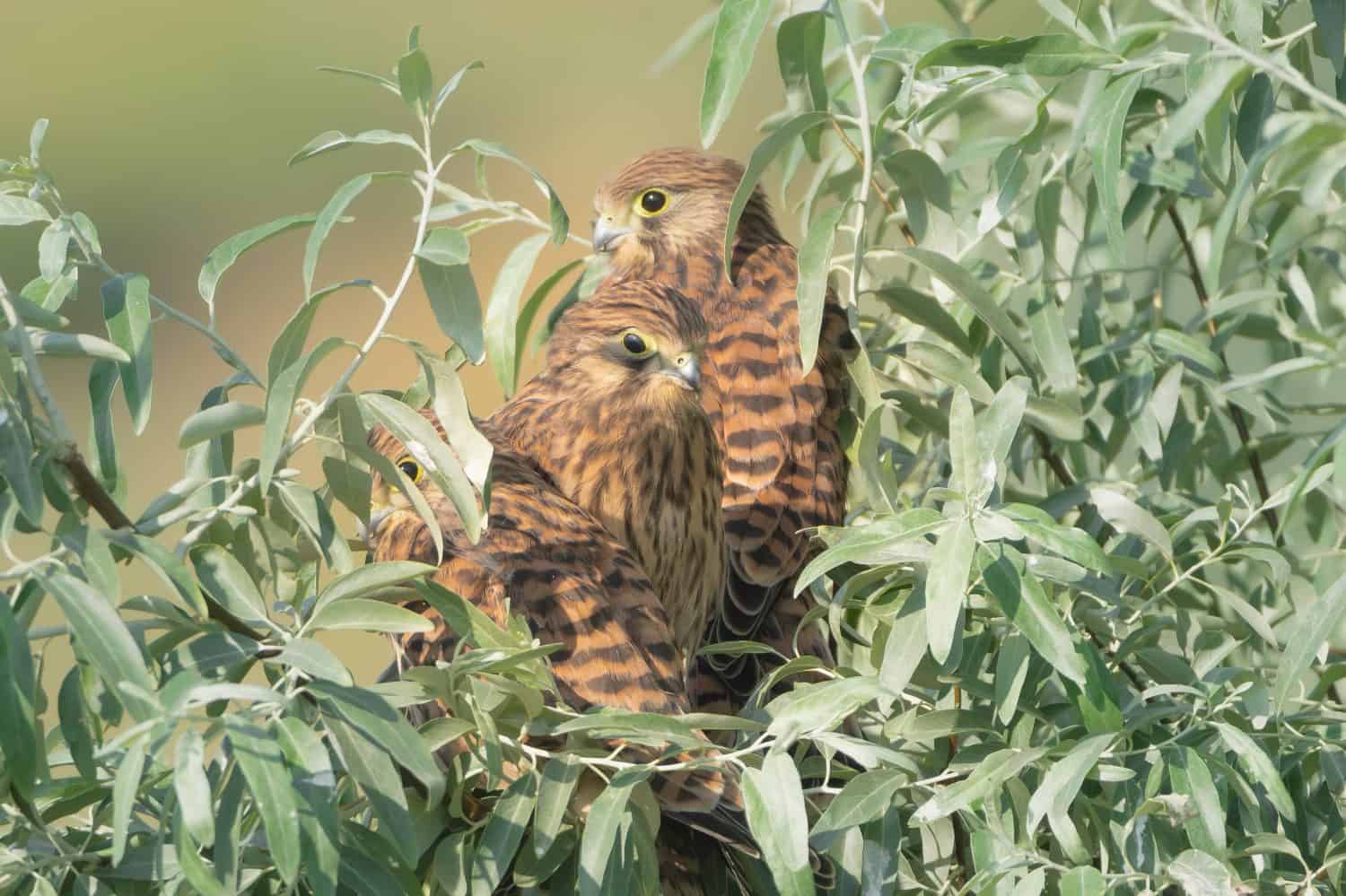
Female kestrels are almost exclusively responsible for egg incubation.
©Hans Wagemaker/Shutterstock.com
However, as more eggs are laid, the female will take over the incubation duties almost exclusively. Female kestrels keep the eggs at a consistent temperature using their body heat. Females are also larger than males, making it easier to cover the clutch and ensuring each egg is evenly warmed as it develops.
Male Kestrels Are Responsible for Hunting After Eggs Hatch
After the eggs begin to hatch, male kestrels are generally no longer involved in the incubation process. While the YouTube video shows Apollo entering the nesting area to sit on the newborn chick and the remaining eggs, this is not his main responsibility. Male kestrels’ main job is to hunt after the hatchlings make their way into the world.
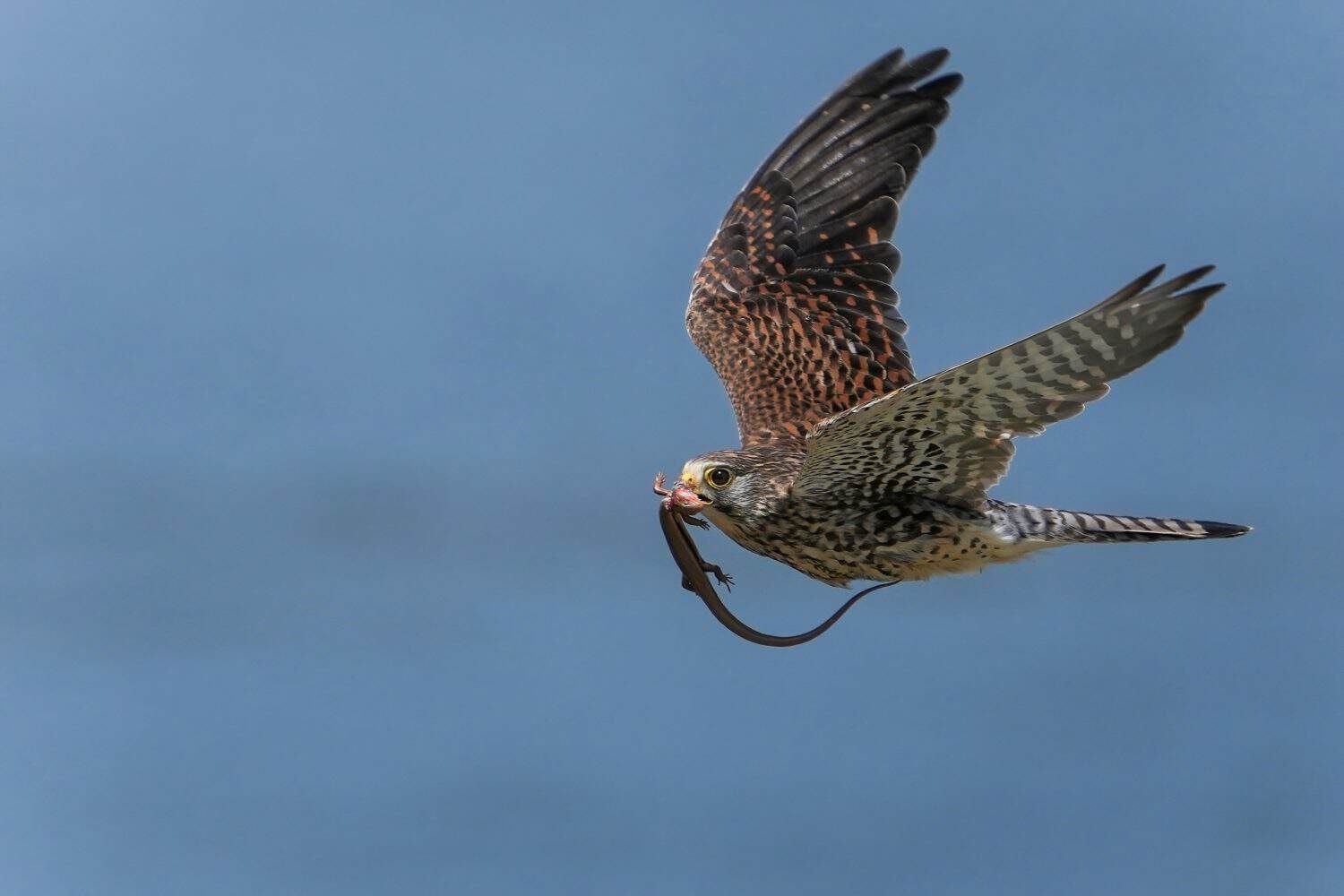
Male kestrels take care of hunting after the eggs hatch.
©scott mirror/Shutterstock.com
Young kestrels grow rapidly. Because of this, they need to be fed many times per day, sometimes around the clock. If both parents left the nest, the babies would be left unprotected. Therefore, the female kestrel remains in the nesting area to keep the chicks warm and protect them while the male brings back prey.
How Long Will It Be Before Kestrels Learn to Fly?
Although kestrels are helpless when they are born, that helplessness does not last long. Within just a few weeks of hatching, juvenile kestrels begin to fly. Shortly thereafter, they become independent and can even defend their own territory if necessary.
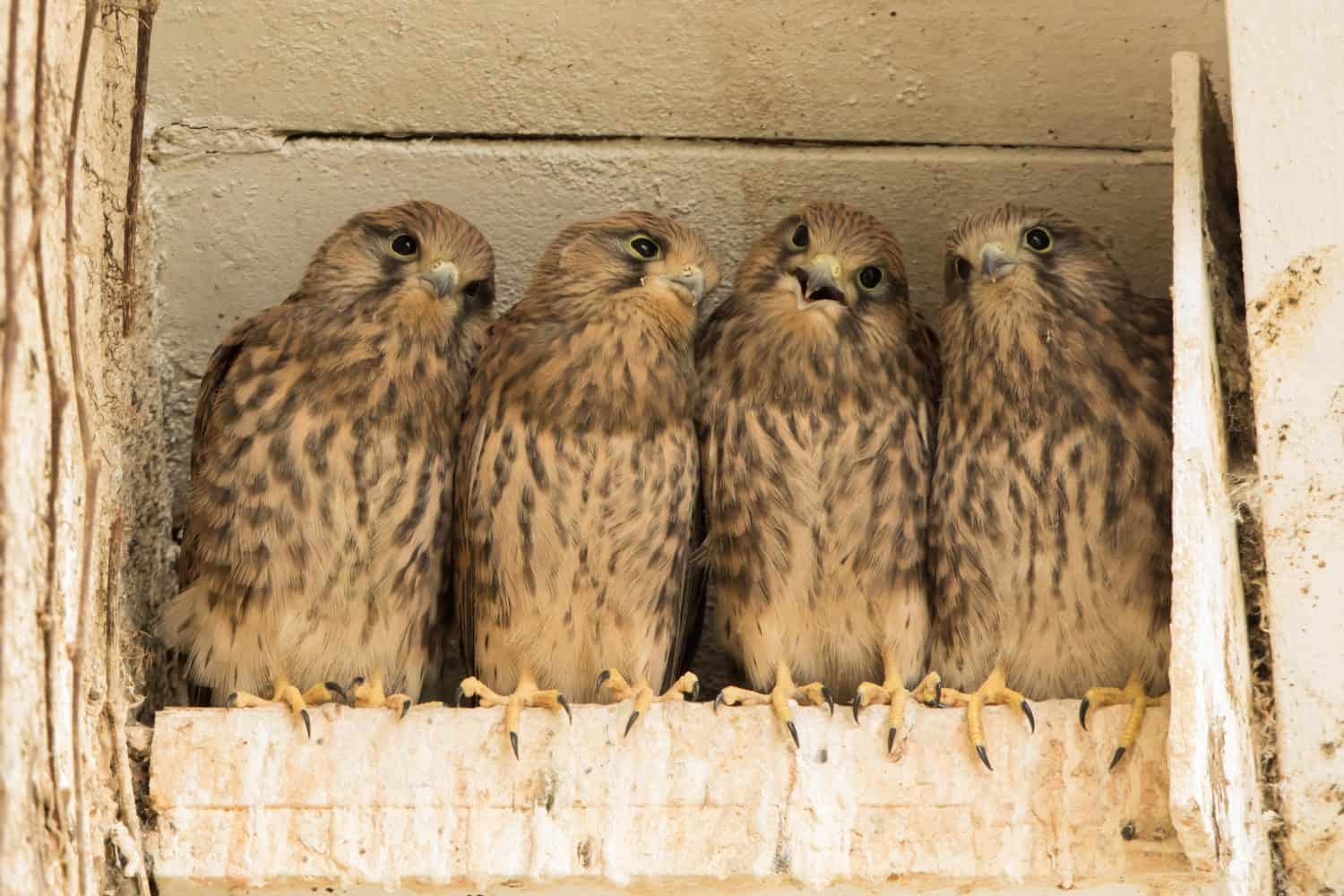
Juvenile kestrels will take flight just a few weeks after birth.
©imageBROKER.com/Shutterstock.com
During the first few weeks of life, kestrels are completely dependent on their parents. They are fed and protected from predators around the clock. However, around 28 to 30 days after birth, the young birds start to flap their wings. This is the first sign they are ready to take flight.
Around day 31, kestrels take their first flight. It is around this time that they begin to hunt independently. Although kestrels develop their flying skills early, juveniles will remain close to their parents for several more weeks after their first flight. When comfortable, the once-helpless kestrels will leave their parents, taking flight to find territory to call their own.