
There are many different types of turtles in the world, but almost none are as unique and specialized as the Mary River turtle. They feature barbs on their faces and have tufts of green, hair-like algae on their limbs. While other turtles require air to breathe, the Mary River turtle has a superpower: it can breathe underwater through specialized glands in its bum. Science, however, is only catching up with the Mary River turtle’s staying power. It was not until 1994 that scientists formally described the species as unique.
Despite evolutionary advantages and standout looks, Mary River turtles are under serious pressure. Mining and dam construction in their environment have not only reduced water quality but also destroyed many of their nesting sites. Even before they were recognized as a distinct species, Mary River turtles were impacted by egg collectors and the pet trade. It seems like time is running out for these turtles before they get their time in the spotlight. Luckily, several conservation initiatives are underway to save them in Queensland, Australia. Let’s learn more about these unique and fascinating turtles, why they are threatened, and what is being done to boost their numbers.
Mary River Turtle Basics

Mary River Turtles are the only living species in the ancient genus Elusor.
©Photography by Rob D/Shutterstock.com
People have known that the Mary River turtle lives in the Mary River in southeast Queensland, Australia, for decades. Despite its presence, however, scientists didn’t formally describe the turtle until 1994 when they recognized it as a new species. Also called green-haired turtles and the punk turtles, Mary River turtles (Elusor macrurus) belong to an ancient turtle lineage. It is the only species in its genus, which means it diverged from all other living species. Scientists estimate that they genetically diverged from other creatures around 40 million years ago. In comparison, humans split from chimpanzees and bonobos under 10 million years ago.
There are several aspects to Mary River turtles that make them unique, even if these attributes also put them at a disadvantage. In most turtle species, females are larger than males. Mary River turtle males, however, are not only larger than females but are also some of the largest turtles in Australia. Both genders feature elongated but smooth carapaces with color patterns ranging from plain to intricate. Typically, Mary River Turtles are rusty red, but some specimens are more brown or even black. Males also have very long and thick tails.
River Indicators
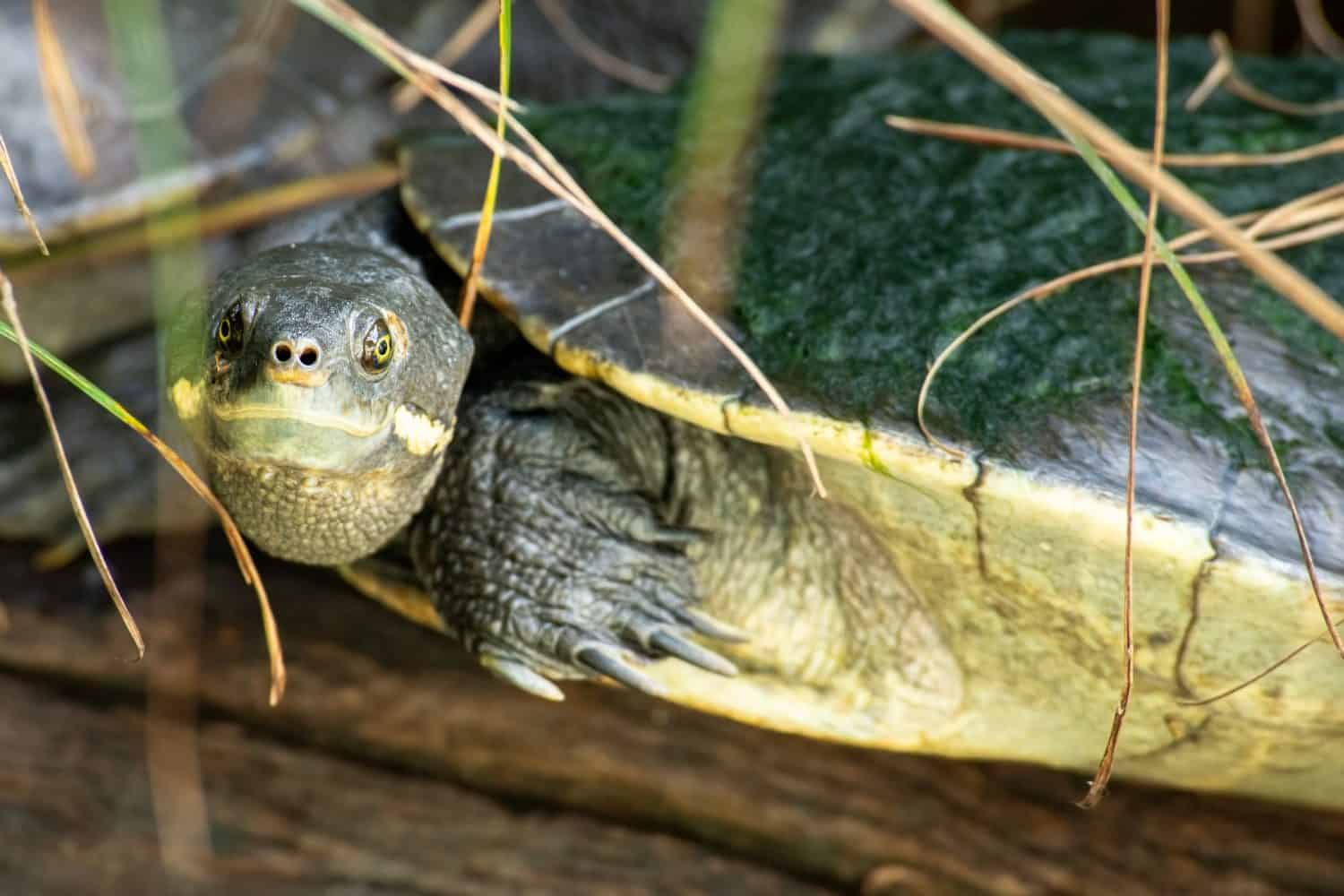
Their tendency to congregate in clean, slow-moving parts of the river makes Mary River Turtles great water health indicators.
©Photography by Rob D/Shutterstock.com
Mary River turtles have the smallest heads but the largest hind feet of all the species in their habitat, making them the river’s fastest swimmers. They prefer parts of the Mary River basin from Gympie to Maryborough with plenty of oxygen and flowing currents. Their tendency to congregate in clear and slower-moving waterways also makes them good indicators of river health and water quality. This puts them at an aquatic advantage. Unfortunately, more human factors put their wellness at a disadvantage, as you will learn more about shortly. First, however, let’s learn about what makes these river turtles so special.
Rebel Looks
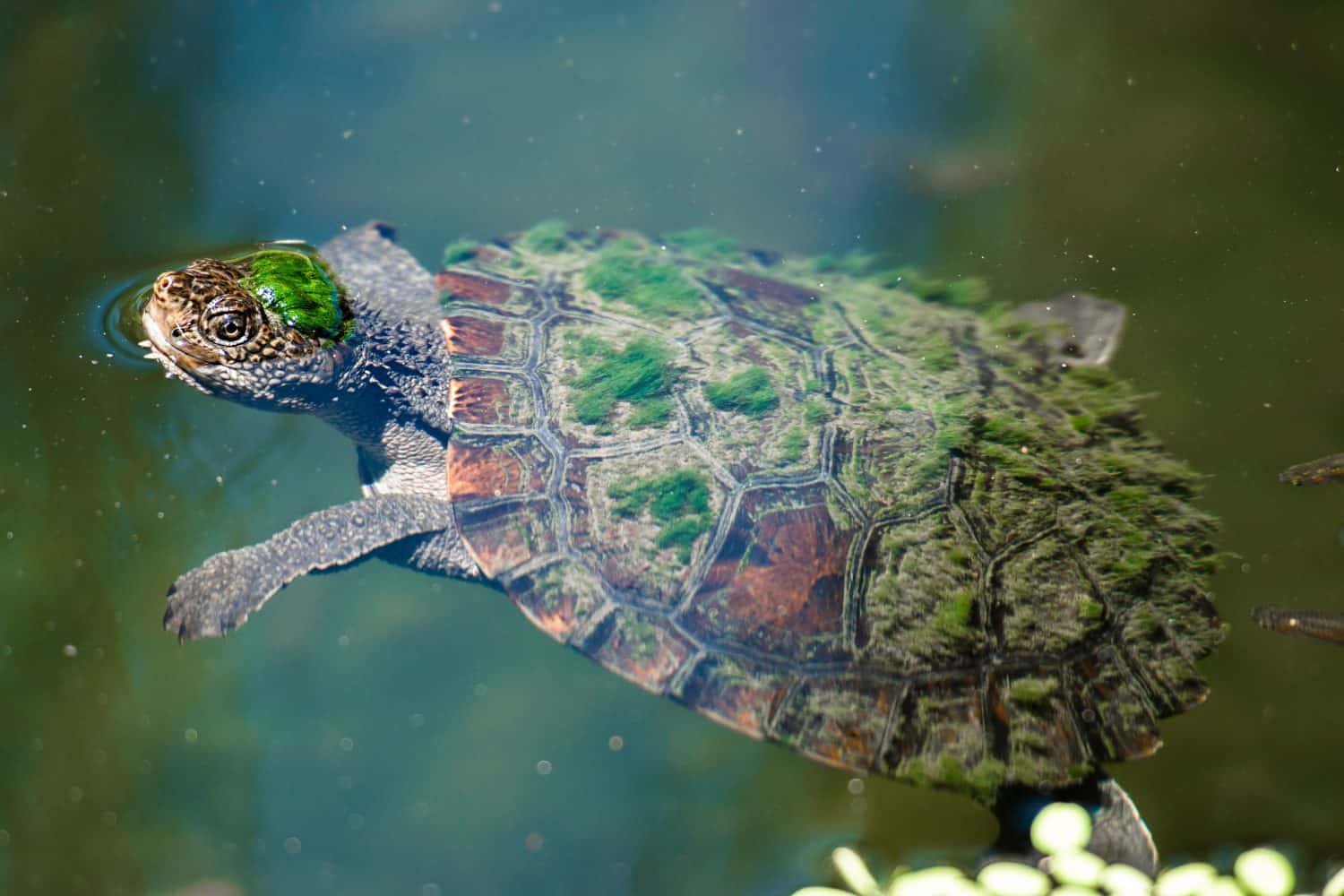
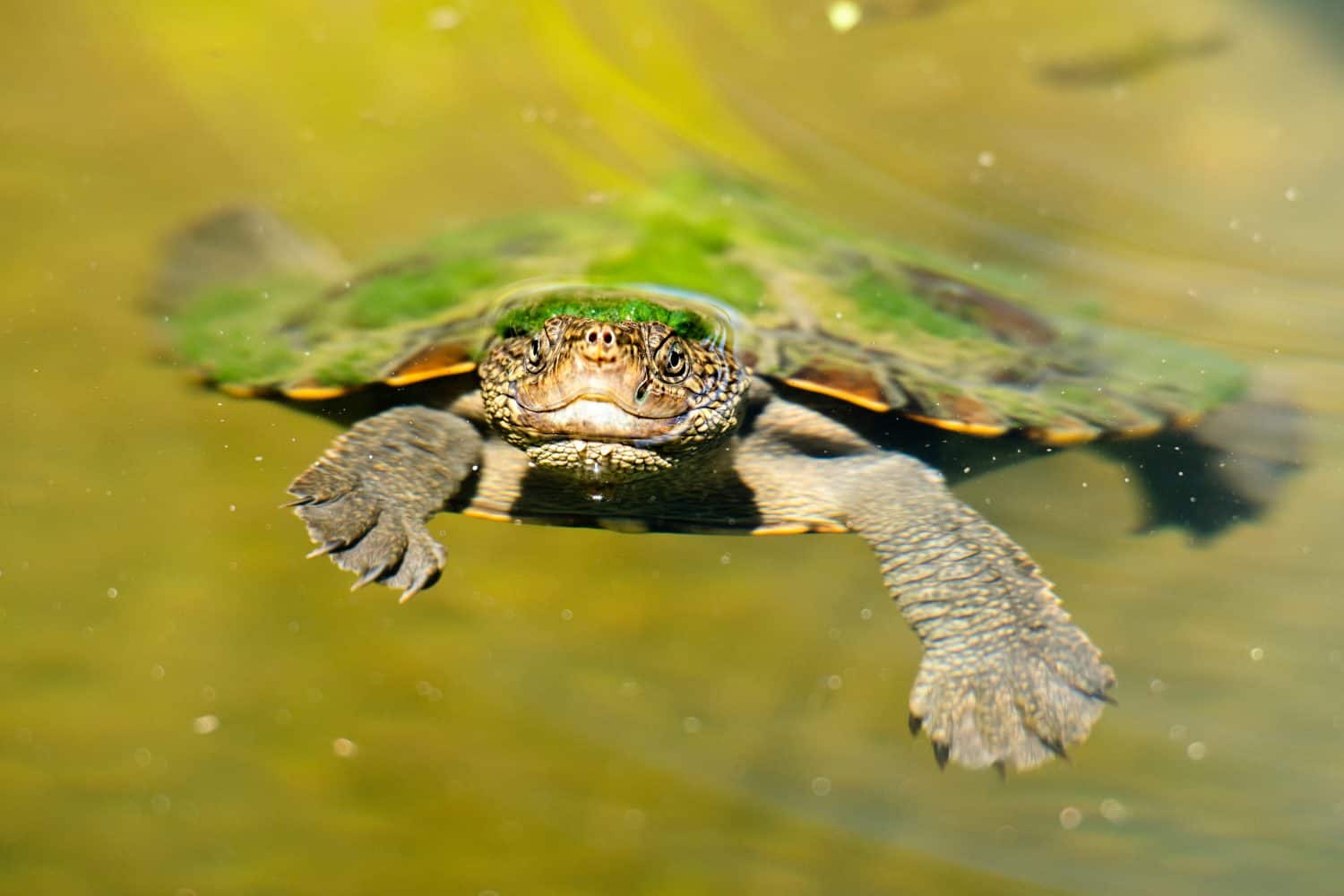
These turtles are often called punk turtles due to a tendency to grow green algae on their heads that look like mohawks.
©Photography by Rob D/Shutterstock.com
Mary River turtles are often called punk turtles thanks to some iconoclastic physical features. For one, they have unique appendages hanging from under their chins called barbels. These barbels help them sense their environment better to find prey, especially in the sand of the Mary riverbed. While juveniles usually feed on insect larvae and algae, adults eat mostly plant matter. Sometimes, adults will eat small prey like mussels and the eggs of aquatic animals.
What really gives these turtles their punk rock looks, however, is the tendency for green algae to accumulate on their limbs. This algae can grow on their arms, shells, and even on top of their head or below on their chins. This neon green, mohawk-like hair and the under-the-chin barbels that look like piercings make the Mary River turtle appear to be real rebels. Make no mistake, however, as these turtles are pretty docile and easygoing.
Butt Breathing
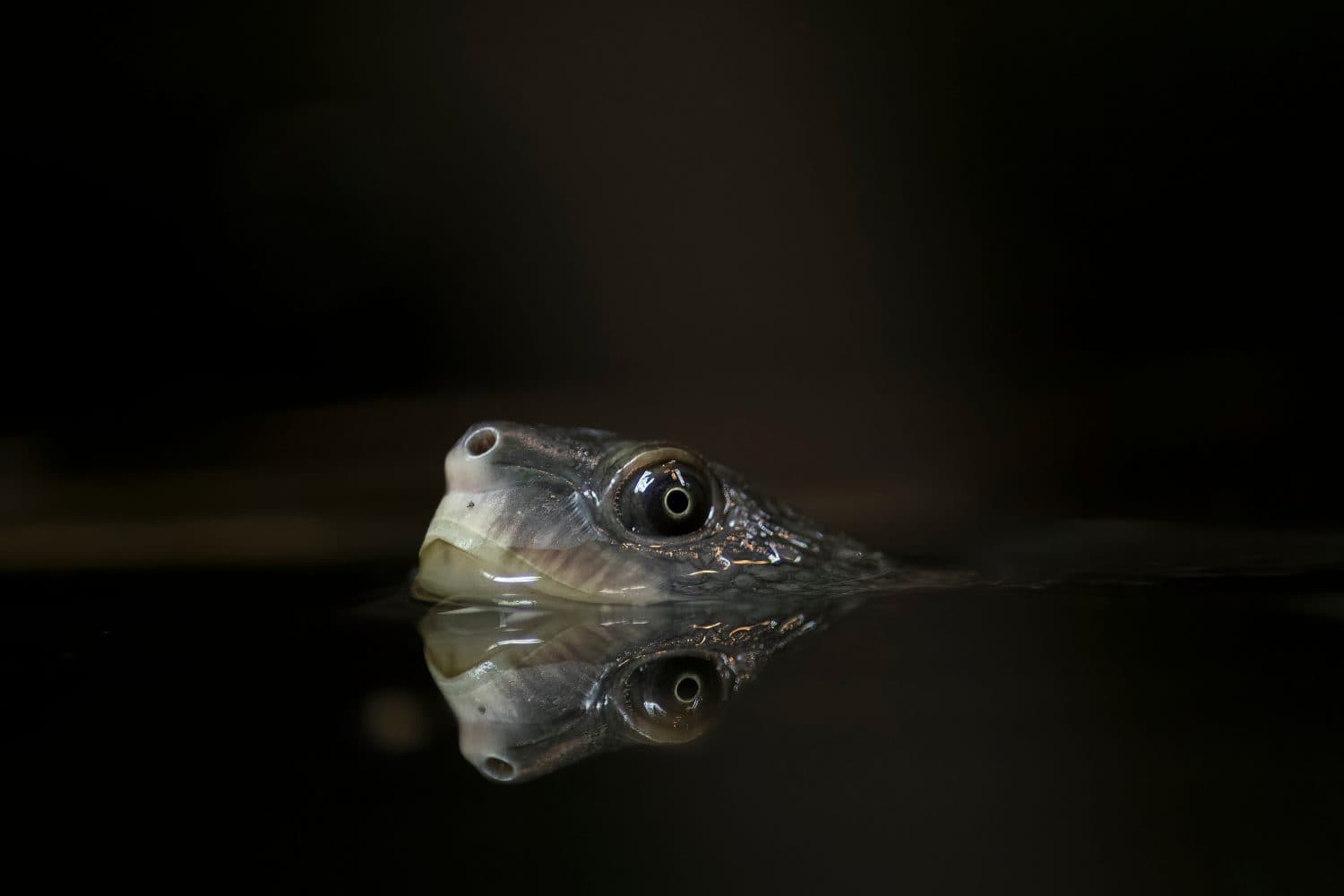
Mary River Turtles can absorb oxygen underwater thanks to specialized glands in their cloacas.
©Vine.Photographic/Shutterstock.com
Perhaps the most fascinating feature of the Mary River Turtle, however, is their ability to breathe with their butts. That’s not a typo. These turtles are among the only turtles on Earth that can breathe underwater, thanks to specialized glands in their backside. Indeed, Mary River turtles have glands in their cloacas. This multi-purpose orifice for excretion and reproduction also helps them absorb oxygen while underwater.
This allows them to stay underwater for up to three days at a time. However, Mary River turtles rarely stay underwater that long, possibly because they prefer fresh air. Instead, they come to the surface to breathe normal air pretty regularly.
Whether due to their punk rock looks or butt-breathing capabilities, these attributes give the Mary River turtle an evolutionary advantage. Like other turtles, female Mary River turtles lay their eggs along the riverbanks during the spring and summer months. This makes them especially vulnerable to threats. As their addition to the IUCN species lists shows, these turtles are no match for human growth, ingenuity, and environmental destruction.
A Threatened Species
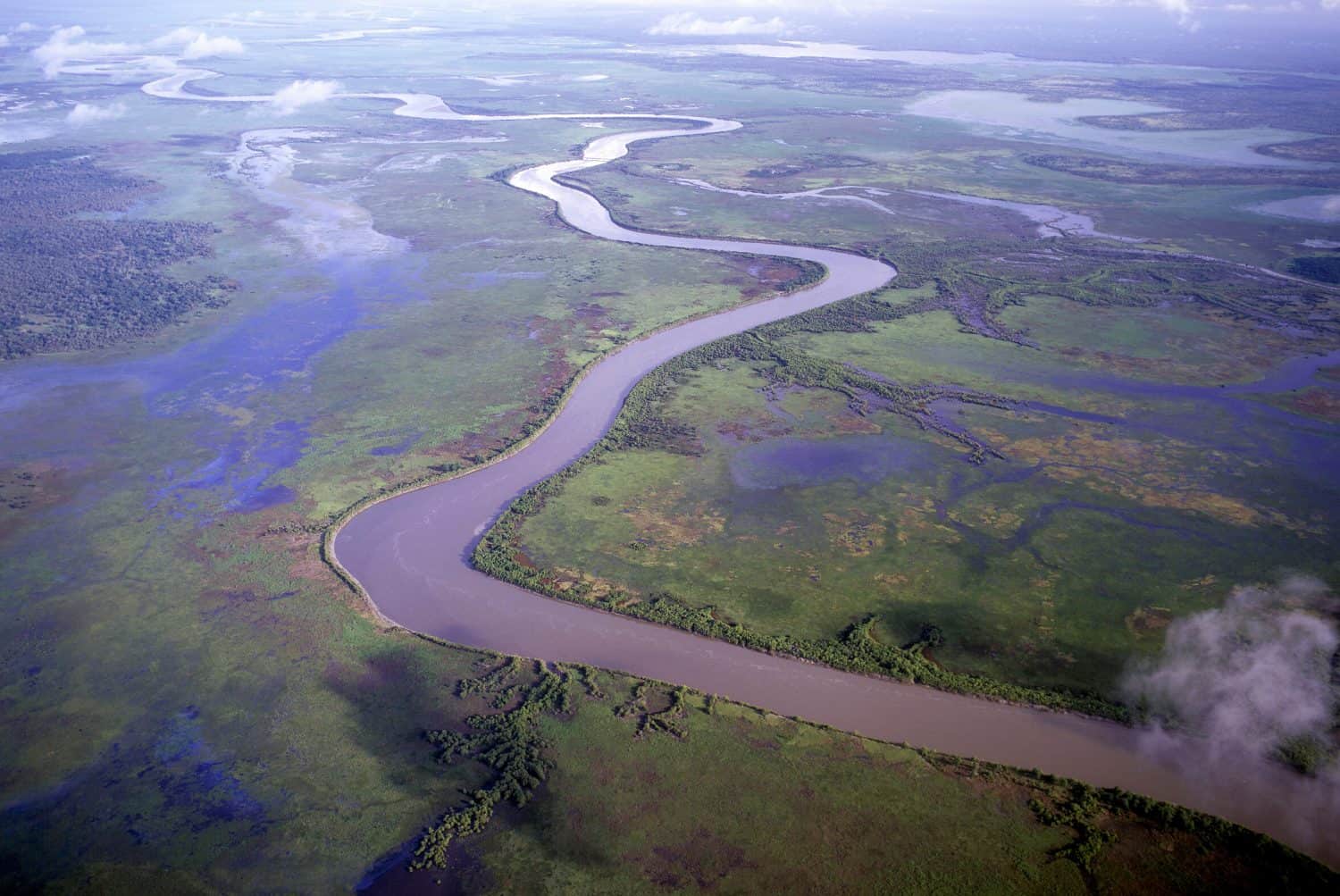
Land clearing, nest depredation, and low reproduction rates have contributed to drastic decreases in the Mary River Turtle population.
©John Carnemolla/Shutterstock.com
Mary River Turtles are considered a threatened species because they are at the center of a perfect storm of under-recognition, long maturation periods, and human encroachment. Additionally, many aspects of the Mary River turtle’s environment threaten their survival. Their eggs are often snatched from the river’s banks by dogs, red foxes, and even fish. The individuals that do survive can take up to 25 or 30 years to fully mature and begin reproducing.
Humans, however, also have a big role to play in the loss of Mary River turtles. We’ve introduced invasive plants to the area that prevent turtles from coming ashore and laying eggs. Additionally, the land in the river basin has been cleared so many times that silt has built up and water quality has drastically declined. People have also been collecting Mary River turtles for decades, long before they were recognized and formally classified as a distinct species in 1994.
Perfect Pets
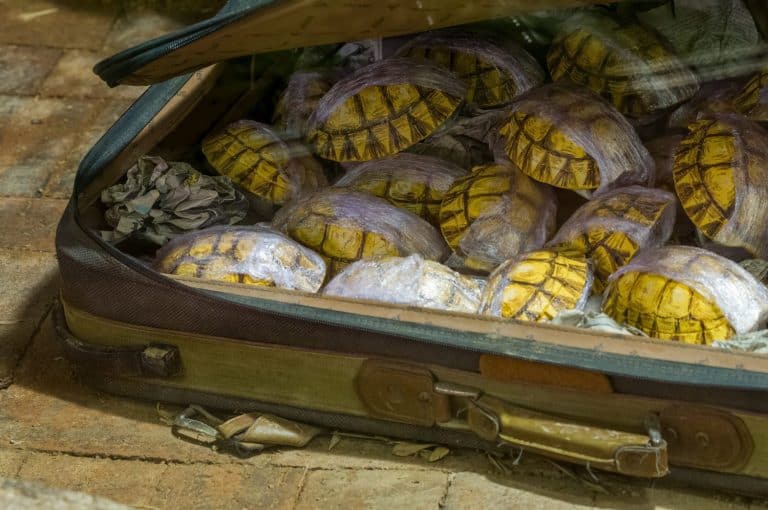
For decades, people raided Mary River turtle nests to take eggs for collections or hatchlings as pets.
©ribeiroantonio/Shutterstock.com
During the 1960s and 1970s, Mary River turtles became the exotic pet du jour. An estimated 15,000 hatchlings were sent to Australian pet shops annually during a ten-year period. It’s hard to deny that they make interesting-looking pets, and their docile nature was likely a major selling point. Plus, much of the pet trade happened before they got the benefits of being recognized as a distinct species in 1994. All these factors have contributed to the Mary River Turtle’s current “Endangered” status on the IUCN Red List.
Conservation Efforts
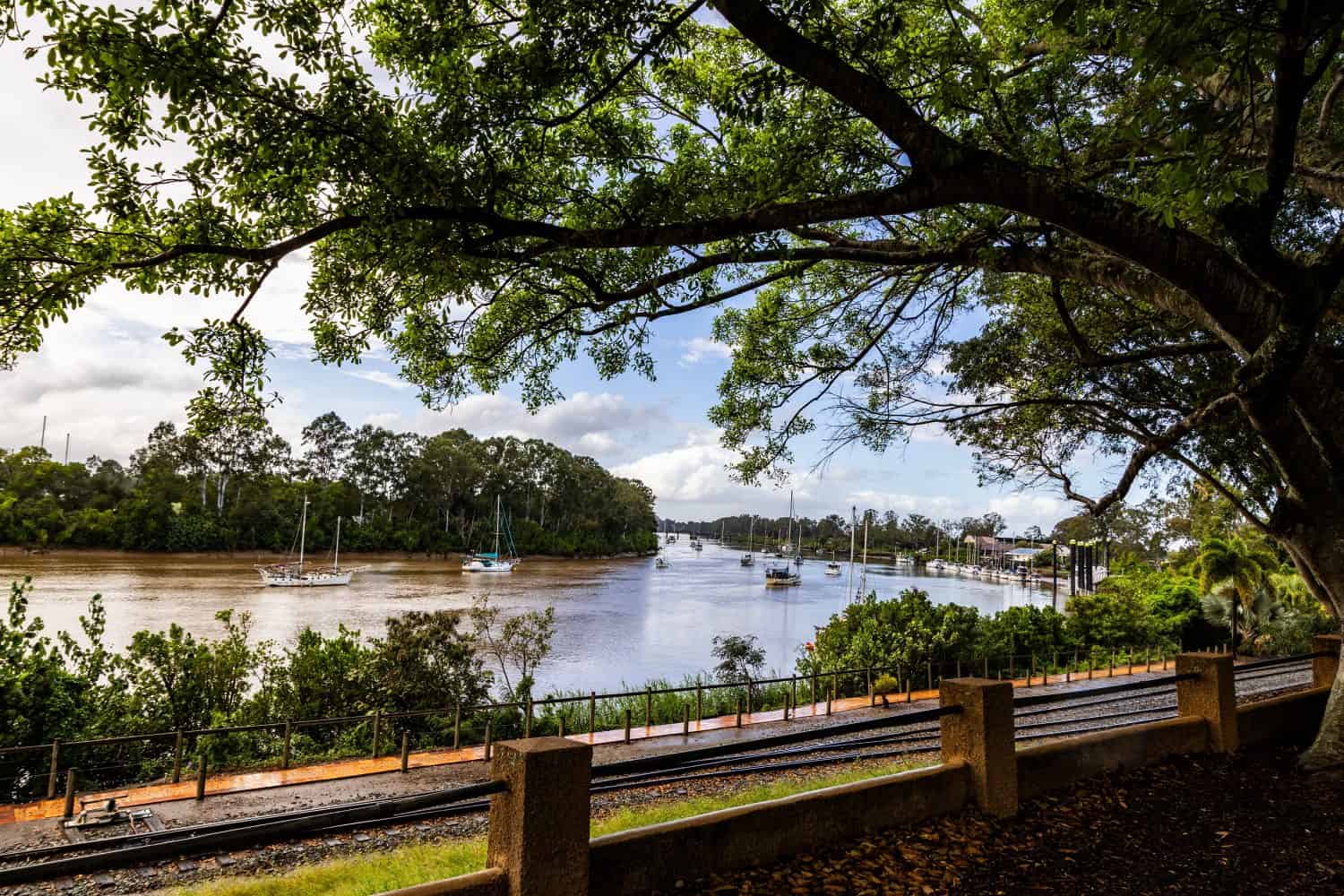
A Mary River turtle-specific hatchery was built on the river in 2019.
©Shane Bartie/Shutterstock.com
Luckily, considerable conservation efforts have been initiated to prevent the Mary River turtle from going extinct. Recognition of their rarity, for one, has gone a long way. As of September 1, 2024, the Mary River turtle is listed as Critically Endangered under Queensland’s Nature Conservation Act of 1992. They are also included in the Federal Environment Protection and Biodiversity Conservation Act of 1999. Mary River Turtles have also been added to several lists regarding the most endangered reptile species on earth. This protects the turtle from the exotic pet trade more effectively.
In the new millennium, several programs have been created to explicitly increase Mary River turtle numbers. Most notably, the Australian Freshwater Turtle Conservation and Research Association became the first group to breed them in captivity. These individuals were then released into the wild. In 2019, a Mary River turtle-specific hatchery was built on the banks of the Mary River to establish nests and grow the population. There’s even a 50-year plan proposed to bring these creatures back to their former glory. Mary River turtles were once known as penny turtles. Thankfully, modern conservation efforts now recognize them as priceless components of the Queensland ecosystem.