Quick Take
- The sawfish's most powerful hunting adaptation is the exact reason it can't escape fishing nets, a trap that evolution never anticipated. See how rostrums cause entanglement →
- Sawfish look like sharks, but their true identity changes everything about why they're so hard to save. Discover their true classification →
- One country's coastline may be the last real hope for an animal that's already vanished from more than half its former range. Find the last strongholds →
- Fishermen who know what a sawfish is are accidentally becoming its best conservationists, and that turns out to matter more than legislation. Explore bycatch release programs →
The sawfish is not a normal-looking creature. With the flattened body of a ray, the gill structure of a shark, and a toothy nose that can reach five feet in length, this marine creature looks like the stuff of nightmares. However, the sawfish has one of the most specialized sensory systems found in the ocean. Unfortunately, the same unusual body part that helps it navigate and hunt is also the reason sawfish are disappearing rapidly.
As of 2024, all five species of sawfish are classified as Critically Endangered on the IUCN Red List, with population declines of at least 80% estimated across the last three generations. In some parts of their former range, sawfish are already gone. Why is the sawfish facing such devastating loss, and what is being done to save them?
October 17th is International Sawfish Day, and this is everything you need to know about it. Let’s dive in.
Classifying the Sawfish: What is It?
Despite looking somewhat like a shark, sawfish are rays, making them members of the Pristidae family. They are technically closer relatives of skates and guitarfish rather than true sharks.
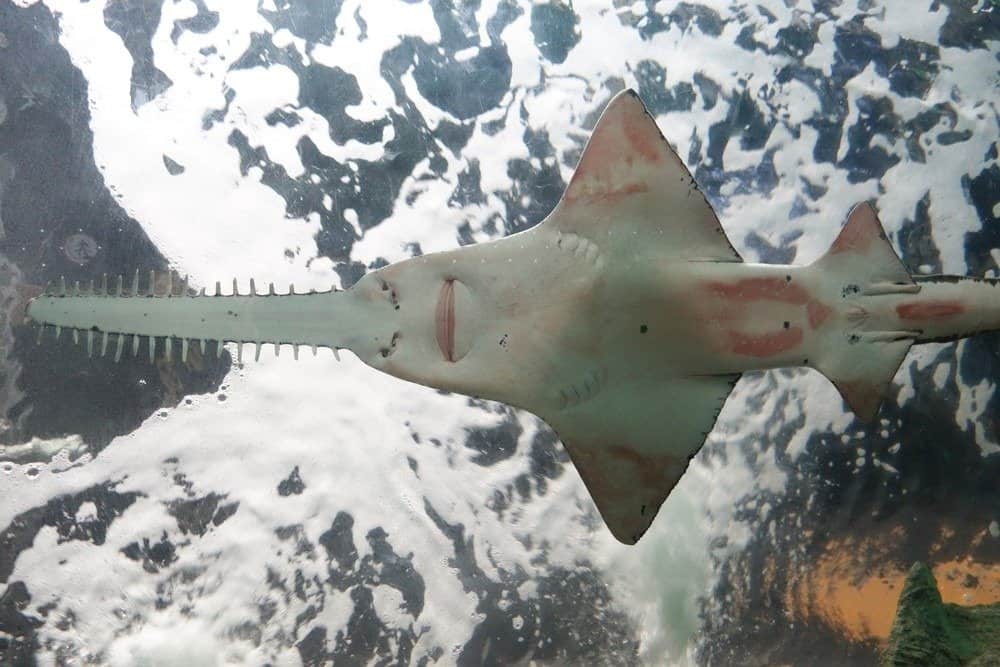
While they look like sharks, sawfish are not technically related to sharks.
©Krofoto/Shutterstock.com
Sawfish are among the largest fish found in shallow coastal waters: for example, the largetooth sawfish can reach up to 23 feet in length and weigh up to 1,300 pounds. Five species of sawfish exist in total, and they are distributed across tropical and subtropical coastal waters, estuaries, and river systems on multiple continents.
According to NOAA Fisheries, the nose of the sawfish serves two distinct and vital functions. The teeth lining its edges are used to slash through schools of fish, making it an effective hunter. Plus, it contains an electrosensory system capable of detecting weak electrical fields produced by other animals. Sawfish can locate prey buried in sand or mud without ever seeing them.
Given that sawfish prefer the shallows, their young depend heavily on estuary habitats, making them directly vulnerable to coastal development and mangrove loss. Young sawfish grow and mature slowly, often needing eight to ten years depending on the species, and produce small litters of between one and thirteen pups per pregnancy. When paired with habitat loss, sawfish are struggling to bounce back.
Why Sawfish Are Vanishing
While it’s an effective hunting tool, the sawfish nose makes them vulnerable to fishing gear. Research published in 2024 confirmed that all five species are now Critically Endangered, reflecting declines of 80% or more over three generations. The teeth along the rostrum catch in gillnets and trawl lines; once trapped, a sawfish typically cannot free itself and tragically drowns. Bycatch is the primary driver of decline in nearly every region where sawfish have been studied.

Fishing net entanglement is one of the main reasons why the sawfish populations are in decline.
©Matthew Troke/iStock via Getty Images
“Recovery for these rays is particularly challenging due to their biology: they grow slowly, mature late, and produce few offspring,” said Rima Jabado, chair of the Shark Specialist Group at the IUCN. “Coordinated conservation efforts, including protecting key estuarine habitats, incentivizing fishers to release bycatch, and strengthening science-based policies” are all required, Jabado added.
Habitat loss is the other major piece of this puzzle. Development areas remove the shallow-water habitat that juvenile sawfish depend on, and manmade expansion is a widespread issue. 61% of the historical geographic range has contracted, according to research published in 2025. The species is already extinct or functionally absent in more than half of its former range.
If that wasn’t enough, targeted fishing for sawfish exists in spades. They are prized for their fins, their teeth are used in cockfighting, and their meat is eaten, adding additional pressure in regions where legal protections are weakly enforced or absent.
Where Do Sawfish Still Exist in the Wild?
There are certain areas where sawfish still exist and will hopefully be protected. For example, Australia’s northern coastline, particularly the waters of Queensland and the Northern Territory, holds the largest remaining populations of largetooth and green sawfish. The shallow, largely undeveloped coastlines and river systems of northern Australia have provided something rare: habitat that remained intact long enough for sawfish populations to persist at near-viable levels.
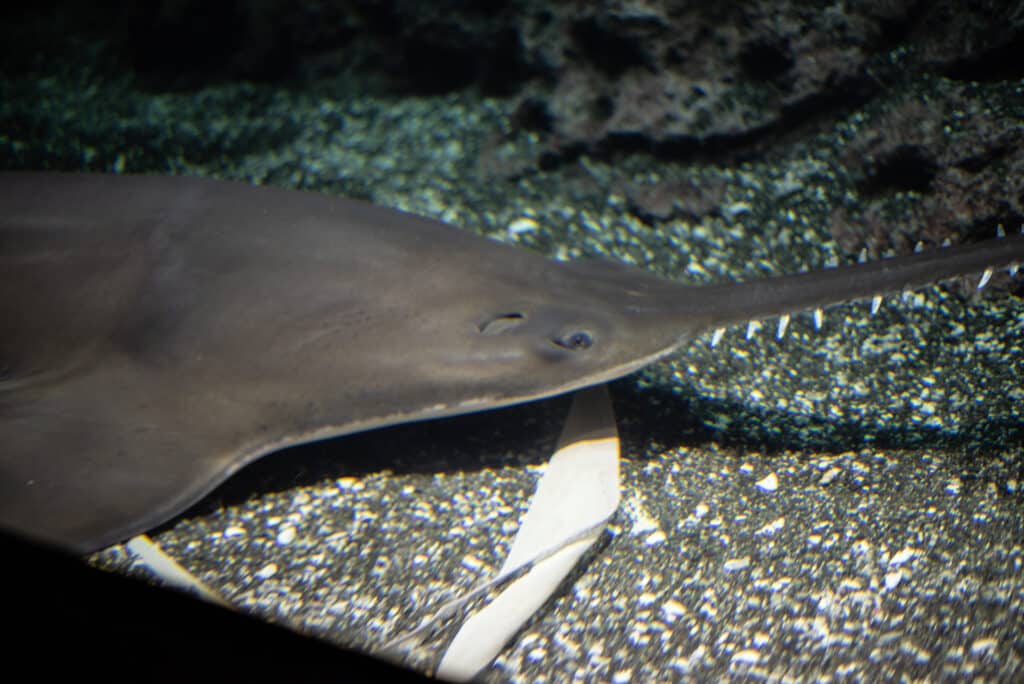
All sawfish species are threatened, if not critically endangered.
©iStock.com/rmbarricarte
In the United States, the smalltooth sawfish was the first marine fish to receive federal protection under the Endangered Species Act, listed in 2003. The species’ remaining population is concentrated in the shallow waters of southwest Florida, and two decades of protection has made for some improvements.
Smaller refuge populations have been documented in the rivers of Papua New Guinea and parts of West Africa, and ongoing survey work continues to locate areas where sawfish may still live. However, without legal protections and enough time for these fish to rebuild their populations, it is unclear what their future holds.
How to Celebrate Sawfish on October 17th
2014 helped bring the Global Sawfish Conservation Strategy into the light. Developed by the IUCN’s Shark Specialist Group, it established coordinated international goals for sawfish research and protection and brought this lesser-known fish into a much-needed spotlight.
Grassroots education and bycatch release programs in key fishing communities have also produced increases in the number of sawfish reported and released alive rather than retained. Where fishers understand what sawfish are and how to safely disentangle the animal, release rates improve, and thus so does the population.
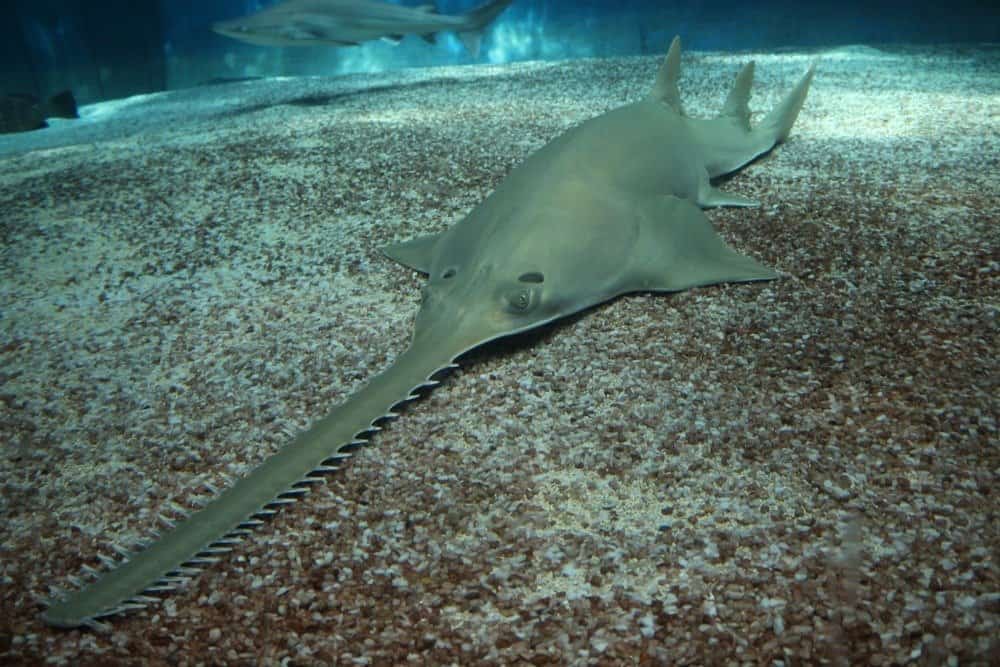
While rare, sawfish deserve protections and assistance bouncing back.
©Chaos2Light Images/Shutterstock.com
In the United States, NOAA Fisheries has acoustic tagging programs, habitat mapping, and engagement with commercial fishing operations to protect the smalltooth sawfish. It is also listed on CITES Appendix I, a designation prohibiting international commercial trade, and under the UN Convention on the Conservation of Migratory Species.
While the window for intervention and saving the sawfish is considerably narrower compared to other animals, International Sawfish Day on October 17th is a reminder that sawfish are still recoverable in some locations. If we continue making efforts to protect them, we may see them reach stable levels in the upcoming decades.