
Quick Take
- Underpasses in Vermont created specifically for amphibians reduce road mortality by over 80%.
- Scientists documented the efficacy of winged walls and curved sections to funnel thousands of amphibians toward the tunnel for safe crossing.
- A community of only about 2,000 people raised nearly $350,000 to support the project.
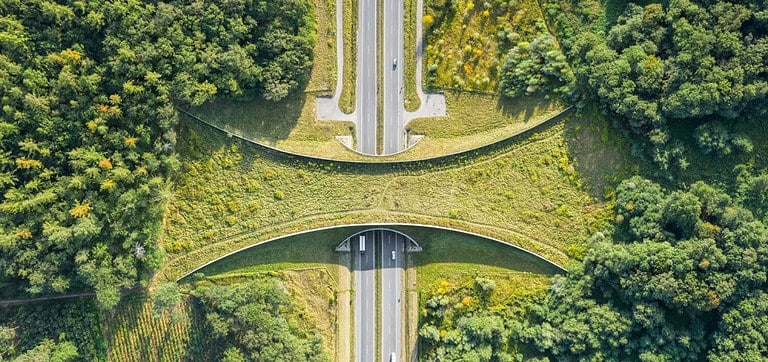
Wildlife overpasses have gained popularity over recent years. You may have even seen images from places like Banff National Park in Alberta, Canada, pop up in your social media. These pictures show large bridges covered with green grasses stretching across busy highways for animals like moose, bears, and cougars to cross. Overpasses like these have been a huge success in reducing animal-vehicle collisions by up to 80%.
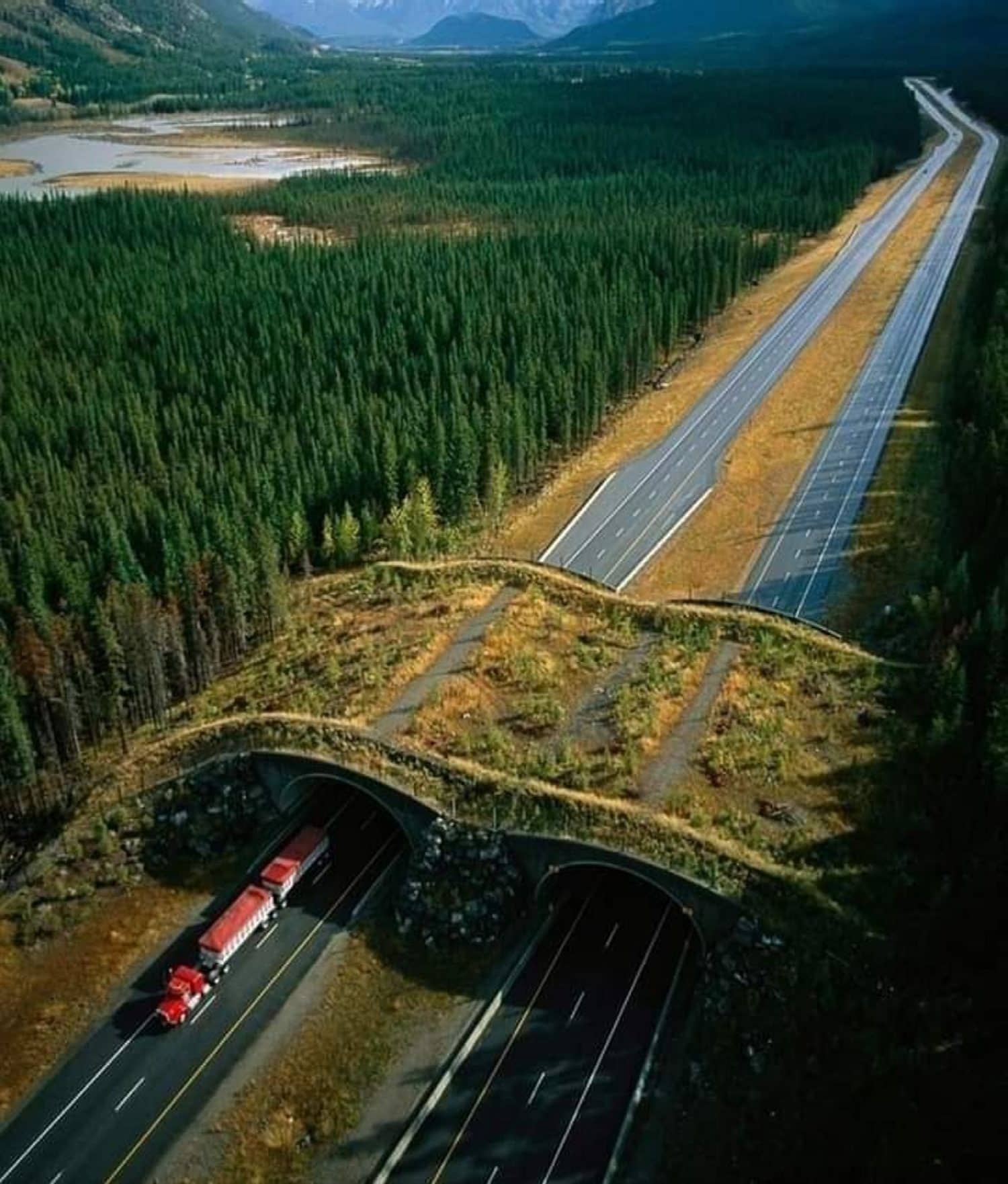
Overpasses like this one in Banff National Park in Alberta, Canada, have been successful in reducing wildlife-vehicle collisions for much larger species and have made a big splash on social media.
©Prof_Jay Jay/Shutterstock.com
But you may not know that overpasses save the lives of smaller animals as well; animals that are so small that you likely don’t even see them crossing the road. Unfortunately, these animals are easily unintentionally killed by drivers who don’t even realize they are hurting wildlife. Steve Parren, retired wildlife biologist with the state of Vermont and co-author of a recent study evaluating the effectiveness of underpasses on these much smaller animals, says, “You don’t notice unless you’re looking for it.”
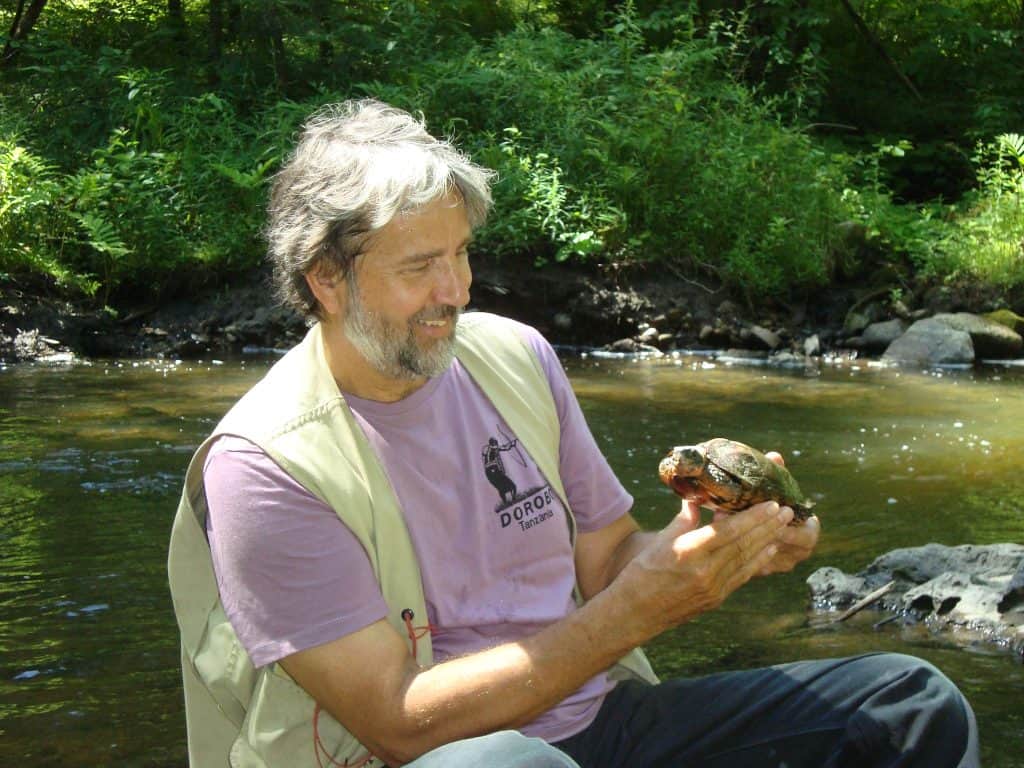
Steve Parren, retired wildlife biologist with the state of Vermont, and co-author on an amphibian underpass study, holding a wood turtle.
©
Roads are a scary place for amphibians
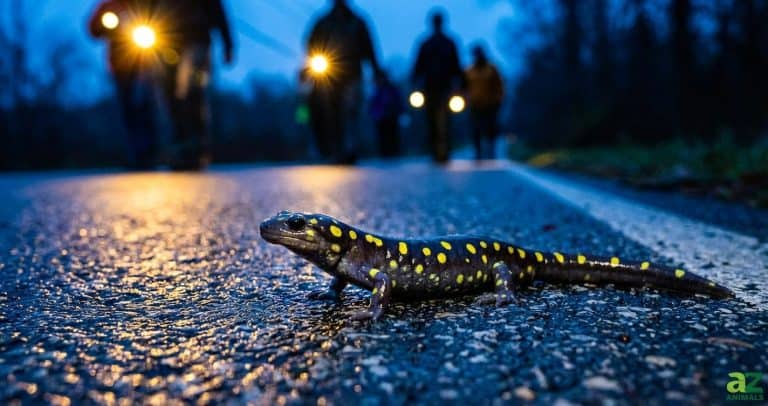
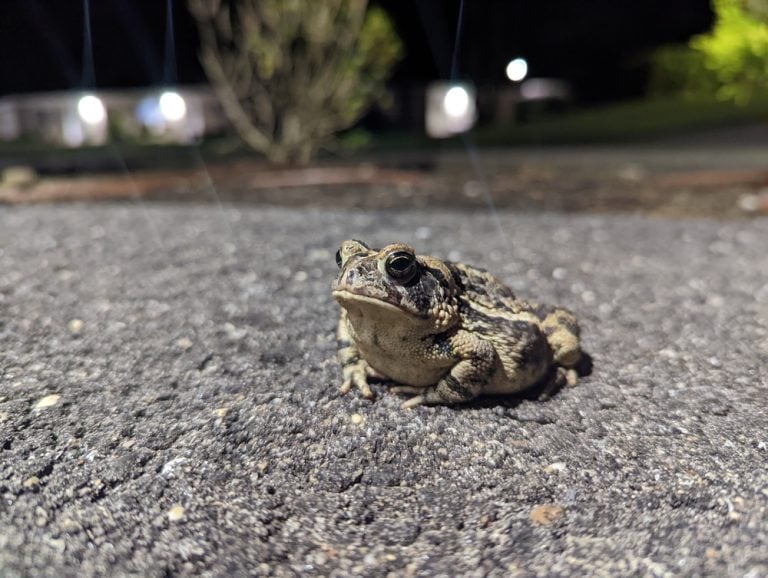
The animals Parren refers to are amphibians; thousands of them. Frogs, toads, newts, and salamanders have to cross dangerous roads to reach the vernal ponds where they breed to continue the survival of the species. Parren says, “It’s dark at night, and they’re dark animals. A huge salamander is only seven inches long. The small ones are three inches long. People aren’t even seeing them.” Amphibians are also much slower than mammals, taking them several minutes to cross the road.
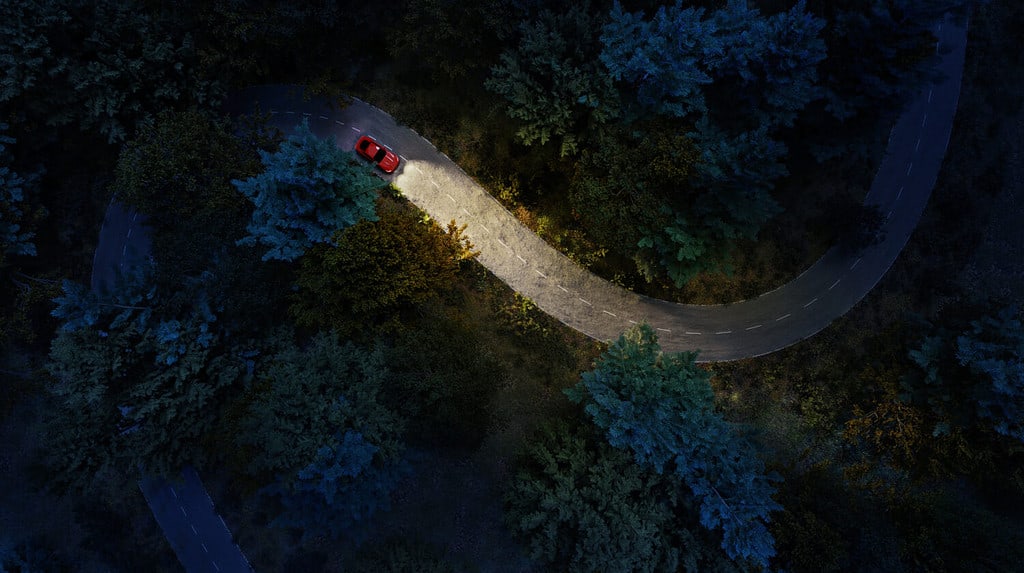
The amphibians largely cross at night, and because they are so small, even vigilant drivers can’t see them and can easily run them over.
©bluefish_ds/Shutterstock.com
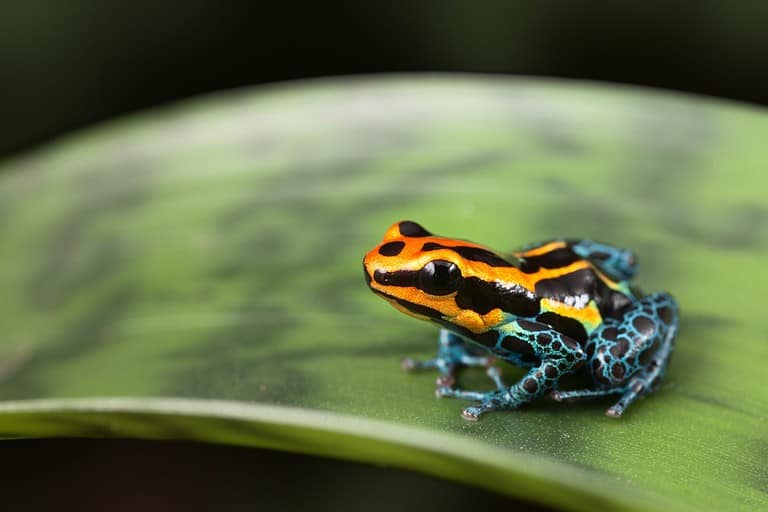
Amphibians are important members of Vermont’s ecosystem and provide pest control. They have to cross these busy roads to ensure the survival of the species. Many spend their lives in forest soils or streams but migrate in the early spring in large numbers to ponds or other wetland areas, often the same ones, to breed and lay eggs.
Amphibian eggs lack an outer shell and therefore need to be laid in water. After hatching, most species are fully aquatic when they are young and dependent on being submerged in water until they metamorphose into their adult forms. Without access to wetlands, the species cannot breed and would subsequently become extinct.
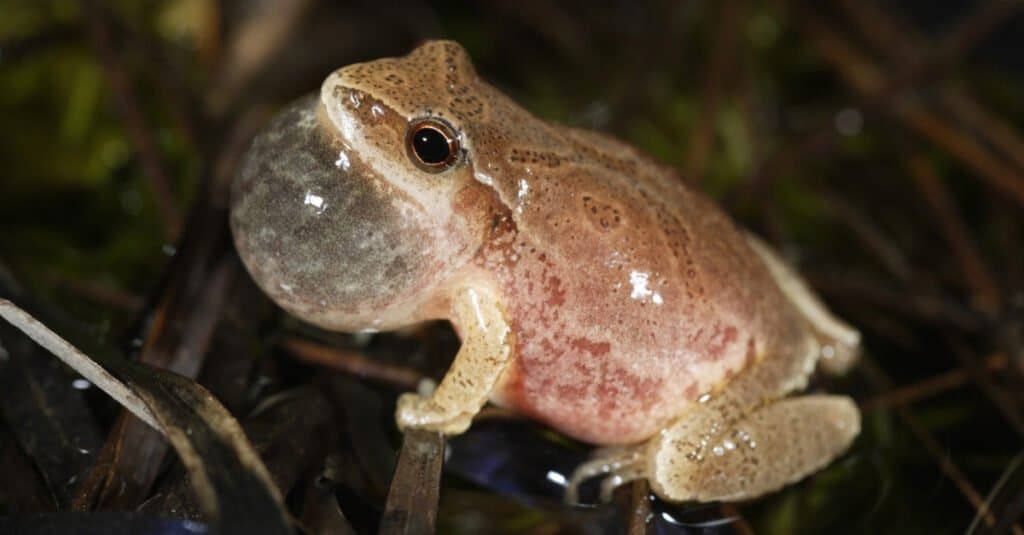
Spring peepers and other amphibians need ponds and wetlands to lay their eggs.
©Paul Tessier/Shutterstock.com
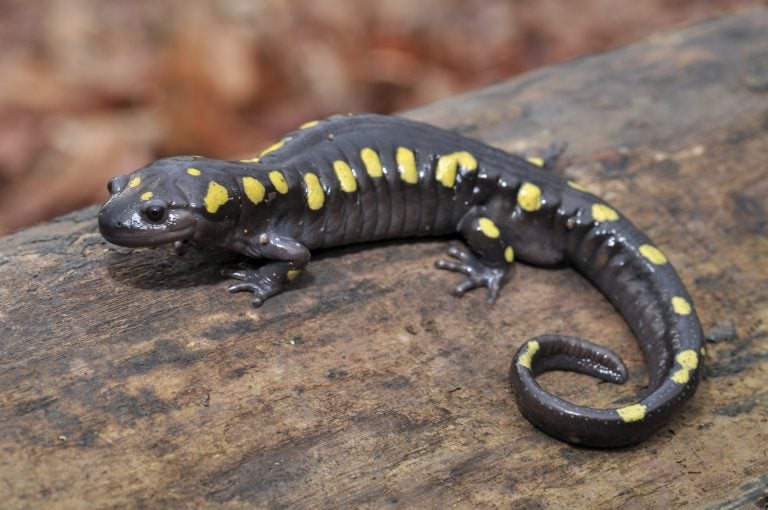
Some of these small amphibians can be quite old, too. Parren says, “It’s variable, but the larger spotted salamander goes to about 12 years (of age), probably. You’ve got some that are going into their twenties, possibly even reaching 30 years.” He adds, “They’re not just an explosive species that lives one or two years and dies. If you take the breeders out, you’re impacting the trajectory of the population. I do know from my professional contacts in other states that there are places in Rhode Island where they no longer have the Eastern newt.”
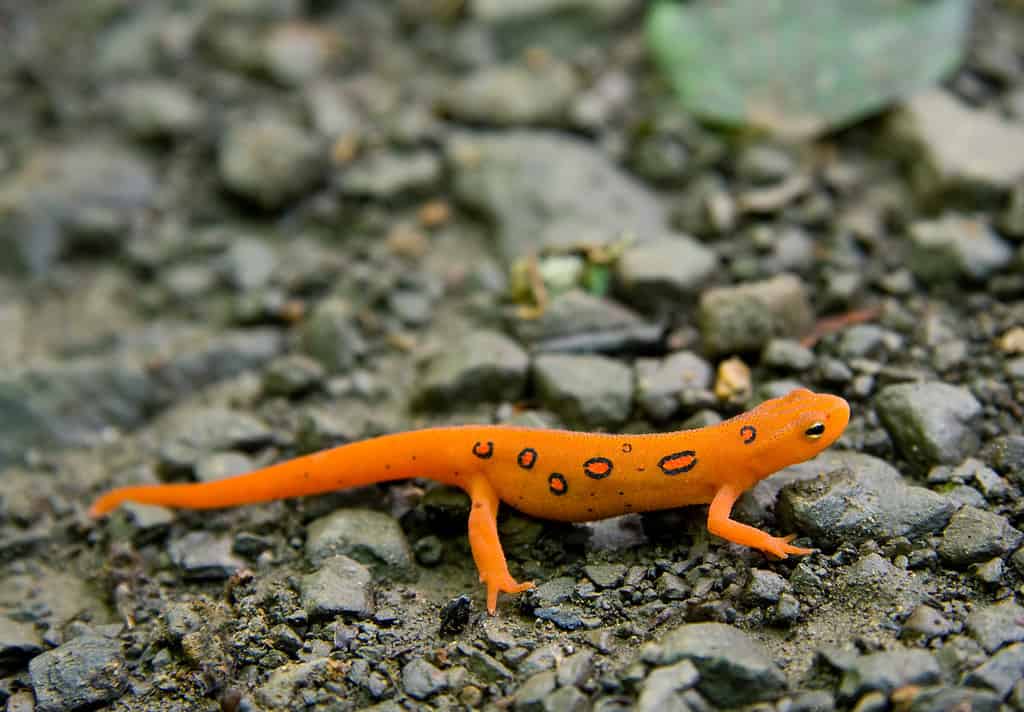
In other states, populations of the Eastern newt can no longer be found.
©epantha/iStock via Getty Images
But just because people don’t see these little amphibians cross the road at night, doesn’t mean they don’t see them ever. After a dark night, morning sunlight reveals the sad reality: the bodies of thousands of amphibians crushed on the road. In just two nights in 2006, residents counted over a thousand dead animals. And even though these animals are small, it doesn’t mean that people don’t care.
We had set it up within both the tunnels, and they counted over 2,000 amphibians using one tunnel in one season. It was just good to have proof of concept that we had a lot of animals that were actually passing through the tunnels.
Steve Parren, retired wildlife biologist with the state of Vermont
The importance of a caring community
When reflecting on the squashed amphibians, Parren says, “Wow. That got us.” When people were starting to take notice, Parren was working as a state biologist and had connections with others who were interested in conservation. He explains, “One day somebody’s driving down a road and they see salamanders crossing in a spot between an upland and a wetland. That was brought to my attention, so I started going out there and noticing. Beginning in 1997, I started going out every spring.”
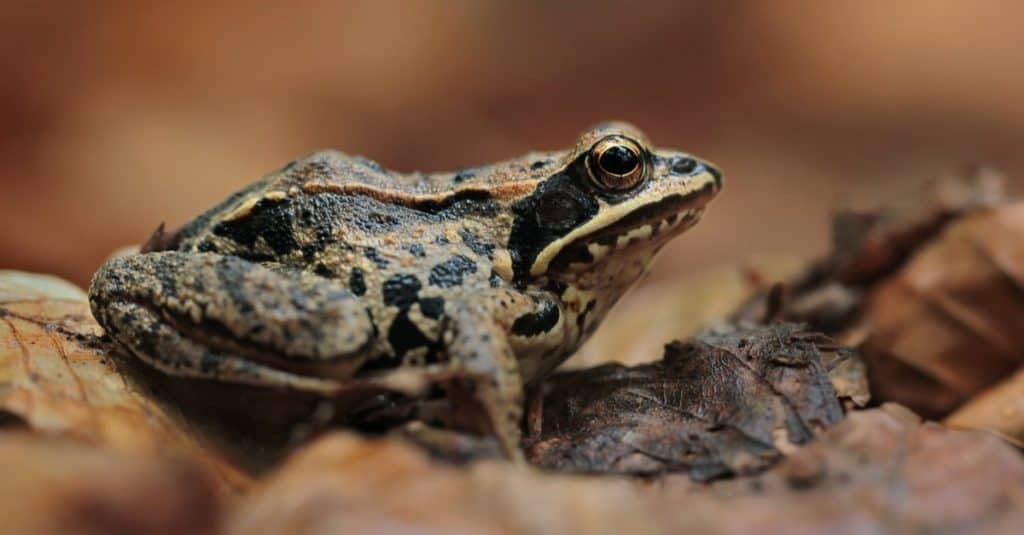
Wood frogs are one of the amphibians that the underpasses were designed to help cross roads safely.
©Marek Mierzejewski/Shutterstock.com
Even enlisting volunteers to help animals cross the road during peak periods of movement didn’t help much. Still, close to 50% of the animals were run over by vehicles. Parren says that he and others thought, “Why don’t we try to do something about it and try to get a grant?”
Could underpasses work for amphibians?
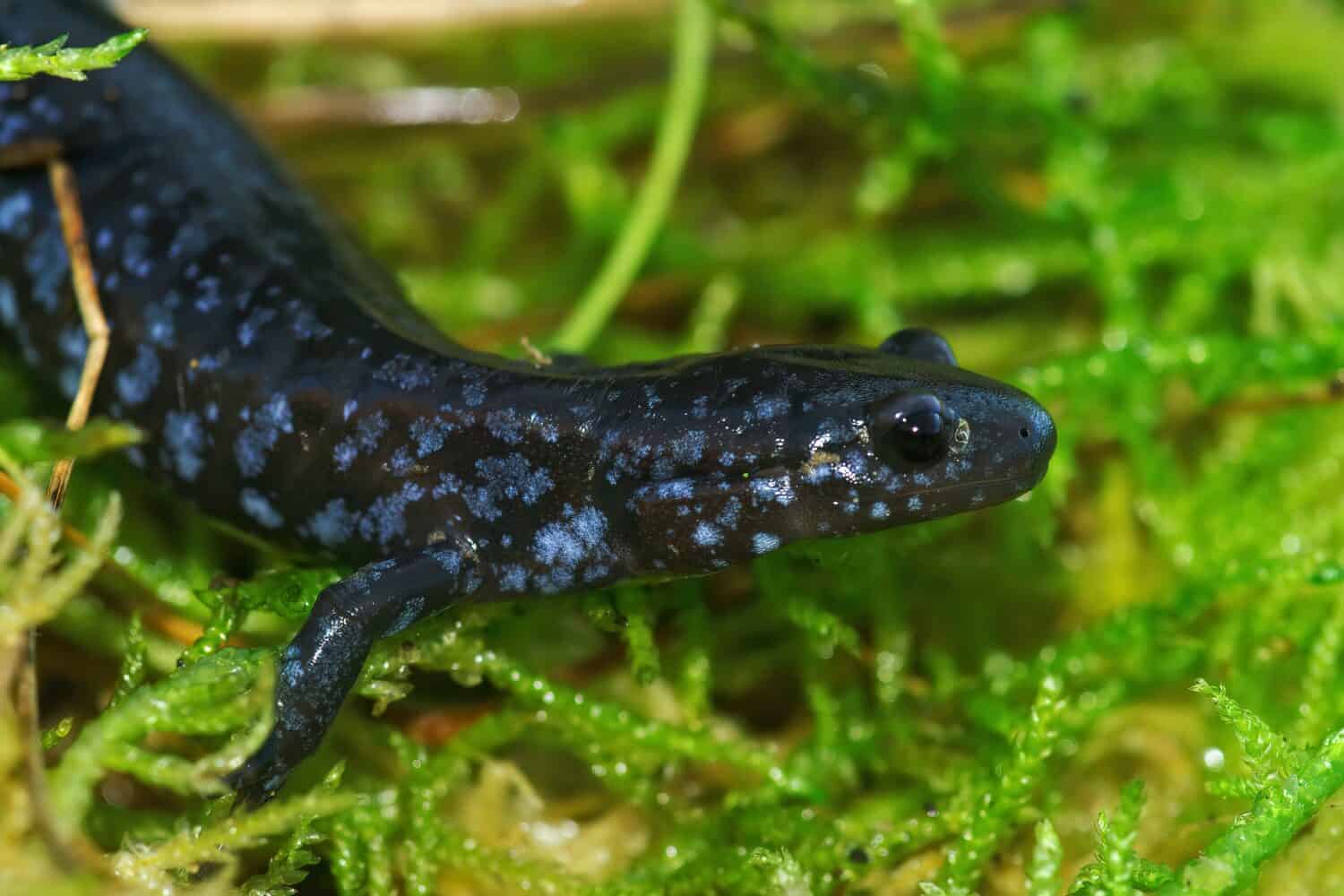
First, they had to demonstrate the need for such a crossing to gather the necessary funds and eventually design a before-and-after study. Parren and others were able to collect years of data prior to the construction of the underpasses, but they still needed more community support and, of course, the funding. To gain this, they created a brochure asking community members to “Help build Vermont’s first amphibian crossing tunnels.” With the information they had collected on amphibian mortality, the brochure asked community members to “Ensure the survival of one of the larger known populations of the blue-spotted salamander.”
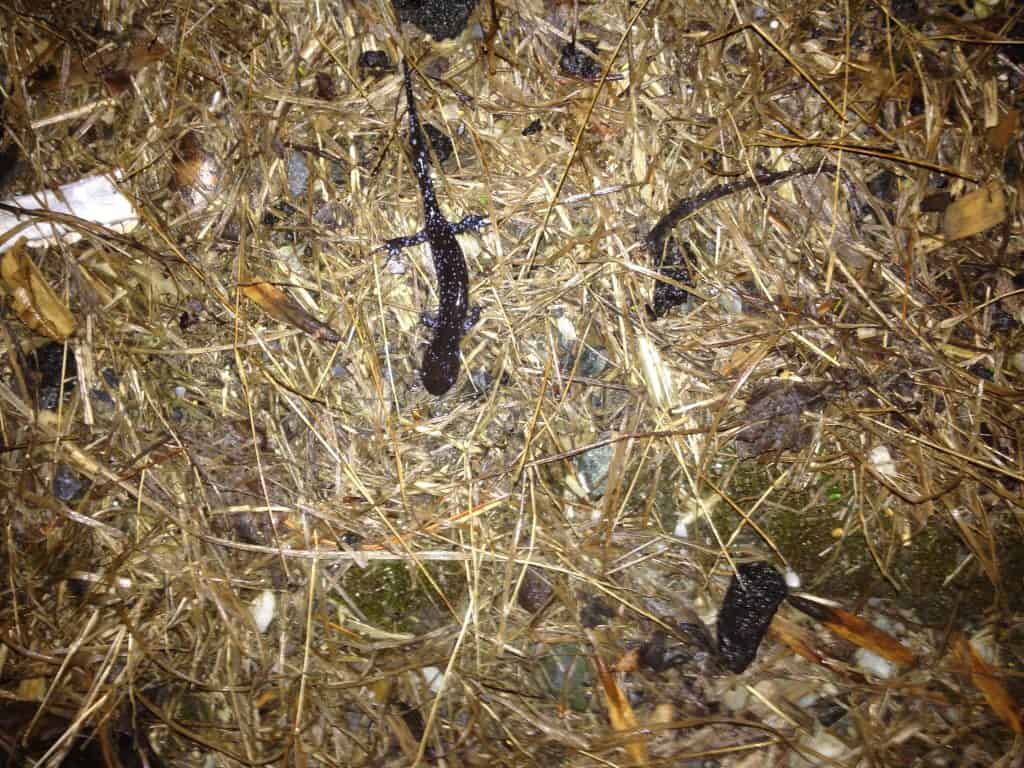
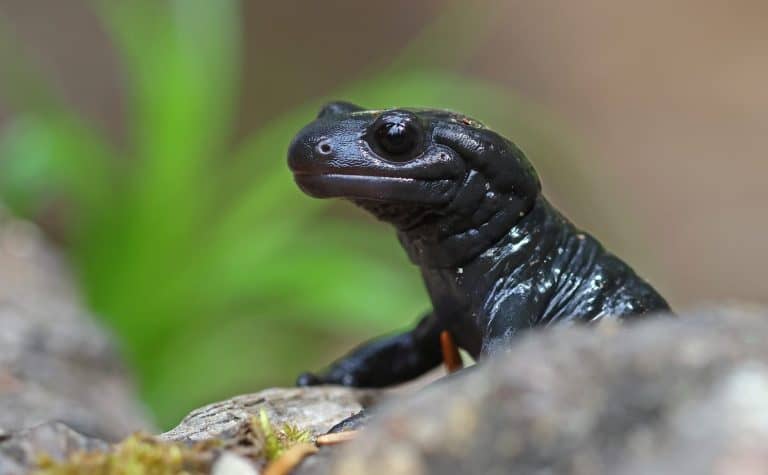
Blue spotted salamanders are one of the amphibian species that needs to migrate to reproduce in ponds and other wetlands. Parren and others wanted to create the underpasses to help this and other amphibian species. Photo by Steve Parren.
©
Parren and others were extremely successful in raising funds, especially considering that Monkton, Vermont, is a small town. Parren points out, “We only have like 2,000 people in town. The total project ended up costing $342,397. We raised a big chunk of that from private donations, like a hundred thousand dollars. So that’s how much interest there was.”
Creation of the amphibian underpasses
After gathering the funds, the construction of the underpasses began. Parren describes the underpasses and how they work, “They are up to five feet high and five feet wide with ‘wing walls’ that funnel the animals. So an animal’s coming down from the upwards through the woods. We don’t want them to get on the road, so we have a concrete wall that they T-bone into. They follow the wall, hopefully towards where the tunnel is. We have walls on both sides of the tunnel opening on both sides of the road. Then we put a semicircle piece that’s designed to try to turn the animals around if it went the wrong way, so they got another chance of going the right way.”
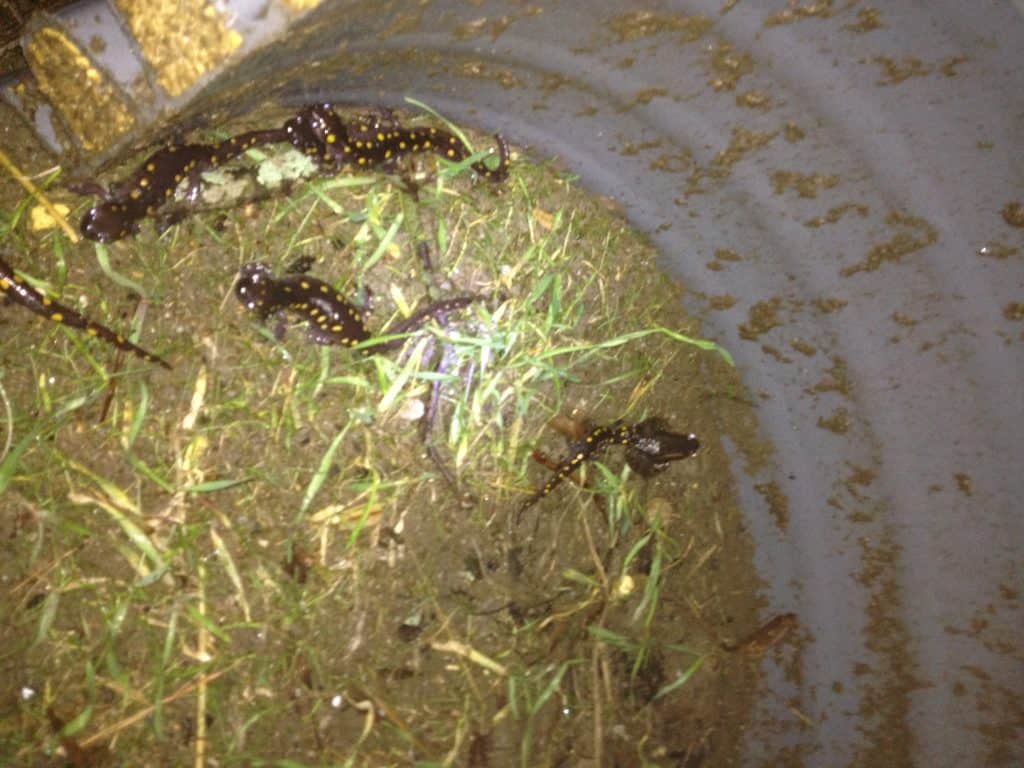
The part of the underpass that had a semicircle designed to turn the animals around if it went the wrong way, so they could access the underpass and safely cross the road. Photo of spotted salamanders by Steve Parren.
©
Studying the effectiveness of amphiban corridors
To evaluate the effectiveness of the underpasses, Parren, along with researchers from the University of Vermont, designed a study to measure how many amphibians survived road crossings. They evaluated areas with the underpasses for up to seven years after they were constructed and compared them to survival data from five years prior, as well as to a control site where no underpasses were built. Parren emphasized the importance of having a respected research institution involved, hoping that the study would really change people’s minds when it was complete. They conducted walking surveys where they counted every amphibian encountered, recording the species and whether it was dead or alive.
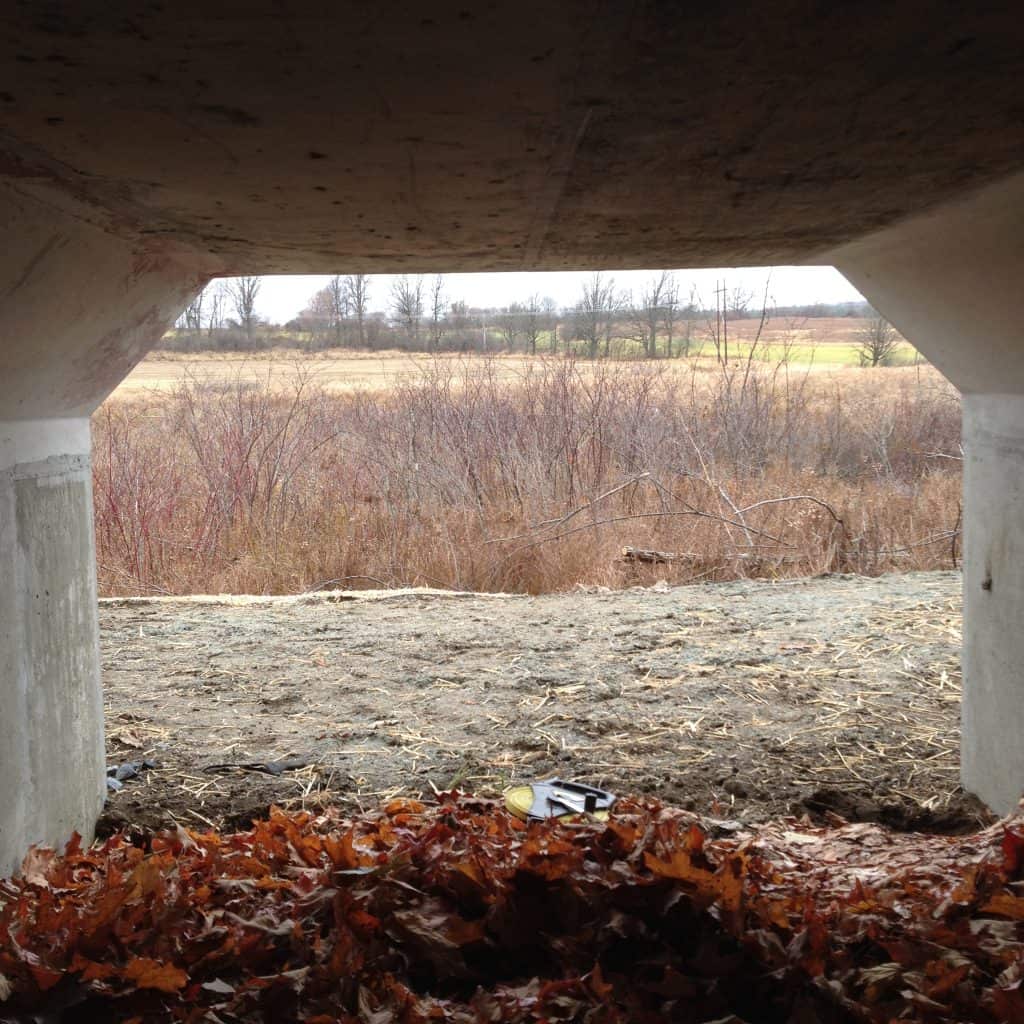
A view from inside the amphibian underpass created in Monkton, Vermont. Photo by Steve Parren.
©
Do underpasses reduce amphibian mortality?
And just like the famous overpasses in Banff that allow large mammals to safely cross roads, they found that these underpasses for much smaller amphibians work as effectively by providing a safe tunnel for them to make it across the road. To the surprise of those involved, the study, Assessing the Efficacy of Wildlife Underpasses in Mitigating Amphibian Road Mortality: A Case Study from the Northeastern United States, published in the Journal for Nature Conservation, found that amphibian mortality in the area was reduced by a higher amount than anticipated: over 80% from just two underpasses.
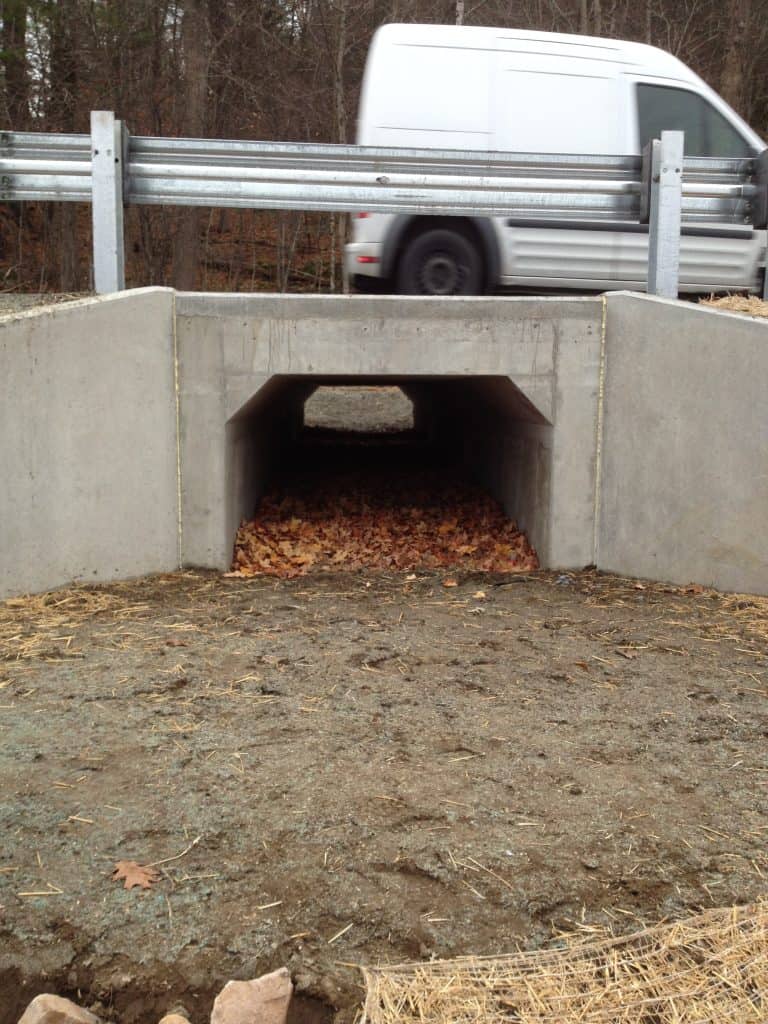
A view of the underpass showing how amphibians can cross safely while cars drive on the road as always. Photo by Steve Parren.
©
Parren explains the process of documenting the amphibian crossings. He worked with the Lewis Creek Association to document the animals using a camera trap, and says, “We had set it up within both the tunnels, and they counted over 2,000 amphibians using one tunnel in one season. It was just good to have proof of concept that we had a lot of animals that were actually passing through the tunnels.”
Preserving amphibian populations for generations to come
Parren hopes that other places in the United States and even the world look to the success of their study and use it as evidence to create corridors for amphibians where they live. “I know we generated a lot of interest when we first opened up the tunnels. People in other states, either transportation agencies, fish and wildlife agencies, or the forest service, wanted to know more. I was hoping that this (study) would finally gather enough information that we could actually prove that what we were doing was successful. And that didn’t happen until this chapter came out.” This study demonstrated just that; underpasses designed specifically for amphibian crossings are highly effective.
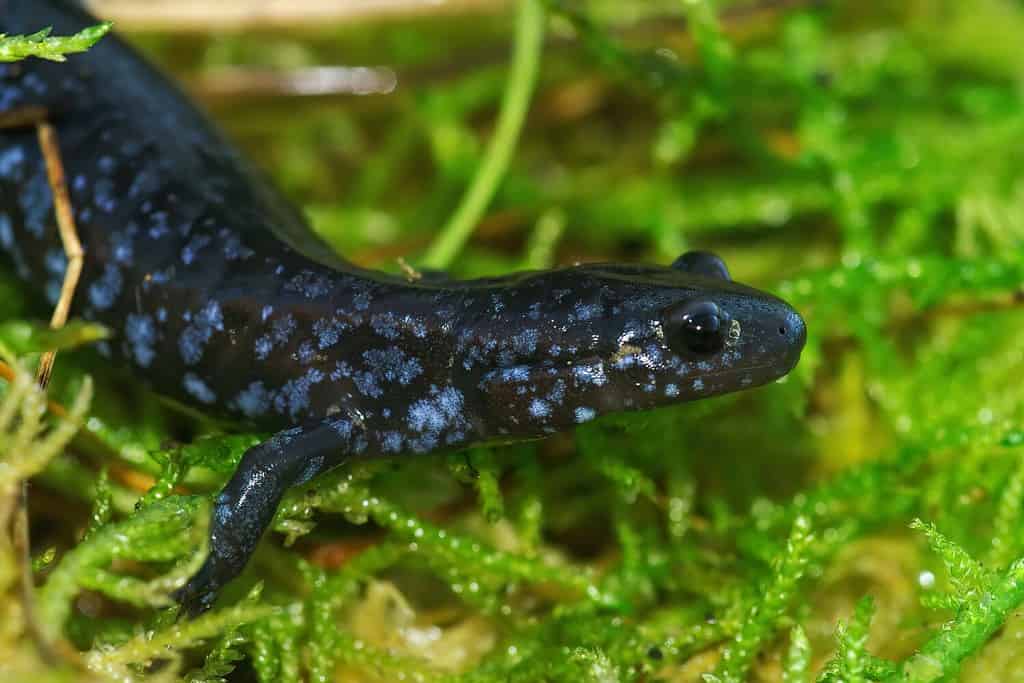
Underpasses like these ensure that species like the blue-spotted salamander can persist.
©Wirestock Creators/Shutterstock.com
Parren reflects recently on a field trip with the Lewis Creek Association, a local non-profit involved in the creation of the underpasses, and says, “We went down there with a couple of kids and started lifting a few of the slates and actually found some salamanders that were on their return trip up to the uplands.” He explains why this is important: “Most of the movement is in the spring when the adults come down the hill, cross through the tunnel, go to small breeding pools, mix it up there, and then come back. That’s all happening in this window of March, April, early May.” But the animals that they found are the offspring that are now fully developed from the larva, illustrating the success of their conservation efforts. He says, “They’re adults, and then they go uphill for the first time. And those are the animals that we think are moving in the fall.”
He goes on to say, “People can make a difference. We had a lot of people who supported us, and probably couldn’t have done this without that support.”