

F
Species Profile

Florida Panther

Puma concolor coryi

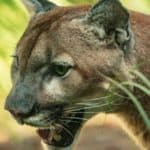
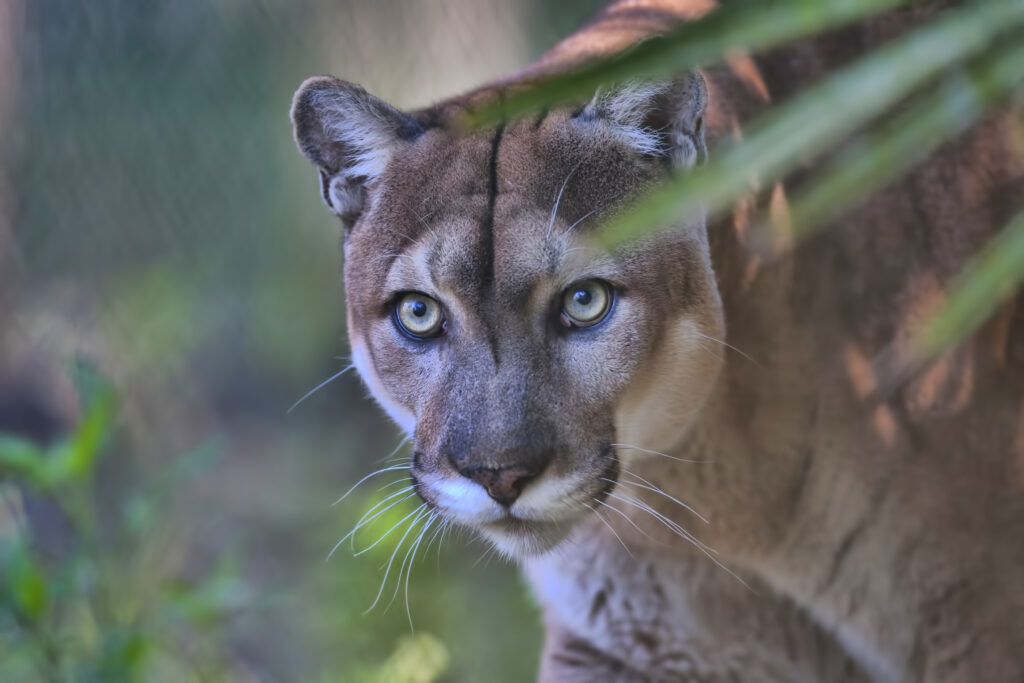
Florida's last eastern wild cougar
J.A. Dunbar/Shutterstock.com

Florida Panther Distribution

Click a location to explore more animals from that region

Endemic Species
Loading map...

Size Comparison

Human 5'8"
Florida Panther 2 ft 2 in

Florida Panther stands at 38% of average human height.

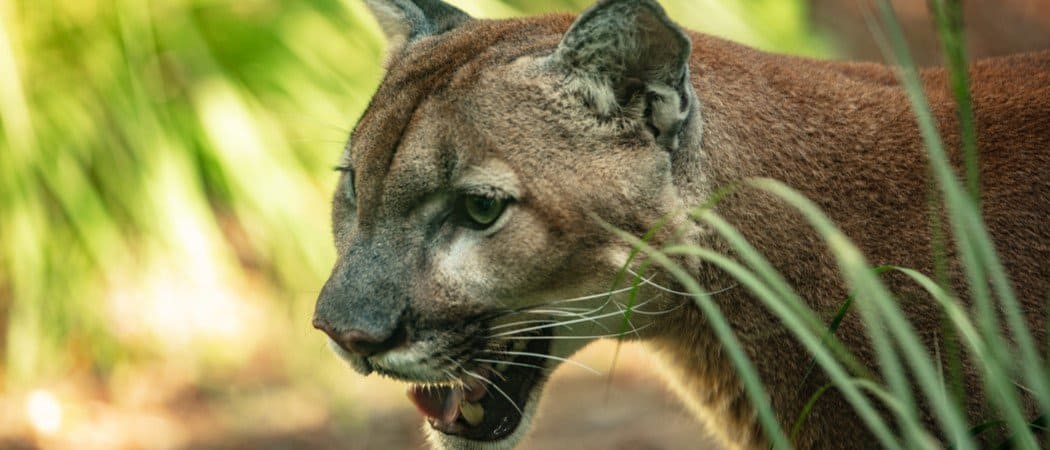
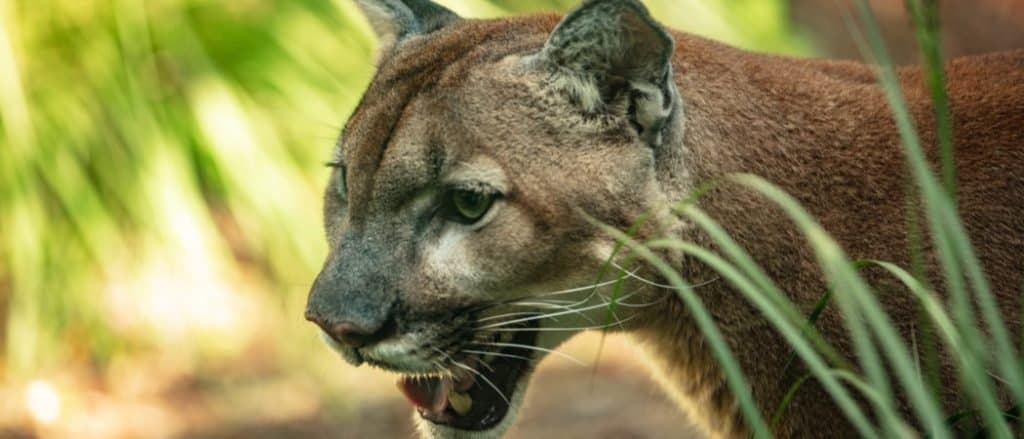
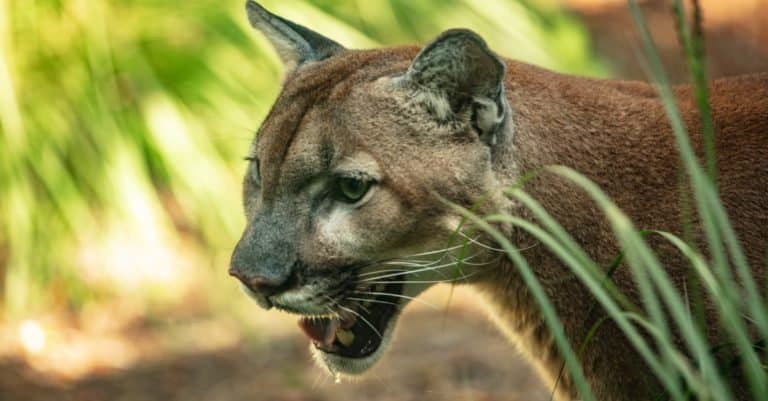
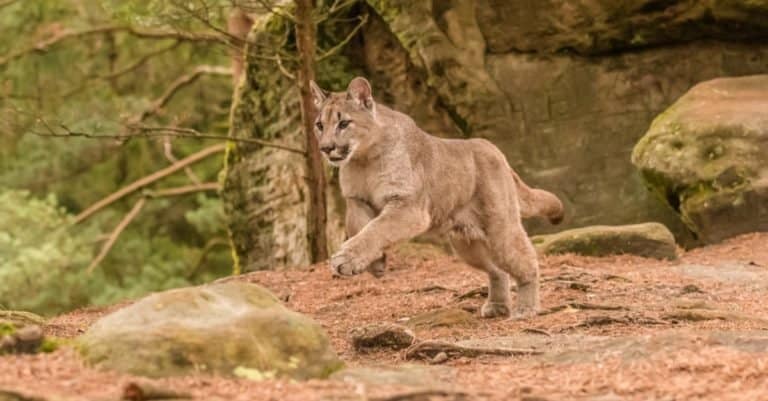
Florida panther is on the prowl

At a Glance

Wild Species
Also Known As Cougar, Puma, Mountain lion, Panther, Catamount
Diet Carnivore
Activity Crepuscular+
Lifespan 8 years
Weight 72 lbs
Status Not Evaluated
Did You Know?

Adult size (typical ranges reported by agencies/field studies): males ~45-72 kg; females ~32-45 kg (USFWS 2008; FWC species accounts).

Scientific Classification

A large felid (cougar) population native to southern Florida and managed as an endangered conservation unit; notable as the only breeding wild cougar population remaining in the eastern United States.

Kingdom
Animalia
Phylum
Chordata
Class
Mammalia
Order
Carnivora
Family
Felidae
Genus
Puma
Species
Puma concolor

Distinguishing Features

  • Same general appearance as cougars: tawny coat, long tail with darker tip, pale underside
  • In Florida individuals may show traits historically associated with inbreeding (e.g., kinked tail, cowlick, cryptorchidism), though these are not universal
  • Identified more reliably by geography (southern Florida range) and management designation than by unique external morphology

Physical Measurements

Males and females differ in size

Height
♂ 2 ft 3 in (2 ft – 2 ft 6 in)
♀ 2 ft 2 in (1 ft 12 in – 2 ft 4 in)
Length
♂ 6 ft 7 in (5 ft 11 in – 7 ft 3 in)
♀ 6 ft 3 in (5 ft 7 in – 6 ft 9 in)
Weight
♂ 123 lbs (99 lbs – 161 lbs)
♀ 79 lbs (64 lbs – 99 lbs)
Tail Length
♂ 2 ft 4 in (1 ft 12 in – 2 ft 7 in)
♀ 2 ft 2 in (1 ft 12 in – 2 ft 6 in)
Top Speed
45 mph
Species-level about 72 km/h

Appearance

Primary Colors
Secondary Colors
Skin Type Dense short fur over mammalian skin (hair coat); fur is relatively short and sleek compared with many temperate felids.
Distinctive Features
  • The Florida panther is a cougar (Puma concolor coryi), not a black panther. It is a south Florida breeding group protected by recovery plans, including adding Texas pumas in 1995 to boost genes.
  • Florida panther (Puma concolor coryi) adults: body 1.2–1.6 m, tail 0.6–0.8 m, shoulder height 0.6–0.75 m, weight about 30–75 kg; males larger than females.
  • Face/ears/tail: rounded ears with darker backs; long, heavy tail commonly ending in a black tip; broad muzzle and prominent whisker pads typical of Puma concolor.
  • Before genetic restoration, the small south Florida panther population often showed inbreeding traits: a kinked tail and a mid-back cowlick (whorl of hair), noted in field and necropsy reports.
  • Eye color: kittens often have bluish eyes that shift to yellow/amber tones as they mature (typical felid development reported for cougars).
  • Solitary, strongly territorial Florida panther with large home ranges. In south Florida it mainly eats white-tailed deer and feral hogs. Major deaths come from vehicle collisions; wildlife crossings and fencing help.
  • Longevity (commonly reported ranges): wild individuals often live ~8-12 years; captivity can reach ~20 years (ranges reported for cougars/Florida panthers in wildlife agency summaries and zoo records).

Sexual Dimorphism

Sexual dimorphism is primarily size-based (males larger and heavier) with broadly similar coat coloration and patterning between sexes; both sexes show the typical cougar tawny coat, black tail tip, and pale underparts.

♂
  • Larger average body size and mass; commonly cited adult male mass range roughly ~45-75 kg in Florida panther management summaries (with overlap and occasional outliers).
  • Males typically maintain larger home ranges than females in south Florida field studies (behavioral dimorphism relevant to management/monitoring rather than appearance).
♀
  • Smaller average body size; commonly cited adult female mass range roughly ~30-45 kg in Florida panther management summaries (with overlap).
  • Females are the rearing sex; may be encountered with dependent, distinctly spotted kittens (juvenile patterning is the most visually obvious age/sex-linked field context).

Did You Know?

Adult size (typical ranges reported by agencies/field studies): males ~45-72 kg; females ~32-45 kg (USFWS 2008; FWC species accounts).

Reproduction: gestation ~90-96 days; litter size usually 1-4 kittens (commonly 2-3); kittens stay with mother up to ~18-24 months (USFWS 2008).

Space needs are huge: adult males commonly use ~518 km² home ranges; adult females ~194 km², varying with habitat and prey (USFWS 2008).

Wild lifespan is often ~8-12 years; individuals can reach ~20 years in captivity (USFWS/FWC husbandry and species summaries).

Roads are a leading cause of known mortality; Florida's panther underpasses + fencing (e.g., along I-75/Alligator Alley and other highways) are a major, measurable conservation tool to reduce vehicle collisions (FDOT/FWC program reporting; USFWS recovery actions).

A 1995 genetic "rescue" introduced 8 female Texas cougars to reduce inbreeding; later monitoring documented improved genetic diversity and fewer inbreeding-linked traits like kinked tails and cryptorchidism (USFWS 2008).

Unique Adaptations

  • Powerful hindlimbs for burst acceleration and jumping-cougars can leap several meters in a single bound; in Florida's flat, wet landscape this helps negotiate downed timber, slough edges, and dense understory during ambush pursuits.
  • Large, padded paws improve silent stalking on sandy soils and leaf litter common in pine flatwoods and hardwood hammocks.
  • Broad diet flexibility (deer to hogs to smaller mammals) supports survival in a fragmented ecosystem where prey availability shifts with water levels and seasonal pulses.
  • Heat-tolerant, humidity-ready behavior: daytime resting in shaded cover and nocturnal movement patterns reduce thermal stress typical of south Florida.
  • Genetic restoration as a "human-enabled adaptation": the 1995 introgression (Texas females) increased heterozygosity and improved fitness indicators, demonstrating adaptive management as part of the subspecies' modern survival strategy (USFWS 2008).
  • Navigation of fragmented habitat: panthers preferentially use forested cover, cypress strands, and edge habitats as movement corridors-knowledge used to site wildlife crossings and prioritize land protection.

Interesting Behaviors

  • Solitary and territorial: adults typically avoid each other except for breeding; home ranges are maintained with scent marking (scrapes, urine, scat) and may overlap most with opposite-sex neighbors (USFWS 2008).
  • Crepuscular/nocturnal hunting: activity often peaks at dusk-night-dawn, especially near human development, reducing encounter risk while tracking prey movement patterns.
  • Stalk-and-ambush predation: uses cover to approach, then a short burst chase; primary wild prey in south Florida is white-tailed deer, with frequent use of feral hogs and other medium mammals (USFWS 2008; FWC).
  • Caching behavior: large kills may be dragged and covered with leaves/duff to hide from scavengers (vultures, bobcats, bears), allowing multi-day feeding.
  • Long-distance dispersal (especially subadult males): young panthers may travel far to find vacant territory, which increases road-crossing risk and drives the need for connected habitat corridors.
  • Maternal denning: females choose dense cover (palmetto thickets, hardwood hammocks) and move kittens between hiding spots to reduce detection.
  • Human-avoidance learning: individuals in developed landscapes often shift movement to cover-rich corridors (canals, tree islands) and low-traffic hours, a behavior used in conflict mitigation planning.

Cultural Significance

The Florida panther (Puma concolor coryi), Florida's state animal since 1982, is a key symbol for Everglades and Big Cypress conservation, habitat corridors, and road safety. It shapes regional identity and endangered-species policy as the last breeding eastern cougar population.

Myths & Legends

Creek/Muscogee and related Southeastern clan traditions include a Panther (often rendered as Cougar/Panther) clan, reflecting the animal as an emblem of strength, protection, and kinship identity in parts of the Southeast.

Across many Indigenous cultures of the Americas, the puma/mountain lion appears as a powerful spirit-being-often a solitary master hunter associated with vigilance and the boundary between wilderness and human space (widely documented pan-American motif).

In Andean tradition, the puma is one of three sacred animals (condor, puma, serpent) that stand for the cosmos. Cusco is said to be shaped like a puma, linking pumas to leadership and protection.

Conservation Status

NE Not Evaluated (subspecies not separately assessed by the IUCN Red List; the species Puma concolor is assessed as Least Concern, LC)

Has not yet been evaluated against the criteria.

Population Increasing

Protected Under

  • U.S. Endangered Species Act (ESA): listed as Endangered (this conservation unit is managed and regulated as endangered in the United States).
  • Florida state protections (state-listed and protected under Florida wildlife regulations; take/harassment prohibited except under permit/authorization).
  • U.S. Fish & Wildlife Service designated Critical Habitat for the Florida panther (federal critical habitat designation in South Florida).
  • Management occurs across a network of protected lands (e.g., National Wildlife Refuges, National Park Service units, state forests/wildlife management areas) plus private lands via conservation easements and corridor initiatives.
  • HUBS (group-level context for cougars/Puma concolor complex): the species Puma concolor is IUCN LC range-wide, but several small, isolated peripheral populations/subspecies-level conservation units (notably in Florida) face elevated risk from habitat fragmentation, road mortality/infrastructure, human-wildlife conflict, and genetic isolation; climate change is an emerging amplifier in low-lying coastal regions.

Life Cycle

Birth 3 cubs
Lifespan 8 years

Lifespan

In the Wild
1–15 years
In Captivity
12–22 years

Reproduction

Mating System Polygynandry
Social Structure Solitary
Breeding Pattern Transient
Fertilization Internal Fertilization
Birth Type Internal_fertilization

Florida panthers (Puma concolor coryi) are solitary. They form short mating ties; no lasting pair bond. Males have large, overlapping ranges and both sexes may mate with many partners. Females raise young alone.

Behavior & Ecology

Social No specific collective noun (typically solitary) Group: 1
Activity Crepuscular, Nocturnal, Cathemeral
Diet Carnivore White-tailed deer (Odocoileus virginianus)

Temperament

Territorial and solitary; adult males are generally less tolerant of same-sex conspecifics than females, with avoidance mediated by space use and marking (reported broadly for cougars and supported by Florida panther telemetry-based space-use studies).
Cautious/avoidant of humans; tends to reduce daytime activity and increase nocturnality in areas/times with higher human activity (pattern reported in large-felid disturbance literature and reflected in Florida panther monitoring summaries).
Maternal investment is strong; females concentrate movements around den sites/kitten-rearing areas and show defensive behavior near kittens (documented in Florida panther monitoring and den investigations conducted by agency programs).
Florida panther (Puma concolor coryi) in the wild usually lives under about 12 years, sometimes older; in captivity they can live longer, and exact maximum ages vary by report.

Communication

Purr Close-range, affiliative; especially mother-kitten
Hiss Threat/aggression
Growl/snarl Threat/aggression
Yowl/caterwaul/scream Often associated with estrus, mating interactions, or agitation
Chirp/whistle-like calls Reported in cougars; used in close-range contexts
Kitten mews/calls Contact with mother
Scent marking via urine spray on vertical objects and along travel routes Chemical signaling of presence/sexual status
Scrape marking Hindfoot scrapes often combined with urine/feces; serves as a visual+olfactory signal
Fecal deposits Latrine-like placement at conspicuous sites can function in territorial communication
Rubbing/cheek marking on substrates Depositing scent from facial glands
Visual postures and tail/ear cues during close encounters Threat/appeasement
Tactile communication primarily in mother-offspring interactions Grooming, body contact

Habitat

Biomes:
Wetland Temperate Forest Freshwater
Terrain:
Coastal Plains Riverine Muddy Sandy
Elevation: Up to 98 ft 5 in

Ecological Role

Apex predator (top carnivore) and keystone regulator in south Florida pinelands, prairies, and forested wetland mosaics; the only breeding wild cougar population in the eastern U.S.

Regulates large herbivore/omnivore prey (notably deer and feral hogs), reducing localized overbrowsing/rooting pressure and associated habitat degradation Creates carrion resources that subsidize scavengers (vultures, coyotes, insects) via cached/partially consumed kills Influences mesopredator behavior and space use (risk effects), potentially reducing pressure on smaller prey species Maintains natural trophic interactions and contributes to ecosystem resilience via top-down control

Diet Details

Human Interaction

Domestication Status

Wild

The Florida panther (Puma concolor coryi) is wild and not domesticated; no Puma concolor group has a domestication history. People have hunted and pushed it from land, caused road deaths, and later listed it as endangered (1967/1973). Managers track them, protect habitat, build crossings/fences, and added Texas pumas in 1995 to help genes.

Danger Level

Low
  • Physical injury possible if cornered/handled; capable of severe bites/claw injuries (large felid)
  • Rare predatory attacks on humans are documented for Puma concolor across its range, but they are uncommon relative to human exposure; risk increases with solitary recreation in cougar habitat, running/cycling at dawn/dusk, or presence of unattended small children (Logan & Sweanor 2001)
  • In Florida specifically, primary documented human-panther harms are indirect (vehicle collisions involving panthers) rather than attacks on people; panthers generally avoid humans (USFWS 2008)
  • Higher practical risk occurs with illegal captivity/handling (escape/attack hazards) rather than from free-ranging Florida panthers

As a Pet

Not Suitable as Pet

Legality: Florida panther (Puma concolor coryi) is Endangered under the U.S. Endangered Species Act. Keeping one as a pet is illegal or nearly impossible without special federal and state permits.

Care Level: Expert Only

Purchase Cost:
Lifetime Cost: $200,000 - $600,000

Economic Value

Uses:
Conservation funding and management expenditures (monitoring, law enforcement, habitat acquisition, road-mortality mitigation) Ecosystem services (apex predator effects on prey populations and trophic dynamics) Cultural/symbolic value (Florida icon; education/awareness) Research value (genetics, small-population recovery, wildlife corridor science) Ecotourism/non-consumptive wildlife value (indirect; panthers are rarely seen, but flagship status supports visitation and donations) Costs/negative externalities: vehicle collisions, occasional livestock/pet depredation, and land-use constraints in critical habitat planning
Products:
  • No lawful consumptive products (hunting/harvest prohibited for this endangered subspecies)
  • Merchandise/branding and fundraising materials tied to conservation organizations and agencies (non-consumptive)

Relationships

The Florida panther is the only member of the puma family known to breed in the Eastern United States.

Only about 150 of these animals are left in the wild, and officials warn that there needs to be at least 240 for them not to go extinct. The tan Florida panther has a white mask, stomach, and chest. They give birth litters of one-to-three kittens in the spring who stay with their mothers for up to six months. Forest defragmentation is a massive problem for this cat as males often roam over a 500-square-mile territory while females often roam over a 75-square-mile territory.
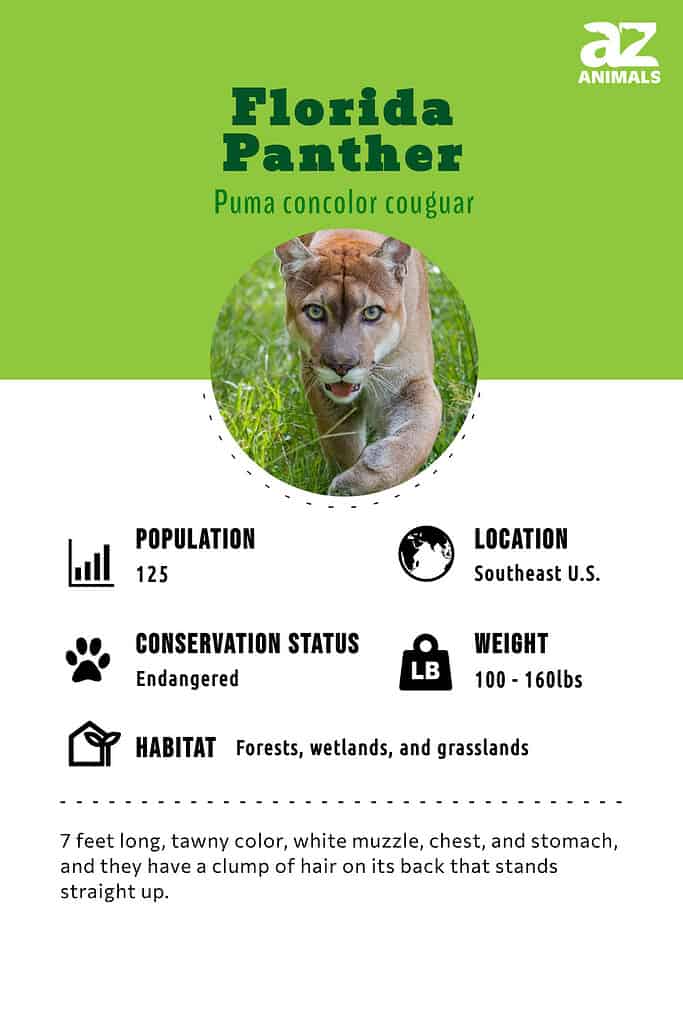
5 Incredible Florida Panther Facts!

  • The Florida panther is a very endangered animal. Conservationists worry that if the population of about 150 animals does not increase to about 240, this animal will become extinct shortly.
  • Florida panthers are near the top of the food chain in Florida, so they have an average lifespan of about 20 years. Females usually give birth to one to three kittens starting in their second year of life and continuing through their lifespan.
  • Florida panthers give birth to one-to-three babies called kittens.
  • Florida panthers eat about 40 deer or their equivalent annually.
  • Florida panthers have a lifespan of about 20 years in the wild.

Scientific Name
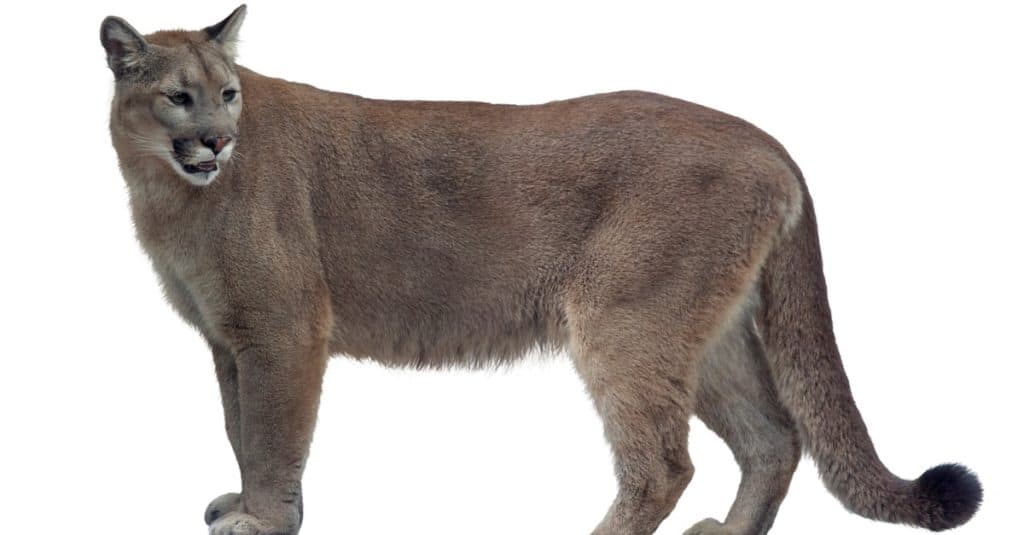
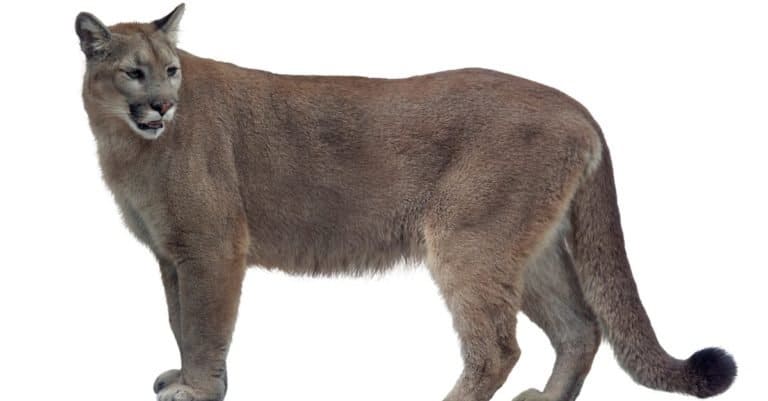
Florida panther or cougar isolated on white background

The scientific name of the Florida panther is Puma concolor coryi.

The scientific name of the Florida panther is Puma concolor coryi. They are a subspecies of the family that also contains pumas, mountain lions, and cougars. They are the only known breeding pumas in the Eastern United States.

History and Evolution

While this big cat historically roamed throughout the lower American states, its population dwindled drastically due to several reasons, including the destruction of its habitat. The remaining majority could be found in souther Florida.

Because of limited gene pools, heart defects, and sperm quality, there have been concerted efforts to bring back the Florida Panther’s numbers, including a plan in the late 20th Century to breed them with Texas Pumas.

The future of the Florida Panther is looking fairly bright with signs of them recovering, albeit in very small geographical regions. The next difficulty will be getting the animals to expand their reach and maintain quality genetics.

Appearance

Male Florida panthers measure about 7 feet long from the tip of their tail to the tip of their nose. They stand about 28 inches high. Females measure about 6 feet long and stand about 24 inches tall. Males can weigh up to 160 pounds while females generally weigh between 60 and 100 pounds.

By comparison, this member of the puma family is shorter than the cougar. Male cougars are about 1 foot longer while female cougars are about 7-inches shorter. Additionally, both male and female cougars weigh considerably more than the Florida panther.

Florida panthers are a tawny color that is darker across their back and gets lighter down the sides. They have a white muzzle, chest, and stomach. If you are looking at a Florida panther, it has a clump of hair on its back that stands straight up like a cowlick.

The cooked tail of the Florida Panther can be up to 33% of its body length. It also has razor-sharp claws that it uses to catch and tear up prey.

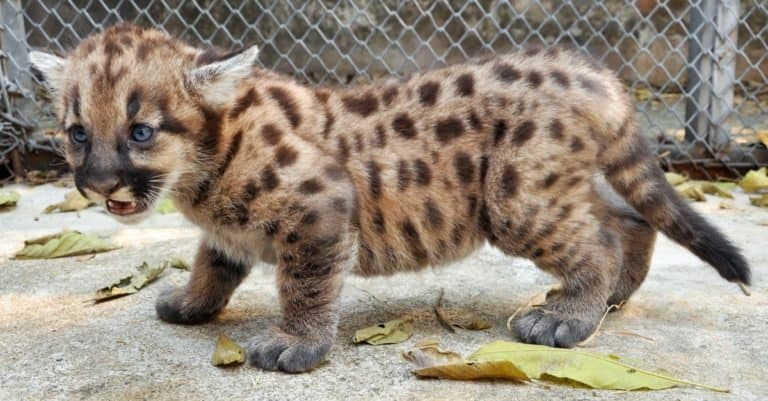
Florida panther kittens do not look much like their parents for the first 6 months of their lives. They are gray with dark brown or black spots. Kittens who are younger than 6 months old have five black rings around their tails. They turn a more tannish color as the black spots fade. Usually, by 6 months, it is hard to see the spots and rings.
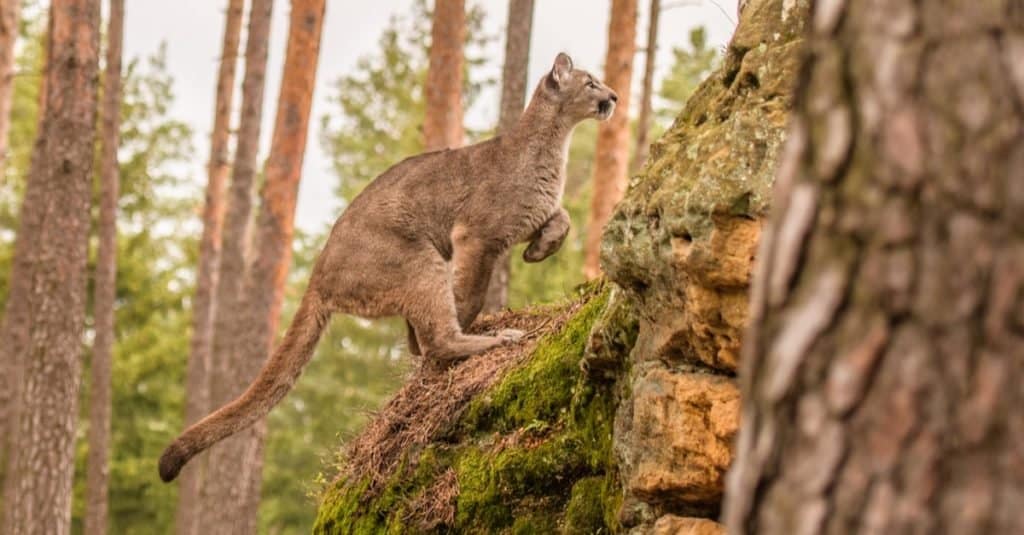
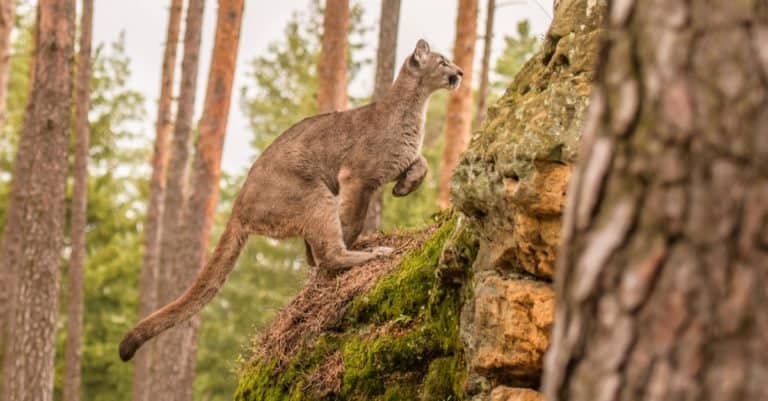
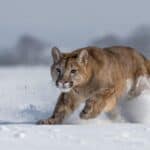
The endangered Florida Panther going up a hill.

Male Florida panthers measure about 7 feet long and can weigh up to 160 pounds.

Behavior

The Florida panther lives a solitary life throughout its lifespan. They hunt at night and can travel up to 20 miles in a single night. Males can cover up to 500 miles in a single month, fighting each other for territory. Females cover a smaller area.

While females make great efforts to remove their scent from an area, males leave scrapes in their territory. These scrapes consist of piles of leaves, pine needles, and soil that the male has urinated on to leave his scent. These scrapes are often about the size of a softball. They may be near a tree that looks like it’s shredded because the male Florida panther has used it as a scratching post.

Both males and females are stealthy hunters, but they make many different sounds. Kittens communicate with their mothers by chirping. Florida panthers also whistle, moan, peep and growl. Their scream is deafening. Males scream to warn other males that an area is part of their territory. Meanwhile, females scream to let males know that they have begun their heat cycle.

Habitat
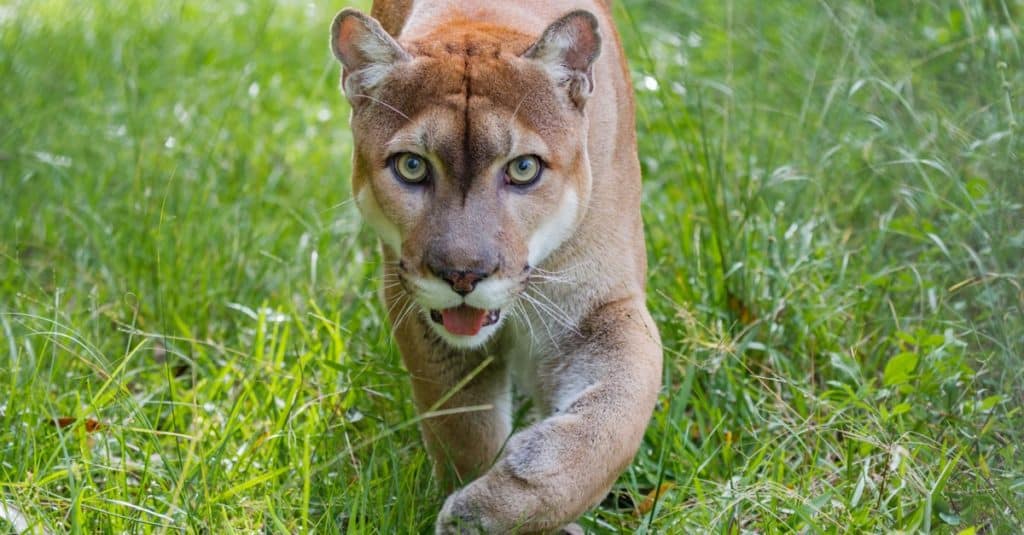
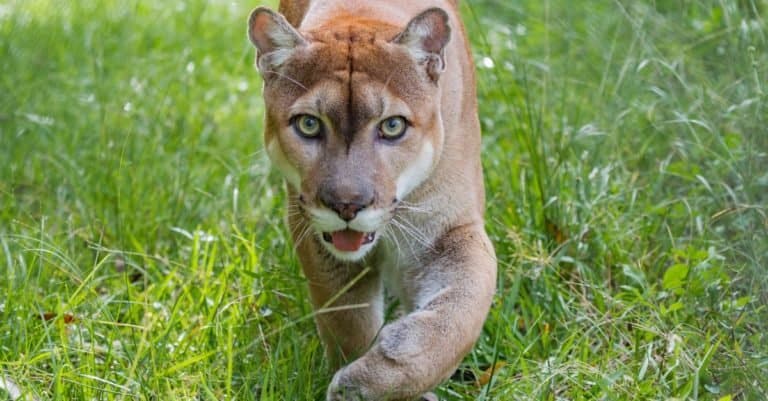
Florida Panther walks through high grass.

Male Florida panthers have been spotted throughout Florida and even in Southern Georgia. Females, however, have only been spotted recently in the Everglades.

There are less than 150 Florida panthers left in the wild. Male Florida panthers have been spotted throughout Florida and even in Southern Georgia. Females, however, have only been spotted recently in the Everglades.

Females often make dens in dense saw palmetto. Both males and females stalk prey in sawgrass prairies and forage through wet cypress strands. You may also see them sunning in hardwood hammocks.

Most live in state land that has been set aside as wildlife management areas. This area is called the Panther Corridor. The first area set aside in 2017 is Cypress Creek Grove, located on the northern bank of the Caloosahatchee River. The state hopes to get the area directly north of Cypress Creek Grove to extend the management area in the near future.

Diet
The Florida panther is the most endangered cat in North America.

Florida Panthers will often bury uneaten meat to save for later.

Florida Panthers have a huge appetite. They need the equivalent of 40 white-tail deer annually. They often kill animals bigger than themselves to meet the requirements of their diet. Then, they cover the meat that they do not eat with dirt to come back to it later. This process is similar to how squirrels bury nuts or dogs bury bones.

Florida panthers eat a variety of foods. White-tail deer are the favorite cuisine of Florida panthers. If they cannot get enough deer to meet their dietary requirements, they will dine on wild hogs, raccoons, rabbits, armadillos, and birds.

While the panther can run up to 35 miles per hour, they prefer to wait patiently for their prey to come by. Then, they pounce on them. A panther can jump up to 15 feet in the air to land on top of its prey. Once they have captured it, they use their strong claws to tear the animal apart so that they can dine on it.

Predators and Threats

The facts are that the Florida panther may go extinct. Man has built developments in many of the areas where the Florida panther used to live. The Florida panthers’ habitat has become so fragmented that it is tough for them to breed.

Population
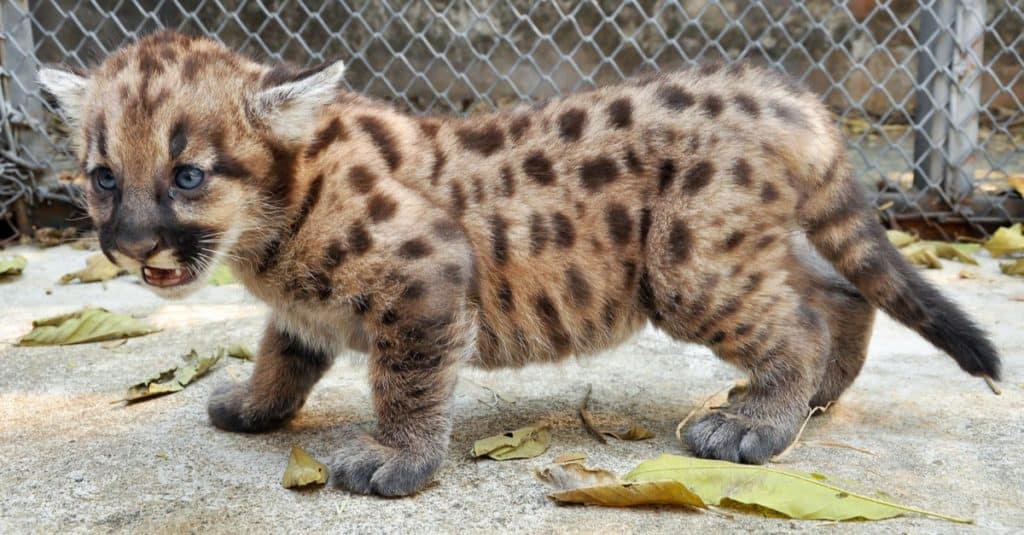
Florida panther cub. When cougars are born, they have spots, but they lose them as they grow, and by the age of 2 1/2 years, they will be completely gone.

When cougars are born, they have spots, but they lose them as they grow, and by the age of 2 1/2 years, they will be completely gone.

Biologists are hoping that it is not too late to save the Florida panther. There are less than 200 of these animals left in the world. Many groups are banning together to buy land where the panthers can live. Many acres that they need remain under private ownership. Therefore, the success may be limited because of fragmentation.

View all 170 animals that start with F

Sources

  1. Friends of the Florida Panther Refuge / Accessed June 11, 2021
  2. Nature Works / Accessed June 11, 2021
  3. National Park Service / Accessed June 11, 2021
  4. US Fish & Wildlife Service / Accessed June 11, 2021
  5. Florida Wildlife Viewing / Accessed June 11, 2021
  6. Everglades Holiday Park / Accessed June 11, 2021
  7. The Nature Conservancy / Accessed June 11, 2021
  8. The National Wildlife Federation / Accessed June 11, 2021
Heather Ross

About the Author

Heather Ross

Heather Ross is a secondary English teacher and mother of 2 humans, 2 tuxedo cats, and a golden doodle. In between taking the kids to soccer practice and grading papers, she enjoys reading and writing about all the animals!

Thank you for reading! Have some feedback for us?


Florida Panther FAQs (Frequently Asked Questions)

The Florida panther is so endangered that you are likely to never see one in the wild. The Florida Wildlife Conservation Commission says that no Florida panther has ever attacked a human. At the same time, they are wild animals, so do not try to trap one. Then, their behavior would become unpredictable, and they might choose to hurt you.